Marine Biodiversity and Public Health

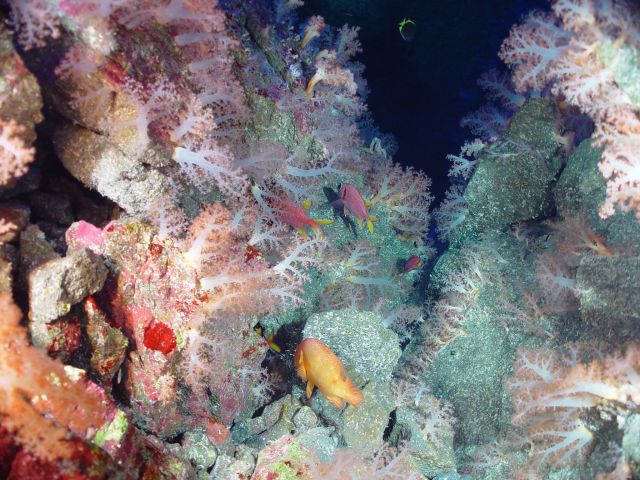
Ocean ecosystems are rich sources of compounds used in medicine. Photo by Bob Embley/NOAA.

Life within the world’s oceans have an ineffable beauty that will always defy the limitations of our discoveries. If we ever needed reasons beyond that acknowledgement, then here are timely examples of the interconnected nature of life on earth and reasons to protect our oceans and the biodiversity within them.

The Ocean Genome Helps Fight Disease: Here’s How We Save It

The ocean plays a surprising role in fighting COVID-19. With death and infection numbers escalating daily, the World Health Organization has made it clear that countries need to do three things to successfully fight this pandemic: test, test and test.

The dramatic increase in demand for testing has drawn renewed attention to the ocean’s genetic diversity. This “ocean genome” is a rich source of anti-viral compounds. In particular, enzymes from a remarkable hydrothermal vent bacterium have been key to the technology in virus test kits, including those used to diagnose COVID-19. Similarly, a protein derived from a coral reef red alga around the Canary Islands has been valuable in the fight against the Middle East Respiratory Syndrome, an illness caused by a coronavirus closely related to the one responsible for COVID-19.

This renewed attention to the genetic diversity of ocean organisms also brings conservation and equity concerns — the subject of two recent research papers commissioned by the High Level Panel for a Sustainable Ocean Economy (Ocean Panel). This research has found that multiple threats face the ocean genome, jeopardizing opportunities for new commercial and scientific uses. At the same time, there is an unbalanced relationship between low- and middle-income countries that are home to most marine biodiversity and higher-income countries, which possess the research capacity, technology, infrastructure and finances to develop marine biotechnology.

These recent papers lay out a clear list of actions that governments and marine researchers can take to safeguard the ocean genome and share its benefits equitably.
Continue reading

Really, California?

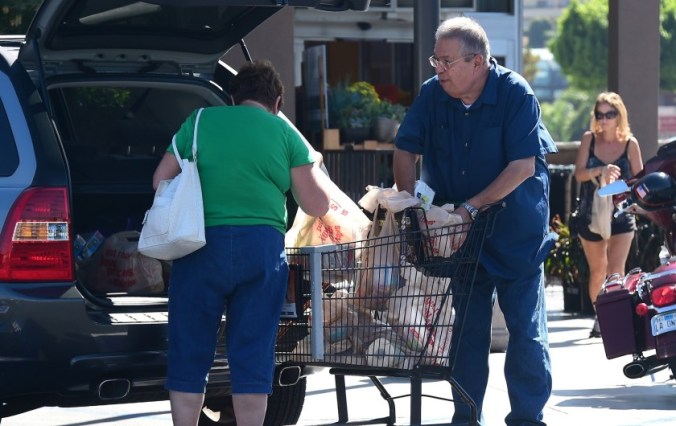
The executive order does not affect cities and counties that adopted their own ordinances banning or regulating single-use plastic bags.(Frederic J. Brown / AFP/Getty Images)

It’s been some months since we added to our “Really?” posts–which is definitely a good things– and California has usually been on the applaud side of our commentary. It’s a sad situation that the plastic industry is able to exert these pressures to take advantage of the current health crisis.

Coronavirus prompts Gov. Gavin Newsom to suspend California’s plastic bag ban

 Gov. Gavin Newsom has suspended California’s ban on grocery stores providing single-use plastic bags amid concerns that clerks may be at risk for exposure to the coronavirus if shoppers are required to supply their own reusable bags to carry their purchases home.


Newsom announced Thursday that he signed an executive order to suspend the 2016 plastic bag ban for 60 days after hearing concerns from the California Grocers Assn. about shoppers bringing reusable bags from home that are handled by store clerks filling them with groceries.

“We are being cautious to make sure there is no transmission of the virus,” said Dave Heylen, a vice president for the grocers’ group. He said the grocers will go back to abiding by the plastic bag ban when the order expires.

The executive order signed Wednesday does not affect the more than 100 cities and counties that adopted their own ordinances banning or regulating single-use plastic bags.

Continue reading

Birdcam Sunday

1314

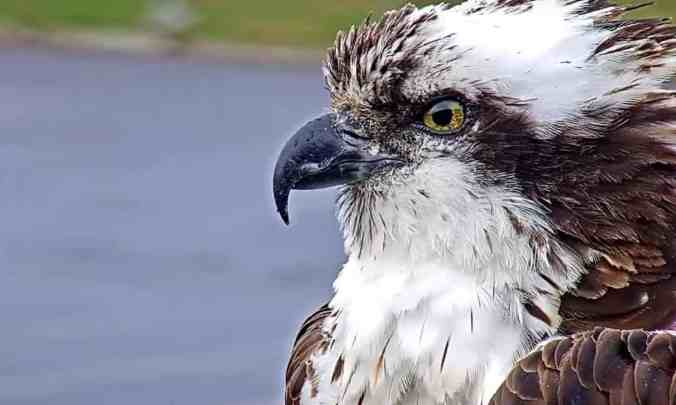
‘Sleek, powerful and yellow-eyed’: an osprey has an irresistible screen presence. Photograph: Cornell Lab Bird Cams

Thanks to Emma Beddington and the Guardian for this story to help put today into a different perspective:

2622

Anyone for Nestflix?: a pair of red-tailed hawks in their nest. Viewing figures for online nestcams are now sky high. Photograph: Cornell Lab Bird Cams

On the webcam it is clear that Telyn is back. Sleek, powerful and yellow-eyed, the osprey has successfully raised a dynasty high above the wind-buffeted grass near the west Wales coast. Last year came Berthyn, Peris and Hesgyn – they sound like Game of Thrones characters. The watchers are waiting for Telyn’s mate, local hero Monty. A magnificent fisherman, heroic provider and model father, he’s been a fixture at the Dyfi Osprey Project since 2008. But where is he?

1600 (3)

Flying over the spire: one of the peregrines that has made itself at home in Salisbury Cathedral. Photograph: James Fisher

“Is Monty back?” says every third post on the webcam’s chatboard. He isn’t – instead, there’s a new pretender on the nest, upstart Idris. He’s doing everything right, ingratiating himself with Telyn, bringing offerings of sea trout and twigs, chasing off intruders and yes, mating. Is this the end for the Burton and Taylor of ospreys? Unswayed by Idris’s can-do attitude and beady-eyed charm, Team Monty is inconsolable. “Still waiting for Monty… His usual slot is mid-afternoon,” says one hopeful post. “Hope Monty is home tomorrow, he is all I have known since 2011, love you, amber eyes,” says another. Still they wait. Continue reading

Mark Kurlansky (Again) On The Importance Of Salmon

KurlSalmon

A spawning salmon is shown through a viewing window near a fish ladder, Thursday, Oct. 17, 2019, during the fall spawning season at the Issaquah Fish Hatchery in Issaquah, Wash.
( AP Photo/Ted S. Warren )

We linked out once previously to this author discussing this book, but it is worth doing again (click the image to the right to go to the podcast); and here is what a bookseller has to say about it:

“Henry David Thoreau wrote, ‘Who hears the fishes when they cry?’ Maybe we need to go down to the river bank and try to listen.”

In what he says is the most important piece of environmental writing in his long and award-winning career, Mark Kurlansky, best-selling author of Salt and CodThe Big Oyster, 1968, and Milk, among many others, employs his signature multi-century storytelling and compelling attention to detail to chronicle the harrowing yet awe-inspiring life cycle of salmon. Continue reading

A Win for the Water

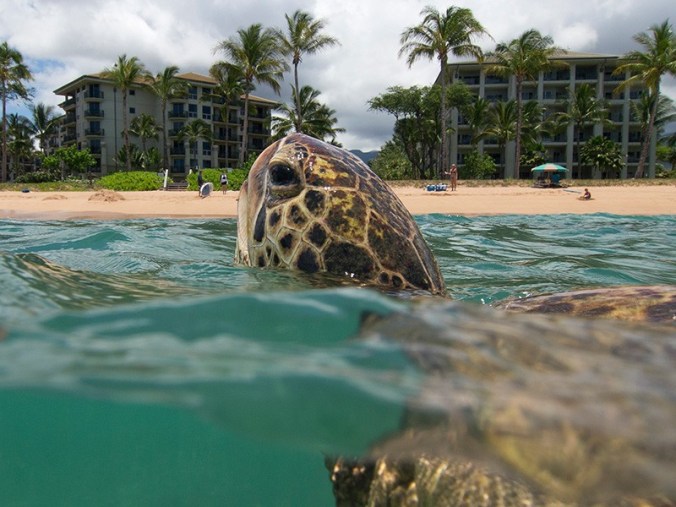
A turtle surfaces offshore of Kahekili Beach Park, Maui, Hawaii. COURTESY OF DON MCLEISH

It seems like a fitting Earth Day celebration that the U.S. Supreme Court voted to block the Trump Administration’s attempts to roll back the EPA Clean Water Act.

SUPREME COURT LEAVES THE CLEAN WATER ACT INTACT

Today the Supreme Court issued its opinion in County of Maui v. Hawaiʻi Wildlife Fund siding with clean water advocates that point source discharges to navigable waters through groundwater are regulated under the Clean Water Act.

The following is a statement from David Henkin, Earthjustice attorney who argued the case defending clean water:

“This decision is a huge victory for clean water. The Supreme Court has rejected the Trump administration’s effort to blow a big hole in the Clean Water Act’s protections for rivers, lakes, and oceans.

“We will have to return to the lower court to confirm this, but we fully expect that Maui County’s sewage plant will be required to get a Clean Water Act permit as a result of the Court’s decision today. That permit will require the County to protect the ocean from sewage discharges in a way it has refused to do to date.

“We are glad the Court has recognized the importance of protecting clean water for all Americans.”

The court held that the Clean Water Act “require[s] a permit if the addition of the pollutants through groundwater is the functional equivalent of a direct discharge from the point source into navigable waters.” In other words, the Clean Water Act prohibits unpermitted discharge of pollution “into navigable waters, or when the discharge reaches the same result through roughly similar means.” In doing so, the Court rejected the Trump administration’s polluter-friendly position in the clearest of terms: “We do not see how Congress could have intended to create such a large and obvious loophole in one of the key regulatory innovations of the Clean Water Act.” Continue reading

Crisis Inspired Pivots

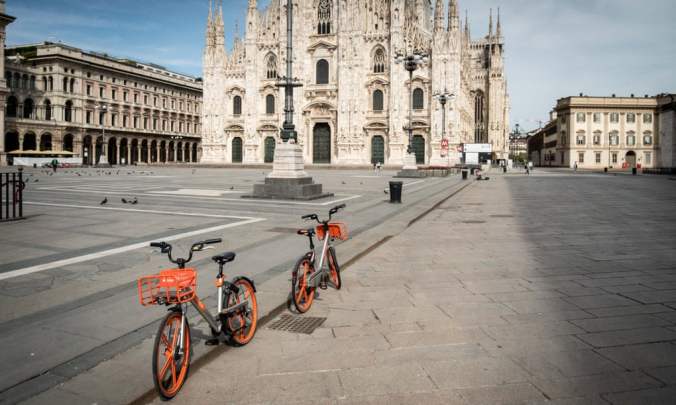
The Strade Aperte plan includes temporary cycle lanes and 30kph speed limits. Photograph: Stefano De Grandis/REX/Shutterstock

Looking for silver linings during the current times isn’t always easy, but reviewing how cities strategize over plans to open economies while keeping the public safe is a possible place to start. (It can also be a source of discouragement, so we’re glad to highlight the enlightened…)

In Milan the concept of pivoting toward carbon-free commuting within the city was a far-reaching goal for a future decade. The current crisis has helped to create a thought shift toward action now.

Seriously working on solutions to both the health crisis and climate crisis together could be a silver lining, indeed.

Milan announces ambitious scheme to reduce car use after lockdown

Milan is to introduce one of Europe’s most ambitious schemes reallocating street space from cars to cycling and walking, in response to the coronavirus crisis.

The northern Italian city and surrounding Lombardy region are among Europe’s most polluted, and have also been especially hard hit by the Covid-19 outbreak.

Under the nationwide lockdown, motor traffic congestion has dropped by 30-75%, and air pollution with it. City officials hope to fend off a resurgence in car use as residents return to work looking to avoid busy public transport.

The city has announced that 35km (22 miles) of streets will be transformed over the summer, with a rapid, experimental citywide expansion of cycling and walking space to protect residents as Covid-19 restrictions are lifted.

The Strade Aperte plan, announced on Tuesday, includes low-cost temporary cycle lanes, new and widened pavements, 30kph (20mph) speed limits, and pedestrian and cyclist priority streets. The locations include a low traffic neighbourhood on the site of the former Lazzaretto, a refuge for victims of plague epidemics in the 15th and 16th centuries. Continue reading

Earth Day @ 50

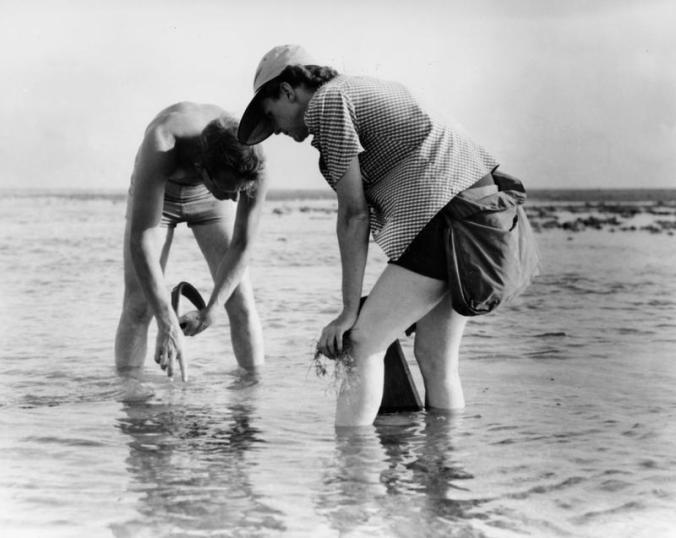
Rachel_Carson_Conducts_Marine_Biology_Research_with_Bob_Hines

( wikipedia/commons/4/48 )

CarsonDreamSeaThis week’s podcast rebroadcasts an episode we first heard a couple years ago, but Rachel Carson Dreams of the Sea is as good a tribute to Earth Day’s 50th anniversary as you will find:

Before she published “Silent Spring,” one of the most influential books of the last century, Rachel Carson was a young aspiring poet and then a graduate student in marine biology. Although she couldn’t swim and disliked boats, Carson fell in love with the ocean. Her early books—including “The Sea Around Us,” “The Edge of the Sea” and “Under the Sea Wind”—were like no other nature writing of their time, Jill Lepore says: Carson made you feel you were right there with her, gazing into the depths of a tide pool or lying in a cave lined with sea sponges. Lepore notes that Carson was wondering about a warming trend in the ocean as early as the 1940s, and was planning to explore it after the publication of “Silent Spring.” If she had not died early, of cancer, could Carson have brought climate change to national attention well before it was too late?

Excerpts from Carson’s work were read by Charlayne Woodard, and used with permission of Carson’s estate.

A Corrective History Of Coffee

200427_r36287

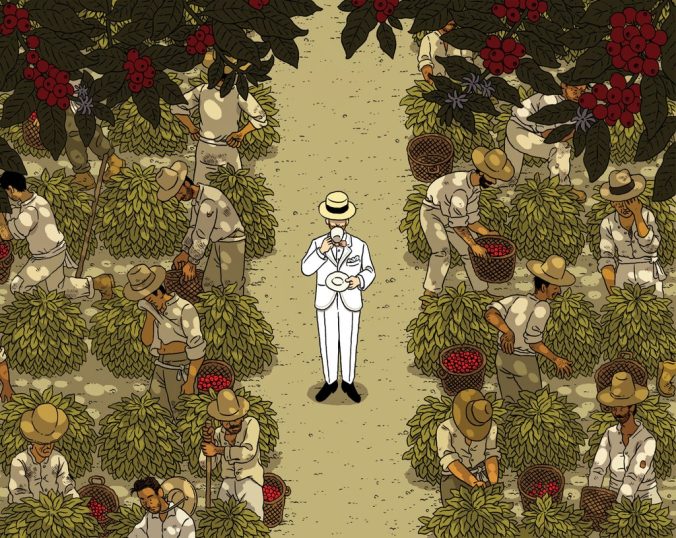
The literature of coffee has produced a new genre: corrective history. Illustration by Ilya Milstein

An essayist‘s review on one of our favorite topics is a nice surprise for a start to a new week:

The War on Coffee

The history of caffeine and capitalism can get surprisingly heated.

What would life be without coffee?” King Louis XV of France is said to have asked. “But, then, what is life even with coffee?” he added. Truer, or more apt, words for the present moment were never spoken, now usable as a kind of daily catechism. At a time when coffee remains one of the few things that the anxious sleeper can look forward to in the morning (What is life without it?), giving as it does at least an illusion of recharge and a fresh start, the charge has invariably slipped away by the time the latest grim briefing comes (What is life even with it?). Imagining life without coffee right now is, for many of us, almost impossible, even though the culture of the café that arose in America over the past couple of decades has, for some indefinite period, been shut down.

The growth of coffee as a culture, not just as a drink, can be measured in a unit that might be called the Larry, for the peerless comedy writer Larry David. In “Seinfeld,” which he co-created in 1989, coffee came as a normal beverage in a coffee shop—bad, indistinct stuff that might as well have been tea. (Paul Reiser had a nice bit about the codependency of coffee and tea, with tea as coffee’s pathetic friend.) Then, on “Friends,” the characters gathered in a coffee-specific location, Central Perk, but the very invocation of a percolator, the worst way to brew, suggested that they were there more for the company than for the coffee. Six or so Larrys later, by 2020, the plotline of an entire season of David’s own “Curb Your Enthusiasm” turned on a competition between Mocha Joe’s and Latte Larry’s—the “spite store” that Larry opens just to avenge an insult over scones, with many details about a specific kind of Mexican coffee bean he means to steal. The audience was expected to accept as an obvious premise the idea that coffee was a culture of devotion and discrimination, not just a passable caffeinated drink.

This change is real, and is reflected in the numbers. As Jonathan Morris documents in his recent book, “Coffee: A Global History” (Reaktion), epicurean coffeehouses in the United States numbered in the hundreds in 1989, and in the tens of thousands by 2013. Continue reading

The Youthful Insights Behind ‘Black Histories, Black Futures’

Jadon Smith is one of six teen curators for “Black Histories, Black Futures,” the first exhibition at the Museum of Fine Arts, Boston, curated entirely by high school students. photo credit: Melanie Stetson Freeman/Staff

Although the exhibit highlighted here began in January (notably directly following the holiday honoring MLK), we have the CS Monitor to thank for bringing it to our attention.  The museum is currently closed due to the coronavirus outbreaks, but the making of video on the MFA website shows some highlights, and we can only hope that there will be opportunity to visit it in person before the end date of June 20th.

“The teen curators—fellows from youth empowerment organizations Becoming a Man (BAM), The BASE, and the Bloomberg Arts Internship Boston program managed by EdVestors—used skills they developed as paid interns in a pilot internship program at the MFA to research, interpret, and design the exhibition. Their work highlights areas of excellence within the Museum’s collection and lays foundations for the future.”

What if curators were teens? Museums try it.

Jadon Smith steps closer to his favorite painting by Archibald Motley, carefully examining the details he’s looked at many times before, a smile from ear to ear. At the center of the piece, five elegant women dressed in their Sunday best sit in a restaurant. One woman, hidden in the background, catches his attention.

The John Axelrod Collection/Frank B. Bemis Fund, Charles H. Bayley Fund, and the Heritage Fund for a Diverse Collection/Courtesy of The MFA “Cocktails” by Archibald Motley is an oil on canvas painting from about 1926. Motley was known for depicting the blossoming of black social life.

“Women are the centerpiece of the whole entire painting,” says Jadon, a junior at John D. O’Bryant School of Mathematics and Science, during a visit to Boston’s Museum of Fine Arts in early March. “They’re supposed to be there to be seen. Don’t ignore them. Notice that they’re there, appreciate the fact that they’re there.”

Jadon is one of six local teens selected to craft “Black Histories, Black Futures” – the museum’s first exhibition curated entirely by high school students. The MFA’s exhibition, the culmination of a partnership with local youth empowerment organizations, reflects a growing trend, one that has museums working to engage and represent a more diverse population within the field of fine art. Including young people in the curation process not only trains the next generation of curators, say museum staffers, but it also helps aging institutions display refreshing and inclusive exhibitions inspired by the young curators’ own experiences.

“This institution is 150 years old. And so what does that mean for young people? Where do young people belong in such an old institution?” says Layla Bermeo, an associate curator at the MFA. “This project really tried to argue that young people belong in the center.”.. Continue reading

Mutation as a Positive

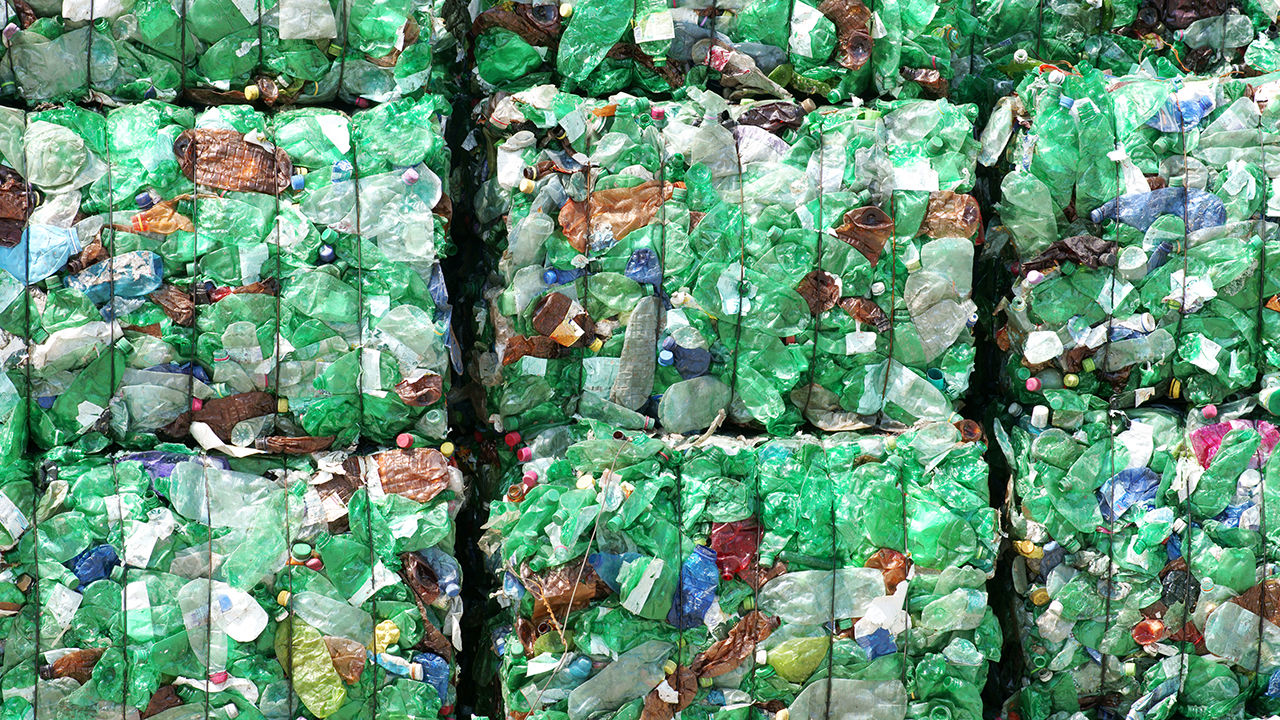
Green plastic bottles ready for recycling

In addition to all the creative ways that people recycle and upcycle plastics, we appreciate when scientific collaboration is brought to the forefront, as in the example here. We thank Science Magazine for highlighting the story.

‘A huge step forward.’ Mutant enzyme could vastly improve recycling of plastic bottles

Recycling isn’t as guilt-free as it seems. Only about 30% of the plastic that goes into soda bottles gets turned into new plastic, and it often ends up as a lower strength version. Now, researchers report they’ve engineered an enzyme that can convert 90% of that same plastic back to its pristine starting materials. Work is underway to scale up the technology and open a demonstration plant next year.

“This is a huge step forward,” says John McGeehan, who directs the center for enzyme innovation at the University of Portsmouth and who was not involved with the work.

Polyethylene terephthalate (PET) is one of the world’s most commonly used plastics, with some 70 million tons produced annually. PET bottles are already recycled in many places. But the current approach has problems. For starters, recycling companies typically end up with a broad mix of different colors of the plastic. They then use high temperatures to melt those down, producing a gray or black plastic starting material that few companies want to use to package their products.

Instead, the material is typically turned into carpets or other low-grade plastic fibers that eventually end up in a landfill or get incinerated. “It’s not really recycling at all,” McGeehan says.

To get around this concern, scientists have searched for enzymes in microbes that break down PET and other plastics. In 2012, researchers at Osaka University found one such enzyme in a compost heap. Continue reading

Librarians Of Bread

00SCI-SOURDOUGH1-jumbo

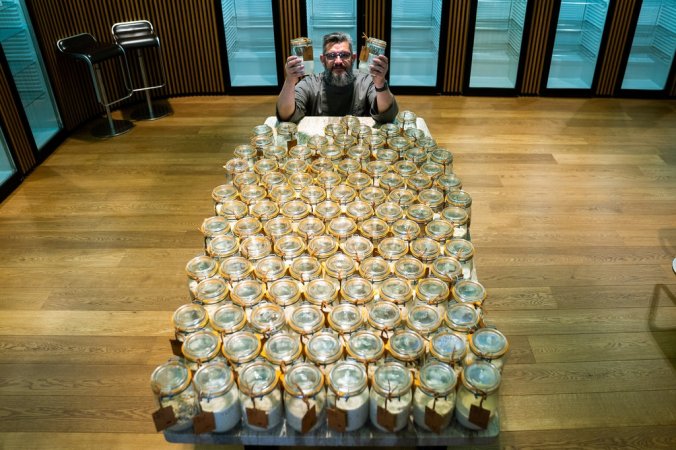
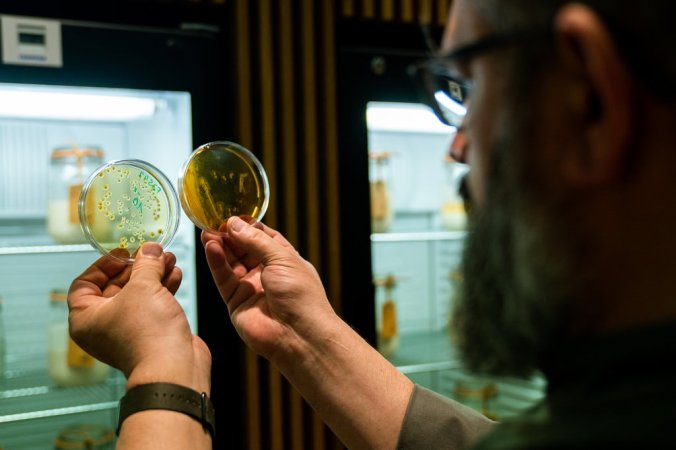
Karl De Smedt in the Puratos Center for Bread Flavor, the world’s most extensive collection of sourdough starters, in St. Vith, Belgium. Puratos Center for Bread Flavor

Bread is a frequent flier of a topic on this platform, including sourdough specifically. Ditto for libraries and their librarians and the creative things they do. Franz Lidz is not a writer we have featured in our pages before, but with a story like this one we will be watching for more.

At the Sourdough Library, With Some Very Old Mothers

Some starters never die, they just get filed away here.

In these housebound times, Americans have gone stark baking mad. Shut-ins are channeling their anxieties into pandemic pastries and quarantine cookies, some with icing piped in the shape of surgical masks, others frosted with the face of Dr. Anthony Fauci. Baking essentials such as yeast and flour are in short supply, and Google searches for bread recipes are on the rise, so to speak.

00SCI-SOURDOUGH2-jumbo

Puratos Center for Bread Flavour

Curiously, during this apocalyptic spring, the best thing since sliced bread turns out not to be sliced bread. The most coveted isolation loaves seem to be sourdough, a knobbly, rugged variety that requires patience, handmade fermentations and something like affection. “Working with sourdough is part art, part science,” said Karl De Smedt. “You don’t tell the dough when it’s time to be shaped. The dough tells you.”

Mr. De Smedt is the curator of the world’s only sourdough library. Located in the flyspeck village of St. Vith, 87 miles southeast of Brussels, the library houses the world’s most extensive collection of sourdough starters, those bubbling beige globs of bacteria and wild yeast — known as “mothers” — that bakers mix into dough to produce flavorful loaves with interestingly shaped holes. If a mother isn’t regularly divided and kneaded and fed with flour and water, she will eventually go dormant or die. “A starter has its own heart, almost its own will,” Mr. De Smedt said. “Treat a starter nice and it will reward you tremendously, like a good friend.” Continue reading

Butterfly Farming’s Limits

merlin_171378282_a6460ac2-c217-40f4-b8a0-00d58c272766-jumbo

Sylvain Cordier/Gamma-Rapho, via Getty Images

Costa Rica pioneered butterfly farming in the 1990s, and it has been an important export ever since. It is an export oriented to botanical gardens and other natural attractions where butterflies can be released by the thousands in enclosures; it is also an export that feeds the hunger of collectors. It is not a cure-all as Elizabeth Preston, on our radar again after five years, notes:

What’s Wrong With Butterflies Raised in Captivity?

A study suggests that monarchs bred by enthusiasts were less fit than those that started as caterpillars in the wild.

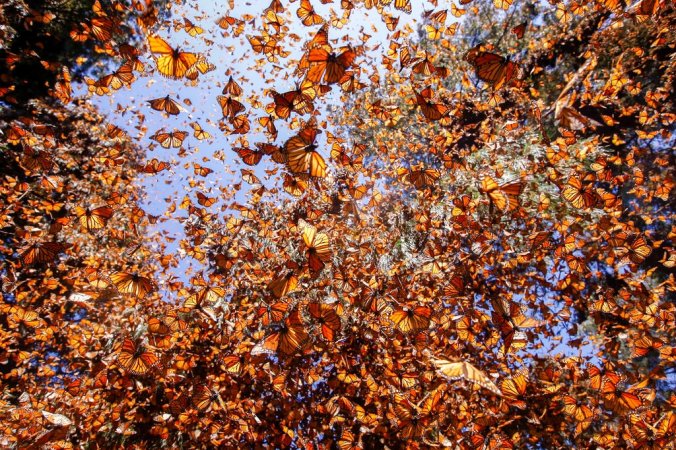
Monarch butterflies look delicate, but they need to be super-tough to survive their annual migrations. The monarchs of eastern North America may travel thousands of miles to their winter home in Mexico’s Sierra Madre mountains. And, increasingly, they’re not making it, a problem that has been blamed on habitat loss, climate change and pesticides.

In an effort to boost the struggling insect’s numbers, some butterfly enthusiasts buy monarchs raised in captivity or breed their own, then set them free. But research published Wednesday in Biology Letters shows that captive-born monarchs are weaker than wild ones — adding evidence to the arguments of those who warn that releasing them does more harm than good. Continue reading

Heralding Libraries as the Superheroes They’ve Always Been

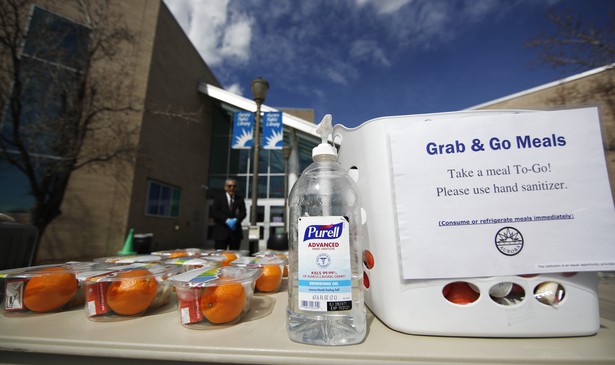
A bottle of hand sanitizer stands next to free lunches for people under the age of 18 outside the Aurora Public Library as branch manager Phillip Challis, back, looks on in an effort to help city residents and reduce the spread of the new coronavirus Wednesday, March 25, 2020, in Aurora, Colo. The new coronavirus causes mild or moderate symptoms for most people, but for some, especially older adults and people with existing health problems, it can cause more severe illness or death. (AP Photo/David Zalubowski)

This is far from the first time we’ve heralded librarians, media specialists and libraries on this site as the super heroes they are, not to mention their ability to adapt; we will continue to herald their adaptiveness in times of public turmoil:

Public Libraries’ Novel Response to a Novel Virus

America’s public libraries have led the ranks of “second responders,” stepping up for their communities in times of natural or manmade disasters, like hurricanes, floods, shootings, fires, and big downturns in individual lives.

Throughout all these events, libraries have stayed open, filling in for the kids when their schools closed; offering therapeutic sessions in art or conversation or writing after losses of life; bringing in nurses or social workers when services were unavailable to people; and hiring life-counselors for the homeless, whom they offer shelter and safety during the day.

Today, interventions like those have a ring of simpler days. But libraries have learned from their experience and attention to these previous, pre-pandemic efforts. They are pivoting quickly to new ways of offering services to the public—the core of their mission. When libraries closed their doors abruptly, they immediately opened their digital communications, collaborations, and creative activity to reach their public in ways as novel as the virus that forced them into it.

You can be sure that this is just the beginning. Today libraries are already acting and improvising. Later, they’ll be figuring out what the experience means to their future operations and their role in American communities.

Here are some of the things libraries are doing now. These are a few examples of many: Continue reading

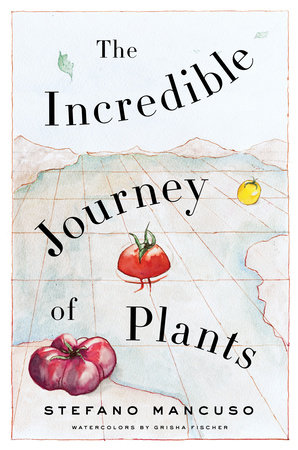
The Incredible Journey of Plants, Reviewed

3543.

‘You need to imagine a plant as a huge brain’ … the plant neurobiologist Stefano Mancuso. Photograph: Alessandro Moggi

Thanks to Amy Fleming for this book review:

The secret life of plants: how they memorise, communicate, problem solve and socialise

Stefano Mancuso studies what was once considered laughable – the intelligence and behaviour of plants. His work is contentious, he says, because it calls into question the superiority of humans

9781635429916I had hoped to interview the plant neurobiologist Stefano Mancuso at his laboratory at the University of Florence. I picture it as a botanical utopia: a place where flora is respected for its awareness and intelligence; where sensitive mimosa plants can demonstrate their long memories; and where humans are invited to learn how to be a better species by observing the behaviour of our verdant fellow organisms.

But because we are both on lockdown, we Skype from our homes. Instead of meeting his clever plants, I make do with admiring a pile of cannonball-like pods from an aquatic species, on the bookshelves behind him. “They’re used for propagation,” he says. “I am always collecting seeds.”

4200.

Flower power … Mancuso’s team has shown that Mimosa pudica can retain learned information for weeks. Photograph: Alamy

Before Mancuso’s lab started work in 2005, plant neurobiology was largely seen as a laughable concept. “We were interested in problems that were, until that moment, just related to animals, like intelligence and even behaviour,” he says. At the time, it was “almost forbidden” to talk about behaviour in plants. But “we study how plants are able to solve problems, how they memorise, how they communicate, how they have their social life and things like that”. Continue reading

Saving The Harvest In Europe

4288.

Strawberries at Greens Berry farm in Wexford, Ireland. Photograph: John Greene

With farmers on our mind, recently, and especially the ability of family farms to get harvesting and distribution done we are watching for stories like this:

Farmers across Europe bank on improvised armies of pickers to save harvest

Growers from Ireland to Spain says coronavirus lockdown has stopped migrant workers from arriving

4500.

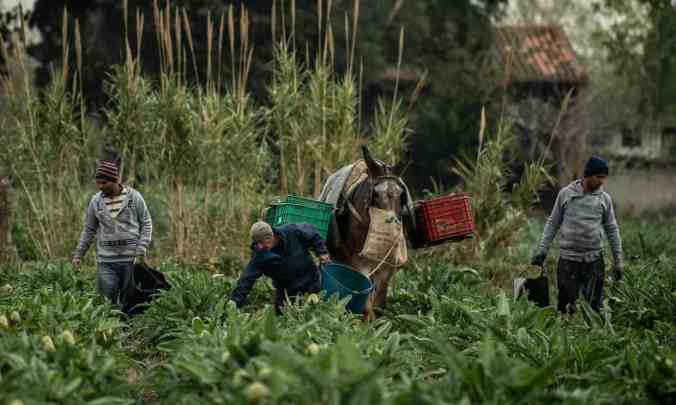
Workers on a farm at El Prat del Llobregat, near Barcelona, harvest artichokes in March. Photograph: David Ramos/Getty Images

At this time of year John Greene is usually preparing to welcome dozens of Slovakian strawberry pickers for another harvest at his farm in County Wexford in south-east Ireland.

The work is arduous and repetitive and he relies on their experience and stamina to get the fruit picked, packed and sold.

Greene surveyed his fields this week with foreboding. “I look out my window and there’s no one to pick it. None of them are on site at the moment.”

His pickers remain in Slovakia, immobilised by a continent-wide lockdown. It is a similar story for hundreds of thousands of other seasonal agricultural workers who cannot travel just at a time when Europe needs them for harvests. Continue reading

Shipworms, Pasts & Futures

merlin_166107183_88f5b417-0852-4d36-a84a-d531e035fd7b-jumbo

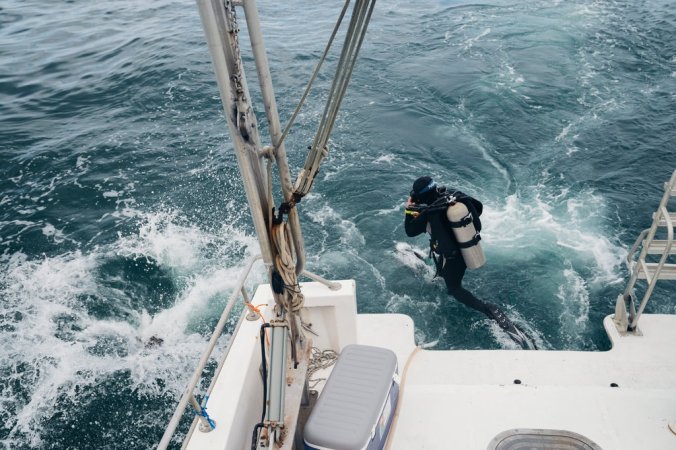
Bailey Miller, a postdoctoral researcher at the University of Utah, dived off the Research Vessel E.O. Wilson to explore an ancient underwater cypress forest in the Gulf of Mexico off of Dauphin Island, Ala.

Thanks to JoAnna Klein, who now more than ever is appreciated for the reminder of the wonders of natural history:

A Forest Submerged 60,000 Years Ago Could Save Your Life One Day

Before this underwater forest disappears, scientists recently raced to search for shipworms and other sea life that might conceal medicine of the future.

An ancient log, home to shipworms, which may help researchers discover new medicines.

An ancient log, home to shipworms, which may help researchers discover new medicines.

DAUPHIN ISLAND, Ala. — It was 6 a.m. at the dock on a Tuesday in December, and the weather did not look promising. Fog hovered over the water, and the engine of the Research Vessel E.O. Wilson rumbled.

Our ship disappeared into the mist, and by 7:30 the crew, a team of biologists, chemists and microbiologists, reached its destination. The sun lounged on obsidian water, masking a secret world where land and sea swap places, and past, present and future collide.

This is the underwater forest. Its unusual residents, shipworms and related marine organisms, could serve as incubators of unexpected medicines, churning out new lifesaving formulas and compounds that may not be found anywhere else on the planet. But first the group of scientists had to manage to dive 60 feet beneath the ocean’s surface to recover their unusual subjects, a task made more challenging by three days of uncooperative weather.

Another log recovered from the underwater forest.

Another log recovered from the underwater forest.

“Underwater forest” is not a metaphor — this is a not a coral reef or a sea grass bed that resembles surface woodlands but bona fide trees with roots and leaves. For thousands of years, this cypress grove — about two football fields long and five feet wide — lay silent, preserved within an oxygen-less tomb of sand and sediment. Then came Ivan.

In 2004, the hurricane, category 5 before making landfall, ripped through the Gulf of Mexico, with winds up to 140 miles per hour kicking up 90-foot waves. The storm scooped up nearly 10 feet of sand from the seabed, awakening the sleeping forest beneath. Continue reading

Givers, Takers & Winning

Most of us find ourselves these days in need of better negotiating tools, to navigate the big changes imposed by forces seemingly out of our control. Adam Grant has not featured enough in these pages, but here is a small step in the right direction.

In Negotiations, Givers Are Smarter Than Takers

Generosity is a sign of intelligence, and givers are the rising tide that lifts all boats.

In 2010, a Costa Rican diplomat named Christiana Figueres set out to do something that many people saw as impossible. The United Nations had appointed her to build a global agreement to fight climate change. She needed to get 195 countries on board, and one of the biggest challenges was Saudi Arabia. Their economy was dependent on oil and gas exports, so they had every incentive to keep profiting from that rather than reducing their carbon footprint. Continue reading
Photos From Wild Places

3200

A fox pounces on a mouse in the snowy hills on the border of the Czech Republic and Slovakia.
Photograph: Johnny Krüger/Mediadrumimages

1875

Thirteen rescued slow loris have been released in the Batutegi protected forest conservation area in Lampung, Sumatra, after undergoing medical care and rehabilitation at a specialist primate centre in Bogor, West Java.
Photograph: Reza Septian/International Animal Rescue

1802

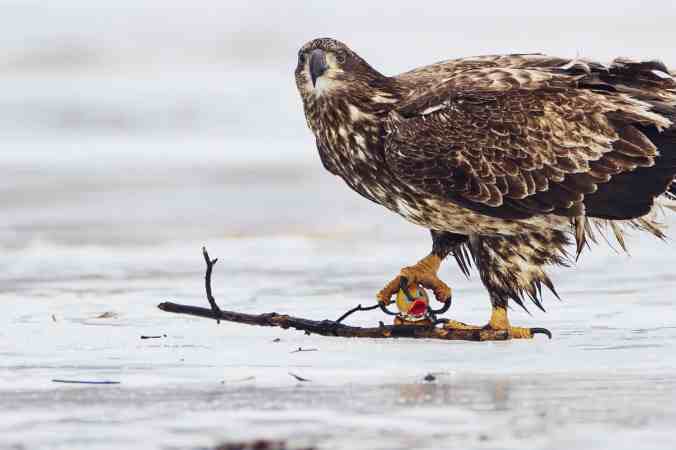
An immature bald eagle tries to hunt a plastic duck on the frozen Quidi Vidi lake in St John’s, Newfoundland, Canada. It was seen picking up and trying to take a bite out of the bath toy, before tossing it away.
Photograph: David Howells/SWNS

See the whole collection here.

Bacterium With A Purpose

7360 (3)

The bacterium is the first that is known to attack polyurethane. Photograph: imageBroker/Alamy

Thanks to the scientists who found this bacterium:

Scientists find bug that feasts on toxic plastic

Bacterium is able to break down polyurethane, which is widely used but rarely recycled

A bacterium that feeds on toxic plastic has been discovered by scientists. The bug not only breaks the plastic down but uses it as food to power the process. Continue reading

Another Victory Favoring Earth, We Hope

25CLI-DAKOTAPIPELINE1-jumbo

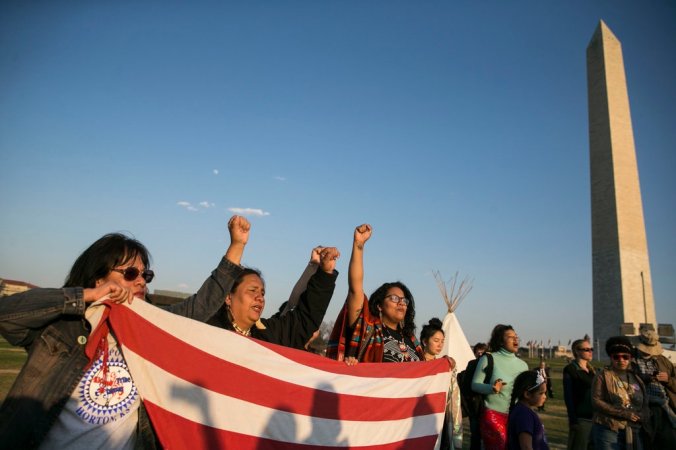
Demonstrators protested against the Dakota Access Pipeline on the National Mall in Washington in 2017.Credit…Al Drago/The New York Times

In 2017 two separate stories by Lisa Friedman were featured in the same post we titled Victory Favoring Earth, We Hope. The title fits the article she has published today, which gives a bit more hope:

Standing Rock Sioux Tribe Wins a Victory in Dakota Access Pipeline Case

WASHINGTON — In a significant victory for the Standing Rock Sioux Tribe, a federal judge on Wednesday ordered a sweeping new environmental review of the Dakota Access Pipeline.

The pipeline, which runs from North Dakota to Illinois, has been carrying oil for nearly three years and has been contested by environmental groups and Native American tribes who live near it. President Trump sought to keep the project alive.

The ruling by United States District Judge James E. Boasberg found that the pipeline’s “effects on the quality of the human environment are likely to be highly controversial” and that the federal government had not done an adequate job of studying the risks of a major spill or whether the pipeline’s leak detection system was adequate. Continue reading