Spying On Whales, For Our Sake As Well As Theirs


Brannen-Reckoning-with-the-Almost-Satanic-Prospect-of-Twentieth-Century-Whaling

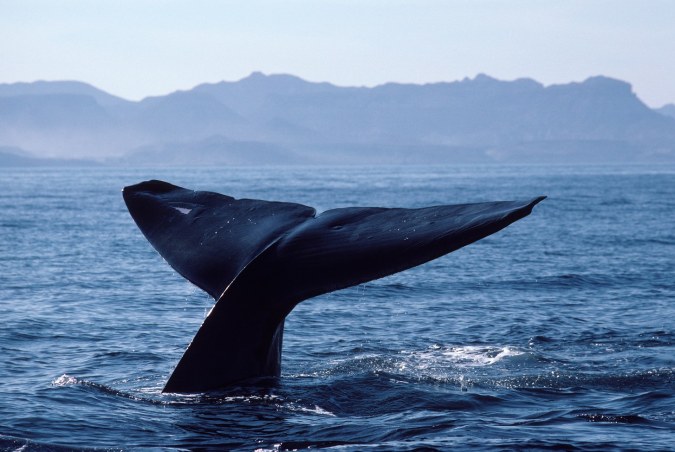
Whales are a powerful oceanographic force in their own right, one that begets even more life; many ecosystems are still straining to equilibrate from the effects of twentieth-century whaling. Photograph by Francois Gohier / VWPics / Redux

x400.jpgIt may be too late, but this is too important to pretend it does not matter. It is not too late to learn from our mistakes. Peter Brannen, a science journalist and the author of “The Ends of the World: Volcanic Apocalypses, Lethal Oceans, and Our Quest to Understand Earth’s Past Mass Extinctions” gets our thanks for this review in the New Yorker, titled We May Never Understand the Ocean-Wide Damage Done by Industrial Whaling:

A few months ago I learned that, as recently as 1972, General Motors was using sperm-whale oil in transmission fluid in its cars. I’m not sure why I was surprised to learn this. It took nearly another decade for much of the world to agree to ban commercial whaling, in 1982. (A handful of countries still ignore the ban.) But the detail about G.M. still struck me as anachronistic. The global pursuit of whales inescapably connotes the romance of nineteenth-century New Bedford and Nantucket: delicately embossed scrimshaw, Melville, oil paintings of stately twilit schooners setting out on the main. Not puke-green Chevy El Caminos. Continue reading

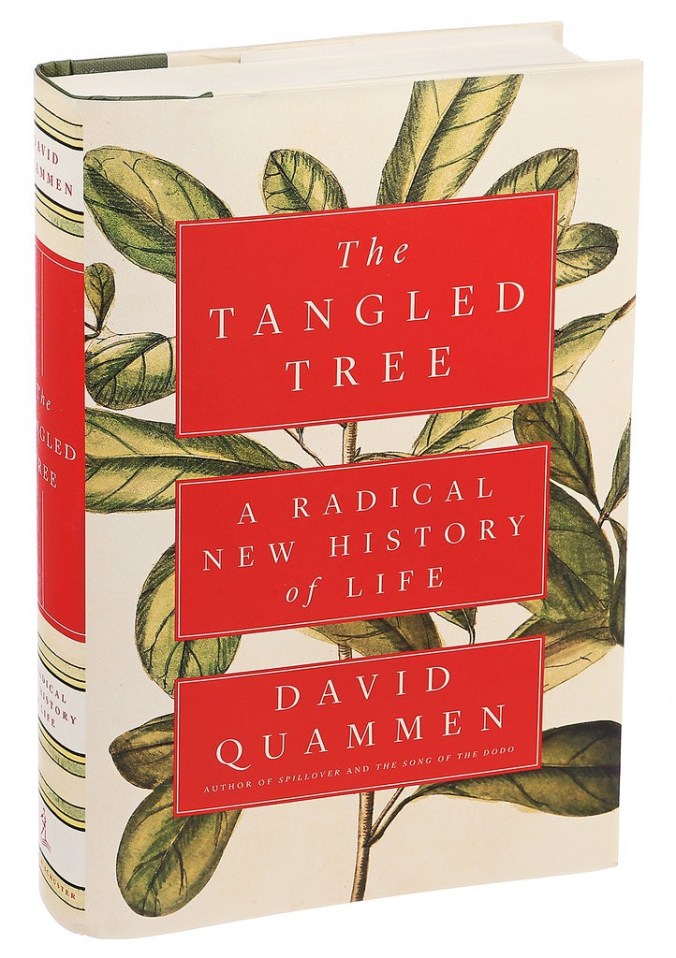
The Tangled Tree, Noodling With Lucidity & Grace

08bookquammen1-jumbo.jpg

Sonny Figueroa/The New York Times

Thanks to the New York Times for Parul Sehgal’s review of the new book by one of science writing‘s greats, reminding us that we have not featured Quammen enough:

David Quammen Turns Tough Science Into Page-Turning Pleasure

08BOOKQUAMMEN2-jumbo.jpg

David QuammenCreditLynn Donaldson

Love a writer — read him carefully and closely — and you’ll pick up on his pet words, the ones he reaches for repeatedly, like a baseball player with a trusted bat.

Nabokov famously had “mauve.” Elizabeth Hardwick had “motive.” Edward St. Aubyn has “gasp.” The statistician Ben Blatt has called these “cinnamon words” (after Ray Bradbury’s fondness for the names of spices), and they’re often hilariously telling, revealing the essence of a writer, something idiosyncratic in his perception of the world and himself. Is it any wonder that Dickens, that cash-strapped father of 10, was so crazy about “pinch” as noun, verb — even name?

For the science writer David Quammen that word is — sublimely — “noodle.” The verb pops up all over his work — and could any word suit him better? He is our greatest living chronicler of the natural world yet was never formally trained in the sciences. He started out as a novelist, a protégé of Robert Penn Warren, and stumbled into nonfiction, his boyhood passion for rooting around in forests now taking him to the canopies of the Amazon and the cliff lines of Komodo island. (The root of “amateur,” remember, is Latin for “lover.”) Continue reading

Plant-Based Diets Boost UK Chia Farming

5760 (1).jpg

Thanks to Rebecca Smithers, consumer affairs correspondent for the Guardian, for this:

First UK-grown chia seeds to go on sale this week

The popularity of plant-based diets has created huge demand for the oil-rich seeds, prompting a farm in Essex to plant a crop

1653

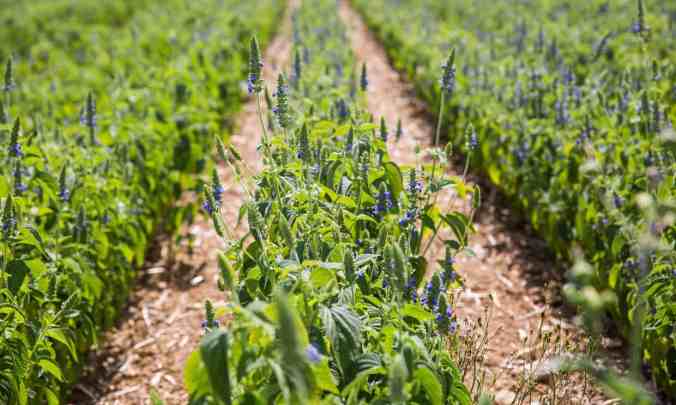
Essex grown Chia seeds by Peter Fairs for Hodmedod’s Photograph: Rebecca Noakes/Courtesy of Hodmedod’s

The first UK-grown chia seeds go on sale this week, as demand for the plant native to the Americas is fuelled by the explosion in the popularity of plant-based diets.

The company Hodmedod, pioneers of British-grown pulses, grains and seeds, has been working with farmers Peter and Andrew Fairs, of Great Tey in Essex, to bring the new British crop to market.  Continue reading

Big Cat News From India

Sundarban_Tiger_SoumyajitNandy_Wikimedia_web.jpg

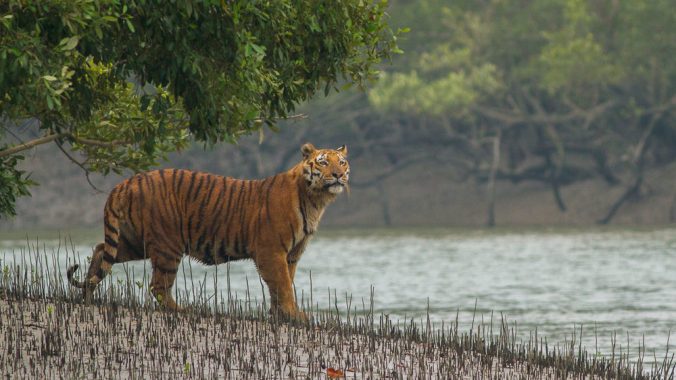
A tiger in the Sundarbans National Park, a protected tiger reserve, in the Indian state of West Bengal. SOUMYAJIT NANDY / WIKIMEDIA COMMONS

Richard Conniff, one of the science writers we most depend on for useful conservation news, shares this interview with one of our heroes from India’s big cat conservation network:

Big Cat Comeback: How India Is Restoring Its Tiger Population

Dr.-Ullas-Karanth_WCS_web.jpg

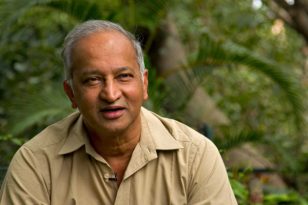
Ullas Karanth

Ullas Karanth has spent a half-century working to protect India’s endangered tigers. In an interview with Yale e360, he argues that with smart planning and the cooperation of its rural residents, the country could support five times the number of tigers it has now.

Ullas Karanth, a senior scientist with the Wildlife Conservation Society, is one of the world’s premier tiger experts and a leader in the effort to restore India’s depleted tiger populations. Raised in the South India state of Karnataka, he has spent much of his professional life studying and working to bring back tigers there, starting in Nagarahole National Park in the foothills of the Western Ghats, and then across a 10,000-square-mile region of that mountain range.

Karanth’s emphasis on scientific methods has frequently brought him into conflict with India’s forest bureaucracy, particularly over its insistence on estimating tiger populations based on footprint counts. Karanth instead pioneered the use of camera traps for population estimates based on identification of individual tigers. That method belatedly became the national standard after a 2004 scandal, when Sariska Tiger Reserve, officially estimated to have 26 tigers, turned out to have none. Continue reading

Virtual Immersion In Wilderness Via Live Feeds

Thanks to Rachel Riederer for this:

Bear Cam’s Captivating, Unedited Zen

Riederer-Bear-Cam.jpg

It’s innately satisfying to see a bear grab ahold of a salmon with its mouth and trundle off into the shallows with the fish still flapping in its jaws. Photograph by Jennifer Leigh Warner / Barcroft / Getty

One recent afternoon, I found myself spellbound by the brown bears of Alaska’s Katmai National Park, and spent longer than I care to admit watching them fishing and feasting on the sockeye salmon of Brooks Falls. Several bears stood in the water, facing the falls. They didn’t interact with each other much—at least not in a way that was legible to me—but quietly went about the business of fattening up for winter. I watched these Internet stars through a live stream popularly known as the bear cam, which provides a counterpoint to the hyper-produced prestige nature documentaries that use music, high-definition videography, and delicately placed cameras to turn wildlife activities into dramatic cinema. If “Planet Earth” is a Michael Bay production, the bear cam is not even a home movie—it’s CCTV. Continue reading

Sustainability & Land-Use Choices

e5ff336b-bd2f-4ce2-a2ba-2b4dfcc82edc-3944c6eeace218b5f8c8a63c4fa8191550f3f63c-s1400-c85.jpg

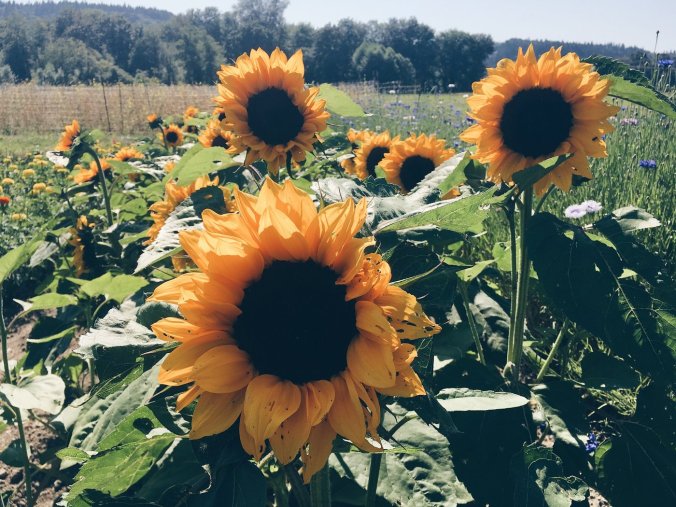
Along the back of this field of sugar snap peas, sunflowers and bachelor buttons at Oxbow Farm & Conservation Center is a buffer of maturing big-leaf maples and red-osier dogwoods. It’s a combination of forest and thicket that the farm has left standing to help protect water quality in the river and aquifer. Oxbow Farm & Conservation Center

Another day, another sunflower because, why not? But this story is about much more than the overwhelming attractiveness of sunflowers:

Which Vision Of Farming Is Better For The Planet?

OxbowFarmers face a growing dilemma. Specifically, a food-growing dilemma.

How do you feed an increasing number of people without harming the environment?

As it turns out, growing as much food as possible in a small area may be our best bet for sustainably feeding the world’s population, according to new research.

It all comes down to how we manage greenhouse gases and climate change. Continue reading

Stopping To See Sunflowers

merlin_141972309_652df777-9da1-4260-b78c-4c5e693a97cd-jumbo.jpg

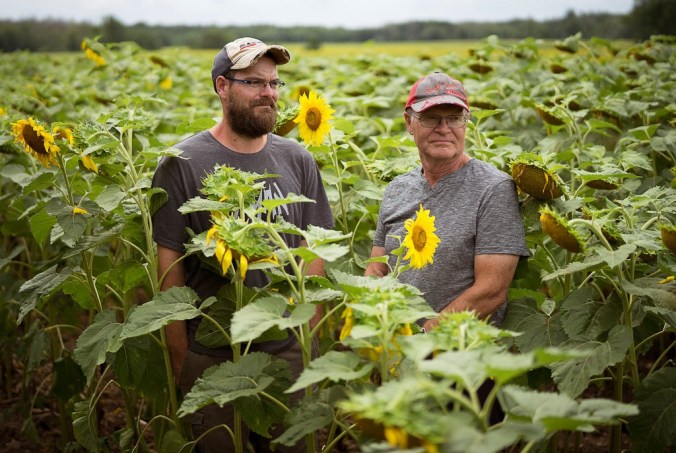
Brad Bogle, left, and his father, Barry Bogle, standing in their sunflower field in Hamilton, Ont. They were forced to close their farm to visitors last weekend after selfie-taking tourists crowded roads.Credit J.P. Moczulski

Thanks to Laura M. Holson for this, specifically for making our Saturday a bit brighter:

A Sunflower Farm Invited Tourists. It Ended Up Like a ‘Zombie Apocalypse.’

Sunflower.jpgThis is a story about a good idea gone awry.

Two weeks ago, a Canadian seed farm in Hamilton, Ontario, opened its gates to visitors, allowing them to wander through 70 bucolic acres of towering, buoyant sunflowers. Provence may have its pastoral lavender fields. But Hamilton, which is an hour outside of Toronto, has its picturesque bloom too.

“For years, we’ve had people stopping alongside the road to take pictures,” said Brad Bogle, who, along with his parents, harvests sunflower seeds for bird food on their farm, Bogle Seeds. In the summer of 2015, the Bogles invited tourists to roam through the fields. They had such a swell time — and it was such a success — the family decided to welcome guests for a visit last month.

What could go wrong? Continue reading

A Science Advisor At Long Last, Yay

ScienceAdvisor

SUE OGROCKI / AP / THE ATLANTIC

If Ed Yong is happy, then we too are happy about this. Really. Even if it has a bit of fiddling while Rome burns feel to it. Let’s hope he can talk some sense, even if it is too late, into the powers that be:

Trump Finally Picks a Science Adviser—And People Are Delighted

His nominee, Kelvin Droegemeier, is an accomplished meteorologist who studies storms and other extreme weather.

For decades, the meteorologist Kelvin Droegemeier has been immersed in the study of thunderstorms, tornadoes, and other extreme weather. Now he looks set to enter the unpredictable and stormy world of the Trump administration as its top scientific consigliere. Continue reading

Avian Adaptation in the Face of Climate Change


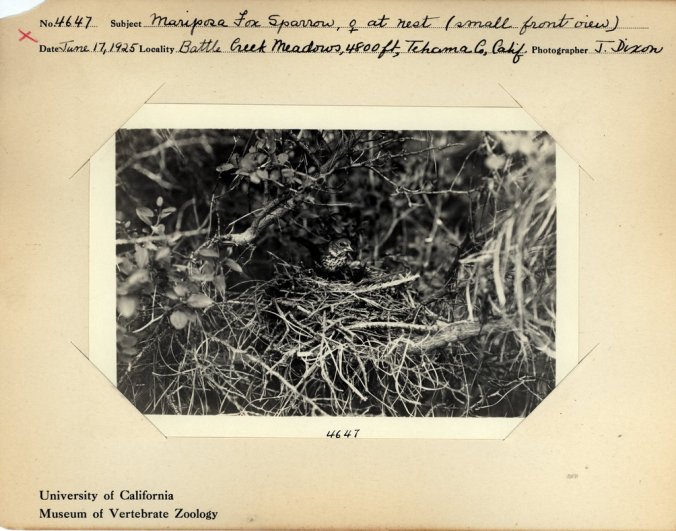
A Mariposa fox sparrow in its nest in 1925, observed during Dr. Joseph Grinnell’s surveys of California fauna. Credit Museum of Vertebrate Zoology, University of California, Berkeley

Accentuate the positive…

California’s Birds Are Testing New Survival Tactics on a Vast Scale

Retracing the steps of a century-old wildlife survey, ecologists find that birds are making remarkable adaptations to climate change.

More than a century ago, zoologist Joseph Grinnell launched a pioneering survey of animal life in California, a decades-long quest — at first by Model T or, failing that, mule — to all corners and habitats of the state, from Death Valley to the High Sierra.

Ultimately Grinnell, founding director of the Museum of Vertebrate Zoology at the University of California, Berkeley, and his colleagues produced one of the richest ecological records in the world: 74,000 pages of meticulously detailed field notes, recording the numbers, habits and habitats of all vertebrate species that the team encountered.

In 2003, museum scientists decided to retrace Grinnell’s steps throughout the state to learn what changes a century had wrought. And that’s why Morgan Tingley, then an ecology graduate student at the university, found himself trekking through the Sierra for four summers.

Dr. Tingley wanted to know how birds had fared since Grinnell last took a census. Years later, the answer turned out to be a bit of a shock. Continue reading

Read About This Place, These People, Their Food

660708410.jpg

Thanks to Blake and Jen for all their awesome work. Also thanks to Sara Ventiera (a new food and travel writer for us to follow!) and her colleagues at National Public Radio (USA) for keeping us connected to such heroics:

Meet The Restaurateurs Fighting To Save The Grand Staircase-Escalante Monument

restaurant_custom-85b7446a9674f688f4281aff18efef2ba28904ee-s1400-c85.jpg

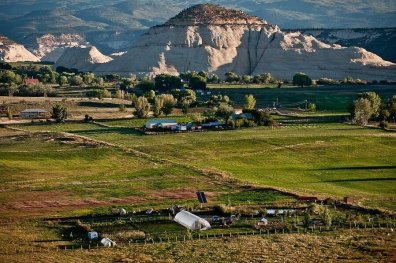
Hell’s Backbone Grill is located in Boulder, Utah, about 250 miles south of Salt Lake City. The restaurant’s owners are fighting Trump’s plans to slash the size of nearby Grand Staircase-Escalante National Monument by more than half. Ace Kvale

Standing between peach and cherry trees on her 6.5-acre Utah farm, Blake Spalding points to the Kaiparowits Plateau. The looming bluff is dotted with thousand-year-old pinyon pine and juniper trees.

“That is one of the areas they’re hoping to mine,” she tells a group of visiting chefs from Salt Lake City. “It’s full of dinosaur fossils and more than 650 documented species of wild bees.”

hells-542a80853d1900a1e76f2d1b4944854d744f9e94-s1400-c85.jpg

The remote and sustainable restaurant has become a destination for travelers seeking a taste of its terroir-driven fare. Ace Kvale

Nearly 20 years ago, Spalding and her business partner, Jen Castle, founded Hell’s Backbone Grill in Boulder, Utah, on the edge of the then-newly designated Grand Staircase-Escalante National Monument, about 250 miles south of Salt Lake City. The remote and sustainable restaurant has become a destination for culinary travelers seeking a taste of its terroir-driven fare. It’s an amalgam of Mormon pioneer, Western range cowboy and traditional Southwest flavors, like juniper lamb posole or grilled pork chops with Boulder crabapple barbecue sauce. Continue reading

Bear Witness, Do Not Take A Cruise


Cruise.jpg

“We completely regret what happened,” a spokesman for the cruise company said, adding the bear was killed in self-defense.

Hapag-Lloyd Cruises is not the worst company in the world but it sure is trying hard.  And they are in a very dirty business. The lead photo in this story by Yonette Joseph is just too depressing to share here, so the map is shown instead. That photo requires viewing as an act of witness to the cruise industry’s lack of ethics, so read on and click through:

LONDON — A polar bear was shot and killed on Saturday after it attacked and injured a guard from a cruise ship that had stopped at an Arctic archipelago, the Norwegian authorities said.

The death of the bear at the hands of another cruise ship employee drew condemnation on social media, with some calling it “abhorrent” and others questioning killing the polar bear for “acting like a wild animal.” Continue reading

When & Where & How Should Crops Be Genetically Modified?

merlin_139523913_5fd65f9c-fc91-48ef-b875-12d5d327301a-jumbo

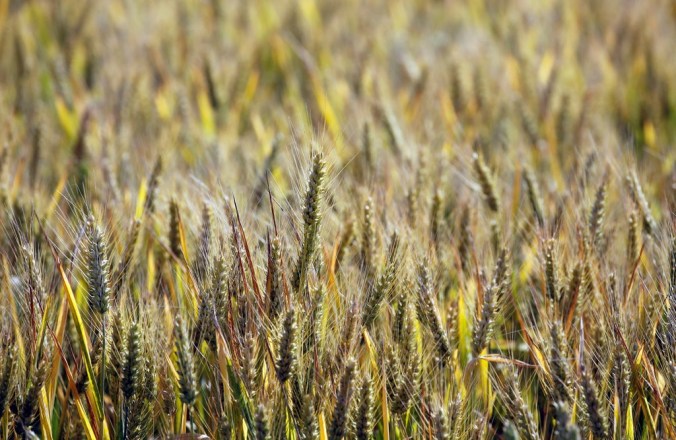
A wheat field in Mouchamps, France. There are very few genetically modified crops grown in Europe compared to the United States. Credit Regis Duvignau/Reuters

Thanks for this GMO primer by Carl Zimmer:

What Is a Genetically Modified Crop? A European Ruling Sows Confusion

In Europe, plants created with gene-editing technologies will be stringently regulated as G.M.O.’s. But older crops whose DNA has been altered will be left alone.

Mushrooms that don’t brown. Wheat that fights off disease. Tomatoes with a longer growing season.

All of these crops are made possible by a gene-editing technology called Crispr-cas9. But now its future has been clouded by the European Union’s top court.

This week, the court ruled that gene-edited crops are genetically modified organisms, and therefore must comply with the tough regulations that apply to plants made with genes from other species.

Many scientists responded to the decision with dismay, predicting that countries in the developing world would follow Europe’s lead, blocking useful gene-edited crops from reaching farms and marketplaces. The ruling may also curtail exports from the United States, which has taken a more lenient view of gene-edited foods.

“You’re not just affecting Europe, you’re affecting the world with this decision,” said Matthew Willmann, the director of the Plant Transformation Facility at Cornell University. Continue reading

Kittens Born At Alladale Wilderness Reserve

Kitten

Photographs © Innes MacNeill

Thanks to our friends at Alladale for sharing this with us yesterday. (to not disturb the kittens at this time, these photos by Innes MacNeill are from an earlier litter and further content will follow will about the new ones, so we recommend you subscribe here to their newsletter):

We have some wonderful news to share with you.

b29fcac2-a483-4917-b500-2d9b2f9167ef.jpeg

Photographs © Innes MacNeill

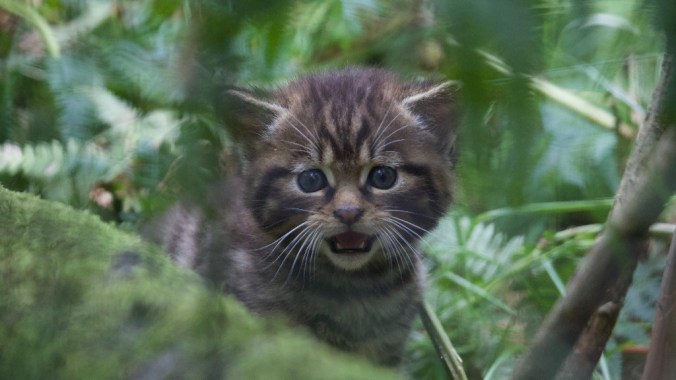
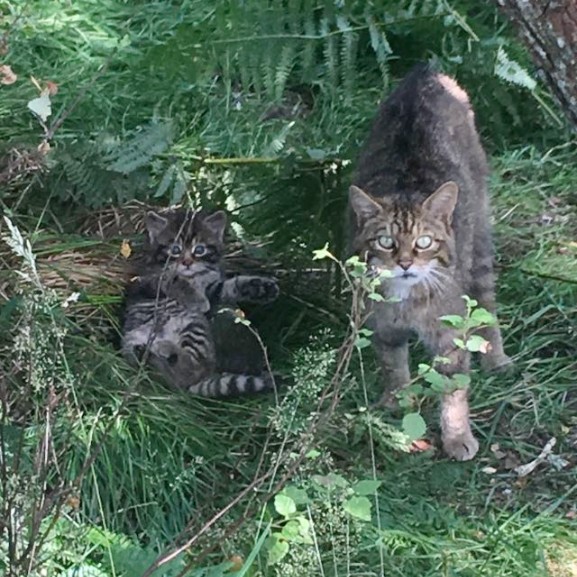
Conservation efforts for the critically endangered Scottish wildcat have had another boost as Alladale Wilderness Reserve welcomes the arrival of two kittens. These kittens, who are part of the captive breeding programme and whose parents were given the go-ahead for breeding following genetic testing by the Royal Zoological Society of Scotland (RZSS), have the potential to play a key role in the long-term conservation of this near-extinct native species.

Working together with RZSS, Scottish Wildcat Action and other wildlife conservation organisations across Scotland, Alladale Wilderness Reserve and The European Nature Trust (TENT) are supporting the development of effective, long term plans focused on wildcat recovery through reintroductions. This work follows other successful models of endangered cat conservation, like that of the Iberian lynx in Spain and Portugal whose population has been saved in recent years following numerous reintroductions. Continue reading

The Science Of Nature, Exhibited

27folkart2-jumbo.jpg

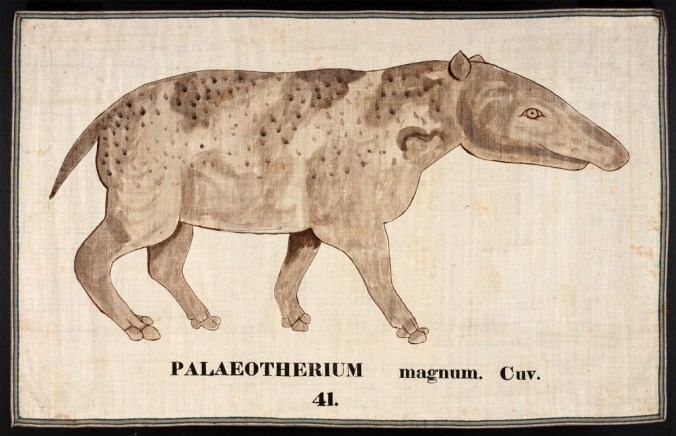
Classroom chart on linen drawn by Orra White Hitchcock, 1828–1840. Credit Amherst College Archives & Special Collections

Thanks to Jason Farago for this review of  Charting the Divine Plan: The Art of Orra White Hitchcock at the American Folk Art Museum:

Mushrooms, Magma and Love in a Time of Science

27folkart1-superJumbo.jpg

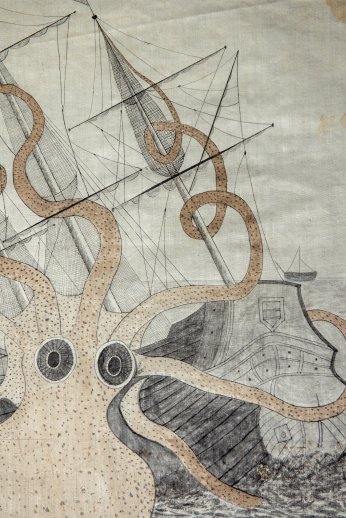
“Colossal Octopus,” 1828–1840, by Orra White Hitchcock, one of America’s first female scientific illustrators, on view at the American Folk Art Museum. Credit George Etheredge for The New York Times

Women remain grossly underrepresented at the highest echelons of American science, and continue to face absurd claims of “innate” inferiority, whether from former Harvard presidents or senior engineers at Google. But until the mid-19th century — when the sciences became professionalized, and when Charles Darwin and others put Christian doctrine under pressure — a woman’s place was in the laboratory, or among the geology and zoology specimens.

Back then the humanities (classics and philosophy, especially) were understood as masculine academic pursuits. It was the more genteel disciplines of natural science, astronomy, chemistry, botany and anatomy, to which women of a certain class gravitated.

merlin_141627540_d42f254c-e955-4d3d-9751-733e1d3723eb-superJumbo.jpg

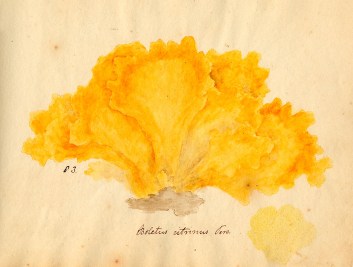
Orra White Hitchcock’s “Fungi Selecti Picti, Vicinity of Conway, Massachusetts” (1821), watercolor, pencil, pen and ink, and ink wash on paper in sewn album. Credit Smith College Special Collections

Orra White Hitchcock (1796-1863) was one of the most remarkable women from this more egalitarian age of scientific study. She had a deep knowledge of botany, zoology and paleontology, and she was also an artist — though that “also” would have seemed unnecessary to her. She produced two albums of botanical illustrations, and later, as introductory materials for her husband’s classes, she diagramed volcanoes, sketched the skeletons of extinct fish and mammals, and drew undulant squids and octopuses on large cotton sheets.

They’re all united at the American Folk Art Museum in “Charting the Divine Plan: The Art of Orra White Hitchcock,” a handsome and unexpectedly passionate exhibition on art, science and education in the early American republic. More than 100 watercolors and classroom charts are here, from painstakingly accurate paintings of reeds and mushrooms to boldly colored abstractions of the earth’s crust and core, and they share space with a splendid array of diaries and correspondence, redolent with the Hitchcocks’ intertwined loves for science, God and each other. Continue reading

I’d Like To Spend Some Time In Mozambique

merlin_140018319_94bfdc4a-189d-4677-b377-eb8b81f1a037-jumbo.jpg

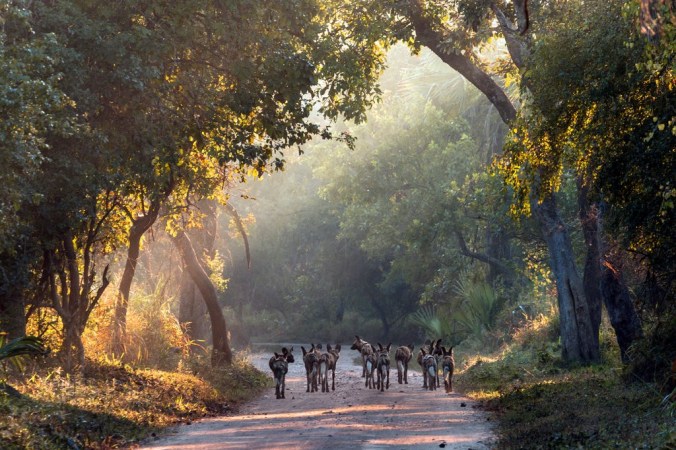
Wild dogs, apex predators missing from Gorongosa National Park for decades, have been reintroduced and are slowly making a comeback, part of an ongoing experiment in reviving the park ecosystem after years of devastating war. Credit Brett Kuxhausen/Gorongosa Media, via Associated Press

Thanks to one of our favorite science writers, the ever-optimistic Natalie Angier, for this note of hope:

In Mozambique, a Living Laboratory for Nature’s Renewal

At Gorongosa National Park, scarred by civil war, scientists are answering fundamental questions about ecology and evolution, and how wildlife recovers from devastation.

merlin_141449499_47b588fd-25e2-4c3c-81b1-1071419e6d19-jumbo.jpg

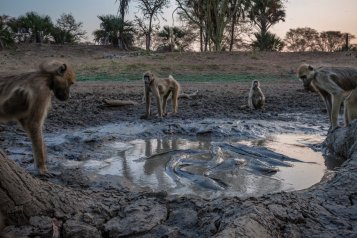
Baboons and sharptooth catfish in the Mussicadzi River in the park during the dry season. The baboons in Gorongosa are brazen and plentiful, as there aren’t many leopards to keep them in check. Credit Piotr Naskrecki & Jen Guyton/NPL/Minden Pictures

GORONGOSA NATIONAL PARK, MOZAMBIQUE — The 14 African wild dogs were ravenous, dashing back and forth along the fence of their open-air enclosure, or boma, bouncing madly on their pogo-stick legs, tweet-yipping their distinctive wild-dog calls, and wagging their bushy, white-tipped tails like contestants on a game show desperate to be seen.

Since arriving at the park three months earlier, as they acclimated to their new setting and forged the sort of immiscible bonds that make Lycaon pictus one of the most social mammals in the world, the dogs had grown accustomed to a daily delivery of a freshly killed antelope to feast on. Continue reading

Don’t Take The Bait

10661.jpg

Is the evidence for fish-eating better than simply taking a fish oil pill? Composite: Getty

Paul Greenberg, author of The Omega Principle: Seafood and the Quest for a Long Life and a Healthier Planet (Penguin Press), is making the rounds with an important argument; get the short version here in the Guardian:

Fool’s gold: what fish oil is doing to our health and the planet

Omega-3 is one of our favourite supplements – but a huge new study has found it has little or no benefit for heart health or strokes. How did it become a $30bn business?

9781594206344.jpgThe omega-3 industry is in a twist. Again. Last week, Cochrane, an organisation that compiles and evaluates medical research for the general public, released a meta-analysis – a study of studies – to determine whether or not omega-3 pills, one of the world’s most popular dietary supplements, reduced the risk of coronary heart disease. After comparing 79 trials involving 112,059 people, the researchers could find “little or no difference to risk of cardiovascular events, coronary heart deaths, coronary heart disease events, stroke or heart irregularities”.

I can’t say that I was particularly surprised. Over the past 15 years, more than 20 studies have shown a similar lack of effect. But what does surprise me is how we continue to look at the world of fish and seafood through the amber lens of a fish oil capsule. Omega-3s do something in our bodies – and probably something important. But without the larger context of the marine organisms that contain them, omega-3s get lost in the noise of human metabolism and modern marketing.

Continue reading

Vegetarianism For Footprint Reduction

3000 (2).jpg

Replacing 50% of meat consumption with a vegetarian diet would push back the overshoot date by five days. Photograph: Scott Olson/Getty

Our vegetarian diet ambitions are strengthening for all kinds of reasons. Footprint reduction among them. Thanks to our colleague Mathis Wackernagel for his regular reminders of the anything but regular footprint growth humanity imposes on the planet each year:

Earth’s resources consumed in ever greater destructive volumes

Study says the date by which we consume a year’s worth of resources is arriving faster

Humanity is devouring our planet’s resources in increasingly destructive volumes, according to a new study that reveals we have consumed a year’s worth of carbon, food, water, fibre, land and timber in a record 212 days.

As a result, the Earth Overshoot Day – which marks the point at which consumption exceeds the capacity of nature to regenerate – has moved forward two days to 1 August, the earliest date ever recorded.

Earth Overshoot Day falls on 1 August this year – marking the point at which consumption exceeds the capacity of nature to regenerate

OverShot.jpg

Guardian graphic. Source: Overshootday.org

To maintain our current appetite for resources, we would need the equivalent of 1.7 Earths, according to Global Footprint Network, an international research organisation that makes an annual assessment of how far humankind is falling into ecological debt. Continue reading

Peacock Spiders!

Spider1.jpg

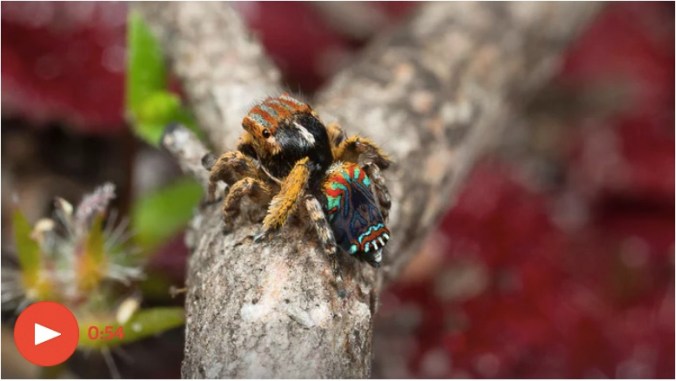
New peacock spider species filmed in Western Australia – video

Thanks to the Guardian for this reminder that nature is generous, bestowing vibrant colors in the most unexpected places:

Biologist Jürgen Otto and colleagues have named two species of the extraordinarily colourful dancing spiders

Spider2.jpgIt is only a few millimetres in size, performs a dance as part of a courtship ritual and has striking coloured markings on its back that “look like a pharaoh’s headdress”.

But when biologist Jürgen Otto first spotted the peacock spider species he has named Maratus unicup, he didn’t immediately recognise how special it was.

Latinovegan

gettyimages-932406182-db3ad2e5b465008ac099992638ce546d7e2c4c6a-s1400-c85.jpg

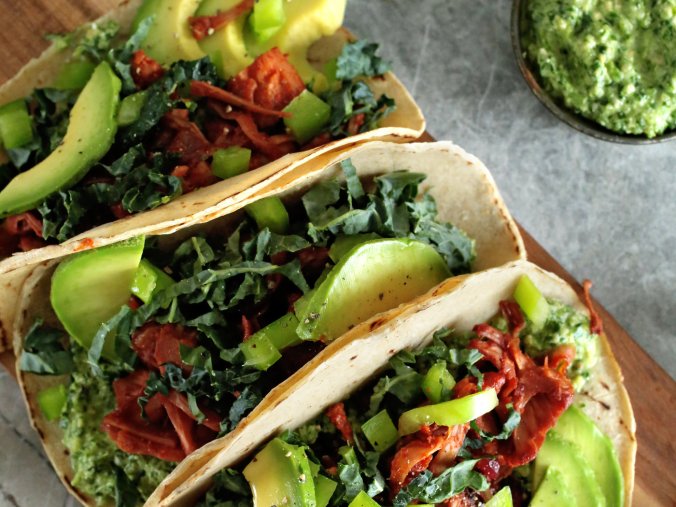
Pesto and pulled jackfruit tacos. In Southern California, working-class Mexican-American chefs are giving traditionally meaty dishes a vegan spin. Evi Oravecz/Green Evi/Picture Press/Getty Images

We are happy to see another story posted by Gustavo Arellano in the salt files at National Public Radio (USA):

Carne Asada, Hold The Meat: Why Latinos Are Embracing Vegan-Mexican Cuisine

vegana_mexicana_family-7ecccab3787805dac706d2b4e23d2b64e8c97b73-s1400-c85.jpg

Loreta Ruiz (center) runs La Vegana Mexicana, a food pop-up based in Southern California, with her children, Loreta Sierra (left) and Luis Sierra. Gustavo Arellano/for NPR

Tall, dreadlocked Josh Scheper knew he was out of place as he surveyed the scene at a Santa Ana, Calif., parking lot on a Sunday morning this past April. And the 46-year-old loved it.

Hundreds of people waited in line at stalls for vegan food, but few people looked like the Los Angeles resident. Nearly everyone in the crowd was young and Latino, as were the chefs. The food on sale was Mexican — but not hippie-dippy cafe standbys like cauliflower tacos, or tempeh-stuffed burritos. Instead, chefs reimagined meaty classics that were honest-to-goodness bueno. Continue reading

Join The Butterfly Count

3500 (6).jpg

Sir David Attenborough launching the Big Butterfly Count in July 2017. Photograph: Butterfly Conservation/PA

Thanks to the Guardian for bringing this to our attention:

Sir David Attenborough urges British public to join butterfly count

Veteran broadcaster encourages people to take part in Big Butterfly Count and highlights mental health benefits of wildlife

Watching nature provides “precious breathing space” from the stress of modern life, Sir David Attenborough has said, as he urges people to take part in the world’s biggest butterfly count.

While the UK’s butterflies are basking in the best summer conditions in more than a decade, if the hot weather becomes a drought it could be catastrophic for the insects as plants wither and caterpillars starve.

The public are being encouraged to take part in the Big Butterfly Count over the next three weeks to help experts see how butterflies are faring and to enjoy the mental health benefits of watching wildlife. Continue reading