Petrostate Is A Choice

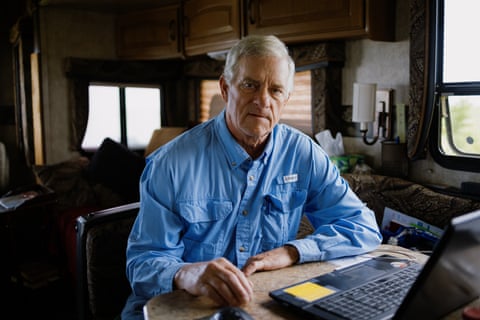
A middle-aged man in a blue button-up shirt sits in front of a laptop.

John Allaire, a former oil industry worker, has turned his efforts to blocking LNG plants from being built directly next to his camper home in Cameron parish.

Some states are moving forward with new technologies leading to a cleaner energy future. We respect John Allaire’s work to protect his state from leaning in to dirty energy, reminding us of the choice we all have to just watch others make decisions affecting where you live, or to do something:

‘This used to be a beautiful place’: how the US became the world’s biggest fossil fuel state

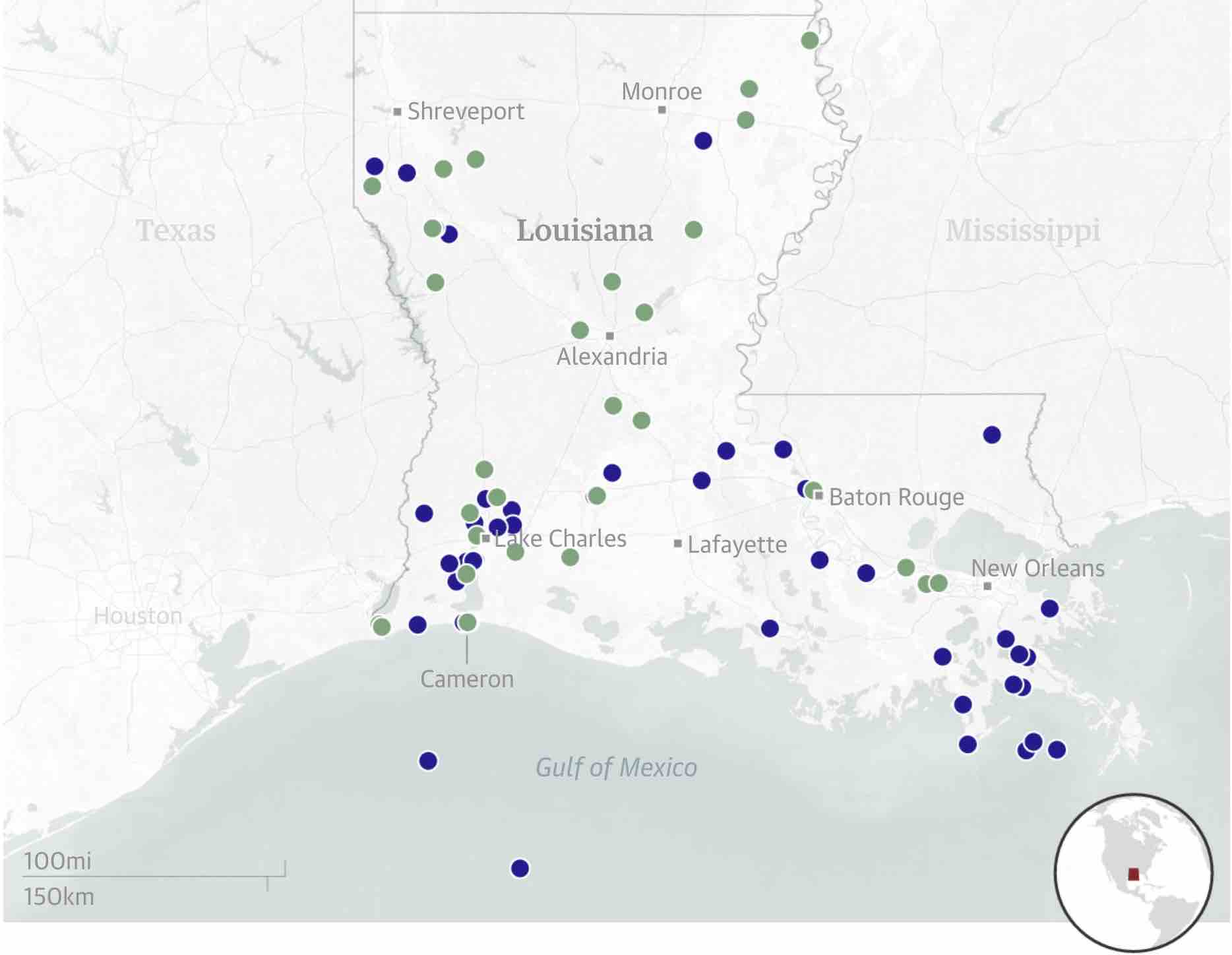
Guardian graphic. Sources: Oil & Gas Watch. Note: Map includes oil, gas and liquified natural gas projects. Those classified as ‘Announced / underway’ also include projects with statuses of ‘Under construction’, ‘Pre-construction’, ‘Commissioning’ and ‘On hold’.

No country has ever in history produced as much oil and gas as the US does now and Louisiana is ground zero

To witness how the United States has become the world’s unchallenged oil and gas behemoth is to contemplate the scene from John Allaire’s home, situated on a small spit of coastal land on the fraying, pancake-flat western flank of Louisiana.

Allaire’s looming neighbor, barely a mile east across a ship channel that has been pushed into the Gulf of Mexico, is a hulking liquified natural gas (or LNG) plant, served by leviathan ships shuttling its chilled cargo overseas. Continue reading
Fungi & Brownfield Remediation

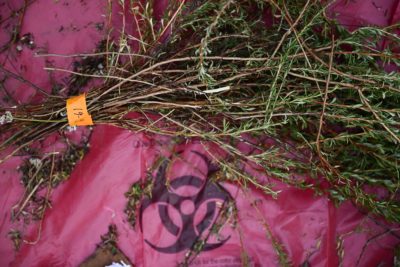
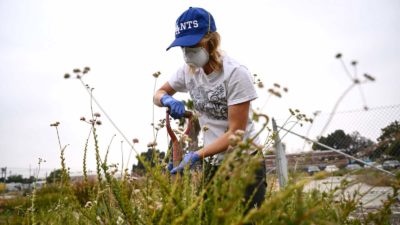
Researcher Danielle Stevenson digs up California buckwheat grown at a brownfield site in Los Angeles.

Researcher Danielle Stevenson digs up California buckwheat grown at a brownfield site in Los Angeles. PATRICK T. FALLON / AFP VIA GETTY IMAGES

Corporate irresponsibility abounds, so brownfield sites are abundant. And fungi sometimes offer relevant remediation options. Thanks to Richard Schiffman and Yale e360 for this interview on a topic we have cared about since launching this platform, and which we believe will be of increasing importance in our future:

Turning Brownfields to Blooming Meadows, With the Help of Fungi

California buckwheat that has absorbed lead at a contaminated site in Los Angeles.

California buckwheat that has absorbed lead at a contaminated site in Los Angeles. PATRICK T. FALLON / AFP VIA GETTY IMAGES

Toxicologist Danielle Stevenson cleans up carbon-based pollutants and heavy metals from contaminated sites using fungi and plants. She’s also training environmental justice and tribal communities in using these methods so they can remediate toxic sites on their own.

The United States is dotted with up to a million brownfields — industrial and commercial properties polluted with hazardous substances. Continue reading

Energy Observer In New York

Illustration by João Fazenda

Our thanks to Adam Iscoe, writing in the New Yorker, for this:

An Around-the-World Eco-Voyage Makes a Pit Stop Near Wall Street

Energy Observer, a ship equipped with solar panels and a hydrogen fuel cell, has spent the past seven years circumnavigating the globe, powered by sun, water, and salads.

One phrase that describes New York’s waterways is “diesel-powered”: supersized container ships, megayachts, oil tankers, garbage barges. But not every ship that comes to town is on a Greenpeace watch list; there are also schooners, plus the odd outrigger canoe. And recently a hundred-foot-long former racing catamaran from France, which had been retrofitted with solar panels and a hydrogen fuel cell, docked near Wall Street. Continue reading
Just Stop Oil & Alternative Approaches

A photo of two protesters sitting in front of Stonehenge, which has orange spray paint on it

Just Stop Oil via AP

On this platform dedicated to environmental and conservation topics, purposeful stone alteration has appeared in our pages exactly once before. Environmental vandalism, likewise. I appreciate this essay by Tyler Austin Harper, an assistant professor of environmental studies at Bates College and a contributing writer at The Atlantic, about a recent act of environmental vandalism:

Maybe Don’t Spray-Paint Stonehenge

Climate protests should be pro-humanity.

They run toward Stonehenge in white shirts. just stop oil is emblazoned on the front, marking them as emissaries of a British climate-activism group. The pair—one of them young, the other older—carry twin orange canisters that emit a cloud of what looks like colored smoke (we later learn it’s dyed corn flour). Continue reading
Culling Questions

Because invasive species are among the main drivers of extinction today, conservationists have made efforts to cull mice in favor of albatrosses, rats in favor of puffins, and pythons in favor of bobcats. Illustration by Javier Jaén; Source photographs from Getty

Invasive species have received plenty of attention in our pages in the years since we first shared on this topic. Creative approaches to solving the problem abound. Elizabeth Kolbert reviews two books that take up the moral implications:

Cull of the Wild coverShould We Kill Some Wild Creatures to Protect Others?

Where humans have tilted the game in favor of one species, some believe we should cull predators to save their prey. Others think it’s a mistake to pick sides.

The northern spotted owl is about a foot and a half high, with very dark eyes, a greenish beak, and a rim of feathers, called a facial disk, that makes it appear to be regarding the world with worried perplexity. Like most owls, northern spotteds are nocturnal, but, unlike most of their brethren, they are picky. They can live only in old-growth forests in the Pacific Northwest. Their diet is restricted and seems to consist mainly of flying squirrels. They’re incapable of building nests of their own, and so, to raise their young, they rely on tree cavities or on basketlike growths that are produced by arboreal infections and known, evocatively, as witches’ brooms.

Hedgehogs, Killing, and Kindness: The Contradictions of Care in Conservation PracticeThe spotted owl’s fastidiousness produced one of the great environmental conflicts of the twentieth century. By the late nineteen-eighties, it was estimated that only fifteen hundred breeding pairs survived. Since the owls depended on old growth, the only way to save them, according to biologists, was to preserve the Northwest’s remaining stands of ancient trees. The timber industry countered that leaving those trees untouched would cost thousands of jobs. The two sides adopted increasingly confrontational tactics. Continue reading
More Youth Demanding Liveable Futures

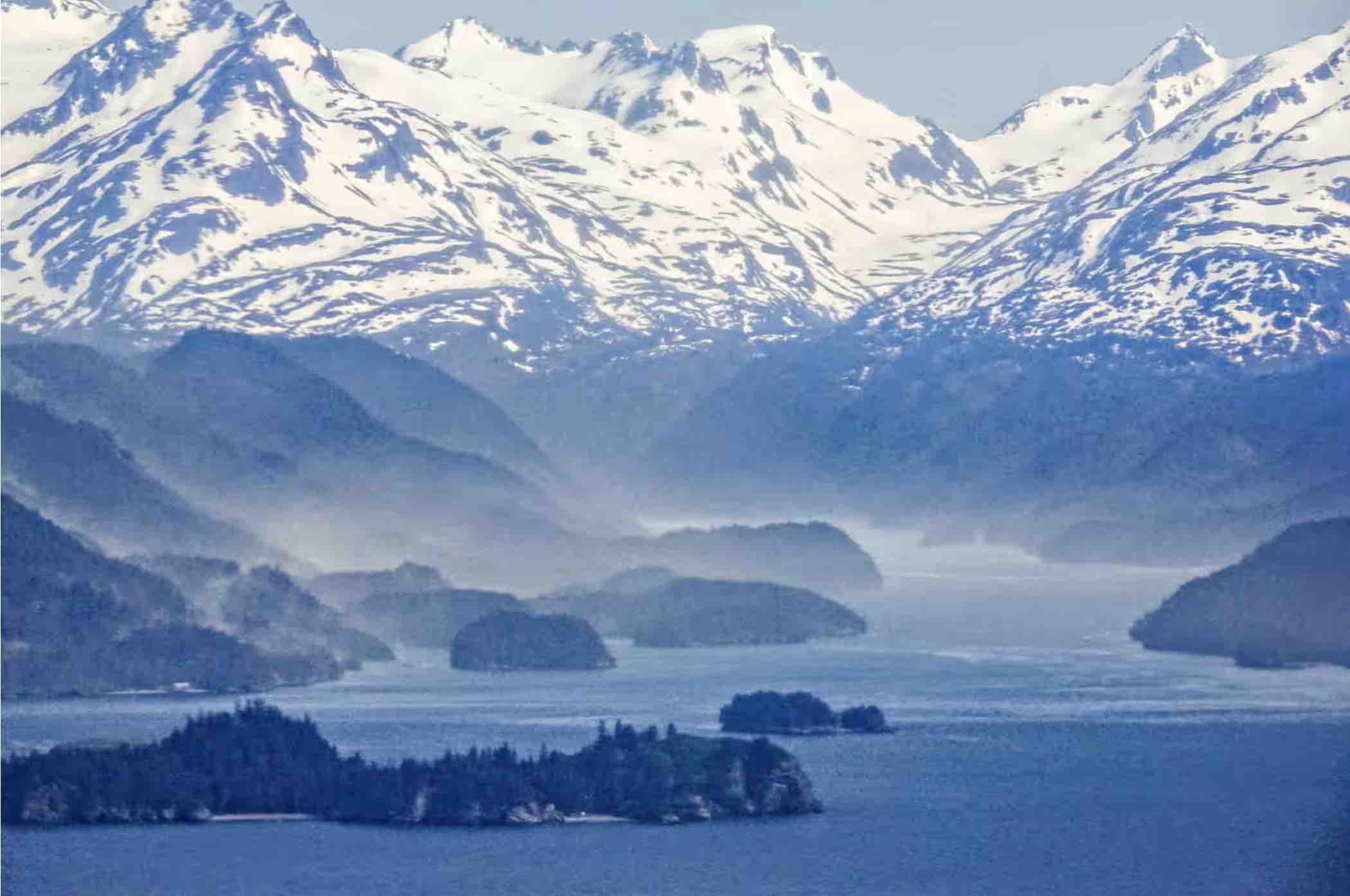
portion of the Kenai Peninsula in Alaska in 2023. The project would involve construction of a liquefaction plant to prepare the gas for export to Asia. Photograph: Richard Ellis/Alamy

Our appreciation to Dharna Noor for writing a clear story about this new legal initiative, and to the Guardian for publishing it. What started in Montana, a naturally well-endowed state with a mixed environmental record, now continues in Alaska, the biggest frontier of the American West. Our thanks to the younger generation for taking up the fight creatively:

Young Alaskans sue state over fossil fuel project they claim violates their rights

Plaintiffs claim $38.7bn gas export project, which would triple state’s greenhouse gas emissions, infringes constitutional rights

Eight young people are suing the government of Alaska – the nation’s fastest-warming state – claiming a major new fossil fuel project violates their state constitutional rights. Continue reading

Making Good Trouble In India

Another of this year’s trouble-making prize-winners:

Meet Alok Shukla

Alok Shukla led a successful community campaign that saved 445,000 acres of biodiversity-rich forests from 21 planned coal mines in the central Indian state of Chhattisgarh. In July 2022, the government canceled the 21 proposed coal mines in Hasdeo Aranya, whose pristine forests—popularly known as the lungs of Chhattisgarh—are one of the largest intact forest areas in India. Continue reading

Vermont Vote Victory

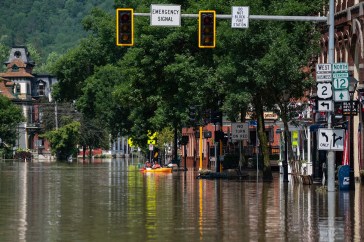
Flooding in downtown Montpelier, Vermont, in July, 2023.Photograph by John Tully / Washington Post / Getty

When you read to the end of this short commentary, you will wonder whether this is a victory at all, but when Elizabeth Kolbert says it is, it probably is. It just requires more pondering to understand how it is:

Vermont Moves to Hold Fossil-Fuel Companies Liable for Climate-Change Damage

A new constituency is willing to stand up to Big Oil (and Gas and Coal): state government.

On July 10, 2023, Vermont’s state capital, Montpelier, was hit with more than five inches of rain. Continue reading

Genetically Modified Rice

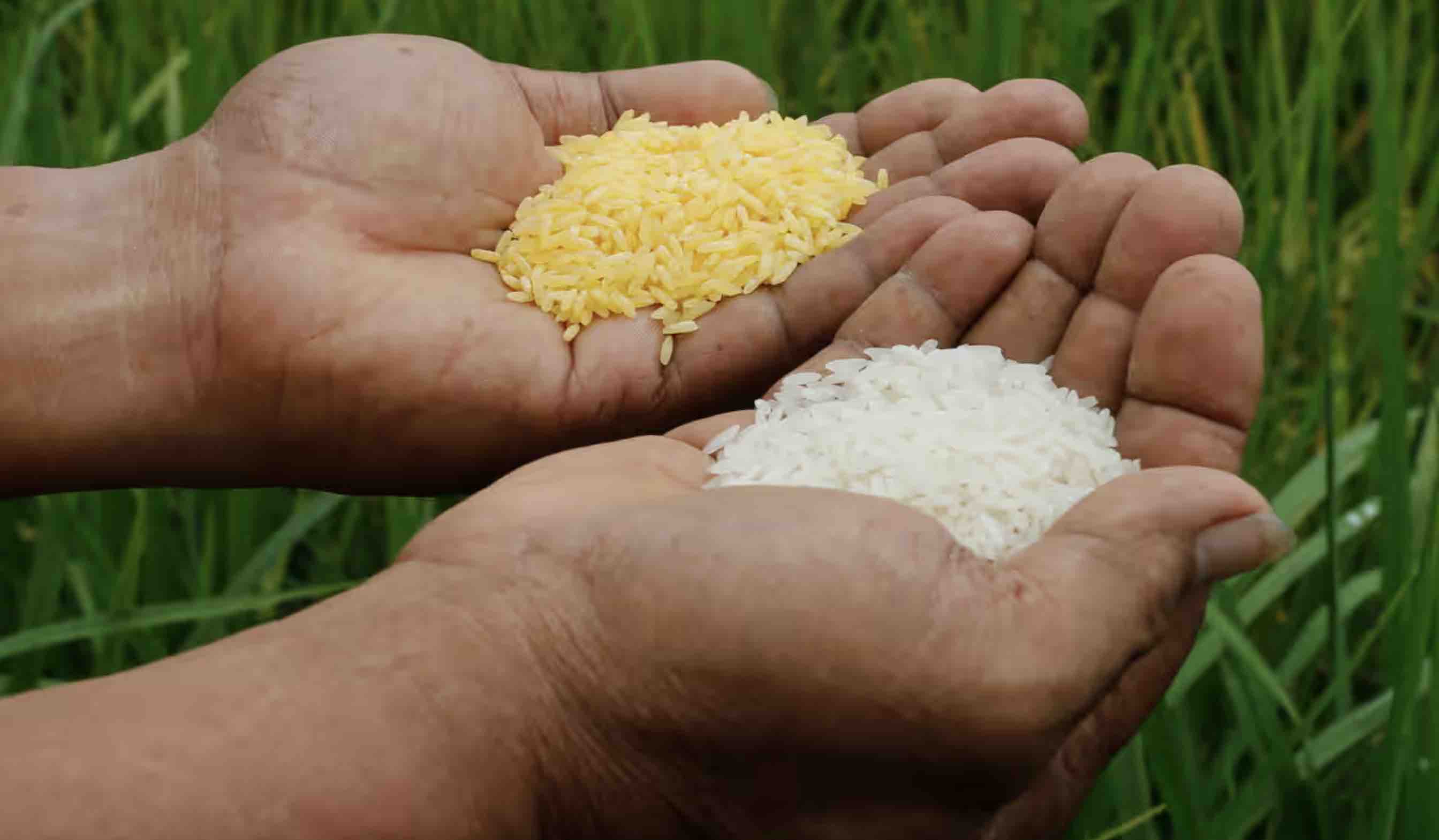
A scientists compares vitamin-A enriched Golden Rice and ordinary rice in Manila, the Philippines. Photograph: Erik de Castro/Reuters

Our thanks to Robin McKie, the Guardian’s science editor, for this news:

Thousands of children could die after court backs campaign group over GM crop in Philippines, scientists warn

Scientists have warned that a court decision to block the growing of the genetically modified (GM) crop Golden Rice in the Philippines could have catastrophic consequences. Tens of thousands of children could die in the wake of the ruling, they argue. Continue reading

Andrea Vidaurre, Making Good Trouble in California

Take five minutes to celebrate Andrea’s activism and its accomplishments:

2024 GOLDMAN PRIZE WINNER

Andrea Vidaurre

Andrea Vidaurre’s grassroots leadership persuaded the California Air Resources Board to adopt, in the spring of 2023, two historic transportation regulations that significantly limit trucking and rail emissions. The new regulations—the In-Use Locomotive Rule and the California Advanced Clean Fleets Rule—include the nation’s first emission rule for trains and a path to 100% zero emissions for freight truck sales by 2036. The groundbreaking regulations—a product of Andrea’s policy work and community organizing—will substantially improve air quality for millions of Californians while accelerating the country’s transition to zero-emission vehicles.

Marshes Matter, And This One More Than Many

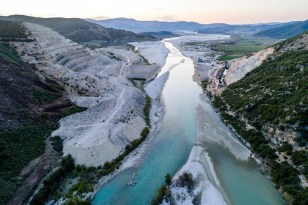
The outer edge of the Nartë lagoon in Vlorë, Albania. YURIY BRYKAYLO / ALAMY STOCK PHOTO

I have worked in some of Albania’s most important coastal and inland bird habitats, though not this one. My time working there is not my only reason for caring about this particular location. Read on–thanks as always to Fred Pearce–to understand why it matters so much. No offense intended to Jared Kushner, but this is not one of his better ideas. The destruction is not worth whatever it is he is hoping to accomplish:

Jared Kushner Has Big Plans for Delta of Europe’s Last Wild River

Albania’s Vjosë River is known as Europe’s last wild river, and its pristine delta is a haven for migratory birds. As plans for luxury developments there — spearheaded by Donald Trump’s son-in-law Jared Kushner — move ahead, conservationists are sounding the alarm.

It is the jewel of the Adriatic. Its shimmering waters feed a rare colony of Dalmatian pelicans, the world’s largest freshwater birds, sustain the endangered Albanian water frog, and host loggerhead turtles on its encircling dunes. Continue reading

Illegal Miners Face The Fire

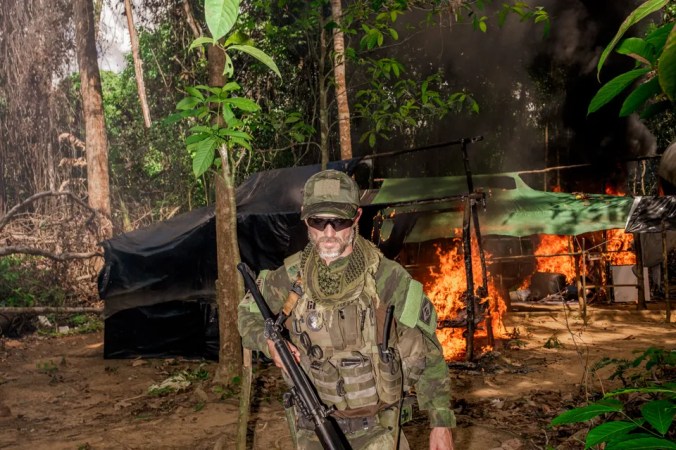
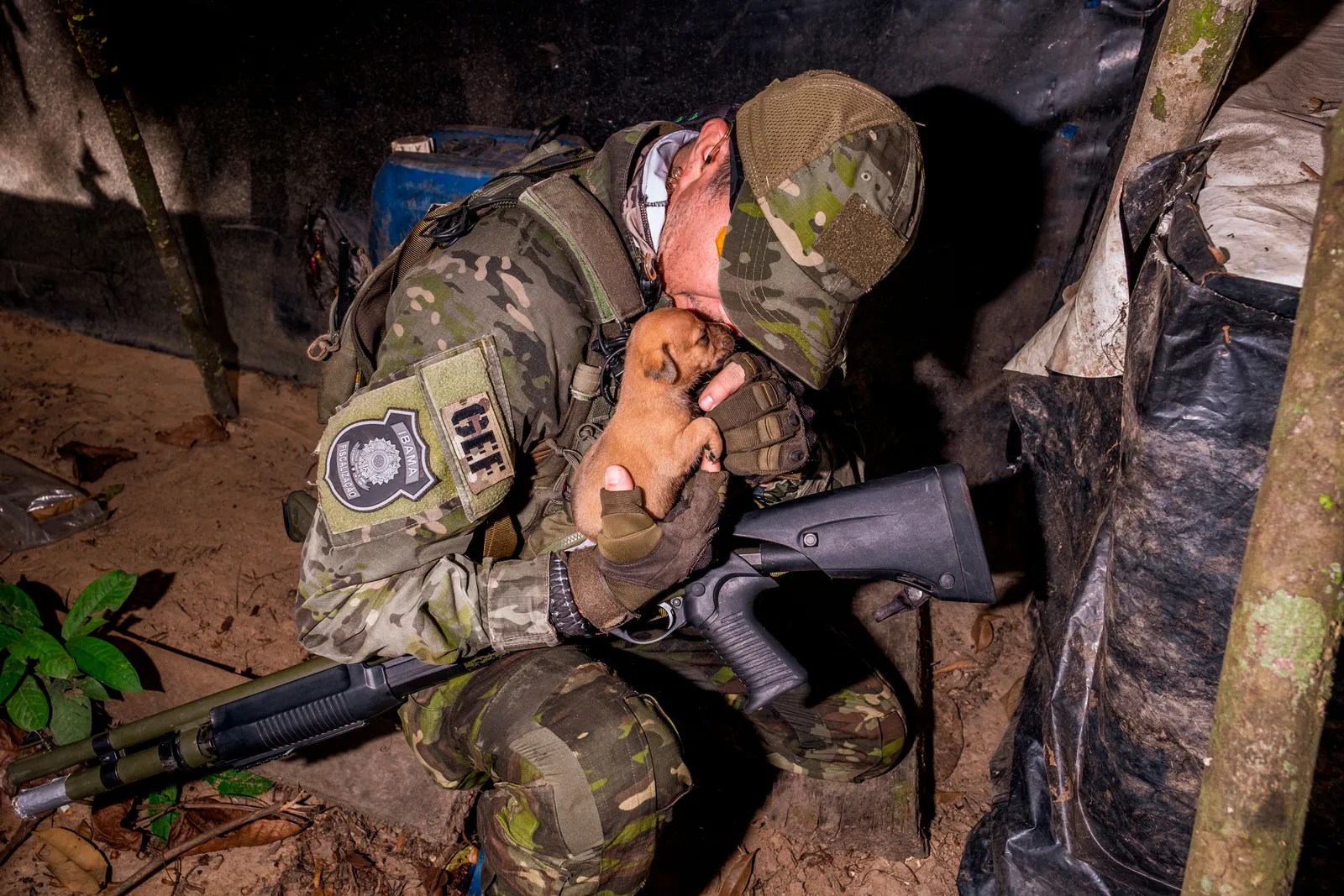
The G.E.F. burns mining camps as part of a long-running counteroffensive against environmental depredation. “Wherever they go, the miners destroy everything,” Felipe Finger, the unit’s leader, says. Photographs by Tommaso Protti for The New Yorker

Thanks to Jon Lee Anderson, as always, for his reporting from the danger zone that Brazil’s Amazon forest too often is:

The Brazilian Special-Forces Unit Fighting to Save the Amazon

As miners ravage Yanomami lands, combat-trained environmentalists work to root them out.

Roberto Cabral, a founder of the G.E.F., attends to a puppy discovered in a camp after miners fled.

In a clearing in the Brazilian Amazon, I stood with a group of armed men, discussing a viral TikTok video. The video, shot from a helicopter full of illegal miners, showed a vast stretch of rain forest, with dense foliage extending in all directions. The only sign of human habitation was below: a dirt circle surrounded by fanlike lean-tos made of wooden poles and palm fronds. It was a maloca, a traditional compound of the Yanomami, an Indigenous group that inhabits a remote territory in the rain forest of northern Brazil. Continue reading

Responding To A Red Alert

Another reason to subscribe to Bill McKibben’s newsletter:

How Not to Act in an Emergency

Forget AI–we need some human intelligence

We’re getting right to the nub now.

Yesterday the World Meteorological Organization officially certified 2023 as the hottest year in human history. Just to put on the record here what should have been the lead story in every journal and website on our home planet:

Andrea Celeste Saulo, secretary general of the WMO, said the organisation was now “sounding the red alert to the world”.

The report found temperatures near the surface of the earth were 1.45C higher last year than they were in the late 1800s, when people began to destroy nature at an industrial scale and burn large amounts of coal, oil and gas.

Last year’s spike was so scary that NASA’s Gavin Schmidt—Jim Hansen’s heir as keeper of NASA’s climate record—wrote in Nature this week that it raised the most profound possible implications. Please read his words slowly and carefully: Continue reading

McKibben On Responsibility & Accountability

Vermont’s capitol city, underwater in epic July flooding that wrecked most of Montpelier’s retail district

Holding the responsible accountable is part of Bill McKibben’s objective; he also provides sunshine. Subscribe to this newsletter if you can:

You flood it, you pay for it.

States are considering ‘climate superfund’ laws to hold Big Oil accountable

One prong of the climate fight involves installing so much renewable energy that fossil fuel use actually declines dramatically—a few places are finally showing that’s possible, like sunny Germany which last week said emissions in 2023 dropped more than ten percent. Continue reading

First Nations’ Food Sovereignty

Delphine Lee

Thanks to Mother Jones for this:

Tribal Nations Are Taking Back Their Food Systems

A new farm bill program aims to undo centuries of federal mismanagement.

The farm bill is one of the most important but least understood pieces of US legislation, and it’s overdue for renewal. Continue reading

Arizona Youth Climate Coalition

(Photo credit: kevin dooley / CC BY 2.0)

Thanks to Yale Climate Connections for this:

High schoolers helped develop Tuscon’s climate action plan

They may not be able to vote yet, but they’re already having an influence.

In the past few years, young people have made headlines with their fight against climate change. Continue reading

Pause On Terminals for LNG Export

Activists protest against fossil fuels and in particular fracking and liquefied natural gas, or LNG, on day eight of the UNFCCC COP28 Climate Conference at Expo City Dubai on December 8, 2023, in Dubai, United Arab Emirates. (Photo by Sean Gallup/Getty Images)

The news was hailed weeks ago as a big deal. Yale Climate Connections takes the proclomation a step further:

Why Biden’s pause on new LNG export terminals is a BFD

The administration’s move puts a spotlight on a potent climate-warming gas: methane, the main ingredient in natural gas.

Natural gas has long been touted as a “bridge fuel” to a clean energy future that gets all its power from renewable sources like wind, solar, and geothermal power. Continue reading

Investing Patagonia’s Proceeds In Conservation

Greg Curtis, the former deputy general counsel of Patagonia, is responsible for giving away huge sums of money to causes that are aligned with Patagonia’s history of environmental activism. Adam Amengual for The New York Times

When news broke about the company’s future, we were in awe; since then we heard little so this is a welcome update:

Patagonia’s Profits Are Funding Conservation — and Politics

$71 million of the clothing company’s earnings have been used since September 2022 to fund wildlife restoration, dam removal and Democratic groups.

A little more than $3 million to block a proposed mine in Alaska. Another $3 million to conserve land in Chile and Argentina. And $1 million to help elect Democrats around the country, including $200,000 to a super PAC this month.

The site of the Kalivac Dam on the Vjosa River in Albania, where Holdfast has funded a major conservation project. Andrew Burr/Patagonia

Patagonia, the outdoor apparel brand, is funneling its profits to an array of groups working on everything from dam removal to voter registration.

In total, a network of nonprofit organizations linked to the company has distributed more than $71 million since September 2022, according to publicly available tax filings and internal documents reviewed by The Times. Continue reading

Scotland’s Farmed Salmon Deserves Attention

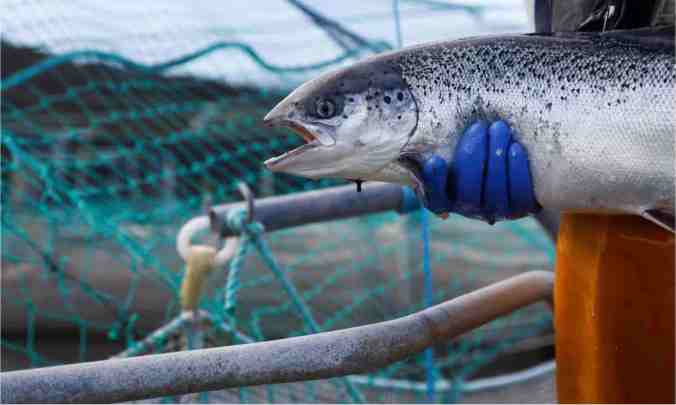
Salmon farms certified as organic have to adhere to certain standards. Photograph: Murdo MacLeod/The Guardian

Scotland has been moving in the right direction in other ways, so this call for action in an area where they have not been leading with best practices is worthy of attention. Thanks to the Guardian’s Karen McVeigh for providing it:

‘Unacceptable greenwashing’: Scottish farmed salmon should not be labelled organic, say charities

Open letter calls for Soil Association certification to be removed from industry, amid concerns of negative environmental impact

The British body that certifies food in the UK as organic has been accused of misleading consumers over its labelling of Scottish farmed salmon.

Thirty charities, conservation and community organisations, including WildFish, the Pesticide Action Network and Blue Marine Foundation, say the negative environmental impacts of the industry in Scotland “run completely counter” to the principles of the Soil Association’s promotion of healthy, humane and sustainable food. Continue reading

Victorious, For Now, Reining In LNG

When Bill McKibben announces victory, savor it but stay vigilant:

A Massive Win, and What It Means

For Once, Big Oil Takes It on the Chin

I wrote you two days ago with provisional good news—it looked as if the long and deep fight to rein in runaway LNG export growth had scored a huge victory. Continue reading