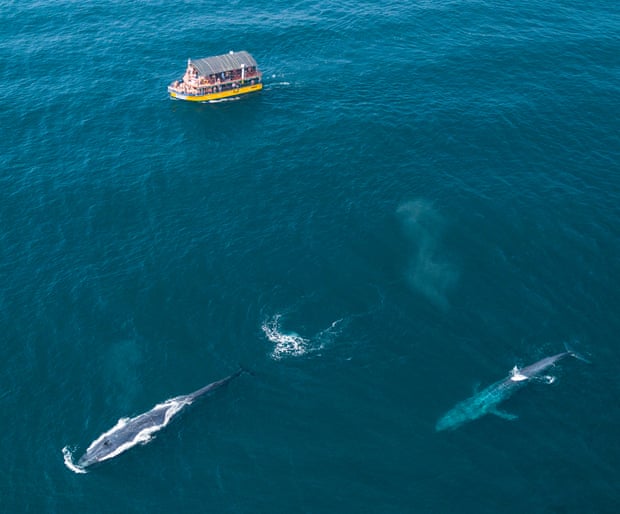
Watching Whales, Hopefully Forever

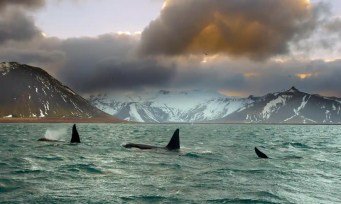
An orca pod feeding. Iceland, one of the few countries that still hunts whales commercially plans to end the practice from 2024. Photograph: Nature Picture Library/Alamy

Of all the dozens of times in our pages where whales are the central topic, there was once when Icelandic whaling was featured. And that story was about ending the practice of hunting these majestic animals. Today’s story–‘Meet us, don’t eat us’: Iceland turns from whale eaters to whale watchers–is the first time I have heard that travelers are the primary market for whale meat there. Strange, but true:

Reykjavik harbour. The small red boat on the right is an Elding whale-watching vessel. The blue one with a tall mast is a whaling boat. Photograph: Abby Young-Powell

The country’s plan to end commercial whaling is driven by falling demand but also a 15-year-long campaign aimed at their biggest consumers of whale meat – tourists

Onboard a small whale-watching boat making its way across the choppy waters of Faxaflói Bay, off the south-west coast of Iceland, a guide urges tourists not to eat whale meat. Continue reading

Youth & Perspective

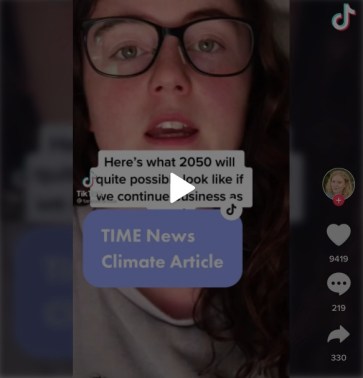
It should not be this difficult to change viewpoints on an existential topic. But apparently it is. If it requires a new social media platform, and watching a few short, catchy videos, so be it:

A growing chorus of young people is focusing on climate solutions. “‘It’s too late’ means ‘I don’t have to do anything, and the responsibility is off me.’”

Alaina Wood is well aware that, planetarily speaking, things aren’t looking so great. She’s read the dire climate reports, tracked cataclysmic weather events and gone through more than a few dark nights of the soul. Continue reading

Close The Hose Of Fossil Fuel Cash

Michael Mann, director of the Earth System Science Center at Pennsylvania State University, said fossil-fuel funding ‘has been used to compromise leading academic institutions’. Photograph: James Ross/AAP

Hats off to Michael Mann and colleagues for this determination:

Universities must reject fossil fuel cash for climate research, say academics

Open letter from 500 academics likens fossil-energy funding of climate solutions to tobacco industry disinformation

Universities must stop accepting funding from fossil fuel companies to conduct climate research, even if the research is aimed at developing green and low-carbon technology, an influential group of distinguished academics has said. Continue reading

Climate Forests

LET TREES
GROW
PROTECT THE CLIMATE

Last week’s epic essay by Bill McKibben in the New Yorker was followed up by his weekly newsletter, in which he mentions the organization above. Visit and see what they are doing. And the newsletter is a useful footnote to the essay:

…It argues that the time has come for us to end—after 200,000 years—the central place of combustion in human affairs, and rely instead on the fact there’s a flaming ball of gas hanging 93 million miles away in the sky. I won’t repeat the argument here, but I do want to extend it a little. Continue reading

McKibben’s Longform Power Pitch

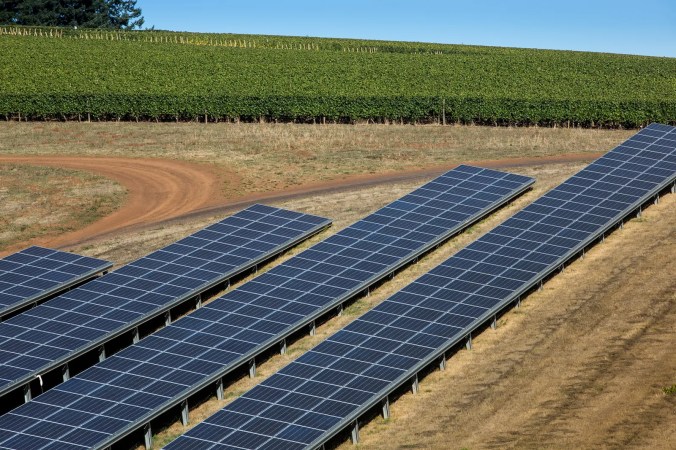
The market for electrons is predictable, meaning that solar panels installed on farmland can provide a fairly stable income for farmers. Photograph by George Rose / Getty

Illustration by Álvaro Bernis

If you have not been reading Bill McKibben regularly, or at all, here is as good a place to start as you will find. It is a long, powerful pitch:

In a World on Fire, Stop Burning Things

The truth is new and counterintuitive: we have the technology necessary to rapidly ditch fossil fuels.

In 2020, fossil-fuel pollution killed three times as many people as COVID-19 did. Photograph by Artur Widak / NurPhoto / Getty

On the last day of February, the Intergovernmental Panel on Climate Change issued its most dire report yet. The Secretary-General of the United Nations, António Guterres, had, he said, “seen many scientific reports in my time, but nothing like this.” Setting aside diplomatic language, he described the document as “an atlas of human suffering and a damning indictment of failed climate leadership,” and added that “the world’s biggest polluters are guilty of arson of our only home.” Continue reading

The Force Of Law, On Top Of Information & Protest

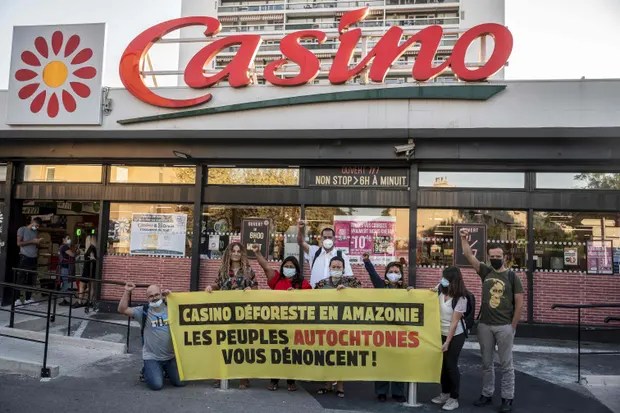
A protest in Marseille against the French supermarket chain Groupe Casino for allegedly selling meat products linked to deforestation. Photograph: Christophe Simon/AFP/Getty

What can we do when commercial interests damage our collective future? The identification of and protest against companies doing business in ways that cause environmental destruction are two important forces, but the force of law is another. Thanks to the Guardian for its ongoing coverage of these:

Legal eagles: how climate litigation is shaping ambitious cases for nature

Plans for an airport in the Tagus estuary have failed to take into account its impact on the wetlands, lawyers argue. Photograph: Handout

Environmental lawsuits are nothing new but now lawyers are turning their attention to cases that address the loss of biodiversity

The Tagus estuary near Lisbon is Portugal’s largest wetland, a vital habitat and stopover for tens of thousands of migratory birds, including flamingos, black-tailed godwits and glossy ibis. Continue reading

Jumpstarting System Change

So many things to change, so little time. If you are looking for a way to jumpstart a change to the system, consider these six lifestyle adjustments (thanks to the Guardian for the feature story on Jump):

From using smartphones for longer to ending car ownership, research shows ‘less stuff and more joy’ is the way forward

Founder of the Jump campaign Tom Bailey. Photograph: Andy Hall/The Observer

Research shows that people in wealthier, high-consuming countries can help avert climate breakdown by making six relatively straightforward lifestyle changes, creating a society of “less stuff and more joy”.

Experts say if enacted these “shifts” would account for a quarter of the required emissions reductions needed to keep the global heating down to 1.5C and increase pressure on government and the private sector to make the necessary far-reaching systemic change. Continue reading

Technically Food

We instinctively favor real food, but this author’s book has our attention:

The inside story of the paradigm shift transforming the food we eat, and the companies behind it.

Eating a veggie burger used to mean consuming a mushy, flavorless patty that you would never confuse with a beef burger. But now products from companies like Beyond Meat, Impossible Foods, and Eat Just that were once fringe players in the food space are dominating the media, the refrigerated sections of our grocery stores, and, increasingly, the world. With the help of scientists working in futuristic labs––making milk without cows, and eggs without chickens––startups are creating wholly new food categories. Real food is being replaced by high-tech. Continue reading

Plastic, The Gift That Keeps Giving

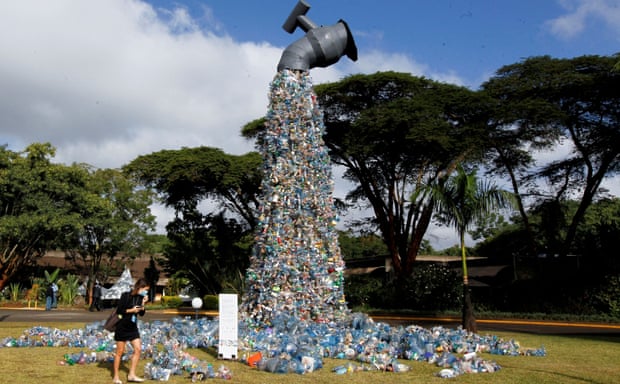
An artwork at the Nairobi summit venue by the artist Benjamin von Wong, made with rubbish from Kibera slum, urging people to ‘turn off the plastic tap’. Photograph: Monicah Mwangi/Reuters

We have endless opportunities to demonstrate leadership, thanks to plastic:

World leaders agree to draw up ‘historic’ treaty on plastic waste

UN environment assembly resolution is being hailed as biggest climate deal since 2015 Paris accord

World leaders, environment ministers and other representatives from 173 countries have agreed to develop a legally binding treaty on plastics, in what many described a truly historic moment. Continue reading

As The World Burns

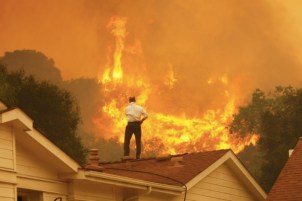
Heat waves have become hotter, droughts deeper, and wildfires more frequent, the I.P.C.C. report states, and the window of time for doing anything about it is fast closing. Photograph by David McNew / Getty

Even as a geopolitical crisis has our full attention, we cannot ignore other important information about our shared future. Click through to the magazine website where one of our favored interpreters of environmental news helps us understand how The Latest U.N. Climate Report Paints Another Grim Picture:

The Secretary-General cites a “criminal” abdication of leadership. Meanwhile, the U.S. Supreme Court is hearing a case that may hamper emissions regulations.

There were two front-page-worthy developments on Monday in the world of climate policy. Perhaps even more significant than either one was the fact that they were at cross-purposes. Continue reading
We Have Seen The Future, And It Is Youthful

Sunrise models itself on the civil-rights movement of the fifties and sixties. Photograph by Evan Jenkins for The New Yorker

In the current issue of the New Yorker, Andrew Marantz offers an inside view of The Youth Movement Trying to Revolutionize Climate Politics; we can only hope they succeed where previous generations have failed:

Sunrise has already shifted the conventional wisdom about climate change. Now it wants to create a mass movement, combining street protest with policy negotiation, while there’s still time.

On the evening of November 12, 2018, six days after being elected to Congress and six weeks before being sworn in, the socialist Democrats Rashida Tlaib and Alexandria Ocasio-Cortez walked into an Episcopal church in Washington, D.C. Inside, more than a hundred activists in their teens and twenties milled around a font of holy water, wearing nametags on their flannel and fleece, eating pizza from paper plates. Continue reading

Subsidizing Environmental Degradation Must End

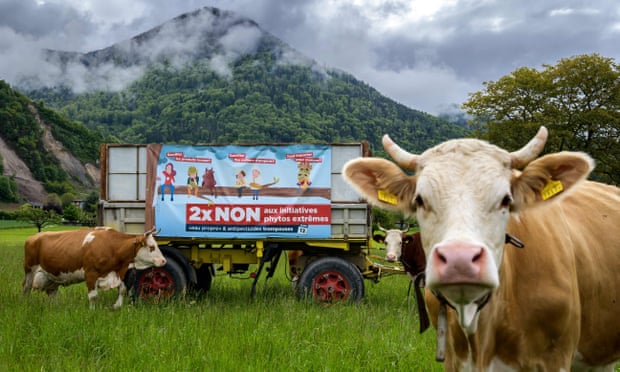
An electoral poster objecting to a proposed ban on subsidies for Swiss farms. A 2021 report found almost 90% of global farming subsidies are harmful. Photograph: Fabrice Coffrini/AFP/Getty

We missed this when it was first published a couple weeks ago, but it is still fresh and important:

World spends $1.8tn a year on subsidies that harm environment, study finds

Research prompts warnings humanity is ‘financing its own extinction’ through subsidies damaging to the climate and wildlife

The world is spending at least $1.8tn (£1.3tn) every year on subsidies driving the annihilation of wildlife and a rise in global heating, according to a new study, prompting warnings that humanity is financing its own extinction. Continue reading
Trees’ Wondrous Capabilities

Diana Beresford-Kroeger at her home in Ontario. “If you build back the forests, you oxygenate the atmosphere more, and it buys us time,” she said. Nasuna Stuart-Ulin for The New York Times

Another round of thanks to Cara Buckley for a vividly written snapshot. Using Science and Celtic Wisdom to Save Trees (and Souls) is about one person’s multi-talented capacity to inspire us in new ways related to trees, and the patience it has required:

Diana Beresford-Kroeger, a botanist and author, has created a forest with tree species handpicked for their ability to withstand a warming planet.

MERRICKVILLE, Ontario — There aren’t many scientists raised in the ways of druids by Celtic medicine women, but there is at least one. She lives in the woods of Canada, in a forest she helped grow. From there, wielding just a pencil, she has been working to save some of the oldest life-forms on Earth by bewitching its humans. Continue reading

The Standing Rock Sioux Tribe Asks For Your Help

If you have been following the pipeline news stories and you care, but not yet found a way to get involved, the Standing Rock Sioux tribe offers you a simple first step to help them end the DAPL. Click on the DAPL EIS Countdown Alert signup image below to show support, by asking to be alerted when public comments open:

The Next Step to End DAPL

The fight to stop the Dakota Access pipeline isn’t over, and you can help right now! This month, the U.S. Army Corps of Engineers will take public comment on DAPL’s fatally flawed Environmental Impact Statement (EIS). Sign up to be first in line to tell the Corps to conduct a proper environmental review — without interference from the fossil fuel industry. We’ll let you know how to make your voice heard as soon as the comment period opens! Thank you for standing with Standing Rock.

Container Ships Versus Whales & Whale-watchers

Whale-watching tourism is lucrative for Sri Lanka but even the small boats are at risk from the huge tankers and container ships that use the route. Photograph: IFAW/Christian Loader

It seems a minor request, asking the companies whose ships pass through Sri Lanka’s waters to be considerate of the whales who live in those waters:

‘Giant obstacle course’: call to reroute major shipping lanes to protect blue whales

Unique colony of blue whales increasingly at risk from tankers and container ships, say marine campaigners

Scientists and conservation groups are calling for one of the world’s busiest shipping lanes to be rerouted in an effort to protect the world’s largest animal. Continue reading
Big Agriculture, Anti-Regulation & Antisocial Behavior

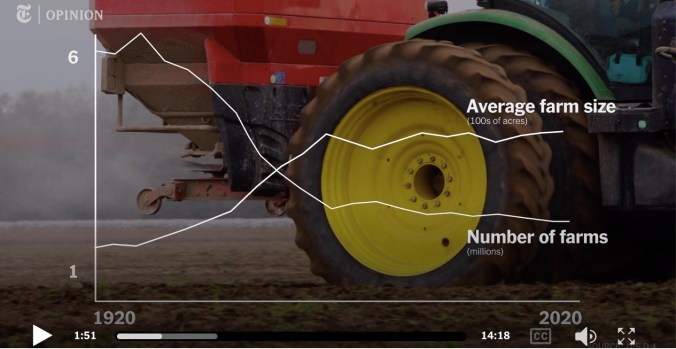
Click any image here to go to an op-ed video that takes just over 14 minutes to watch. You’ll get an inside look into what has happened to food production in the USA, and how, and why.

Summed up, it is all about the power of big-ag lobbying. They want no regulations. They want to decide on their own how to produce food. And it is making a big mess. This anti-regulatory ideology, which has the hallmark of antisocial behavior, is not unique to agricultural lobbyists, but is quite well illustrated by them.

Meet the People Getting Paid to Kill Our Planet

American agriculture is ravaging the air, soil and water. But a powerful lobby has cleverly concealed its damage.

“We’re Cooked” is an Opinion Video series about our broken food system and the three chances you get to help fix it — and save the planet — every day.


The global food system is a wonder of technological and logistical brilliance. It feeds more people than ever, supplying a greater variety of food more cheaply and faster than ever.

It is also causing irreparable harm to the planet. Continue reading

Big Win On Climate, Says McKibben

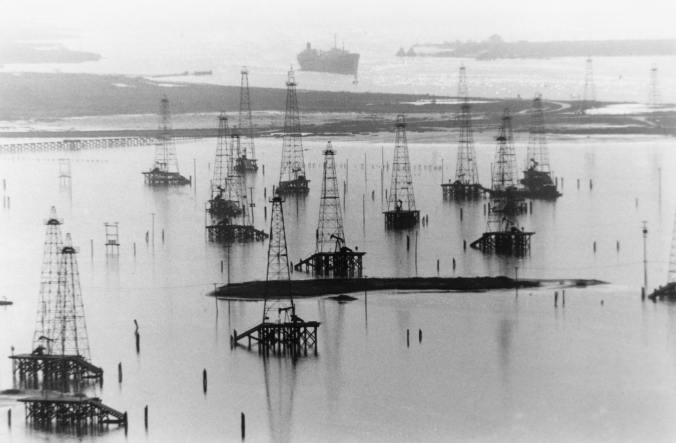
Early offshore action in Texas. the rigs are bigger now—so big that a federal court found yesterday that they’re endangering the climate.

His first book was an early harbinger that we wish had changed the world. Now, decades later, his newsletter is worth subscribing to. When Bill McKibben says something has gone right, we cannot wait to read it:

Something went right!?

Through no fault of its own, Biden’s team gets a big win on climate

Last summer the Biden administration granted the largest set of offshore oil leases in American history. The ironies abounded—Biden had insisted during his campaign that he would not be doing this (“And by the way, no more drilling on federal lands, period. Period, period, period,” he’d explained during the New Hampshire primary); it was the Interior Department that officially sold the leases, headed by a secretary, Deb Haaland, that environmentalists had fought like crazy to get confirmed. Continue reading

Hargila


“Hargila” Film Documents India’s Grassroots Effort to Save the Endangered Greater Adjutant Stork

A new film by the Cornell Lab of Ornithology’s Center for Conservation Media tells the story of a wildlife photographer who travels to India intent on documenting the rarest stork on earth, but soon discovers a conservation hero and her inspiring efforts to rally a community to save it. Hargila documents the Greater Adjutant, a huge scavenging stork that was once widely distributed across India and Southeast Asia but is now mostly confined to a last stronghold in Assam, with small populations persisting in Cambodia’s northern plains region. Greater Adjutants are called “hargila” in the Assamese language, which literally translates as “bone swallower.” Continue reading

Carless Berlin

A cyclist in Berlin, Germany.

A cyclist in Berlin, Germany. HENDRIK WIEDUWILT VIA FLICKR

Thanks to Yale E360 for Berlin Looks to Create Car-Free Zone Larger Than Manhattan, a snapshot of the city’s fewer cars campaign, with links to further details in related stories by the Guardian and Fast Company:

Berlin’s regional parliament is considering creating a car-free zone in the German capital in response to a concerted push from a local advocacy group. Continue reading

The Great Bamboozle

Bill McKibben’s newsletter on Substack asks the question:

What happens if you greenwash greenwash?

It’s hard to go lower than net zero….

Greenwashing began, as it name implies, as a gentle, barely perceptible rain of fibs. Back at the start, it was mostly pictures; it was pretty easy to gauge how much environmental damage a company did by the number of penguin photographs it felt it needed to include in its annual report. Continue reading