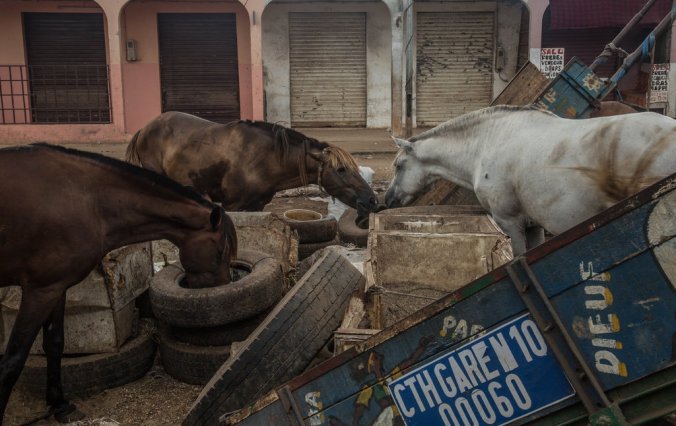
Dakar’s horse-drawn buggies, long a staple means of getting around, are under an emerging threat from motorized rickshaws. Yagazie Emezi for The New York Times
Senegal shows up a dozen times in our pages over the years, but not one those times is about my own experience there. Strange, because that experience marked my return to teaching, and indirectly led to the work we are doing now with Authentica and Organikos. That is worthy of a post, which I will write another day, for now enjoying a simple story about life on the streets with horses, buggies, their drivers, and the community members who are transported by them:
By Anemona Hartocollis
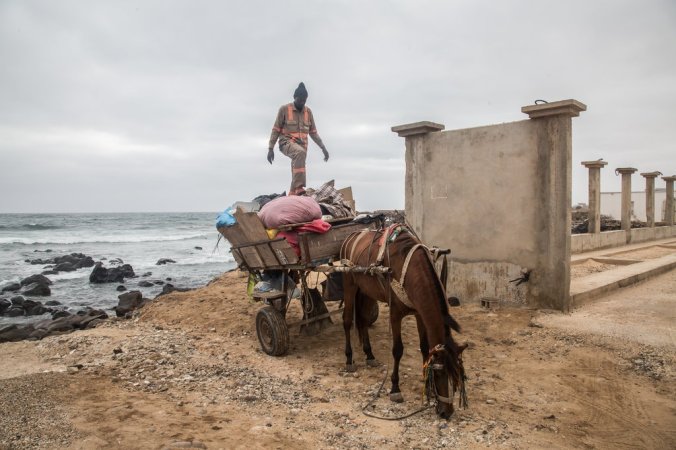
Wague Diouf and his horse Toyota driving through Dakar neighborhoods, picking up trash. Yagazie Emezi for The New York Times
DAKAR, Senegal — After a visit to the market to buy a box of mangoes, some fish and a length of cloth, Binta Ba, a Senegalese woman, needed a way to get home.
So she looked around for her preferred means of transportation: a horse and buggy.
A ride was easy to find, with dozens of horse-drawn buggies lined up near the market, which was in Rufisque, a picturesque suburb of Dakar known for its colonial architecture.
She climbed aboard a buggy, whose driver then waited patiently for a third passenger to occupy his final seat. When his buggy was full, he took off at a trot, sometimes speeding up to a canter. The riders paid about 50 cents for a 10-minute ride, a fraction of what it would cost to take a taxi.
“Taking taxis is for rich people,” Ms. Ba said. “We prefer to support these people because they are from the community.” Continue reading →
















 Organikos