Generosity, Alive & Well In The USA

Giving-USA-Cover-with-IU-Logo-Final-A-3D-e1465868838236

Generosity of Americans will help ensure, among other things, that the challenges facing the US National Parks Service will be met:

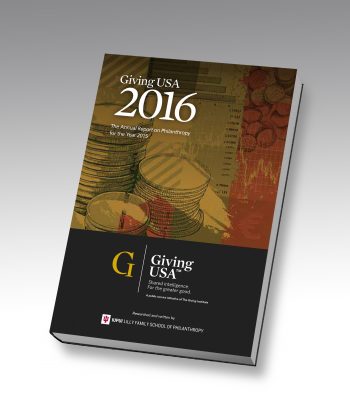
Donations from America’s individuals, estates, foundations and corporations reached an estimated $373.25 billion in 2015, setting a record for the second year in a row, reports Giving USA 2016: The Annual Report on Philanthropy for the Year 2015, released today. Continue reading

Waste Not, Want Not

Indian weddings (and other big parties) serve a lot of food — and have a lot of leftovers. Now there's a plan in Mumbai to share the surplus with those who are hungry. Mahesh Kumar A./AP

Indian weddings (and other big parties) serve a lot of food — and have a lot of leftovers. Now there’s a plan in Mumbai to share the surplus with those who are hungry.
Mahesh Kumar A./AP

Living in India provides daily examples of life’s major contradictions: silence and chaos, simplicity and grandeur, lack and excess… Traditional Indian weddings illustrate the examples of abundance – even the most modest of weddings will represent some version of the the proverbial “groaning board” – be it traditional banana-leaf thali of south India or an elaborate multi-course dinner in towering tents. Whenever food is prepared for a crowd there’s potential for waste, even in the so-called “developed world”.

The beauty of this inspiring story is how it taps into Mumbai’s dabbawalla system, taking advantage of the extraordinary logistics of a food distribution system that has functioned well for decades. (If you’ve never seen Ritesh Batra’s beautiful film The Lunchbox, run and find it now…)

India has 194.6 million undernourished people — that’s more than half the world total.It’s what people mean when they talk about “food insecurity:” the economic and social condition of limited or unpredictable access to adequate food.

But in a study published in the August 2015 issue of the journal Lancet, researchers found that India also has 46 million obese citizens.

The dabbawallas — Mumbai’s lunch delivery collective — have stepped in with an initiative they’re calling the Roti Bank. Their aim is to connect the have-nots with the have-too-muchs.

“We deal with food every day, so we’re ideally placed to fix this,” says Dashrath Kedare, a co-founder of the Roti Bank and a leader of one of the dabbawalla unions. Continue reading

Can You Top This?

160404_r27911-690

Kamilla Seidler, center, who has worked in some of Europe’s top restaurants, leads the kitchen at Gustu, which is both a restaurant and an experiment in social uplift. PHOTOGRAPH BY BENJAMIN LOWY / GETTY IMAGES REPORTAGE FOR THE NEW YORKER

What were we thinking? Yesterday we chose a favorite without considering all the evidence.  We stand corrected. Here we have a story of a restaurant at the top of the world, and at the pinnacle of how the game is played today, it sounds like. The content of this story is as superb as it is well written, and the theme is much closer to our hearts with regard to our organization’s core values and social enterprise roots:

Letter from La Paz APRIL 4, 2016 ISSUE

The Tasting-Menu Initiative

Can a restaurant for the rich benefit the poor?

BY CAROLYN KORMANN

Look out the windows of Gustu, the most ambitious restaurant in La Paz, Bolivia, and you’ll see the city climbing up toward the looming peaks of the Andes in a lumpy, shimmering mosaic. Continue reading

Mother’s Day Redux: Bluebird and her Babies

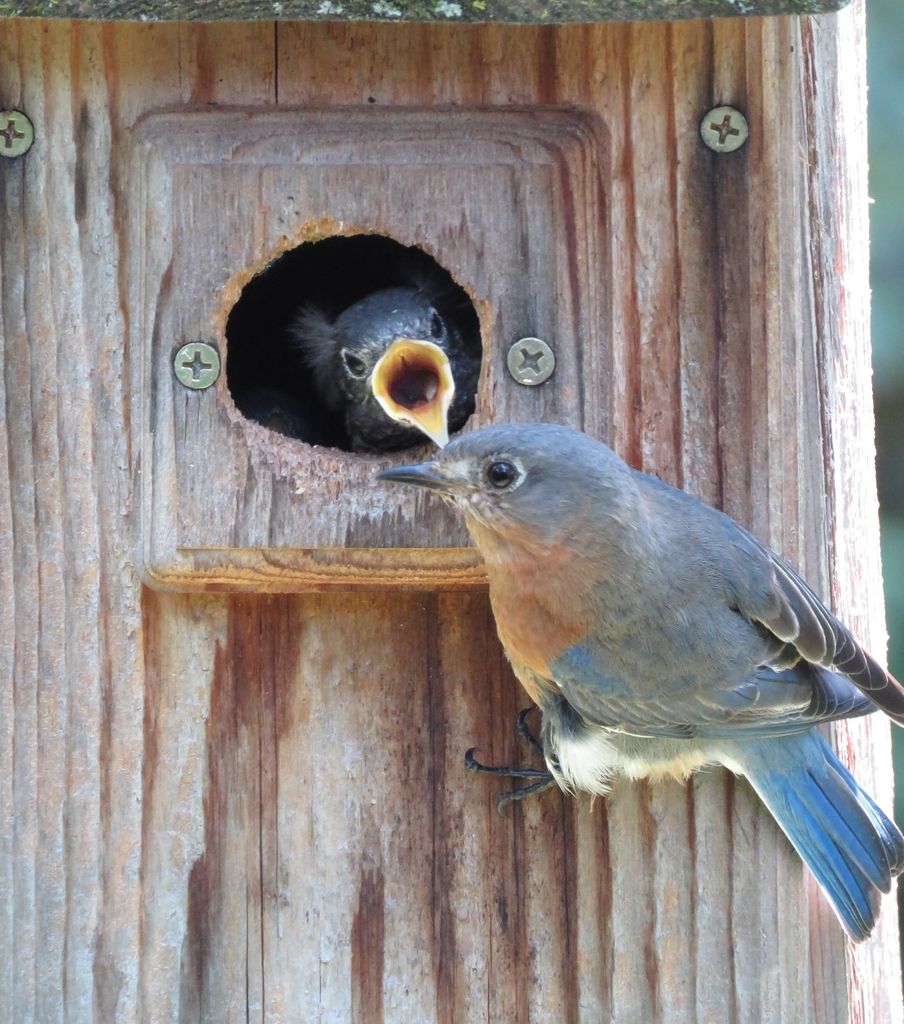
Mother bluebird feeding babies on Mother’s Day

A little less than a month before mother’s day (May 10th), a pair of bluebirds made their nest in one of the bluebird houses in our backyard in Atlanta. I was away studying at the university at the time, but my parents described to me in phone conversations the process familiar to anyone who has seen birds build a nest in their yard: first the birds made tentative visits to the site, then they began to carry in straw, twigs, and grass, finally the mother Continue reading

Teaching, Reading, Books, And The Art Of Heroic Generosity

teacher-dorchester_wide-e26ec96b4bf01b90583733bad7518f51e86db66b-s1300-c85

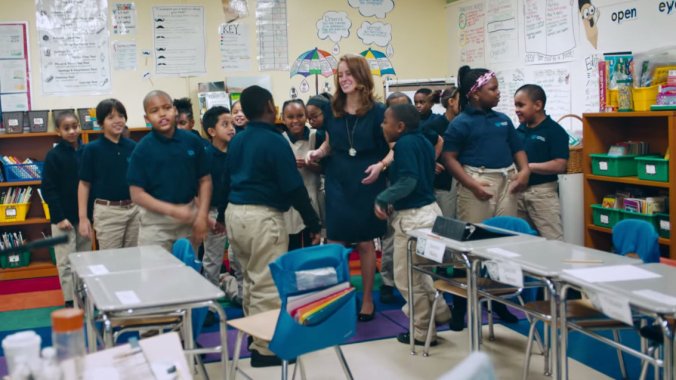
Third-grade teacher Nikki Bollerman, 26, won a contest that gave her students books for the holidays. When she also won $150,000, she decided it should go to her school. YouTube

No matter how much we talk about books, or libraries, or teachers, or reading, we are not sure. We hope we would do the same as Ms. Bollerman. The fact that we are not sure is the real reason why this story is a must share, must read. We like her decision very much and will do our best to follow her lead:

One thing’s for sure: Nikki Bollerman believes in her school and the kids who go there. How else to explain Bollerman, 26, giving a $150,000 windfall to the Boston area public charter school where she teaches third grade?

The story comes to us from member station WBUR, which reports that Bollerman’s generosity got the attention of Mayor Marty Walsh, who met with her and some of her students Monday.

“I want to thank Nikki for your kindness and your humility, and you are certainly a shining example of great things to the city of Boston,” Walsh said. “We are grateful for your hard work and generosity. You have inspired lots of people with your selfless act.” Continue reading

Gifts That Give Back, Often In More Ways Than One

Each item, including boots from Guatemala, a basket from Rwanda and a soda can cuff from Kenya, are handmade. And when people buy these gifts, the profits go back to the artisans and their community. Courtesy of Teysha; Indego Africa; Serrv

Each item, including boots from Guatemala, a basket from Rwanda and a soda can cuff from Kenya, are handmade. And when people buy these gifts, the profits go back to the artisans and their community. Courtesy of Teysha; Indego Africa; Serrv

Thanks to National Public Radio (USA) for this coverage of artisanal products that use materials that might otherwise be called waste, all of which channel resources to where they are most needed, a topic we never tire of reading about:

After you’ve seized all the deals on Black Friday, Small Business Saturday and Cyber Monday, it’s giveback time.

Today is Giving Tuesday, the day that asks people to donate to a good cause. This online campaign was created three years ago by the 92nd Street Y, a cultural and community center in New York, with the support of a slew of partners, including entrepreneurs, philanthropists and the United Nations. The idea is that you can kick off the holiday season by donating your money or time. At least $32.3 million was donated on Giving Tuesday 2013, according to a survey by the trade publication NonProfit Times.

But if you’re still in an acquisitive mood, there are ways to shop altruistically. There are nonprofits and even companies that sell handmade products whose profits go back to artisans and toward community projects in poorer countries. Continue reading

Pachyderm Prowess

Mother and baby Asian Elephant, Periyar Tiger Reserve. Photo credit: Milo Inman

Mother and baby Asian Elephant, Periyar Tiger Reserve.
Photo credit: Milo Inman

Quite a few La Paz Group contributors are life-long elephant lovers, and we never tire of learning about these amazing members of the animal kingdom. Thanks to TED Ed for giving us more to remember…

It’s a common saying that elephants never forget. But the more we learn about elephants, the more it appears that their impressive memory is only one aspect of an incredible intelligence that makes them some of the most social, creative, and benevolent creatures on Earth… Continue reading

A Norwegian Sense Of Obligation

Norwegian King Harald V.  Photo: P. J. George

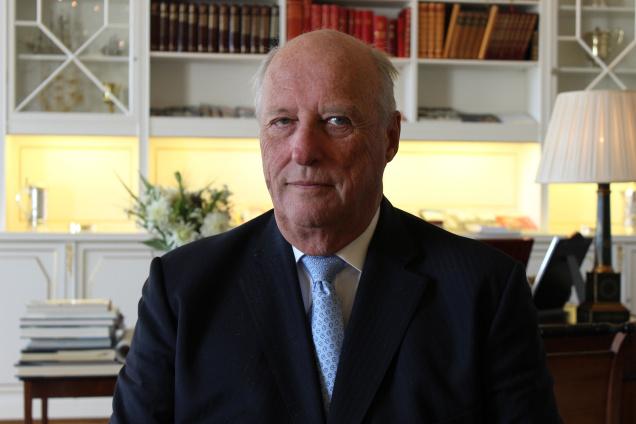
Norwegian King Harald V. Photo: P. J. George

From today’s Hindu, an interview with the King of Norway. It may be an example of noblesse oblige, but it is an interesting story at a time when some other developed economies have determinedly charged hard right, away from state-sponsored welfare:

‘We had a problem — too much money’

Interview with Norwegian King, Harald V, on the country’s successful welfare model, its oil and gas reserves and the threat of climate change

The Norwegian society is at present debating several issues, including its economy, climate change, immigration and the changing cultural milieu. In all these, the country often looks to its King, Harald V, for a decisive voice… A renowned sailor, he carries out royal duties with aplomb even at the age of 77. He spoke to The Hindu recently in Oslo on the triumphs and concerns of his country. Excerpts: Continue reading

Know Paul Piff

80ea24_d53ded59ec09408f80abb6ca0084197f.jpg_srz_p_998_508_75_22_0.50_1.20_0 (1)

It has been some time since we posted on the topic of altruism, but it is one of the words we come back to directly and indirectly nearly every day, one way or another. We watch out for our own stories to explain this phenomenon. Raxa Collective works in locations categorized as developing economies. Some among our ranks are from so-called developed economies, with among the highest per capita incomes in the world, while others among our ranks are from economies at the other end of the per capita income range.

A consensus has developed among those of us who have worked across a spectrum of countries, a consensus which we considered a bit of a paradox (and a completely unrealistic and unfair generalization, but still we noticed it this way), that poorer people do more surprisingly generous things considering that they would seem to have less with which to be generous.

Continue reading

Andrew Forsthoefel, Come To Kerala!

AndrewSlider

Andrew Forsthoefel. Photo by Therese Jornlin, Andrew’s mom. Chadds Ford, PA.

The interns we have had the honor of hosting since setting up shop in Kerala a few years ago have all shared in the responsibility to communicate their experiences in writing on this blog. We are committed to the written word, but not Ludditically opposed to other forms of communication. We have barely put a toe in the water with video, and not even thought about radio as an option, even though we consider Jay Allison an epic hero of good, important communication.

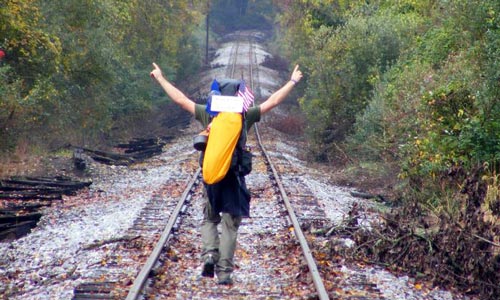
Because of him, we know alot of worthy things that otherwise would have escaped our attention; most recently we learned of and from Andrew Forsthoefel, whose radio story is worth an hour of your time. After which, if you are like us, you will want to know where he is now, and what he is doing. We hope Andrew will see our shout out here and consider our welcome mat in Kerala. Here is his introduction to the podcast when it originally aired nearly 17 months ago: Continue reading

A Story About Patagonia, A Company We Believe In, And Relate To

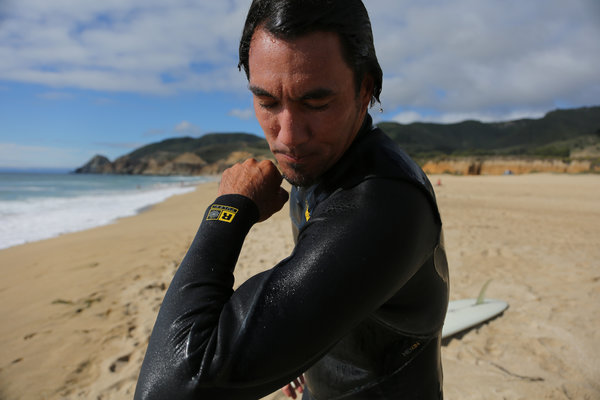
Jon Kitamura in a Patagonia wet suit at Montara State Beach, California. Credit Jim Wilson/The New York Times

Jon Kitamura in a Patagonia wet suit at Montara State Beach, California. Credit Jim Wilson/The New York Times

We hope one day to have as many participant observers like Jake, saying things like this about some of our group’s initiatives, as Patagonia has admirers. The company gets alot of good press, and for all the right reasons. We have not tired of it yet. Fans of the founder already, we also believe in his company, and (as if anyone needed to be convinced) this New York Times profile helps to understand why:

…“We had customers looking for safe alternatives for those with latex allergy, and then we had customers looking for alternatives to petroleum-based products,” Mr. Martin said, “so a number of companies had been approaching us.” Continue reading

Bison, A European Species Almost Lost

Bison

Thanks, prince (and New York Times for the video record of a noteworthy collaborative act of conservation, with a dash of altruism, and creative definition of commons):

Bringing Back Europe’s Bison

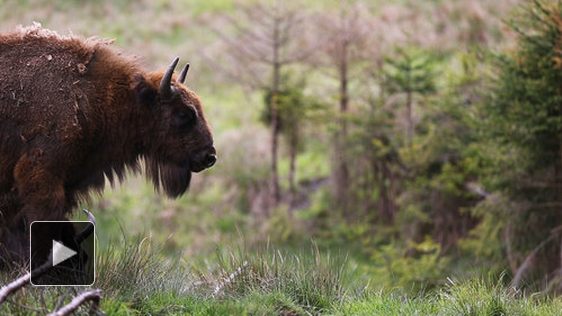
A German prince is leading an effort to bring back the European bison, Europe’s largest land mammal, in Bad Berleburg. The animal almost went extinct in the early 20th century.

Big Business, Conservation, Innovation

We have written about and linked to others’ thoughts on altruism more than once, thinking we will eventually have an ultimate illumination on its origins and how to increase its likelihood. Likewise on our main theme as an organization, with regard to entrepreneurial conservation. We also keep a watch out for big companies (versus entrepreneurs) and governments (as in the case of the state initiative in the banner above, which is discussed below) doing the right thing.

Thanks to this article in the New Yorker for bringing our attention to the efforts to bring sustainable and affordable water to the good folks of Texas, and at the same time raising our awareness of the tightrope walking between big businesses that have many motivations to participate in innovative conservation schemes, and the organizations that have been the innovators in this regard for decades:

Mark Tercek, the head of the Nature Conservancy, recently took a tour of the largest chemical-manufacturing facility in North America: the Dow plant in Freeport, Texas. The Nature Conservancy, which is responsible for protecting a hundred and nineteen million acres in thirty-five countries, is the biggest environmental nongovernmental organization in the world. Tercek, accompanied by two colleagues, had come to Freeport because the facility—a welter of ethylene crackers and smokestacks built next to a river that flows into the Gulf of Mexico—is at the center of a pilot collaboration that he hopes will reshape conservation.The key idea is to create tools that can assign monetary value to natural resources. Continue reading

Bring Your Own Bottle

tumblr_mrzmgv3ZXg1qz5g9bo1_1280

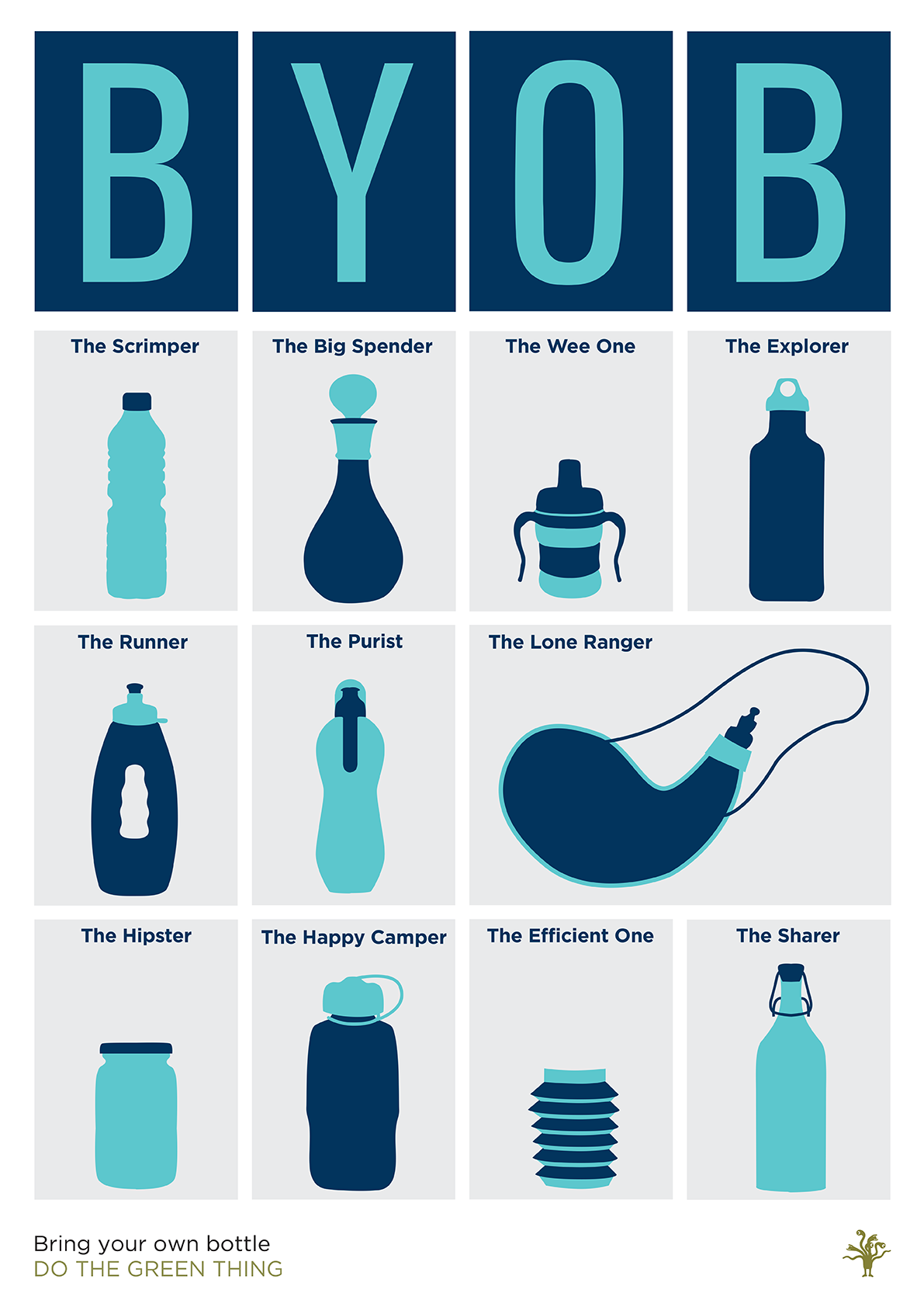
The image above is a reminder for us, as much as it is a pass along to you. After finally securing, in early 2013, a supply of beautiful glass water bottles for all of our restaurants and guest rooms in Kerala, Raxa Collective has been working for the last year to source a reusable and conveniently portable water bottle. The Earth Hour original purpose of the series of which the above poster is a part has a long tail of utility. Today we give thanks for “BYOB” by Rebecca Penmore, one of the altruistic designers at Pentagram giving us more clarity on why we should re-use:

On a hot summer’s day when hydration was the name of the game, Pentagram designer Rebecca Penmore noticed that our bottles of tap water are much more than liquid containers – they are an extension of our personality.

“The aim of my poster is to encourage people to carry their own bottle of tap water and avoid countlessly re-buying mineral water. I have used the well known acronym BYOB as a simple and straightforward way to communicate this message,” says Rebecca. “Bringing your own bottle is not only an easy way to reduce your global footprint, but it can be a great form of self expression!”

Why? Continue reading

Creating CommuniTEA

Since I am a new writer for RAXA Collective, here is an introduction. My name is Kayleigh Levitt and I am currently a Sophomore at Soka University of America in Southern California. My major is in Environmental Studies with a focus in urban sustainability. I am an avid gardener and biophiliac. I believe in the transformative power of community.

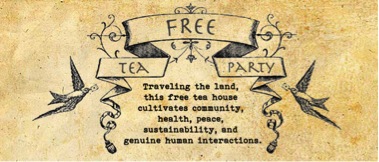
I love when I meet people who show me that there are different ways to live than what is expected of us. Guisepi Spadafora serves free tea out of a mini-school bus that runs off recycled vegetable oil and biodiesel. There is a solar panel on the roof of his bus that powers his refrigerator, lights, outlets, water pump and anything he needs electricity for. He gets herbs for his tea donated on a continual basis, so he is able to have a steady menu. The companies give to him freely because they believe in what he does and he believes in what they do.He travels the land, and during a tea party, he opens up his bus and sets out chairs and rugs and serves tea for people.

The way he got started serving free tea for people was not actually on purpose. He honestly started because of loneliness in a big city. He was living in Los Angeles, in his pick-up truck, working full time and did not really have friends other than the friend he was working for. He started going to Hollywood Boulevard and would open up his tailgate, pull out his camp stove and cook a bit of dinner. He would cook a little bit of extra dinner because inevitably someone would say ‘What are you doing?’ and he would say, ‘Oh, I’m cooking dinner, would you care to join me?’ and people would then sit and eat with him, and to keep those interactions going he would just make tea for hours. Every walk of life would sit down with him, from street performers to Japanese tourists to television producers. He got really excited about the actual genuine human interactions he was having.

He had tried to go to the bars, one of the only places where you can know no one and meet people. Girls would come up and talk to him and ask him to buy them a drink, which he considered as the least genuine type of interaction one could have because the only thing they were looking for was his money.

He realized so many of his interactions with strangers were over money. Continue reading

Electric Car Sharing In London

Vincent Bollore, CEO of investment group Bollore, poses by an electric car following a news conference in London March 12, 2014. CREDIT: REUTERS/OLIVIA HARRIS

Vincent Bollore, CEO of investment group Bollore, poses by an electric car following a news conference in London March 12, 2014. CREDIT: REUTERS/OLIVIA HARRIS

Various reports in the last year or so of sharing means of transportation focused on bicycles, which itself seemed remarkable; now reports of car-sharing schemes make it seem almost impossible to believe. Whether it is altruism, rational economics, or something else at work here we will soon find out:

First it was pedal power; now Londoners are being offered electric transport to dodge their way around the city.

French billionaire Vincent Bollore on Wednesday unveiled plans to park 3,000 electric cars on London streets by 2016, as part of a car share project that emulates the popular bike hire scheme started in 2010 under Mayor Boris Johnson.

Bollore, chief executive of the group bearing his name which set up the Autolib electric car-sharing program in Paris in 2011, said electric car hire could help cut congestion and reduce pollution in the British capital. Continue reading

Animal, Insect, Vegetable Altruism

It’s been said that there’s an imbalanced focus on ornithology within our site, but we can also claim to have a slightly skewed preference for sloths as well. Whether it’s their permanently gentle grin or their slow, methodical movements we’re not sure, but we know we’re not the only ones who find them fascinating.

Sloths are found in both rainforest and dry tropical forest ecosystems but the biodiversity of their habitat is nothing compared to what they carry around with them in their arboreal lives. A team of biologists from the University of Wisconsin led Jonathan N. Pauli and M. Zachariah Peery has recently tackled a 35-year-old mystery about sloth behavior.

The sloth is not so much an animal as a walking ecosystem. This tightly fitting assemblage consists of a) the sloth, b) a species of moth that lives nowhere but in the sloth’s fleece and c) a dedicated species of algae that grows in special channels in the sloth’s grooved hairs. Groom a three-toed sloth and more than a hundred moths may fly out. When the sloth grooms itself, its fingers move so slowly that the moths have no difficulty keeping ahead of them.

Every week or so, the sloth descends from its favorite tree to defecate. It digs a hole, covers the dung with leaves and, if it’s lucky, climbs back up its tree. The sloth is highly vulnerable on the ground and an easy prey for jaguars in the forest and for coyotes and feral dogs in the chocolate-producing cacao tree plantations that it has learned to colonize. Half of all sloth deaths occur on the ground. The other serious hazard in its life is an aerial predator, the harpy eagle.

Why then does the sloth take such a risk every week? Researchers who first drew attention to this puzzle in 1978 suggested that the sloth was seeking to fertilize its favorite tree. Meanwhile, the algae that gave the sloth’s coat a greenish hue were assumed to provide camouflage.

Writing last week in Proceedings of the Royal Society B, the Wisconsin researchers assembled all these pieces in a different way. They started by trying to understand what would compel the sloth to brave the dangers of a weekly visit to ground zero. Continue reading

Disrupting Education’s Status Quo

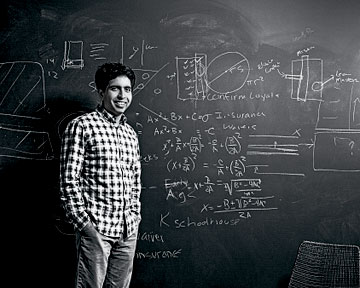
Harvard Business Review offers this interview with the founder of Khan Academy, a non-profit educational initiative that has been succeeding the way many dot-com businesses succeed–the difference being that all the benefits accrue to students and their educational attainment around the world. Bravo, Mr. Khan:

…In the traditional academic model, you’re passive. You sit in a chair, and the teacher tries to project knowledge at you; some of it sticks, some of it doesn’t. That’s not an effective way to learn. Worse, it creates a mind-set of “you need to teach me,” so when you’re on your own, you think, “I can’t learn.” Anyone in any industry will tell you there’s new stuff to learn every week these days. So you have to say, “What information and people do I have at my disposal? What questions do I need to ask? How do I gauge whether I’ve really understood it?” Khan Academy is designed to give students that agency. If you want to get more tangible, I would say learn how to program a computer, more about the law, and definitely statistics… Continue reading

If You Build It They May Come, But If You Build It Better Will They Pay For It?

fairTradeLogoThe following paper has been influential since its publication more than two and a half years ago, and seems destined to have a lengthy shelf life, which we hope to contribute to.  It is not only interesting theoretically, but gets at practical questions we consider existential at the level of our enterprise. If consumers (in our case travelers) are willing to pay a fair premium for building and operating a business that is more sensitive to environmental and social responsibility, we can afford to engage in fair trade; if they are not really willing, uh oh…

We are more than happy to share our empirical evidence, but for now let’s take a look at some scientifically-derived evidence:

Consumer Demand for the Fair Trade Label: Evidence from a Field Experiment

Jens Hainmueller

Massachusetts Institute of Technology (MIT) – Department of Political Science

Michael J. Hiscox

Harvard University

Sandra Sequeira

London School of Economics

April 1, 2011

MIT Political Science Department Research Paper No. 2011-9B

Abstract: 

A majority of surveyed consumers claim to prefer ethically certified products over non-certified alternatives, and to be willing to pay a price premium for such products. There is no clear evidence, however, that people actually seek out such ethically certified goods and pay a premium for them when shopping. We provide new evidence on consumer behavior from experiments conducted in a major U.S. grocery store chain. Continue reading

Todd Bretl, Come To Kerala!

This slideshow requires JavaScript.

We have been linking photographers with wildlife since the inception of Raxa Collective. We believe that the more amazing photographs of nature people are exposed to, the more they will care about the need for conservation of wildlife habitat. From organizing nature photography workshops, to sharing the photographs of friends and members of our team in our outreach, we embrace the medium’s power to motivate.

While most of his photographs are underwater, and most photography we have promoted so far is not, Todd Bretl is definitely worthy of the same kind of invitation we have extended to other masters of their domain (whatever form it might take, whether the person is famous or not as famous as they should be, even surprising ones). It is not just his obvious talent, but his sense of purpose. According to the bio on his website:

Raised on a boat in Bermuda, Todd grew up with the ocean as his playground and constant companion. Continue reading