Top 3 Words to Avoid When Talking Shop with Architects

We are working in Cochin and sometimes I feel like I am speaking two different languages. I’m not talking about struggling with mixing English and Malayalam. I’m not talking about scratching my head each time I encounter an Indian head shake/nod (“Wait- was that a yes or a no?”). I’m talking about the client’s language vs. the architect’s language.

This internship really is a “living laboratory.” I am getting a chance to sit on the client side and discuss ideas with the architects that will push Raxa Collective’s vision forward. Crist and Amie have worked with the design team side by side on each project and I am starting to understand how they think, how to make sure my drawings, renderings, and presentations can be clearer, and more. Sitting in on these design meetings in which the architect and clients discuss, propose, discuss, present, discuss, discuss, and discuss some more, I realize…

It’s like talking shop at an auto repair.

Continue reading

5 Lenses For Every Vacation

Hey guys,

All of us photobugs and travel-junkies have struggled with the age-old question: which lens should I bring on my River Escapes backwaters adventure or my Roman holiday or my trip to the moon?

As a casual photographer, I’m not crazy about specs. I don’t get the numbers and technical terms! JUST TELL IT TO ME STRAIGHT! I know there are people out there who are like me, so Ben, Milo, and I will make it as easy as possible to understand which lens YOU need to bring on your next vacation! We’d also love to know what YOU brought on your last vacation!

See which of description fits you best:

  1. I’m out to shoot wildlife. Tell me what I need to know.
  2. I love architecture and the built world. What should I bring with me?
  3. I’m a tourist who’s going to stick out like a sore thumb, but I really want to capture candid portraits of interesting people– help!
  4. I’m going to a naturey place filled with dust/humidity/dirt/whatever and I don’t want to constantly change my lens. What’s the best daily walk-around lens?
  5. I’m going on a service trip and I’ll be working on a construction site. How do I make it look epic?
Here’s what we’ll be introducing from our private collections today:
  1. Canon EF 70-200mm f/2.8 L IS USM with 2x extender
  2. Canon EF 70-300mm f/4-5.6 IS USM
  3. Canon EF 50mm f/1.8
  4. Canon EF-S 10-22mm f/3.5-4.5 USM
  5. Canon EF-S 18-55mm f/3.5-5.6 IS

ALRIGHT, I’M READY!! NOW SHOW ME THE 5 LENSES I SHOULD BRING ON MY NEXT VACATION!!!

Continue reading

Colorful Wonderland: Fort Cochin, Kerala

Five hours away from Thekkady is a colorful land of ornate architectures and a hometown of many fishermen that represent the historical harbor city, Fort Cochin, Kerala. The narrow and winding streets are filled with houses and churches that clearly showe their Dutch, Portuguese, or British influence from the colonial time. As I carelessly stroll down the streets only with my camera and some rupees (Indian currency) in my purse, I didn’t mind the stares from the local village people, nor the heat and humidity that made me drench in my own sweat; but, my mind got carried away seeking the remains of what time had left us.

Blue door and window with a wagon

Continue reading

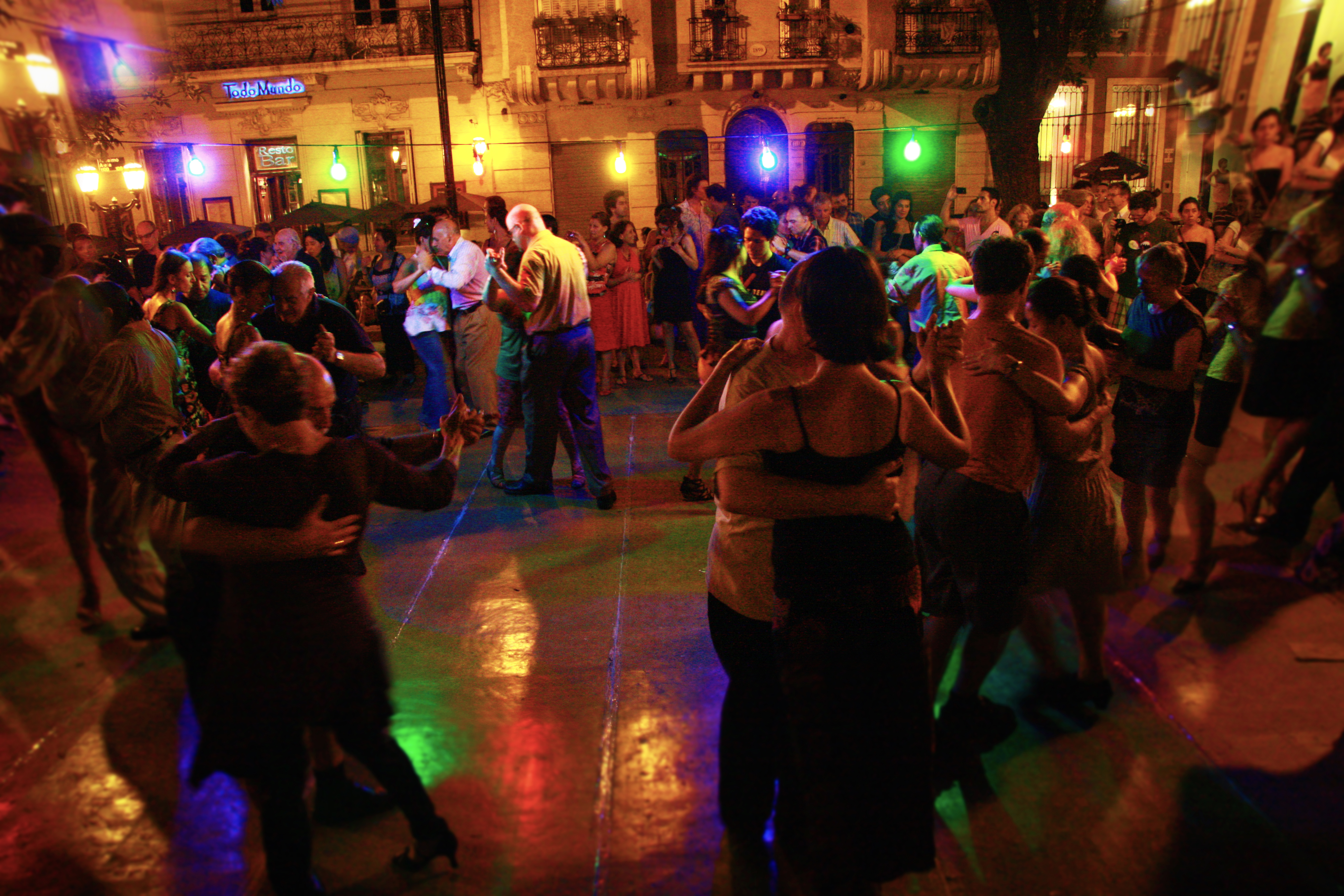
Southern City of Light

Guest Author: Denzel Johnson

During the 1800’s Buenos Aires hosted a wealthy group of people in what is today’s most popular district- San Telmo. The district today is as popular as it could be and hosts a series of events that accommodate locals as well as tourists as they flock between the clubs and cafes. Continue reading

Mangala Devi Temple in Thekkady

This slideshow requires JavaScript.

The 1000 year old Mangala Devi Temple is a good example of the traditional architectural style of South India. It is situated on the northern boundary of the Periyar Tiger Reserve 1400m above sea level. Continue reading

Green Lifestyle Everywhere You Go in a Concrete Jungle

This will be my first post that I’m writing for Raxa Collective. To be honest, I was waiting for a great idea to jump out at me that will brilliantly catch everyone’s attention. But, now that I think about it, blogs are more about sharing a stream of mind in our daily life, so here I am.

As I’m spending my spring break in NYC, I’ve been observing a range of eco-lifestyles all around me, even in this urban area. You may think that New Yorkers care less about the environment because they live in a “concrete jungle”, but it’s proved to be wrong. In NYC, there are so many organic stores, restaurants that serve organically and locally grown vegetables and fruits, farmers markets, etc. – the list goes on and on. Seriously, there are even farming and gardening classes and programs for both children and adults! Continue reading

Plan B

My past posts reveal my desire to be directly involved with sustainable farming.  I plan and hope to achieve this, but as both the global population and the demand for land, space, and food rise, I recognize that being flexible with this dream may minimize any potential disappointment.  Comparatively, as much as I seem to “fly by the seat of my pants,” I like to plan.  I come close to peace when I at least have some general structure to my life.  So with this in mind, I began to brainstorm back-up plans to having my own farm.

In this search and planning excursion, I read an article and learned of vertical farming.  Dickson Despommier of Columbia University and his students researched this urban farming phenomenon and hypothesized that such projects could solve our global food insecurity problems.

I am unsure of its feasibility, but in my characteristic optimism, I believe it has potential.  Continue reading

Architectural Conservation in Dubai?

What do you do with a 5 hour layover in Dubai?  Whenever I fly with Emirates, I somehow find myself with a lengthy layover at the Dubai airport. The last time this happened I was lucky enough to have a friend in town to show me the infamous skyline by night. This time, however, my flight arrived in Dubai at about 6am. So after an hour or so nap on the fairly comfortable waiting lounge seat, I headed off to check out old town Dubai by Dubai Creek. The pink women and children-only taxi dropped me off in the Shindagha area, right beside the docking area for the abras, the commuter boats.  I walked along the quiet and pristine port towards a cluster of traditional-looking buildings.

This slideshow requires JavaScript.

Low and behold, I stumbled upon a sign reading “Traditional Dubai House”. Continue reading

Beetles, Dancing, Rock & Roll

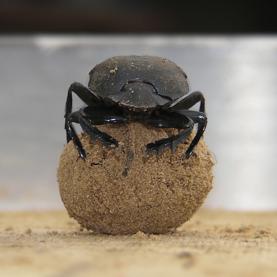
Click the image to the left to go to an article in Scientific American about a beetle that is capable of a remarkable architectural feat while dancing a remarkable two-step:

Emily Baird of Lund University in Sweden and her colleagues study how animals with tiny brains—such as bees and beetles—perform complex mental tasks, like navigating the world. The dung beetle intrigues Baird because it manages to roll its dung ball in a perfectly straight line, even though it pushes the ball with its back legs, its head pointed at the ground in the opposite direction. If the six-legged Sisyphus can’t see where it’s going, how does it stay on its course?

Continue reading

God in Goa

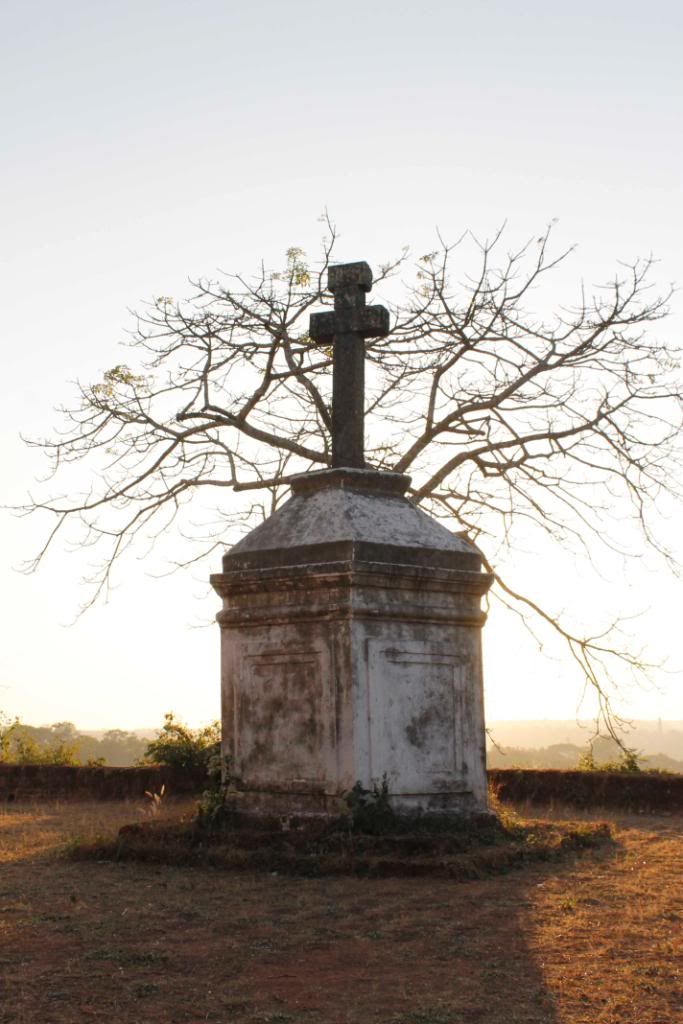
Goa, India’s smallest state, is a former Portuguese colony bordering the Arabian Sea. Once a key trading enclave for spices, Goa is now a significant tourist attraction due to its beaches and festivals. It is also known for its considerable Catholic history and architecture; St Francis Xavier arrived in 1542 with Jesuit missionaries (he was a pupil of St Ignatius Loyola, founder of the Jesuit Order) and there are many impressive churches throughout Goa’s capital, Panaji, and its former capital, Old Goa.

Perhaps one of the most awe-inspiring of these is the Church of St Augustine. Augustinian friars completed its construction in 1602, and it has been in different states of disrepair since 1835, when the Portuguese government began evicting many religious orders from Goa. The 46 meter tower (half of which collapsed in 1931), in varying stages of illumination, is perhaps the most easily appreciated element of grandeur remaining. But close examination of the vault floor reveals dozens of tombstones in relief, mostly for men who seem to have been knights, or at least who had knightly coat of arms. Some of these sigils are surprising, such as the skull and crossbones motifs. This is the church that I spent the most time at; most of what is left is eroded, overgrown, cracked, or otherwise dilapidated, without detracting from the ruins’ beauty or impressiveness, however. Continue reading

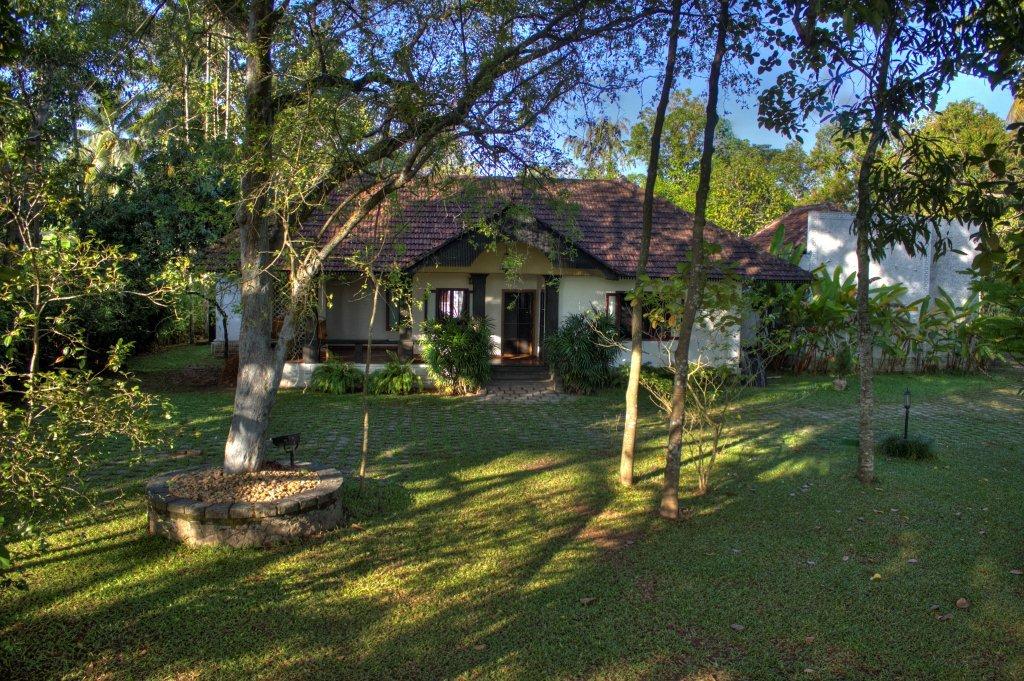
Backwaters Home: Pampa Villa

Pampa Villa On The Pamba River

We have mostly shown images of life on Kerala’s backwaters from the perspective of boats, as in looking at and looking from.  As Milo’s recent post showed (at the tail end, so to speak), there is much more life on these waters than first meets the eye of the occasional visitor.  The view above is from the river, looking at a home that Raxa Collective recently took responsibility for.

This responsibility included modifications to the interiors in order to make it more welcoming to travelers.  It had served as the home of a prosperous resident of the backwaters, but now is open to receive visitors whose preferences in terms of privacy, decor and food (at least spice levels) often differ from those of locals, at least a bit.

Continue reading

Meeting the Masai

Although the Kenyan destination tourism market has commercialized the Masai name, I was pleasantly surprised to find the traditions and heritage of the Masai people thriving and vibrant in the Masai Mara. In Nairobi, you will find merchants and craft markets collectively selling Masai blankets, beaded jewelry, artwork and more. I would contend the Masai name is an over-utilized marketing tool, a clear indication it’s moving dangerously close to holding a “tourist trap” reputation. Although my position on the matter remains unchanged, the innate beauty of the Masai culture should not be dismissed. The Masai Mara may be best recognized as Kenya’s wildlife mecca, but the region is also home to over fifty authentic Masai villages of tremendous character and unique local charms.

This slideshow requires JavaScript.

After our concluding full day safari game drive, our guide gave us the option of visiting a Masai Village near our camp. Indicating that the venture would cost us an additional 15USD, I immediately believed yet another “tourist trap” pitstop was in store. Nevertheless, faced with the alternative option of sitting in my non-electrified tent, I succumbed to the sales proposal and scrambled together 1500 Kenyan Shillings to visit this so called “authentic village”. The entrance fee granted us a traditional Masai welcome dance, entry into the villagers’ homes, a guided tour of the community, and complimentary photo opportunities. With my skepticism still intact upon entering, I anticipated some sort of lazily executed, artificial village re-creation of primitive Masai Mara life, à la Plymoth Plantation or some cheesy Renaissance Fair. While the community has certainly optimized their culture’s tourism appeal, I was happily surprised to find that what we witnessed wasn’t just for show or to indulge us “muzungus” (foreigners); conversely, it demonstrated how the native Masai currently lived day-to-day.

Continue reading

Necessary Versus Sufficient

There are needs, and there are wants.

A toothpick sculpture?  Not necessary for San Francisco to demonstrate its greatness (as might have been an underlying objective of the commission).  Not sufficient for that purpose either.

Continue reading

All the World’s a Stage

In a recent post Matthias Jost shared his impressions of San Jose, Costa Rica and its Teatro Nacional.  But what he didn’t share was the fascinating history that surrounds this piece of National Patrimony.

Part apocryphal and part historical, the tale goes that in the late nineteenth century an important European Opera Troupe was touring Central and South America, but they refused to stop in the “back water” of Costa Rica, as it had no proper venue for them to perform in. Continue reading

And the “Fourth R Award” Goes to….

This slideshow requires JavaScript.

Two months ago I wrote about British restaurateur Arthur Potts Dawson and his closed loop restaurant concepts and social enterprise food cooperatives here.   When I came across the Greenhouse I found the perfect follow up.  One would not be amiss to call the Australia based designer/builder/environmentalist Joost Bakker “green-blooded”.  His Dutch flower growing heritage helped forge a lifelong passion with growing things and plant inspired structures, such as greenhouses and conservatories.  His greenery walls invoke the power of nature creeping back into urban environments, making them simultaneously comforting and edgy. Continue reading

Such Stuff As Dreams Are Made On

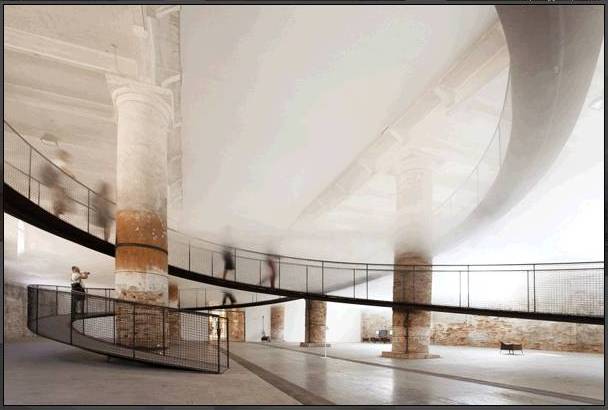
Cloudscapes (2010), Transsolar and Tetsuo Konda Architects

The Venice Architectural Bienale has a long history of showcasing innovative, thought provoking design and the Arsenale is a ideal venue to experience it.  Once the largest industrial complex before the Industrial Revolution, in the 16th century the assembly line system was so efficient that it is said they could complete the manufacture of a ship in one day. (I won’t go into the number of trees required to feed this system throughout the centuries…)

The exhibition space of the Corderie, built in 1303 and then rebuilt between 1576 and 1585, covers a 6400 square meter surface that includes nearly 10 meter high ceilings, a magnitude that allows for a range of installations in the 2010 Bienale themed “People Meet in Architecture”.

Cloudscapes is an aerie (and slightly eerie) example of the possibilities.   Continue reading

Blazing Trails

When the Estonian city of Tallinn was named the 2011 European Capital of Culture organizers immediately started planning a festival to highlight the fact that the city has much more to offer than the picture postcard views.  The LIFT11 Urban Installations Festival is intended to showcase the city’s innovative use of public space from 12 June to 22 October 2011.

The temporary urban installations range from objects of art and architecture, to land art installations set up in and around the city space.  The pieces are meant to be interactive, asking visitors to use their senses in how they perceive them, including their sense of humor. Continue reading

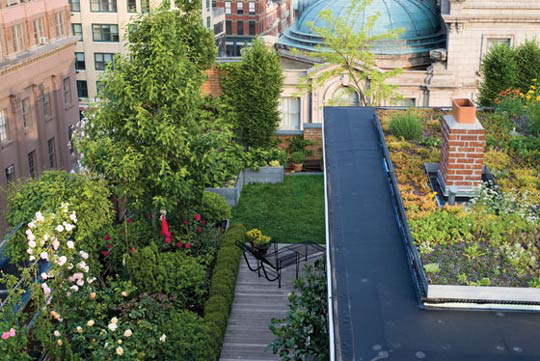
The High Line

Notice where the railway used to enter the building

The High Line railway was originally designed to bring shipments straight from the Hudson to manufacturing warehouses in Manhattan. The train cars could run packages from wharves to upper-level floors of these industrial buildings without having to obstruct street traffic or be carried up several stories manually (freight elevators weren’t a common sight in the 1930s, whether for safety, efficiency, or invention reasons I don’t know).

In 1980 the High Line trains stopped running, and construction of the new park design started in 2006 (after seven years of planning). The first section opened to the public in 2009, and the second section in 2011.

I first heard of the High Line Park this summer, while doing some browsing about the city online. I was immediately struck by the ingenuity of converting what had once been industrial space Continue reading

Mission-Driven Development in Baja California Sur

In the first third of the 17th Century the Spanish crown sent Jesuit priests to establish missions in what is now Baja California Sur.  The fourth of these–Misión San Francisco Javier Vigge Biaundó–was active from 1699-1817.  What is amazing is that the installation has remained intact even centuries after its last priest left (abandoning the missions at the gun-pointing insistence of the crown as independence movements fomented, which is a story worthy of your further investigation).  Having found this particular oasis in the last third of the 17th Century, the priests cultivated grapes, dates, olives and other produce which, remarkably, still grow here today.

This slideshow requires JavaScript.

It is visually and olfactorally stunning to be in a place with the cactus and other desert flora native to the region Continue reading