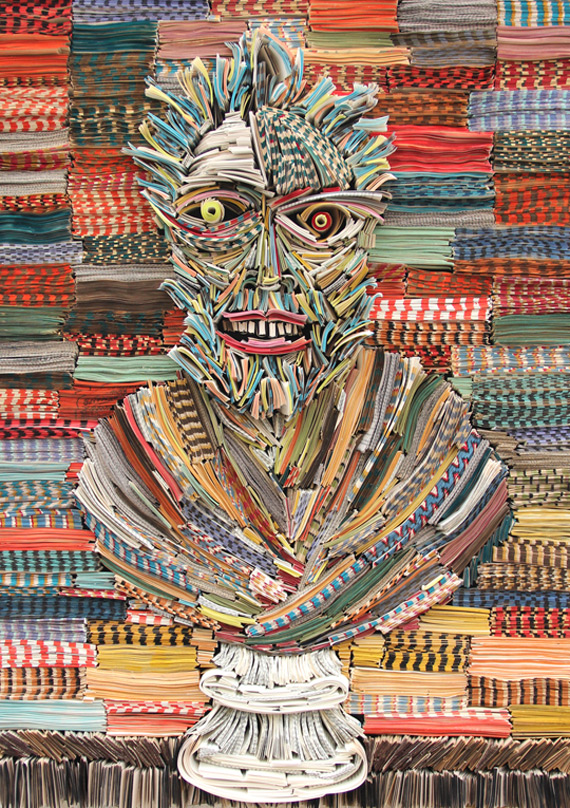
We Love Paper Creatively Reconceived
Over ten years ago South African designer Marisa Frick-Jordaan literally wove together two of her apparently disparate passions : Socio-economic development and contemporary craft and design. A BA Honors degree in Politics and Fine Arts at the University of Natal and a Fashion Design Diploma at Natal Technikon was followed by 6 months at the Cité Internationale des Arts, a residential arts cooperative in Paris, similar to London’s Cockpit Arts.
A long time interest in African art forms took her from a clothing line that incorporated Zulu beadwork to a telephone wire weaving project that blends traditional craft with avant-guard, award winning design. Weaving is an ancient art around the world and in addition to the use of grasses, the decorative use of wire in Southern Africa dates back hundreds of years. Color coated copper telephone wire came with modernization and the rural to urban migration created access to these new industrial materials. Continue reading
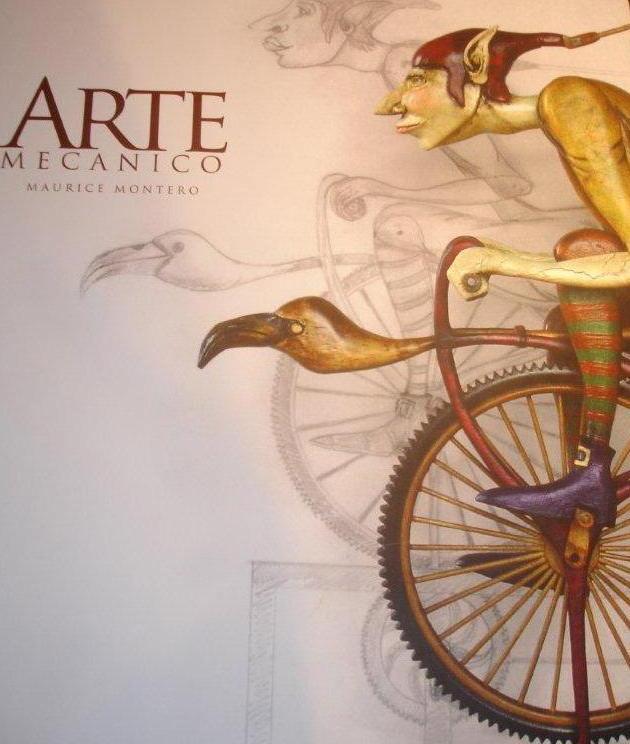 Another change visible in the Galapagos Islands circa 2011, versus 2oo3, is the quality of the craft on display in at least one shop in Puerto Ayora. I have always been interested in artisan craft, but especially so in the last 15 years. My first exposure to the intersection between ancient traditions and modern methods was in Guatemala in the mid-1990s, where an Austrian artisan was working with Maya communities on the re-establishment of production of finely carved ceremonial masks. Not long after that, I saw the same thing in Ecuador, where a Swiss artisan was working with the tagua nut (aka vegetable ivory) to create remarkable carved curiosities.
Now, in Galapagos, I see that an Ecuadoran artisan has documented his work in this book, showing a series of hand-made, all-wooden mechanical devices. While he is not based in the islands, his work is on display and somehow resonates especially well there. I took these short videos while visiting the gallery showing his work:
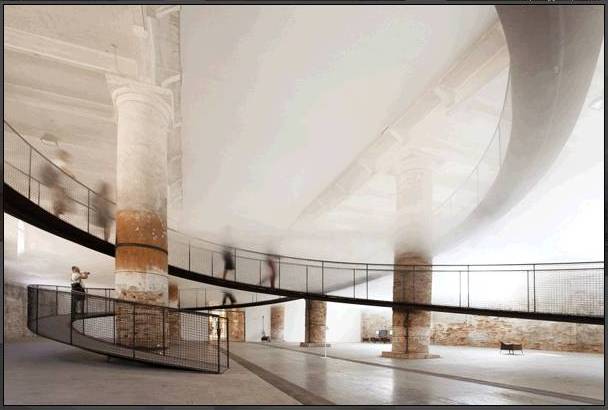
Cloudscapes (2010), Transsolar and Tetsuo Konda Architects
The Venice Architectural Bienale has a long history of showcasing innovative, thought provoking design and the Arsenale is a ideal venue to experience it. Once the largest industrial complex before the Industrial Revolution, in the 16th century the assembly line system was so efficient that it is said they could complete the manufacture of a ship in one day. (I won’t go into the number of trees required to feed this system throughout the centuries…)
The exhibition space of the Corderie, built in 1303 and then rebuilt between 1576 and 1585, covers a 6400 square meter surface that includes nearly 10 meter high ceilings, a magnitude that allows for a range of installations in the 2010 Bienale themed “People Meet in Architecture”.
Cloudscapes is an aerie (and slightly eerie) example of the possibilities. Continue reading
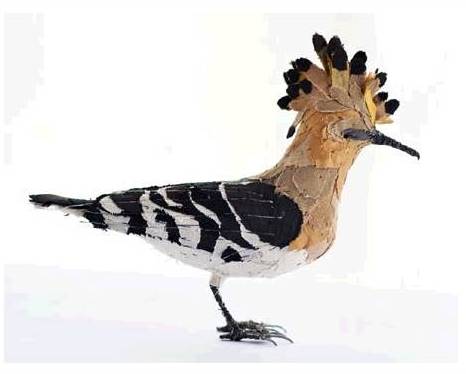 Hoopoo by Textile Artist Abigail Brown
Question: What would a Natural History Museum look like in Wonderland?
Answer: Abigail Brown’s studio.
The Victorians were avid collectors, and there’s something deliciously Victorian about the detail and precision with which textile artist Abigail Brown practices her craft, bringing the winged world to life with bits and pieces of cloth that each carries their own history. Continue reading

Chris Jordan, Caps Seurat, 2011
Seattle based photographer Chris Jordan has been making visual statements about mass consumption for over ten years. Using the “artist’s eye” to be able to step back from the overwhelming truths of societies’ excesses, he simultaneously breaks down that mass consumption into its smallest part and its incomprehensible whole.
Jordan uses commodities that are discarded daily–plastic and paper cups, newspapers, electronics–as the “brushstrokes” to illustrate the wastefulness in cultures of consumerism. His photographs place both conscious and unconscious behaviors under a microscope, which is often unsettling, and always thought provoking. Continue reading
Janet Echelman, Her Secret is Patience, Phoenix, AZ, U.S.A. 2009
American artist Janet Echelman has worked in numerous mediums throughout her career and has a long history of working collaboratively with communities outside of her own culture, whether it be Balinese textile artisans or Indian bronze castors.
A Fulbright lectureship about painting brought her to Mahabalipuram, India, a fishing village in Tamil Nadu famous for sculpture. But it was watching the millennia-old craft of weaving and working with nets that ultimately inspired the work that now defines her art. When she watched the men making piles of nets on the shore she began wondering if the material was “a way to create volumetric form without heavy, solid materials.” Continue reading

Land Art Installations can be as varied as the land they sit upon and the vision of the individuals who create them. Sometimes urban and often in wilderness areas, they almost always offer a window into the hearts of their creators.
I’ve spoken about the convergence of art and architecture in previous posts, and Swedish firm Kjellgren Kaminsky Architecture was one such example. Whereas the installation Clear Cut makes a visual statement about a particular conservation issue, Reflecting Time is a study of the interaction of light and landscape.
The team headed north along the Norwegian coast, their only tools for this ephemeral installation 100 simple reflectors and the cameras they would need to record the work. They climbed the seaside mountain, placing the reflectors in straight, parallel lines that defied the undulating landscape. Then they spent time by the sea itself, marking the coast with tiny glimmers.
The tide is strong in Norway shifting the sea level up to 2 meters every day. A line of reflectors marked the coast, sometimes the reflectors lay on the ground later they float in the water. We made a ring further out in the sea untouched by the tide. It had an ephemeral glow that fascinated us.
In both cases the changing light and tides did the work, the art lay in meditating on the results.
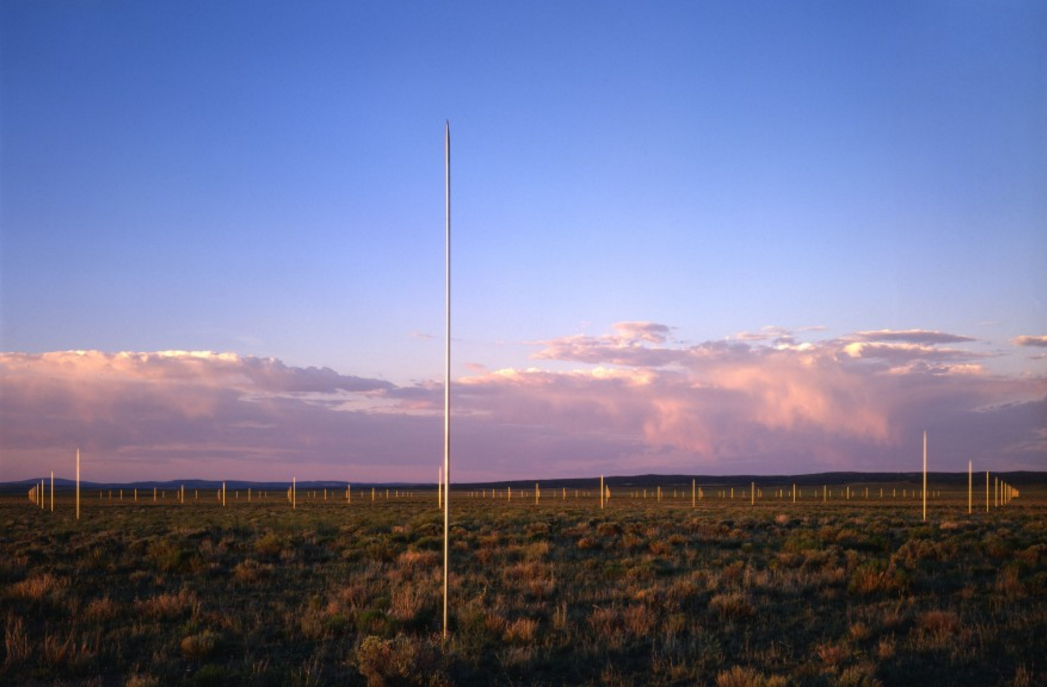
Walter De Maria, The Lightning Field, 1977. © The Estate of Walter De Maria. Photo: John Cliett
Based on his oeuvre one would say that Walter De Maria is an artist fascinated by mathematical precision and order. His work at Gagosian Gallery in New York City or The Nelson-Atkins Museum of Art in Kansas City in the United States or even the Chichu Art Museum in Naoshima, Japan exemplify this focus on the predictable progression of sunlight as it relates to planetary rotation and the perfection of spheres.
In my last post, I walked along a border–the one separating the land of nostalgia from the land of meaning–and am still not sure which side of the border I was on. One person’s memory lane is full of madeleines, and another’s may have no particular there there (so be it, glass houses and all). The link to Brother Blue is the puzzle. Can anyone, out of context, realize who that man was and what he accomplished from that little bit of Lear jive? I do not know. But recycling is an ethos that India is instilling, so I go with it.
The thread linking Thoreau and Brother Blue for me the other day kept un-spooling, and led me back to my favorite living artist:
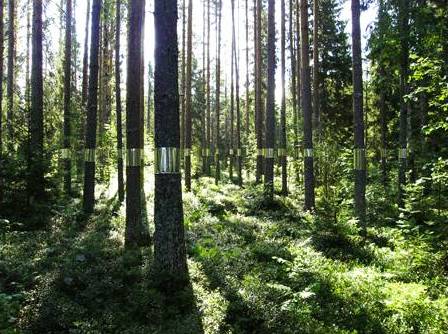
“Nature is my manifestation of God.
I go to nature every day for inspiration in the day’s work.”
― Frank Lloyd Wright
Architects taking their inspiration from nature isn’t an innovation, in fact, its retrieving what has often been forgotten. Sometimes that inspiration leads them outside of the building process altogether and into the sphere of Art, or to be more precise, into the sphere of Land Art Installation. Continue reading
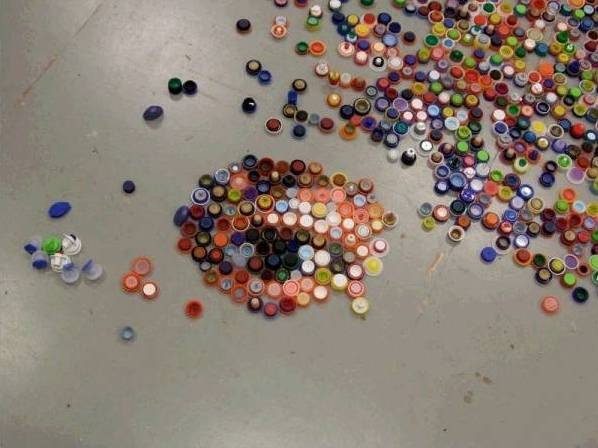
Mary Ellen Croteau’s “Nested Caps/eye”
Even the most enthusiastic recycler gets bogged down by bottle caps. Their chemical make up is different from the bottles they top, so often they don’t fit into the categories of those ubiquitous numbers that are ascribed to other plastic items.
Artist (and self proclaimed Agitator) Mary Ellen Croteau has a history with statement art and commenting on the quantity of plastic waste has been part of her work for some time. She’s used both bags and the caps to create work that is both captivating and provocative. Continue reading

Seth’s reference yesterday to one of the writers who most influenced me, combined with Amie’s reference today (do give a moment to her link on Niemann’s brilliance) to autumn, caused some sort of mnemonic chemical reaction. It started by thinking about the quotation of Thoreau overnight. By the time I saw Amie’s mention of autumn this morning, I suddenly remembered a trip I took to Walden Pond in the autumn of 1979. Continue reading
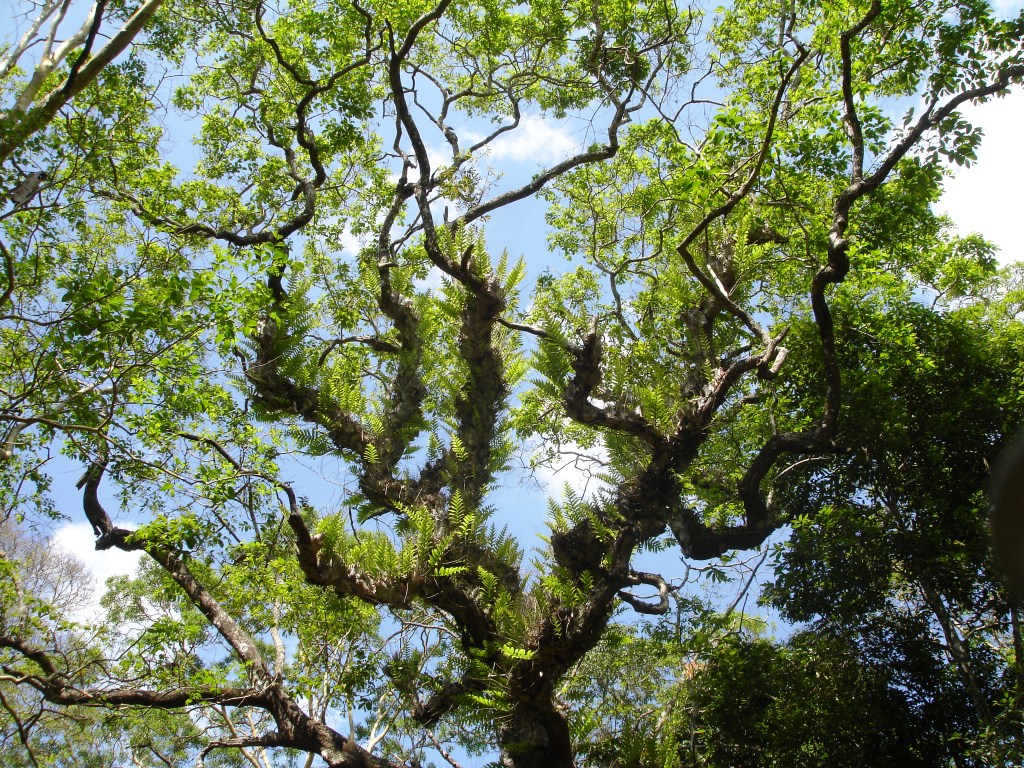
I live in a very green land. Especially post monsoon the landscape of Kerala is dotted with all shades of green like a pointillistic painting.
There’s the chartreuse of new growth tea. The Chromium oxide green of the lower, more mature leaves. The olive green of coconut fronds or the sage of the pineapple top. The celadon of bamboo, the sap green of buffalo grass or the emerald of the banyan tree….all the greens that blend when you squint into this verdant landscape.
The word green is closely related to the Old English verb growan, “to grow”. It makes us think of nature, of biology, of ecology, of prosperity, even of innocence.
Do I need to mention that green happens to be my favorite color?
But I also spent many years of my life in parts of the world where the Autumnal Equinox means crisp air and changing leaves. And when the chlorophyll levels drop the spectrum changes to include the colors of spice– of turmeric, cinnamon, nutmeg and mace, with a healthy dose of dried capsicum thrown in with the help of the maple trees.
Unless someone from another part of the world sends me photos of this annual metamorphosis I have only the poignancy of memories. But Christophe Niemann is always a good choice to add levity to longing.

Whether by coincidence or just being on a roll (sorry), I just came across an inspiring urban art project that is part Civil Disobedience, part Public Art Initiative, part plain old recycling and completely FUN! Continue reading
The mention of Brown and the questions students raised in a postscript exchange of ideas continues to inspire.
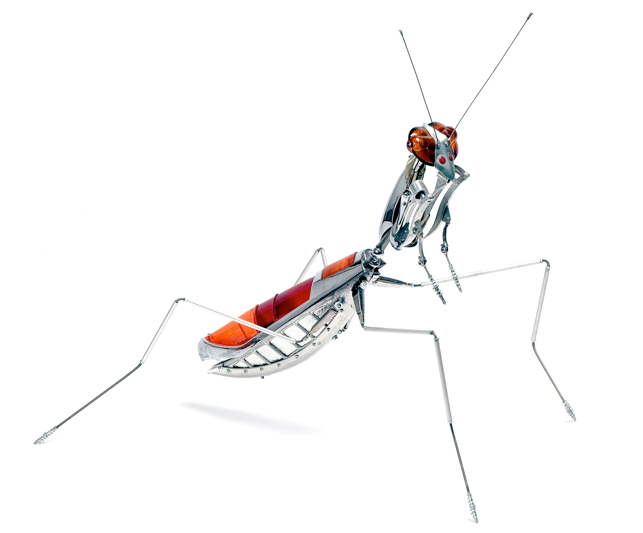
In a world of give and take, another mention of our favorite sculpteur of late is one way to think again about the fable mentioned here. Ants are not just the worker drones implied, and grasshoppers are not just the partiers implied. Could it be that the praying mantis has the answer? :
From Bike Share programs to recycled wheels, Tour de France to backwater byways, bicycles are universal, or at least global.
More than just a method of transportation, they are often a form of expression, of the person riding it or the job they do. Continue reading

 Organikos