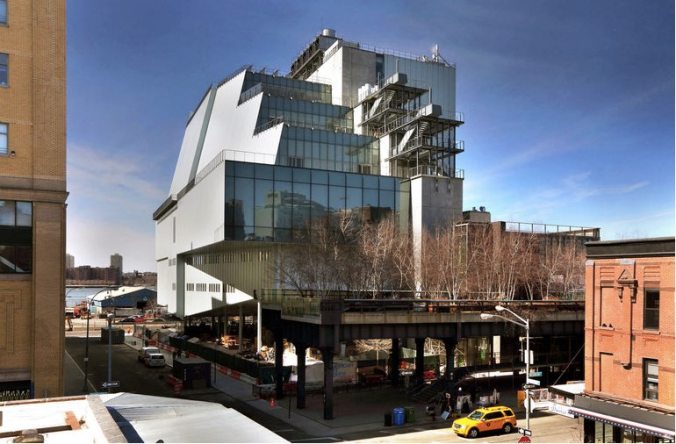
If You Happen To Be In New York City

Whitney Museum of American Art. Photograph by Ed Lederman

Whitney Museum of American Art. Photograph by Ed Lederman

We have a thing for public spaces, especially when they combine with community activism. We try to get firsthand experience, and when we have learned enough about such places, we share what we can here. Ditto for museum exhibits, special library exhibitions, and unusual library thingys. It is not every day we get to announce the opening, or re-opening, of one of the greatest museums in the world, right in the midst of such a public space:

THE NEW WHITNEY OPENS MAY 1, 2015 BUY ADVANCE TICKETS NOW

The reviews convince us that this will be worth the visit, and this particular wording puts it in perspective:

The Whitney Museum of American Art, long the odd duck among the Big Four of Manhattan art museums—a cohort that includes the mighty Metropolitan, the starry Modern, and the raffish Guggenheim—takes wing on May 1st, when it reopens in a new, vastly expanded headquarters downtown. The fledging owes a lot to the Italian architect Renzo Piano’s ingenious building, on Gansevoort Street, which features six floors of shapely galleries, four open-air terraces, spaces for performance and screening, a library and reading rooms, a restaurant, a café, and an over-all feeling of seductive amenity—a bar on the piazza-like ground floor bodes to be one of the toniest trysting spots in town. It is likely to win far more fans than the Whitney’s old home, Marcel Breuer’s brutalist “inverted ziggurat,” which opened in 1966, on Madison Avenue, and which it vacated six months ago and leased to the Met. Piano’s museum stands at the southern end of the High Line and hard by the Hudson River, in what remains of the tatterdemalion meatpacking district. It looms like a mother ship for both gallery-jammed Chelsea, to the north, and the puttering West Village, to the south. It is instantly a landmark on the cultural and social maps of the city—and on its poetic map, as a site to germinate memories. Continue reading
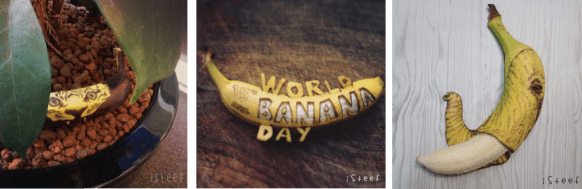
Stephan Brusche, Come To Kerala!

Stephan Brusche (@isteef)

Stephan Brusche (@isteef) From left to right: tiger, WBD, elephant

Hospitality is in our DNA, but we always want to go the extra mile for the those who tickle our creative fancy. In fact, World Banana Day touches us on multiple dimensions, and we thank our newest contributor, Rosanna Abrachan, for bringing it to our attention.

Stephen Brusche is someone who clearly enjoys playing with his food, and scrolling through his gallery it was close to impossible to choose favorites from over 200 fabulously creative examples, crafted with a wink and smile at both the sacred and the profane. We settled on 2 of our iconic Kerala fauna above, but be prepared to lose yourself in the images when you visit his site. Continue reading

Northern California’s Public Media Shares Art History With Communities Local And Global

Sonya Noskowiak, Calla Lily, 1932. (Courtesy Center for Creative Photography)

Sonya Noskowiak, Calla Lily, 1932. (Courtesy Center for Creative Photography)

Thanks to KQED (Public Media for Northern California, including National Public Radio and Public Broadcasting System, both of which would have the Raxa Collective seal of approval, if such a thing existed, for their excellent service to their communities) for this story of a not well enough known photographer:

Sonya Noskowiak: A Groundbreaking but Forgotten Photographer

By Matthew Harrison Tedford

…Another photograph, Calla Lily(1932), also possibly shown at the de Young, demonstrates Noskowiak’s thoughtful treatment of light. The flower’s milky white spathe is set against a vacuous black background. The flower appears as if floating, but the light falls on the veins of the leaves, grounding the luminous spathe.

A work titled Sand Pattern (1932) looks like aerial photographs of the Sahara or a satellite image of some uncharted Martian desert. Tentacles of sand stretch out in all directions as if they’re grasping for a nearby oasis. The sand resembles the aluminum powder found in an Etch A Sketch, almost shimmering. In actuality, the patterns might cover an area no larger than a footprint, possibly on a Carmel beach. Continue reading

If You Happen To Be In London

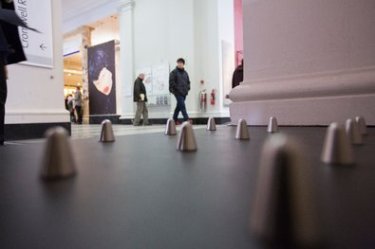
Peter Kelleher/Victoria and Albert Museum, London, 2015. Spike studs, used to keep people from sleeping near buildings, are part of the exhibition.

Peter Kelleher/Victoria and Albert Museum, London, 2015. Spike studs, used to keep people from sleeping near buildings, are part of the exhibition.

When we hear of civic-minded initiatives, museum shows are not the first thing that comes to mind. Schools, and libraries, and conservation initiatives come to mind.

Museums are civic institutions, of course, and we have posted more on this site about museums than almost any other topic.

But civic? We like the theme. This is a show we know will be worth seeing:

V&A Museum Returns to Its Civic-Minded Roots

“All of This Belongs to You,” an exhibition running through July 19 at the Victoria and Albert in London, seeks to stimulate debate about citizenship and the role of museums as public spaces.

If You Happen To Be In New York City

PHOTOGRAPH BY DAN WINTERS

PHOTOGRAPH BY DAN WINTERS

We have said since early on, and plenty of times since, that in these posts we cannot claim to be either committed vegetarians nor committed meat eaters. Rather, we believe–yawn at your own risk–in moderation. This upcoming show sounds like a worthy outing for a novel take on the topic:

Ab Ex meets Zap Comics in the wild imagination of Trenton Doyle Hancock (seen above in his Houston studio). In his boisterous mythologies, villainous vegans do battle with good-guy, meat-eating mutants, and Torpedo Boy—a superhero that Hancock, now forty, first drew in the fourth grade—swoops in to save the day. Continue reading

Marari Pearl Welcomes Sand Artists And Spectators to SAFA

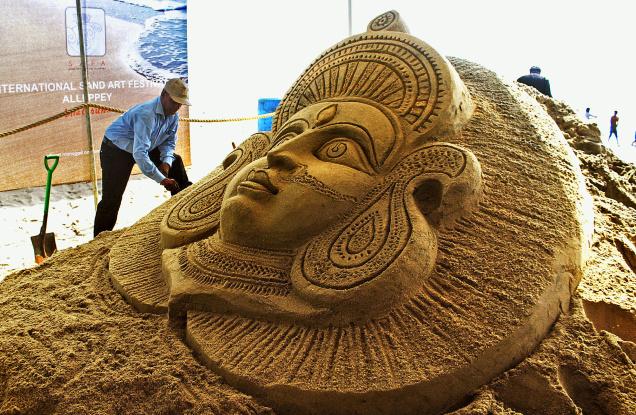
An artist prepares a sand installation at the Alappuzha beach during the trial run of the international sand art festival that will be held in April.– Photo: By Special Arrangement

An artist prepares a sand installation at the Alappuzha beach during the trial run of the international sand art festival that will be held in April.– Photo: By Special Arrangement

Thanks to the Hindu for  bringing this to our attention:

safa-logoCome April, sand sculptures and paintings will adorn the picturesque Alappuzha beach. An international sand art competition, titled Sand Art Festival Alleppey (SAFA), is being jointly organised by the Tourism Department and the SAFA Foundation from April 18 to 26.

We love the logo, and the website for SAFA, and will assist any of our guests at Marari Pearl with the opportunity to participate, either as artists or spectators.

Progress, Evolution & Design

Screen Shot 2015-03-21 at 10.38.33 AM

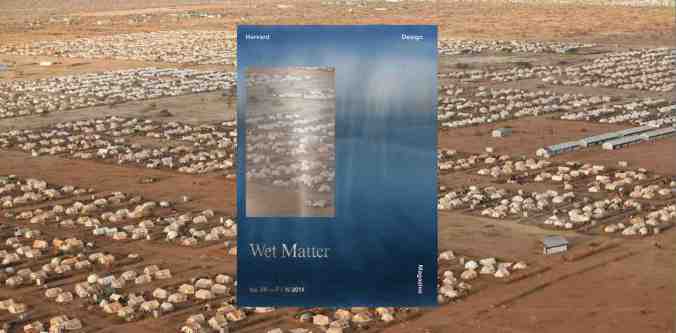
Thanks to the Harvard Gazette for bringing our attention to this magazine, published twice yearly by the Harvard University Graduate School of Design:

Making print modern

New look for Harvard Design Magazine deepens focus on ‘Wet Matter’

By Corydon Ireland, Harvard Staff Writer

In an age of bits and bytes and pixels and text on screens, Harvard Design Magazine — relaunched in a new format last year ― fervently embraces the thingness of print, the quotidian actuality of paper and ink.

The right wordsmiths were on hand to recast and renew the magazine, which is produced at the Harvard Graduate School of Design.

Continue reading

The Critic As Cold Water Splashed Refreshingly On The Face Of Modernity

Schjeldahl-Bjork-690

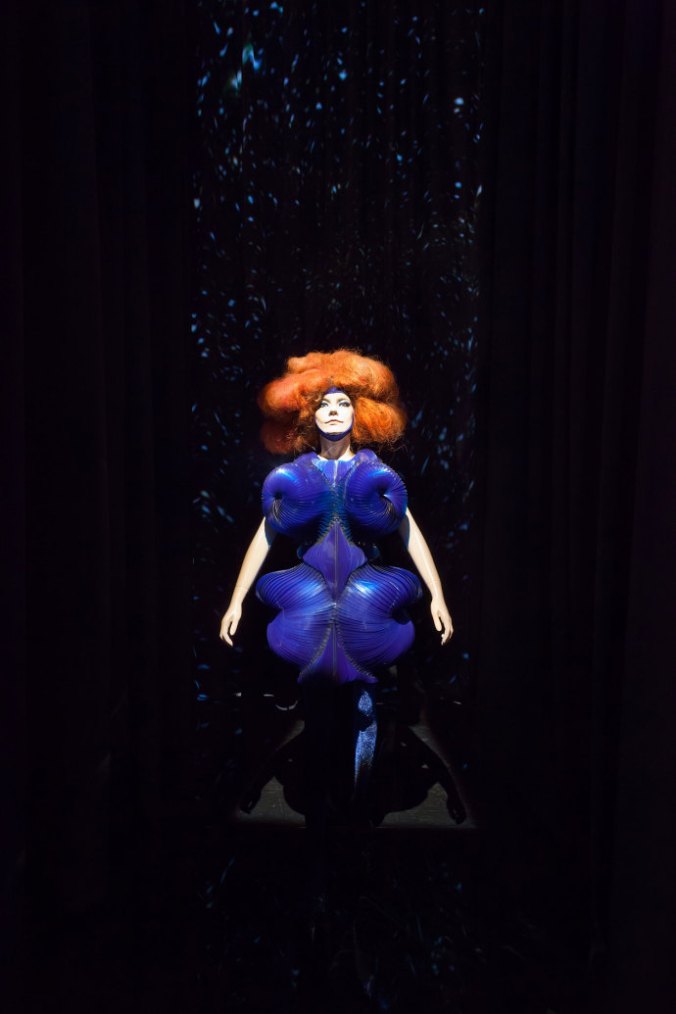
Björk is a restlessly experimental (and therefore fallible), tremendous creative force, not a tarnishable brand. CREDIT PHOTOGRAPH BY JONATHAN MUZIKAR


The opening paragraph of this brief review is worth the click, but the point we would like to bring to your attention is what follows. Sometimes an artist’s museum show can be taken down, critically speaking, with the museum bearing the brunt of the shame. And this point is directly linked to the now well-established concern that art in our age is as much a racket as it is an essential embodiment of culture. This reviewer, and his peers quoted in the opening paragraph, remind us of why we depend on critics for the insight that comes with an occupation whose singular focus is to help us decide whether a certain journey is worth making, or not:

…And yet Björk is unscathed. All the critics (now including me) hasten to acknowledge her musical genius and personal charisma. No detour into lousy taste—even at times her own, as in her partnership, lately ended, with the mercilessly pretentious Matthew Barney—can dent her authenticity. Her music videos (an oasis at the show, in a screening room) typically bring out the best in collaborating directors, musicians, designers, costumers (notably the late Alexander McQueen), and technicians. But if she chances to bring out the worst in star-struck curators, so what? Björk is a restlessly experimental (and therefore fallible) tremendous creative force, not a tarnishable brand. Continue reading

If You Happen To Be In New York City

“The Grand Robe” (circa 1800-30), made by an artist from a Central Plains tribe. CREDIT COURTESY PATRICK GRIES AND VALÉRIE TORRE / MUSÉE DU QUAI BRANLY

“The Grand Robe” (circa 1800-30), made by an artist from a Central Plains tribe. CREDIT COURTESY PATRICK GRIES AND VALÉRIE TORRE / MUSÉE DU QUAI BRANLY

Talk about an epic show. Let’s go:

Moving Pictures

Plains Indian Art at the Metropolitan Museum.

By 

It began with horses and ended in massacre. The zenith of the cultures that are celebrated in “The Plains Indians: Artists of Earth and Sky,” a wondrous show at the Metropolitan Museum, lasted barely two hundred years. It started in 1680, when Pueblo Indians seized the steeds of Spanish settlers whom they had driven out of what is now New Mexico. The horse turned the scores of Plains tribes—river-valley farmers and hunter-gatherers who had used dogs as their beasts of burden—into a vast aggregate of mounted nomads, who ranged from the Mississippi River to the Rocky Mountains, and from the Rio Grande into Canada, hunting buffalo, trading, and warring with one another. The era ended with the killing of more than two hundred Lakota men, women, and children by federal troops at Wounded Knee, South Dakota, in 1890. Meanwhile, epidemic smallpox and other alien diseases took a toll far beyond that of military violence. The official census of 1900 found only a quarter of a million Native Americans in the entire United States. What ensued is a story of reservations—including the immaterial sort, which trouble the mind. But there’s an ameliorating epilogue of revivals and transformations of Plains heritage.

Continue reading

Mindo, Ecuador: Tourism without context


10930076_10202710170395184_2084746537557117191_n

An ethereal plant from the ginger family from an orchid garden in Mindo

I just got back from Mindo, Ecuador, a small town with a lot to do. It’s about an hour and a half from Quito and we took a bus through winding roads in a cloud forest with beautiful sights of waterfalls along the way. Upon arriving, we promptly found a hostel and went ziplining within the first hour. After that, we did a “tarzan jump” off a 30 meter platform into the cloud forest. In the afternoon, we went tubing followed by a tour of a chocolate factory. Before dinner that day, I had a full, multi-layered sensory experience of my body in nature. It wasn’t until later, when I saw a mural on a wall, full of paintings of gringos and tourists ziplining that I realized what was missing. Continue reading

If You Happen To Be In New York

Always downtown in spirit, the Whitney relocates from Madison Avenue to the base of the High Line. CREDIT ILLUSTRATION BY MICHAEL KIRKHAM

Always downtown in spirit, the Whitney relocates from Madison Avenue to the base of the High Line.
CREDIT ILLUSTRATION BY MICHAEL KIRKHAM

If you have not read Justin’s post yet, stop here and go there.  It is much more important. But this is important to our archiving the ever-evolving and improving institutions related to the arts:

On May 1, the Whitney Museum opens in its new location, on Gansevoort Street. The eight-story building, designed by the Italian architect Renzo Piano, has sweeping views of the Hudson River, but they won’t pull focus from the inaugural show, an in-depth look at the permanent collection, which is anchored deep in the American modern and contemporary canon, from Marsden Hartley to Rachel Harrison. Continue reading

Lighting Up Language

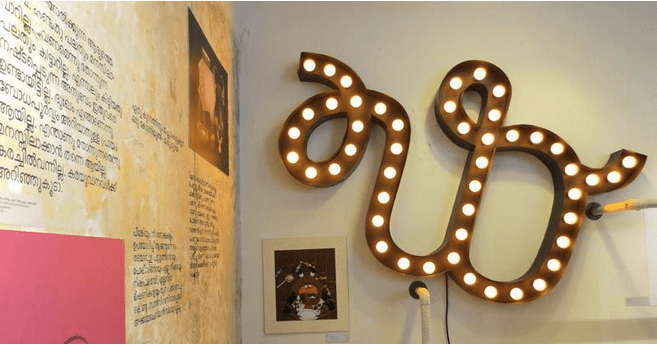
Malayalam Project at Kochi Biennale

Malayalam Project at Kochi Biennale

As a language, Malayalam is a perfect example of form as function: its “loopy” forms seem to roll off the speaker’s tongue. The word itself is even a palindrome, reading forward and backward in a never-ending loop. The high literacy rate in Kerala is evident in the newspapers found in tea stalls at every corner, not to mention the ubiquitous walls painted with verbal signage in both urban and rural settings, and those signs often feel more like murals due to the graphic nature of the language itself. The Kochi-Muziris Biennale ’14 is the perfect platform to express this concept:

Among the various internationally-acclaimed installations at the Kochi-Muziris Biennale ’14 is Malayalam Project that strives to draw the world’s attention towards the regional language and script.

A partner project at the Biennale, Malayalam Project is a collaborative forum that experiments with Malayalam letterform and typography. Kochi-based firms Thought Factory Design and Viakerala have put together this typography cum graphic design exhibition in collaboration with Riyas Komu, secretary of the Kochi Biennale.

“In the digital era, where imagery is used to communicate ideas, words become canvas of graphic. We are looking at how Malayalam, which is either a sound or a text enters the visual age we live in,” said the creative director Theresa Joseph George.

Pointing out that her firms have done lot of research into the field of Malayalam typography, Theresa, who is also a graphic designer, says, “Malayalam script with its loopy curves provides immense scope for experimentation.” Continue reading

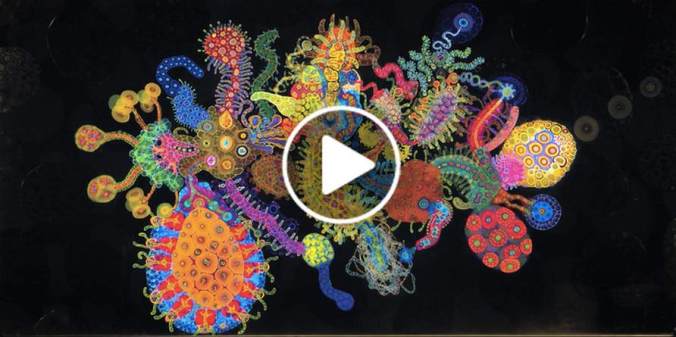
Resin Painting, Explained By A Master

Screen Shot 2015-01-31 at 3.55.00 PM

There is no explanation for how this post relates to other posts on this blog–not much to say about community, collaboration or conservation here. But it fits in with our general appreciation and sharing of stories in which creativity, craft and the broader art world feature. Thanks to the Atlantic, by way of Vimeo, for this five minute wonder:

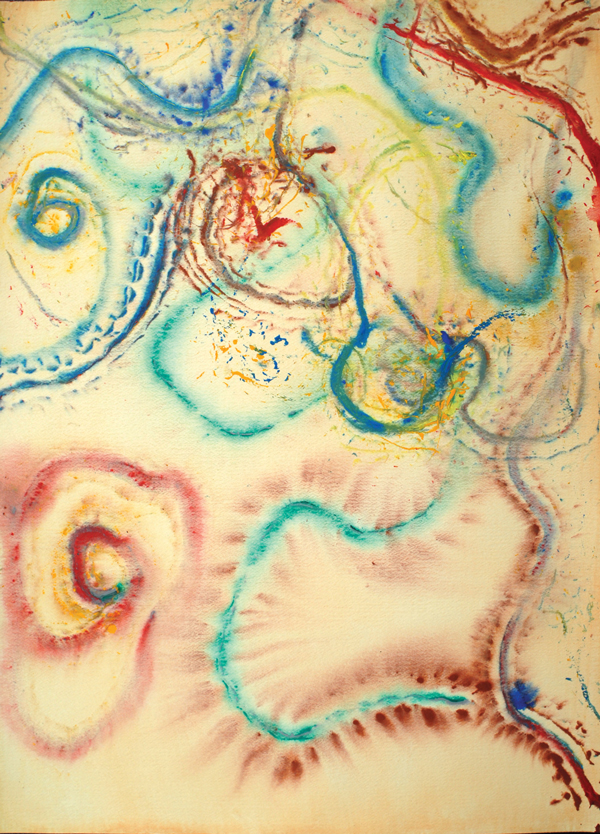
In this short documentary, filmmakers Jason Stanfield and Jordan Olshansky visit the studio of artist Bruce Riley, who paints abstract wonders with poured resin. His art blooms as he works; each layer of dripped paint reacts with the others, creating deep patterns that bear an uncanny resemblance to what a biologist might see under a high-powered microscope. “It’s obvious when it works,” Riley says. “It’s obvious when it fails.”

Riley publishes photos of his artwork on Flickr. Stanfield and Olshansky frequently collaborate with brands to tell their stories through documentaries. To learn more, visit truestoriessf.com and stanfieldwork.com.

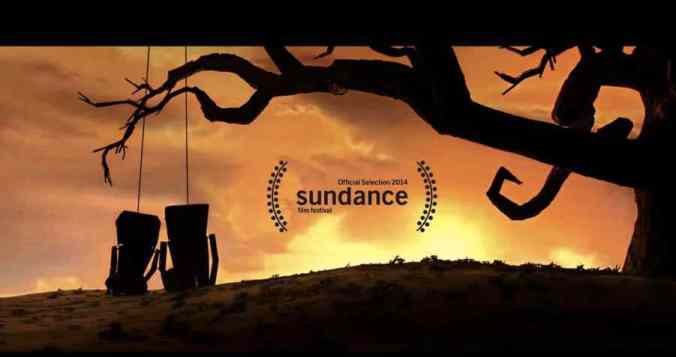
Recycling as a Universal Construct

Although not technically an environmental manifesto, this superbly crafted short film ushers us into a 2-dimensional world built on the depth and power of atomic theory: recycling as a form of immortality.

Congratulations to the director and team for their selection at the Sundance Film Festival, among other achievements.

Click here to view the film via the newyorker website and here for the official featurette.

If You Happen To Be In Fort Kochi

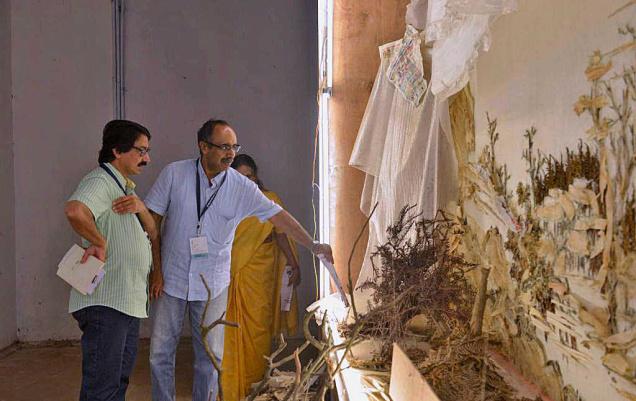
V. Venu, director-general of the National Museum in Delhi (in blue), viewing Xu Bing’s work at Aspinwall House  in Kochi on Sunday.

V. Venu, director-general of the National Museum in Delhi (in blue), viewing Xu Bing’s work at Aspinwall House in Kochi on Sunday.

If you are in town before the end of March, come see the show. We have mentioned the event in these pages more than once between its first iteration and this year’s; and if you follow Spice Harbour‘s social media you would have seen, among other things, that the formal opening of that property doubled as a fundraiser for KMB, as it is affectionately known to Raxa Collective. In today’s Hindu, an article reminds us that the event is not just for fancy folks, but serves a deeply important cultural education service for Indians of all backgrounds and education levels:

Prominent figures from the world of art, film personalities, art students, and the public turned up in large numbers at the Kochi Muziris Biennale on Sunday, even as the event completes a month on January 12.

Among the visitors to the contemporary art event on Sunday was V. Venu, director-general of the National Museum in Delhi. “The kind of consistent engagement by people from every walk is what makes the Biennale an unparalleled successful event in the country,” said Dr. Venu. Continue reading

If You Happen To Be In Ithaca

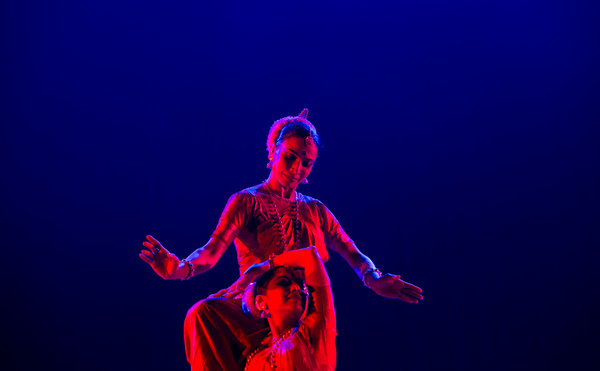
Bijayini Satpathy, top, and Surupa Sen in two duets, “Dheera Sameere” and “Kisalaya Sayana,” in Chennai, India. Credit Jyothy Karat for The New York Times

Bijayini Satpathy, top, and Surupa Sen in two duets, “Dheera Sameere” and “Kisalaya Sayana,” in Chennai, India. Credit Jyothy Karat for The New York Times

On February 4 Nrityagram, a dance troupe from India, will perform “Songs of Love and Longing” at Cornell University’s Barnes Hall. We normally do not take note of such performances at university campuses, even when the artist is from India. But this troupe is exceptional. Last week not far from Raxa Collective’s operations in Kerala, in the neighboring state, a Nrityagram dance performance led to this remarkable review in the New York Times:

A Sublime Touch, From Head to Heel

Odissi Stars at a Dance Festival in Chennai, India

JAN. 6, 2015

CHENNAI, India — Who are the greatest dancers in the world today? Most of the contenders considered in the West for this category are the roving international stars of ballet. But many of today’s finest dance artists have been performing here at the Music Academy’s weeklong dance festival, which ends on Friday. Some — all women — have touched on the sublime.

Three have been practitioners of the Odissi genre: Sujata Mohapatra, who performed on Sunday, and the two leading dancers of the Nrityagram company, Surupa Sen and Bijayini Satpathy, who presented solos and duets on Monday. (I’ll consider other festival performances next week, some no less superlative.)

Odissi is the classical idiom deriving from the eastern state of Orissa (now named Odisha). Though its roots go back 2,000 years, by the 1940s and ’50s it was scarcely known, whereas now it is taught and performed around the world. These three artists exemplify the qualities that have often made Odissi seem the most sensuously poetic of all dance idioms.

Continue reading

If You Happen to be in Kochi

http://www.huffingtonpost.in/riyas-komu/kochimuziris-biennale-aga_b_6319218.html

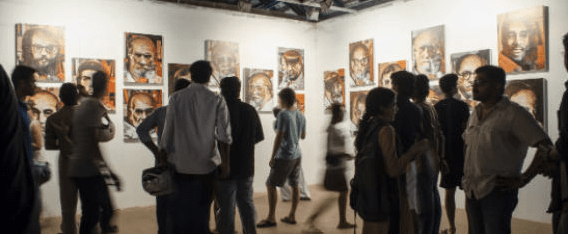
The second edition of the Kochi-Muziris Biennale opened with typical Indian energy, with drums and enthusiasm. Fort Kochi and Mattanchery streets were alive with painters, working solo or in teams, adding finishing touches to murals and other installations.

Riyas Komus’ words resonate well with the RAXA Collective ethos of Community, Collaboration and Conservation.

The story of Kochi-Muziris Biennale, an artist initiative which derived its confidence from artists, art lovers, cultural organisations and the people of Kochi, is the story of taking on challenges to create an alternate space, of sacrifices and solidarity to build an art ecosystem for the new emerging India. Conducting the biennale in Kerala — a state that had the world’s second democratically elected communist government — complimented by the history of the land in the context of art was an organic achievement of its legacy. Our mission is to draw energy from the rich tradition of public action and political engagement in Kerala and build a new aesthetic that integrates both the past and the present…. Continue reading

Xandari’s Latest Dozen+ Pysanky

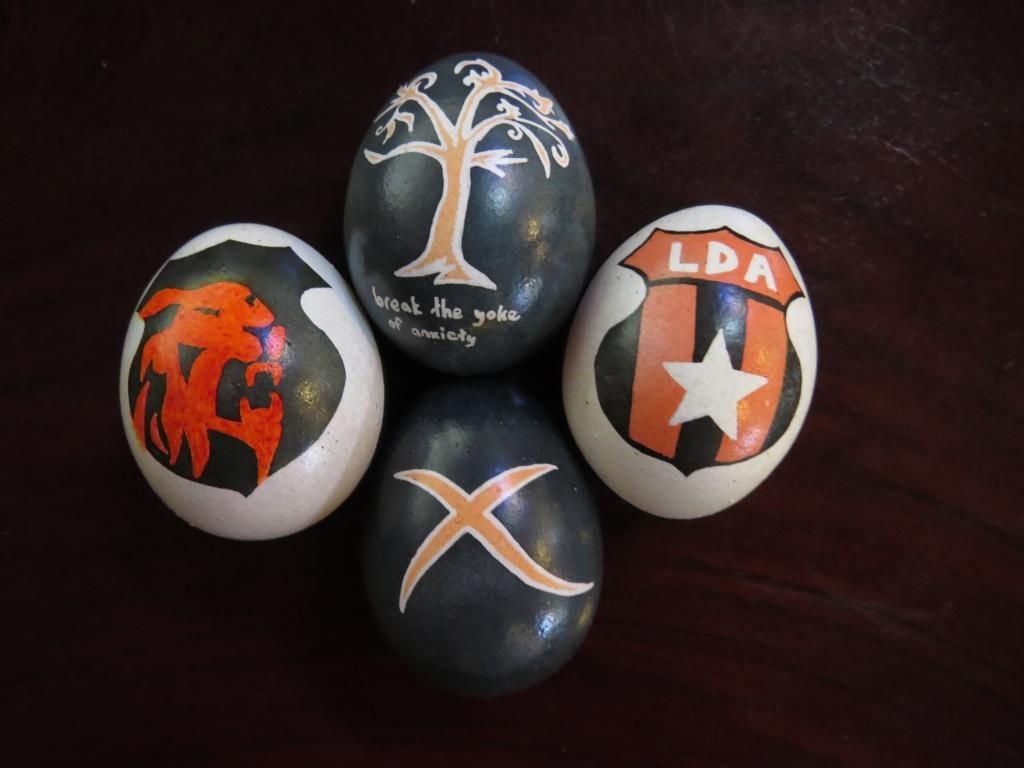
As my on-site time with Xandari wound down for the year early this week, I worked to make as many pysanky for the gift shop as possible, since an ornithological expedition in Jamaica will be taking up the first couple months of the new year. In the photo on the right, you can see that I finally got to one of the patterns I’d brainstormed when first starting this project, as well as a repetition of the Alajuelan soccer team insignia egg. Since the little tree for hanging the eggs in the gift shop is pretty full at sixteen eggs already, most of these eggs will stay in the office until an egg is sold or eggs are rotated.

Two adaptations of earlier patterns I developed and another soccer-themed egg, this time for Heredia’s team.

I’m hoping all these eggs, some of which directly reference Xandari and others Continue reading

Bugs Illustrating Important Things

bug-art-starry-night

Thanks to Conservation for this story, more inspiring than the other one we just posted:

Steven Kutcher is an artist, an entomologist, a teacher—and a Hollywood bug wrangler. Kutcher got his start in bug art in the 1980s when he was asked to figure out how to make a fly walk through ink and leave footprints for a Steven Spielberg–directed TV project. From there he went on to work with carpenter ants in Copycat, giant mosquitoes in Jurassic Park, and stampeding spiders in Arachnophobia—of course. Continue reading

Museum As Pollinator

07SUBGUGGENHEIM-thumbStandard-v2A New Art Capital, Finding Its Own Voice

As plans for the Guggenheim Abu Dhabi go forth, those involved are hoping to speak to the art history of many nations.

Cosmopolitanism expands its reach. A good thing, we believe. Thanks to the New York Times Arts section for that story.