The Value Of Pollinating Bees

We love all creatures great and small, even (we try as best we can) the pesky ones. It is not because we are generous, though we hope we are. It is because we see their value. For hopefully obvious reasons, pollinators are our favorite bees. Our lives depend on them. That is why we have featured dozens of stories about them. Thanks to National Public Radio (USA) for this one:

Watch This Native Pollinator Build Her Bee-Jeweled Nest

dl_514blueorchardbees_bee_on_phacelia_tanacetifolia_wide-026b809eb16b094939e36911aa87b02aad62ddca-s1400-c85

A female blue orchard bee forages for nectar and pollen on Phacelia tanacetifolia flowers, also known as blue or purple tansy. Blue orchard bees are solitary bees that help pollinate California’s almond orchards. Josh Cassidy/KQED

While honeybees and their buzzing hives and hyper-fertile queens get all the press for pollinating our food supply, the hard-working blue orchard bee is one of 4,000 bee species native to North America that does its solitary work in relative obscurity. That is, until now.

In the video, you can see how this bee builds its nests, alternating mud and a purple nectar-pollen mixture in hollow, skinny spaces. The blue orchard bees are preparing a purple lunch box of sorts for their offspring so they have food to eat in the tunnel. The blue orchard bees’ work looks more like jewelry or even scoops of trendy ube ice cream than a nest. Continue reading

World Elephant Day

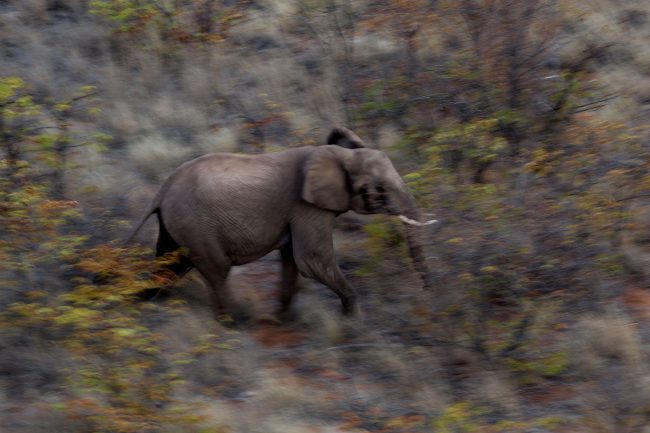
23 July 2018. Elephant Relocation from Venetia Limpopo Nature Reserve (South Africa) to Zinave Reserve (Mozambique). Picture: JAMES OATWAY

Our fascination with elephants is evident throughout the history of this site, and are heartened by actions taken toward increased conservation of these magnificent animals. Relocating large African mammals to new protected areas due to either habitat loss or overpopulation has successfully been done before, but the challenges continue.

Giants on the Move

Written by Patricia Sims, Co-Founder, World Elephant Day

Each year for World Elephant Day we put a lot of our elephant conservation attention toward the ivory poaching crisis threatening African elephants, and the tourism and captivity issues that the endangered Asian elephants face. Yet the larger conservation challenge of habitat loss for both African and Asian elephants is looming. Our increasing encroachment on elephant habitat throughout Africa and Asia is putting elephants at greater risk, resulting in human-elephant conflict issues, and the demise of elephant populations and the ecosystems that they, as a keystone species, maintain.

So what are the solutions? Can moving elephants – from one location where there isn’t enough space for them – to another location where there aren’t enough elephants, help solve this issue? At the heart of this critical elephant conservation conundrum is a partnership between the De Beers Group – the world’s leading diamond company – and Peace Parks Foundation, a leading not-for-profit organization focused on the preservation of large cross-border ecosystems. They have just completed the first phase of the largest and longest translocation of elephants ever recorded in South Africa. This translocation project is called “Moving Giants.

Continue reading
Spying On Whales, For Our Sake As Well As Theirs


Brannen-Reckoning-with-the-Almost-Satanic-Prospect-of-Twentieth-Century-Whaling

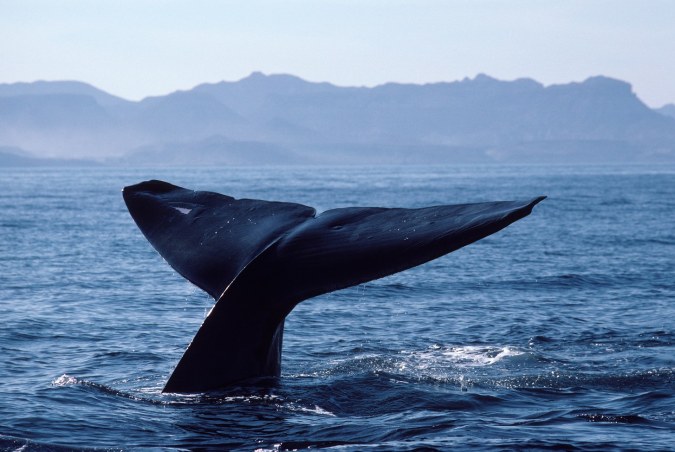
Whales are a powerful oceanographic force in their own right, one that begets even more life; many ecosystems are still straining to equilibrate from the effects of twentieth-century whaling. Photograph by Francois Gohier / VWPics / Redux

x400.jpgIt may be too late, but this is too important to pretend it does not matter. It is not too late to learn from our mistakes. Peter Brannen, a science journalist and the author of “The Ends of the World: Volcanic Apocalypses, Lethal Oceans, and Our Quest to Understand Earth’s Past Mass Extinctions” gets our thanks for this review in the New Yorker, titled We May Never Understand the Ocean-Wide Damage Done by Industrial Whaling:

A few months ago I learned that, as recently as 1972, General Motors was using sperm-whale oil in transmission fluid in its cars. I’m not sure why I was surprised to learn this. It took nearly another decade for much of the world to agree to ban commercial whaling, in 1982. (A handful of countries still ignore the ban.) But the detail about G.M. still struck me as anachronistic. The global pursuit of whales inescapably connotes the romance of nineteenth-century New Bedford and Nantucket: delicately embossed scrimshaw, Melville, oil paintings of stately twilit schooners setting out on the main. Not puke-green Chevy El Caminos. Continue reading
Big Cat News From India

Sundarban_Tiger_SoumyajitNandy_Wikimedia_web.jpg

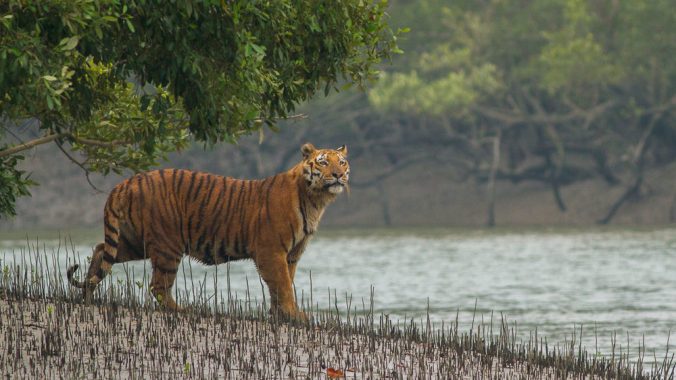
A tiger in the Sundarbans National Park, a protected tiger reserve, in the Indian state of West Bengal. SOUMYAJIT NANDY / WIKIMEDIA COMMONS

Richard Conniff, one of the science writers we most depend on for useful conservation news, shares this interview with one of our heroes from India’s big cat conservation network:

Big Cat Comeback: How India Is Restoring Its Tiger Population

Dr.-Ullas-Karanth_WCS_web.jpg

Ullas Karanth

Ullas Karanth has spent a half-century working to protect India’s endangered tigers. In an interview with Yale e360, he argues that with smart planning and the cooperation of its rural residents, the country could support five times the number of tigers it has now.

Ullas Karanth, a senior scientist with the Wildlife Conservation Society, is one of the world’s premier tiger experts and a leader in the effort to restore India’s depleted tiger populations. Raised in the South India state of Karnataka, he has spent much of his professional life studying and working to bring back tigers there, starting in Nagarahole National Park in the foothills of the Western Ghats, and then across a 10,000-square-mile region of that mountain range.

Karanth’s emphasis on scientific methods has frequently brought him into conflict with India’s forest bureaucracy, particularly over its insistence on estimating tiger populations based on footprint counts. Karanth instead pioneered the use of camera traps for population estimates based on identification of individual tigers. That method belatedly became the national standard after a 2004 scandal, when Sariska Tiger Reserve, officially estimated to have 26 tigers, turned out to have none. Continue reading
Virtual Immersion In Wilderness Via Live Feeds

Thanks to Rachel Riederer for this:

Bear Cam’s Captivating, Unedited Zen

Riederer-Bear-Cam.jpg

It’s innately satisfying to see a bear grab ahold of a salmon with its mouth and trundle off into the shallows with the fish still flapping in its jaws. Photograph by Jennifer Leigh Warner / Barcroft / Getty

One recent afternoon, I found myself spellbound by the brown bears of Alaska’s Katmai National Park, and spent longer than I care to admit watching them fishing and feasting on the sockeye salmon of Brooks Falls. Several bears stood in the water, facing the falls. They didn’t interact with each other much—at least not in a way that was legible to me—but quietly went about the business of fattening up for winter. I watched these Internet stars through a live stream popularly known as the bear cam, which provides a counterpoint to the hyper-produced prestige nature documentaries that use music, high-definition videography, and delicately placed cameras to turn wildlife activities into dramatic cinema. If “Planet Earth” is a Michael Bay production, the bear cam is not even a home movie—it’s CCTV. Continue reading
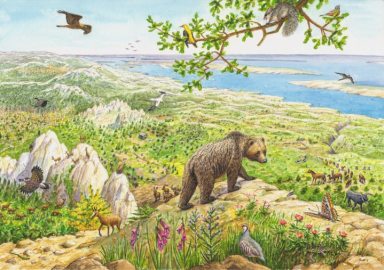
The Mystery of the Lorax: Solved

Dr. Seuss has held an important place in my life, stretching from my own childhood and into parenthood, and connecting the dots between the pure joy of reading and powerful messages keeps him at the top. So what fun to discover the story, species and science behind the inspiration for his most impactful books!

Who Was the Real Lorax? Seeking the Inspiration for Dr. Seuss

What inspired the creature who was “shortish and oldish and brownish and mossy?” The one who spoke in a voice that was “sharpish and bossy?” He spoke for the trees, yet he called them his own. All that he left “in this mess was a small pile of rocks, with the one word … ‘UNLESS.’”

In 1970, millions of people observed Earth Day for the first time, and the Environmental Protection Agency was born. Joni Mitchell’s “Big Yellow Taxi” topped the charts.

And in La Jolla, Calif., Theodor Geisel, also known as Dr. Seuss, was fighting to keep a suburban development project from clearing the Eucalyptus trees around his home. But when he tried to write a book about conservation for children that wasn’t preachy or boring, he got writer’s block.

At his wife’s suggestion to clear his mind, they traveled to the Mount Kenya Safari Club, an exclusive resort where guests watched animals along Kenya’s Laikipia plateau.

And if you haven’t guessed by now, it was there that “The Lorax” took shape — on the blank side of a laundry list, nearly all of its environmental message created in a single afternoon. Continue reading
Avian Adaptation in the Face of Climate Change


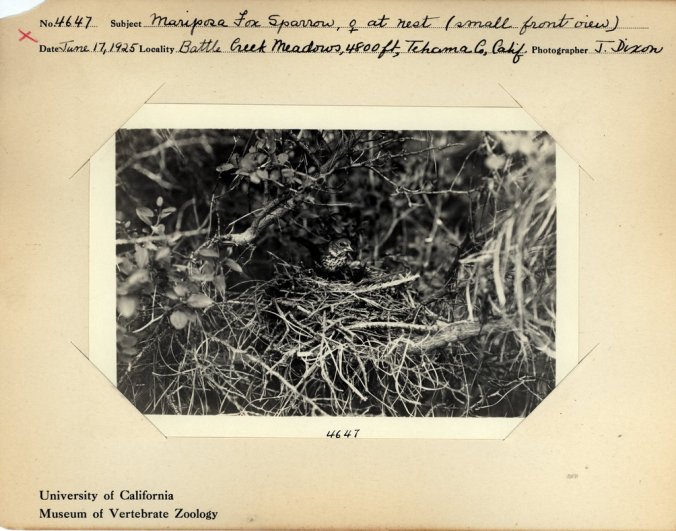
A Mariposa fox sparrow in its nest in 1925, observed during Dr. Joseph Grinnell’s surveys of California fauna. Credit Museum of Vertebrate Zoology, University of California, Berkeley

Accentuate the positive…

California’s Birds Are Testing New Survival Tactics on a Vast Scale

Retracing the steps of a century-old wildlife survey, ecologists find that birds are making remarkable adaptations to climate change.

More than a century ago, zoologist Joseph Grinnell launched a pioneering survey of animal life in California, a decades-long quest — at first by Model T or, failing that, mule — to all corners and habitats of the state, from Death Valley to the High Sierra.

Ultimately Grinnell, founding director of the Museum of Vertebrate Zoology at the University of California, Berkeley, and his colleagues produced one of the richest ecological records in the world: 74,000 pages of meticulously detailed field notes, recording the numbers, habits and habitats of all vertebrate species that the team encountered.

In 2003, museum scientists decided to retrace Grinnell’s steps throughout the state to learn what changes a century had wrought. And that’s why Morgan Tingley, then an ecology graduate student at the university, found himself trekking through the Sierra for four summers.

Dr. Tingley wanted to know how birds had fared since Grinnell last took a census. Years later, the answer turned out to be a bit of a shock. Continue reading

Read About This Place, These People, Their Food

660708410.jpg

Thanks to Blake and Jen for all their awesome work. Also thanks to Sara Ventiera (a new food and travel writer for us to follow!) and her colleagues at National Public Radio (USA) for keeping us connected to such heroics:

Meet The Restaurateurs Fighting To Save The Grand Staircase-Escalante Monument

restaurant_custom-85b7446a9674f688f4281aff18efef2ba28904ee-s1400-c85.jpg

Hell’s Backbone Grill is located in Boulder, Utah, about 250 miles south of Salt Lake City. The restaurant’s owners are fighting Trump’s plans to slash the size of nearby Grand Staircase-Escalante National Monument by more than half. Ace Kvale

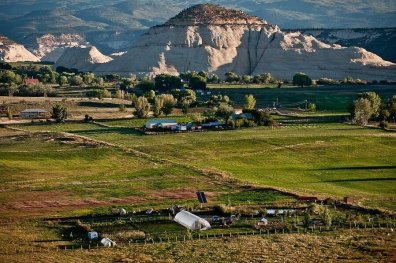
Standing between peach and cherry trees on her 6.5-acre Utah farm, Blake Spalding points to the Kaiparowits Plateau. The looming bluff is dotted with thousand-year-old pinyon pine and juniper trees.

“That is one of the areas they’re hoping to mine,” she tells a group of visiting chefs from Salt Lake City. “It’s full of dinosaur fossils and more than 650 documented species of wild bees.”

hells-542a80853d1900a1e76f2d1b4944854d744f9e94-s1400-c85.jpg

The remote and sustainable restaurant has become a destination for travelers seeking a taste of its terroir-driven fare. Ace Kvale

Nearly 20 years ago, Spalding and her business partner, Jen Castle, founded Hell’s Backbone Grill in Boulder, Utah, on the edge of the then-newly designated Grand Staircase-Escalante National Monument, about 250 miles south of Salt Lake City. The remote and sustainable restaurant has become a destination for culinary travelers seeking a taste of its terroir-driven fare. It’s an amalgam of Mormon pioneer, Western range cowboy and traditional Southwest flavors, like juniper lamb posole or grilled pork chops with Boulder crabapple barbecue sauce. Continue reading

Kittens Born At Alladale Wilderness Reserve

Kitten

Photographs © Innes MacNeill

Thanks to our friends at Alladale for sharing this with us yesterday. (to not disturb the kittens at this time, these photos by Innes MacNeill are from an earlier litter and further content will follow will about the new ones, so we recommend you subscribe here to their newsletter):

We have some wonderful news to share with you.

b29fcac2-a483-4917-b500-2d9b2f9167ef.jpeg

Photographs © Innes MacNeill

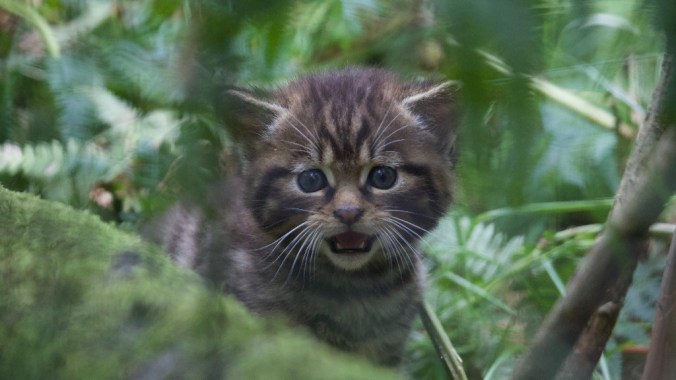
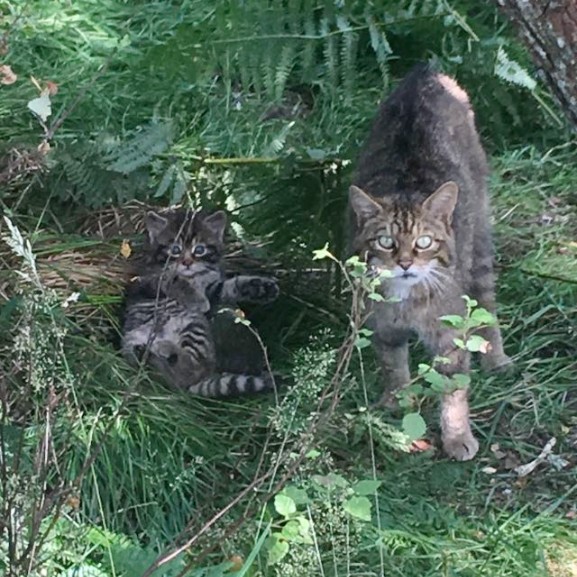
Conservation efforts for the critically endangered Scottish wildcat have had another boost as Alladale Wilderness Reserve welcomes the arrival of two kittens. These kittens, who are part of the captive breeding programme and whose parents were given the go-ahead for breeding following genetic testing by the Royal Zoological Society of Scotland (RZSS), have the potential to play a key role in the long-term conservation of this near-extinct native species.

Working together with RZSS, Scottish Wildcat Action and other wildlife conservation organisations across Scotland, Alladale Wilderness Reserve and The European Nature Trust (TENT) are supporting the development of effective, long term plans focused on wildcat recovery through reintroductions. This work follows other successful models of endangered cat conservation, like that of the Iberian lynx in Spain and Portugal whose population has been saved in recent years following numerous reintroductions. Continue reading

The Science Of Nature, Exhibited

27folkart2-jumbo.jpg

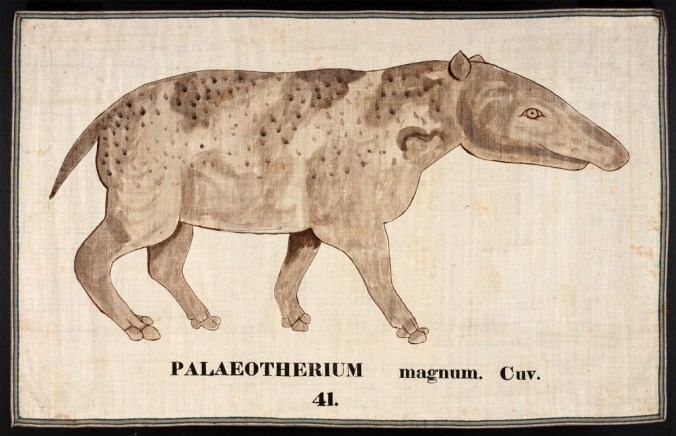
Classroom chart on linen drawn by Orra White Hitchcock, 1828–1840. Credit Amherst College Archives & Special Collections

Thanks to Jason Farago for this review of  Charting the Divine Plan: The Art of Orra White Hitchcock at the American Folk Art Museum:

Mushrooms, Magma and Love in a Time of Science

27folkart1-superJumbo.jpg

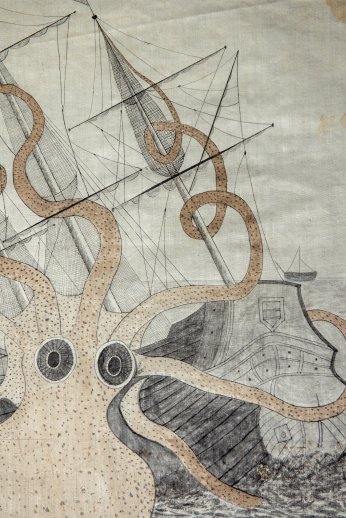
“Colossal Octopus,” 1828–1840, by Orra White Hitchcock, one of America’s first female scientific illustrators, on view at the American Folk Art Museum. Credit George Etheredge for The New York Times

Women remain grossly underrepresented at the highest echelons of American science, and continue to face absurd claims of “innate” inferiority, whether from former Harvard presidents or senior engineers at Google. But until the mid-19th century — when the sciences became professionalized, and when Charles Darwin and others put Christian doctrine under pressure — a woman’s place was in the laboratory, or among the geology and zoology specimens.

Back then the humanities (classics and philosophy, especially) were understood as masculine academic pursuits. It was the more genteel disciplines of natural science, astronomy, chemistry, botany and anatomy, to which women of a certain class gravitated.

merlin_141627540_d42f254c-e955-4d3d-9751-733e1d3723eb-superJumbo.jpg

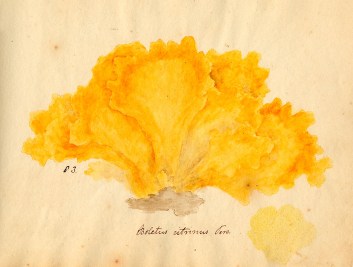
Orra White Hitchcock’s “Fungi Selecti Picti, Vicinity of Conway, Massachusetts” (1821), watercolor, pencil, pen and ink, and ink wash on paper in sewn album. Credit Smith College Special Collections

Orra White Hitchcock (1796-1863) was one of the most remarkable women from this more egalitarian age of scientific study. She had a deep knowledge of botany, zoology and paleontology, and she was also an artist — though that “also” would have seemed unnecessary to her. She produced two albums of botanical illustrations, and later, as introductory materials for her husband’s classes, she diagramed volcanoes, sketched the skeletons of extinct fish and mammals, and drew undulant squids and octopuses on large cotton sheets.

They’re all united at the American Folk Art Museum in “Charting the Divine Plan: The Art of Orra White Hitchcock,” a handsome and unexpectedly passionate exhibition on art, science and education in the early American republic. More than 100 watercolors and classroom charts are here, from painstakingly accurate paintings of reeds and mushrooms to boldly colored abstractions of the earth’s crust and core, and they share space with a splendid array of diaries and correspondence, redolent with the Hitchcocks’ intertwined loves for science, God and each other. Continue reading

I’d Like To Spend Some Time In Mozambique

merlin_140018319_94bfdc4a-189d-4677-b377-eb8b81f1a037-jumbo.jpg

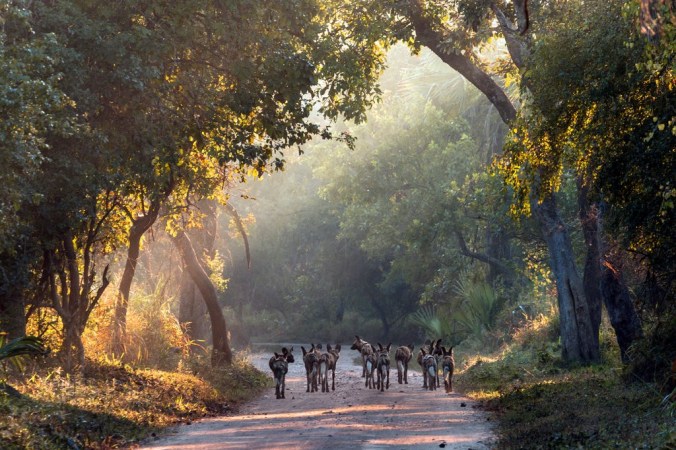
Wild dogs, apex predators missing from Gorongosa National Park for decades, have been reintroduced and are slowly making a comeback, part of an ongoing experiment in reviving the park ecosystem after years of devastating war. Credit Brett Kuxhausen/Gorongosa Media, via Associated Press

Thanks to one of our favorite science writers, the ever-optimistic Natalie Angier, for this note of hope:

In Mozambique, a Living Laboratory for Nature’s Renewal

At Gorongosa National Park, scarred by civil war, scientists are answering fundamental questions about ecology and evolution, and how wildlife recovers from devastation.

merlin_141449499_47b588fd-25e2-4c3c-81b1-1071419e6d19-jumbo.jpg

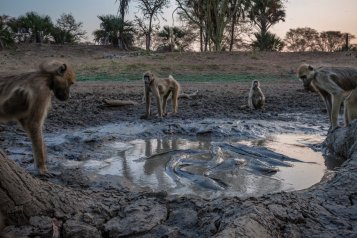
Baboons and sharptooth catfish in the Mussicadzi River in the park during the dry season. The baboons in Gorongosa are brazen and plentiful, as there aren’t many leopards to keep them in check. Credit Piotr Naskrecki & Jen Guyton/NPL/Minden Pictures

GORONGOSA NATIONAL PARK, MOZAMBIQUE — The 14 African wild dogs were ravenous, dashing back and forth along the fence of their open-air enclosure, or boma, bouncing madly on their pogo-stick legs, tweet-yipping their distinctive wild-dog calls, and wagging their bushy, white-tipped tails like contestants on a game show desperate to be seen.

Since arriving at the park three months earlier, as they acclimated to their new setting and forged the sort of immiscible bonds that make Lycaon pictus one of the most social mammals in the world, the dogs had grown accustomed to a daily delivery of a freshly killed antelope to feast on. Continue reading

Peacock Spiders!

Spider1.jpg

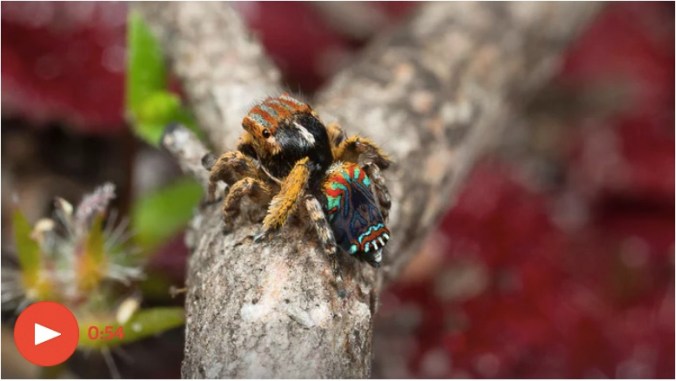
New peacock spider species filmed in Western Australia – video

Thanks to the Guardian for this reminder that nature is generous, bestowing vibrant colors in the most unexpected places:

Biologist Jürgen Otto and colleagues have named two species of the extraordinarily colourful dancing spiders

Spider2.jpgIt is only a few millimetres in size, performs a dance as part of a courtship ritual and has striking coloured markings on its back that “look like a pharaoh’s headdress”.

But when biologist Jürgen Otto first spotted the peacock spider species he has named Maratus unicup, he didn’t immediately recognise how special it was.

Join The Butterfly Count

3500 (6).jpg

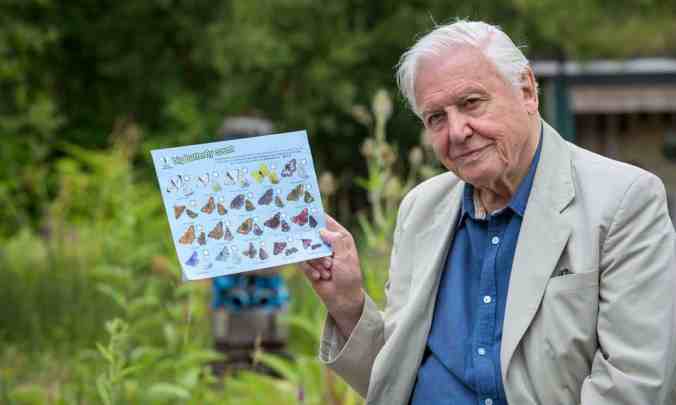
Sir David Attenborough launching the Big Butterfly Count in July 2017. Photograph: Butterfly Conservation/PA

Thanks to the Guardian for bringing this to our attention:

Sir David Attenborough urges British public to join butterfly count

Veteran broadcaster encourages people to take part in Big Butterfly Count and highlights mental health benefits of wildlife

Watching nature provides “precious breathing space” from the stress of modern life, Sir David Attenborough has said, as he urges people to take part in the world’s biggest butterfly count.

While the UK’s butterflies are basking in the best summer conditions in more than a decade, if the hot weather becomes a drought it could be catastrophic for the insects as plants wither and caterpillars starve.

The public are being encouraged to take part in the Big Butterfly Count over the next three weeks to help experts see how butterflies are faring and to enjoy the mental health benefits of watching wildlife. Continue reading

Rewilding Croatia’s Velebit Mountains

0A2A4816-1.jpg

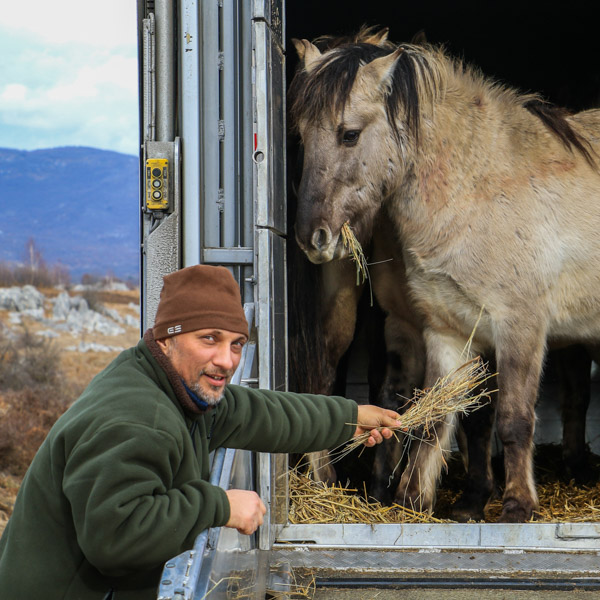
Davor Krmpotić
Team leader of Velebit Mountains

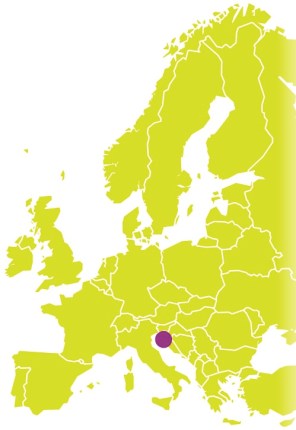
VelebitMap.jpgCroatia, playing in its first World Cup final today, makes this rewilding story from the Velebit Mountains, and interview with its team leader, timely:

This dramatic mountain chain, right on the Adriatic coast in Croatia, is one of the wildest areas of the whole Mediterranean. A region where wild nature is really coming back.

Velebit is one of the most important natural areas in the Balkans and situated on the Adriatic coast of Croatia. It hosts two national parks, a biosphere reserve and several wonderful old-growth forests, deep canyons, ancient open lands and exciting wildlife like Balkan chamois, red deer, brown bear, wolf and lynx…

Velebit hosts a diversity of habitats

Velebit.jpgHow would you characterise your rewilding area?
Velebit is one of the most important natural areas in the Balkans. The area hosts an extraordinary diversity of different habitats, from barren Mediterranean landscapes at sea level, via vast beech forest of central European type, to almost boreal systems and alpine grasslands at higher altitudes. Outside protected areas in the south and east there are several other very interesting areas also with great rewilding potential, mainly consisting of abandoned farm and grazing lands. Apart from its fantastic wildlife, Velebit is also a climber’s paradise, home to spectacular caves and breathtaking sceneries. Continue reading

Rewild The Uplands?

Poster_battle

Int2.jpgIntelligence Squared has an app that allows you to listen to their debates and lectures at your own convenience, on your phone or wherever, whenever you choose. If, like us, you have found the rewilding debate interesting, this is one you will want to listen to:

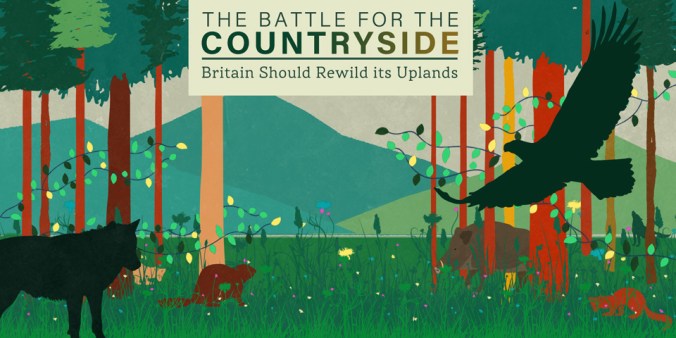
THE BATTLE FOR THE COUNTRYSIDE: BRITAIN SHOULD REWILD ITS UPLANDS

Imagine if swathes of the British countryside were allowed to be wild once again, if trees and rare plants could flourish and beavers, boars and white-tailed eagles could retake their place in the ecosystem. That’s the goal of the growing numbers of nature-lovers who support the idea of rewilding Britain’s uplands. We tend to think of these uplands as ‘wild’ and ‘natural’. But in fact, as the rewilders point out, they are entirely man-made, the result of clearances by man to make way for millions of sheep whose grazing over the last 200 years has rendered the land bare. Continue reading

Fishing Brinksmanship

5025.jpg

Using purse seine nets to fish for bluefin tuna, Turkey. Two-thirds of species are overexploited in the Mediterranean. Photograph: Gavin Newman/Alamy

Thanks to Damian Carrington, Environment editor at the Guardian, for bringing this to our attention:

One in three fish caught never makes it to the plate – UN report

Global fish production is at record levels thanks to fish farming, says the UN FAO, but much is wasted and many species are worryingly overfished

One in three fish caught around the world never makes it to the plate, either being thrown back overboard or rotting before it can be eaten, according to the UN Food and Agriculture Organization. Continue reading

A Mom’s Pride & Joy, Heirloom Berries

merlin_140240622_a8a6b30d-1d4d-4890-b8c9-00264de87c4e-jumbo.jpg

Heirloom berries growing outside the White home. Credit John Taggart for The New York Times

Pondering the future of a heritage dairy in Costa Rica is our 2018 summer pastime. The future of a heritage berry is a welcome distraction. With more moms like Jeanne Lindsay and more sons like Richard Stevens Jr. we can trust that the uniquely North American flavor produced on this farm is in good hands. Thanks to Rachel Wharton:

Agroecology, A Guiding Principle For Food Entrepreneurship

Ryan Donnell for The New York Times

Our attention has been on food entrepreneurship recently, and here we continue the thread. With agroecology, a new word and robust concept, we have new food for thought. And for that we thank one of our favorite food writers, who we have relied since the first year of this platform. Many of the food stories we have linked to over the years have been authored by him. A year ago we linked to this story, which marked the first time we noted him as an activist. We expect, after reading Bringing Farming Back to Nature, which he co-authored with Daniel Moss, that he has found his new calling:

Workers in a paddy field in the state of Andhra Pradesh, India. Credit Noah Seelam/Agence France-Presse — Getty Images

Farming the land as if nature doesn’t matter has been the model for much of the Western world’s food production system for at least the past 75 years. The results haven’t been pretty: depleted soil, chemically fouled waters, true family farms all but eliminated, a worsening of public health and more. But an approach that combines innovation and tradition has emerged, one that could transform the way we grow food. It’s called agroecology, and it places ecological science at the center of agriculture. It’s a scrappy movement that’s taking off globally. Continue reading

Tasmanian Tiger Tale

180702_r32368_rd.jpg

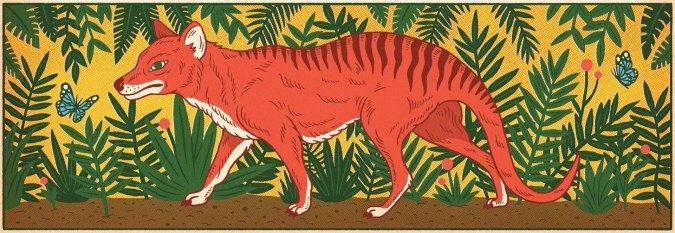
Like the dodo and the great auk, the Tasmanian tiger is more renowned for the tragedy of its death than for its life, about which little is known. Enthusiasts hope it will be a Lazarus species—an animal considered lost but then found. Illustration by Bene Rohlmann

We thank Brooke Jarvis for her reporting on this compelling tale:

The Obsessive Search for the Tasmanian Tiger

Could a global icon of extinction still be alive?

Andrew Orchard lives near the northeastern coast of Tasmania, in the same ramshackle farmhouse that his great-grandparents, the first generation of his English family to be born on the Australian island, built in 1906. When I visited Orchard there, in March, he led me past stacks of cardboard boxes filled with bones, skulls, and scat, and then rooted around for a photo album, the kind you’d expect to hold family snapshots. Instead, it contained pictures of the bloody carcasses of Tasmania’s native animals: a wombat with its intestines pulled out, a kangaroo missing its face. “A tiger will always eat the jowls and eyes,” Orchard explained. “All the good organs.” The photos were part of Orchard’s arsenal of evidence against a skeptical world—proof of his fervent belief, shared with many in Tasmania, that the island’s apex predator, an animal most famous for being extinct, is still alive. Continue reading

Insects, Underappreciated Often-Charismatic Fauna

4177.jpg

This article by Robin McKie, Observer science editor, will have you thinking differently about what are often called the pests of summer:

Where have all our insects gone?

There is a crisis in the countryside – and a massive decline in insect numbers could have significant consequences for the environment

4928 (1).jpg

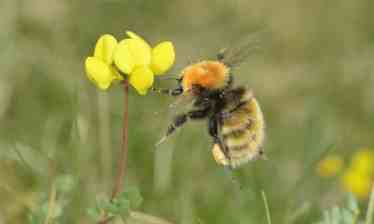
A great yellow bumblebee. Its numbers have declined steeply in recent years. Photograph: Alamy

When Simon Leather was a student in the 1970s, he took a summer job as a postman and delivered mail to the villages of Kirk Hammerton and Green Hammerton in North Yorkshire. He recalls his early morning walks through its lanes, past the porches of houses on his round. At virtually every home, he saw the same picture: windows plastered with tiger moths that had been attracted by lights the previous night and were still clinging to the glass. “It was quite a sight,” says Leather, who is now a professor of entomology at Harper Adams University in Shropshire. Continue reading