Nonetheless, Arabica

SIERRA Coffee Biodiversity WB

PHOTO COURTESY OF PRAKASH MATADA

I have spent most of the last year expanding my coffee knowledge. One thing I was already confident about, and remain so, is that arabica is better than robusta on two scales that matter most to me: taste, and environmental impact. From 2010-2017 during our residency in the Western Ghats, we developed and opened a series of properties where both taste and environmental impact were brand signatures formed in Costa Rica.
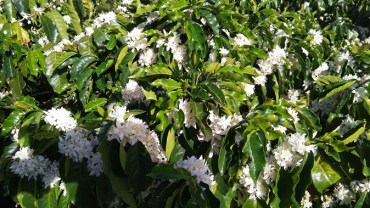
image002

 Instituto del Café de Costa Rica

With regard to coffee, I knew there was more than one good reason why Costa Rica only permits arabica coffee to be grown in the country. And we sourced the highest grade arabica coffee produced in the Western Ghats as much as we could.

17TB-COFFEE6-superJumbo

A Malabar pied hornbill, one of 204 species of bird found on coffee plantations in a new study, which found that the tree cover from shade-grown coffee farms provides a welcome habitat for all kinds of animal species. Credit Shashank Dalvi

I took to India a conviction that robusta coffee was to be avoided, but a few months ago started learning otherwise. Today I have read an article that reminds me to keep rethinking.

Thanks to Jason Daley in Sierra magazine for this look at the same scientific findings as those I first read in February in the New York Times,  (as I drink an organic arabica that I am sampling from a roaster in Atlanta, and even with this news about robusta I expect to remain committed to arabica for my own consumption, as well as our commercial purposes):

Which Coffee Is Better for Biodiversity?

A new study shows sun-loving robusta coffee doesn’t have to hurt biodiversity

SIERRA Coffee Biodiversity 2 WB

Alexandrine parakeet | Photo courtesy of Manish Kumarhoto

When coffee consumers think about the most sustainable way to manage their caffeine habit, they normally think about the cup it’s in—is it recyclable? But what about the coffee itself? Some coffee plantations require clear-cutting—will drinking one type of coffee have a bigger impact on the environment than another? Continue reading
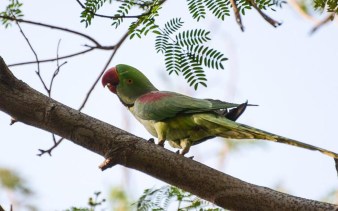
Concrete Jungles, Habitat For Humanity, Parrots

BilgerPets

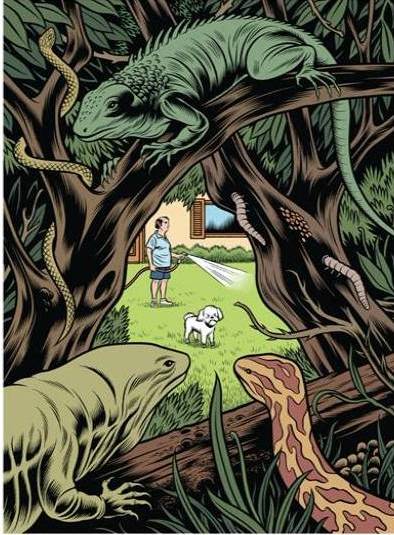
The state’s ecology is a kind of urban legend come true—the old alligator-flushed-down-the-toilet story, with a thousand species. Illustration by Charles Burns

When I first read this article about the downstream problems of the pet trade, I was living in India and learning about efforts to reduce the poaching crisis of wild animals being transported eastward as well as westward. Florida seemed a long way away and the problem Bilger described was a crisis, for sure, but it bordered on sounding, for lack of a better term, exotic. And maybe worthy of closer observation?

The Atlantic’s Emily Buder offers this post that includes an 8-minute video by Neil Losin. It immediately takes me back to the big picture:

The Legal ‘Pet-Poaching’ Problem

It’s easy to spot a wild parrot in Miami, as in San Francisco, San Diego, and several other metropolitan areas in the U.S. But in Florida, “technically, it’s not illegal to take wild parrots, according to Florida Fish & Wildlife,” says Daria Feinstein, a parrot conservationist, in Neil Losin’s short documentary, Parrots in Peril. The film examines the threat that poaching poses to Miami’s wild macaws. Continue reading

The Networking Of Trees, A Novel Idea In Novel Form

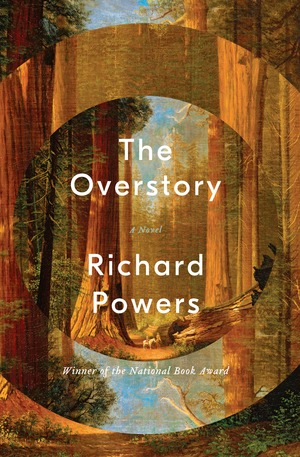
9780393635522_300The novelist Richard Powers, I see from this review, has utilized an idea I first heard of in 2016, and that idea disappeared for a couple years (from my view, anyway). But that compelling idea is back, fictionalized and more interesting than ever:

People see better what looks like them,” observes the field biologist Patricia Westerford, one of the nine—nine—main characters of Richard Powers’s 12th novel, The Overstory. And trees, Patricia discovers, look like people. They are social creatures, caring for one another, communicating, learning, trading goods and services; despite lacking a brain, trees are “aware.” After borers attack a sugar maple, it emits insecticides that warn its neighbors, which respond by intensifying their own defenses. When the roots of two Douglas firs meet underground, they fuse, joining vascular systems; if one tree gets ill, the other cares for it. The chopping down of a tree causes those surrounding it to weaken, as if in mourning. But Powers’s findings go beyond Dr. Pat’s. In his tree-mad novel, which contains as many species as any North American forest—17 are named on the first page alone—trees speak, sing, experience pain, dream, remember the past, and predict the future. The past and the future, it turns out, are mirror images of each other. Neither contains people.

merlin_136156101_0df4e4fd-b976-4a09-a8fc-5769260524f7-superJumbo

Olaf Hajek

Barbara Kingsolver’s earlier review in the New York Times started the ante on the must-read judgement that Nathaniel Rich (above) upped:

Trees do most of the things you do, just more slowly. They compete for their livelihoods and take care of their families, sometimes making huge sacrifices for their children. They breathe, eat and have sex. They give gifts, communicate, learn, remember and record the important events of their lives. With relatives and non-kin alike they cooperate, forming neighborhood watch committees — to name one example — with rapid response networks to alert others to a threatening intruder. Continue reading

The Food Explorer, Explored

GastroTaking a cue from yesterday’s post, another recent Gastropod can be combined with a review in the New York Times of a book that fits well in our pages:

You’ve probably never heard of David Fairchild. But if you’ve savored kale, mango, peaches, dates, grapes, a Meyer lemon, or a glass of craft beer lately, you’ve tasted the fruits of his globe-trotting travels in search of the world’s best crops—and his struggles to get them back home to the United States.

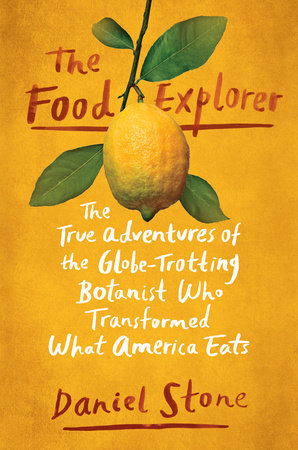
This episode, we talk to Daniel Stone, author of The Food Explorer, a new book all about Fairchild’s adventures. Listen in now for tales of pirates and biopiracy, eccentric patrons and painful betrayals, as well as the successes and failures that shaped not only the way we eat, but America’s place in the world.

9781101990582Daniel Stone, an author I had not known of 24 hours ago, fits well within our pages as part of a mix of historical sleuthing and present-day food activism that have been central themes here since we started.  Thanks to his book being the subject of that podcast, as well as its review last month, allow us to recommend that if you have an hour for the both, combine the listen with the read:

In a photograph dated Christmas 1896, featured in “The Food Explorer,” Daniel Stone’s biography of the botanist and explorer David Fairchild, his subject is sitting with his patron and friend Barbour Lathrop, in what looks like an empty saloon or a lounge on a steamship. The caption informs us that they’re off the coast of Sumatra; both are dressed in white and have mustaches that border on the extravagant.

Continue reading

Avocados & Epic Journeys

lead_960_540

Maggie Marsek / Getty / Katie Martin / The Atlantic

The Atlantic’s partnering with specialists in content that would not qualify as the magazine’s historically typical fare, we think, is good for all concerned. The folks at Gastropodcast certainly qualify, we also think, and have thought so, more than once:

Peak Avocado Is Yet to Come

How the fatty green fruit went from near-extinction to a worldwide boom

AvocadoAvocados are on a roll. More precisely, they’re on toast—a lot of toast. Last summer, BritishVogue reported that more than 3 million new photos of whole, sliced, and toast-topping avocados are uploaded to Instagram every day. Continue reading

Fishes, Fishing & Fishermen, Reviewed

Untitled-1

Book covers left to right: Fishes in the Fresh Waters of Florida, Fly Fishing for Redeye Bass, and Born to Fish

Thanks to Mathew L. Miller for an honest take on these three books:

Review: Fishing and Conservation

The mayflies are hatching, river levels are dropping and the evenings are getting longer. It’s the most wonderful time of year for those of us in North America who love to fish.

And if you can’t be out fishing? Well, you can always read a fish book. Here are three great new reads: a biography of an obsessed angler turned conservationist, a how-to book about overlooked species that need some attention, and an invaluable reference guide.

I have no interest in competitive fishing, and even less in books by and about celebrity anglers. I find most of them to be self-congratulatory and poorly written. So I’d normally have little inclination to read a book about a record-breaking striped bass angler, one who gained fame by appearing on the show Shark Tank.  Such a book would also appear to be a poor fit for a conservation blog. Continue reading

Humpback Comeback, Brink To Boom

merlin_137560146_04720b59-267d-4943-82e7-2da5e9f11e4d-master768

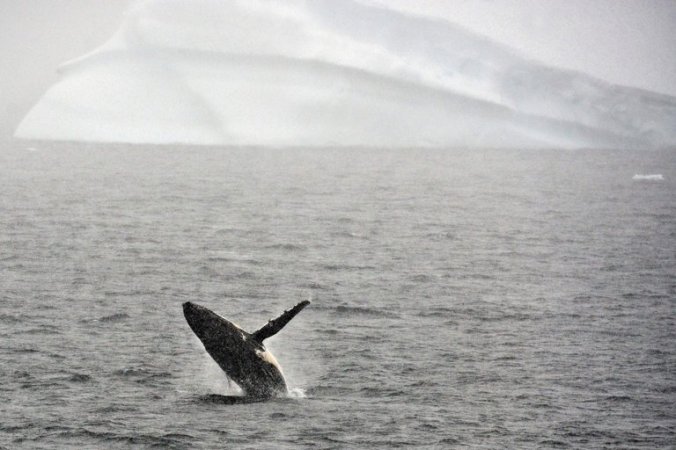
Humpback whales in the southern oceans around Antarctica appear to be breeding successfully, recovering their population. Credit Eitan Abramovich/Agence France-Presse — Getty Images

Ford does what it thinks to be in the best interest of its shareholders, and other companies follow suit as they sense the opportunity to do so, reducing their environmental responsibilities. Meanwhile and nonetheless, thanks to the work of organizations like WWF and Greenpeace, we have the opportunity to witness, if from afar, the rebirth of a population that signals some intact corners of the earth’s environment:

Humpback Whale Baby Boom Near Antarctica

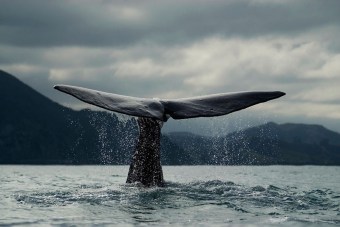
Blue whale, New Zealand

© naturepl.com/Mark Brownlow/WWF

In a rare piece of good news for whales, humpbacks who live and breed in the southern oceans near Antarctica appear to be making a comeback, with females in recent years having a high pregnancy rate and giving birth to more calves.

Humpback whales were nearly hunted out of existence in the late 19th and most of the 20th centuries until treaties were signed to stop killing them and protections were put in place for the world’s coldest, least accessible continent.

Humpback Whales in the Southern OceanThe end of hunting has fostered the recovery of the school-bus-sized animals whose life spans are roughly comparable to ours, according to Ari Friedlaender, an associate researcher at the University of California Santa Cruz, who led the new study.

The population was believed to have been reduced to less than 10 percent of it pre-whaling levels. Continue reading

Polar Bears, Hudson Bay & Informed Opinion

Polar.jpg

Polar bears haunt the landscape around the remote town of Churchill in northern Manitoba.Published On Credit Image by Ian Kerr

Thanks to Ian Kerr, a filmmaker who has spent years documenting polar bears in Churchill, Manitoba and shared this op-ed in the New York Times:

Polar Bears of Hudson Bay

Polar bears sleep a lot. That sight can leave an observer feeling disappointed, even insulted — it’s like watching a superhero clean his nails while you’re wishing he’d fly or pick up a car.

Keep watching, though, and you begin to notice interesting things about the sleeping bear’s world: the hard, cold snow blown across ice or the sun turning into a vertical streak through sheets of sleet; the odd, sticky sensation of frost slowly growing over your beard. Continue reading

Global Problems, Forests & Solutions

19lovejoy-reid-jumbo.jpg

Thomas E. Lovejoy a pioneer in the use of economics to conserve forests and other ecosystems globally is joined by John Reid, who has worked in the Amazon since 1965, in presenting a case for:

How Big Forests Solve Global Problems

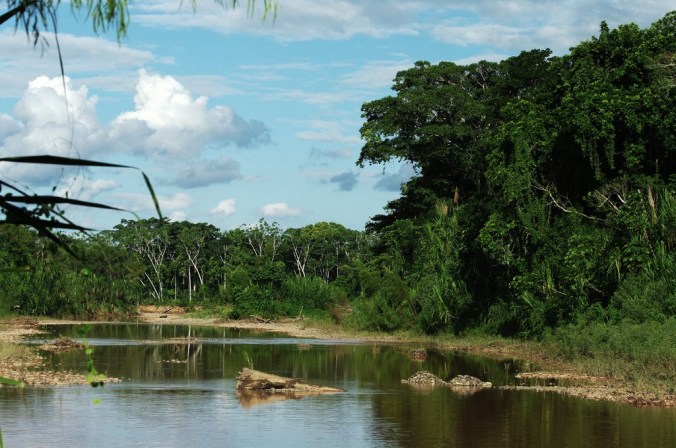
Sit on a log by the Madidi River in Bolivia at dusk and you can hear what an Amazon forest should sound like. The music includes red howler monkeys, breathy thumps from the mutum jungle fowl, droning cicadas, eerie calls locals attribute to deadly bushmaster vipers and the unhinged excitement of elusive titi monkeys. Around your feet, the beach is crisscrossed by jaguar tracks and those of the pony-size tapir, a shy beast that, if you keep quiet, will saunter out of the forest and swim across the river.

This is what scientists call an “intact forest landscape.” It’s a swath of at least 500 square kilometers (about 193 square miles, equal to 70,000 soccer fields) of unbroken forest. Because of their size, these areas have maintained all their native plant and animal life and biophysical processes. These forests still adorn parts of our planet’s tropical midsection, notably the Amazon, Congo Basin and the island of New Guinea. And they form a northern belt, the boreal forests of Canada, Russia, Alaska and Scandinavia. Continue reading

Trees For Life In Scotland

4000m.jpg

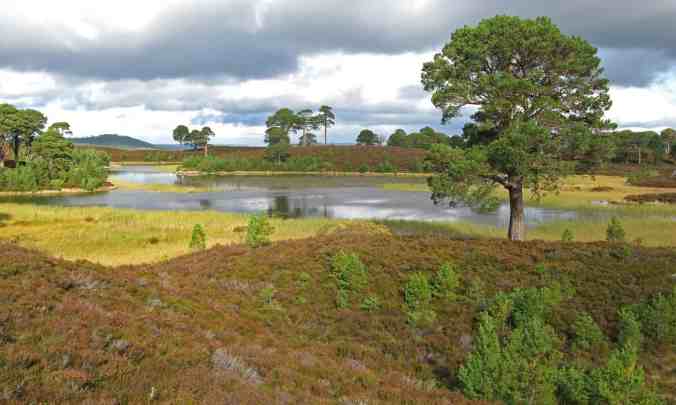
Trees for Life have planted 1.5m native trees in Glenmoriston and nearby Glen Affric since being founded 30 years ago. Photograph: Desmond Dugan/RSPB/PA

Thanks to Damian Carrington, the Guardian’s Environment editor, for this:

‘Magical’ mushroom mix to boost regrowth of lost Scottish forests

Return of Great Caledonian forest speeded up with fungi spores to help saplings flourish

The return of the Great Caledonian forest that once covered much of Scotland’s highlands is being boosted with a special mix of mushroom spores that should help saplings survive better on the hills.

Fungi living on the roots of trees play a vital role in the ecology, helping to break down nutrients in the soil. But trees were lost in much of the Highlands many years ago so the fungi vanished too.

The new project, run by Trees for Life, is adding the spores when young trees are planted. Continue reading

Legume’s Lost Legacy, Found

180423_r31919.jpg

Rancho Gordo’s heirloom beans look like gems in a jewelry case. The company sells half a million pounds of them a year.Illustration by Cari Vander Yacht

180423_r31939

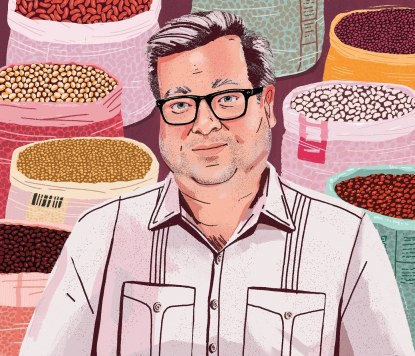
“My favorite bean is always the last one I ate,” Steve Sando says.Illustration by Cari Vander Yacht

If you only had read the first sentence in this story, you might move right on to something more promising.

Look at the author and look at the title, both familiar to those visiting this platform over the years, and it is certain not to disappoint. It is about this man to the right, and his culinary/cultural mission:

The Hunt for Mexico’s Heirloom Beans

Rare varieties discovered by Rancho Gordo’s Steve Sando have turned the humble legume into a gourmet food.

By Burkhard Bilger

The best meal of my life, or at least the most memorable, came from a can. I was thirteen at the time and living in France, so that may have had something to do with it. But I credit the beans. My older sisters and I were at a hippie camp in the Alps that summer, not far from the Italian border. My parents had stashed us there while they went home to Oklahoma to check on our house, which they’d rented to some graduate students while my father was on sabbatical. The camp was the cheapest one they could find, and they seemed to have done next to no research before signing us up. My mother just loved the name: Jeunesse du Soleil Levant, Youth of the Rising Sun. Continue reading

Mary River Turtle, Hang On!


Thanks to the Guardian for bringing this to our attention:

Green-haired turtle that breathes through its genitals added to endangered list

With its punky green mohican the striking Mary river turtle joins a new ZSL list of the world’s most vulnerable reptiles

3500 (3)

The Mary River turtle, found in Queensland, Australia, features on a new list of the most vulnerable reptile species on the planet. Photograph: Chris Van Wyk/ZSL/PA

It sports a green mohican, fleshy finger-like growths under its chin and can breathe through its genitals.

The Mary river turtle is one of the most striking creatures on the planet, and it is also one of the most endangered.

The 40cm long turtle, which is only found on the Mary river in Queensland, features in a new list of the most vulnerable reptile species compiled by the Zoological Society of London (ZSL). Continue reading

Us & Them Instead Of Us Versus Them

Thanks to Emily Buder at the Atlantic for this five minute recommended viewing. In the video above, by Nani Walker and Alan Toth, the question is:

Can Humans and Lions Get Along?

“Lions are really causing us havoc,” laments an African pastoralist in Nani Walker and Alan Toth’s short documentary, Living with Lions.  Continue reading

Sweet Potato Origin Story


merlin_136754454_c4302230-80b3-4890-af60-f6030c8dde14-master675.jpg

A chromolithograph of Christopher Columbus arriving at the Caribbean. Credit Louis Prang and Company/Getty Images

Thanks to Carl Zimmer for this 1493-ish story:

All by Itself, the Humble Sweet Potato Colonized the World

Many botanists argued that humans must have carried the valuable staple to the Pacific from South America, a hidden chapter in human history. Not so, according to a new study.

merlin_136706727_2ce09f86-757c-4b1a-9282-57e2695eda29-jumbo

The distribution of the sweet potato plant has baffled scientists. How could the plant arise from a wild ancestor in the Americas and wind up on islands across the Pacific? Credit Karsten Moran for The New York Times

Of all the plants that humanity has turned into crops, none is more puzzling than the sweet potato. Indigenous people of Central and South America grew it on farms for generations, and Europeans discovered it when Christopher Columbus arrived in the Caribbean.

In the 18th century, however, Captain Cook stumbled across sweet potatoes again — over 4,000 miles away, on remote Polynesian islands. European explorers later found them elsewhere in the Pacific, from Hawaii to New Guinea.

The distribution of the plant baffled scientists. How could sweet potatoes arise from a wild ancestor and then wind up scattered across such a wide range? Was it possible that unknown explorers carried it from South America to countless Pacific islands? Continue reading
Conservation Aided By Lowliest Of Creatures

merlin_136489011_2126accc-97cc-4224-813c-e09bb5e980a0-jumbo.jpg

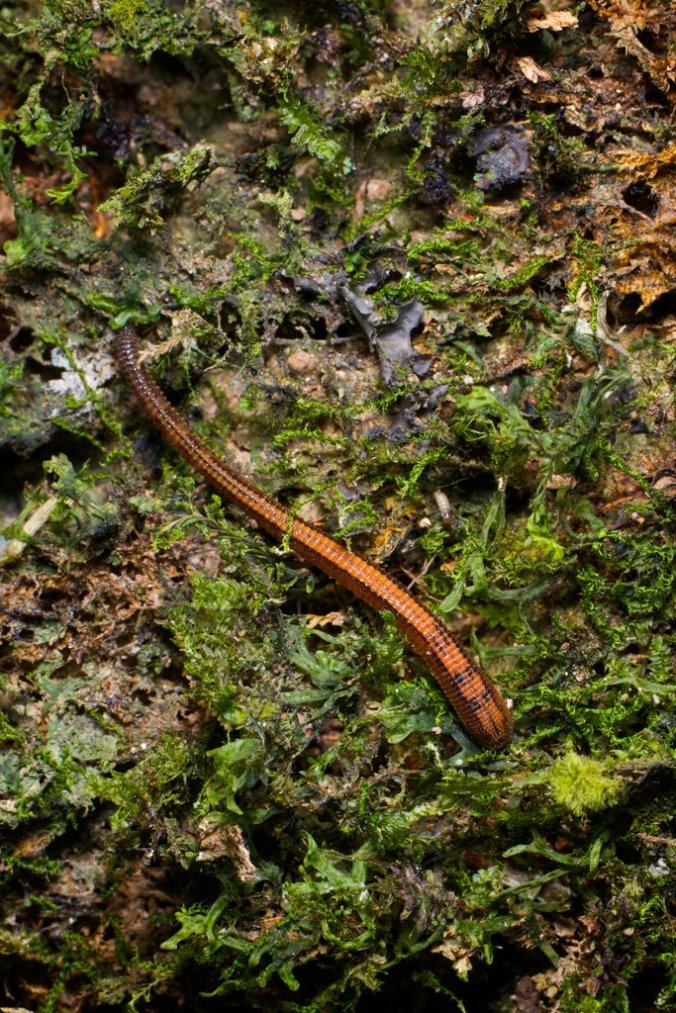
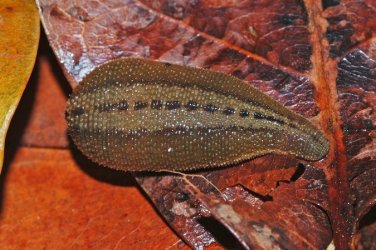
A leech, Haemadipsa zeylanica, in Thailand. Scientists have found they can survey the biodiversity of a forest with DNA analysis of leeches’ last blood meals. Credit Thailand Wildlife/Alamy

From Re-Wilding To Un-Wilding

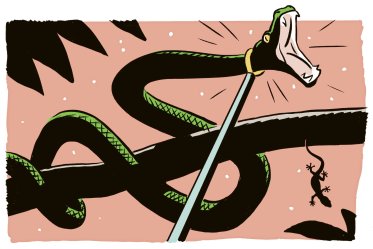
03SNAKE-GIF-superJumbo

Illustrations by R. Kikuo Johnson

Yesterday our attention was riveted by heroic efforts in the Highlands to re-wild, and today it is back to the sadder topic of un-wilding. Thanks to Rachel Nuwer for this article on a topic long of interest in these pages:

That Python in the Pet Store? It May Have Been Snatched From the Wild

03SNAKE3-superJumbo.jpg

R. Kikuo Johnson

JAKARTA — In the market for a new pet? Maybe something a bit exotic? For many consumers, reptiles and amphibians are just the thing: geckos, monitors, pythons, tree frogs, boas, turtles and many more species are available in seemingly endless varieties, many brilliantly colored, some exceedingly rare.

Exotic reptiles and amphibians began surging in popularity in the early 1990s, not only in the United States but also in Europe and Japan. From 2004 to 2014, the European Union imported nearly 21 million of these animals; an estimated 4.7 million households in the United States owned at least one reptile in 2016.

But popularity has spawned an enormous illegal trade, conservationists say. Many reptiles sold as pets are said to have been bred in captivity, and sales of those animals are legal. In fact, many — perhaps most, depending on the species — were illegally captured in the wild. Continue reading

Alladale & Apex Wildlife

4019.jpg

Eurasian grey wolves at the Highland Wildlife Park, Kingussie, Scotland.
Photograph: Alamy

Thanks to Kevin McKenna and the Guardian for this profile of an entrepreneurial conservation project that is quite in the spirit of our work over the last two decades. We salute Paul Lister and his team for this wonder:

One man’s plan to let wolves roam free in the Highlands

The ‘custodian’ of the Alladale estate wants to turn it into a fenced-off wildlife reserve

4992.jpg

The Alladale estate. Photograph: Alamy

The echoes of Scotland’s predator prince faded into silence three centuries ago. The wolf was once lord of these Sutherland slopes and the forest floors beneath and now a voice in the wilderness is calling him home.

Paul Lister acquired the Alladale estate, 50 miles north of Inverness, in 2003 and immediately set about creating a wilderness reserve according to his perception of what these wild and beautiful places ought to look like. He can’t imagine them without the packs of wolves that once roamed free here.

But his views are considered eccentric by ramblers and conservationists, who view them as a rich man’s caprice, centring their objections on his plans to fence off the vast reserve. Continue reading
Coffee, Journeys & Yemen

24bookeggers4-superJumbo-v2

CreditPatricia Wall/The New York Times

This review, thanks to Ghaith Abdul-Ahad, has my attention on The Coffee-Flavored American Dream of a young man with about as improbable a mission as I can imagine.  Returning to the coffee fields of Costa Rica’s Tarrazu region in a few days, I also plan to cross the Central Valley to see the latest mission accomplished of another coffee dreamer, the choice of Dave Eggers for his latest book topic is much appreciated.

A few years ago I traveled with a group of friends from the southern Yemeni port city of Aden to the capital of Sanaa in the north, taking the long coastal road that twists and curves around the bulge of Yemen’s southernmost tip. After passing the Bab el Mandeb strait, the road stretches along the seashore. Under a clear bright sky, the waters of the Red Sea shimmered and the sand glowed a warm ocher, the monotony interrupted only by an occasional fisherman’s shack, a small nomadic settlement or a bleached one-room mosque. Flat-topped trees looming in the distance suggested an African landscape.

merlin_135539598_25a28bf1-c1ea-4f91-864b-e5d08b63264d-master768

CreditLorenzo Gritti

Ahead of us lay the port of Mokha, or Al-Mukha in Arabic, where from the 15th century onward ships set sail with precious Yemeni coffee bound for Istanbul, London, Amsterdam and eventually New York — so much coffee that the word “mocha” became synonymous with it. Continue reading

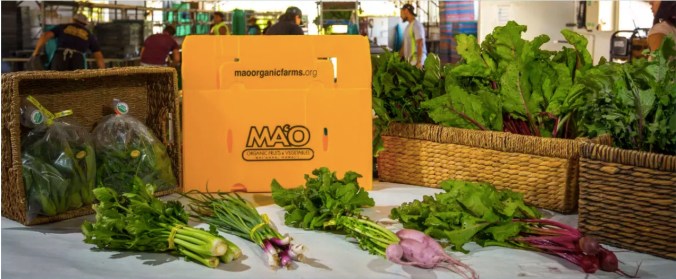
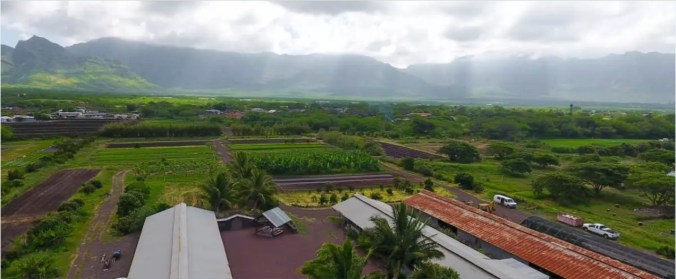
MA’O’s Marvelous Mission

MaoFarm

If we had come upon the website with no introduction maybe it would have looked like just another pretty organic farm in a tropical paradise.

MaoFarm2

But there are people involved, and it is a pleasant surprise to learn from Dakota Kim’s story Youth Farm In Hawaii Is Growing Food And Leaders how those people bring that place further to life. There is a mission worth reading about:

farm-3_vert-1ca699e699afb15a6803f2ffef41df115fa49f22-s500-c85

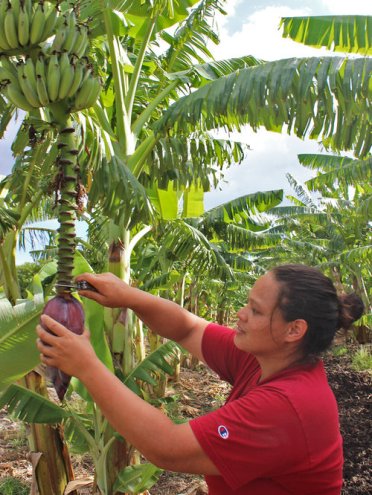
Cheryse Sana, farm co-manager, cuts a banana blossom off a tree at MA’O Organic Farms. Dakota Kim

A tight circle of teenagers is deep in conversation — not about movies or apps, but about … vegetables.

It’s 7 a.m. at MA’O Organic Farms, part of 24 acres nestled in an emerald mountain-ringed valley just two miles from Oahu’s west shore. Under a hot sun that bathes this idyllic breadbasket, college-aged farmers harvest tons of mangoes, bananas, mizuna (mustard greens) and taro every month for the island of Oahu.

The farm’s atmosphere bubbles with enthusiastic lightheartedness, its college interns quipping across the rows that they can beat their neighbors’ harvesting speed. But a calm falls over the group as they move from joking around to talking more seriously. A circle forms under an open pavilion, and a young woman speaks. Continue reading
Why Did The Robot Swim Like A Fish?

Thanks to for this story about how a Robotic Fish Moves Like The Real Thing — So It Can Observe The Real Thing:

1sofi-swimming-close-up_wide-6a470eed915278147d38a60afa055d7ac8c1e5a0-s1600-c85

SoFi, the robotic fish, swims in for its close-up. MIT computer scientists hope SoFi will help marine biologists get a closer (and less obtrusive) look at their subjects than ever before. MIT CSAIL

Scientific advancement: It’s all in the wiggle.

OK, it’s a lot more complicated than that. But when a team of researchers at MIT unveiled their robotic fish Wednesday, one of the keys they emphasized was the graceful undulation of the prototype’s tail — which, besides being rather eye-catching, serves a crucial role in the robot’s ultimate mission: giving scientists the ability to unobtrusively observe marine wildlife remotely.

robot-fish.gif“Because the fish moves through undulating movement rather than thrusters, the impact it has on how the water moves around it is much more like what is expected of physical fish,” Daniela Rus, director of the school’s Computer Science and Artificial Intelligence Lab, tells NPR. Continue reading