What Does Positive & Progressive Permitting Look Like?

We have seen the Center for Biological Diversity mentioned in his newsletters before, but this week Bill McKibben links to this recently released document. The Center offers a positive and progressive consideration of priorities we should give to permitting renewable energy, contrasting efforts to gut regulatory protections related to fossil fuel permitting highlighted in his current newsletter:

Introduction

It is indisputable that the climate emergency requires the United States to rapidly transform its majority fossil energy system to 100% clean and renewable energy.

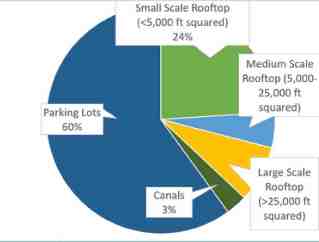
Distributed solar on rooftops alone can generate a significant portion of our energy demands while also bringing key benefits like resilience, local job generation, and avoided wildlife impacts. Once distributed energy is maximized, building renewables on top of parking lots and canals as additional built surfaces can fill the remaining gap in our current energy demand. Prioritizing these sites for renewable energy can avoid the community impacts and bottlenecks associated large-scale transmission construction.

The United Nations Intergovernmental Panel on Climate Change’s recent sixth synthesis report makes absolutely clear that an unprecedented bold transition to renewable energy with an equally aggressive effort to halt new fossil fuel development and phase out existing fossil fuel usage is absolutely vital to avoiding the most catastrophic consequences of climate change (1). This necessary transformation presents a tremendous opportunity to pursue a far more just path forward—one that ends the status quo entrenchment of the fossil fuel industry; empowers federal agencies to use their authorities to accelerate the transitions to a justly sourced, justly implemented, resilient, and equitable power system; actualizes the principles of environmental justice; and preserves our core environmental laws. Continue reading
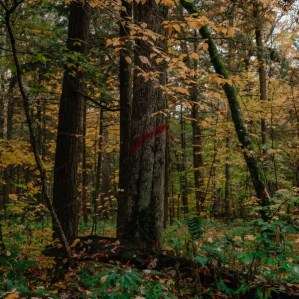
Reversal Of Absurd Destruction Counts As Progress in Brazil’s Amazon

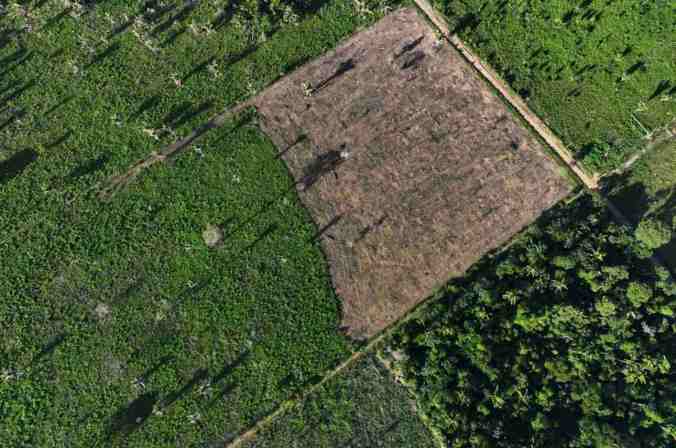
An aerial view shows a deforested area during an operation to combat deforestation at the Cachoeira Seca indigenous reserve, in Uruara, Para State, Brazil January 19, 2023. REUTERS/Ueslei Marcelino

What counts as good news now in one part of the world is simply a reversal of absurd destruction trends of recent years. Without minimizing its importance we can acknowledge that a positive reversal is a low bar for what needs to be accomplished:

Deforestation in Brazil’s Amazon falls 68% in April, first major drop under Lula

SAO PAULO, May 12 (Reuters) – Deforestation in Brazil’s Amazon rainforest fell 68% in April from the previous year, preliminary government data showed on Friday, a positive reading for President Luiz Inacio Lula da Silva as it represents the first major drop under his watch. Continue reading

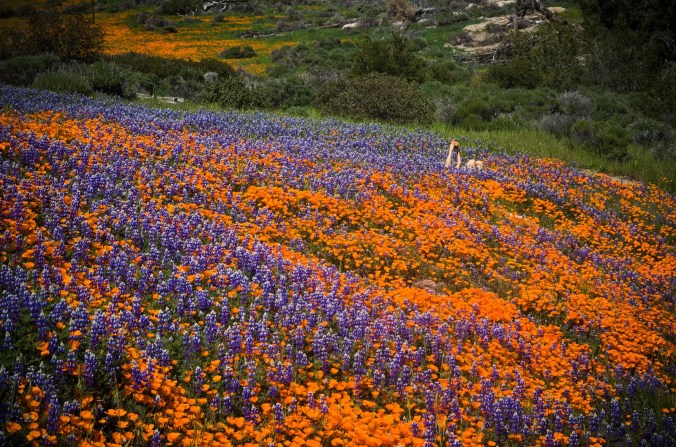
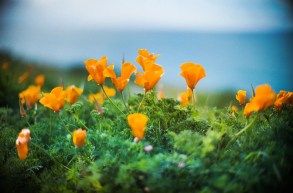
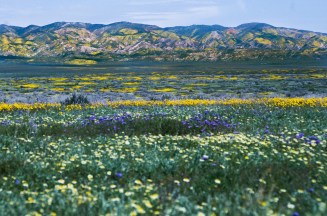
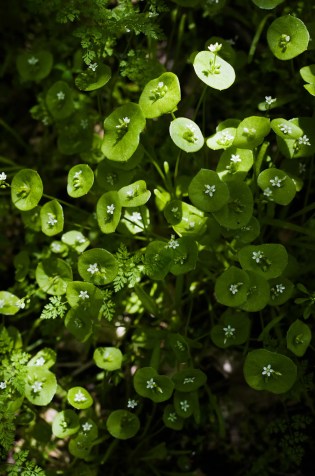
About That Bloom

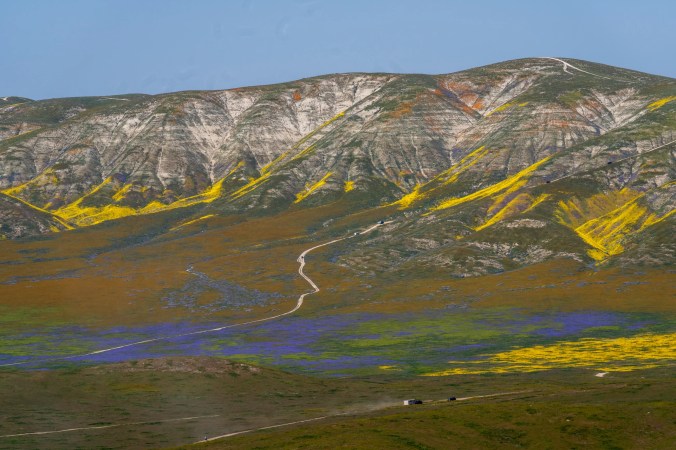
Figueroa Mountain. April, 2023.

We had a quick look at this phenomenon recently, but Dana Goodyear is just the person to give it this depth of follow up that is worth a read and luxuriant gazing:

Point Buchon Trail, Montaña de Oro State Park. February, 2023.

The Superbloom Is a Glimpse of California’s Past

This year’s rains reversed, temporarily, more than a decade of catastrophic drought. Some of the seeds that caused the bloom have lain dormant for years.

This winter, it rained in California. Ten inches in San Francisco in the ten days after Christmas alone. Thirty-one atmospheric rivers—columns of vapor that move water from the tropics. Record-breaking snow at Mammoth Lakes. Los Angeles measured its wettest year on record since 2004-05, the year I moved here.

Carrizo Plain National Monument. April, 2023.

My memories from that first winter are of driving in a rental car on slick gray roads, weaving around Jurassic-looking fallen palm fronds; my elderly neighbor calling, terrified, as the water rushed from my basement office toward her house; a picture on the front page of the paper showing a swimming pool sliding off a hill.

Pinnacles National Park. April, 2023.

People hunkered down; red tags went up, flagging damaged buildings. I had left all my sweaters in New York, and froze. I learned the city through a veil of rain. Looking at the mountains, downtown is to the right, and the coast is to the left.

By April, the rain had stopped, and nasturtiums, not muddy rivers, were cascading down the hillsides. Seussian red bottlebrush trees and violet jacarandas made the days vivid, and at night the white blooms emanated perfume.

So this was Los Angeles: abundant, intoxicating, unmoored. It must have been a Superbloom, though I don’t remember anyone calling it that then. I didn’t know that it would be eighteen years before I would see this Los Angeles again. Continue reading

The Lab Of Peter Girguis

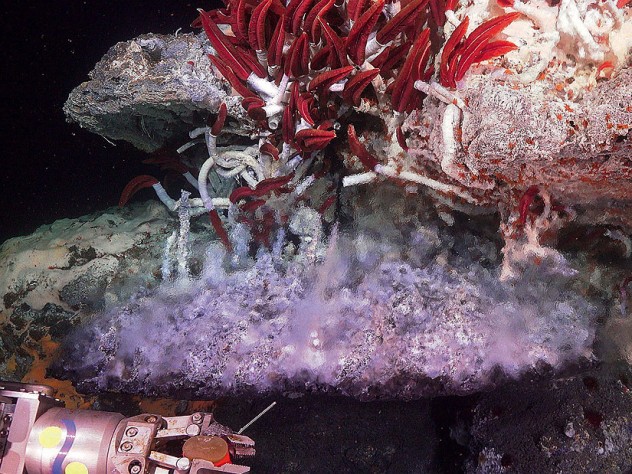
Giant tubeworms take up chemicals from a hydrothermal vent 6,200 feet deep in the Gulf of California (the Girguis lab is world-renowned for research on these worms). Photograph courtesy of the Schmidt Ocean Institute

Our thanks to Veronique Greenwood (after a few years’ absence from our notice) for her most recent article in Harvard Magazine:

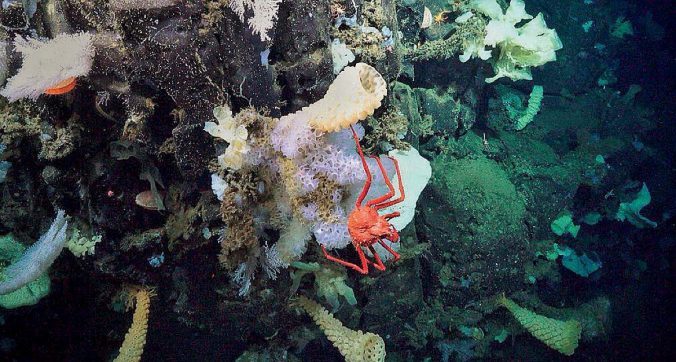
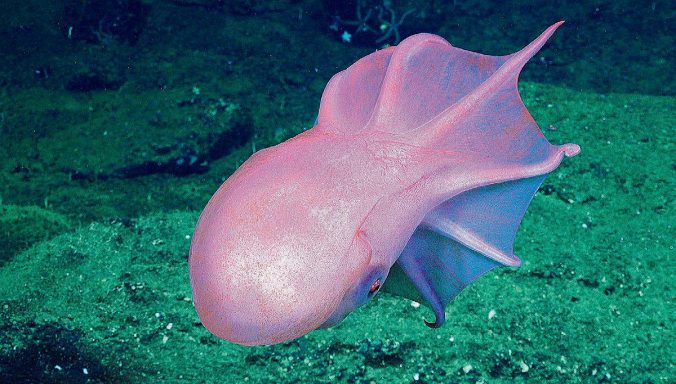
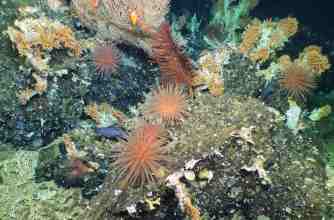
Top: a remote dive at Emery Knoll, a deepwater reef off Southern California, reveals crabs, sponges, and corals. Bottom: a rare sighting of the massive seven-arm octopus, Haliphron atlanticus. Photographs courtesy of the Schmidt Ocean Institute

Peter Girguis on terra firma in the lab. Photograph by Jim Harrison

Plumbing the Deep Sea

Peter Girguis probes life on the ocean floor

In a cavernous underground space behind Harvard’s Biological Laboratories, biochemist Peter Girguis frowns at the pressure vessel in his hand. The machined titanium cylinder, about the size of a French press, gleams as he works to release the cap, and he chuckles at his own stubbornness. He could probably find a tool to loosen it, he remarks. Continue reading
Bringing Back Peat

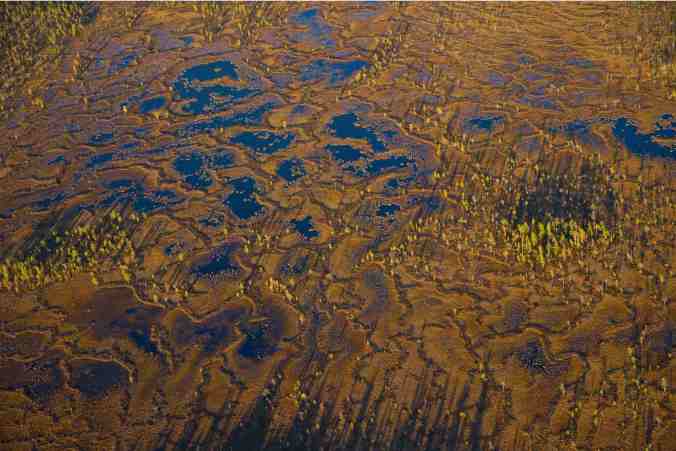
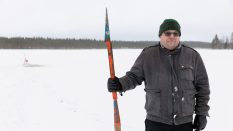
Peatland and taiga forest in northern Finland. NATURE PICTURE LIBRARY / ALAMY STOCK PHOTO

It has been a year since we linked to a peat-in-place story, of which there cannot be too many (so thank you, Yale e360):

Tero Mustonen. GOLDMAN ENVIRONMENTAL PRIZE

Finland Drained Its Peatlands. He’s Helping Bring Them Back

Tero Mustonen has led a successful effort to restore roughly 80 areas of ecologically critical peatlands across his native Finland. In an interview, he talks about the importance of bringing Indigenous knowledge to rewilding initiatives in far northern regions and beyond.

Until a century ago, almost a third of Finland was covered in pristine peatlands, which comprise one of the Earth’s largest and most important carbon sinks. Since then, however, half of Finnish peatlands have been strip-mined for fuel or drained to make room for forest plantations. Continue reading
Galápagos Reef Discovery, Deep

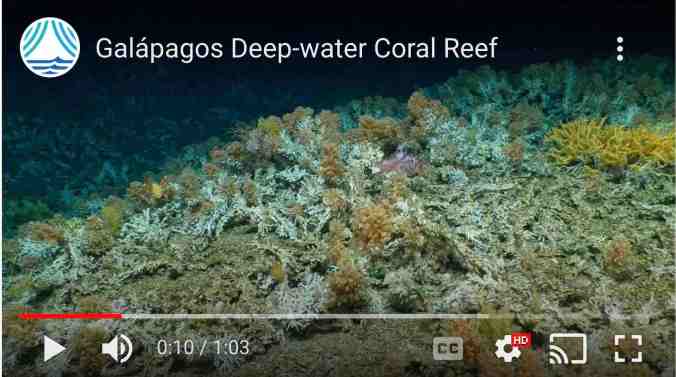
The video is worth a minute of your time, and the short article that follows is as close as we get to nature-related good news these days. Our thanks, as always, to Yale e360:

Pristine Deep-Sea Reef Discovered in the Galápagos

The newly discovered deep-sea reef in the Galápagos Marine Reserve. WOODS HOLE OCEANOGRAPHIC INSTITUTION

In Ecuador’s Galápagos Islands, where ocean warming has decimated shallow-water reefs, scientists have discovered a healthy, sprawling coral reef hidden deep under the sea.

“This newly discovered reef is potentially an area of global significance,” Michelle Taylor of the University of Essex, co-lead of the expedition, said in a statement. It is “a site we can monitor over time to see how a pristine habitat evolves with our current climate crisis.” Continue reading

The Forest Gives Much

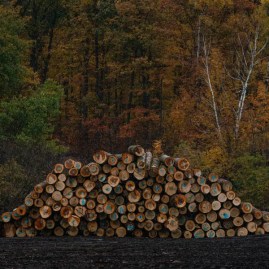
Freshly harvested logs from the Menominee Forest in Keshena, Wis., marked with color to indicate each log’s grade.

Sustainable forestry is a long-running topic in these pages over the years. The previous times we have linked to Cara Buckley stories we have been enriched by the humanity in environmental stories, so here we combine her unique talent to the topic of forestry:

The Giving Forest

The Menominee tribe has sustainably logged its forest in Wisconsin for 160 years. But that careful balance faces a crisis: too many trees and too few loggers.

A tree marked for cutting. The Menominee harvest only trees that are sick and dying or those that have fallen naturally

MENOMINEE COUNTY, Wis. — Amid the sprawling farmlands of northeast Wisconsin, the Menominee forest feels like an elixir, and a marvel. Its trees press in, towering and close, softening the air, a dense emerald wilderness that’s home to wolves, bears, otters, warblers and hawks, and that shows little hint of human hands.

Yet over the last 160 years, much of this forest has been chopped down and regrown nearly three times. The Menominee Tribe of Wisconsin, its stewards, have pulled nearly two hundred million cubic feet of timber from this land since 1854 — white pine cut into museum displays and hard maple made into basketball courts for the Olympics. Continue reading
California’s Wildflower Bloom Boom

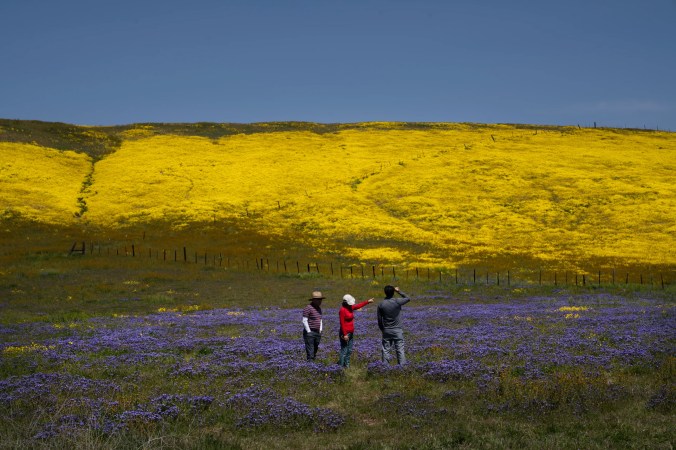
People view fields of flowers at Carrizo Plain National Monument, California’s largest remaining grassland.
Claire Harbage/NPR

When lemons are plentiful, make the best of it:

California’s destructively wet winter has a bright side. You’ll want to see it

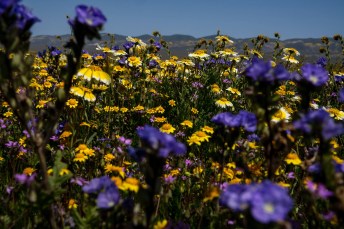
A benefit of California’s wet winter is what is known as a superbloom. Flowers including purple phacelia, yellow goldfields, hillside daisies and tidy tips grow at Carrizo Plain National Monument. Claire Harbage/NPR

CARRIZO PLAIN NATIONAL MONUMENT, Calif. — The roads are still rutted where rainwater carved them and farms are still flooded down the valley, but here in California’s largest remaining grassland, the benefits of the state’s destructively wet winter are on full display.

And they’re spectacular.

Wildflowers — yellow, purple, blue and orange — are splattered across the landscape in sweeps and pools like a clumsy airbrush painting.

Flowers are splattered across the landscape at Carrizo Plain. Claire Harbage/NPR

A superbloom. Continue reading
Tagging Large Land Animals

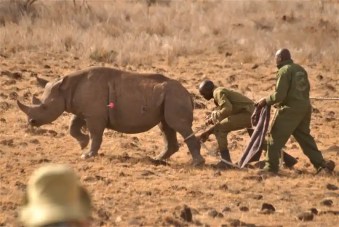
The team secure a darted rhino with nylon rope, then take its temperature and use a pulsemeter to monitor its heart rate and blood oxygenation

We have previous links to articles on tagging animals, but few land animals this big:

How to tag a rhino? Use tech, tact … and plenty of caution – a photo essay

Fewer than 2,000 rhino remain in Kenya, and the country’s wildlife service needs to keep tabs on them to make sure they thrive. It’s a major undertaking, involving a helicopter, 4x4s and a lot of rangers

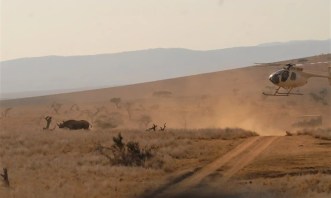
Here comes a chopper … a helicopter is used to dart the highly aggressive black rhino

Kenya has the world’s third largest rhinoceros population: a total of 1,890 including 966 black rhinos, 922 southern white and two northern white. But how to keep track of them and ensure the species are thriving? Every two or three years, Kenya Wildlife Service (KWS) carries out an ear-notching exercise in all rhino sanctuaries in the country to ensure that at least 60% of the animals are uniquely identifiable. Continue reading
Pesticide Practicalities

The Asahi Shimbun, via Getty Images

Our thanks, as always, to Margaret Renkl:

Long Live the Fireflies (and the Wildflowers and Mosquitoes, Too)

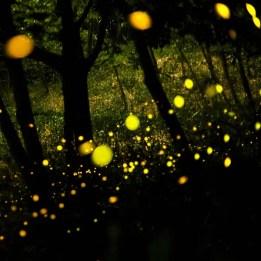
NASHVILLE — The day we moved into this house, 28 years ago next month, a thunderstorm knocked out the power late in the day. My husband was returning the rental van. Our 3-year-old was safely tucked into his old bed in his new room. As night began to fall in the silent house, I sat down on the sofa to cry. Continue reading

Planting For Foraging

Picking too many fiddleheads from a single ostrich fern plant can reduce its productivity. Jared Rosenbaum, a field botanist, never harvests more than one or two from any individual plant. (Also, cooking with fiddleheads can be toxic, so be sure to wash them well and never eat them raw: Always boil them before you sauté or cook them in any other way.) Jared Rosenbaum/Wild Ridge Plants

Margaret Roach delivers the goods when we need a dose of useful plant life information:

Why It’s Better to Plant Wild Greens Than to Forage for Them

This spring, don’t forage for wild edible plants. Instead, welcome them into your garden.

Jared Rosenbaum knows the primal thrill of foraging — a sense of interdependence with the natural world that he wants his son to experience, too.

But as a field botanist, he also understands that foraging is one of the many pressures on native-plant populations. And he has a proposition for gardeners: What if we gave back to the wild edible plants that tempt us on our springtime woodland hikes, by welcoming them into the landscapes we cultivate?

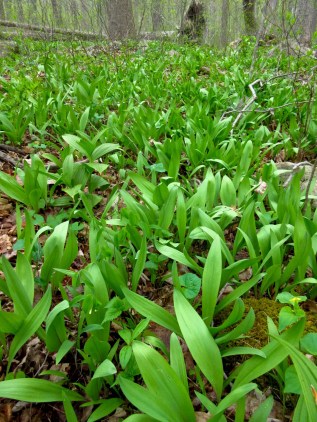
For a fleeting moment each spring, wild leeks (otherwise known as ramps) are a star of restaurant menus, creating a demand that has intensified the pressure on wild populations. Jared Rosenbaum/Wild Ridge Plants

It’s one layer of the habitat restoration and ecological design inspiration that he and his wife, Rachel Mackow, provide to clients of Wild Ridge Plants, in rural Pohatcong Township, N.J. And it’s reflected in many of their mail-order nursery’s plant choices, too.

In Mr. Rosenbaum’s recent book, “Wild Plant Culture: A Guide to Restoring Edible and Medicinal Native Plant Communities,” he revisits that idea: “The time has come to reconnect with our habitats, right where we live, work, and play,” he writes. “Not as museum pieces, but as vital, sustaining elements in our lives, livelihoods, and lifeways.”

That includes our gardens. Continue reading
Valuation Of Biodiversity

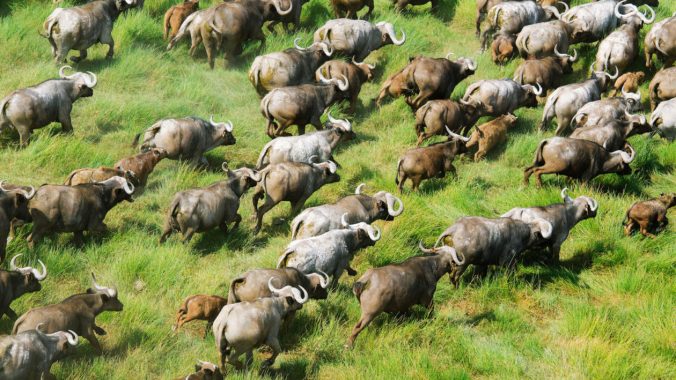
Cape Buffalo in Kenya. MARTIN HARVEY / ALAMY

Biodiversity valuation is a topic we link to from time to time, so we thank Zach St. George for this article’s contribution to our understanding:

Pricing Nature: Can ‘Biodiversity Credits’ Propel Global Conservation?

Backed by the UN, an alliance of conservationists and policymakers is devising new ways to finance the preservation of biodiversity by placing economic values on ecosystems. Some analysts say such schemes have the potential to boost conservation, but others are skeptical.

In 2009, as global financial markets shuddered, David Dorr became interested in the possibility of putting a price on nature. Dorr is a Cayman Islands-based global macro trader, attuned to what he calls the “butterfly effect” of geopolitics and other international forces on financial markets. Continue reading
Wilding The Golf Course

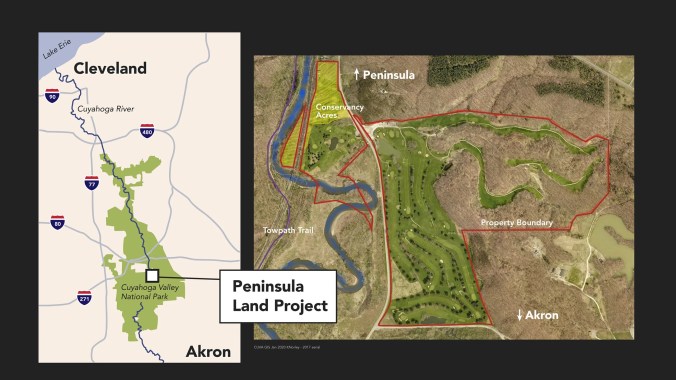
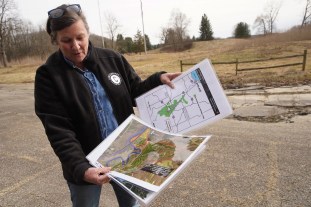
Map by Anna Yantek / Ideastream Public Media, with satellite imagery via the Conservancy for Cuyahoga Valley National Park

We do not mind the sport, per se, but its footprint is quite problematic. This story by Abigail Bottar with photos and video by Ryan Loew is worth a few minutes of your time, either reading or listening, if you want to see what is possible to mitigate the footprint:

Stacey Rusher, director of park projects at the Conservancy for Cuyahoga Valley National Park, holds maps of the former Brandywine Country Club golf course property.

Back to nature

At the former Brandywine golf course in Peninsula, a national park acquisition is allowing Mother Nature to retake her land.

On a warm winter day, Stacey Rusher serves as a guide through what used to be the par three golf course at the former Brandywine Country Club. Through fields of dry brush, up leaf-covered hills and past resting geese, she arrives at the banks of the Cuyahoga River. Continue reading
Decline Of Mackerel Fisheries

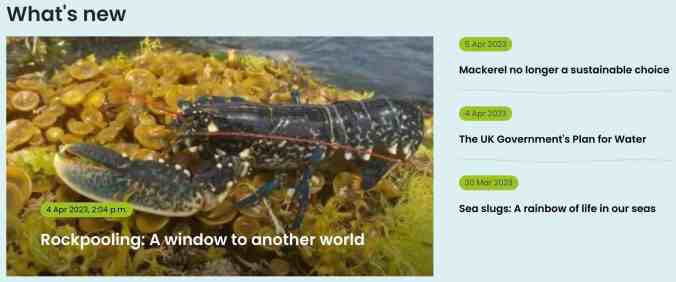
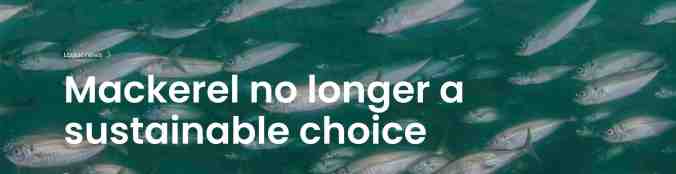
In the UK the Marine Conservation Society has issued this guideline on mackerel:

We’ve updated the environmental sustainability ratings on our Good Fish Guide in line with the latest scientific advice.

We reviewed 186 environmental ratings for seafood, with 20 seafood ratings moving to the ‘Fish to Avoid’ list and only 15 seafood ratings joining the green-rated, ‘Best Choice’ list with this season’s ratings update. Unfortunately, Northeast Atlantic mackerel has moved on to the amber list, having been on the charity’s green list since before 2011. Continue reading
Final Words On P-22

We linked to stories about this great cat frequently enough that its demise was sad news. So this requiem is overdue and quite welcome. We rarely have words with no images, but for P-22 it seems like the way to do it (as is the reference to a domestic cat in the author’s life):

Requiem for a Great Cat

The beloved mountain lion P-22 connected humans to feline mysteries.

The citizens of Los Angeles have not forgotten about P-22, the furtively majestic mountain lion of Griffith Park, who died a week before Christmas, at the age of about twelve. A handsome beast with amber eyes and a white muzzle, P-22 was probably born in the Santa Monica Mountains, the coastal range west of L.A. His father was P-1, the first animal to have been tagged in a National Park Service mountain-lion study that began in 2002. Continue reading
Bees’ Brains

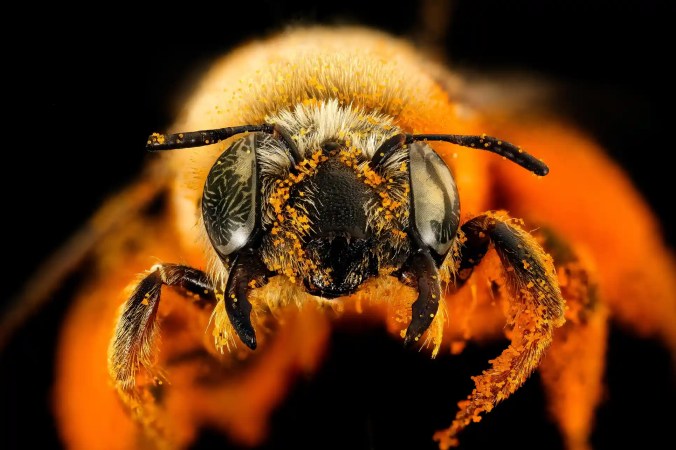
Bees are in a class by themselves as pollinators, a role that requires a sophisticated mind, says one expert. Photograph: Alamy

Stories about bees in our pages are the proverbial bees knees, again, this time with some information on their sense of the world:

‘Bees are sentient’: inside the stunning brains of nature’s hardest workers

‘Fringe’ research suggests the insects that are essential to agriculture have emotions, dreams and even PTSD, raising complex ethical questions

When Stephen Buchmann finds a wayward bee on a window inside his Tucson, Arizona, home, he goes to great lengths to capture and release it unharmed. Continue reading
Yosemite, John Muir & Robert Underwood Johnson

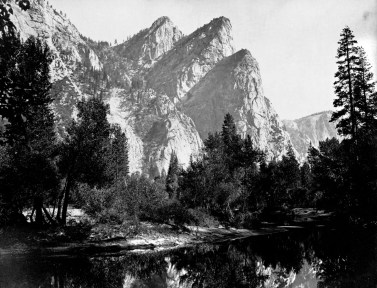
The Three Brothers, taken just east of El Capitan, by Carleton Watkins, ca. 1865. “A sharp earthquake shock at 7:30 a.m.,” Muir wrote in his journal on January 5, 1873. “Rotary motion tremored the river. . . . A boulder from the second of the Three Brothers fell today.” (Courtesy of the Library of Congress)

This book review in the LA Times will be of interest to those who find the history of conservation innovations entertaining:

The odd couple that saved Yosemite

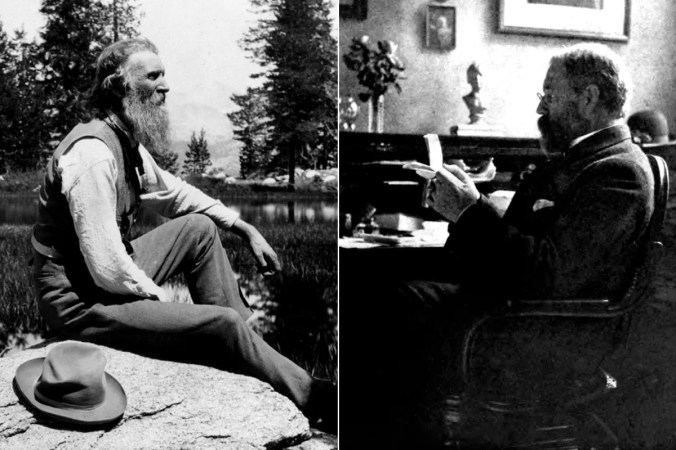
John Muir and Robert Underwood Johnson were unlikely allies in the war to preserve Yosemite. Muir, son of a Scripture-quoting Scottish immigrant father, was raised poor on a Wisconsin farm, but he wrote and spoke with the fervor of a prophet, and his craggy visage, tough constitution and unshakable devotion to the natural world drew admirers like a magnet. The urbane and cultured Johnson was an insider with a vast network of contacts in publishing and politics. The editor of one of the country’s preeminent magazines, Johnson hosted New York literary salons, mingled with America’s elite and eventually became the U.S. ambassador to Italy.

John Muir in California nature, 1902, left, and Robert Underwood Johnson, associate editor of the Century Magazine, at his office on Union Square in New York City. Their complementary skills helped carve out Yosemite National Park.(Courtesy of the Library of Congress; Courtesy of Wikimedia Commons)

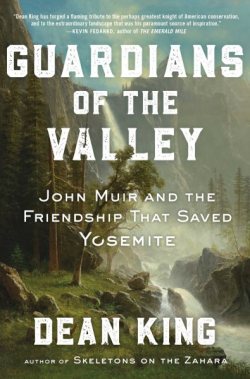
It was improbable that they even met — Muir was on the West Coast, Johnson on the East. But on one memorable journey into the California kingdom now known as Yosemite National Park, the two agreed to pull together to wage the nation’s “first great environmental war,” battling through the administrations of seven presidents to save Yosemite. It’s fair to say that the valley’s matchless terrain and fragile ecosystem would have been logged, plowed and plundered without their relentless efforts. Veteran nonfiction writer Dean King tells their story in “Guardians of the Valley: John Muir and the Friendship that Saved Yosemite.” Continue reading
Op-Ed For Amphibians

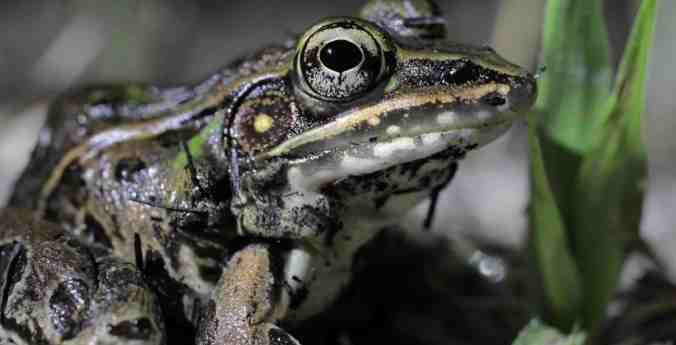
Photographs and video were taken by Bobby Altman at the Francis Marion National Forest, S.C., with assistance from Amphibian and Reptile Conservancy, a national nonprofit.

Every now and then we link to a gem by Margaret Renkl, and these often calm the environmentally-rattled nerves, as is the case today:

Why Tiny Ponds and Singing Frogs Matter So Much

NASHVILLE — I wish you could hear what it sounds like to sleep near an ephemeral pond in early springtime on the Cumberland Plateau, especially on a rainy night. As darkness begins to fall, the small frogs called spring peepers begin to sing. At first their song is the sonic equivalent of the way popcorn pops: each peep a single sound, each sound buffered on either side by silence. Continue reading
Beasts That Bluff

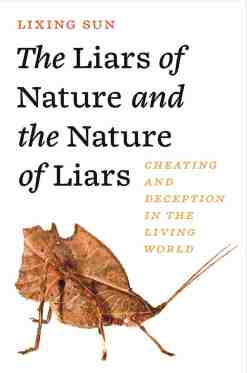
Whether to ward off predators or to exploit their victims, creatures can gain advantage by posing as different creatures. Illustration by Lou Benesch

When Elizabeth Kolbert reviews a book we know that at least the review is a must-read:

Why the Animal Kingdom Is Full of Con Artists

Some crows “cry wolf” to snatch food from their neighbors; some caterpillars trick ants into treating them like queens. What can we learn from beasts that bluff?

On April 20, 1848, Alfred Russel Wallace and Henry Walter Bates set off for the Amazon on a boat named Mischief. The two young men—Bates was twenty-three, Wallace twenty-five—had met a few years earlier, probably at a library in Leicester, in England’s East Midlands. Both were passionate naturalists, and both were strapped for cash. (Neither had been able to afford university.) To finance their adventures, they planned to ship specimens back to London, where they could be sold to wealthy collectors.

For reasons that no one has ever been able to explain—but that many have speculated about—Wallace and Bates separated soon after they reached Brazil. In the decade that followed, Wallace amassed an immense trove of new species; lost most of them in a ship fire; set off again, for Southeast Asia; and, with Charles Darwin, discovered natural selection.

Bates, meanwhile, remained in Brazil. He sailed up the Tapajós, an Amazon tributary, and then up the Cupari, a tributary of the Tapajós. Travel in the region was often agonizingly slow; to get from the town of Óbidos to Manaus, a journey of less than four hundred miles, took him nine weeks. (At some point during the trip, he was robbed of most of the money he was carrying.) Bates would find a congenial town and spend months, even years, there, making daily forays into the surrounding rain forest. He tromped around in a checked shirt and denim pants, an outfit considered outré by the British merchants he encountered in Brazil, who wore their top hats rain or shine. Continue reading
The Birds Of Australia, Interactive Exhibition Of John & Elizabeth Gould’s Illustrations

A new exhibition showcasing the incredible world of Australia’s birdlife will launch in Newcastle. Presented on STORYBOX, an interactive storytelling cube, The Birds of Australia, brings to life the iconic bird illustrations of John and Elizabeth Gould together with First Nations storytelling and knowledges.
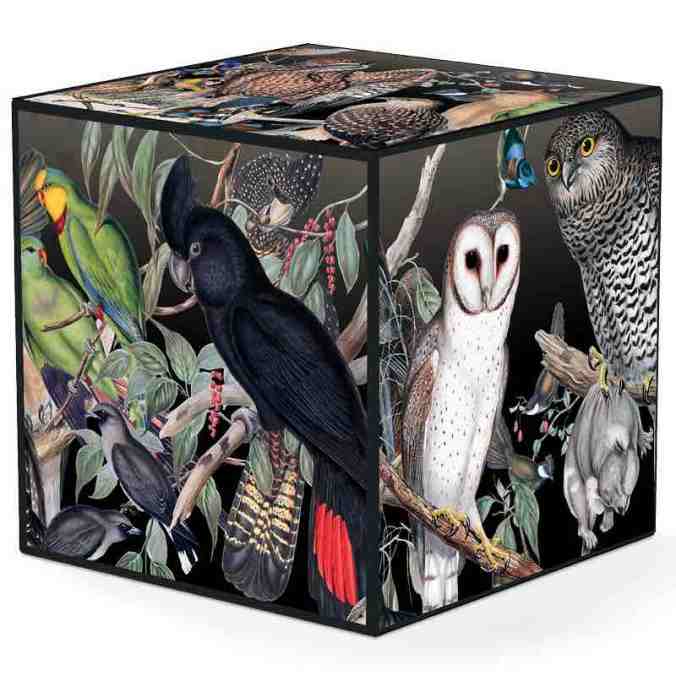
We have linked to stories about both John Gould and his wife Elizabeth, and now there is a museum exhibition honoring both together, so if you happen to be in Australia:

Touring exhibition: The Birds of Australia

Trace the journey of English ornithologist John Gould and his wife Elizabeth, as they travelled across New South Wales in the 1800s on one of the most significant birding expeditions in history, helping inform contemporary knowledge and conservation of Australian birds. The Goulds described and illustrated over 300 birds that were completely new to science, including the Pied Butcherbird (Cracticus nigrogularis) and the now extinct Paradise Parrot (Psephotellus pulcherrimus). It was an astonishing record of observation and sustained hard work. Continue reading