Jumpstarting System Change

So many things to change, so little time. If you are looking for a way to jumpstart a change to the system, consider these six lifestyle adjustments (thanks to the Guardian for the feature story on Jump):

From using smartphones for longer to ending car ownership, research shows ‘less stuff and more joy’ is the way forward

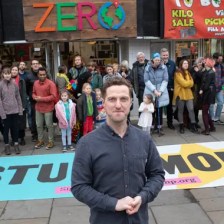
Founder of the Jump campaign Tom Bailey. Photograph: Andy Hall/The Observer

Research shows that people in wealthier, high-consuming countries can help avert climate breakdown by making six relatively straightforward lifestyle changes, creating a society of “less stuff and more joy”.

Experts say if enacted these “shifts” would account for a quarter of the required emissions reductions needed to keep the global heating down to 1.5C and increase pressure on government and the private sector to make the necessary far-reaching systemic change. Continue reading
As The World Burns

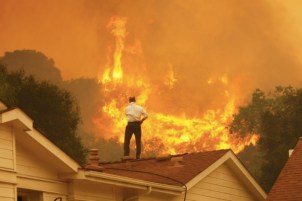
Heat waves have become hotter, droughts deeper, and wildfires more frequent, the I.P.C.C. report states, and the window of time for doing anything about it is fast closing. Photograph by David McNew / Getty

Even as a geopolitical crisis has our full attention, we cannot ignore other important information about our shared future. Click through to the magazine website where one of our favored interpreters of environmental news helps us understand how The Latest U.N. Climate Report Paints Another Grim Picture:

The Secretary-General cites a “criminal” abdication of leadership. Meanwhile, the U.S. Supreme Court is hearing a case that may hamper emissions regulations.

There were two front-page-worthy developments on Monday in the world of climate policy. Perhaps even more significant than either one was the fact that they were at cross-purposes. Continue reading
We Have Seen The Future, And It Is Youthful

Sunrise models itself on the civil-rights movement of the fifties and sixties. Photograph by Evan Jenkins for The New Yorker

In the current issue of the New Yorker, Andrew Marantz offers an inside view of The Youth Movement Trying to Revolutionize Climate Politics; we can only hope they succeed where previous generations have failed:

Sunrise has already shifted the conventional wisdom about climate change. Now it wants to create a mass movement, combining street protest with policy negotiation, while there’s still time.

On the evening of November 12, 2018, six days after being elected to Congress and six weeks before being sworn in, the socialist Democrats Rashida Tlaib and Alexandria Ocasio-Cortez walked into an Episcopal church in Washington, D.C. Inside, more than a hundred activists in their teens and twenties milled around a font of holy water, wearing nametags on their flannel and fleece, eating pizza from paper plates. Continue reading
Subsidizing Environmental Degradation Must End

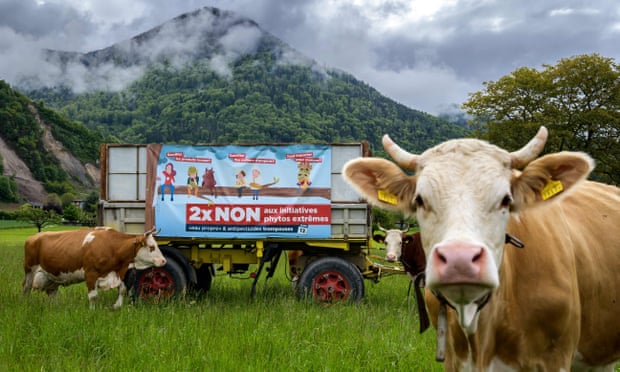
An electoral poster objecting to a proposed ban on subsidies for Swiss farms. A 2021 report found almost 90% of global farming subsidies are harmful. Photograph: Fabrice Coffrini/AFP/Getty

We missed this when it was first published a couple weeks ago, but it is still fresh and important:

World spends $1.8tn a year on subsidies that harm environment, study finds

Research prompts warnings humanity is ‘financing its own extinction’ through subsidies damaging to the climate and wildlife

The world is spending at least $1.8tn (£1.3tn) every year on subsidies driving the annihilation of wildlife and a rise in global heating, according to a new study, prompting warnings that humanity is financing its own extinction. Continue reading

Trees’ Wondrous Capabilities

Diana Beresford-Kroeger at her home in Ontario. “If you build back the forests, you oxygenate the atmosphere more, and it buys us time,” she said. Nasuna Stuart-Ulin for The New York Times

Another round of thanks to Cara Buckley for a vividly written snapshot. Using Science and Celtic Wisdom to Save Trees (and Souls) is about one person’s multi-talented capacity to inspire us in new ways related to trees, and the patience it has required:

Diana Beresford-Kroeger, a botanist and author, has created a forest with tree species handpicked for their ability to withstand a warming planet.

MERRICKVILLE, Ontario — There aren’t many scientists raised in the ways of druids by Celtic medicine women, but there is at least one. She lives in the woods of Canada, in a forest she helped grow. From there, wielding just a pencil, she has been working to save some of the oldest life-forms on Earth by bewitching its humans. Continue reading
Keep Peat In Place

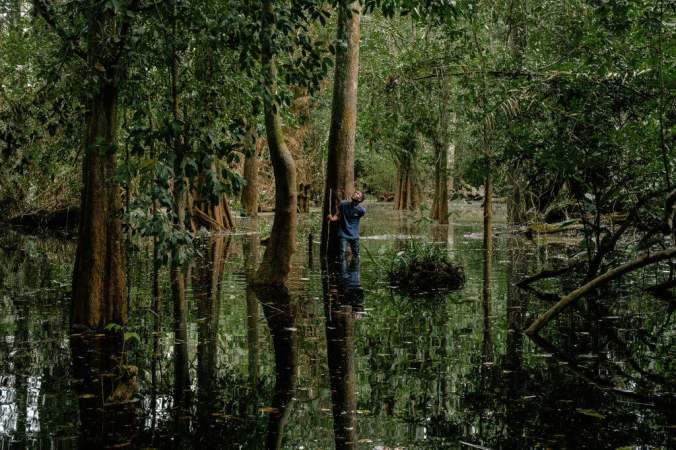
Nanna Heitmann for The New York Times

Peat is back on our radar, with this excellent report by Matthew Thompson in the New York Times. It is part of a new series called Headway, an initiative “exploring the world’s challenges through the lens of progress,” which is exactly the founding sentiment of our platform here. So, read on:

Rural Congolese villagers are being asked to protect one of earth’s most precious ecosystems. What can other places contribute to our shared future?

Imagine someone showed up on your doorstep one day and told you that the swampy forest not far from your home contained a rare and precious soil, so powerful that the planet’s future hinges on its preservation. The world is relying on you to keep the soil undisturbed, you’re told, or sinister forces will be unleashed, large enough to doom us all. Continue reading

Nuclear Fusion’s Heat Feat

The interior of the JET, where an experiment generated 59 megajoules of heat, beating the 1997 record of 21.7 megajoules. Photograph: UKAEA

We have no expertise in this specific energy-related subject, but we know that new sources of energy are an important potential contributor to the reduction of global warming. So, we read this news about a new heat record from nuclear fusion as a qualified source of hope:

Nuclear fusion heat record a ‘huge step’ in quest for new energy source

Oxfordshire scientists’ feat raises hopes of using reactions that power sun for low-carbon energy

The prospect of harnessing the power of the stars has moved a step closer to reality after scientists set a new record for the amount of energy released in a sustained fusion reaction. Continue reading
Big Agriculture, Anti-Regulation & Antisocial Behavior

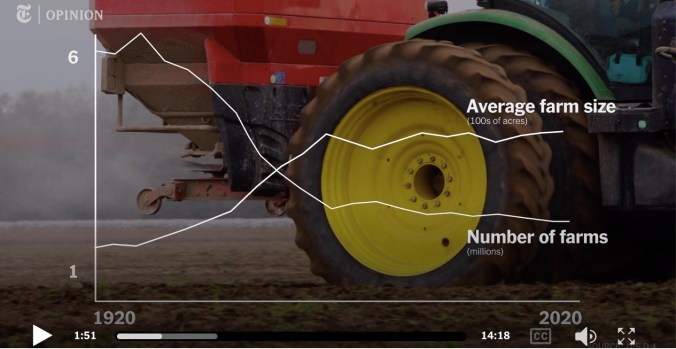
Click any image here to go to an op-ed video that takes just over 14 minutes to watch. You’ll get an inside look into what has happened to food production in the USA, and how, and why.

Summed up, it is all about the power of big-ag lobbying. They want no regulations. They want to decide on their own how to produce food. And it is making a big mess. This anti-regulatory ideology, which has the hallmark of antisocial behavior, is not unique to agricultural lobbyists, but is quite well illustrated by them.

Meet the People Getting Paid to Kill Our Planet

American agriculture is ravaging the air, soil and water. But a powerful lobby has cleverly concealed its damage.

“We’re Cooked” is an Opinion Video series about our broken food system and the three chances you get to help fix it — and save the planet — every day.


The global food system is a wonder of technological and logistical brilliance. It feeds more people than ever, supplying a greater variety of food more cheaply and faster than ever.

It is also causing irreparable harm to the planet. Continue reading
Palm Oil Potential

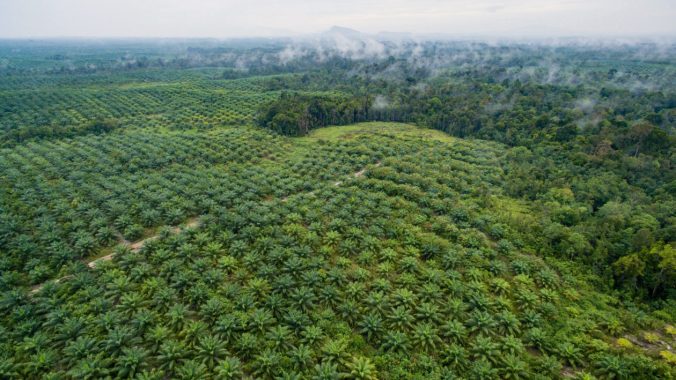
An oil palm plantation encroaches on a rainforest in West Kalimantan, Indonesia. NANANG SUJANA / CIFOR

Palm oil’s problems, and potential solutions have been catalogued in these pages many times. In this recent story by James Dinneen, writing again for Yale Environment 360, a new potential solution is explored:

Can Synthetic Palm Oil Help Save the World’s Tropical Forests?

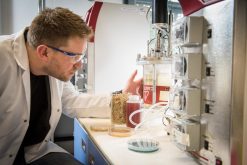
Christopher Chuck, a chemical engineer at the University of Bath, is working to produce yeast able to generate more oil from cheaper feedstocks. UNIVERSITY OF BATH

Numerous startups are creating synthetic palm oil in the lab, hoping to slow the loss of tropical forests to oil palm cultivation. But palm oil is the most widely used vegetable oil, and producing a synthetic version on a large scale remains a daunting challenge.

Tom Jeffries and Tom Kelleher met at Rutgers University in the 1970s while studying industrially useful microbes. Jeffries went on to run a yeast genomics program at the U.S. Department of Agriculture; Kelleher spent decades in the biomedical industry, working with biologics like insulin, which are produced by genetically modified microbes in giant, fermenting vats. Continue reading

Big Win On Climate, Says McKibben

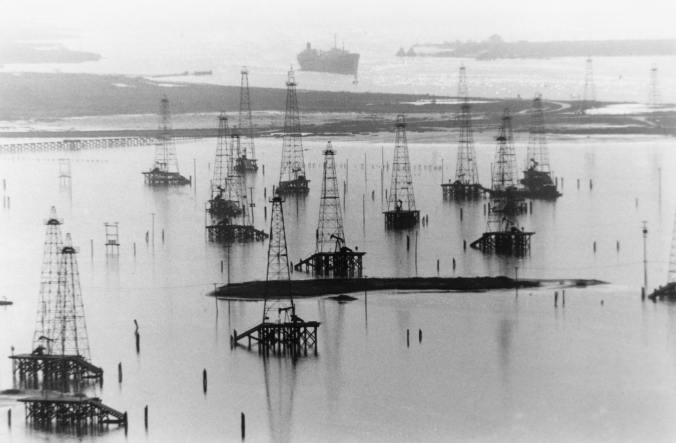
Early offshore action in Texas. the rigs are bigger now—so big that a federal court found yesterday that they’re endangering the climate.

His first book was an early harbinger that we wish had changed the world. Now, decades later, his newsletter is worth subscribing to. When Bill McKibben says something has gone right, we cannot wait to read it:

Something went right!?

Through no fault of its own, Biden’s team gets a big win on climate

Last summer the Biden administration granted the largest set of offshore oil leases in American history. The ironies abounded—Biden had insisted during his campaign that he would not be doing this (“And by the way, no more drilling on federal lands, period. Period, period, period,” he’d explained during the New Hampshire primary); it was the Interior Department that officially sold the leases, headed by a secretary, Deb Haaland, that environmentalists had fought like crazy to get confirmed. Continue reading

Carless Berlin

A cyclist in Berlin, Germany.

A cyclist in Berlin, Germany. HENDRIK WIEDUWILT VIA FLICKR

Thanks to Yale E360 for Berlin Looks to Create Car-Free Zone Larger Than Manhattan, a snapshot of the city’s fewer cars campaign, with links to further details in related stories by the Guardian and Fast Company:

Berlin’s regional parliament is considering creating a car-free zone in the German capital in response to a concerted push from a local advocacy group. Continue reading

Too Much Hype About Too Much Stuff

The Economist recently promoted a notion:

Rags to riches – fashion as an asset class HOW DID second-hand clothes become fashion’s hottest buy? Online resale and rental firms are changing the calculus on what it means to buy fashion “as an investment”

Hype? We will see. The “trapped” value of fashion items in our homes might get liberated as discussed, but what about the fundamental trap of fashion?

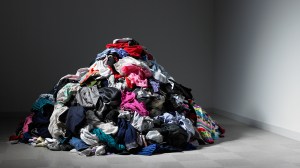
Ryan McVay/Getty Images

Kenneth P. Pucker shares an important lesson from his time in industry, and kudos to Harvard Business Review for giving him the platform to explain The Myth of Sustainable Fashion:

Few industries tout their sustainability credentials more forcefully than the fashion industry. Products ranging from swimsuits to wedding dresses are marketed as carbon positive, organic, or vegan while yoga mats made from mushrooms and sneakers from sugar cane dot retail shelves. New business models including recycling, resale, rental, reuse, and repair are sold as environmental life savers. Continue reading

The Great Bamboozle

Bill McKibben’s newsletter on Substack asks the question:

What happens if you greenwash greenwash?

It’s hard to go lower than net zero….

Greenwashing began, as it name implies, as a gentle, barely perceptible rain of fibs. Back at the start, it was mostly pictures; it was pretty easy to gauge how much environmental damage a company did by the number of penguin photographs it felt it needed to include in its annual report. Continue reading

Yakutia’s Outsized Impact

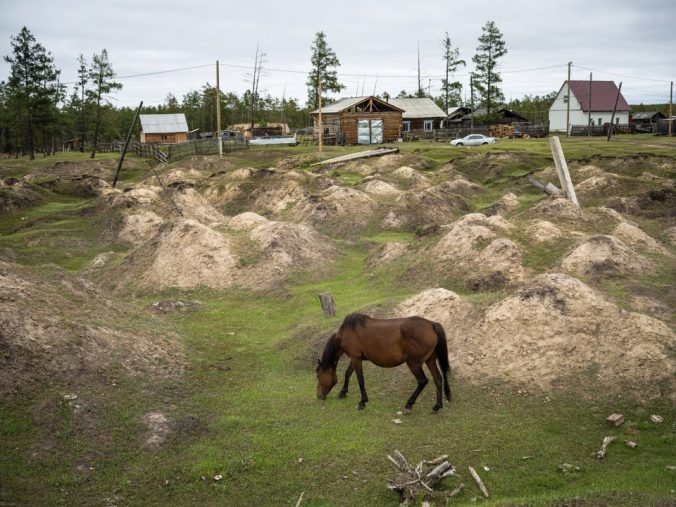
“The problem is, you can’t just turn off, let alone reverse, permafrost thaw,” one scientist said. “It won’t be possible to refreeze the ground and have it go back to how it was.” Photographs by Alexander Gronsky for The New Yorker

Joshua Yaffa reminds me, vividly, that my work in Yakutia 16 years ago was an exercise in futility:

The Great Siberian Thaw

Permafrost contains microbes, mammoths, and twice as much carbon as Earth’s atmosphere. What happens when it starts to melt?

Flying over Yakutia, in northeastern Russia, I watched the dark shades of the boreal forest blend with patches of soft, lightly colored grass. Continue reading

Juliet Eilperin’s Sprawling, Soaring Sitka Story

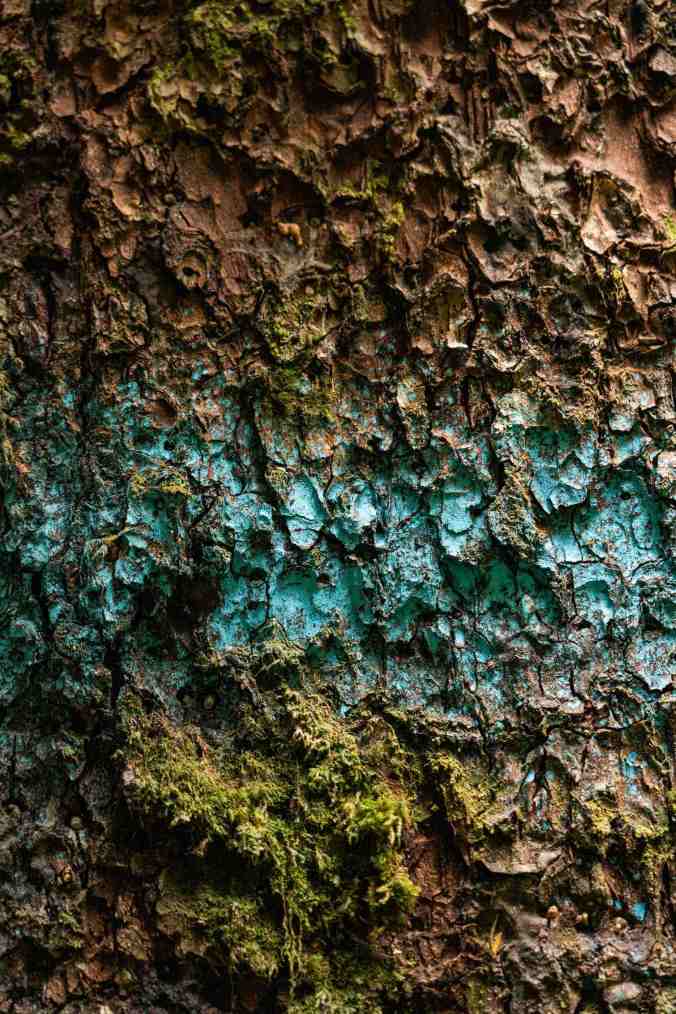
The trunk of the Sitka spruce marked to be cut down.

The soaring, centuries-old Sitka spruce with its blue spray-paint blaze is spared, for now.

A story about a tree, its history intertwined with five centuries of human history, this article earns your time. And it earns respect for the Washington Post, which assigned a star reporter to oversee its climate change coverage.

Juliet Eilperin features this tree’s significance from multiple angles, and accompanied by the stunning photography and video of Salwan Georges, her words are leveraged artfully with images and dramatic arc into a question you want the answer to: This tree has stood here for 500 years. Will it be sold for $17,500? Definitely worth reading on a large monitor rather than a phone screen. It may get you thinking about graduate school:

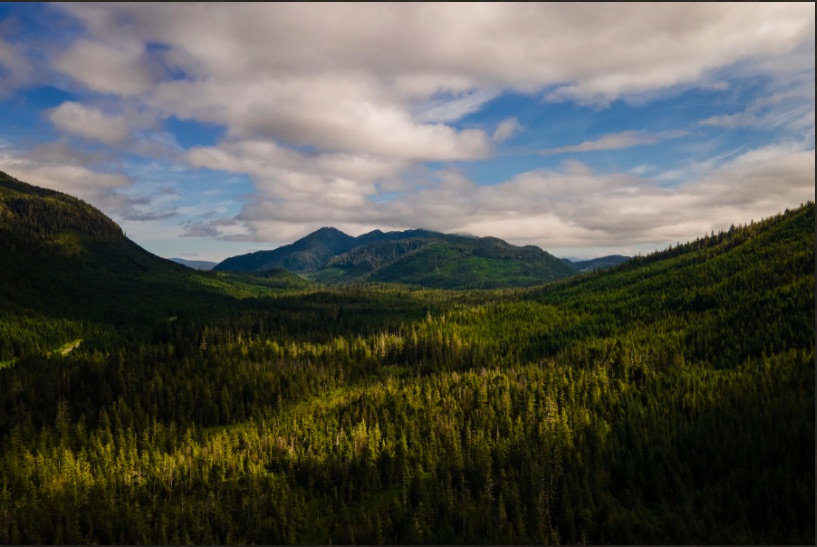
The Tongass National Forest in Alaska.

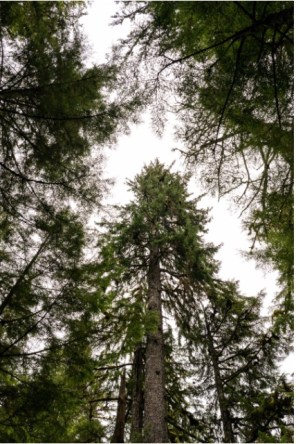
TONGASS NATIONAL FOREST, Alaska — The Sitka spruce soaring more than 180 feet skyward has stood on this spot on Prince of Wales Island for centuries. While fierce winds have contorted the towering trunks of its neighbors, the spruce’s trunk is ramrod straight. Standing apart from the rest of the canopy, it ascends to the height of a 17-story building.

This tree’s erect bearing — a 1917 publication called the Sitka species “the autocrat of timbers” — is what helps give it such extraordinary commercial value. Musical instrument makers covet its fine grain, as do builders whose clients want old-growth wood that’s increasingly scarce. In a world whose ancient forests have largely disappeared, this grove holds a sliver of what remains. Continue reading

Extraction, Adaptation & Opportunity

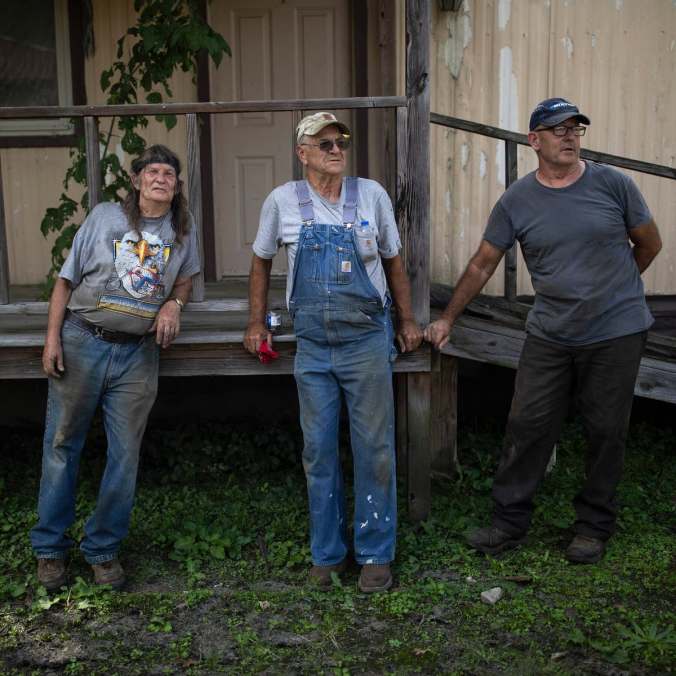
The former coal miner Gary Webb, right, with his cousins Darrell Davis and Ernie Dials, in Lovely, Ky. Mr. Webb supports the planned solar farm. “It’s good for climate change,” he said. “Anything that helps is good.” Maddie McGarvey for The New York Times

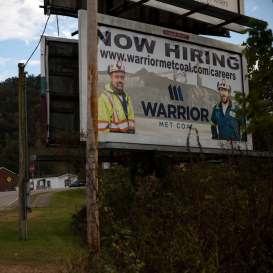
The photograph above speaks to the humanity of coal mining culture in a time when the world is trying to wind down its use of coal. It is not fair, in so many ways, that miners seem to have so few options; but a way forward will be found. The billboard in the photo below may suggest otherwise, but opportunities for those miners are not likely to include coal.  Thanks to Cara Buckley for this vivid portrait of a place historically focused on extraction, its people who are in need of a better future, and the tensions that come with making that better future happen:

Coming Soon to This Coal County: Solar, in a Big Way

In Martin County, Ky., where coal production has flatlined, entrepreneurs are promising that a new solar farm atop a shuttered mine will bring green energy jobs.

A billboard advertising mining jobs in Inez, Ky. By last count, the county had just 26 miners left. Maddie McGarvey for The New York Times

MARTIN COUNTY, Ky. — For a mountain that’s had its top blown off, the old Martiki coal mine is looking especially winsome these days. With its vast stretches of emerald grass dotted with hay bales and ringed with blue-tinged peaks, and the wild horses and cattle that roam there, it looks less like a shuttered strip mine and more like an ad for organic milk.

The mountain is poised for another transformation. Hundreds of acres are set to be blanketed with solar panels in the coming year, installed by locals, many of them former miners. Continue reading

2021 Climate Inaction

ILLUSTRATION: JENNY SHARAF; GETTY IMAGES

Not fun, but a useful review:

2021 Was a Huge Missed Opportunity on Climate Action

The pandemic should have been a wake-up call—instead, emissions have climbed once more. Here’s how the US could have seized the opportunity

JUST LIKE THAT, a pandemic-fueled glimpse of a better world is growing hazy—or smoggy, to be more precise. As civilization locked down in early 2020—industries ground to a halt, more people worked from home, and almost no one traveled—global carbon dioxide emissions crashed by 6.4 percent, and in the United States by 13 percent. In turn, air quality greatly improved. Life transformed, sure enough, but that transformation was fleeting. Scientists warned that the drop would be temporary because economies would roar back stronger than ever to make up for lost revenue. Indeed, by the end of 2021, emissions have now returned to pre-pandemic levels. Continue reading

AgEc Revolution In Puerto Rico

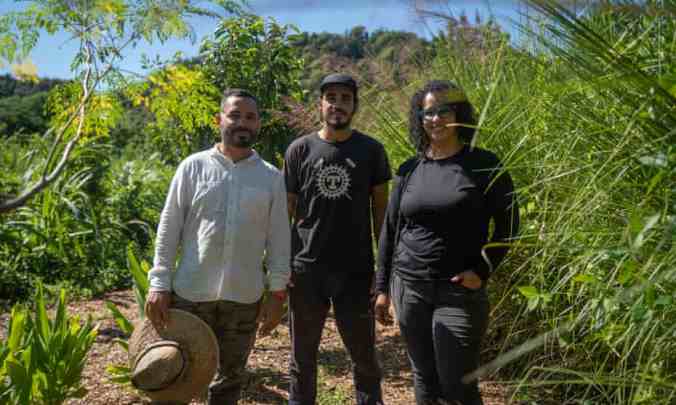
Francisco Diaz Ramos, 44, Marissa Reyes, 32, and Jan Paul, 29, run the Güakiá Colectivo Agroecólogico, an 11 acre farm in Dorado, Puerto Rico. Photograph: Angel Valentin/The Guardian

When we look at these young farmers and the work they are doing we see a greener future.

A farmer prepares the land at the El Josco Bravo argoecology farm in the Toa Alta mountains. Photograph: Nina Lakhani/The Guardian

Thanks to Nina Lakhani and The Guardian for this story:

‘An act of rebellion’: the young farmers revolutionizing Puerto Rico’s agriculture

The island imports 85% of its food but these three farms are part of the agroecology movement that seeks food sovereignty and climate solutions

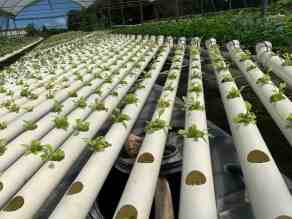
A hydroponics greenhouse at Frutos del Guacabo is used to grow a range of herbs and greens quickly and without soil. Photograph: Nina Lakhani/The Guardian

Puerto Rico was once a thriving agricultural hub thanks to its tropical climate, rich biodiversity, and sustainable farming traditions.

Today, less than 2% of the workforce is employed in agriculture and tens of thousands of acres of arable land sit idle. Meanwhile 85% of the food eaten in Puerto Rico is imported, grocery prices are among the highest in the US and last year two in five people experienced food insecurity. “Unemployment is brutal, prices are brutal, migration from the island is brutal,” said Denise Santos, who runs Puerto Rico’s food bank. Continue reading

Costa Rica, Never Old

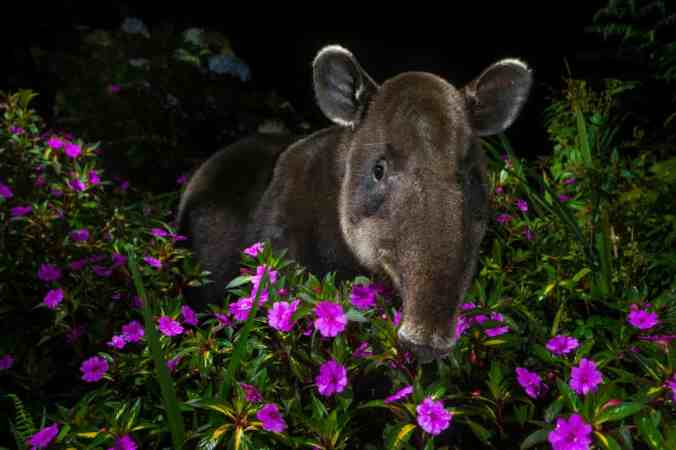
A tapir in Braulio Carrillo national park, near San José. Costa Rica’s policy of paying citizens to protect and restore ecosystems is credited with reversing deforestation rates, which threaten the species. Photograph: Michiel van Noppen/2021 Wildlife Photographer of the Year

The stories we use the title Really to highlight are among the heavies. Too much malfeasance, too often. Reading stories about Costa Rica‘s remarkable achievements related to the environment never gets old:

Billionaires, princes and prime ministers are among those keen to learn from the Central American country, which has long put nature at the heart of its policies

If there had been a popularity contest at Cop26, the Costa Rican president, Carlos Alvarado Quesada, would have been a clear winner. Leonardo DiCaprio, Jeff Bezos, Boris Johnson and Prince William all wanted to speak with the leader of the tiny Central American country, eager to bask in its green glow. Continue reading

Historians As Climate Sleuths

The Leshan Giant Buddha in Sichuan, China, a relic of the Tang dynasty, which collapsed in 907 A.D. amid changes in the climate. ZHONG ZHENBIN / ANADOLU AGENCY / GETTY IMAGES

Thanks to Jacques Leslie

Climate Clues from the Past Prompt a New Look at History

A fragment from a sculpted stele, an artifact of the Akkadian Empire, which collapsed in the 22nd century B.C. amid a severe drought. MBZT VIA WIKIPEDIA

As scientists rapidly improve their ability to decipher past climate upheaval through ice cores and other “proxies,” historians are re-examining previous political and social turmoil and linking it to volcanic eruptions, prolonged droughts, and other disturbances in the natural world.

Joseph Manning, a Yale University professor of ancient history, likes to recall the moment when he was shown an advance copy of a scholarly paper that pinpointed the timing of major volcanic eruptions over the last 2,500 years. As he read the paper, “I literally fell off my chair,” he said recently.

Roman coins dating to 82 B.C. Lead from smelting such coins has been found in faraway ice cores, offering clues about Roman history. CARLOMORINO VIA WIKIPEDIA

Relying on new geochemical techniques for analyzing ice core sediment to determine the dates of ancient volcanic activity down to the year or even season, the paper, published in Nature in 2015, showed that major eruptions worldwide caused precipitous, up-to-a-decade-long drops in global temperatures. Continue reading