Marsh Matters

Coastal marshlands exist in a precarious state: they need enough sediment to stay above water but not so much they get buried. In San Francisco Bay, the US Army Corps of Engineers and others are working to develop a less destructive way of giving marshes the mud they need. Photo by Aerial Archives/Alamy Stock Photo

For the record, marshes matter, so our thanks to Erica Gies, writing for Hakai:

Making a Marsh out of a Mud Pile

In San Francisco Bay, scientists are looking for a better way to rebuild flagging marshland.

The water in California’s San Francisco Bay could rise more than two meters by the year 2100. For the region’s tidal marshes and their inhabitants, such as the endangered Ridgway’s rail and the salt marsh harvest mouse, it’s a potential death sentence. Continue reading

Heat Pumps, Circa 2024

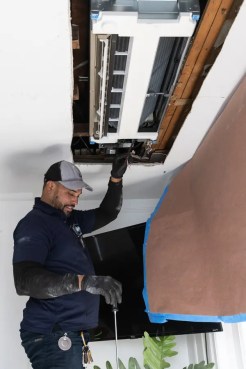
Heat pumps are energy efficient and considered by many to be powerful tools in combating climate change. Jackie Molloy for The New York Times

The technology is still young, and raising questions, but also full of promise according to this article by Hilary Howard in the New York Times:

Why Heat Pumps Are the Future, and How Your Home Could Use One

The highly efficient devices are the darlings of the environmental movement. Here’s why.

Heat pumps, which both warm and cool buildings and are powered by electricity, have been touted as the answer to curbing greenhouse gas emissions produced by homes, businesses and office buildings, which are responsible for about one-third of the emissions in New York State. Continue reading

Are We Anthropocenic Or Not?

Art works by Aletheia Casey

Thanks, as always, to Elizabeth Kolbert for illumination on this mystery:

The “Epic Row” Over a New Epoch

Scientists, journalists, and artists often say that we live in the Anthropocene, a new age in which humans shape the Earth. Why do some leading geologists reject the term?

A few months into the third millennium, a group called the International Geosphere-Biosphere Programme (I.G.B.P.) held a meeting in Cuernavaca, Mexico. Among the researchers in attendance was Paul Crutzen, an atmospheric chemist best known for his research on ozone-depleting chemicals, such as chlorofluorocarbons. Continue reading

10,000 New Electric Buses In India

People wait to board an electric bus in Pune, India. (Image credit: courtesy of ITDP)

Seven years and many bus stories among us recall the old buses. Noisy, smoke-belching, hot and crowded. Time to retire the old ones and at least lessen the noise and belching. Thanks to Sarah Spengeman and Yale Climate Connections:

India makes a big bet on electric buses

Fast-growing cities need electric buses if the country is to meet its climate goals.

Public transportation riders in Pune, India, love the city’s new electric buses so much they will actually skip an older diesel bus that arrives earlier to wait for a smoother, cooler ride in a new model. This has fed a new problem: overcrowding. Fortunately, more new buses are on the way. Continue reading

Babatana Rainforest Conservation Project & High Integrity Carbon Credits

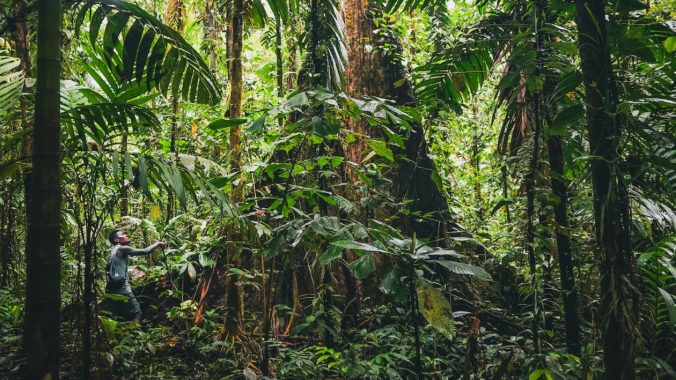
Sirebe tribal ranger Elijah Qalolilio Junior in the rainforest. DOUGLAS JUNIOR PIKACHA / NAKAU

A sign marks the boundary of protected Sirebe land. DOUGLAS JUNIOR PIKACHA / NAKAU

Of all the methods for addressing climate change, new incentives for protecting forests are among those we have most confidence in. Thanks to this article by Jo Chandler in Yale e360, if your introspection after reading this previous article had you down on carbon credits, there may be a way to restore your confidence:

The Sirebe forest at dusk. DOUGLAS JUNIOR PIKACHA / NAKAU

Solomon Islands Tribes Sell Carbon Credits, Not Their Trees

In a South Pacific nation ravaged by logging, several tribes joined together to sell “high integrity” carbon credits on international markets. The project not only preserves their highly biodiverse rainforest, but it funnels life-changing income to Indigenous landowners.

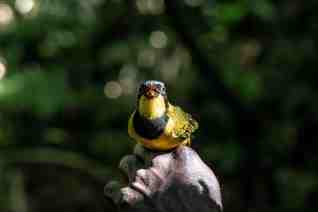
A male oriole whistler on a forest ranger’s hand. DOUGLAS JUNIOR PIKACHA / NAKAU

When head ranger Ikavy Pitatamae walks into the rainforest on Choiseul Island, the westernmost of the nearly 1,000 islands that make up the South Pacific archipelago of Solomon Islands, he surveys it with the heart of a tribal landowner and the eye of a forester. Continue reading

Assisted Evolution

Photo illustration by Lauren Peters-Collaer

If conservation failure is an option, then assisted evolution is a necessary consideration. Emily Anthes walks us through the idea:

When traditional conservation fails, science is using “assisted evolution” to give vulnerable wildlife a chance.

Scientists are trying to save lowland Leadbeater’s possums, tree-dwelling marsupials known as forest fairies, by crossbreeding them with possums from a separate highland population, a strategy known as genetic rescue.

For tens of millions of years, Australia has been a playground for evolution, and the land Down Under lays claim to some of the most remarkable creatures on Earth.

It is the birthplace of songbirds, the land of egg-laying mammals and the world capital of pouch-bearing marsupials, a group that encompasses far more than just koalas and kangaroos. (Behold the bilby and the bettong!) Nearly half of the continent’s birds and roughly 90 percent of its mammals, reptiles and frogs are found nowhere else on the planet.

Australia has also become a case study in what happens when people push biodiversity to the brink. Continue reading

Make Space For Weeds

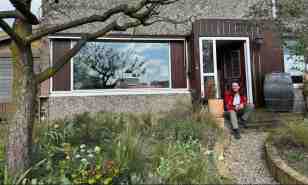
Tineke Menalda on her front doorstep in Amersfoort Photograph: Senay Boztas/Guardian

Weeds are part of nature, whether we like them or not. Thanks to Senay Boztas and the Guardian for this new take on weeds from Holland:

‘We need to accept the weeds’: the Dutch ‘tile whipping’ contest seeking to restore greenery

View image in fullscreen
A pile of ‘whipped’ paving stones in the village of Raalte.

National competition has goal of helping Netherlands reach environmental targets by removing garden paving

Tineke Menalda sits in the sun on her front step, nursing a cup of coffee and idly plucking out the odd weed. Three years ago, the front of her terrace house in Amersfoort was completely paved. But now, sitting in a lush garden of trees and green, she is an official ambassador for the strangest new sport in the Netherlands: tegelwippen, “tile whipping”, or “whipping away” the paving stones. Continue reading

Does Recycling Matter In 2024?

Thanks to Yale Climate Connections for this primer:

Does recycling actually do anything? What about carbon offsets? Did you know that the average person’s carbon footprint is about 6.5 tons but the average American’s footprint is double that? Meteorologist Alexandra Steele talks to the experts to get answers about what actually helps the planet, and what doesn’t. You can calculate you carbon footprint by using the links below:

https://coolclimate.berkeley.edu/calc…

https://www.nature.org/en-us/get-invo…

Credits Script, research, interviews, camera: Alexandra Steele Script Editors: Sara Peach, Pearl Marvell Edit Producers: Iain Moss, Sam Lucas Production support: Anthony Leiserowitz, Lisa Fernandez Production Editor: Iain Moss Graphics: Screen Stories Production Manager: Ellie Aitken Social Media Manager: Ellie Phillips Director of Production: Hal Arnold Production Company: Little Dot Studios

An Oil Company Funding Carbon Capture?

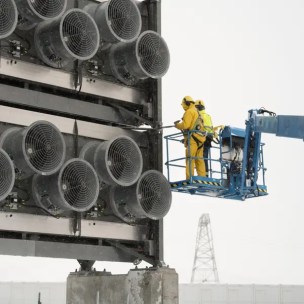
The plant will be powered by geothermal energy. Francesca Jones for The New York Times

David Gelles in the New York Times furthers our understanding of the expanding use of carbon capture, and the motives of the key actors utilizing this technology:

On a windswept Icelandic plateau, an international team of engineers and executives is powering up an innovative machine designed to alter the very composition of Earth’s atmosphere.

“Collector containers” where air is pulled in. Francesca Jones for The New York Times

If all goes as planned, the enormous vacuum will soon be sucking up vast quantities of air, stripping out carbon dioxide and then locking away those greenhouse gases deep underground in ancient stone — greenhouse gases that would otherwise continue heating up the globe.

Just a few years ago, technologies like these, that attempt to re-engineer the natural environment, were on the scientific fringe. They were too expensive, too impractical, too sci-fi. Continue reading

Map For Planting & For Not Planting Trees

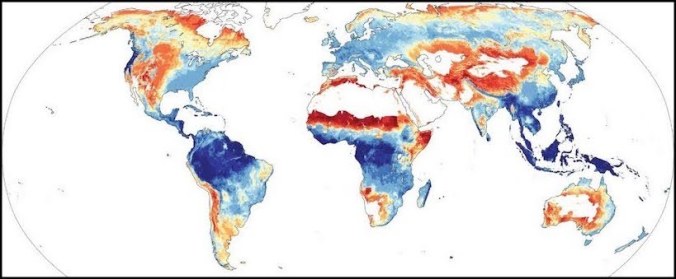
Regions where tree planting would curb warming on balance are shaded in blue, while regions where tree planting would intensify warming are shaded in red. HASLER, ET AL.

As we prepare to plant trees when the rainy season starts in a few weeks, a story like this one gives pause. If you are capable of reading and understanding the article summarized below, congratulations; meanwhile, thanks to Yale e360 for interpretation that allows the lay reader to follow along:

This Map Shows Where Planting Trees Would Make Climate Change Worse

Though oft touted as a fix for climate change, planting trees could, in some regions, make warming more severe, a new study finds. Continue reading

Dutch Water Knowhow Is Respectable

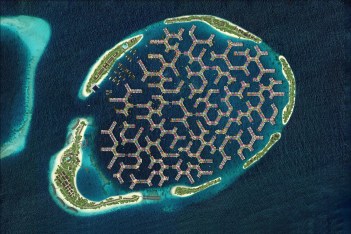
Waterstudio renderings like this one, of a floating “city” in the Maldives, are created using tools including Photoshop and the A.I. program Midjourney. Art work courtesy Waterstudio / Dutch Docklands

We respect the Dutch for their respect of nature, particularly their respect for the power of water and their longstanding determination to harmonize our life with it. This profile extends our respect:

A Dutch Architect’s Vision of Cities That Float on Water

What if building on the water could be safer and sturdier than building on flood-prone land?

Koen Olthuis, the founder of the architectural firm Waterstudio, believes that floating buildings like the Théâtre L’Île Ô, in Lyon, will transform urban living like skyscrapers did a century ago. Photograph by Giulio Di Sturco for The New Yorker

In a corner of the Rijksmuseum hangs a seventeenth-century cityscape by the Dutch Golden Age painter Gerrit Berckheyde, “View of the Golden Bend in the Herengracht,” which depicts the construction of Baroque mansions along one of Amsterdam’s main canals. Handsome double-wide brick buildings line the Herengracht’s banks, their corniced façades reflected on the water’s surface. Interspersed among the new homes are spaces, like gaps in a young child’s smile, where vacant lots have yet to be developed.

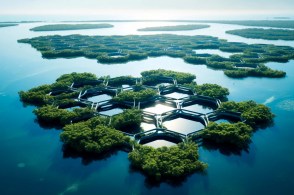
A rendering of a floating forest in the Persian Gulf, devised as part of a strategy to combat heat and humidity. When building projects on the water, Olthuis says, “you have to be very, very patient.” Art work courtesy Waterstudio

For the Dutch architect Koen Olthuis, the painting serves as a reminder that much of his country has been built on top of the water. The Netherlands (whose name means “low countries”) lies in a delta where three major rivers—the Rhine, the Meuse, and the Scheldt—meet the open expanse of the North Sea. More than a quarter of the country sits below sea level. Over hundreds of years, the Dutch have struggled to manage their sodden patchwork of land. Continue reading

Breadfruit More Fully Appreciated

Wolfgang Kaehler / LightRocket / Getty

Our thanks to Zoë Schlanger for this corrective. Breadfruit has appeared more than once in our pages, but never with appreciation like this:

Too Few Americans Are Eating a Remarkable Fruit

Breadfruit is a staple in tropical places—and climate change is pushing its range north.

Someplace in the lush backroads of San Sebastián, in western Puerto Rico, my friend Carina pulled the car over. At a crest in the road stood a breadfruit tree, full of basketball-size, lime-green fruits, knobbled and prehistoric, like a dinosaur egg covered in ostrich leather. Continue reading

Ants & Us

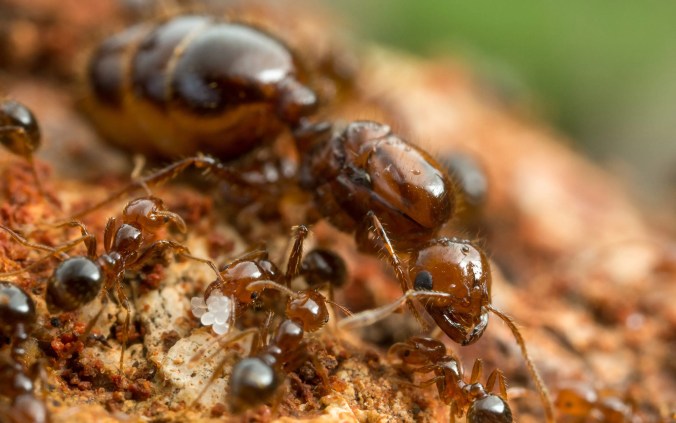
A queen Solenopsis invicta, an invasive fire ant. Photo by Alex Wild

John Whitfield, author of this article in Aeon, is a science journalist whose writing has appeared in Nature, among publications:

A polygyne population of red imported fire ants at Brackenridge Field. Austin, Texas, USA. Photo by Alexander Wild

Ant geopolitics

Over the past four centuries quadrillions of ants have created a strange and turbulent global society that shadows our own

It is a familiar story: a small group of animals living in a wooded grassland begin, against all odds, to populate Earth. At first, they occupy a specific ecological place in the landscape, kept in check by other species. Then something changes. The animals find a way to travel to new places. They learn to cope with unpredictability. They adapt to new kinds of food and shelter. They are clever. And they are aggressive. Continue reading

Where Does Captured Carbon Go?

The Heirloom Carbon direct air capture plant in Tracy, California, which opened last November. HEIRLOOM CARBON

For keeping an eye on the captured carbon trail, thanks to Nicola Jones:

As Carbon Air Capture Ramps Up, Major Hurdles Remain

Aided by tax breaks and carbon credits, scores of plants are being developed or are now operating that remove CO2 from the air. Such facilities are considered necessary to limit global warming, but critics have questions about the high costs and where the captured carbon will go.

Texas is by far the top emitter of greenhouse gases in the United States: The oil-rich state releases twice as much carbon dioxide as the runner-up state, California, and as much as the entire country of Germany. Continue reading

Forest Adaptation Via Scientific Methodology

Scientists in northern Minnesota are exploring how to adapt forests for climate change, transitioning them to a warmer future by planting new mixes of southern seedlings. In this “transition test” in the Cutfoot Experimental Forest, forest ecologists thinned trees and planted seedlings of eight species, grown from seeds collected up to hundreds of miles to the south. CREDIT: BRIAN PALIK / USDA FOREST SERVICE

Thanks to John Tibbets and Knowable Magazine

This 8-year-old bitternut hickory, native to a milder climate to the south, is flourishing in northern Minnesota, notorious for long, intensely cold winters. CREDIT: BRIAN PALIK / USDA FOREST SERVICE

On a brisk September morning, Brian Palik’s footfalls land quietly on a path in flickering light, beneath a red pine canopy in Minnesota’s iconic Northwoods. A mature red pine, also called Norway pine, is a tall, straight overstory tree that thrives in cold winters and cool summers. It’s the official Minnesota state tree and a valued target of its timber industry.

But red pine’s days of dominance here could fade. In coming decades, climate change will make red pine and other Northwoods trees increasingly vulnerable to destructive combinations of longer, warmer summers and less extremely cold winters, as well as droughts, windstorms, wildfires and insect infestations. Climate change is altering ecological conditions in cold regions faster than trees can adapt or migrate. Continue reading

Responding To A Red Alert

Another reason to subscribe to Bill McKibben’s newsletter:

How Not to Act in an Emergency

Forget AI–we need some human intelligence

We’re getting right to the nub now.

Yesterday the World Meteorological Organization officially certified 2023 as the hottest year in human history. Just to put on the record here what should have been the lead story in every journal and website on our home planet:

Andrea Celeste Saulo, secretary general of the WMO, said the organisation was now “sounding the red alert to the world”.

The report found temperatures near the surface of the earth were 1.45C higher last year than they were in the late 1800s, when people began to destroy nature at an industrial scale and burn large amounts of coal, oil and gas.

Last year’s spike was so scary that NASA’s Gavin Schmidt—Jim Hansen’s heir as keeper of NASA’s climate record—wrote in Nature this week that it raised the most profound possible implications. Please read his words slowly and carefully: Continue reading

Grazing More Lightly To Lock Away 63 Billion Tons Of Carbon

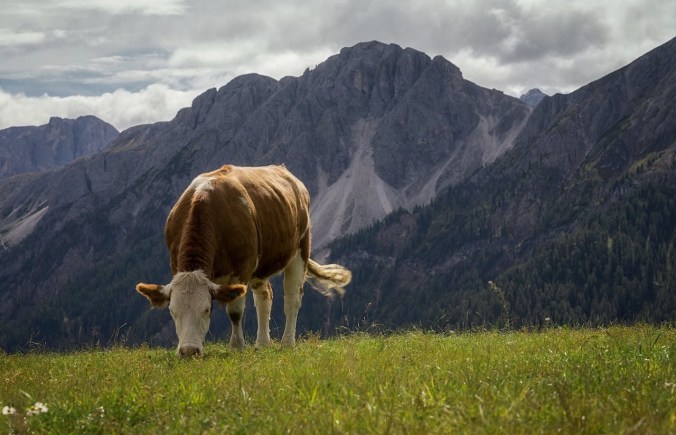
PEXELS

Thanks to Yale e360 Digest:

How Lightly Grazed Lands Can Lock Away Carbon

A new study finds that scaling back grazing on most pastureland worldwide would dramatically increase the amount of carbon stored in soils. Continue reading

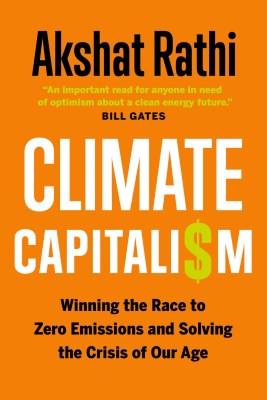
Climate Capitalism Conversation

We are in need of realism more than anything else, but according to David Gelles it still makes sense to hear what an optimist has to say:

Making the Case for Capitalism

A new book argues that short-term profit incentives can deliver long-term changes to benefit the climate.

Combating the climate crisis is the ultimate long-term challenge. Can society rapidly overhaul energy production, transportation, heavy industry, agriculture and more in order to prevent truly catastrophic global warming? Continue reading

Tree Species Moving, To Adapt & Survive

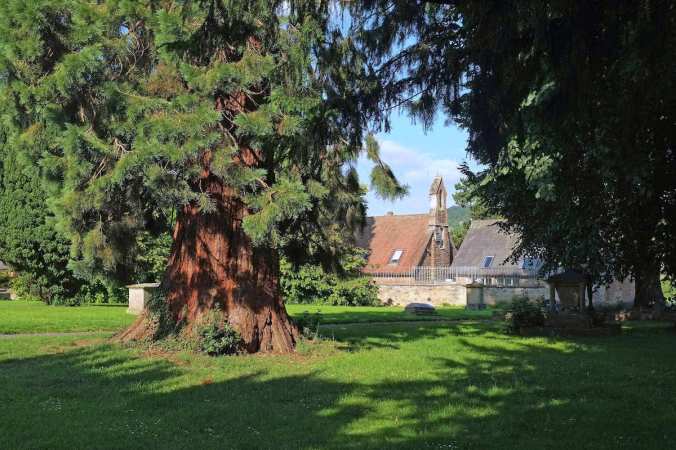
A giant sequoia in Bromyard, England. DEREK HARPER VIA GEOGRAPH

Thanks to Yale e360:

Under Threat in Their Native California, Giant Sequoias Are Thriving in Britain

Worsening drought and wildfires in California are pushing giant sequoias, the biggest trees on Earth, into decline. But sequoias that have been planted in Britain are flourishing, new research finds. Continue reading

McKibben On Responsibility & Accountability

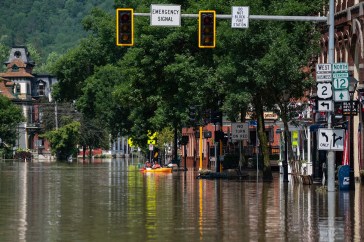
Vermont’s capitol city, underwater in epic July flooding that wrecked most of Montpelier’s retail district

Holding the responsible accountable is part of Bill McKibben’s objective; he also provides sunshine. Subscribe to this newsletter if you can:

You flood it, you pay for it.

States are considering ‘climate superfund’ laws to hold Big Oil accountable

One prong of the climate fight involves installing so much renewable energy that fossil fuel use actually declines dramatically—a few places are finally showing that’s possible, like sunny Germany which last week said emissions in 2023 dropped more than ten percent. Continue reading