As CO2levels climb, the carbon count is a daily reminder we must tackle climate change now
The simplest measure of how the mass burning of fossil fuels is disrupting the stable climate in which human civilisation developed is the number of carbon dioxide molecules in the atmosphere.
Today, the CO2 level is the highest it has been for several million years. Back then, temperatures were 3-4C hotter, sea level was 15-20 metres higher and trees grew at the south pole. Worse, billions of tonnes of carbon pollution continues to pour into the air every year and at a rate 10 times faster than for 66m years.
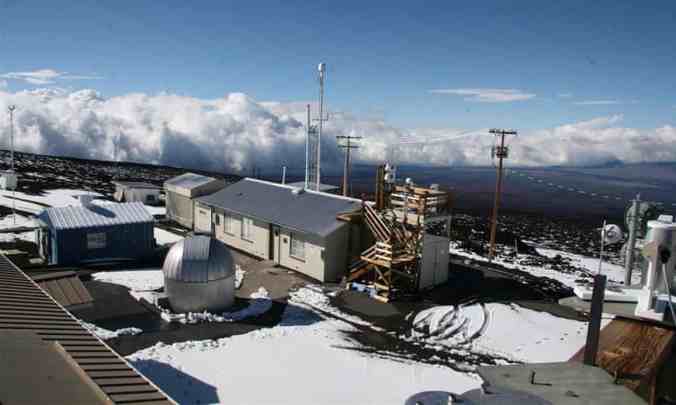
At the dawn of the industrial revolution, CO2 was at 280 parts per million (ppm) in the atmosphere. By 1958, when the first measurements were made at Mauna Loa in Hawaii, it had reached 315ppm. It raced past 350ppm in 1986 and 400ppm in 2013.
The Guardian will now publish the Mauna Loa carbon count, the global benchmark, on the weather page of the paper every day.
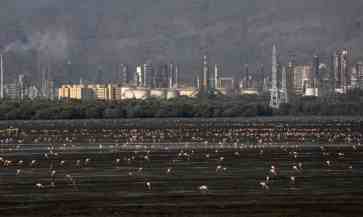
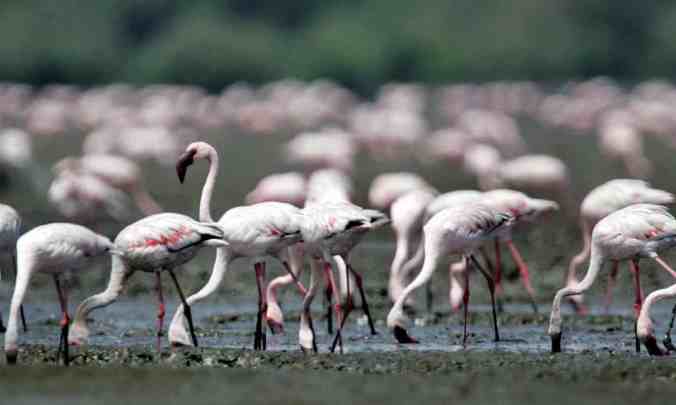
Flamingos eat plankton in front of an industrial area at Sewri mudflats, Mumbai. Photograph: Divyakant Solanki/EPA-EFE
Payal Mohta reported from Mumbai for this story in the Guardian that caught our attention with images of urban flamingos. An unusual beauty can be the result of a common problem. As it is important to understand nature in wilderness areas, which is our strong preference, it is also important to understand these man-made phenomena:
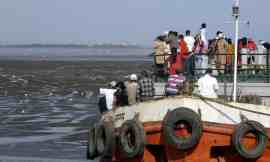
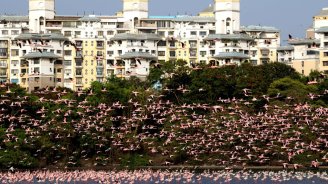
People watch flamingos from a boat during the Bombay Natural History Society’s flamingo festival. Photograph: Hindustan Times/Hindustan Times via Getty Images
There is an air of anxious excitement among the urban professionals and tourists on board our 24-seater motorboat as we enter Thane Creek.
A chorus of “oohs” and “aahs” breaks out as we spot the visions in pink we came to see – hundreds of flamingos listlessly bobbing in the murky green water – followed by the furious clicking of cameras.
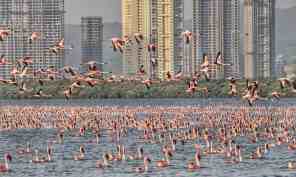
Flamingos at Sewri. Photograph: Hindustan Times/Hindustan Times via Getty Images
Then, almost as one, the birds skim the water and take off in sync. “They always stay together,” says Prathamesh Desai, who has been organising birding excursions in the city for seven years. “They are an extremely gregarious species.”…
Flamingos at Sewri. Photograph: Hindustan Times/Hindustan Times via Getty Images
Flamingos flock to Mumbai between September and April, but this year there are almost three times more birds than the amount that usually flocks to the area. Bachchan Kumar/Hindustan Times via Getty Images
That story continues after the jump below. First, thanks to National Public Radio (USA)’s Audrey Nguyen and Sarah Oliver for producing and bringing this story to our attention with this opening line (which goes on to credit the Guardian story as its source):
Around this time every year, tens of thousands of flamingos flock to Mumbai to feed. But this year, there are almost three times more than the normal amount in the city — about 120,000.
The reason for the influx is currently a mystery. But some scientists believe that pollution in the birds’ natural habitat might be one factor at play… Continue reading →
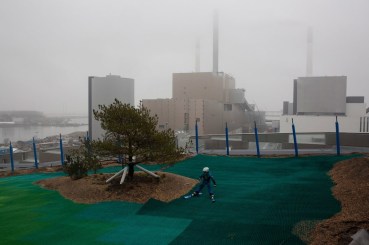
The beginning of a ski run on the roof of Copenhagen’s new trash incinerator, which will help heat buildings in the city. Photograph by Charlotte de la Fuente
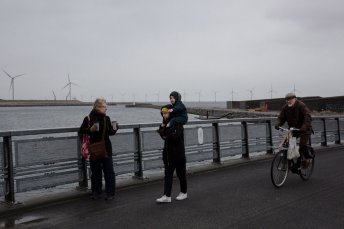
Wind turbines along the strait that separates Denmark from Sweden, seen from the Amager Strandpark in Copenhagen. Photograph by Charlotte de la Fuente
COPENHAGEN — Can a city cancel out its greenhouse gas emissions?
Copenhagen intends to, and fast. By 2025, this once-grimy industrial city aims to be net carbon neutral, meaning it plans to generate more renewable energy than the dirty energy it consumes.
The Copenhagen Metro. A new line, scheduled to open this year, will put most residents less than half a mile from a station. Photograph by Charlotte de la Fuente
Here’s why it matters to the rest of the world: Half of humanity now lives in cities, and the vast share of planet-warming gases come from cities. The big fixes for climate change need to come from cities too. They are both a problem and a potential source of solutions.
The experience of Copenhagen, home to 624,000 people, can show what’s possible, and what’s tough, for other urban governments on a warming planet.
Recycling bins in the Christianshavn district of Copenhagen. The city requires residents to sort recycling into eight separate categories. Photograph by Charlotte de la Fuente
The mayor, Frank Jensen, said cities “can change the way we behave, the way we are living, and go more green.” His city has some advantages. It is small, it is rich and its people care a lot about climate change.
Mr. Jensen said mayors, more than national politicians, felt the pressure to take action. “We are directly responsible for our cities and our citizens, and they expect us to act,” he said. Continue reading →
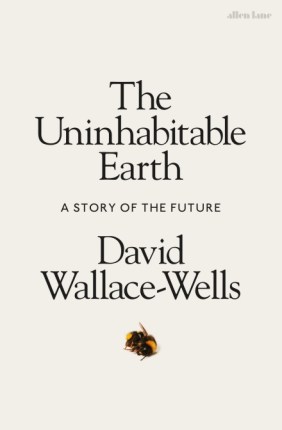
We have already linked to stories about life after warming enough that it borders on repetitive. No choice, as the book to the right makes very clear. This recent short video by the author will make you wince. There is something about visual cues on this topic that make it tougher to listen without being distracted. One of the better conversations with him is this one hour+, so if you only have that much time for him, make the best of it:
After years of hovering on the periphery of American politics, never quite the star of the show, it seems that climate change is having a moment. Continue reading →
Costa Rican wildlife was the theme of reception in February to formally introduce the government’s decarbonization strategy.
Somini Sengupta and her colleague Alexander Villegas published a story yesterday that resonates with the explanations Amie and I gave friends and family about our original decision to live in Costa Rica. It also resonates with the decision we made recently to return. In 2010 when we moved to Kerala it was not clear when, or even if, we would be back here. But our work in India was intertwined with Costa Rica’s evergreen pioneering role in the global conversation about conservation. So we are back. And the evergreen is appreciated, especially in the way Costa Rica’s president and his wife tell the story within a story.
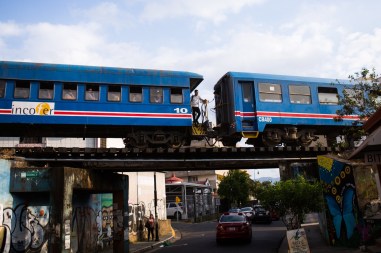
A diesel commuter train in San José. The government plans to replace older trains with electric models.
Despite it’s diminutive size, Costa Rica been at the forefront of the climate change conversation. While the country has only about 0.25% of the world’s landmass, it contains almost 5% of the world’s biodiversity. These statistics give both an added incentive to focus energies on shifting the juggernaut of climate change and the ecological soapbox from which to be heard.
Costa Rica has an infrastructural uphill climb, most specifically with transportation as is illustrated below, but the country has stood its ground successfully in the past. When we think of the country’s road network in the mid-1990s relative to the roads today, it gives one of many reasons to be optimistic:
SAN JOSÉ, Costa Rica — It’s a green big deal for a tiny sliver of a country. Costa Rica, population 5 million, wants to wean itself from fossil fuels by 2050, and the chief evangelist of the idea is a 38-year-old urban planner named Claudia Dobles who also happens to be the first lady. Continue reading →
The UN Environment Assembly in Nairobi, Kenya, is the world’s leading decision-making forum. From 11 to 15 March 2019, it will be considering how best to improve outcomes for people and planet. Ecosystems will be high up on the agenda.
The timing looks good. The UN Decade on Ecosystem Restoration 2021-2030, declared on 1 March 2019 by the UN General Assembly, aims to massively scale up the restoration of degraded and destroyed ecosystems as a proven measure to fight climate change, and enhance food security, water supply and biodiversity.
The degradation of land and marine ecosystems undermines the well-being of 3.2 billion people and costs about 10 per cent of the annual global gross domestic product in loss of species and ecosystems services. Key ecosystems that deliver numerous services essential to food and agriculture, including supply of freshwater, protection against hazards and provision of habitat for species such as fish and pollinators, are declining rapidly.
Restoration of 350 million hectares of degraded land between now and 2030 could generate US$9 trillion in ecosystem services and take an additional 13 to 26 gigatons of greenhouse gases out of the atmosphere.
UN Environment and the Food and Agriculture Organization of the United Nations will lead implementation of the UN Decade on Ecosystem Restoration. Continue reading →
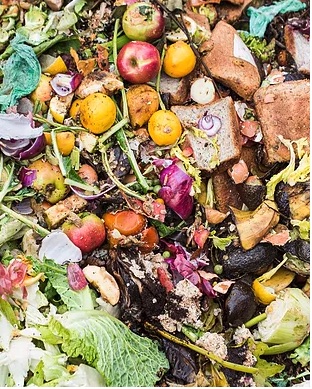
Food waste, a problem whose partial solutions are myriad, has been on my radar since Milo posted about it. Its root seems obviously related to not properly pricing the input resources, like land, water, etc., which paradoxically makes it possible to produce an abundance sufficient to waste. But dealing with the problem at the tail end of the value chain is another partial solution so the video above is worth a few minutes of your time.
If, when you finish that, you want to learn more, click the logo to the left. And if you live in Brooklyn you might want to participate in some manner.
Home Composting. Rabbit Roots is a home food scraps pick up service. For a monthly rate our bikers will collect straight from your door to our compost site.
If you live nearby, get more information about how to subscribe to their home composting program by clicking here. Sandy and her operation tell me that waiting for someone else to solve the collective action problem is wasted time. David Owen brought her and it to my attention in this short profile:
…BK ROT was founded, in 2013, by Sandy Nurse. She was born in Panama, in 1984—both her parents were in the U.S. Navy—and grew up mainly there and in South Korea and Japan. She studied international affairs at the New School and assumed that she was headed for a diplomatic career. But she changed her mind after working on food assistance in Haiti after the big earthquake there in 2010.
This article appears in the print edition of the March 11, 2019, issue, with the headline “Sacred Rot.”
“I came back to New York and got really excited about urban resiliency and food sovereignty and disaster recovery,” she said recently. BK ROT was one of the results. “We have a very specific mission of environmental and social-justice values, and grassroots accountability to the neighborhood, and transparency, and giving our output, the compost, back into food-growing and soil-building operations.” BK ROT is partly a grant-supported jobs program for young people. (Ibarra and his co-workers, most of whom live in the neighborhood, earn fifteen dollars an hour.) Nurse also teaches community activism and basic construction skills, which she studied as a trainee of the New York City District Council of Carpenters.
At BK ROT, food waste is mixed with wood chips and sawdust, then moved, over a period of weeks, through a succession of wooden bins the size of washing machines. By the time it reaches the final bin, it’s black and bug-covered and unrecognizable as former food. Then it’s heaped into sloping, loaflike piles, called windrows. “Convection sucks in air from the bottom and pulls it to the top,” Nurse said. “That keeps the microorganisms inside the windrows healthy.” The resulting mass is eventually shovelled into a rotating cylindrical sifter that looks like something you might pull bingo numbers out of; the original version was built by a friend of Nurse’s, who found instructions on YouTube. The compost is sold in local stores and directly to individuals—“Somebody came from Staten Island yesterday and took a bunch,” Nurse said—but most of it goes to nearby urban farms and community gardens, a few of which Nurse herself helped to start.
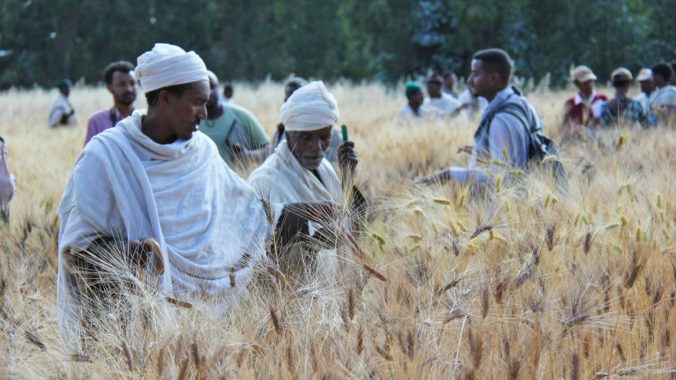
Ethiopian farmers examine the results of a trial of wheat varieties. BIOVERSITY INTERNATIONAL
The bread we eat in the not so distant future may depend on the type of cooperation described below. Thanks to Yale e360 and Virginia Gewin for this story:
In Ethiopia and other developing nations, scientists are working with small-scale farmers on trials to see which seed varieties perform best in changing conditions. These initiatives are enabling farmers to make smarter crop choices in the face of rising temperatures, drought, and more extreme weather.
Durum wheat varieties grow in trial plots in Ethiopia’s Amhara region. Thousands of farmers participated in the project, testing how various wheat strands performed under changing climatic conditions. BIOVERSITY INTERNATIONAL
In Ethiopia’s undulating, high-elevation grasslands, farmers — most of them working parcels of only two to three acres — produce more wheat than anywhere else in sub-Saharan Africa. They accomplish this feat in the face of chronically short supplies of high-quality seed. Still, Ethiopia’s record harvest of 4.6 million metric tons in 2017 didn’t satisfy the country’s needs, forcing it to import an additional 1.5 million tons of wheat. Continue reading →
In 2017, seventeen major wildfires in California were connected to P.G. & E. Photograph by George Rose / Getty
Sheelah Kolhatkar has a note, The P.G. & E. Bankruptcy and the Coming Climate-Related Business Failures, that gets me thinking. The standard thinking on why climate change is so difficult to do anything about is how it is seen as a problem we will encounter far off in the future. It obviously is not far off. It has started. Farmers have suffered. Big city folk have suffered. California dreamers have suffered. The immediacy needs to be framed accordingly:
On January 15th, the World Economic Forum issued its annual Global Risks Report, which presents the results of a survey of what policymakers and experts perceive to be the world’s greatest challenges and threats. The report categorizes concerns by color: blue for economic risks, orange for geopolitical risks, purple for technological risks, red for societal risks. This year, green, which denotes environmental hazards, was dominant: the top three risks, listed by the “likelihood” that they would occur, were extreme weather events, failure of climate-change mitigation and adaptation, and natural disasters. (Threats such as data fraud and cyber-attacks appeared lower down on the list). “Is the world sleepwalking into a crisis?” the report’s authors wrote. “Global risks are intensifying but the collective will to tackle them appears to be lacking.” Continue reading →
It takes the full 15 minutes of video above to fully appreciate what happened a few days ago. The soundbite 57 second version had me convinced that the senator was haughty and deserved to be schooled by these kids. But the full picture above, as often happens, provides better perspective, an attribute of little l liberalism. She was not quite the jerk I first thought.
In an exchange that went viral, the senator from California demonstrated why climate change exemplifies an issue on which older people should listen to the young. Photograph by Mark Peterson / Redux
One imagines that Senator Dianne Feinstein would like a do-over of her colloquy with some young people on Friday afternoon. A group of school students, at least one as young as seven, went to the senator’s San Francisco office to ask her to support the Green New Deal climate legislation. In a video posted online by the Sunrise Movement, she tells them that the resolution isn’t a good one, because it can’t be paid for, and the Republicans in the Senate won’t support it. She adds that she is at work on her own resolution, which she thinks could pass. Then, when the group persists in supporting the Green New Deal, which was introduced by Representative Alexandria Ocasio-Cortez, Feinstein responds, “You know what’s interesting about this group? I’ve been doing this for thirty years. I know what I’m doing. You come in here and you say, ‘It has to be my way or the highway.’ I don’t respond to that. I’ve gotten elected, I just ran, I was elected by almost a million-vote plurality,” she continued. “And I know what I’m doing. So, you know, maybe people should listen a little bit.” Continue reading →
Fox Maple Woods in Wisconsin. JOSHUA MAYER / FLICKR
Emergency? The evidence is clear in the case of the environment, and it is a global emergency with a global solution. Thanks to Yale e360 for this summary of a new finding:
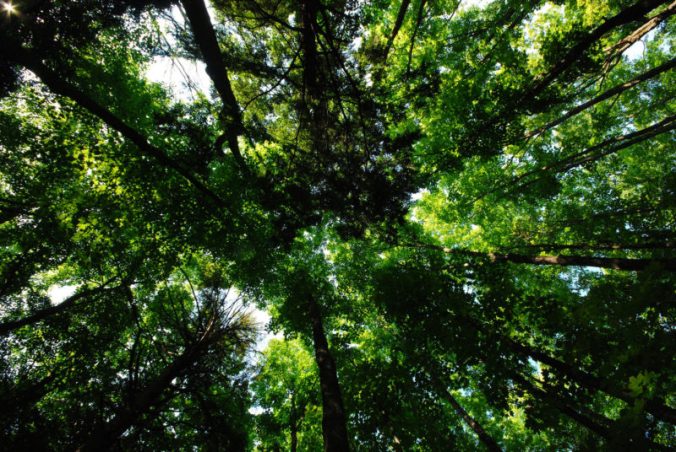
There is enough room in the world’s existing parks, forests, and abandoned land to plant 1.2 trillion additional trees, which would have the CO2 storage capacity to cancel out a decade of carbon dioxide emissions, according to a new analysis by ecologist Thomas Crowther and colleagues at ETH Zurich, a Swiss university. Continue reading →
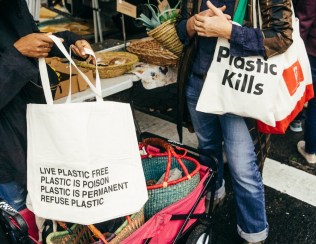
Ms. Cohen favors vendors who don’t use plastic. Credit Adam Amengual for The New York Times
When I started my Saturday morning reading it was just prior to our weekly visit to the farmer’s market and there was visual resonance with our own experience eliminating, or trying to eliminate plastic:
Going plastic free starts with cloth bags and straws. Suddenly, you’re … making your own toothpaste?
Reusable cloth bags are a must. Credit Adam Amengual for The New York Times
Like most people, resonance is always welcome in my reading. But like a second cup of coffee to really get the day going, there is nothing like cognitive dissonance. I can think eliminating plastic from our lives is a big deal one moment, and then the next it is clear that it is not enough, that it is like tinkering. Or as the punchy cliche puts it, like arranging deck chairs on the Titanic. David Wallace-Wells is a skilled dissonance artist in this vein. He can make your best efforts suddenly seem pathetic; not in a snarky way and if you listen to him explain his work you will realize resistance is futile; you cannot look away from what he is saying, even if you want to.
‘A profound book, which simultaneously makes me terrified and hopeful about the future’ Jonathan Safran Foer A Times and FT Most Anticipated Book 2019
His book will not likely be damned by faint praise; its look at our future prospects will more likely draw extreme responses in favor of the intensity of his alarm, and claims of alarmism from the usual suspects. He is catching up to Elizabeth Kolbert in balancing our preference for optimism with extreme realism. His op-ed on Saturday tipped the balance for me quite like a second, maybe third cup of coffee:
The age of climate panic is here. Last summer, a heat wave baked the entire Northern Hemisphere, killing dozens from Quebec to Japan. Some of the most destructive wildfires in California history turned more than a million acres to ash, along the way melting the tires and the sneakers of those trying to escape the flames. Pacific hurricanes forced three million people in China to flee and wiped away almost all of Hawaii’s East Island.
We are living today in a world that has warmed by just one degree Celsius (1.8 degrees Fahrenheit) since the late 1800s, when records began on a global scale. We are adding planet-warming carbon dioxide to the atmosphere at a rate faster than at any point in human history since the beginning of industrialization. Continue reading →
The title I give to today’s post is impossible to justify with any metrics, but read on and you may see my point. Jon Gertner, for this first time featured in our pages, and for what is likely the longest of any longform treatments of any topic in the New York Times, thank you for making it about this:
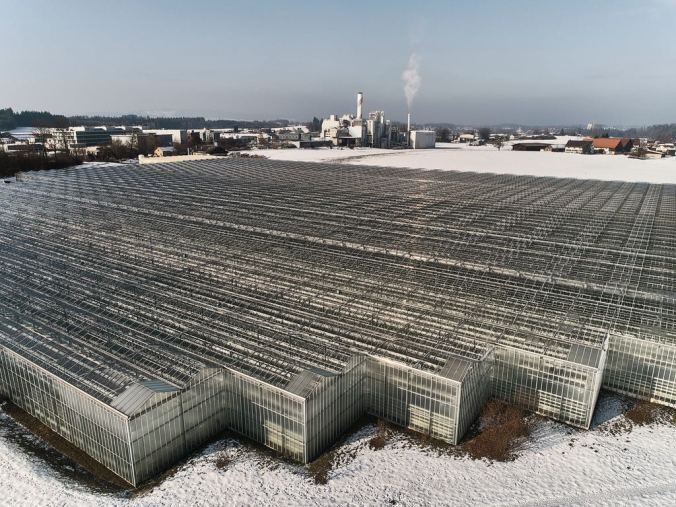
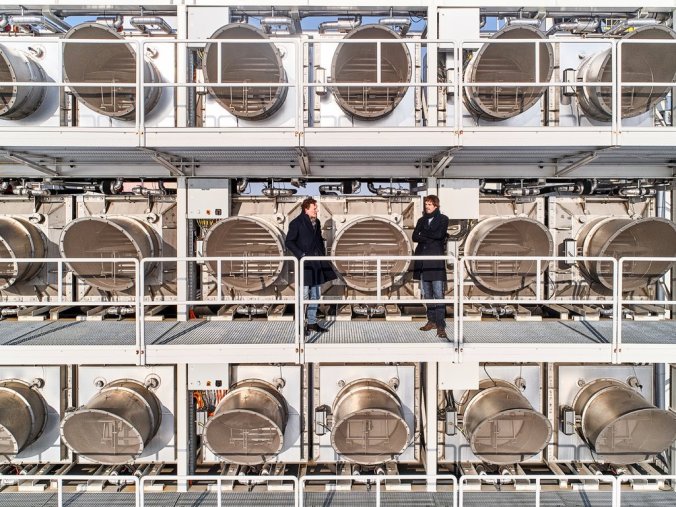
Christoph Gebald, left, and Jan Wurzbacher, the founders of Climeworks, at their plant in Hinwil, Switzerland. Luca Locatelli for The New York Times
Two European entrepreneurs think they can remove carbon from the air at prices cheap enough to matter.
A pilot project at a Swiss university that uses Climeworks equipment to make methane out of airborne CO₂. Luca Locatelli for The New York Times
Just over a century ago in Ludwigshafen, Germany, a scientist named Carl Bosch assembled a team of engineers to exploit a new technique in chemistry. A year earlier, another German chemist, Fritz Haber, hit upon a process to pull nitrogen (N) from the air and combine it with hydrogen (H) to produce tiny amounts of ammonia (NH₃). But Haber’s process was delicate, requiring the maintenance of high temperatures and high pressure. Bosch wanted to figure out how to adapt Haber’s discovery for commercial purposes — as we would say today, to “scale it up.” Anyone looking at the state of manufacturing in Europe around 1910, Bosch observed, could see that the task was daunting: The technology simply didn’t exist.
Over the next decade, however, Bosch and his team overcame a multitude of technological and metallurgical challenges. He chronicled them in his 1932 acceptance speech for the Nobel Prize for Chemistry — an honor he won because the Haber-Bosch process, as it came to be known, changed the world. His breakthrough made possible the production of ammonia on an industrial scale, providing the world with cheap and abundant fertilizer. The scientist and historian Vaclav Smil called Haber-Bosch “the most important technical invention of the 20th century.” Bosch had effectively removed the historical bounds on crop yields, so much so that he was widely credited with making “bread from air.” By some estimates, Bosch’s work made possible the lives of more than two billion human beings over the last 100 years. Continue reading →
Slat cares deeply about the environment, but, for him, the appeal of cleaning the oceans is also about puzzle solving. Illustration by Cristiana Couceiro
In the pantheon of writers we have linked out to since 2011, of those who focus on science and/or environmental issues Carolyn Kormann is a relatively recent arrival. Since I started noticing her work three years ago she has started 2019 with an especially strong duo of stories. One is a longform profile and a must-read if you have been even just glancing at the headlines about giant garbage patches swirling in the ocean. How to deal with epic waste after the fact, after the out-of-sight-out-of-mind approach that has been building this mess for decades, is no simple matter. Nor is the man she introduces us to.
Last year, the U.S.’s carbon-dioxide emissions increased by an estimated 3.4 per cent, the second-largest gain in the past two decades.Photograph by Fernando Moleres / Panos Pictures / Redux
The profile of Slat is compelling, disturbing and inconclusive–hallmarks of the type of profile I most appreciate when the subject involves seemingly intractable environmental challenges. The other item is shorter, with a pair of metaphors for economic periods that I wish I had known earlier. If you only have time for one, read about William Nordhaus’s many contributions to the otherwise dismal science, especially his description of the economic transformation from my lifetime to that of the next generation:
In 1974, the economist William Nordhaus described the transition from a “cowboy economy” to a “spaceship economy.” In the former, he wrote, “we could afford to use our resources profligately,” and “the environment could be used as a sink without becoming fouled.” But, in the spaceship economy, “great attention must be paid to the sources of life and to the dumps where our refuse is piled.” He added, “Things which have traditionally been treated as free goods—air, water, quiet, natural beauty—must now be treated with the same care as other scarce goods.” Toward the end of his landmark paper, “Resources as a Constraint on Growth,” Nordhaus discussed the possible adverse effects of energy consumption, most notably the “greenhouse effect.” Continue reading →
Those familiar with our work will recognize the word valorization, which is an essential element of what we write about and what we do. It’s increasingly important to note that Nature, made more fragile with each passing year by human impact climate change, requires human efforts to protect and hopefully, turn back the clock on damage already done; and it appears to be human nature that maintain a direct correlation between how something is valued and the amount of attention it gets.
We’re particularly impressed by this example of tech collaboration. Thanks to the Nature Conservancy for highlighting these stories…
AI and social media are helping quantify the economic value of coral reefs
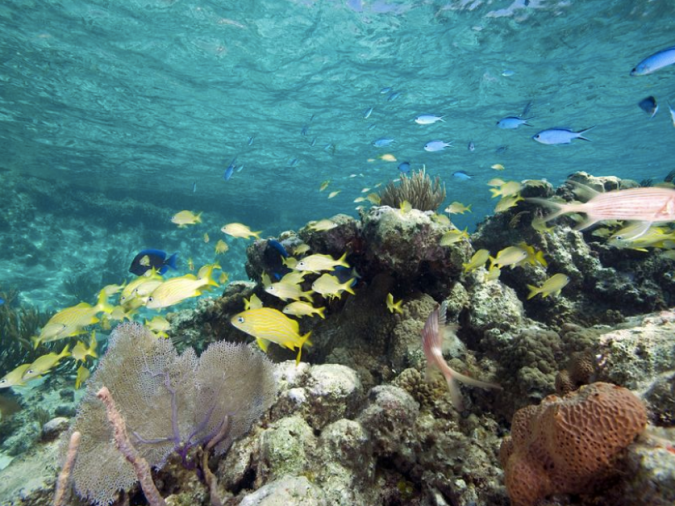
The Caribbean region is more dependent on tourism than any other region in the world—the sector accounts for over 15 percent of GDP and 13 percent of jobs in the region. And almost all visitors to the Caribbean take part in some activity that relates to coral reefs—either directly, like snorkeling and scuba diving, or indirectly, like enjoying sandy beaches, eating fresh seafood and swimming in crystal waters. That means the health of the Caribbean’s tourism industry—and thus the whole regional economy—is dependent on the health of its coral reefs.
But just how much value do reefs produce? After all, “what gets measured gets managed and improved.” The Nature Conservancy (TNC) recently released the results of a study that focused on reef-adjacent activities and the value they generate for the tourism industry, island governments and Caribbean communities. This study, which builds on an earlier body of globally focused research produced by TNC, found that reef-adjacent activities alone generate an estimated $5.7 billion per year in the Caribbean from roughly 7.4 million visitors. When combined with reef-dependent tourism activities, they generate $7.9 billion total from roughly 11 million visitors.
In other words, a major draw for people traveling to the Caribbean are activities related to coral reef ecosystems, and both the tourism industry and other aspects of the local economies depend on healthy coral reefs to keep this relationship afloat. This evidence offers a pivotal opportunity for advancing coral conservation initiatives not only in the Caribbean but around the world, as it can catalyze both the tourism industry and local governments and communities to invest in protecting and restoring coral reefs for the benefit of economies and incomes.
We now know that these natural wonders are responsible for generating billions of dollars, sustaining livelihoods and anchoring economies in the Caribbean as well as other tropical destinations across the globe. And that should translate into a major incentive to conserve them. Continue reading →
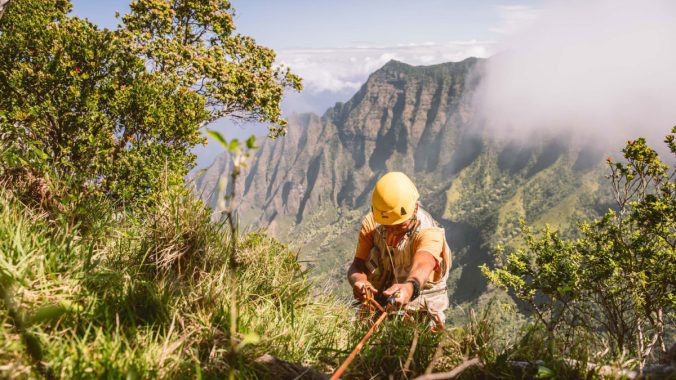
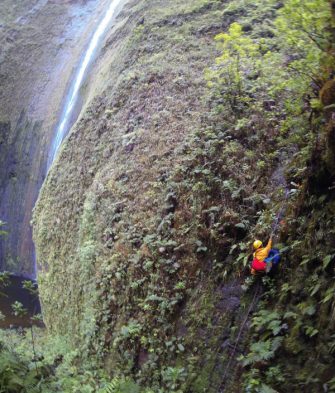
Botanist Steve Perlman rappels into the Kalalau Valley, a biodiversity hotspot on the Hawaiian island of Kauai.COURTESY OF BRYCE JOHNSON/FLUX HAWAII
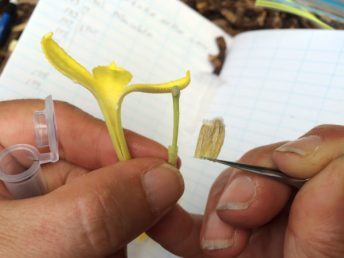
A botanist collects pollen from the flower of Brighamia insignis. NATIONAL TROPICAL BOTANICAL GARDEN
The work described in this article may explain why I first missed the story when it was published in October. The heroics get lost in the delicacy. My attention, like that of many people who are fortunate enough to have plenty of exposure to the natural world, gravitates to megafauna. And next in line for our attention is usually the rest of the fauna. But without flora, none of that fauna would be possible. And so our concern for biodiversity, and perhaps especially for the hotspots of biodiversity, should reflect an equal gravitational pull. So, my thanks to Yale e360 for this story:
They don’t make the headlines the way charismatic animals such as rhinos and elephants do. But there are thousands of critically endangered plants in the world, and a determined group of botanists are ready to go to great lengths to save them.
A scientist with the Plant Extinction Prevention Program climbs through remote Hawaiian ecosystems to study endangered plant species. PEPP
To save plants that can no longer survive on their own, Steve Perlman has bushwhacked through remote valleys, dangled from helicopters, and teetered on the edge of towering sea cliffs. Watching a video of the self-described “extreme botanist” in action is not for the faint-hearted. “Each time I make this journey I’m aware that nature can turn on me,” Perlman says in the video as he battles ocean swells in a kayak to reach the few remaining members of a critically endangered species on a rugged, isolated stretch of Hawaiian coastline. “The ocean could suddenly rise up and dash me against the rocks like a piece of driftwood.”
The plant known as cabbage-on-a-stick (Brighamia insignis) has been grown at Limahuli Garden & Preserve on Kauai, which is within the historic range of the species. SEANA WALSH
When he arrives at his destination, Perlman starts hauling himself up an impossibly steep, razor-sharp cliff 3,000 feet above the sea without a rope, his fingers sending chunks of rock tumbling down to the waters below. Finally, he reaches the plants and painstakingly transfers pollen from the flowers of one to those of another to ensure that the species can perpetuate itself. At the end of the season, he will return to collect any seeds they were able to produce. Continue reading →
The illustrative video above is on its own worth a couple minutes of your time. But the innovative approach to one of the world’s most pressing problems is the thing to take note of. Thanks to National Public Radio (USA) for bringing Evelyn Wang and Omar Yaghi’s work to our attention in this story:
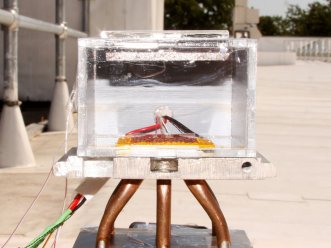
A prototype MOF-based water-collection device is set up for testing on the roof of a building on the MIT campus. Courtesy Evelyn Yang, MIT
Researchers have come up with a new way to extract water from thin air. Literally.
This isn’t the first technology that can turn water vapor in the atmosphere into liquid water that people can drink, but researchers from the Massachusetts Institute of Technology and the University of California, Berkeley, say their approach uses less power and works in drier environments. Continue reading →
To help protect the planet and promote good health, people should eat less than 1 ounce of red meat a day and limit poultry and milk, too. That’s according to a new report from some of the top names in nutrition science. People should instead consume more nuts, fruits and vegetables, legumes, and whole grains, the report says. The strict recommended limits on meat are getting pushback. Westend61/Getty Images/Westend61
Preparing ahead for a meal to be cooked today, I was reading this recipe, whose image (below) was competing for my attention with the image above. The picture above is eye-catching, at least to me, a visual cue leading me to the type of meal I should be thinking about more often. It is a big picture picture. I have red lentils in the cupboard, and I intend to prepare them today, so the recipe won the race for my attention.
Melissa Clark’s red lentil soup.CreditJoseph De Leo for The New York Times. Food Stylist: Monica Pierini.
The story by National Public Radio (USA) waited. It is about diet, with the kind of explanatory information that motivates me to find lentils more appealing, and to understand why meals like this should dominate the weekly menu:
What we eat – and how our food is produced – is becoming increasingly politicized.
Why? More people are connecting the dots between diet and health – not just personal health, but also the health of the planet. And the central thesis that has emerged is this: If we eat less meat, it’s better for both.
So, how much less? A new, headline-grabbing report — compiled by some of the top names in nutrition science — has come up with a recommended target: Eat less than half an ounce of red meat per day. That works out to about 3.5 ounces — or a single serving of red meat — per week. And it’s far less red meat than Americans currently consume on average: between an estimated 2 and 3 ouncesper day. Continue reading →
After two decades of drought, Lake Mead in Nevada is just 40 percent full. TED WOOD
Thanks to Jim Robbins and Yale e360 for this second installment, and especially to Ted Wood for photography as visually compelling as the implication of the story:
With the Southwest locked in a 19-year drought and climate change making the region increasingly drier, water managers and users along the Colorado River are facing a troubling question: Are we in a new, more arid era when there will never be enough water?
Scientists at the University of Arizona are using tree rings to study centuries of drought conditions in the Colorado River Basin.
In the basement of the University of Arizona’s Laboratory of Tree-Ring Research, the fragrant smell of pine hangs in the air as researchers comb through the stacks of tree slabs to find a round, 2-inch-thick piece of Douglas fir.
They point out an anomaly in the slab — an unusually wide set of rings that represent the years 1905 to 1922. Those rings mean it was a pluvial period — precipitation was well above average — and so the trees grew far more than other years.
“In 1905, the gates opened and it was very wet and stayed very wet until the 1920s,” said David Meko, a hydrologist at the lab who studies past climate and stream flow based on tree rings. “It guided their planning and how much water they thought was available.”
Mark Harris, a water manager in Grand Junction, Colorado.
The planning was that of the states that share the water of the Colorado River. Worried that a burgeoning California would take most of the water before it was fairly divvied up, representatives from the other Colorado River Basin states, presided over by U.S. Secretary of Commerce Herbert Hoover, came together in 1922 to develop an equitable apportionment. They looked at flow measurements and figured that the river contained an average of 15 million acre-feet. They divided the Colorado River states into two divisions – the upper basin and the lower basin, with the dividing line in northern Arizona near the Utah border. The upper basin states — Utah, Wyoming, Colorado, and New Mexico — agreed not to take more than a total of 7.5 million acre-feet and to allow the other half to flow south to the lower basin. The agreement they signed was called the 1922 Colorado River Compact, also known as the Law of the River. Continue reading →
Thirty years ago, all 197 countries got together to ban the gases damaging the Earth’s ozone layer. Now we need to unite to combat an even greater threat. What can we learn from 1989?
Amid the anti-globalist chest-thumping of Brexit, Donald Trump, and the Brazilian president, Jair Bolsonaro, it may sound like the stuff of folklore. But there was a time in the recent past when all the countries of the world moved quickly to discuss a common threat, agreed an ambitious plan of action and made it work.
The Montreal protocol, which came into effect 30 years ago, was drawn up to address the alarming thinning of the ozone layer in the Earth’s stratosphere. It was the first agreement in the history of the United Nations to be ratified by all 197 countries. Since it came into effect on 1 January 1989,more than 99% of the gases responsible for the problem have been eradicated and the “ozone hole” – which, in the late 80s, vied for headline space with the cold war, Diana, Princess of Wales, and Madonna – is receding in the sky and the memory. Continue reading →

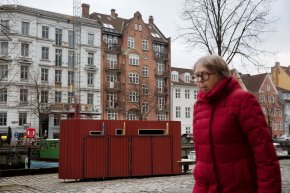

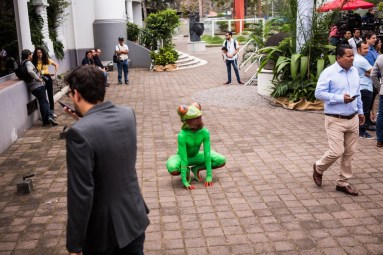


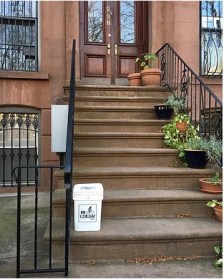













 Organikos