Paint It Very White

In one green-gloved hand, a man wearing goggles holds a paint brush dripping with bright white paint. His other hand holds a plastic container of the white paint under the brush to catch the drops.

Xiulin Ruan, a professor of mechanical engineering at Purdue University, has created the whitest paint on record with his students. John Underwood/Purdue University

We once again have Cara Buckley to thank:

Scientists at Purdue have created a white paint that, when applied, can reduce the surface temperature on a roof and cool the building beneath it.

Xiulin Ruan, a professor of mechanical engineering at Purdue University, didn’t set out to make it into the Guinness World Records when he began trying to make a new type of paint. He had a loftier goal: to cool down buildings without torching the Earth. Continue reading

Stop Digging

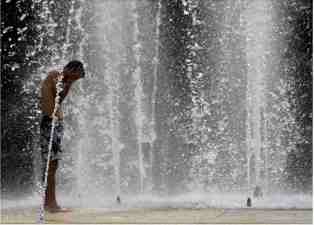
A man cools off by a fountain during a heat wave in Seville, Spain, on July 10th. Photograph by Cristina Quicler / AFP / Getty

It is difficult to imagine, from where I sit in cool weather in the mountains of Costa Rica’s central valley, what that heat would feel like. But it is not difficult to imagine all the possibilities for doing something about it. When you are in a hole that you do not want to be in, stop digging:

Is It Hot Enough Yet for Politicians to Take Real Action?

The latest record temperatures are driving, again precisely as scientists have predicted, a cascading series of disasters around the world.

We’ve crushed so many temperature records recently—the hottest day ever measured by average global temperature, the hottest week, the hottest June, the highest ocean temperatures, the lowest sea-ice levels—that it would be easy to overlook a couple of additional data points from this past weekend. But they’re important, because they help illuminate not just the size of our predicament but the political weaknesses that make it so hard to confront. Continue reading

Anthropocene Representative Location

A wide view of a lake with trees surrounding it and blue sky with clouds in distance. We now have a place to match to the name for our epoch:

The Human Age Has a New Symbol. It’s a Record of Bomb Tests and Fossil Fuels.

A scientific panel has picked Crawford Lake, Ontario, to represent the Anthropocene, a proposed, and hotly contested, new chapter in geologic time.

For almost 15 years, a panel of scholars has been chewing over a big question: Has our species transformed the planet so much that we have plunged it into a new interval of geologic time? Continue reading

The Scale Of Conservation Needed To Mitigate The USA’s Carbon Footprint

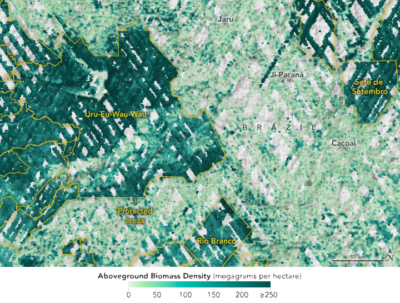
Protected areas, outlined in yellow, in a swath of the Brazilian Amazon are richer in trees than are other areas.

Protected areas, outlined in yellow, in a swath of the Brazilian Amazon are richer in trees than are other areas. NASA

Thanks to Yale e360, a very simple way to put scale on the value of protected areas, and at the same time consider the carbon footprint of the country that emits the most:

World’s Protected Lands Are Safeguarding More Carbon Than the U.S. Emits in a Year

If left unguarded, many of the world’s protected lands would have likely been burned, logged, or otherwise degraded, unleashing huge sums of heat-trapping gas. Continue reading

Lula’s Commitments Continue Progress

Cattle graze on land recently burned and deforested by cattle farmers near Novo Progresso, in Para state. Photograph: André Penner/AP

A short note following up on the progress reported earlier from our big and very important neighbor to the south:

Brazil: Amazon deforestation drops 34% in first six months under Lula

Government data shows marked reduction against same period last year, reversing trend of destruction during Bolsonaro reign

After four years of rising destruction in Brazil’s Amazon, deforestation dropped by 33.6% during the first six months of President Luiz Inácio Lula da Silva’s term, according to new government satellite data. Continue reading

Bill McKibben On Degrowth Movements Past & Present

Bill McKibben gives a thorough reconsideration of what, if any, growth is helpful now:

To Save the Planet, Should We Really Be Moving Slower?

The degrowth movement makes a comeback.

John Maynard Keynes once observed that dating from “say, to two thousand years before Christ—down to the beginning of the 18th century, there was no very great change in the standard of life of the average man living in the civilised centres of the earth. Ups and downs certainly. Visitations of plague, famine, and war. Golden intervals. But no progressive, violent change.” Continue reading

Rewilding On The Beara Peninsula

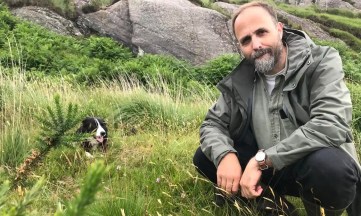
Eoghan Daltun with his dog on his farm, where native trees such as sessile oak, rowan and downy birch have self-seeded. Photograph: Rory Carroll/The Guardian

Rewilding remains one of our favorite topics to read about, and we share accordingly. Thanks to Rory Carroll for this article in the Guardian:

‘The result was amazing’: one man’s mission to reforest a barren Irish hillside

Eoghan Daltun has spent 14 years rewilding part of Beara peninsula into a showcase of diversity

Eoghan Daltun stood on a slope and pointed to a distant vista of verdant fields, craggy hills and conifer trees across the Beara peninsula in west Cork. Continue reading

Celebrating Energy Independence

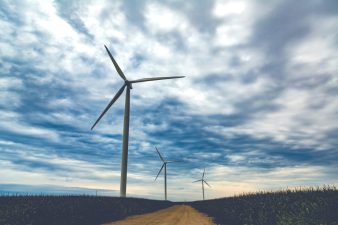
he Pioneer Prairie Wind Farm along the Iowa-Minnesota state line. TONY WEBSTER VIA WIKIPEDIA

If you are in the USA and are looking for more reasons to celebrate independence, consider renewables (thanks to Yale e360):

U.S. Wind and Solar Overtake Coal for the First Time

In a first for the U.S. power sector, wind and solar have generated more electricity than coal so far this year. Continue reading

California Bumble Bee Atlas

Leif Richardson examines a queen bee. Grace Widyatmajda/NPR

Bumble bees need help and the California Bumble Bee Atlas Project is on it. Thanks to National Public Radio (USA) for bringing it to our attention:

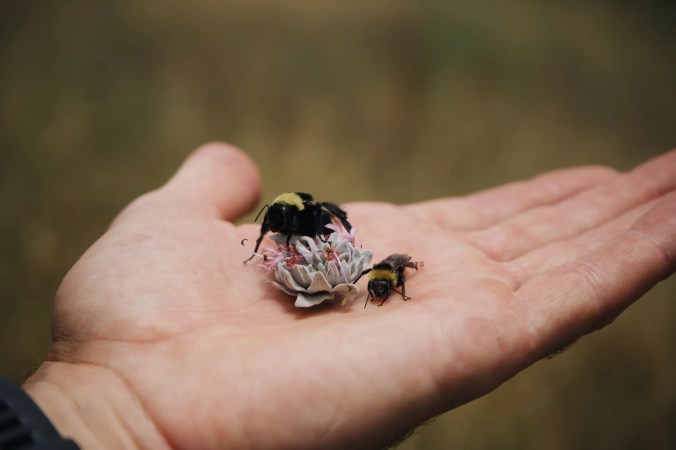
Krystle Hickman, a bee photographer and volunteer for the Bumble Bee Atlas Project, carefully places a bee onto a flower.
Grace Widyatmadja/NPR

Nets, coolers and courage: A day in the life of a volunteer bee conservationist

I never realized how fuzzy a bumble bee is until I got to hold one between my fingertips. It feels like a furry black and yellow bear, buzzing with its tiny body, wriggling with its legs.

The conservation biologist Leif Richardson, who handed me this bee a moment ago, has some advice for holding it. “You’re going to squeeze harder than you think you need to, but not so hard that you hurt him.” Continue reading

Climate Migration’s Upsides

Reporting from Niger, the Economist offers a glass-half-full consideration of a daunting topic (the podcast version of this story is excellent), and pulls it off:

image: josh haner/the new york times/redux/eyevine

The surprising upside of climate migration

To adapt to climate change, people will move. The results will not be all bad

On the outskirts of Niamey, the capital of Niger, it looks as if the countryside has moved to the city. Clusters of dome-like wooden huts have popped up. Cows and goats are tethered in the shade. Waves of rural folk have arrived, largely because of climate change. Continue reading

Graphic Comprehension Of Forest Loss

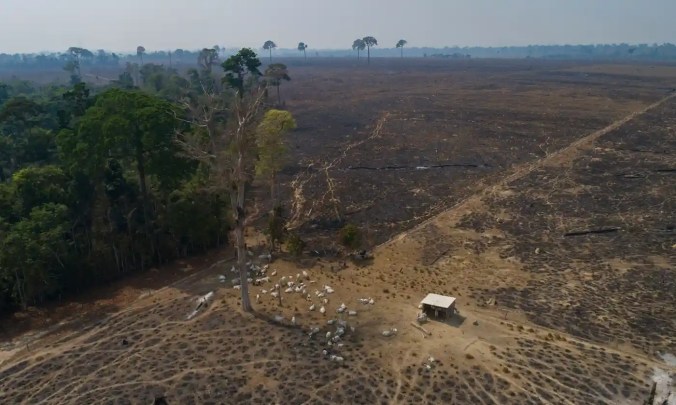
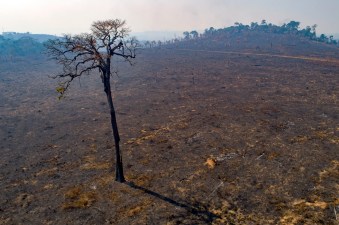
A section of forest in the Brazilian Amazon that was burned by cattle ranchers, seen on August 16, 2020. Cattle ranching is the largest driver of deforestation in the Amazon rainforest. Andre Penner/AP

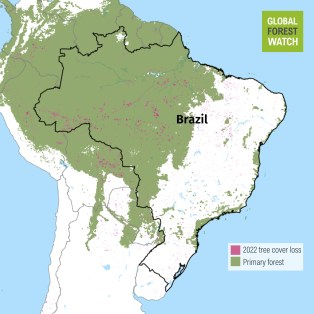
The photograph heading the story is alarming enough, but the illustrations (especially the “scroll down” graphic) accompanying the written explanations are extremely compelling. Thanks to Benji Jones for the story and to Alvin Chang for the graphics in this Vox article:

The alarming decline of Earth’s forests, in 4 charts

Deforestation raged ahead again in 2022, even after scores of countries pledged to protect their forests.

Over the last decade, dozens of companies and nearly all large countries have vowed to stop demolishing forests, a practice that destroys entire communities of wildlife and pollutes the air with enormous amounts of carbon dioxide.

A big climate conference in Glasgow, in the fall of 2021, produced the most significant pledge to date: 145 countries, including Brazil, China, and Indonesia, committed to “halt and reverse” forest loss within the decade. Never before, it seems, has the world been this dedicated to stopping deforestation. Continue reading

The Downside Of Dry

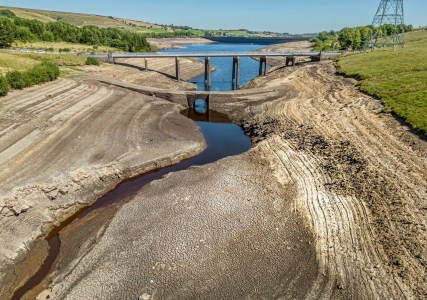
Baitings reservoir in Ripponden, West Yorkshire, in summer 2022, when the total stock of water in England’s reservoirs was at its lowest level since 1995. Photograph: Danny Lawson/PA

We do not favor panic button words in headlines; but when the cap fits, wear it:

‘Drought is on the verge of becoming the next pandemic’

While the world becomes drier, profit and pollution are draining our resources. We have to change our approach

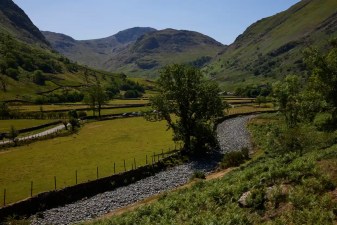
The River Derwent in Cumbria has run dry in parts of the Borrowdale valley for the third consecutive year. Photograph: Christopher Thomond/The Guardian

During the summer months in the Oxfordshire town where I live, I go swimming in the nearby 50-metre lido. With my inelegantly slow breaststroke, from time to time I accidentally gulp some of the pool’s opulent, chlorine-clean 5.9m litres of water. Sometimes, I swim while it’s raining, when fewer people brave it, alone in my lane with the strangely comforting feeling of having water above and below me. I stand a bottle of water at the end of the lane, to drink from halfway through my swim. I normally have a shower afterwards, even if I’ve showered that morning. I live a wet, drenched, quenched existence. But, as I discovered, this won’t last. I am living on borrowed time and borrowed water. Continue reading

Wind Power & Backyard Progress

A turbine blade more than 300 feet long. The $4 billion Vineyard Wind project is expected to start generating electricity by year’s end. Bob O’Connor for The New York Times

On previous occasions when we linked to stories about windfarms‘ large turbines, we have noticed that aesthetics can get in the way of progress, so thanks to Stanley Reed and Ivan Penn for this reporting from the New England coast:

A Giant Wind Farm Is Taking Root Off Massachusetts

The offshore energy project will have turbines taller than any building in Boston, but they will be barely visible from Martha’s Vineyard.

On a chilly June day, with the Massachusetts island of Martha’s Vineyard just over the distant horizon, a low-riding, green-hulled vessel finished hammering a steel column nearly 100 feet into the bottom of the Atlantic Ocean. Continue reading

Celebrating French Environmental Commitments

Paris mayor Anne Hidalgo and the co-president of the Paris bid for the 2024 Olympics, Tony Estanguet, paddle on the Seine in Paris. Photograph: Reuters

Since 11+ years ago many valuable environmental opinions by George Monbiot have been linked to in our pages; today a celebration of a neighboring country’s efforts:

When it comes to rich countries taking the environment seriously, I say: vive la France

Emmanuel Macron’s government is at least doing the bare minimum to avert the planetary crisis – and putting the UK to shame

While we remain transfixed by a handful of needy egotists in Westminster and the crises they manufacture, across the Channel a revolution is happening. It’s a quiet, sober, thoughtful revolution, but a revolution nonetheless. France is seeking to turn itself into an ecological civilisation. Continue reading

Useful Summary Of Carbon Credit Schemes

©Anthropocene Magazine

Anthropocene Magazine has a useful summary, created by Mark Harris, of the strength’s, weaknesses, opportunities and threats of various carbon credit schemes. In a short read it helps clarify some, if not all, questions that can generate from conflicting headlines on the topic:

What Counts As A Carbon Credit?

A new UN draft report threatens to sideline billions of tons of future carbon removal

Back in 2015, the Paris Agreement called for the creation of an international program through which countries could trade emissions to meet their climate commitments. For that to happen, the world has to agree on what qualifies for a carbon credit. Continue reading

Thank You, Church Of England

‘The climate crisis threatens the planet we live on, and people around the world who Jesus Christ calls us to love as our neighbours,’ says Justin Welby, the archbishop of Canterbury. Photograph: Gareth Fuller/PA

This is likely the first, and maybe the only time we ever thank a church in our pages (religion has shown up only a few times, whereas divestment is quite common in our pages), but it is certainly warranted in this case:

C of E divests of fossil fuels as oil and gas firms ditch climate pledges

Church pension and endowment funds shed holdings after U-turns by BP and Shell

The Church of England is divesting from fossil fuels in its multibillion pound endowment and pension funds over climate concerns and what the church claims are recent U-turns by oil and gas companies. Continue reading

Capsicum Futures

The World Vegetable Center conducts research, builds networks, and carries out training and promotion activities to raise awareness of the role of vegetables for improved health and global poverty alleviation.

Among the essential components of Kerala cuisine, various chili peppers were central in our diet during the India work years. I became quite tolerant of high intensity heat from capsicum, and learned to enjoy the steamy delirium of a typical mango curry. I am out of practice, not sure I can still handle high Scoville meals any more, but heartened to know that Derek Barchenger and the W.V.C team are taking care for capsicum’s future, so thanks to Clarissa Wei for this story:

The Quest to Save Chili Peppers

A seed bank in Taiwan is home to more chili varieties than anywhere else on earth. In a warming world, we’re going to need them.

In 1999, Susan Lin, a bespectacled plant researcher at the World Vegetable Center, in Taiwan, pulled on a pair of latex gloves and got to work cross-pollinating some chili peppers. She collected tiny white flowers from a cayenne-pepper plant, shook their pollen into a tiny test tube, and walked over to an aji-chili plant. Using tweezers, she removed the petals and anthers from its flower buds, exposing the thread-like stigmas that serve as the plant’s female reproductive organs. Then she dipped the stigmas into the pollen, hoping that they would eventually form peppers. Continue reading

Youth Is Not To Be Wasted In Montana

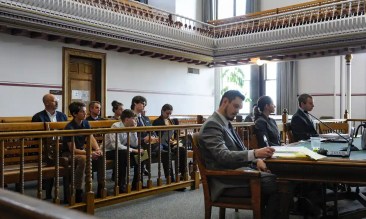
The plaintiffs look on during a status hearing for Held v Montana in the Lewis and Clark county courthouse in Helena, Montana, last month. Photograph: Thom Bridge/AP

At first it sounded like a gimmick, but listen to and read about it: there is a useful half hour podcast on this topic, and here we thank the Guardian for a bit more detailed coverage:

‘My life and my home’: young people start to testify at historic US climate trial

Some of the plaintiffs listen to arguments during the hearing in Montana. Photograph: Thom Bridge/AP

The plaintiffs note that Montana’s constitution pledges a healthy environment ‘for present and future generations’

The US’s first-ever trial in a constitutional climate lawsuit kicked off on Monday morning in a packed courtroom in Helena, Montana.

The case, Held v Montana, was brought in 2020 by 16 plaintiffs between the ages of five and 22 from around the state who allege state officials violated their constitutional right to a healthy environment by enacting pro-fossil fuel policies. Continue reading

Pyrolysis, Advanced Plastic Recycling, Explained

Plastic waste at a disposal plant in Tokyo. THE YOMIURI SHIMBUN VIA AP IMAGES

We have a difficult time giving Exxon and other petroleum companies the benefit of the doubt, but at minimum we want to understand what they say about what they are selling:

As Plastics Keep Piling Up, Can ‘Advanced’ Recycling Cut the Waste?

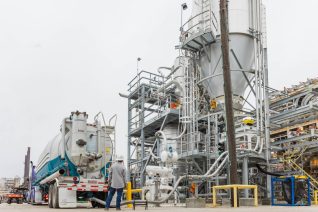
Exxon’s advanced recycling facility in Baytown, Texas. BUSINESS WIRE

Proponents of a process called pyrolysis — including oil and gas companies — contend it will keep post-consumer plastics out of landfills and reduce pollution. But critics say that by converting waste to petroleum feedstock, it will only perpetuate a dependence on fossil fuels.

Bob Powell had spent more than a decade in the energy industry when he turned his attention to the problem of plastic waste. Continue reading

Taking Inspiration From Smallhold Farms In Africa

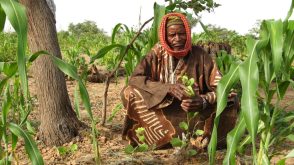
A farmer in Niger tends to a tree sprout growing among his millet crop. TONY RINAUDO / WORLD VISION AUSTRALIA

I am nearing the point where I can offer an update on the trees we have planted in advance of 1,000+ coffee plants going into the ground in their shade. Thanks to Fred Pearce, reporting in Yale E360, I have some inspiration coming from across the Atlantic on the broader value of those trees:

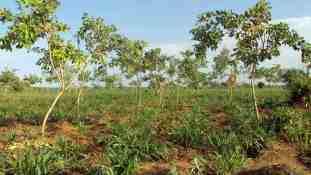
Dooki (Combretum glutinosum) trees grow on a millet field in Niger. P. SAVADOGO / ICRAF

As Africa Loses Forest, Its Small Farmers Are Bringing Back Trees

The loss of forests across Africa has long been documented. But recent studies show that small farmers from Senegal to Ethiopia to Malawi are allowing trees to regenerate on their lands, resulting in improved crop yields, productive fruit harvests, and a boost for carbon storage.

For decades, there have been reports of the deforestation of Africa. And they are true — the continent’s forests are disappearing, lost mainly to expanding agriculture, logging, and charcoal-making. But the trees? Continue reading