The Most Important Infrastructure

New York Library Historic Rooms

People read in the Rose Main Reading Room of the New York Public Library MARK LENNIHAN / AP

This podcast featuring Eric Klinenberg resonated with many of our readers, and this article he wrote for the Atlantic may be the next best step in advance of reading his book:

Worry Less About Crumbling Roads, More About Crumbling Libraries

America’s social infrastructure is falling apart, and it’s hurting democracy.

Every four years, the American Society for Civil Engineers issues grades for the nation’s infrastructure. In the most recent evaluation, released in 2017, America’s overall infrastructure score was a D+, the same as in 2013. Although seven systems, including hazardous waste and levees, received modestly better grades than in the previous assessment, transit and solid waste, among others, did worse. Aviation (D), roads (D), drinking water (D), and energy (D+), retained their miserably low scores. Continue reading

The Camera’s Gift To The Task Of Documenting Climate Change

main_900 (3).jpg

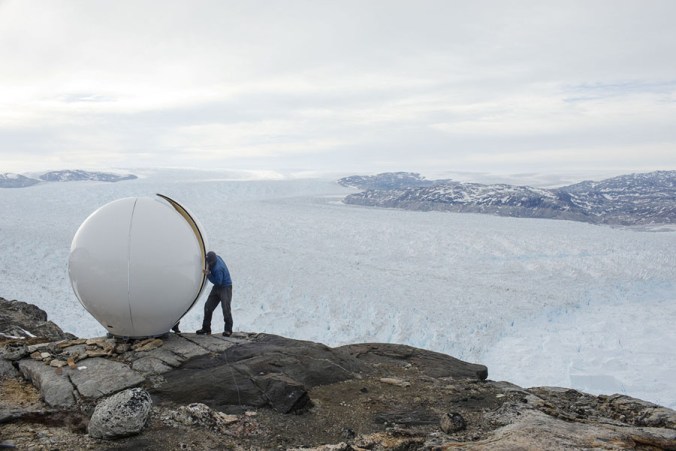
The safety officer Brian Rougeux assembles a radar dome while working at the research camp above Helheim Glacier near Tasiilaq, Greenland, on June 20, 2018. 
Lucas Jackson / Reuters

Alan Taylor, who  compiles and edits the news photo blog “In Focus” for the Atlantic, shares 21 spectacular images with captions that help even a lay person understand better the science of climate change:

Studying Greenland’s Ice to Understand Climate Change

main_900 (4).jpg

An iceberg floats in a fjord near Tasiilaq on June 16, 2018. # Lucas Jackson / Reuters

Earlier this year, Lucas Jackson, a photographer with Reuters, joined a team of scientists affiliated with a NASA project named Oceans Melting Greenland (OMG) and traveled with it to the Greenland ice sheet and fjords. Jackson photographed the researchers as they set up their scientific equipment and took readings to help understand the ongoing impact of the melting glaciers and map out what to expect in the future. Jackson says: “For both journalists and scientists, climate change is difficult to document. It most often happens imperceptibly—a tenth of a degree increase in temperature, a few less inches of rain, a slowly melting ice sheet.” Continue reading

Farm Innovations From Kampala

1200 (2).jpg

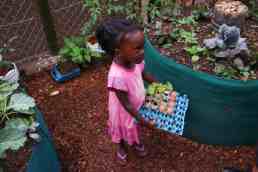
Urban farms in Kampala, Uganda, make the most of their limited space. Photograph: Nils Adler

Vertical farming, urban farming, innovations we have seen mostly from industrialized places, are important in developing countries as well:

Rooftop farming: why vertical gardening is blooming in Kampala

Ugandans are finding creative solutions to the growing challenges of urbanisation

1200 (3).jpg

Growth spurt: a child carries a tray of plants in eggshell flowerpots. Photograph: Nils Adler

When Martin Agaba realised his urban farm had run out of space, he decided the solution was not to expand outwards but upwards.

“We realised we had to use the roof,” he says. Of all the innovations that have galvanised people in his district in the Ugandan capital Kampala to grow their own food, these vertical box plantations remain his favourite.

Kwagala farm, located on half an acre of land, is the brainchild of Diana Nambatya, a professor in public health, who began growing vegetables to save money on food in 2010.

After receiving two cows as a dowry, she decided to use their dung to generate biogas for her home. Her burgeoning urban farm soon attracted the attention of the neighbours, and in 2012 she started training women at a small demonstration centre. Continue reading

Protecting Nature & Defying The Odds

23akagera2-jumbo-v2.jpg

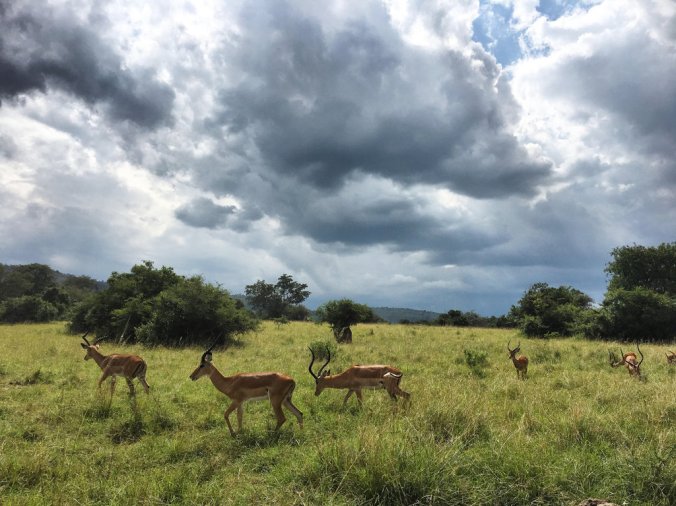
On a game drive in Akagera. Shannon Sims

Thanks to Shannon Sims for this story of a refuge defying the odds:

A Rwandan Game Park Defying the Odds

Despite modest tourism numbers, Akagera National Park is a success story in the making, particularly considering that, like its host country, it survived catastrophe.

23akagera-jumbo-v2

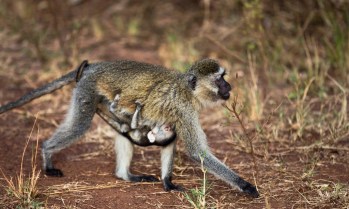
A velvet monkey and her baby in Akagera National Park. The Rwandan park is a success story, despite modest tourism numbers. Credit Ben Curtis/Associated Press

The road through Akagera National Park in eastern Rwanda was blocked. Two giraffes had positioned themselves smack in the middle of the dirt road and were rubbing their necks together. In the car, with a driver and a guide, my cell service was long gone; there was nothing to do but sit back, relax and enjoy the show.

Right around this time of year, to the east of Rwanda’s borders, in Tanzania and Kenya, big packs of tourists are stumbling over each other to get the perfect photo of a scene like this. They’re driving through protected areas like Serengeti National Park and the Maasai Mara National Reserve in caravans of Land Rovers, each packed so tightly that peoples’ binocular straps get tangled up. It makes sense: the animal migrations that occur in this part of the world these months are rightly considered by many to be the greatest natural show on earth. Continue reading

Be Aware, Big Boom & Beware

csm_TOC_Computer_Renderings_Profileview_2942c52c93.jpg

Thanks to Christina Caron for this story that raises important questions about an awesome-sounding technology. Best to first read from The Ocean Cleanup website, and if you have been following the stories we pay attention to you will understand how we might get hooked on the idea:

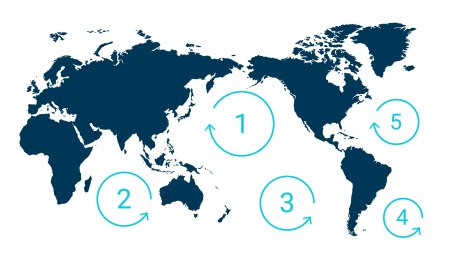
TOC_map-gyres-02

Ocean garbage patches are vast and dispersed

Ocean currents concentrate plastic in five areas in the world: the subtropical gyres, also known as the world’s “ocean garbage patches”. Once in these patches, the plastic will not go away by itself. The challenge of cleaning up the gyres is the plastic pollution spreads across millions of square kilometers and travels in all directions. Covering this area using vessels and nets would take thousands of years and cost billions of dollars to complete. How can we use these ocean currents to our advantage?

THE IMPACT OF CLEANUP

Concentration_microplasticsOur models indicate that a full-scale system roll-out could clean up 50% of the Great Pacific Garbage Patch in 5 years.
Research shows the majority of plastic by mass is currently in the larger debris. By removing the plastic while most of it is still large, we prevent it from breaking down into dangerous microplastics.

Combining the cleanup with source reduction on land paves the road towards a plastic free ocean by 2050.

The story in the New York Times raises important questions, not least of which is that Peter Thiel is involved:

merlin_143438058_1dbdff34-c291-498d-a8a9-572419767520-jumbo (1).jpg

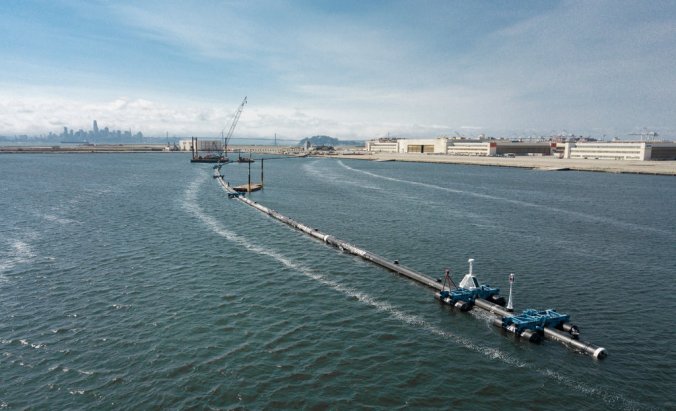
A 2,000-foot-long floating boom, designed by the Ocean Cleanup, a nonprofit, will be used to corral plastics littering the Pacific Ocean. Credit The Ocean Cleanup, via Associated Press

…But the ocean can be unpredictable, and simulation models are no guarantee of future performance.

“There’s worry that you can’t remove the plastic without removing marine life at the same time,” said George Leonard, chief scientist at the Ocean Conservancy. “We know from the fishing industry if you put any sort of structure in the open ocean, it acts as a fish-aggregating device.” Continue reading

Libraries As Palaces For The People

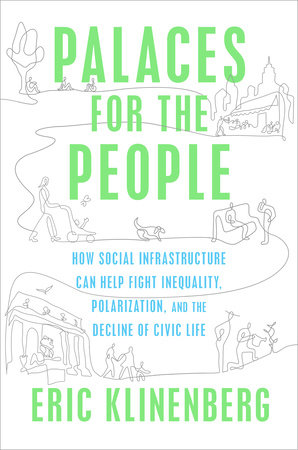
9781524761165We have had more stories in seven years about libraries, and librarians and books than most other topics, so we are pleased to pass along this reference to a book about libraries (among other essential elements of social infrastructure). In 20 minutes on this podcast the ideas in this book are discussed by the author:

Eric Klinenbergprofessor of sociology and director of the Institute for Public Knowledge at New York University and the author of Palaces for the People: How Social Infrastructure Can Help Fight Inequality, Polarization, and the Decline of Civic Life (Crown, 2018), argues that the future of democracy lies in shared spaces, like libraries and parks.

Riverford, A Model Of Organic Farming In The UK

We first heard the name of the farmer on a favored music-oriented podcast, and then the name of his farm. After listening to his story, and his musical tastes, we had to learn more:

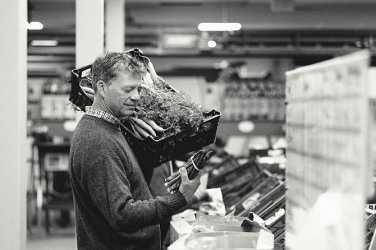
guy-singh-watson-4.jpgSelf-confessed veg nerd, Guy Singh-Watson has over the last 30 years taken Riverford from one man and a wheelbarrow delivering homegrown organic veg to friends, to a national veg box scheme delivering to around 50,000 customers a week.

Guy is an inspirational, passionate, opinionated and admired figure in the world of organic farming, who still spends more time in the fields than in the boardroom. Continue reading

Teaching Lego To Play Well By Eliminating Plastic

merlin_137674503_7ad52e7b-462c-4daf-897b-9940119cd67b-jumbo.jpg

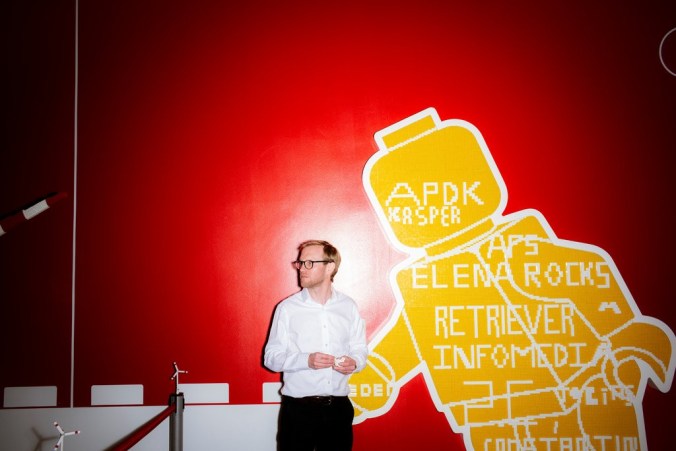
Tim Brooks, Lego’s vice president for environmental responsibility, says the company emits about a million tons of carbon dioxide each year. Credit Carsten Snejbjerg for The New York Times

For a company, and a product, that has been a part of so many lives for so long–and especially one whose name means to play well, it is still a shock to be reminded of their carbon footprint. And three years after first reading about their commitment, it is good to read details of their plan and progress:

Lego Wants to Completely Remake Its Toy Bricks (Without Anyone Noticing)

merlin_137674470_486eb273-ba3b-4808-857f-956b9cb7f533-jumbo.jpg

At Lego, petroleum-based plastics aren’t the packaging, they’re the product — and the bricks making up these dinosaurs have barely changed in more than 50 years. Credit Carsten Snejbjerg for The New York Times

BILLUND, Denmark — At the heart of this town lies a building that is a veritable temple to the area’s most famous creation, the humble Lego brick. It is filled with complex creations, from a 50-foot tree to a collection of multicolored dinosaurs, all of them built with a product that has barely changed in more than 50 years.

A short walk away in its research lab, though, Lego is trying to refashion the product it is best known for: It wants to eliminate its dependence on petroleum-based plastics, and build its toys entirely from plant-based or recycled materials by 2030. Continue reading

Greening Indian Cities

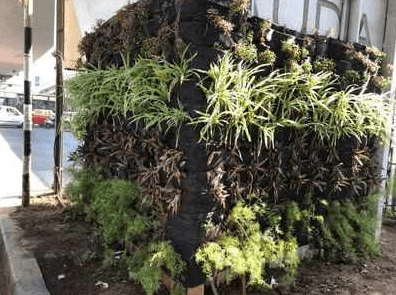
Another creative commitment to Green Innovation. Thanks to the Times of India for this story about how Ahmedabad embraces green walls, goes vertical:

Aapnu Amdavad has a lot to boast about. From being the first city to have been declared India’s first Unesco World Heritage City to being home to some prime educational institutes, this city has gained prominence on the global map. Having said that, the city has its share of dark spots too. The fast diminishing green cover in the city is one of them. India’s fifth largest city has a tree cover of approximately 35 crores (as per a 2017 census), which although is 13% more than the number of trees in 2013, is still not enough. The ongoing metro project has also led to a lot of felling of trees. Taking into consideration all this, Ahmedabad Municipal Corporation (AMC) has decided to build vertical gardens in the city. It recently set up a small vertical garden along one of the pillars at the flyover at Helmet crossroads.

What are vertical gardens? Essentially vertical gardens are the kind of gardens that grow vertically, along walls or pillars, with the help of trellis (which are wooden frames) or similar support systems. Continue reading

Superpods & Ocean Heroes

OHeroes.jpgThis National Public Radio (USA) story led us to the video above, and then the source website, where we discovered several initiatives that are worth a closer look:

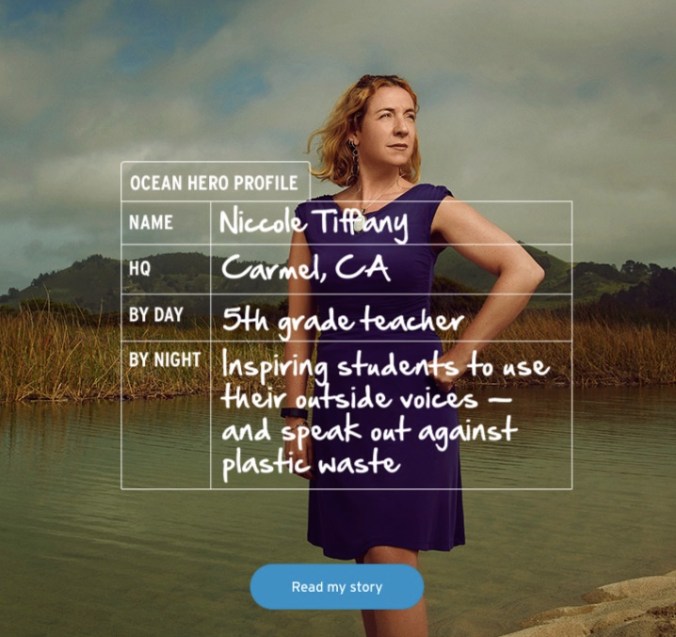
Ocean action: In 2017, Carmel-by-the-Sea’s City Council voted to require that restaurants stop using single-use plastic straws and utensils and instead provide only compostable to-go serviceware—and only upon request. The law took effect in the spring of 2018. The impetus came from a group of fifth-grade students from Carmel River Elementary School. They spoke at community forums and Carmel City Council meetings to advance the idea. Mayor Steve Dallas later credited them with playing a pivotal role in getting the ordinance enacted. “When it finally passed, the students were ecstatic,” says teacher, Niccole Tiffany, of her students. “It was a big lesson on the power of kids’ voices in actively creating change.” (Read more of her story here)

OceanHero.jpg

Thanks to the Monterey Bay Aquarium for programs that inspire local citizens, especially youth, to environmental activism like this:

Saving Our Seas One Sip at a Time with “No Straw November”

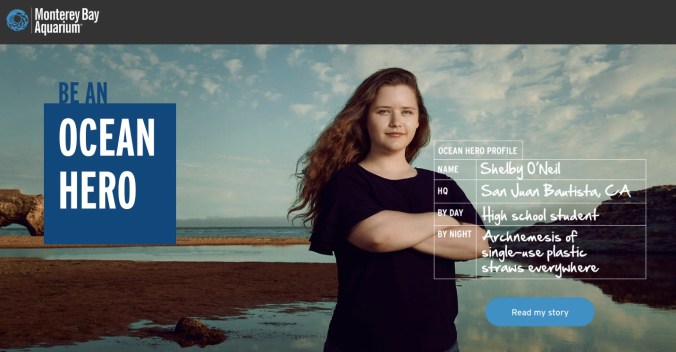
Ocean action: Shelby O’Neil, a high school student from San Juan Bautista, created a successful campaign called “No Straw November,” asking people to pledge not to use plastic straws for one month. She’s earned national exposure through the Martha Stewart Living magazine and the Leonardo DiCaprio Foundation. She convinced Alaska Airlines to ditch plastic straws and toothpicks on all its flights (a story picked up by Fortune magazine). Shelby was even flown to the headquarters of Delta Airlines to promote her campaign; spoke at Dreamforce, the annual user conference hosted by Salesforce.com in San Francisco; and won unanimous California Coastal Commission support for “No Straw November.” But she didn’t stop there. “For a Girl Scout Gold Award, I created a nonprofit called Jr Ocean Guardians,” says Shelby, “teaching younger schoolchildren the importance of the oceans and how they can help.” Continue reading

The Visual Shero of Afrofuturism

A still-life of accessories from various films that Carter has worked on: the headpiece of Queen Ramonda, in “Black Panther”; cufflinks for Martin Luther King, Jr., in “Selma”; and the dancing shoes worn by Shorty, a character in “Malcolm X,” who was played by Spike Lee. Photographs by Awol Erizku

In film and theatre, costume design is often as important as a setting and script to craft the sense of both character and story. It’s debatable whether non-fiction or fiction is more challenging, but Ruth E. Carter’s work carries the story for either one, with an attention to detail that brings the viewer back into history or forward into new worlds.

Be sure to click through the article for more of Awol Erizku’s dynamic photos, as well as watch the video below for more images and Carter’s own explanation of her work.

RUTH E. CARTER’S THREADS OF HISTORY

Throughout her career, the costume designer for “Black Panther” has created visions of black identity, past and future.

Ryan Coogler’s “Black Panther” is a rare thing: a big-budget superhero movie that is unabashedly serious about great clothes. The film’s costume designer, Ruth E. Carter, evoked the fictional African kingdom of Wakanda by melding sci-fi with global fashion history, drawing influence from sources including the color symbolism of the Maasai people, samurai armor, and the jewelry of Ndebele women. She realized her vision with the help of an international team of researchers, buyers, tailors, beaders, and engineers, and by exploring the possibilities of 3-D-printing technology. For her efforts, she has been lauded as one of the essential visual storytellers of Afrofuturism. Continue reading

Roots Of Biodiversity

052918_antonelli_0090.jpg

Alexandre Antonelli references the International Plant Names Index to identify specimens.
Rose Lincoln/Harvard Staff Photographer

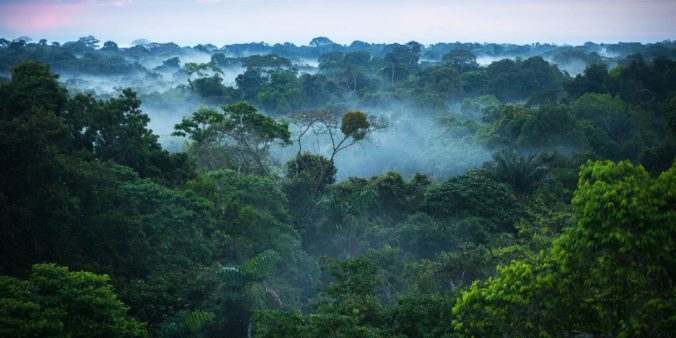
Our practice was born in Costa Rica, so we sometimes may appear partisan when it comes to celebrating the sciences related to biodiversity. Costa Rica has impressive credentials in that realm, especially relative to its size as a country. But we are very clear on the fact that it would take dozens of Costa Rica-sized biodiversity hotspots to match the scale of the Amazon region, and it is no surprise that studies like those of these scholars are carried out with Amazonian data:

The Amazon as engine of diverse life

052918_antonelli_0233.jpg

“Most evolutionary research focuses on how new species form. But we want to understand how whole ecosystems evolve,” said Alexandre Antonelli.
 Rose Lincoln/Harvard Staff Photographer

A recent study says that many of the plants and animals that call Latin America home may have had their roots in the Amazon region.

The study, co-authored by Harvard Visiting Scholar Alexandre Antonelli and an international team of researchers, says that a dynamic process of colonization and speciation led to the formation of the American tropics, which is the most species-rich region on the planet. The study is described in a paper published in the Proceedings of the National Academy of Sciences.

“We were astonished to detect so much movement across such different environments and over such large distances,” said Antonelli, the study’s lead author. “Up until now, these natural dispersal events were assumed to be quite rare. Our results show how crucial these events have been in the formation of tropical America’s unique and outstandingly rich biodiversity.” Continue reading

Option Bee

21sci-bees-illo-superjumbo

Heidi Younger

The Blue Orchard Bee recently came to our attention thanks to Natalie Boyle. However, it seems the species has some competition as potential saviors of the farming industry.  This article by Catherine M. Allchin,  Honeybees Are Hurting. What Else Can Pollinate Our Food?, illustrates how…

…The dominant pollinator is under siege, straining the business of farming. Now growers are turning to alternative species to help their crops.

Jim Freese grows apples, pears and cherries on 45 acres in the north-central part of this state, on sagebrush-studded land his grandfather bought in 1910.

Walking among trees laden with shiny red cherries, Mr. Freese recalled that four years ago his trees were not producing well and his farm was financially struggling. Like many growers, he had been relying on rented honeybees to pollinate his cherry trees every spring, along with wild bees and other insects.

But that year, spring was expected to be cool. “Honeybees will just sit in the hive in cooler weather,” Mr. Freese said. He needed a way to ensure more flowers would develop into fruit than in the past.

At a horticulture meeting, he learned that blue orchard bees — a native species that doesn’t make honey or live in hives — could be used to supplement honeybee pollination. Blue orchard bees will fly at cooler temperatures.

Mr. Freese bought 12,000 cocoons and set them in his orchard to emerge when the trees bloomed. His investment paid off. “We doubled our cherry production from any previous record year,” he said.

His wife, Sandee Freese, said: “The little bees have been a godsend.”…
Continue reading

Local Knowledge Aids Scientific Understanding

Brazilian_amazon_rainforest_web

WIKIMEDIA COMMONS

In a perfect dovetail with yesterday’s nod to one science writer, today we nod to the contributions of ancestral ways in helping scientists better understand the life cycles of forests. Thanks to Richard Schiffman for this interview:

Lessons Learned from Centuries of Indigenous Forest Management

CMPeters_web.jpgIn an interview with Yale Environment 360, botanist Charles M. Peters discusses how, in an era of runaway destruction of tropical forests, the centuries-old ecological understanding of indigenous woodland residents can help point the way to the restoration of damaged rainforests.

Over centuries, even millennia, indigenous communities have developed interdependent systems of agriculture and forestry that are uniquely suited to the ecological requirements of the land they inhabit. Yet even today, says Charles M. Peters, the Curator of Botany at the New York Botanical Gardens, that skill and knowledge often remain unacknowledged, with some government officials and conservationists arguing that indigenous communities should sometimes be excluded from protected lands that are part of their historical territory.

Field-crews.002_web

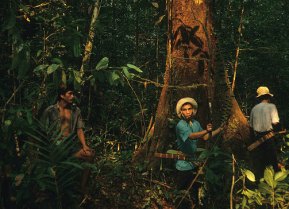
Members of the Kenyah Dayak indigenous group conducting forest surveys in Western Borneo in the early 1990s. CHARLES PETERS

In an interview with Yale Environment 360, Peters — author of the recently published bookManaging the Wild: Stories of People and Plants and Tropical Forests — discusses what he has learned from 35 years of working with indigenous forest communities; explains how indigenous farming, even slash-and-burn agriculture, can actually improve forest health; and reflects on the need to enlist indigenous groups as allies in the struggle to preserve and restore tropical forests. Continue reading

Bee Awesome

19mag-bees-slide-5XCH-jumbo

Will Nissen’s bees north of Bakersfield, Calif. Credit Ilona Szwarc for The New York Times

Thanks to Jaime Lowe for this:

Waterways, Persons & Rights

BakerRiver_Chile_Louis-Vest-Flickr_web.jpg

The free-flowing Baker River in Chile’s Patagonia region. Permits for a major hydroelectric project on the waterway were revoked in 2014 amid protests. LOUIS VEST/FLICKR

Dams in Patagonia are the gift that keep on giving, in terms of awakening activism and forcing raised awareness of the value of waterways. I first mentioned my experience in Chile here. I came back to the idea a few more times. Thanks to Jens Benohr and Patrick Lynch for this reminder, and for letting us all know where this seems headed from a legal point of view:

Should Rivers Have Rights? A Growing Movement Says It’s About Time

Inspired by indigenous views of nature, a movement to grant a form of legal “personhood” to rivers is gaining some ground — a key step, advocates say, in reversing centuries of damage inflicted upon the world’s waterways.

San-Pedro-Dam_Carlos-Lastra_web.jpg

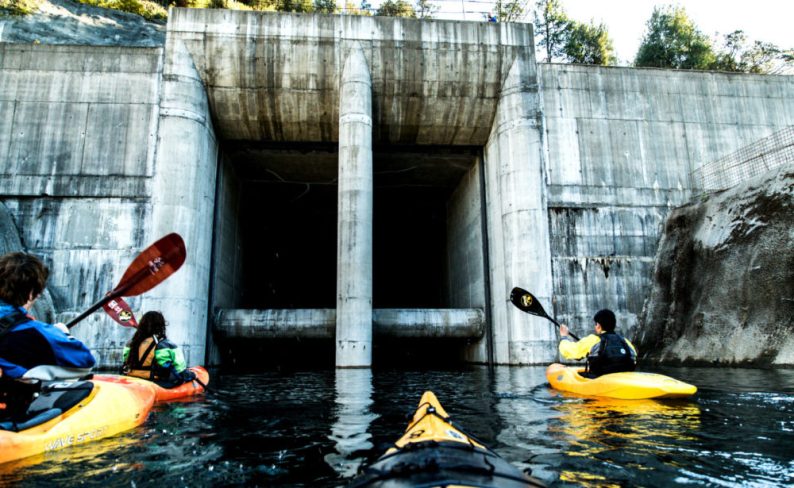
A Chilean energy company is seeking permits to restart the building of an unfinished dam along the San Pedro River. CARLOS LASTRA

Chile is a land of rivers. Along its narrow 3,000-mile length, thousands of rivers and wetlands bring freshwater and nutrients down from the Andes Mountains to the Pacific Ocean. Together, these river systems drain 101 major watersheds that support both terrestrial and marine ecosystems, ranging from arid lands in the north to blue whale nurseries off of Patagonia in the south.

Chile’s second-longest river, the 240-mile Biobío, once tumbled fast and wild through deep gorges and spectacular scenery on its way from the Andes to the sea. The Biobío was one of the world’s great whitewater rafting venues — until the 1990s, when the first of three large hydroelectric dams was built across the river. Over the past two decades, the Biobío dams have flooded more than 13,000 acres, displaced hundreds of families of the indigenous Mapuche people, turned long stretches of this once-unruly river into placid reservoirs, and caused abrupt fluctuations in water levels that have wrecked nesting habitat for native birds and disrupted the river’s natural rhythms. Continue reading

World Elephant Day

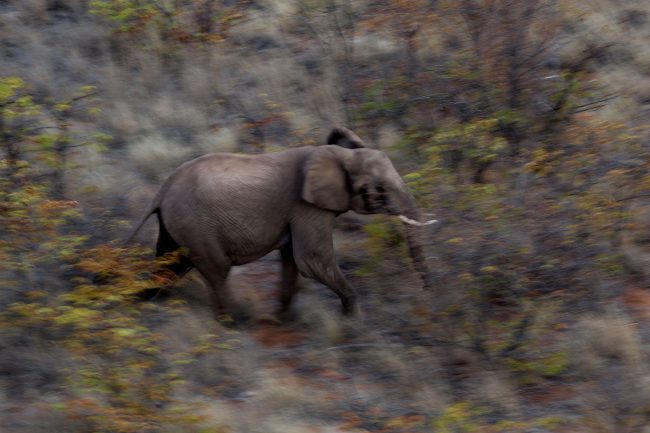
23 July 2018. Elephant Relocation from Venetia Limpopo Nature Reserve (South Africa) to Zinave Reserve (Mozambique). Picture: JAMES OATWAY

Our fascination with elephants is evident throughout the history of this site, and are heartened by actions taken toward increased conservation of these magnificent animals. Relocating large African mammals to new protected areas due to either habitat loss or overpopulation has successfully been done before, but the challenges continue.

Giants on the Move

Written by Patricia Sims, Co-Founder, World Elephant Day

Each year for World Elephant Day we put a lot of our elephant conservation attention toward the ivory poaching crisis threatening African elephants, and the tourism and captivity issues that the endangered Asian elephants face. Yet the larger conservation challenge of habitat loss for both African and Asian elephants is looming. Our increasing encroachment on elephant habitat throughout Africa and Asia is putting elephants at greater risk, resulting in human-elephant conflict issues, and the demise of elephant populations and the ecosystems that they, as a keystone species, maintain.

So what are the solutions? Can moving elephants – from one location where there isn’t enough space for them – to another location where there aren’t enough elephants, help solve this issue? At the heart of this critical elephant conservation conundrum is a partnership between the De Beers Group – the world’s leading diamond company – and Peace Parks Foundation, a leading not-for-profit organization focused on the preservation of large cross-border ecosystems. They have just completed the first phase of the largest and longest translocation of elephants ever recorded in South Africa. This translocation project is called “Moving Giants.

Continue reading

Model Mad, Rollback Pushback

Mary Nichols, who heads the California Air Resources Board, has vowed to fight the federal government’s proposed changes. Credit Eric Risberg/Associated Press

It’s been a while since we’ve addressed our “model mad” theme, despite there being numerous opportunities. We’re continually heartened by the strength of both the public and the private sector to pushback against the current administration’s regressive proposals.

California Strikes Back Against the Trump Administration’s Auto Pollution Rollback

California went on the offensive Tuesday against the Trump administration’s plan to weaken fuel-efficiency rules for cars, laying out a scathing rebuttal that the state’s clean-air regulator said would shape the battle with Washington in the coming months and years.

The state’s target is one of President Trump’s most consequential environmental rollbacks to date, a proposal unveiled last week to let cars pollute more while stripping California of its right to set its own air-quality rules.

The administration’s proposal “is contrary to the facts and the law,” the California document says, before refuting point by point the Trump administration’s arguments for weakening the nation’s long-term goals for making vehicles more fuel efficient and less polluting.

The clash between California and Washington threatens to throw the United States auto market into disarray. Because California has the authority under the Clean Air Act to set its own air pollution rules, and because a dozen other states follow its lead, the dispute could effectively split the nation’s market into two, one side adhering to stringent emissions rules set in Sacramento and the other to weaker federal standards.

Continue reading

Big Cat News From India

Sundarban_Tiger_SoumyajitNandy_Wikimedia_web.jpg

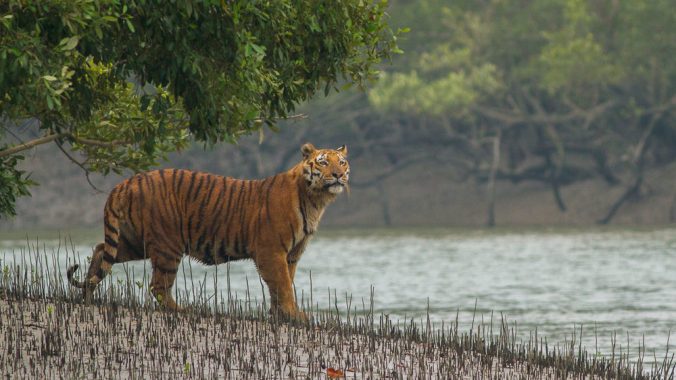
A tiger in the Sundarbans National Park, a protected tiger reserve, in the Indian state of West Bengal. SOUMYAJIT NANDY / WIKIMEDIA COMMONS

Richard Conniff, one of the science writers we most depend on for useful conservation news, shares this interview with one of our heroes from India’s big cat conservation network:

Big Cat Comeback: How India Is Restoring Its Tiger Population

Dr.-Ullas-Karanth_WCS_web.jpg

Ullas Karanth

Ullas Karanth has spent a half-century working to protect India’s endangered tigers. In an interview with Yale e360, he argues that with smart planning and the cooperation of its rural residents, the country could support five times the number of tigers it has now.

Ullas Karanth, a senior scientist with the Wildlife Conservation Society, is one of the world’s premier tiger experts and a leader in the effort to restore India’s depleted tiger populations. Raised in the South India state of Karnataka, he has spent much of his professional life studying and working to bring back tigers there, starting in Nagarahole National Park in the foothills of the Western Ghats, and then across a 10,000-square-mile region of that mountain range.

Karanth’s emphasis on scientific methods has frequently brought him into conflict with India’s forest bureaucracy, particularly over its insistence on estimating tiger populations based on footprint counts. Karanth instead pioneered the use of camera traps for population estimates based on identification of individual tigers. That method belatedly became the national standard after a 2004 scandal, when Sariska Tiger Reserve, officially estimated to have 26 tigers, turned out to have none. Continue reading

Sustainability & Land-Use Choices

e5ff336b-bd2f-4ce2-a2ba-2b4dfcc82edc-3944c6eeace218b5f8c8a63c4fa8191550f3f63c-s1400-c85.jpg

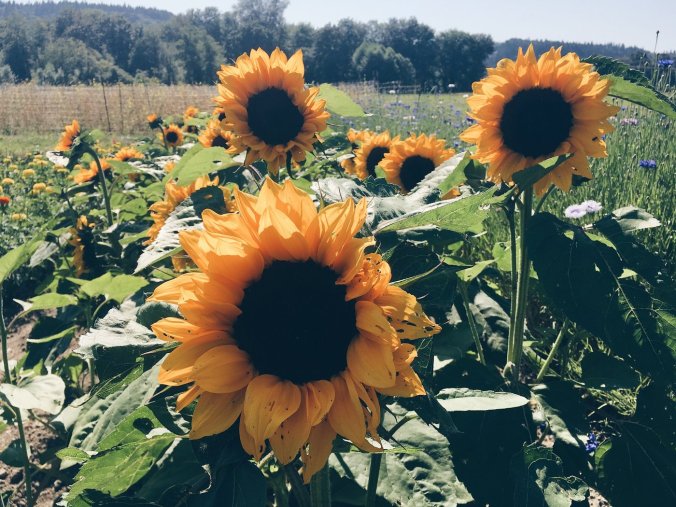
Along the back of this field of sugar snap peas, sunflowers and bachelor buttons at Oxbow Farm & Conservation Center is a buffer of maturing big-leaf maples and red-osier dogwoods. It’s a combination of forest and thicket that the farm has left standing to help protect water quality in the river and aquifer. Oxbow Farm & Conservation Center

Another day, another sunflower because, why not? But this story is about much more than the overwhelming attractiveness of sunflowers:

Which Vision Of Farming Is Better For The Planet?

OxbowFarmers face a growing dilemma. Specifically, a food-growing dilemma.

How do you feed an increasing number of people without harming the environment?

As it turns out, growing as much food as possible in a small area may be our best bet for sustainably feeding the world’s population, according to new research.

It all comes down to how we manage greenhouse gases and climate change. Continue reading