The Slow Ways App, For Right Of Way Walkers

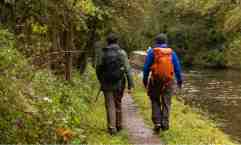
The Slow Ways founder, Daniel Raven-Ellison (right) walks with the Guardian’s Patrick Barkham as they verify a route between Congleton and Macclesfield. Photograph: Fabio De Paola/The Guardian

The right of way is a theme we love, and now there is a technology to assist our pursuit of those rights, at least in one country.

Our thanks to and the Guardian for their coverage of this development:

Walk the walk: the app mapping 140,000 miles of public right of way

Slow Ways was set up during the pandemic when frustrated locked-down walkers drew up more than 9,000 walking routes across Great Britain. Photograph: Fabio De Paola/The Guardian

Community-based, Slow Ways has verified 60% of a network of pedestrian-friendly routes across Great Britain

I meet up with Daniel Raven-Ellison, the brains behind the Slow Ways walking network, in the darkness of a drizzly dawn at Kidsgrove railway station in Staffordshire. Our mission? To walk and verify the final 17-mile (27km) link in the route between Birmingham and Manchester. Continue reading

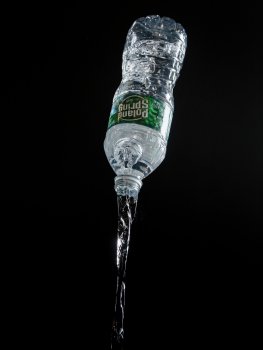
Really, Poland Spring?

Tristan Spinski

We all need drinking water. Those of us lucky enough to have good quality water from a public source can avoid bottled water, but still too many need or want what Poland Spring sells.

The New York Times deserves high praise for this series on water abuses, especially Hiroko Tabuchi‘s reporting on Poland Springs and its parent company’s practices:

Inside Poland Spring’s Hidden Attack on Water Rules It Didn’t Like

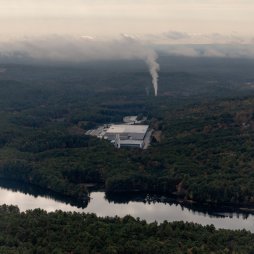
The BlueTriton bottling plant in Poland Spring, Maine, this month.

When Maine lawmakers tried to tighten regulations on large-scale access to water, the brand’s little-known parent company set out to rewrite the rules.

When Maine lawmakers tried to rein in large-scale access to the state’s freshwater this year, the effort initially gained momentum. The state had just emerged from drought, and many Mainers were sympathetic to protecting their snow-fed lakes and streams.

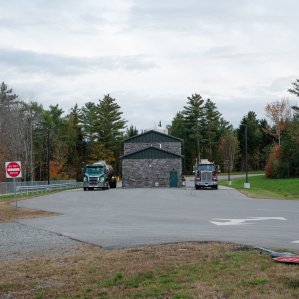
Water trucks filling up at a Poland Spring facility in Lincoln, Maine.

Then a Wall Street-backed giant called BlueTriton stepped in.

BlueTriton isn’t a household name, but its products are. Americans today buy more bottled water than any other packaged drink, and BlueTriton owns many of the nation’s biggest brands, including Poland Spring, which is named after a natural spring in Maine that ran dry decades ago.

Maine’s bill threatened BlueTriton’s access to the groundwater it bottles and sells. The legislation had already gotten a majority vote on the committee and was headed toward the full Legislature, when a lobbyist for BlueTriton proposed an amendment that would gut the entire bill. Continue reading

Water Rights, Heritage & Responsibility

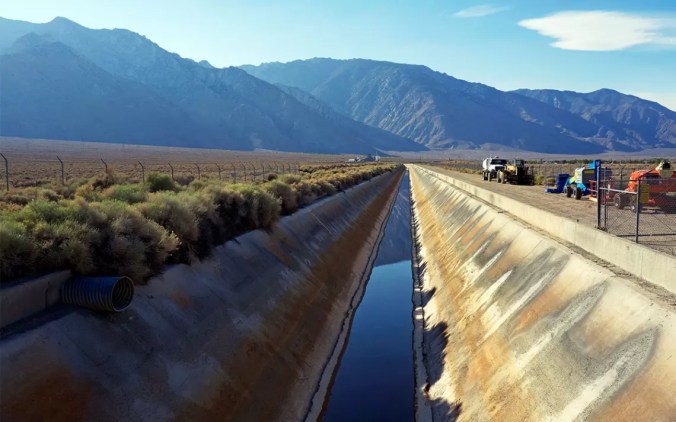
The Los Angeles Aqueduct. | Photo by Brian Melley/AP

California water has been covered in earlier posts, and it keeps getting more important. Once again, with abundance comes responsibility:

Dear Los Angeles: You’re Drinking Indigenous Water

How LA can localize its water supply and finally do right by the Owens Valley Paiute tribes

In August 2023, a tropical storm bore down upon Southern California for the first time in 84 years. As Hilary’s northward-rolling blanket of rain touched off mudslides from Hollywood to the San Bernardino Mountains, thigh-deep water floated vehicles in the streets of Cathedral City. To the east, 120 miles of Highway 395 were closed due to flooding and rock slides, pinching off the route between the city of Los Angeles and the once-green valley 300 miles away from which it has, for over a century, sourced fresh water. Continue reading

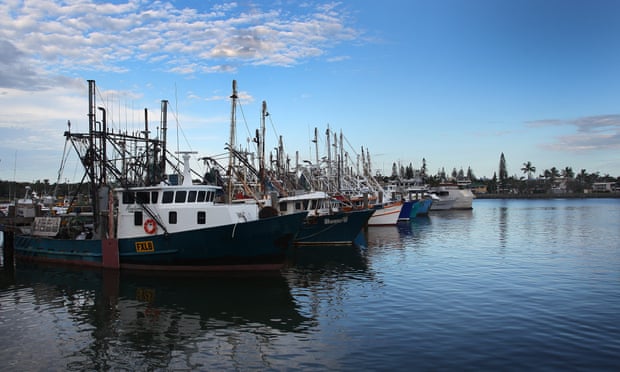
Where Your Seafood Comes From, And How

Ian Urbina has chronicled this topic in the past, and the fishing crimes on the high seas have not abated, to say the least:

BEHIND THE SEAFOOD YOU EAT

China has invested heavily in an armada of far-flung fishing vessels, in part to extend its global influence. This maritime expansion has come at grave human cost.

DANIEL ARITONANG GRADUATED from high school in May, 2018, hoping to find a job. Short and lithe, he lived in the coastal village of Batu Lungun, Indonesia, where his father owned an auto shop. Aritonang spent his free time rebuilding engines in the shop, occasionally sneaking away to drag-race his blue Yamaha motorcycle on the village’s back roads. Continue reading

Overfishing & Long Island Fancyfolk

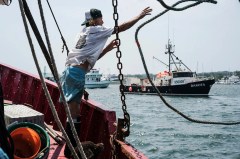
Chris Winkler, a fisherman in ever-fancier Montauk on Long Island, is accused of breaking limits on his catch.

We hope that the wrongs get righted:

Chris Winkler is on trial, accused of taking too many fish from the seas off gentrified Montauk. His former partners have pleaded guilty, and stand to make millions from the sale of their small seafood-themed empire.

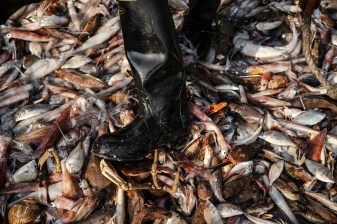
Along with trash fish, catch that exceeds daily limits must be tossed overboard even if it perishes.

It was just before dawn when Chris Winkler, a fisherman in Montauk, N.Y., set off on his trawler, the New Age.

A longhaired surfer who looks far younger than his 63 years, Mr. Winkler was in flip-flops and shorts, trailed by Murphy, a good-natured Irish water spaniel who is usually his only company. Continue reading

Small Win For Limited Right To Trespass In The UK

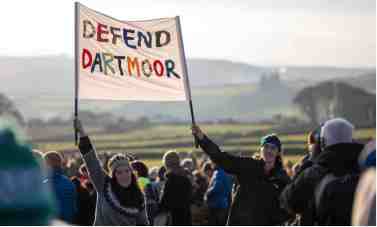
Wild camping campaigners on Dartmoor earlier this year. Photograph: Jim Wild

We thank Helena Horton for her update on this story we linked to just a few days ago:

Wild camping allowed on Dartmoor again after court appeal succeeds

Dartmoor National Park Authority had appealed against January high court ruling that outlawed practice

Wild camping is once again allowed on Dartmoor after the national park won a successful appeal against a ruling in a case brought by a wealthy landowner. Continue reading

Decline Of Mackerel Fisheries

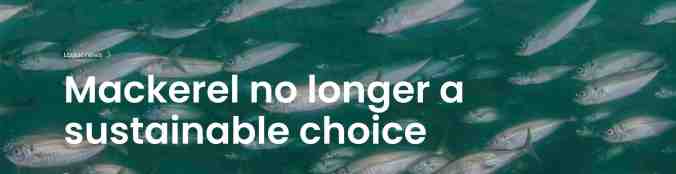
In the UK the Marine Conservation Society has issued this guideline on mackerel:

We’ve updated the environmental sustainability ratings on our Good Fish Guide in line with the latest scientific advice.

We reviewed 186 environmental ratings for seafood, with 20 seafood ratings moving to the ‘Fish to Avoid’ list and only 15 seafood ratings joining the green-rated, ‘Best Choice’ list with this season’s ratings update. Unfortunately, Northeast Atlantic mackerel has moved on to the amber list, having been on the charity’s green list since before 2011. Continue reading

Economic Zones On Oceanic Commons

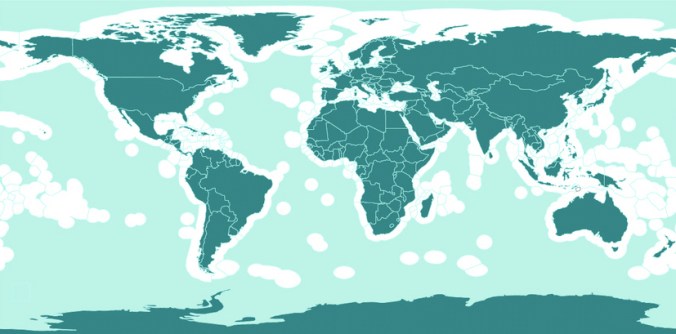
On this map, exclusive economic zones are shown in white and high seas, or areas beyond national jurisdiction, are shown in light green.

For some historical context it helps to think of the many challenges that commons represent. But here and now, this deal is as important as it gets:

Countries Reach Deal to Protect Marine Life in International Waters

UN member states have forged a landmark deal to guard ocean life, charting a path to create new protected areas in international waters. Continue reading

Bronx River Alliance’s Foodway

Just after recently learning that this borough is the greenest, another story clues us in on this innovative program:

The Bronx River Foodway

Fresh Food from Our Land

The Foodway connects the river area with people, growing food and medicinal plants. Come explore the food forest and relish (hah!) the delight of seeds becoming plants for life.

The Guardian’s Meka Boyle gives another reason why visiting this borough is a worthwhile extension to any visit to New York City:

‘It made my heart sing’: finding herbs and medicine in the Bronx food forest

The Bronx River Foodway, the only legal place to forage in New York, celebrates the end of a season

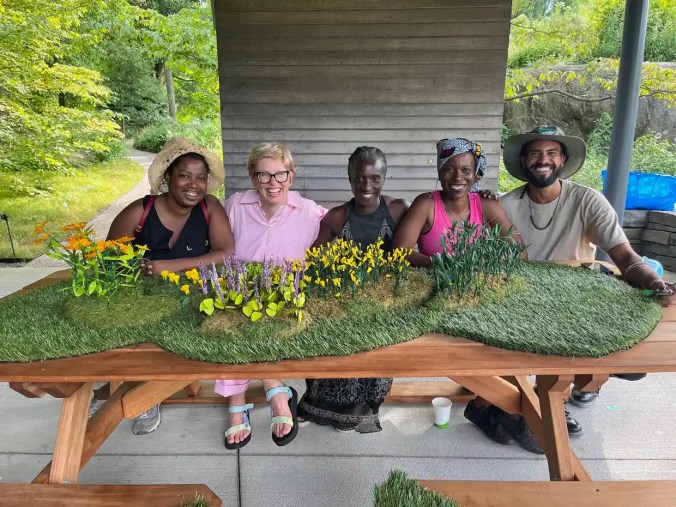
Foodway team members gathered around a picnic bench at the New York Botanical Garden created by the artist Elizebeth Hamby. Photograph: Courtesy Elizabeth Hamby

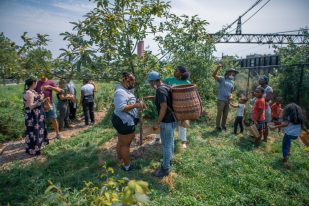
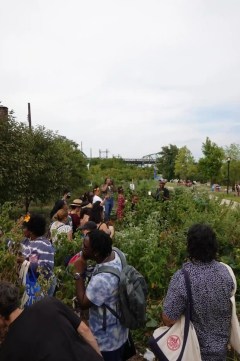
Bimwala’s tours are a mix of returning foragers eager to learn more and newcomers, many of whom have lived in the Bronx for decades. Photograph: Courtesy of Nathan Hunter

On a crisp November day in the South Bronx, more than 300 people made their way from Westchester Avenue below the clamor of the 6 train down a tree-lined path leading to Concrete Plant park. This is the home of the Bronx River Foodway, a quarter-acre food forest full of edible, mostly native plants. What looks like a stretch of land dotted with trees appears at first glance to be overrun by weeds, but the wild foliage has been intentionally planted by the Foodway. It is the only legal foraging site in New York City.

Neighbors young and old poured on to the grassy banks of the Bronx River to celebrate the end of the season and the foliage of the Bronx, including an array of snacks made from foraged ingredients: ginkgo cheese and acorn crackers, and pickled mushrooms and herbal ales made at recent four-part cooking series put on by the Foodway over the last two months. Continue reading

Nepal’s Community Forests

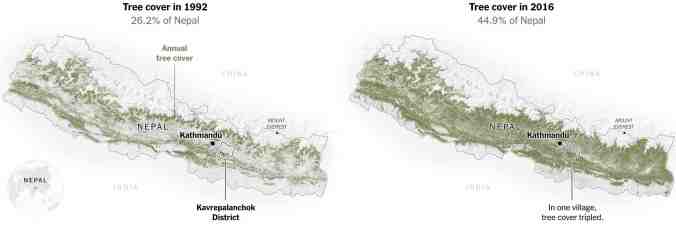
Note: Green areas show land that is mostly covered by trees, based on an analysis of satellite imagery. Source: Jefferson Fox, Jamon Van Den Hoek, Kaspar Hurni, Alexander Smith and Sumeet Saksena.By Pablo Robles

We have shared plenty of stories about Nepal, but until now no story about Nepal involving trees or forests. We welcome this one:

The community forests in Khairahani, Nepal, stretching over several tree-capped hills in March. Karan Deep Singh/The New York Times

An effort decades in the making is showing results in Nepal, a rare success story in a world of cascading climate disasters and despair

KANKALI COMMUNITY FOREST, Nepal — The old man moved gingerly, hill after hill, cutting dry shrubs until he was surrounded by trees that had grown from seedlings he had planted two decades ago. He pointed to a row of low peaks above the Kathmandu valley that were covered with dense foliage. Continue reading

Fishing Endgame

Note: Data for 2020 is from June 2020 through May 2021; for 2021, it is from June 2021 through May 2022.

Overfishing and potential solutions have received lots of attention in our pages over the years. It is not a new problem. And yet, we now have better metrics for how serious the problem is and who is responsible, currently, for making the problem worse. The screenshot to the left does not capture the full value of the dynamic illustration accompanying this article. Click the image to go to the source:

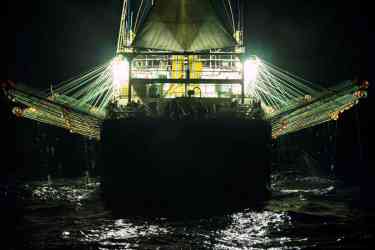
A Chinese ship fishing for squid off the west coast of South America in July 2021. Isaac Haslam/Sea Shepherd via Associated Press

How China Targets the Global Fish Supply

With its own coastal waters depleted, China has built a global fishing operation unmatched by any other country.

Rich and ecologically diverse, the waters around the Galápagos Islands have attracted local fishermen for centuries. Now, these waters face a much larger, more rapacious hunter: China. Continue reading

England’s Green And Pleasant Land

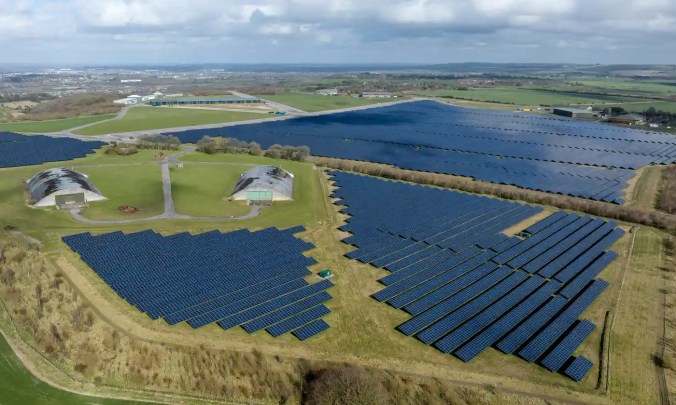
Solar farm in Wroughton, England. Planning permission for 23 solar farms has been refused across England, Wales and Scotland between January 2021 and July 2022. Photograph: Chris Gorman/Getty Images

Nature gets disrupted even by the most sensitively planned green solutions. Here is a parallel story to yesterday’s, with solar replacing wind and England replacing Western USA, illustrating the challenges facing renewable energy:

Exclusive: Projects which would have cut annual electricity bills by £100m turned down

Solar farms are being refused planning permission in Great Britain at the highest rate in five years, analysis has found, with projects which would have cut £100m off annual electricity bills turned down in the past 18 months.

Continue reading

Western Wind Power’s Impacts

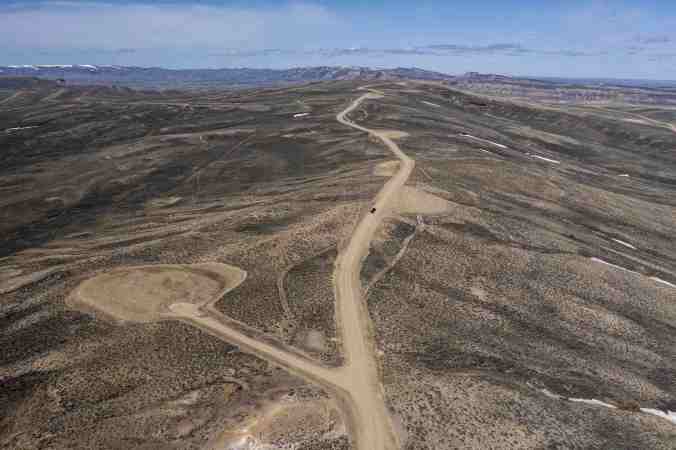
Pads have been cleared in preparation for massive wind turbines at Overland Trail Ranch. (Robert Gauthier / Los Angeles Times)

Wind power is part of our future. Full stop. But it is worth thinking about how the infrastructure for that power will change places of vast beauty and tradition.

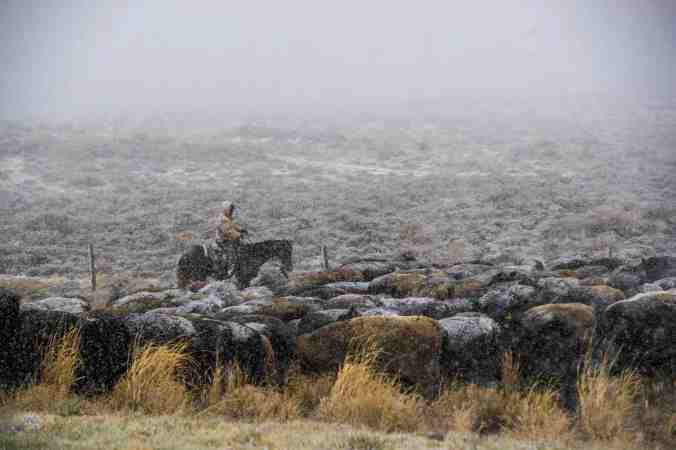
A worker herds cattle at Overland Trail Ranch as a snowstorm moves in. (Robert Gauthier / Los Angeles Times)

This article by Sammy Roth, with photography by Robert Gauthier, is a worthy thought piece on what we gain, what we give up, and who decides how and where wind energy comes to town:

This power line could save California — and forever change the American West

PacifiCorp’s Ekola Flats wind farm has 63 turbines, most of them rated at 4.3 megawatts — almost six times as much power as some of the old steel-lattice wind towers in the California desert outside Palm Springs. (Robert Gauthier / Los Angeles Times)

I know the wind turbine blades aren’t going to kill me. At least, I’m pretty sure.

No matter how many times I watch the slender arms swoop down toward me — packing as much punch as 20 Ford F-150 pickup trucks — it’s hard to shake the feeling they’re going to knock me off my feet. They sweep within a few dozen feet of the ground before launching back toward the heavens, reaching nearly 500 feet above my head — higher than the highest redwood.

They’re eerily quiet, emitting only a low hum. But in the howling wind, the tips could be barreling past at 183 mph. Continue reading

Changing Water Use, Last Chances

Sources: U.S. Geological Survey, U.S. Census Bureau Research: Austin R. Ramsey/IRW; Graphic: Kelly Martin/IRW

Yesterday’s post was about a book that argues we must change the way we source food. Water use is a parallel topic, of equal importance, and today National Public Radio (USA) presents an investigative report about Louisiana’s challenges related to water, and changes that must be made:

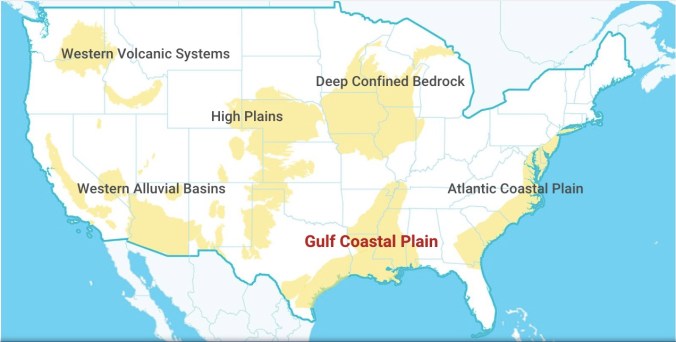
Known For Its Floods, Louisiana Is Running Dangerously Short Of Groundwater

A wastewater treatment plant in West Monroe, La., uses microalgae to biologically purify water. It’s the first step in a process that helps supply water for a local paper mill, saving the area’s stressed aquifer for residents. Austin R. Ramsey/IRW

Louisiana is known for its losing battle against rising seas and increasingly frequent floods. It can sometimes seem like the state has too much water. But the aquifers deep beneath its swampy landscape face a critical shortage.

Groundwater levels in and around Louisiana are falling faster than almost anywhere else in the country, according to U.S. Geological Survey data. An analysis by the Investigative Reporting Workshop and WWNO/WRKF traced the problem to decades of overuse, unregulated pumping by industries and agriculture, and scant oversight or action from legislative committees rife with conflicts of interest. Continue reading

You Can’t Have Your Crabcake And Eat It Too

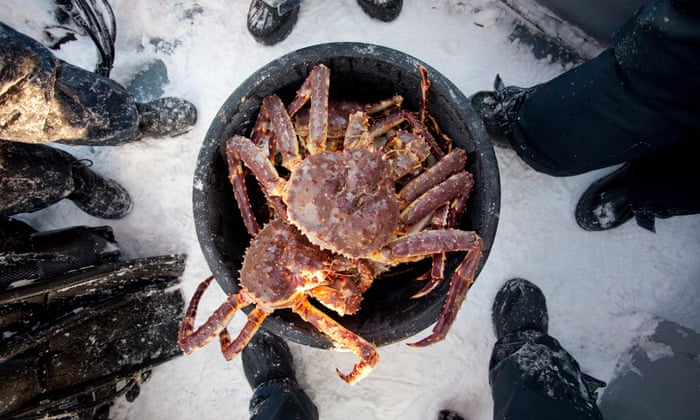
Pot of red gold … Norway exported nearly $9m worth of king crab in October alone. Photograph: Cultura Travel/Philip Lee Harvey/Getty

Invasive species sometimes lead to creative opportunities, but rarely without some tradeoffs:

Crab-22: how Norway’s fisheries got rich – but on an invasive species

Known locally as ‘Stalin’s Red Army’, an invasion of king crabs from Russia created a lucrative industry, and difficult choices

Bugøynes

Fishermen in Bugøynes were struggling before the crabs marched in from Russia. Photograph: Nadia Isakova/Alamy

The Norwegian fishing village of Bugøynes, 310 miles north of the Arctic Circle and a frigid, dark place for much of the year, was on the edge of ruin.

Work was scarce. Years of overfishing and mismanagement had stymied cod quotas. Boats lay idle in cold waters. Those who chose to stay were forced to rely on what meagre wages they could still muster from fishing and processing. Continue reading

A Step To Reduce Overfishing, Even A Modest One, Is Better Than No Step

Research has found that sustainably managed oceans can provide six times more food than today. Photograph: Lisa Maree Williams/Getty Images

It is too few countries protecting too little ocean space, but it is a step in the right direction:

Global sustainable fishing initiative agreed by 14 countries

Governments to reduce pollution in oceans and end subsidies that contribute to overfishing

Governments responsible for 40% of the world’s coastlines have pledged to end overfishing, restore dwindling fish populations and stop the flow of plastic pollution into the seas in the next 10 years.

The leaders of the 14 countries set out a series of commitments on Wednesday that mark the world’s biggest ocean sustainability initiative, in the absence of a fully fledged UN treaty on marine life.

The countries – Australia, Canada, Chile, Fiji, Ghana, Indonesia, Jamaica, Japan, Kenya, Mexico, Namibia, Norway, Palau and Portugal – will end harmful subsidies that contribute to overfishing, a key demand of campaigners. They will also aim to eliminate illegal fishing through better enforcement and management, and to minimise bycatch and discards, as well as implementing national fisheries plans based on scientific advice.

Each of the countries, members of the High Level Panel for Sustainable Ocean Economy, has also pledged to ensure that all the areas of ocean within its own national jurisdiction – known as exclusive economic zones – are managed sustainably by 2025. That amounts to an area of ocean roughly the size of Africa. Continue reading

Functioning Ecosystems Are Key To Our Future

200217_r35849

“How do we feed the nine billion?” Fiennes said. “Through functioning ecosystems.” Photograph by Siân Davey for The New Yorker

The title of this post, paraphrasing the subject of the profile below, states the obvious. Sometimes, that must be. Thank you, Sam Knight:

CAN FARMING MAKE SPACE FOR NATURE?

After Brexit, the obsessions of Jake Fiennes could change how Britain uses its land.

One day last summer, Jake Fiennes was lost in a cloud of butterflies. He was on a woodland path near Holkham Beach, on the north coast of Norfolk. Every decade or so, ten million painted-lady butterflies, which are orange, black, and white, migrate to Britain from tropical Africa. The hot summer meant that it was a bumper year for native species, too, and the painted ladies mingled with red admirals, peacocks, and common blues, feeding on bushes set back a few yards from the path. “Just sat in a haze of flittering, fluttering butterflies,” Fiennes told me later. “I was in awe. These flowers were just exploding.” Continue reading

Anything But Sweet

ScioForest_Better_Cocoa-0689_web2.jpg

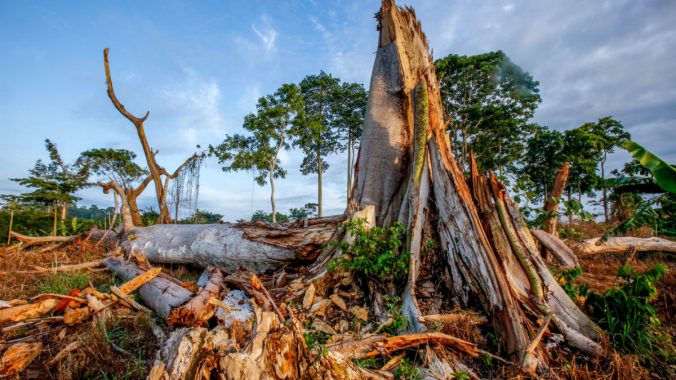
Trees felled for a cocoa plantation inside the Scio Forest Reserve in western Ivory Coast. MIGHTY EARTH

Fred Pearce provides puzzling yet somehow understandable examinations of environmental challenges, that make it impossible to look away with a clear conscience. Since reading this (note the photo above and in that story) I have been paying more attention to chocolate and its origins. I appreciate Mr. Pearce’s deep dive into the dark reality documented in this story:

The Real Price of a Chocolate Bar: West Africa’s Rainforests

Ivory Coast has lost more than 80 percent of its forests in the last 50 years, mainly to cocoa production. The government has a plan to turn over management of former forest to international chocolate manufacturers: Is it a conservation strategy or a land grab?

IvoryCoast_Cocoa_GettyImages-77612143_web.jpg

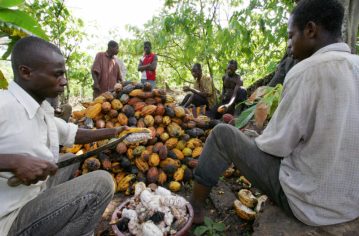
Workers cut cocoa in the Ivory Coast village of Godilehiri. Most of the country’s cocoa is grown by small farmers, on plots of 7 to 10 acres. ISSOUF SANOGO/AFP/GETTY IMAGES

How can you save the last rainforests from rampant deforestation in one of Africa’s most biodiverse countries? A crackdown on those responsible — in this case, chocolate growers and traders? In the Ivory Coast, the government thinks differently. It is unveiling a plan instead to remove protection from most of its remaining forests and hand them over to the world’s chocolate traders. Is this madness, a brutal land grab, or the only way out?

Best-Cocoa-Photos-03_SODEFOR-park-ranger-in-charge-of-Cavally-protected-area-standing-over-illegal-cocoa-found-during-a-patrol_web.jpg

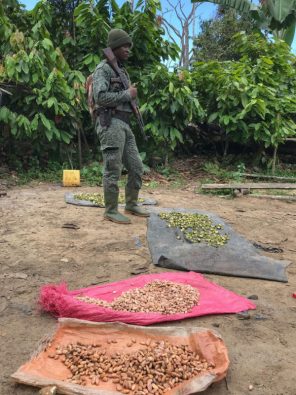
A park ranger stands over illegally harvested cocoa, found during a routine patrol of the Cavally Classified Forest in Ivory Coast. MIGHTY EARTH

In the past half-century, few countries have lost rainforests as fast as the Ivory Coast. More than 80 percent of its forests are gone, most following an illegal invasion by as many as a million landless people into national parks and other supposedly protected forests. The Marahoue National Park alone has 30,000 illegal inhabitants. The invaders are growing cocoa to supply the global chocolate business.

The Ivory Coast, a West African country the size of New Mexico, produces more than a third of the world’s cocoa. The crop contributes around a tenth of the nation’s GDP. But around 40 percent of the country’s cocoa crop — more than a tenth of the world’s chocolate bars — is grown illegally in the country’s national parks and 230 supposedly protected government-owned forests, known as forêts classée, says Etelle Higonnet of Mighty Earth, a United States-based environmental group active in cataloging the footprint of key global commodities.

Most cocoa is grown in monocultures of what is known as the full-sun system, requiring the removal of all surrounding trees. Meeting the world’s insatiable demand for the beans that make chocolate has resulted in many protected areas being “completely converted to farms,” according to Eloi Anderson Bitty of the University Felix Houphouet-Boigny in Abidjan. Continue reading

Hill Culture Contemplation

surfacing-bothies-1-jumbo-v2.jpg

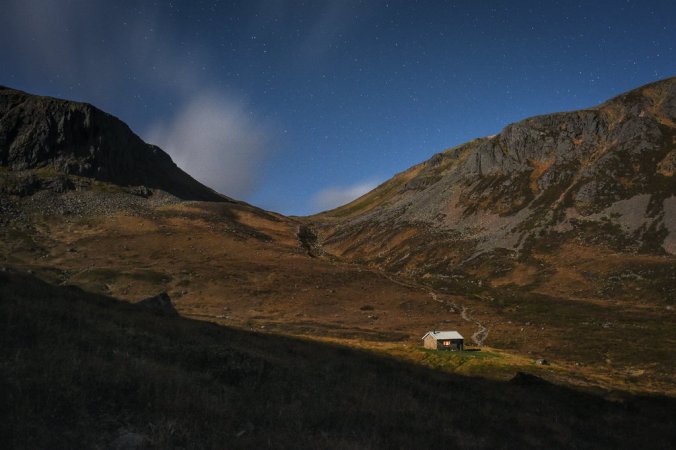
The Hutchison Memorial Hut, colloquially called the Hutchie Hut, illuminated by moonlight in Scotland’s Cairngorms National Park. Stephen Hiltner/The New York Times

How did Stephen Hiltner know? I was just looking through photos from the 2009 edition of the Patagonia Expedition Race, and remembering the huts along the way. They were perfect places to escape the realities of the rest of the world, in order to contemplate more clearly. With perspective. They could come in handy for plenty of folks these days, I am sure. Seems certain to me now that those huts at the southern tip of the South American continent were built by folks from the hills sampled in the story below:

In Britain, Enraptured by the Wild, Lonely and Remote

Rustic shelters called bothies — more than 100 of which are scattered throughout England, Wales and Scotland — are an indispensable, if little-known, element of British hill culture.

27surfacing-bothies8-jumbo-v3

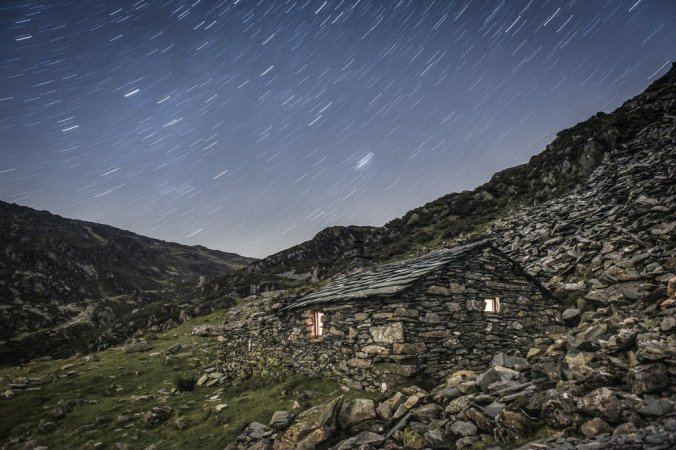
Warnscale Head at night. Since bothies are often built with local stones, they’re easily camouflaged in their surrounding landscapes. Stephen Hiltner/The New York Times


surfacing-bothies-window-6-jumbo-v2.jpg

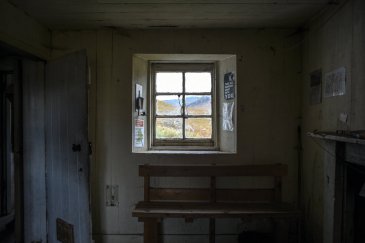
Shenavall Stephen Hiltner/The New York Times

By the time the tiny hut came into view, nestled high in a corrie in Scotland’s 1,748-square-mile Cairngorms National Park, I’d trekked for nearly nine miles, three of which, regrettably, I’d had to navigate after nightfall. The hike, through a broad valley in the Eastern Highlands called Glen Derry, carried me past groves of Scots pines and over a series of streams, some of which, lined with slick steppingstones, made for precarious crossings. All the while, two rows of smooth, eroded mountain peaks enclosed me in an amphitheater of muted colors: hazel-hued heather, golden grasses. Though much of my walk was solitary, the flickering glow in the hut’s main window, I knew, meant I’d have some company for the night and the warmth of a fire to greet me. Continue reading

Walking, Rights & Ways

Knight-EnglandForgottenFootpaths.jpg

Going for an unremarkable walk in the English countryside has a lot in common with other old British freedoms. Everyone swears by it, though no one knows quite how it works. Photograph by Education Images / UIG / Getty

As someone who walks 5-10 miles most days, I am always looking for new things to think about, or to pay attention to during my walking. In the olden days I was left to my own thoughts and in recent days I am podcast-fueled. But some days I resist the earbuds and instead focus thought on a particular thing. One of my favorite pathways through the mountains where we live was fenced off in recent years, which already was on my mind before reading the article below. And I love the idea of an unremarkable walk, which my daily walks are, except that I have gotten to know most of the families who live in the mountains near us only by walking and having the chance to say hello. Which is a remarkable side benefit of trying to live now without owning a car. Thanks to Sam Knight for this other perspective on how to think about this thing:

The Search for England’s Forgotten Footpaths

Nineteen years ago, the British government passed one of its periodic laws to manage how people move through the countryside. The Countryside and Rights of Way Act created a new “right to roam” on common land, opening up three million acres of mountains and moor, heath and down, to cyclists, climbers, and dog walkers. It also set an ambitious goal: to record every public path crisscrossing England and Wales by January 1, 2026. The British Isles have been walked for a long time. They have been mapped, and mapped again, for centuries. But that does not mean that everything adds up, or makes sense. Between them, England and Wales have around a hundred and forty thousand miles of footpaths, of which around ten per cent are impassable at any time, with another ten thousand miles that are thought to have dropped off maps or otherwise misplaced. Finding them all again is like reconstructing the roots of a tree. In 2004, a government project, named Discovering Lost Ways, was given a fifteen-million-pound budget to solve the problem. It ended four years later, overwhelmed. “Lost Footpaths to Stay Lost,” the Daily Telegraph reported. Since then, despite the apparent impossibility of the task, the 2026 cutoff has remained on the statute books, leaving the job of finding and logging the nation’s forgotten paths to walkers, horse people, and other obsessives who can’t abide the muddled situation. Continue reading