Hacienda La Amistad, 2024

Amistad label circa 2019
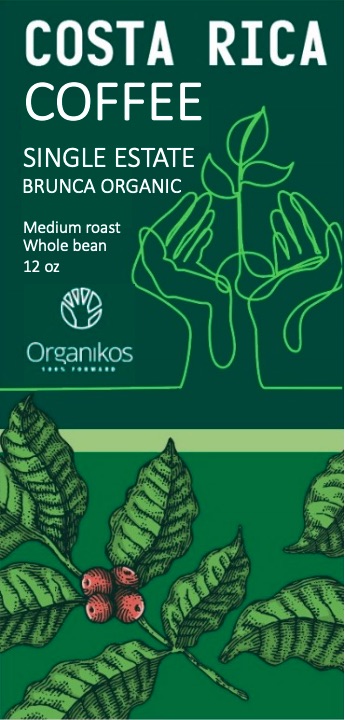
Amistad label 2020-2023

We have been offering this Hacienda La Amistad coffee since 2019. The original label, seen in the photo above, was one we thought perfect for its simplicity.

During the pandemic, with time on our hands, we redesigned all of our labels and came up with this label to the left.  It served us well over the last few years,  as we expanded from selling only in the Authentica shops in Costa Rica to also roasting and selling in the USA.

Starting in early 2024 we began rethinking all of our coffee labels. We approached the task region by region, with the blends and the single estates following a common design style. We saved this coffee for last, for no particular reason, but yesterday the rainbow over the farm was our signal that it was time to release the new label:
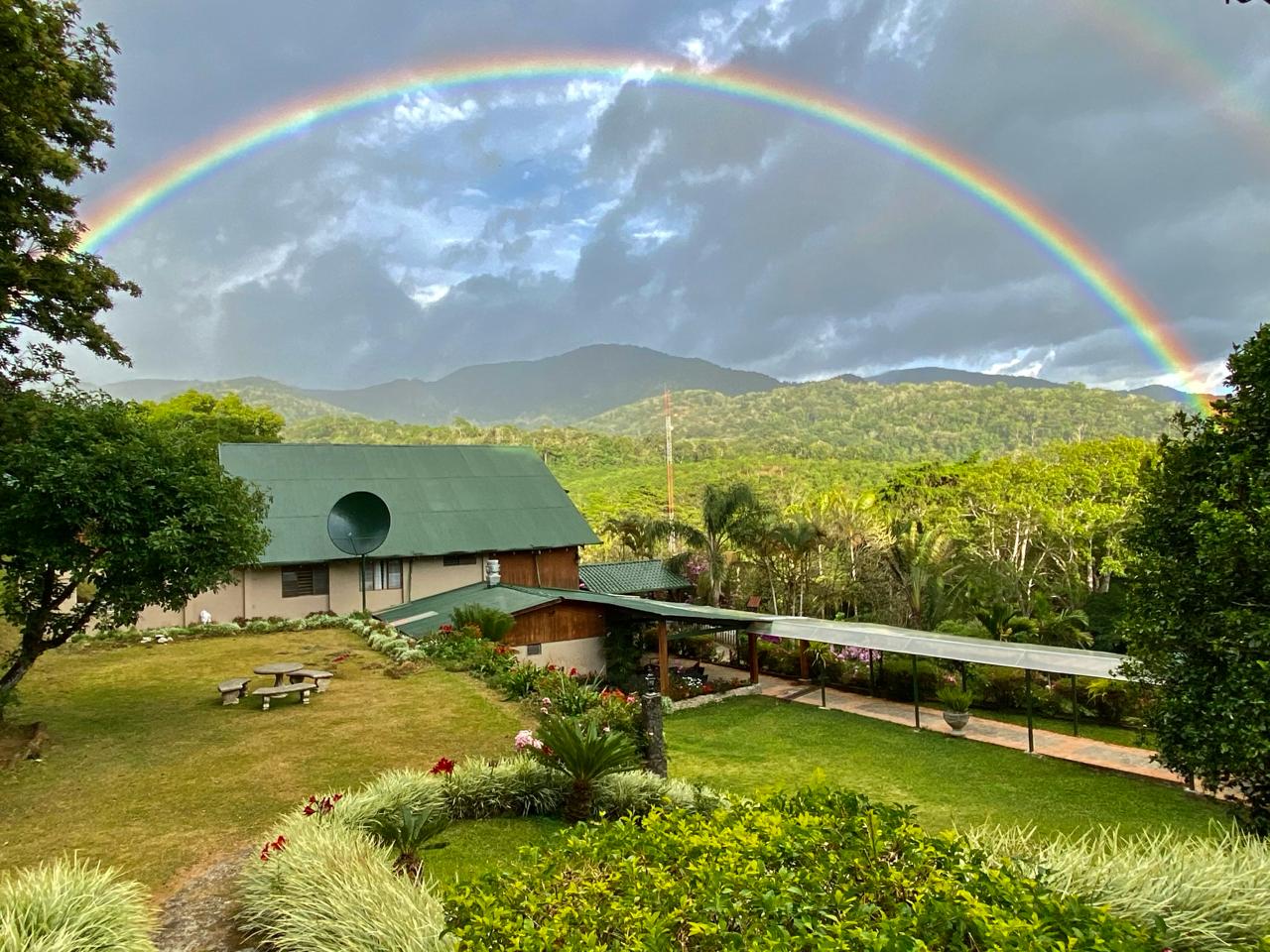
Hacienda La Amistad March 10, 2024

Thank you to the farm for the inspiration:

Amistad label, 2024
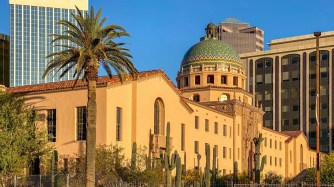
Arizona Youth Climate Coalition

(Photo credit: kevin dooley / CC BY 2.0)

Thanks to Yale Climate Connections for this:

High schoolers helped develop Tuscon’s climate action plan

They may not be able to vote yet, but they’re already having an influence.

In the past few years, young people have made headlines with their fight against climate change. Continue reading

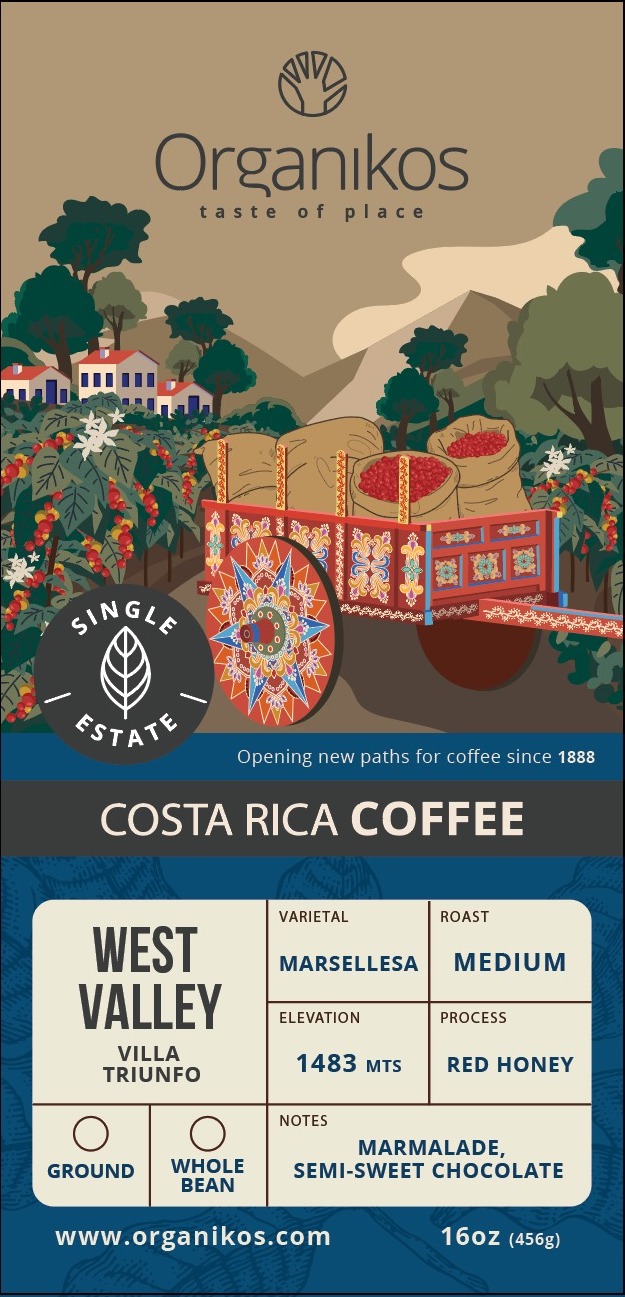
Villa Triunfo, Old Farm & New School

We have shared a few posts in these pages mentioning Villa Triunfo, but now we have designed a new label for it. So, time to celebrate that. What is most important to us about the farm is that it is one of the oldest continuously operating coffee farms in Costa Rica, since its first plantings in the late 1800s.

That, and the fact that today it is also one of the more innovative in terms of pioneering hybrids that help the coffee stay fit in the context of climate change and the various challenges (such as the uniquely problematic mold that is called rust). It is the end of harvest season, when coffees in the West Valley are being processed. The red honey process used for this coffee allows all the sugars from the juicy fruit to absorb into the beans. We look forward to cupping it soon.

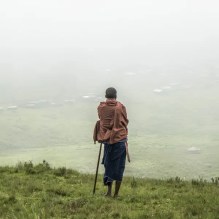
Is That Safari In Tanzania A Good Use Of Your Money?

Brian Otieno

This guest opinion, written by Professor Robert Williams of the Indigenous Peoples Law and Policy Program at the University of Arizona, and published in the New York Times, should make you think twice about the safari that might be on your bucket list:

Over 600,000 tourists travel to Tanzania’s Ngorongoro Conservation Area each year, and many will catch a glimpse of the Great Migration: the famed trek of more than one million wildebeests and thousands of zebras, gazelles and other animals crossing over the Mara River into Kenya and back again. Continue reading

Dickson D. Despommier Discussing The New City Concept

The vertical farming part of this concept is one we have linked to many times. The appeal is not difficult to grasp even if sometimes the concept is stretched. This is different and worth hearing him out:

Dickson Despommier Wants Our Cities to Be Like Forests

A leading proponent of vertical farming discusses how urban areas should adapt to a perilous environmental future.

Illustration by Daniele Castellano

In 2000, Dickson D. Despommier, then a professor of public health and microbiology at Columbia University, was teaching a class on medical ecology in which he asked his students, “What will the world be like in 2050?,” and a follow-up, “What would you like the world to be like in 2050?” As Despommier told The New Yorker’s Ian Frazier in 2017, his students “decided that by 2050 the planet will be really crowded, with eight or nine billion people, and they wanted New York City to be able to feed its population entirely on crops grown within its own geographic limit.” Continue reading

Green Mountain Power, Sunrun, FranklinWH & Innovative Electricity Options

Photograph by Ian Thomas Jansen-Lonnquist / Bloomberg / Getty

We need more energy, and here are some possibilities:

The Next Power Plant Is on the Roof and in the Basement

A Department of Energy report promotes a new system that could remake the energy grid.

On any given Monday in Vermont, Josh Castonguay, the vice-president of innovation at that state’s Green Mountain Power utility, told me, he studies the forecast for the days ahead, asking questions like “What’s it looking like from a temperature standpoint, a potential-of-load standpoint? Is there an extremely hot, humid stretch of a few days coming? A really cold February night?” If there is trouble ahead, Castonguay prepares, among other things, Vermont’s single largest power plant, which isn’t exactly a power plant at all—or, at least, not as we normally think of one. Continue reading

Water Rights, Heritage & Responsibility

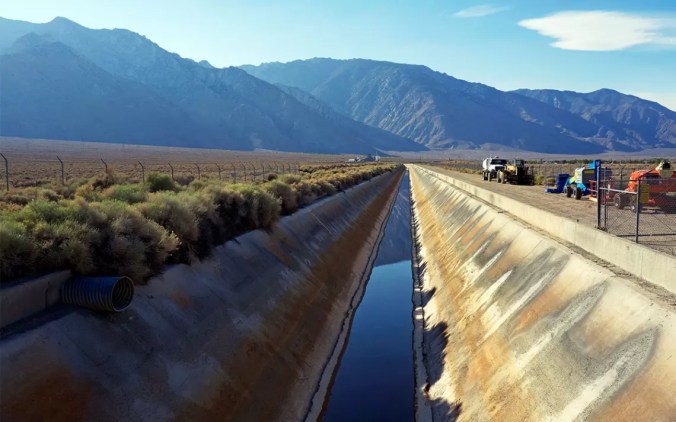
The Los Angeles Aqueduct. | Photo by Brian Melley/AP

California water has been covered in earlier posts, and it keeps getting more important. Once again, with abundance comes responsibility:

Dear Los Angeles: You’re Drinking Indigenous Water

How LA can localize its water supply and finally do right by the Owens Valley Paiute tribes

In August 2023, a tropical storm bore down upon Southern California for the first time in 84 years. As Hilary’s northward-rolling blanket of rain touched off mudslides from Hollywood to the San Bernardino Mountains, thigh-deep water floated vehicles in the streets of Cathedral City. To the east, 120 miles of Highway 395 were closed due to flooding and rock slides, pinching off the route between the city of Los Angeles and the once-green valley 300 miles away from which it has, for over a century, sourced fresh water. Continue reading

Museum Loot Going Home

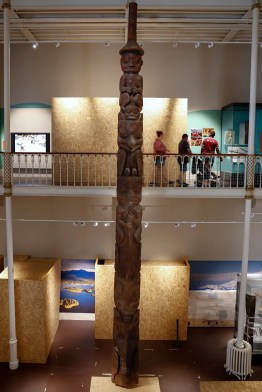
Earl Stephens, who goes by the Nisga’a cultural name Chief Ni’is Joohl, center left, and members of a delegation from the Nisga’a nation pose beside a 36-foot tall memorial pole during a visit to the National Museum of Scotland on Monday. Andrew Milligan/Press Association, via Associated Press

The legitimacy of museums possessing artifacts from other cultures is not inherently dubious, but as the Parthenon marbles example has demonstrated, there are plenty of reasonable questions. This story about a museum’s move to the better side of history is worth a read:

The pole is soon to be moved to British Columbia on the west coast of Canada. Jeff J Mitchell/Getty Images

Totem Pole Taken 94 Years Ago Begins 4,000-Mile Journey Home

The 36-foot tall memorial pole has spent almost a century in a Scottish museum. Now it will be returned to the Nisga’a Nation in Canada.

Almost 100 years ago, a hand-carved totem pole was cut down in the Nass Valley in the northwest of Canada’s British Columbia.

The 36-foot tall pole had been carved from red cedar in the 1860s to honor Ts’wawit, a warrior from the Indigenous Nisga’a Nation, who was next in line to become chief before he was killed in conflict. Continue reading

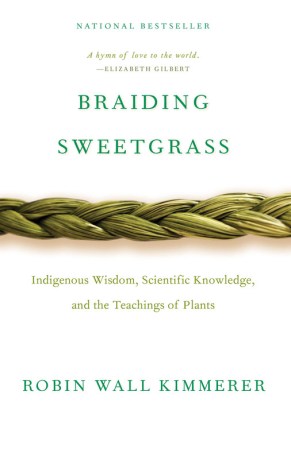
Braiding Sweetgrass

My daily news scanning, reading and listening diet are fairly omnivorous, but I am constantly reminded of how much I miss. This sounds like a book I should have read in 2015 when it was first published, but instead I only heard about it this morning. Listening to the author talk about it, I learned that she lives where I lived when I was a boy, in a region where my family history is partly rooted; the same region where I spent seven years to get to an idea that has guided my work ever since; where both our sons and our grand daughter were born. Which is to say, as she talks about nature in that conversation, I know that particular nature. Which is to say, I will find this book.


Insect Oases

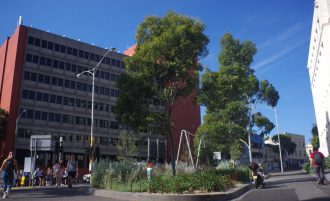
A small patch of native plants in Melbourne, Australia, draws native insects. MATA, ET AL.

Thanks to Yale e360 for this short story on small wonders:

Even a Small Patch of Native Greenery Can Give a Big Boost to Local Insects

In cities, a little native greenery can go a long way. Australian scientists found that, after adding native shrubs to a planting in Melbourne, the number of insect species at the site increased sevenfold. Continue reading

Proposed Chumash Sanctuary One Step Closer

Thanks to National Public Radio (USA) for bringing this to our attention:

Members of the Chumash tribe have pushed for a decade to create a new marine sanctuary. If created, it would be the first to be designated with tribal involvement from the outset. Robert Schwemmer/NOAA

Biden proposes vast new marine sanctuary in partnership with California tribe

The Biden administration is one step away from designating the first national marine sanctuary nominated by a tribe. The Chumash Heritage National Marine Sanctuary would protect 5,600 square miles of ocean off the central California coast, an area known for its kelp forests, sea otters and migratory whales. Tribal members of the Chumash, who have lobbied for its creation for more than a decade, would be involved in managing it…

The First Tribally Nominated Sanctuary

Preserving marine and cultural resources along 156 miles of Central California Coastline

Estimated to generate $23 million in economic activity and create 600 new jobs

Will safeguard the Central Coast from offshore oil expansion and other threats


Honey Bee Dangers & Mythology

Gorazd Trusnovec inspects a beehive at the B&B Hotel Ljubljana Park in Ljubljana, Slovenia.

Thanks to this article by David Segal, with photographs and video by Ciril Jazbec, we realize now that even after our dozens of links to articles about bees, one key point was never on our radar. Our beekeeping/honey-making friends in Costa Rica inform us that the opposite is an issue here–in the entire country there are only 800 beekeepers and most of them are small scale hobbyists, and that a national authority (SENASA) controls the density of hives per area:

Mr. Trusnovec at home. “I would say that the best thing you could do for honey bees right now is not take up beekeeping,” he says.

In Slovenia and around the world, conservationists try — and mostly fail — to combat the widespread belief that honey bees are in danger.

When the B&B Hotel in Ljubljana, Slovenia, decided to reinvent itself as an eco-friendly destination in 2015, it had to meet more than 150 criteria to earn a coveted Travelife certificate of sustainability. But then it went step further: It hired a beekeeper to install four honey bee hives on the roof. Continue reading

Planting Trees In New Haven

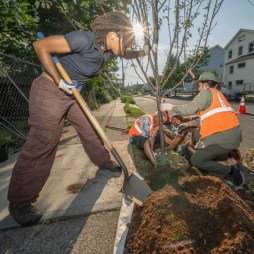
From left, Jess Jones, Ed Rodriguez, Zach Herring and Joshua De-Anda, planting a crab apple tree at 10 Wolcott Street in the Fair Haven neighborhood of New Haven, Conn. Tony Cenicola/The New York Times

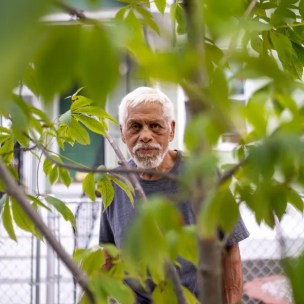
Ed Rodriguez has a few years on me, but we have comparable tree counts. The caption of the second photo below captures my my own preference of activity on any given day. Having grown up in Connecticut and moved to Costa Rica decades ago, I note our reverse patterns of migration.

Colbi Edmonds, a member of the 2023-24 New York Times Fellowship class, reports from Seth’s previous hometown New Haven on an initiative I love reading about as much as I enjoy my own versions of the same kind of activity:

“I love to dig and mess around in the soil,” said Ed Rodriguez, who grew up in Puerto Rico but moved to Connecticut in the 1960s. Christopher Capozziello for The New York Times

One Neighborhood, 90 Trees and an 82-Year-Old Crusader

Ed Rodriguez is on a mission to convince his neighbors that they need trees to help combat summer heat — and to make the world a better place. It’s not always so easy.

Maria Gonzalez, who lives in New Haven, Conn., was envious of the other side of her street. It was lined with trees, offering some beauty as well as a shield from this summer’s unusual heat. But the sidewalk directly in front of her residence was bare, with trash littering patches of grass. Continue reading

UK Regenerative Agriculture Festival, Groundswell 2023

Last year’s highlights in the video above, and a review of this year’s festival in the link below to an online magazine:

Lannock Manor Farm, Hertfordshire, SG4 7EE, UK

The Groundswell Festival provides a forum for farmers, growers, or anyone interested in food production and the environment to learn about the theory and practical applications of regenerative farming systems.

The next Groundswell Festival takes place on the 26th & 27th of June 2024. View the Event Guide from 2023 here.

New Roots Garden, Urban Oasis

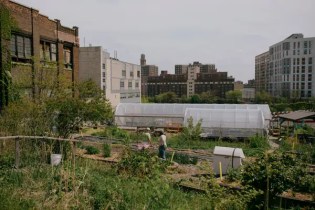
Sheryll Durrant has managed the New Roots Garden, which sits between the Grand Concourse and the Metro North railroad tracks in the Bronx, with volunteers for eight years.

We have linked out to stories about urban farming plenty of times; it never gets old:

Vital Places of Refuge in the Bronx, Community Gardens Gain Recognition

Lawmakers in Albany voted to designate community gardens statewide as crucial to the urban environment, especially in the fight against climate change. The bill awaits the governor’s signature but the role of these gardens stretches back decades.

The Morning Glory garden in the West Farms section of the Bronx is among more than 500 community gardens in New York City.

Sheryll Durrant left her family farm in Jamaica in 1989 and embarked on a career in corporate marketing. But after the 2008 financial meltdown, she reconsidered her life.

She returned to her roots.

Now she runs a thriving urban farm wedged into a triangular plot in the Bronx, between the Grand Concourse and the Metro North railroad tracks. At her farm, New Roots Garden, membership consists of refugees and migrants, resettled by the International Rescue Committee, whose herbs and vegetables sustain their memories of home.

“Just putting your hands in soil is a form of healing,” Ms. Durrant, 63, said. Continue reading

Starbucks Flexing Its Muscle

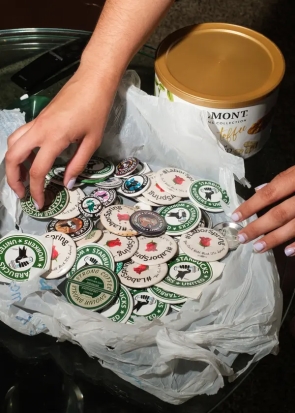
Jordan Baumgarten for The New York Times

In the coffee business, we look up to the big players for inspiration. Sometimes we find something else. Starbucks can be a very admirable corporate citizen. It can also be rotten, as we are reminded in this op-ed by Megan K. Stack:

Inside Starbucks’ Dirty War Against Organized Labor

NOTTINGHAM, Md. — Agnes Torregoza came to this country when she was a toddler, brought from the Philippines by her parents. Her mother found a teaching job in the Baltimore County Public School District, and the family set about cobbling together a new life. Continue reading

Bring Birds Back Podcast

A new (to us) podcast to get your bird nerd fix:

Let’s All Go to Gullah Geechee Sea Islands with Isaiah Scott

Bring Birds Back Season 4: Episode 4

This episode’s guest may be too young to remember the 90’s children’s show, Gullah Gullah Island, but he’s certainly influencing the next generation the same! Isaiah Scott, a rising Gen-Z bird-influencer and ornithologist, reconnects with Tenijah to dish all about his journey into birding while young, Black and curious. He also shares how his Gullah Geechee heritage continues to inspire his work, including a forthcoming field guide that seeks to preserve his ancestral connection to birds. There’s definitely “lots to see and to do there”– press play and take the journey with us!


Taking Inspiration From Smallhold Farms In Africa

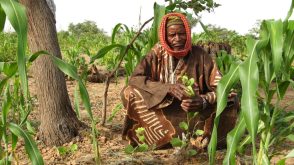
A farmer in Niger tends to a tree sprout growing among his millet crop. TONY RINAUDO / WORLD VISION AUSTRALIA

I am nearing the point where I can offer an update on the trees we have planted in advance of 1,000+ coffee plants going into the ground in their shade. Thanks to Fred Pearce, reporting in Yale E360, I have some inspiration coming from across the Atlantic on the broader value of those trees:

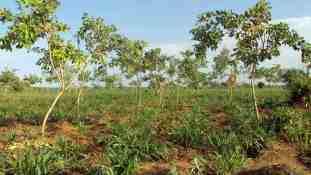
Dooki (Combretum glutinosum) trees grow on a millet field in Niger. P. SAVADOGO / ICRAF

As Africa Loses Forest, Its Small Farmers Are Bringing Back Trees

The loss of forests across Africa has long been documented. But recent studies show that small farmers from Senegal to Ethiopia to Malawi are allowing trees to regenerate on their lands, resulting in improved crop yields, productive fruit harvests, and a boost for carbon storage.

For decades, there have been reports of the deforestation of Africa. And they are true — the continent’s forests are disappearing, lost mainly to expanding agriculture, logging, and charcoal-making. But the trees? Continue reading

Crop Swap LA & Other Microfarm Advances

Illustration: Julia Louise Pereira/The Guardian

Our thanks to Victoria Namkung for this reporting in the Guardian, from Los Angeles:

‘Everything is natural and tastes so good’: microfarms push back against ‘food apartheid’

Crop Swap LA founder Jamiah Hargins in the Asante microfarm in Los Angeles, California. Photograph: Valérie Macon/AFP/Getty Images

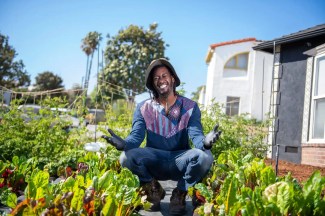
Bipoc-led local farms in unconventional spaces decentralize systems that have produced food deserts and create food equity

On a recent Sunday morning in South Los Angeles, Crop Swap LA volunteers and staffers harvested bags of freshly picked produce from the front yard of a residence. Located just steps from Leimert Park Plaza, the Asante microfarm is the first of what will be numerous microfarms created by the organization, which is dedicated to growing hyperlocal food on unused spaces “in the neighborhood, exclusively for the neighborhood”. Continue reading

Pottery Tradition & Modernity

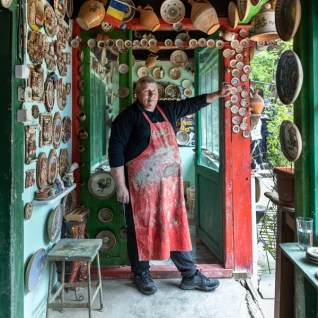
Mr. Biscu makes pieces using clay that comes from earth extracted from a hill in Horezu.

Chantel Tattoli reported this story from Horezu, Romania for the New York Times. Accompanied by photographs and video by Marko Risovic, her story is based on speaking to a dozen local potters using a translator:

A style of pottery made for centuries in a small Romanian town has recently become a hot commodity.

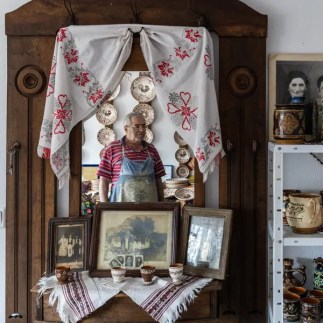
Sorin Giubega at his home, which is filled with ceramics made by him and his ancestors.

Sorin Giubega’s grandfather was a potter. So was his father. And at 8 years old, Mr. Giubega said, he started to play on a pottery wheel, too.

Mr. Giubega, now 63, and his wife, Marieta Giubega, 48, are potters in Horezu, Romania, a town in the foothills of the Capatanii Mountains about three hours by car from Bucharest.

Horezu is home to a community of about 50 artisans who make a traditional style of ceramics with methods that have been practiced for more than 300 years. Continue reading