In my earlier posts, I wrote about the abundance of coconut trees in Kerala and their many uses from ingredients in typical foods to the construction of house boats. Another primary use is for roofing. Here at Marari Pearl, it is used unsparingly for most of the buildings from the restaurant to the 20 villas on site. Continue reading
Community
Eat a Lionfish, Save a Reef – Markets and Menus to the Rescue
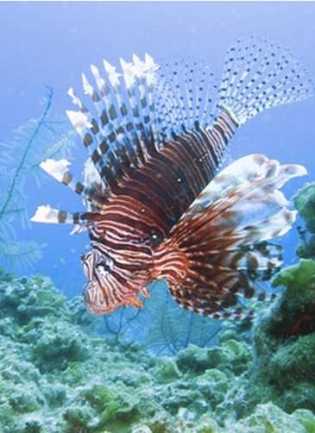
photo credit: Reef.org
At the risk of back-patting and preaching to the converted, it’s heartening to connect with others in the world community calling attention to and making efforts toward education and action against invasive species.
We thank the contributors of Conserve Fewell for introducing themselves to us!
As many of you who follow this blog know, invasive species can have devastating impacts on local economies and wipe out endemic wildlife populations. Scott Cameron a frequent blogger here at ConserveFewell has established a new coalition devoted to reducing the risks and economic costs from invasive species, RRISC.
The lionfish is one of those perfectkillers, introduced by aquarium enthusiasts into places it doesn’t belong and wreaking havoc on native fish populations and decimating reefs. Continue reading
When the land heats up and air rises
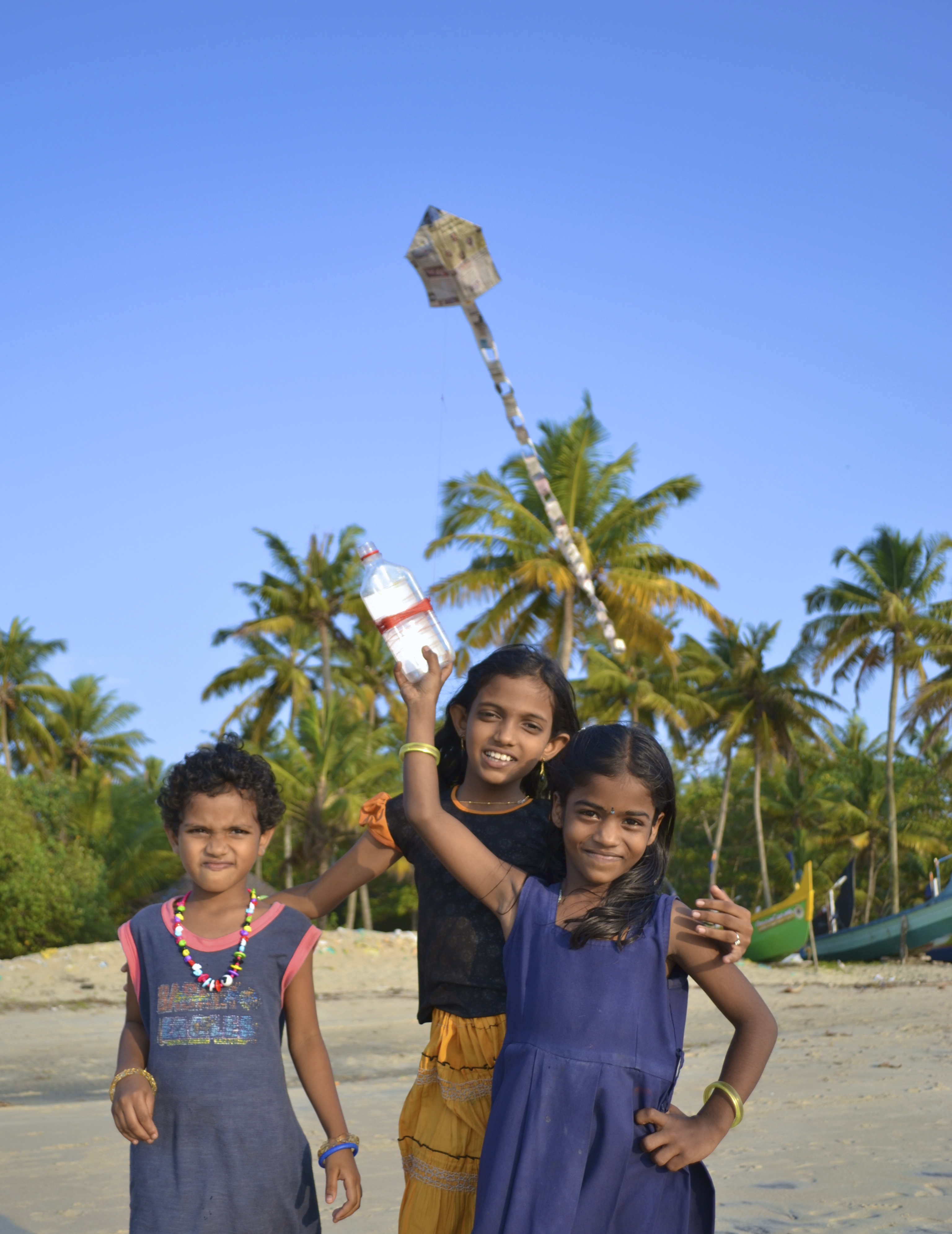
Three sisters
When land heats up and air rises, it gives way to fresh on-shore wind from the Arabian sea. A walk along Marari beach during sunset will most likely give the sight of homemade kites being flown mostly by children, but also adults of all ages. These kites are made of bamboo, newspaper and glue. Old fishing line is then attached and wound up on a bottle.
The children are very proud of their creations and will insist that theirs is the “best” of all and that you try it out. Choose carefully and watch the kite soar!
Seeing The Forest Through The Concrete Jungle

Shutterstock, Oxygen64
Thanks to Dan Levitan for his ever-punchy summaries of important environmental science stories in Conservation:
IS THERE AN OPTIMAL URBANIZATION STRATEGY?
Cities are going to get bigger. With more than half the world now living in urban areas, and that percentage growing steadily, that means the concrete and steel will have to stretch out into areas that are currently forest and farm and grass. But just letting that process happen without a plan is likely to be a very bad idea.
A study published in the journal Landscape and Urban Planning simulated the urbanization process in the Piedmont region of North Carolina out to 2032. The question the authors posed was, essentially, what land will suffer in favor of the ever-growing city? Continue reading
Bookstores, Breweries, Bunk
Local Habit, in San Diego, offers a variety of California craft beers. Beer has become as much a part of the San Diego identity as surf and sun.
CREDIT PHOTOGRAPH BY EROS HOAGLAND/THE NEW YORK TIMES/REDUX
It was already so good at what it did in print, it was easy to wonder what would come next. How to respond to the digital era? The New Yorker‘s transformation has been welcome, and Tim Wu is clearly an awesome part of it, as you may already know:
Consider a few surprising and optimistic facts for the new year: nationwide, independent bookstores have grown by about twenty per cent since 2009; meanwhile, American craft breweries collectively now sell more than 16.1 million barrels of beer annually, outpacing, for the first time, Budweiser. This isn’t the only evidence that small-scale businesses are making a comeback. Over the last ten years, the long-running decline of small farms has levelled out, and more than three billion dollars was spent last year on more than four thousand independent feature films. Over all, since 1990, small businesses (with, generally, fewer than five hundred employees or less than $7.5 million in annual receipts) have added millions of employees, while big businesses have shed millions. Continue reading
Chinese Fishing Nets, Kerala
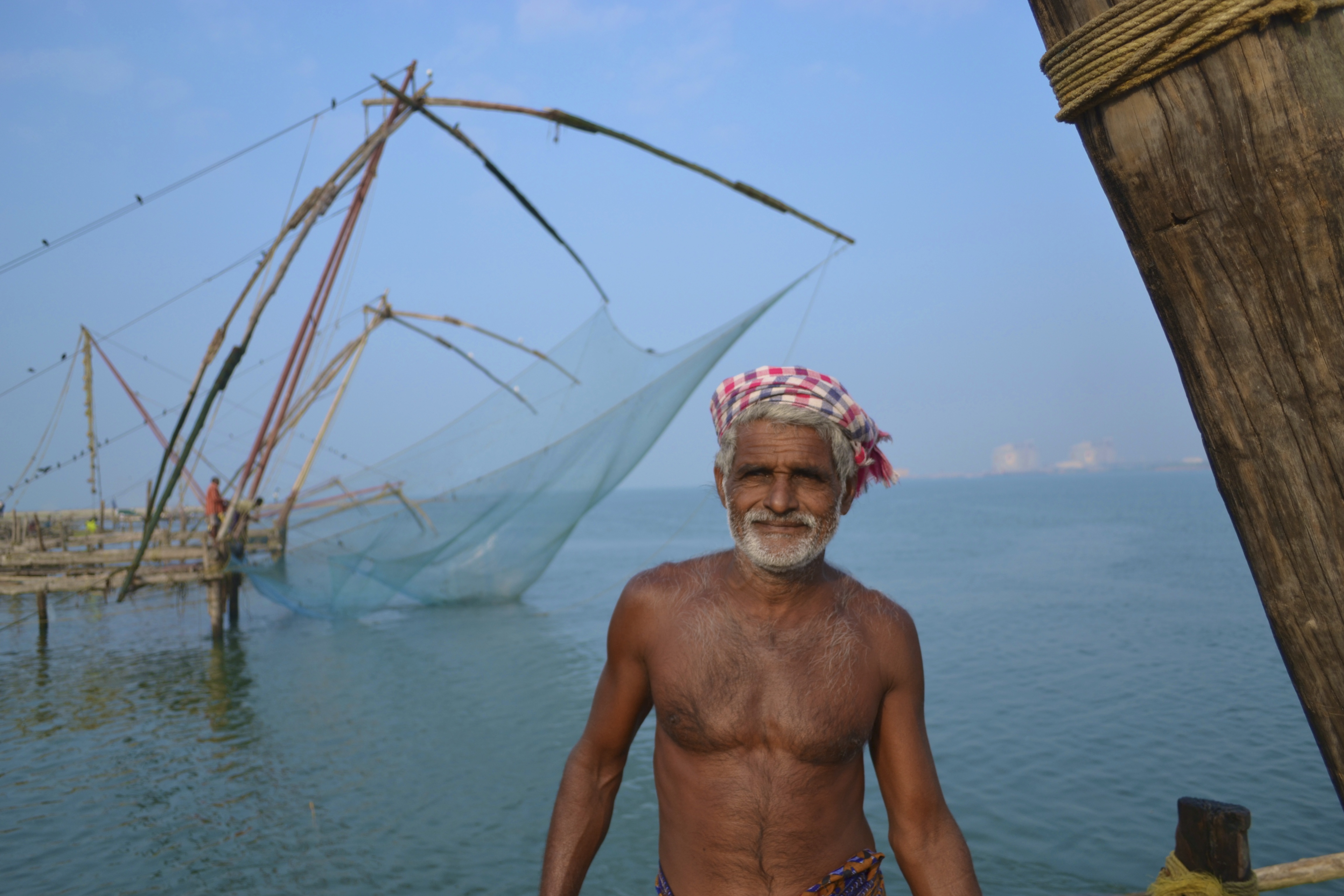
Marconi
Marconi is an original decedent of the Mongolian people (a Chinese state at the time) who were the creators of the “Chinese Fishing Nets” in Kerala, India. These structures are at least 30 ft high and the nets stretch out more than 50 ft across the water! It takes half a dozen people to even attempt to heave the nets which work on a pulley system with GIANT boulders hanging from the opposite side to counteract the weight. Continue reading
A Reflection On My Summer In Kerala
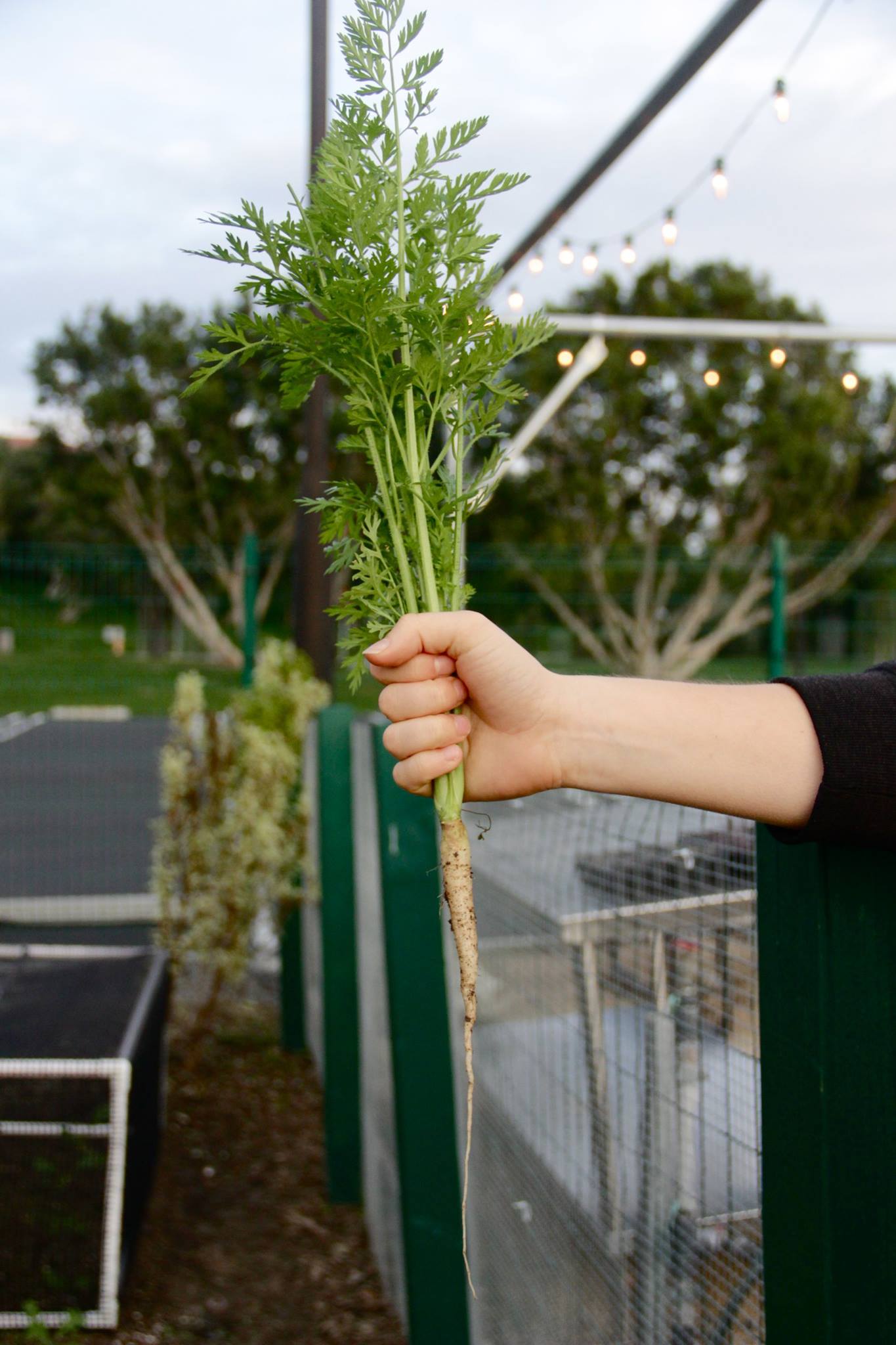
Soka Instructional Garden, photo courtesy of Nina Boutin
It has been a little over 4 months since I finished my internship, which has given me a lot of time to integrate and reflect on what I learned at Raxa Collective. I spent my first month in Thekkady at Cardamom County and my second month in Cochin at Spice Harbour. I am deeply grateful for this experience because it has informed my personal growth and career path in ways that are hard to articulate, but- I will try.
The month before coming to India, I walked part of the Camino de Santiago, a pilgrimage in Spain. If that wasn’t exhausting enough, I promptly went to India, and when I got to Raxa Collective, I hit the ground running, trying to figure out how I could best be of service and learn as much as possible. I expected for it to be difficult, but I didn’t know how it would be (though I was forewarned about the monkeys).
I’m working towards an environmental studies liberal arts degree at Soka University. A liberal arts degree is interdisciplinary, therefore I’m always looking for the intersection between things people think are separate. Profit and conservation are definitely things people usually think are separate.
I got to look deeply into the way those can intersect when I interviewed Crist about the path they have taken up until now. That interview has been so valuable for me in planning a business model that incorporates environmental and cultural conservation. Now, I think I want to start a restaurant that incorporates my passion for local food, biodiversity, sustainability, agriculture, and community. Continue reading
New App for Borrowing/Lending Things

You can find apps for everything nowadays, and some of them are really creatively useful or simply entertaining. We’ve seen an app for typing in various indigenous languages from North America and Australia, some environmentally-focused games, the potential for a prairie dog translator app, and an application to help monitor the plants in your garden. Now we’re learning about a new company that has an app to help coordinate loans of tools or other things among neighbors. Named Peerby, this social platform came to life in the Netherlands, and seems like a great idea to promote friendly and community-building interactions while also reducing consumption. Eleanor Beardsley reports for NPR’s All Tech Considered:
Millions of people use websites and apps like Airbnb to share their homes and Uber to transport people in their cars. A new company allows people to share things like power drills and bicycle pumps by connecting people who need them to people who have them.
It isn’t surprising that the idea for the borrowing platform Peerby originated in one of the world’s most densely populated countries — The Netherlands.
The Second Annual Thevara Badminton Tournament
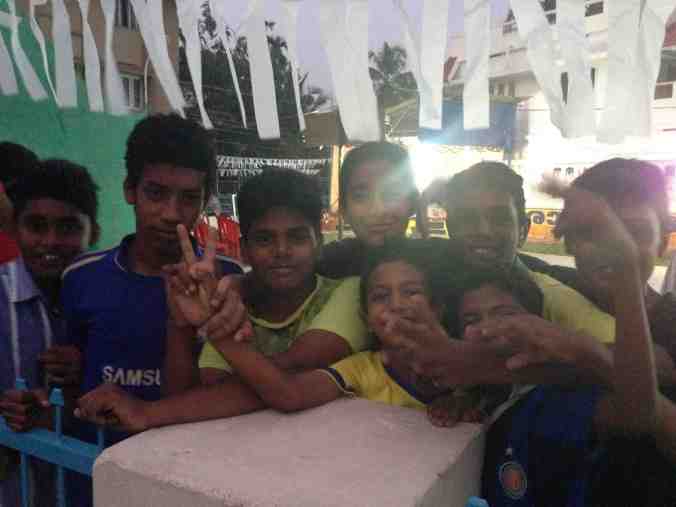
The 2014 edition of our neighborhood sporting event of the year officially kicked off this evening, with two Raxa Collective representatives sharing the stage with two politicians, a priest and the neighborhood association’s leadership (who graciously invited Raxa Collective to join in again) prior to the first match. We look forward to announcing the champion on December 31. Continue reading
Seed to Cup Tea Experience
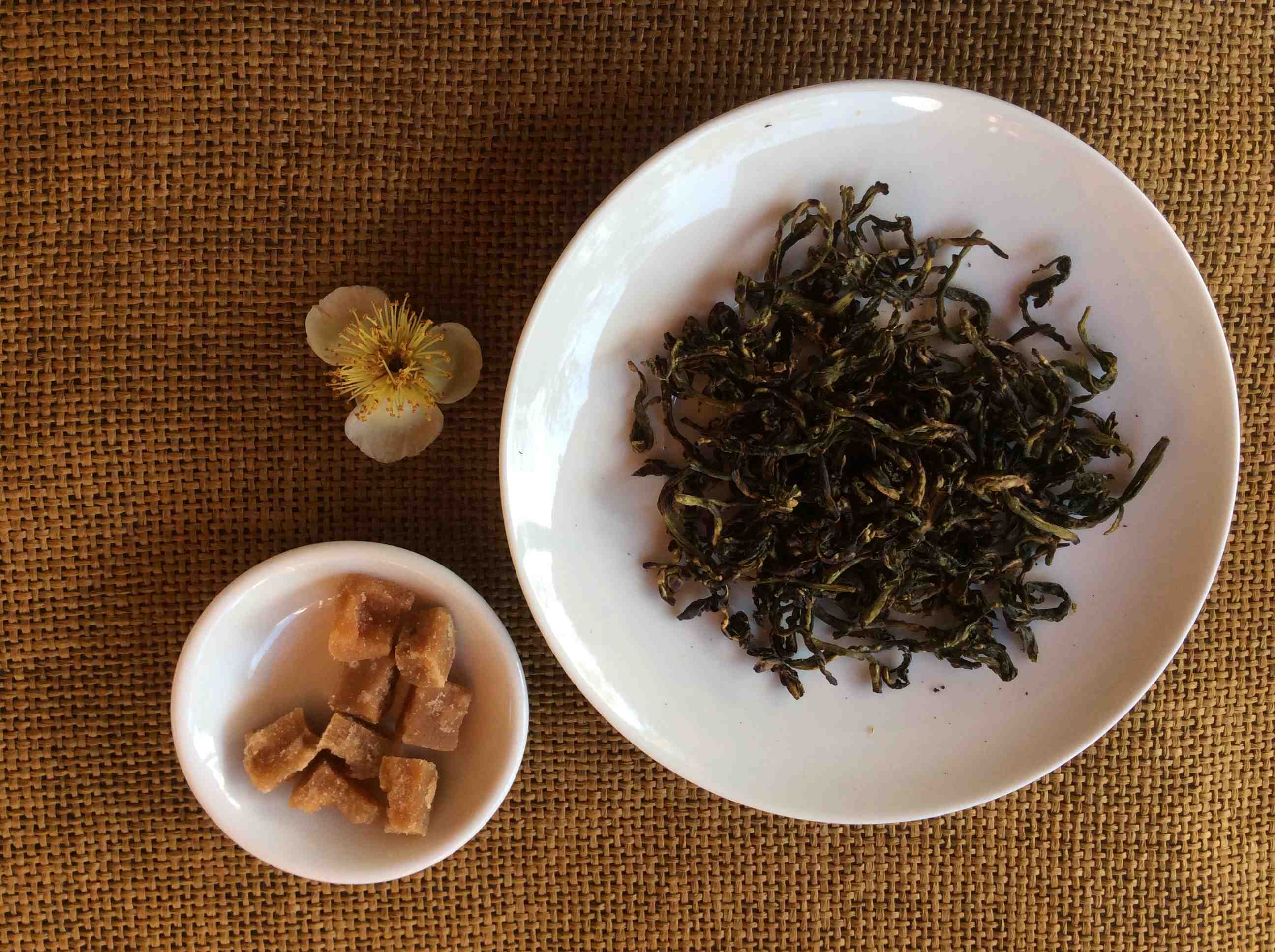
Roasted Assam Tea “nibble” with cane sugar
Our time in Thailand included a range of sensory experiences, one of which was tea. One might think that living in India, we have little more to learn about tea, but that is far from the truth. Our experience with tea in our adopted home has been more visual than experiential; drives through the beautiful, sculpted tea landscapes of Munnar, or the tea tours near Thekkady, for example.
In the northern Thailand we visited a 60-hectare tea plantation near the Lisu Hilltribe village in Chaing Mai Province. One of the oldest plantations in the country, the owners are working on expanding the quantity of tea produced while offering the full range of tea experience for visitors, from planting a seed that will be lovingly cared for over a 2-year period before being transplanted, to hand plucking the tender green “silver tips” of the tea, Continue reading
Culture Of Hack
 We are the antithesis of radical, in the political science and political activism sense of that word. We have been more incremental, often experimental and necessarily patient in our approach to entrepreneurial conservation than political radicals are in their approach to social change. Working with children, as we often do in our community outreach, we use methods appropriate to the situations. We sometimes say, perhaps just in the spirit of cheekiness, that we “hack” solutions in remote locations. We even say sometimes that the outcome is “radical.”
But that is the slang use of the word, just as we once called skateboarding or ball-dribbling moves in football “wicked.” We aspire to neither radical nor wicked outcomes in our day to day work, in the proper definitions of those words. Still, as with Mr. Watson, whose methods are different from ours but his objectives are akin, this review of Hacker, Hoaxer, Whistleblower, Spy: The Many Faces of Anonymous in the current issue of Book Forum helps us see some recognizable objectives in this particular culture of hack (with plenty of notable exceptions, as the review makes plain to anyone who regularly reads our blog):
By Any Memes Necessary
An inside look at the hacking group Anonymous reveals a boisterous culture of dissent and debate
ASTRA TAYLOR
THE FIRST TIME I SAW Gabriella Coleman speak about the hacker group Anonymous I was befuddled. It must have been around 2009. Anonymous was already at least three years old, having materialized out of the bowels of the popular, and often excruciatingly obscene, online bulletin board 4chan as early as 2006, yet it was still known mostly for its antisocial pranks. Continue reading
Water Hyacinth EcoDevelopment Projects
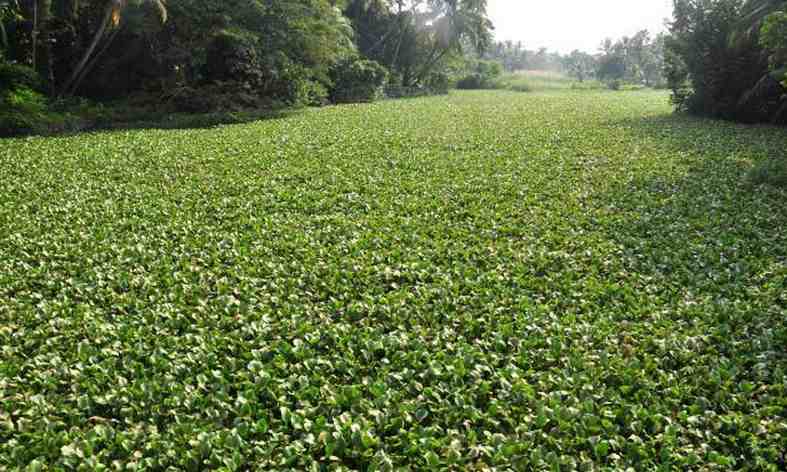
Water hyacinths choke the Poorna river at Tripunithura. Photo: Vipin Chandran; The Hindu
There are many similarities between Indian and Thai river life; watching villagers and people on barges going about their daily lives on the water is one, and the flora and fauna of river life is another. While traveling on the Chao Phraya River it only took a moment to see how the water hyacinths have the potential to choke river traffic. My excitement was piqued when Chananya from Asian Oasis told me that there was an established industry to use the plant for decorative, household and furniture purposes. Continue reading
Joint Ventures In Thanksgiving Cooking

Renee Comet Photography/Restaurant Associates and Smithsonian Institution
We had not seen this book when it was first published two years ago, but now will seek it out to authenticate our commemorations for our table mates in distant lands:
The Native American Side Of The Thanksgiving Menu
Everyone knows the schoolhouse version of the first Thanksgiving story: New England pilgrims came together with Native Americans to share a meal after the harvest. The original menu was something of a joint venture, but over the years, a lot of the traditional dishes have lost their native flavor.
For those who want to create a feast that celebrates the flavors that Native Americans brought to the table, Chef Richard Hetzler put together an entire menu of options from his award-winning cookbook,The Mitsitam Cafe Cookbook. The recipes are drawn from the Mitsitam Native Foods Cafe at the Smithsonian National Museum of the American Indian, where Hetzler was lead chef until summer 2014. Since opening the cafe, he told NPR’s Celeste Headlee he observed a growing interest in native cooking.
Thanksgiving, 2014
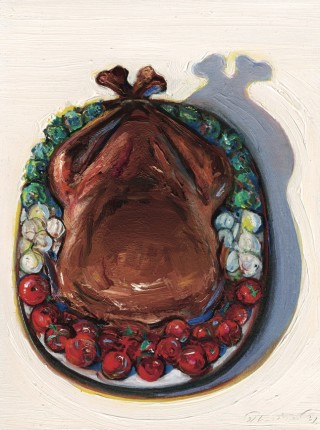
The problem with cooking Thanksgiving dinner abroad is never just the shopping. It’s the local culinary aesthetic. CREDIT WAYNE THIEBAUD
For those whose heritage includes someone who has proclaimed thanks in a land distant from where s/he was born, and/or broke bread with the locals, this day has a particular ring to it. For anyone who has commemorated the specific holiday in lands distant to their own original homes, there is an odd symmetry to the original Thanksgiving event. This New Yorker classic-in-the-making will bring special pleasure to all who have commemorated the Thanksgiving holiday in far off lands:
NOVEMBER 23, 2009 ISSUE
Pilgrim’s Progress
Thanksgiving without borders.
BY JANE KRAMER
…I am what you might call an amateur of Thanksgiving. My family prefers the phrase “regrettably hospitable,” but I would add strategically hospitable, because Thanksgiving dinner has turned out to be the stealth weapon of my reporting life. Everybody knows something about Thanksgiving, though not necessarily what we eat or why we eat it. Continue reading
An Impromptu Tacacorí CUBs Art Contest
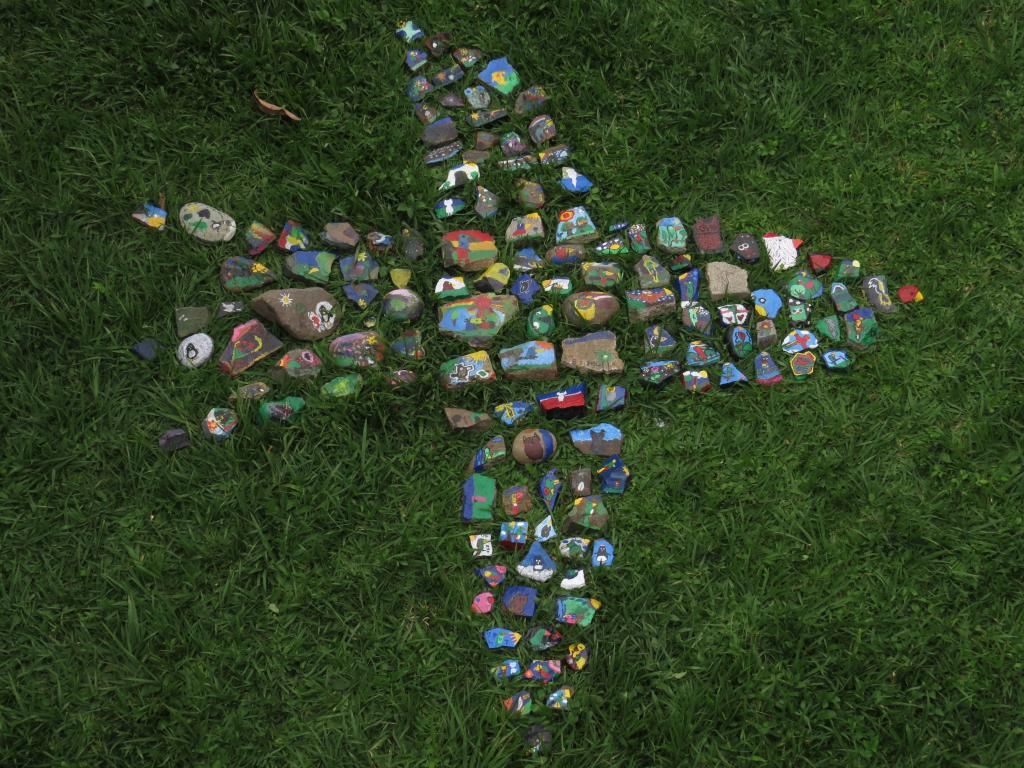
A crudely-formed bird (airplane?) mosaic, photographed from the school roof
Last week, after many delays, I was able to get down to the school in Tacacorí and take photos of all the CUBs rocks that the students had painted. I used my camera (rather than my phone) and a borrowed tripod so that the pictures would be better quality and also more standardized. The result was 146 photos of rocks. I don’t know the exact number of students at the school, but I know that fifth-graders in particular were impatient to take their rocks home before I photographed them, because there were only a handful of specimens left last week.


Unfortunately for those students who didn’t wait until I told them they could Continue reading
Neighborhood Electric Vehicles

Ecocruise Cruser Sport (Ecocruise Vehicles)
Thanks to the BBC for this new entrant into our vocabulary:
Ecocruise Cruser Sport is the golf cart, accelerated
…Depending on the region in which they are registered, NEVs are limited by law (and usually, by engine output) to speeds below 25mph or 35mph. The best resemble earnest attempts at space capsules, the worst evoke street-legal golf carts (and often because they are, quite simply, street-legal golf carts).
Continue reading
Redefining Benefits And Welfare, With Fresh Fruits And Vegetables

These wooden tokens are handed out to shoppers who use SNAP benefits to purchase fresh produce at the Crossroads Farmers Market near Takoma Park, Md. Customers receive tokens worth twice the amount of money withdrawn from their SNAP benefits card — in other words, they get “double bucks.” Dan Charles/NPR
Thanks to the salt, a food-specialized segment on National Public Radio (USA), for this story of one country’s expanding definition and innovative rethinking of welfare, and of the various benefits associated with welfare:
The federal government is about to put $100 million behind a simple idea: doubling the value of SNAP benefits — what used to be called food stamps — when people use them to buy local fruits and vegetables.
This idea did not start on Capitol Hill. It began as a local innovation at a few farmers’ markets. But it proved remarkably popular and spread across the country.
“It’s so simple, but it has such profound effects both for SNAP recipients and for local farmers,” says Mike Appell, a vegetable farmer who sells his produce at a market in Tulsa, Okla.
The idea first surfaced in 2005 among workers at the New York City Department of Health and Mental Hygiene. They were starting a campaign to get people to eat more fresh produce. Continue reading
Crowd-sourcing Hacker Help On Behalf Of Natural History

American Museum of Natural History
Thanks to the Atlantic‘s coverage of the topics we care about, as always:
On a Friday night in New York City you can find just about anything. And this past Friday about 130 hackers gathered in the Hayden Planetarium to participate in the American Museum of Natural History’s very first hackathon.
The premise was simple: The museum handed the huge dataset they call The Digital Universe to the hackers and gave them 24 hours to make something. (Part of what made this hackathon different was the literal universe of data hackers were given. More on that in a minute.) There were some specific challenges and categories (Education, Visualization, Tool Kit, and Wildcard) but the hackers were otherwise free to explore the data and run with it. Continue reading
Education, Innovation, Puzzling Future

Online education is a technology with potentially revolutionary implications—but without a precise plan for realizing that potential. CREDIT PHOTOGRAPH BY MELANIE STETSON FREEMAN / THE CHRISTIAN SCIENCE MONITOR VIA GETTY
If the first post of today was rather too depressing, here is an interesting puzzle to take your mind off that subject. In honor of all of this year’s interns, many of whom are probably thinking about MOOCs for various reasons, we thank the New Yorker’s Elements writer Maria Konnikova for this intriguing distraction:
On July 23rd, 1969, Geoffrey Crowther addressed the inaugural meeting of the Open University, a British institution that had just been created to provide an alternative to traditional higher education. Courses would be conducted by mail and live radio. The basic mission, Crowther declared, was a simple one: to be open to people from all walks of life. “The first, and most urgent task before us is to cater for the many thousands of people, fully capable of a higher education, who, for one reason or another, do not get it, or do not get as much of it as they can turn to advantage, or as they discover, sometimes too late, that they need,” he told his audience. “Men and women drop out through failures in the system,” he continued, “through disadvantages of their environment, through mistakes of their own judgment, through sheer bad luck. These are our primary material.” He then invoked the message emblazoned on the Statue of Liberty: Open University wanted the tired, the poor, the huddled masses. To them, most of all, it opened its doors. Continue reading
Neelamperoor Pooram Padayani
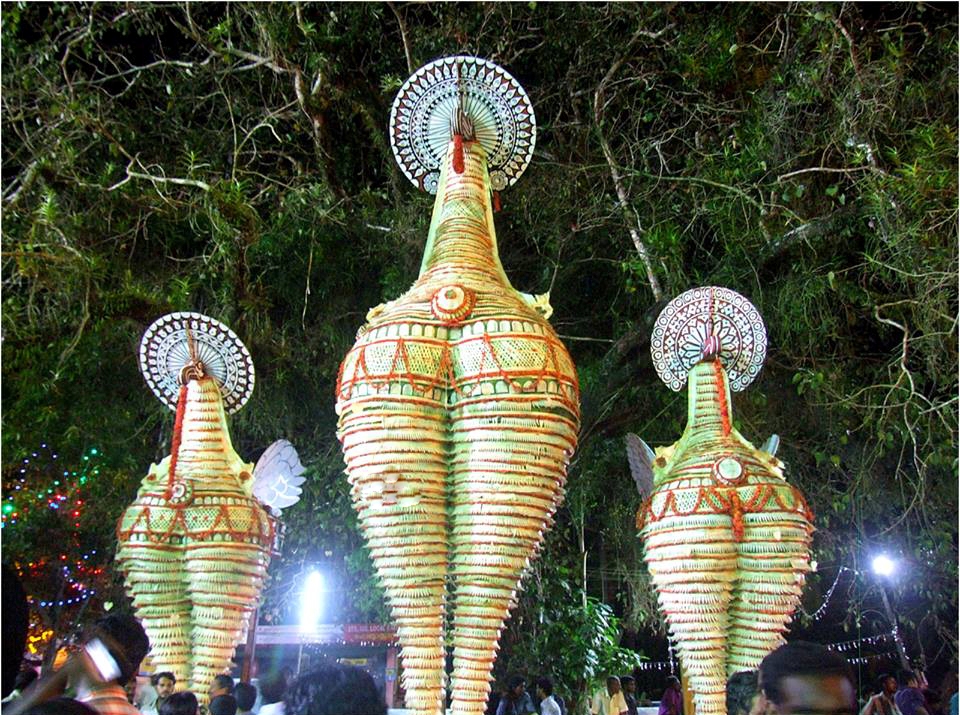
Photo credits: Ramesh Kidangoor
Neelamperoor Pooram Padayani is an old Dravidian ritual offering to the Kali Mother Goddess. This great cultural and religious event of central Kerala is celebrated during September-October at Neelamperoor, a village near to Kottayam. This Padayani is celebrated in the Palli Bhagavathi Temple, which has a history of more than 1000 years. Continue reading

