Bioluminescent Fungi

4608

Fungal luciferin could eventually allow the creation of an autonomously luminescent plant. Photograph: Cassius Stevani at the San Paulo University in Brazil

Bioluminescence has appeared in these pages so many times that people probably wonder why. The answer would be because we have contributors who see its wonder of the world quality as directly relevant to our communications mission.

And there was a time when stories about fungi, mushrooms, etc. were the domain of one key contributor. We used to leave stories like this one to our resident mycoenthusiast  Milo, but he is no longer in residence with us; instead, busy now setting up a permaculture organic farm in the rolling hills to the west of Ithaca, NY (USA). So, for lack of a better post-person, this recommendation is from the team:

How research into glowing fungi could lead to trees lighting our streets

Bioluminescence, the peculiar ability of some organisms to behave like living night-lights, could be the key to some remarkable advances

On a moonless night deep in a Brazilian rainforest the only thing you are likely to see are the tiny smears of light from flitting fireflies or the ghostly glow of mushrooms scattered around the forest floor. Both effects are the result of bioluminescence, the peculiar ability of some organisms to behave like living night-lights. Continue reading

Continue Protecting The Boundary Waters Canoe Area Wilderness

02MONDALE-web-master768

Canoeing in the Boundary Waters Canoe Area Wilderness near Ely, Minn.CreditBre McGee/The St. Cloud Times, via Associated Press

None in our immediate circle has been there, but it looks like our kind of place. We hope to see it, to canoe it, to breathe in that clean air. This editorial makes it clear what’s at stake, and what needs to be done. It’s not the messengers, it’s the message (but wow on the messenger front too):

Protect Minnesota’s Boundary Water

MINNESOTA’S Boundary Waters Canoe Area Wilderness is one of America’s most popular wild destinations. Water is its lifeblood. Over 1,200 miles of streams wend their way through 1.1 million acres thick with fir, pine and spruce and stippled by lakes left behind by glaciers. Moose, bears, wolves, loons, ospreys, eagles and northern pike make their home there and in the surrounding Superior National Forest. Continue reading

Conservation Reserve Program

The Hull family has partnered with U.S. Department of Agriculture (USDA) Farm Service Agency (FSA) Conservation Reserve Program (CRP) in Vermont to conserve sensitive riparian areas on their dairy farm by establishing forested buffer zones and installing high-tensile fence, stream crossings and other water handling equipment. Photo © USDA / Flickr through a Creative Commons license

This article by Kris Johnson for The Nature Conservancy is reminiscent of a post on paying for ecosystem services published here five years ago, where watersheds that would otherwise be affected by agriculture are better protected with incentives from conservation programs. From Cool Green Science today:

Ask someone in the rural Midwest what the Conservation Reserve Program (CRP) does, and a likely answer is: “It pays farmers not to farm.” But, research recently published in the journal Ecosystem Servicessuggests a better answer would be: It pays farmers to grow clean water.

It’s a better answer because with nutrient pollution threatening drinking water supplies, impacting boating and fishing on lakes and rivers throughout the Midwest and causing a persistent “dead zone” in the Gulf of Mexico, figuring out how to produce clean water is a critically important challenge. And the Conservation Reserve Program (CRP) is key to solving it.

Continue reading

#12 Of One Dozen Love Letters About Xandari

IMG_0040

After our visit to Cardamom County last weekend to bid farewell to our colleagues there, Amie suggested that I amend my dozen Xandari love letters writing engagement to a baker’s dozen: Cardamom County has been so integral to our time in Kerala that it would not be proper to reflect only on Xandari in this manner. Continue reading

Queens, NY Entrepeneurial Conservation

Queens

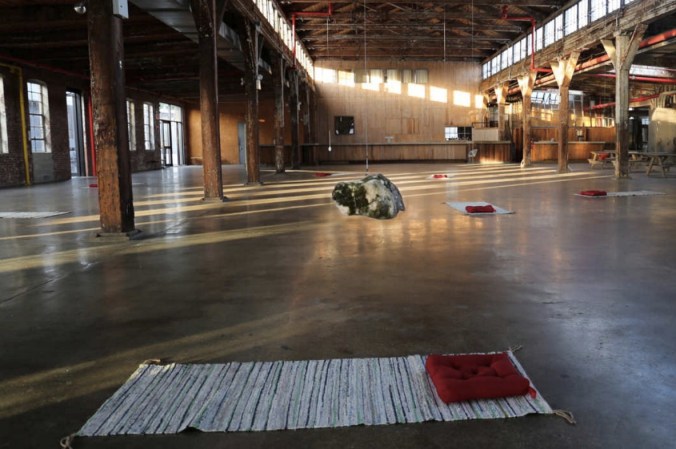
Architecture intersecting with cultural conservation–that is a topic that will always get my attention. When I read this article it reminded me a bit of the early days of scouting out the location that would become Xandari Harbour’s restaurant, 51. Hard to resist reading, based on the title, and the article does not disappoint:

Never Has My Breath Been Taken Away Like It Was at Knockdown Center

By


#11 Of One Dozen Love Letters About Xandari

XWebsite.jpg

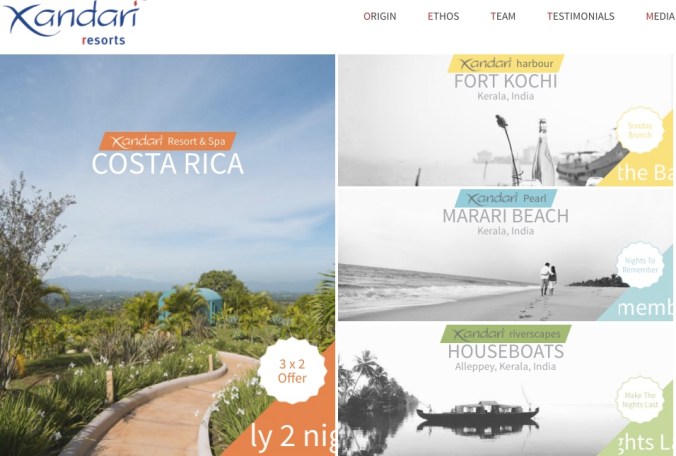
It is that time of year. Monsoon in Kerala, and what we like to call green season in Costa Rica. The rains are delicious, and give the sense of abundance and replenishment, refreshment. It is the ideal time for ayurveda in Kerala. Or just pure relaxation with a book, escaping the news and other distractions–digital detox–and any of the four properties shown above can help you achieve that bliss.

For one more day La Paz Group will be responsible for ensuring that Xandari delivers that bliss. July 1 onward George M George and his team will be in that role. In making the rounds to all the properties this week we have been experiencing a sensation that maps on almost perfectly to the sensation that has come with two decades of nomadic life. Continue reading

#10 Of One Dozen Love Letters About Xandari

ADXHArchitectural Digest is not the reason we do what we do. But when they take note, in any manner, we feel the love. Xandari Harbour soft-opened, and within a very short time got an inordinate amount of good press even before the formal opening. Yet the AD mention, which was neither a cover story nor even a particularly huge feature, had a different level of impact on those of us on the team that developed it.
George M George, the visionary who saw the potential in the run down property and particularly the crumbling godown (waterfront warehouse) featured on the left above post-restoration, was that team’s source of energy, inspiration, encouragement–this would not have happened without his excellent leadership. Continue reading

#9 Of One Dozen Love Letters About Xandari

XCRMSN1

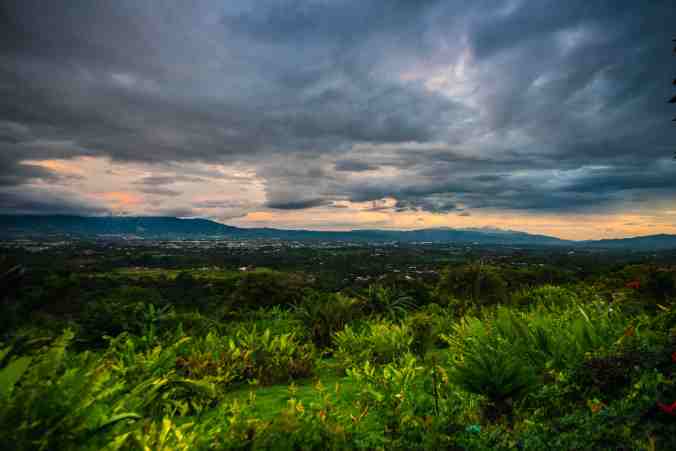
Two years ago I had the pleasure of meeting a family at Xandari in Costa Rica who were on their first vacation in Costa Rica and at Xandari. The father in the family was a photographer by avocation and he shared various photographs with me that he had taken on that visit. He captured views from the property that I consider to be classic favorites of the guests who know Xandari the best. I asked permission to use his photographs, which he granted, but this is the first chance (oops) I have had to share them.

Then one year ago I had the good fortune to meet them again on their second vacation at Xandari–good fortune in the sense that I do not spend alot of time at the Costa Rica property, and so meeting them again was just funny good luck. Ray showed me more photographs. I noticed his scope and scale had changed this time around. Continue reading

Watch Your Wood, Know Its Origin

2000 (1)

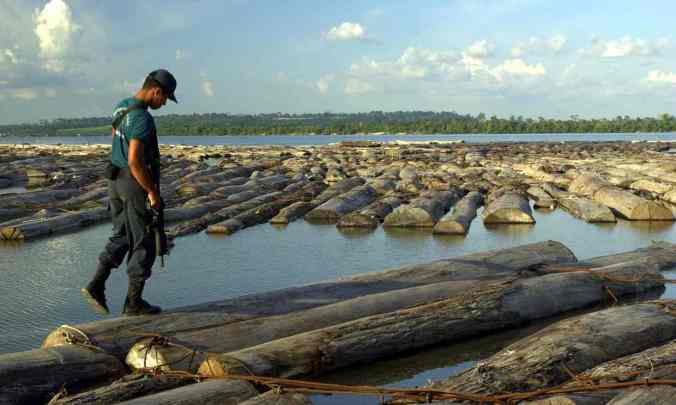
An armed officer inspects a seizure of thousands of illegal mahogany logs in Brazil. Photograph: Dado Galdieri/AP

Thanks to the Guardian for this reminder that we consumers need to do our caveat emptor duties when buying wood products:

Deforestation is rife in the Amazon, Colombia and the Philippines, say environmental groups

British shoppers could be unknowingly buying wooden furniture, flooring and even food items that are byproducts of destructive illegal logging in the Amazon, environmental campaigners are warning.

Friends of the Earth is calling on ministers to make companies reveal the source of their products in order to stop the black market trade. Last week human rights watchdog Global Witness revealed that 185 environmental activists were killed in 2015, many of whom had been trying to stop illegal logging in the Amazon. An estimated 80% of Brazilian hardwood is illegally logged.

Continue reading

Birds Back From Beyond Brink

gettyimages-129031564_custom-0155a178bff9fc85b180038391dbdbe1bf478731-s1400-c85

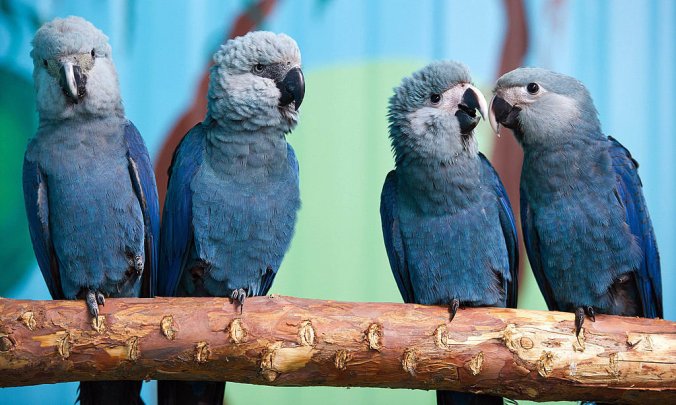
Spix’s macaws (L-R) Felicitas, Frieda, Paula and Paul sit on a branch in their aviary in Germany. The species has not been seen in the wild for 15 years until the recent sighting in Brazil. DPA/AFP/Getty Images

Thanks to National Public Radio (USA):

An Avian Mystery: Rare Parrot Spotted In Wild For First Time In 15 Years

For the last 15 years, Spix’s Macaw has been presumed extinct in the wild. That’s until one of the blue-feathered parrots was spotted and caught on video flying near the town of Curaca, Brazil.

Conservators say the appearance of the mysterious rare bird represents “a new hope” for the area.

The bird was first spotted by a local farmer named Nauto Sergio Oliveira, a government conservation institute said in a statement. Oliviera told his neighbors, and the next day his wife Lourdes Oliveira and daughter Damilys trekked out at dawn in search for the bird.

The rare parrot appeared in a nearby riparian forest and Damilys managed to catch it on video: Continue reading

#7 Of One Dozen Love Letters About Xandari

XP

Dear Xandari Pearl circa 2026,

I hope the day this photo was taken (yesterday as I type this) will be remembered. Amie wept. Saji shared some wisdom–and we all embraced in the hopeful spirit of looking forward to this lovely property’s prosperity. I shared recollections of my first visit to this property  years before moving to India, and wanted each of the team members to know why this property is the most important work so far in my lifetime. It had to do with this location’s personal meaning to George M George, and how that meaning influenced the design process. Xandari Costa Rica was a big part of that process as well, and the Xandari community should be aware of that special link. Continue reading

#5 Of One Dozen Love Letters About Xandari

Photo credit: Milo Inman

When the conversation about bringing the Xandari concept to India was in the early stages, Milo was in the early stages of mastering the camera. We spent a large percentage of our time in the backwaters in those days, working with our team at River Escapes, and this gave Milo time with his craft in an astounding setting. My father was a photographer, and his father painted landscapes, but for some reason their visual acuity skipped a generation and Milo got it. He saw in composition and captured with camera what escaped me. A  collection of these photographs has adorned our office walls since they were taken in 2011.  And they have influenced our thinking about what is now called Xandari Riverscapes.

XR2

Photo credit: Milo Inman

The houseboat operation has been written about many times in these pages over the years, but in the archival diving of the last week I discovered some fascinating correspondence related to my first visit to Kerala.

George M George had taken me to the backwaters and showed me the first houseboat under construction. The craftsmen were doing something I had no idea was possible, stitching together a hull with no nails; and then afterwards the artistry of the upper deck, and all that we have written about elsewhere.

I have just reread a letter I wrote to Sherrill Broudy after that first visit to Kerala a dozen years ago, and had shared my snapshots with him, saying that what I saw reminded me of Xandari with the curvaceous, organic feel.

Continue reading

#4 Of One Dozen Love Letters About Xandari

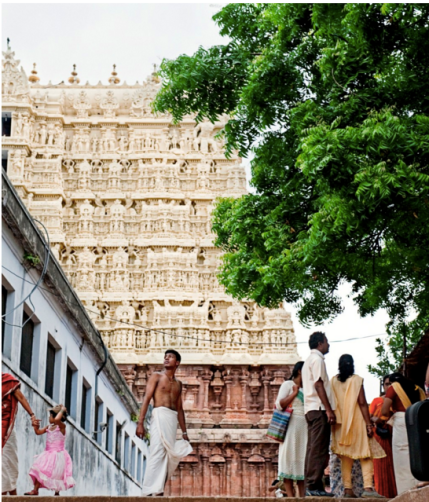
The Sri Padmanabhaswamy temple, in Trivandrum, has been amassing gold for centuries. PHOTOGRAPH BY CHIARA GOIA

What I love most about Xandari is this fact: over nearly two decades, several tens of thousands of guests have trusted Xandari with their valuable vacation time, and that faith has been reciprocated with such authentic hospitality that Xandari has one of the most loyal clientele of any hotel I know of. Most guests coming to Xandari today are related through kinship or friendship to guests who have already been at Xandari before. That loyalty is like treasure buried deep inside of Xandari. Continue reading

#3 Of One Dozen Love Letters About Xandari

X3By the time that MLHS had completed the acquisition of Xandari in Costa Rica we were already well under way with the development of what is now Xandari Pearl, on the beach about 40km south of Xandari Harbour. Reflecting today on what I love about Xandari, I again am reminded of some rather heroic decisions made by George M George, and the board of directors who he reported to.

In 2010, when we were in the early months of this relationship between MLHS and La Paz Group, there was already a completed architectural plan for the beach property that MLHS owned at Marari. There were already permits applied for the construction of those plans. So it was with some trepidation that I took a firm position in my recommendation to the board George reported to: those plans would result in a resort that would not fit the strategic road map I was laying out. To start with, it was 80+ rooms; and there were other issues but scale was the one I focused on.

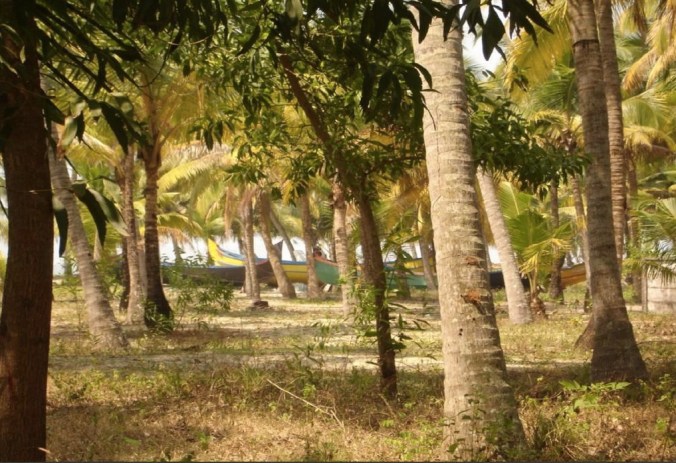
Just now I was looking at the powerpoint presentation I brought into the board room with me to make my case about abandoning the original plans for the resort at Marari. The first image in that presentation was the one above, which was a photo snapped just some days prior to the meeting. I talked about the natural beauty of the beach property, and how our target market would appreciate meandering on paths through as much of that as we could preserve; ideally we would not cut a single tree. We would let the local fishermen continue to keep their boats on property. And other points about that land. Continue reading

Boxing, Bartending, And One Final Fight

Screen Shot 2016-06-20 at 12.09.18 PMClick above to listen to this remarkable tale, and if you do not feel your socks being knocked off, complain in our comments section below. We first learned about Bob Bozic in early 2012, but now that we hear this update to his story we think we may need to visit him in Belgrade. This is the stuff we live for:

At Fanelli’s, a venerable bar in SoHo, Bob Bozic was the kind of bartender who also served as entertainment, telling endless stories about his life: he was the scion of a rich inventor in Serbia, a prizefighter, even a onetime bank robber. Nick Paumgarten, who wrote about Bozic in 2012, discovered that these barroom tales are true. Recently, Bozic was in touch again, with big news: he was quitting the bar and going to Serbia to pursue a restitution claim on his father’s mansion, one of the nicest houses in Belgrade, which was seized by the Communists in 1946.

#2 Of One Dozen Love Letters About Xandari

The October-November, 2014 issue of Conde Nast Traveler’s India edition came with a special supplement. This low resolution image of that feature includes the cover and the page inside that featured our newly opened property (click the image to be taken to a more recent honor from the same magazine; when you get to the December recommendation be sure to scroll down to see our mention last month on that publication’s website).

The timeline may have looked choppy in the first love letter, but that is how it goes with reminiscences, even when the archival material is immaculate. To give an overview of the Xandari story in a manner that conveys my deep debt of gratitude, but also keep it reasonably short (two decades condensed to 12 posts), I am going to jump around starting with the image above.

* blurry text on the right of the image is reprinted at the end below

On the left of that image is the cover of a special edition–India’s Stunning Boutique Hotels–published by Conde Nast Traveller in October 2014; to the right of the cover was the story about the property we had just opened for our client MLHS, led by George M George. This publication arrived at exactly the moment we were opening the hotel, then named Spice Harbour, soon to be rechristened Xandari Harbour. And Raxa Collective, the code name for our assignment with MLHS, would eventually (July 1, 2016, thus these dozen love letters starting yesterday) revert to our company’s proper name, La Paz Group. Continue reading

John Muir’s Writings About Yosemite

lead_large (3).jpg

Library of Congress

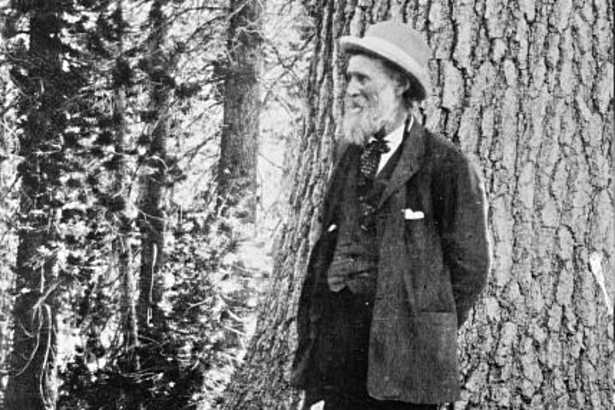
We posted about John Muir’s writings in the Atlantic four years ago, once we realized they were so accessible in that magazine’s archives. In that post, two years into our foray in India, we simply wanted to share our amazement that Muir had written about India as an example relevant to the case for protecting the forests of North America. We have also posted about Muir indirectly, including a lovely photo-documented post about his visit with Teddy Roosevelt to several wilderness areas that would become iconic national parks.

As we prepare for the expansion of our activities in India, and in advance of our announcement of two exciting new conservation initiatives in Mesoamerica that we will embark upon next month, I have been going back through our archives, enjoying some examples of the historical perspective this platform has allowed us to share.

Today, in the spirit of the centenary of the National Parks Service, and considering this past weekend’s visit to Yosemite by the President of the USA, it makes sense to share another of Muir’s several contributions to The Atlantic, this one specifically about the first national park (which predates the creation of the NPS):

The Yosemite National Park

“All the world lies warm in one heart, yet the Sierra seems to get more light than other mountains.”

JOHN MUIR   AUGUST 1899 ISSUE

Of all the mountain ranges I have climbed, I like the Sierra Nevada the best. Though extremely rugged, with its main features on the grandest scale in height and depth, it is nevertheless easy of access and hospitable; and its marvelous beauty, displayed in striking and alluring forms, wooes the admiring wanderer on and on, higher and higher, charmed and enchanted. Benevolent, solemn, fateful, pervaded with divine light, every landscape glows  Continue reading

#1 Of One Dozen Love Letters About Xandari

xneighbor1

Xandari’s neighborhood includes some of the best estate-quality coffee land in Costa Rica

I keep correspondences for as long as possible. With all of our moving around some of my older paper correspondences have been lost along the way, but since the advent of email, and especially since archiving email has been possible, I have been a diligent archivist.

So, as I reflect on the completion of our engagement with MLHS June 30, that gives me a dozen opportunities for daily reflection on Xandari as we prepare to hand over the keys. Email archives keep it real.

My relationship with George M George, related in an earlier post, started a couple years after I had first met the man who created Xandari in Costa Rica. From the mid- to late-1990s I was focused on destination-level strategy work in Costa Rica and other countries in that region. I met Sherrill Broudy first during those years as part of my effort to understand the hotel investors who came to Costa Rica from other countries. At that point, the main building of Xandari and just a few villas had been built. Continue reading

New York Times Editorial On USA National Parks

18sat1-master768

If you have been reading our posts for the last five years, you will find we have much in common with the editorial board at one of our favored news sources:

Monuments for Future Generations

President Obama’s visits this weekend to Carlsbad Caverns and Yosemite national parks give him a timely opportunity to think about how, in the twilight of his presidency, he can add to what has already been an admirable record of protecting America’s public lands and marine reserves. The parks themselves are in a celebratory moment, the 100th anniversary of the founding of the National Park Service. But given Congress’s preference for partisan infighting over environmental stewardship, it is unlikely to approve any additions to the park system. Still, there is much that Mr. Obama can do on his own using the 1906 Antiquities Act, which allows a president to unilaterally protect areas of great natural or historical value as monuments when Congress is unlikely to act. Continue reading