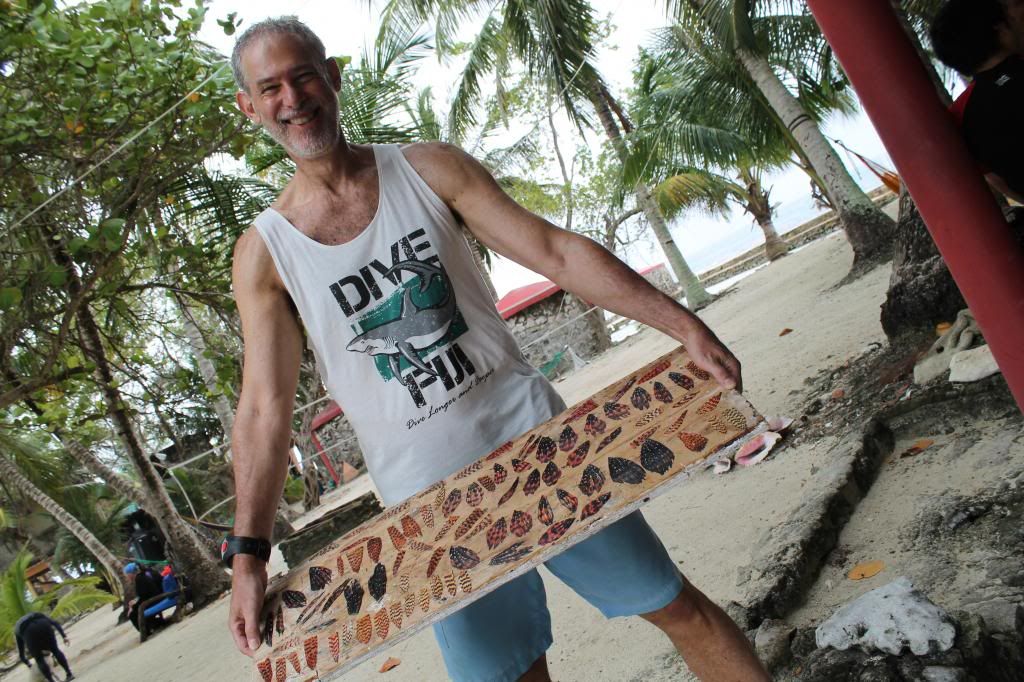
I’ve written in previous posts about the initiative to develop a market for lionfish jewelry as one of a number of commercially sustainable approaches to fighting this invasive species that is threatening marine ecosystems throughout the Caribbean, the Gulf of Mexico, and the Southern Atlantic seaboard of the United States. In my last post, I mentioned that the idea is beginning to take off in Belize. I was able to observe this first-hand last month, spending two and a half weeks in the country. During my stay I had the opportunity to meet local artists who are making lionfish jewelry and to participate in several workshops to share techniques and designs. Continue reading
Conservation
How Do You Write 200 Crore, In Words And Deeds, In The New Improved India?
200 crore is a uniquely Indian way of saying a number. Two billion; or 2,000,000,000 is the way to see the number written out in Western terminology, but the Indian deeds associated with this particular number are much more important, according to news headlines across India in recent days (here taken from the Hindu):
The government plans to plant 200 crore trees along the entire 1 lakh km National Highways network across the country to employ jobless youth.
“The length of National Highways in the country is one lakh kilometre. I have asked officials to come out with a plan to plant 200 crore trees along these stretches which in turn would create jobs for the unemployed on the one hand and protect the environment on the other,” Road Transport, Highways, Shipping and Rural Development Minister Nitin Jairam Gadkari said in New Delhi on Friday.
A similar scheme could be implemented under MNREGA (Mahatma Gandhi National Rural Employment Gurantee Act) along the village and district roads and state highways. That has the potential to employ 30 lakh youth, he said while inaugurating a conference on “Regeneration of Rivers”.
Mr. Gadkari said Gram Panchayats will be taken into confidence and the unemployed youth could be assigned 50 trees each which could fetch livelihood for them from the produce. Continue reading
Bison, A European Species Almost Lost
Thanks, prince (and New York Times for the video record of a noteworthy collaborative act of conservation, with a dash of altruism, and creative definition of commons):
Bringing Back Europe’s Bison
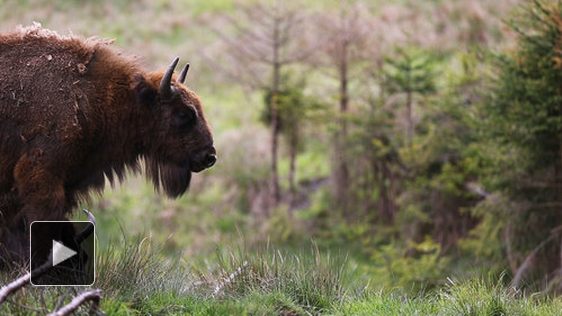
A German prince is leading an effort to bring back the European bison, Europe’s largest land mammal, in Bad Berleburg. The animal almost went extinct in the early 20th century.
Xandari’s Omni-garden
Over the past decade and a half, the creation and maintenance of Xandari’s impressive and diverse flora has been largely orchestrated by one man, José Luis Ballestero. Head gardener at the property, this man and his skilled team of gardeners have developed a highly heterogeneous and visually appealing collection of plant life throughout the private nature reserve that was once a coffee plantation.
As James and I will show in the next several weeks, Xandari’s gardens are a true wonder and effectively occupy any space that is not covered by the resort’s buildings. I use the word ‘garden’ here flexibly, because the forest that makes up the lower portions of Xandari’s forty-odd acres is more of a jungle than a garden, and at this point much of the flora Continue reading
“Patagonia Sin Represas”–Finalmente

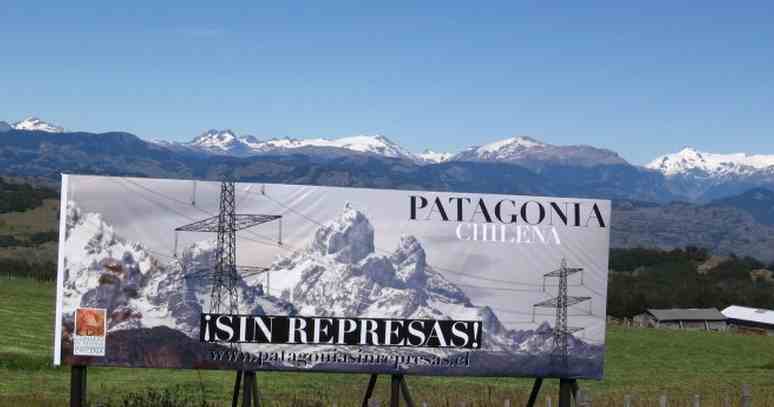
One of the many billboards representing the outcry from environmentalists and concerned members of the tourism sector
It’s been some years since our work brought me to this magical part of the world, but all of Patagonia and the specific region of Aysen have long been close to our hearts. So the news that the Chilean government overturned their 2011 approval of the HidroAysén project was happy indeed. The Baker and Pascua Rivers, previously slated for a series of 5 dams, are two of Patagonias wildest, and that’s saying a lot in a country filled with rugged beauty as diverse as it’s 4,300 kilometer length can possibly hold.
Part of that diversity has the potential to offer multiple options for renewable energy sources other than hydro-electric power. Solar power from the Atacama Desert, wave and tide projects from that enormous coastline, as well as wind turbines in areas of the country where winds reach gale force strength on a regular day are all possible options. Continue reading
New Tesla Model Test Driven

Samuel Gibbs test-drives a Tesla Model-S. Photograph: Antonio Zazueta Olmos
Its availability is limited to a few places. Its numbers are limited, period. But in the UK it is about to grow a new market, so this review is timely. We are not in the business of promoting automobiles or other consumer products but several La Paz Group contributors have been in the vicinity of the home location of this car and its claims of zero emissions are such that we could not help noting this remarkable thing:
…Inside it’s all premium Silicon Valley technology. Musk likes to think of Tesla as the “Apple” of cars, which might explain why there is what looks like a large iPad complete with Apple-style graphics where the centre console should be. The 17in touchscreen controls almost everything about the car, from the air conditioning and music to opening the sunroof and firing up the heated windscreen wipers. Continue reading
Kerala – God’s Own Country
In the last few years, Kerala Tourism has recorded remarkable growth in the number of both international and domestic tourists visiting the state annually. After its rise to the top in 2003 as a recognized worldwide destination, Kerala Tourism was named a “super brand” by the India Tourism board. Continue reading
Bird of the Day: Red-backed Fairy-wren, female (Darwin, Australia)
Big Business, Conservation, Innovation
We have written about and linked to others’ thoughts on altruism more than once, thinking we will eventually have an ultimate illumination on its origins and how to increase its likelihood. Likewise on our main theme as an organization, with regard to entrepreneurial conservation. We also keep a watch out for big companies (versus entrepreneurs) and governments (as in the case of the state initiative in the banner above, which is discussed below) doing the right thing.
Thanks to this article in the New Yorker for bringing our attention to the efforts to bring sustainable and affordable water to the good folks of Texas, and at the same time raising our awareness of the tightrope walking between big businesses that have many motivations to participate in innovative conservation schemes, and the organizations that have been the innovators in this regard for decades:
Mark Tercek, the head of the Nature Conservancy, recently took a tour of the largest chemical-manufacturing facility in North America: the Dow plant in Freeport, Texas. The Nature Conservancy, which is responsible for protecting a hundred and nineteen million acres in thirty-five countries, is the biggest environmental nongovernmental organization in the world. Tercek, accompanied by two colleagues, had come to Freeport because the facility—a welter of ethylene crackers and smokestacks built next to a river that flows into the Gulf of Mexico—is at the center of a pilot collaboration that he hopes will reshape conservation.The key idea is to create tools that can assign monetary value to natural resources. Continue reading
Saving Species–One Paper, One Video, One Course, And One Initiative At A Time

We thank Stuart Pimm for his ongoing excellent contributions to conservation through science and education, as well as creative activism, and congratulate him and his colleagues for their most recent publication:
A new scientific paper was published today in the prestigious journal Science and it has important findings for biodiversity. Though it reaffirms what we already know—that there is a global extinction crisis and it is worse than we believed—it also details how technology and smart decision-making are offering hope for endangered species and their habitats. Continue reading
New York Public Library’s Good And Sensible Decision
Thanks for this (and other recent) attention from the New Yorker‘s stable of super-writers (and others, elsewhere) on a topic of ongoing interest to us, especially this important comment:
The New York Public Library’s announcement that it is abandoning its Central Library Plan has been praised as a good and sensible thing, and indeed it is. The C.L.P. would have sold off the Mid-Manhattan Library and the Science, Industry, and Business Library (called sibl; five of its floors not open to the public have been sold already). The collections of those libraries would have been moved to the main research library, on Fifth Avenue, and elsewhere. That hundred-and-three-year-old edifice (now known as the Stephen A. Schwarzman Building), with the stone lions out front, would have been reconfigured: seven floors of its stacks taken out, a lending library added to what had been a research library only, more than a million books moved off-site, and a four-level atrium and other new elements put in, following a design by the architect Norman Foster. Continue reading
Google, Maps, And Modern Conservation
We have not been sourcing from Harper’s, one of the great magazines covering topics of interest to Raxa Collective. We will mend our ways starting now:
Grand Plan
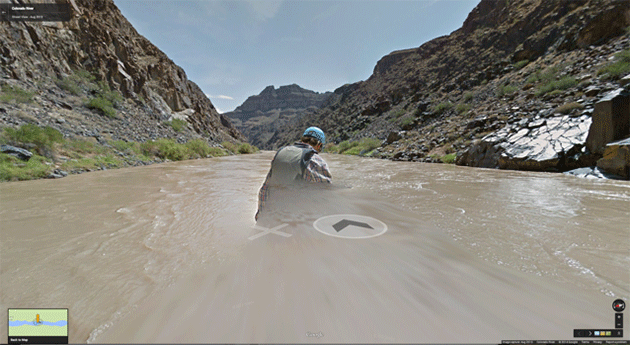
Why has Google added the Grand Canyon to Street View? By Jeremy Miller
China’s Environmental Laws Just Got Stronger
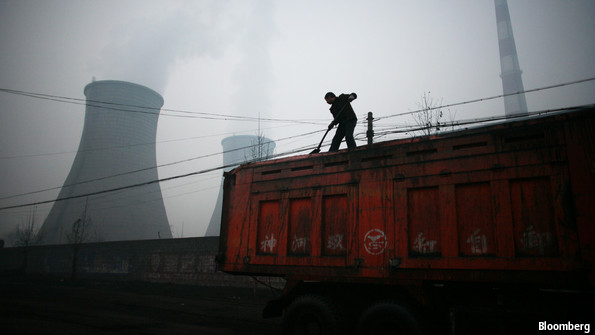
Thanks to the Economist magazine for this update on a set of laws that have not been able to keep up with the pace of development:
Environmental protection
Green teeth
The government amends its environmental law
AT LAST year’s annual session of the National People’s Congress, China’s legislature, Li Keqiang, the prime minister, said the notoriously bad air quality in Chinese cities made him “quite upset”.
Help Hanging Rock, If You Can

Government funding for Hanging Rock will support the upkeep of picnic areas, wetlands and protection of plant and animal life. Photograph: John Crook/AAP
Fans of Peter Weir will be inclined to heed the call, if they can, to help ensure Hanging Rock is not spoiled:
Controversial plans to build a tourist resort at Victoria’s Hanging Rock have been scrapped after the state government committed $250,000 a year to maintain the landmark.
The funding, announced on Friday, will fund the upkeep of trails and signs along the rock, as well as the nearby picnic areas, wetlands and protection of plant and animal life. Planning protections in the area would be strengthened to shield the area from “inappropriate development in the long-term”, the Victorian planning minister, Matthew Guy, said.
Plans by the Macedon Ranges shire council to build a 100-room resort, eco-cabins, a “nature-focused adventure facility” and a day spa near the unique volcanic rock formation had divided the small community north-west of Melbourne. Continue reading
Solutions For An Invasive Plant Species Found In Waters Everywhere

Thanks to Conservation, a magazine published by the University of Washington, for this fascinating article on the invasive species known all too well by those of us based in Kerala’s backwaters:
The scene at Florida’s Crystal River National Wildlife Refuge in Kings Bay last October would have been familiar to anyone who has ever engaged in the battle to control the spread of invasive plants. Eager volunteers scurried about the shoreline of this manatee wintering ground, carting large plastic bins stuffed with water hyacinth, a notorious aquatic weed that’s caused headaches on five continents. Closer inspection, however, would have revealed the activity to be anything but business as usual: instead of hauling water hyacinth outof the bay, the conservationists were putting it back in—almost 4,300 gallons’ worth by day’s end. Continue reading
Fiji Shark Dive

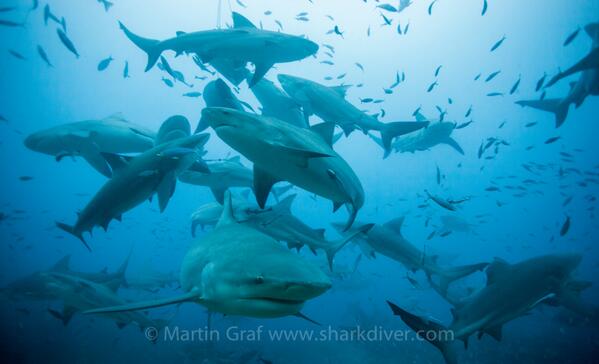
Photo Credit: Martin Graf, Sharkdiver.com
In an earlier post I wrote about how more and more countries are waking up to the benefits of preserving natural capital, in recognition of the economic value that can be derived through ecotourism. I noted, in particular, the value that can be generated through ecotourism ventures focused on iconic species such as sharks, manta rays, and sea turtles. I cited a number of studies and calculations that demonstrate that the ecotourism value of these animals far outweighs their one-time economic value if harvested for food or body parts.
Earlier this week, I had an opportunity to experience one such venture first hand, via the famous Fiji Shark Dive. Over the course of two dives I was treated to the spectacle of 40+ Bull Sharks and dozens of Blacktip and White Tip Reef Sharks, up close and personal! What an amazing experience to see these magnificent animals – some upwards of 8 feet long –swimming only inches away. Click here for a video (check out the background music!) courtesy of Martin Graf, one of the pioneers of the Shark Diving industry, who just happened to be in Fiji this week and was along on my dives. Continue reading
New York Public Library’s Evolving Plans

Chang W. Lee/The New York Times. The New York Public Library has abandoned its controversial plan to turn part of its research flagship on 42nd Street into a circulating library.
Our interest in public libraries, as pillars of their communities, is frequently leading us to stories about the interplay between new technology and how libraries or used; or supposed challenges to the relevance of libraries. We remain convinced of their relevance and are interested in stories that highlight innovative solutions to the challenges these institutions face. Continue reading
If You Happen To Be In Amsterdam
Most of our followers know we love coffee. We love how it grows. We love how it tastes. We love the settings where we can drink it. Which makes it all the more unfortunate that we’re in India and not in Amsterdam this weekend to experience Coffee Week NL 2014.
The festival collaboration with the Allegra Foundation makes participation all the more enticing:
50% of all ticket sales to The Amsterdam Coffee Festival will go towards Project Waterfall, the charitable components of NL Coffee Week. Continue reading
Controlling Invasive Lionfish – Update on Market Solutions: Part 2/2 — Lionfish Art

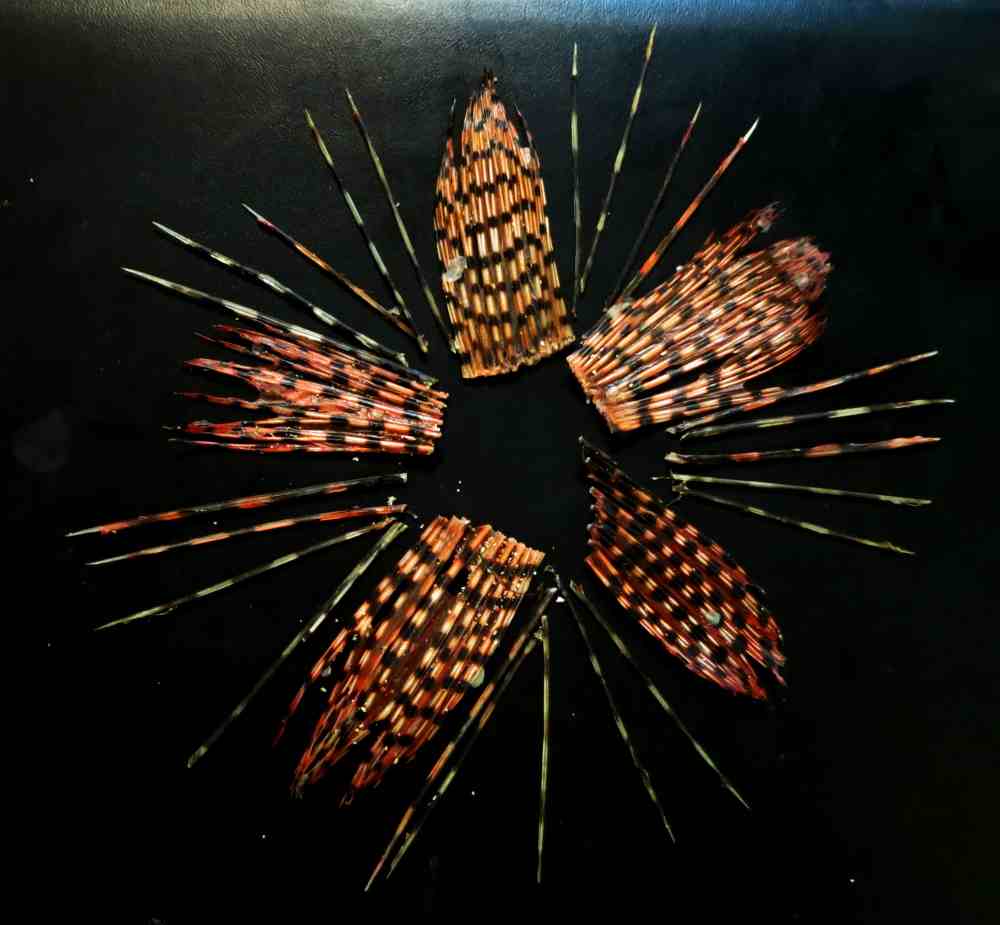
Array of dried lionfish spines and tails -ready for jewelry use Credit: ReefCI
In Part 1 of this post regarding market-based solutions to fighting the lionfish invasion that is threatening coral reef and other marine ecosystems throughout the Caribbean, Gulf of Mexico, and Southern Atlantic Seaboard of the United States, I wrote about the challenge of developing commercially sustainable strategies for undertaking the systematic removals that are needed to keep lionfish populations under control. I discussed the need to develop a series of vertical markets, pointing to promotion of lionfish as a seafood choice as the most obvious of these. Capture of juvenile lionfish for the aquarium trade as another. A third market, and one in which I’m personally involved, is use of lionfish spines and tails for jewelry and other decorative items. Continue reading
Green Economy Realism
There’s no way toward a sustainable future without tackling environmentalism’s old stumbling blocks: consumption and jobs. And the way to do that is through a universal basic income.
There is nothing wrong, per se, with wishful thinking. It is when those wishful thoughts are left in dream state that they can become tedious, even dangerous. Action matters. It is where dreams meet reality. Reality matters at least as much as dreams in getting to a desired outcome. This is true with regard to environmental issues as with any other. We appreciate reminders whenever, wherever we find them:
For as long as the environment has existed, it’s been in crisis. Nature has always been a focus of human thought and action, of course, but it wasn’t until pesticides and pollution started clouding the horizon that something called “the environment” emerged as a matter of public concern.
In 1960s and 1970s America, dystopian images provoked anxiety about the costs of unprecedented prosperity: smog thick enough to hide skylines from view, waste seeping into suburban backyards, rivers so polluted they burst into flames, cars lined up at gas stations amid shortages, chemical weapons that could defoliate entire forests. Economists and ecologists alike forecasted doom, warning that humanity was running up against natural limits to growth, extinction crises, and population explosions.
But the apocalypse didn’t happen. The threat that the environment seemingly posed to economic growth and human well-being faded from view; relieved to have vanquished the environmental foe, many rushed to declare themselves its friends instead. Continue reading