Cashmere, Goats & Accounting Flaws

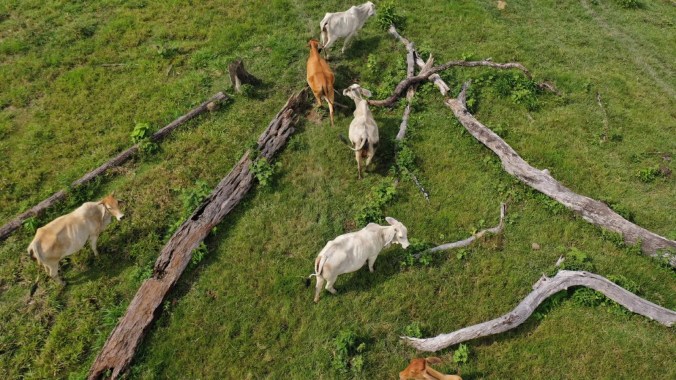
An aerial photo of goats grazing on the Mongolian Plateau.

Goats grazing on the Mongolian Plateau in Central Asia. Gilles Sabrié for The New York Times

Goats have appeared in our pages from time to time over the years–usually related to their ecological contributions. Thanks to National Public Radio (USA) for the article below, which references the New York Times op-ed where the photo to the left was on display. Now it is time to talk about flaws in the accounting for the true costs of cashmere:

A goat that provides cashmere fibers grazes on foliage. Finnbarr Webster/Getty Images

The uncomfortable hidden costs behind the rise in cheap cashmere

The coveted material known for its luxurious softness has become much more accessible and affordable in recent years. But at what cost?

Who are they? Well, the fellers providing the goods are cashmere goats, many of whom live in parts of Central Asia, like northern China and Mongolia. Continue reading


Winning The Popularity Contest, Fungi In Our Pages

courtesy of Laura Murray/Smallhold

The topic came to our attention a dozen years ago and is now mainstream enough that it is a regularly featured topic in our feed:

A mushrooming trend: how fungi became an It food

The mushroom moment of the past few years shows no sign of ending. What’s feeding its enduring popularity?

You can’t walk more than a few aisles in the grocery store these days without running into some kind of new mushroom product. Fresh white button mushrooms are increasingly joined by specialty varieties like lion’s mane, maitake or oyster mushrooms. There’s sparkling cordyceps tea and chaga coffee boasting a range of health benefits, mushroom chips and even chocolate bars infused with reishi. Continue reading

Corrupted Cop & Better News

Cylindrical battery cells undergoing tests in the UK. Photographer: Jason Alden/Bloomberg

Thanks to Bill McKibben, in his newsletter–“A Corrupted COP New revelations show just how bad the oil countries really are“–for more details on this bad news but also for pointing us to better news that has implications for so much of the decarbonization opportunity set:

Battery Prices Are Falling Again as Raw Material Costs Drop

BloombergNEF breaks down the biggest annual drop in its lithium-ion battery price survey since 2018.

As the auto industry grapples with how to make affordable EVs, the task may get easier by one key metric. Battery prices are resuming a long-term trend of decline, following an unprecedented increase last year.

According to BloombergNEF’s annual lithium-ion battery price survey, average pack prices fell to $139 per kilowatt hour this year, a 14% drop from $161/kWh in 2022.1

New York Wind Power

The giant parts for wind turbines await pickup at a pier in New London, Conn. Joe Buglewicz for The New York Times

Wind has always been there for the taking in so many places, the challenges of nimbyism notwithstanding. Now the turbines are arriving to harness it for the New York metropolitan area. Our thanks to Patrick McGeehan and the New York Times for sharing the story:

Huge Turbines Will Soon Bring First Offshore Wind Power to New Yorkers

Parts of what will eventually be the towers of wind turbines out in the ocean. Joe Buglewicz for The New York Times

New York’s best bet for entering the era of offshore wind power is stacked up at the water’s edge in Connecticut.

The pier on the Connecticut coast is filled with so many massive oddities that it could be mistaken for the set of a sci-fi movie. Sword-shaped blades as long as a football field lie stacked along one edge, while towering yellow and green cranes hoist giant steel cylinders to stand like rockets on a launchpad.

It is a launching point, not for spacecraft, but for the first wind turbines being built to turn ocean wind into electricity for New Yorkers. Crews of union workers in New London, Conn., are preparing parts of 12 of the gargantuan fans before shipping them out for final assembly 15 miles offshore. Continue reading

Heat Pumps Catching On In Norway

The Tromsø sorting office of the Norwegian postal service Posten Bring is heated by heat pumps. The city is located almost 140 miles north of the Arctic Circle. Photograph: NurPhoto/Getty

Previous stories we have linked to about heat pumps have raised our expectations and hopes, but also raised the question of whether they will catch on. Here is the start to an answer:

You can walk around in a T-shirt’: how Norway brought heat pumps in from the cold

Device installed in two-thirds of households of country whose experience suggests switching to greener heating can be done

When Glen Peters bought a heat pump for his home in Oslo he wasn’t thinking about the carbon it would avoid. Continue reading
Green Mountain Power, Sunrun, FranklinWH & Innovative Electricity Options

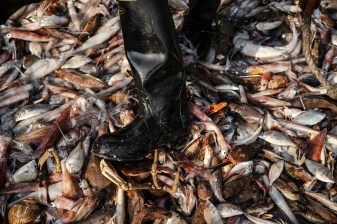
Photograph by Ian Thomas Jansen-Lonnquist / Bloomberg / Getty

We need more energy, and here are some possibilities:

The Next Power Plant Is on the Roof and in the Basement

A Department of Energy report promotes a new system that could remake the energy grid.

On any given Monday in Vermont, Josh Castonguay, the vice-president of innovation at that state’s Green Mountain Power utility, told me, he studies the forecast for the days ahead, asking questions like “What’s it looking like from a temperature standpoint, a potential-of-load standpoint? Is there an extremely hot, humid stretch of a few days coming? A really cold February night?” If there is trouble ahead, Castonguay prepares, among other things, Vermont’s single largest power plant, which isn’t exactly a power plant at all—or, at least, not as we normally think of one. Continue reading

Prioritizing Carbon Capture Versus Emissions Reduction

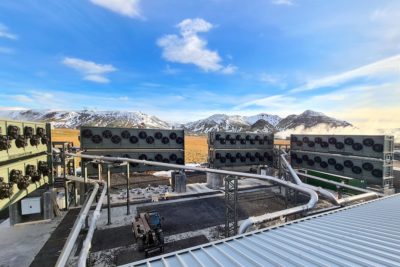
A carbon capture plant near Reykjavik, Iceland.

A carbon capture plant near Reykjavik, Iceland. CLIMEWORKS

Since we first heard of it we have been enthusiastic about the upside potential of this technology, but until now had not considered the tradeoffs:

Climate Plans That Rely Too Much on Carbon Removal Could Breach International Law

Countries that rely too heavily on carbon removal in their climate plans could violate international law, warns a new paper. Continue reading
More Energy Use Annually Dwarfs Gains From Renewables

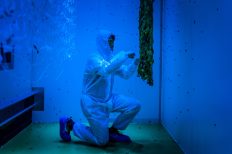
Ty Wright / Bloomberg / Getty

The facts about our progress combatting environmental crises are complex. Sometimes we sense hope and other times not so much. Zoë Schlanger, writing in the Atlantic, runs some numbers on mitigation from renewables:

One Huge Contradiction Is Undoing Our Best Climate Efforts

The math isn’t adding up.

You’d be forgiven for thinking that the fight against climate change is finally going well. Continue reading

Industrial Meat, Fascinating & Disgusting

The “cultivation room” at Upside Foods in Emeryville, California. The company is one of two now approved to sell lab-grown meat to U.S. consumers. Upside Foods

We appreciate Garth Brown writing in New Atlantis for this rather disgusting explanation of one big part of our industrial meat system:

Oiling the Chicken Machine

Queasy about lab-grown meat? Too bad — you’ve pretty much been eating it for decades.

In her community, it’s common knowledge that my mom is a soft touch when it comes to chickens. She maintains a motley flock of adoptees — backyard hens whose owners have moved, scrawny layers too old to be worth their feed, the pets of children who never much wanted them in the first place. She knows most of the people who donate the birds, or at least knows how they connect to her capacious social circle. Continue reading

Frightening Future Facts For All Hallows’ Eve

Faced with climate change on the one hand and the material demands of new energy infrastructure on the other, humanity had better figure out how to reuse the resources it has already dug up. Illustration by Laura Edelbacher

Not to rain on the parade of the candy and costumes fun of October 31, but to heighten the mood of the day with some sobering truths facing all of us, our thanks as always to Elizabeth Kolbert for getting our attention pointed where it needs to go:

The Real Cost of Plundering the Planet’s Resources

Our accelerating rates of extraction come with immense ecological and social consequences.

The town of Spruce Pine, North Carolina, doesn’t have a lot to say for itself. Its Web site, which features a photo of a flowering tree next to a rusty bridge, notes that the town is “conveniently located between Asheville and Boone.” According to the latest census data, it has 2,332 residents and a population density of 498.1 per square mile. A recent story in the local newspaper concerned the closing of the Hardee’s on Highway 19E; this followed an incident, back in May, when a fourteen-year-old boy who’d eaten a biscuit at the restaurant began to hallucinate and had to be taken to the hospital. Without Spruce Pine, though, the global economy might well unravel. Continue reading

Pricing Flights Realistically

United Airlines wants to zero out its greenhouse gas emissions by 2050, but without using conventional carbon offsets. Nicolas Economou/NurPhoto via Getty Images

If airlines can quantify what it would cost to become carbon neutral within a relevant timeframe, it implies that we know by how much they are currently fudging their investment model. If it is going to require an investment of X number of dollars over Y number of years to achieve carbon neutrality then they should invest, and price their flights accordingly. Then we will all know the real cost of flying, including the environmental cost. Thanks to Umair Irfan (long time since we last saw his work) and to Vox for this:

Emirates demonstrated a Boeing 777 flight fueled with SAF earlier this year. Giuseppe Cacace/AFP via Getty Images

Airlines say they’ve found a route to climate-friendly flying

Cleaner, faster, cheaper — the aviation industry’s plan to decarbonize air travel, explained.

If you’ve caught an ad for an airline lately on TV, a podcast, or the entertainment display on your flight, you’ve probably heard the company brag about what it wants to do about climate change.

Major airlines like AmericanDeltaSouthwest, and United have all set targets of achieving net-zero greenhouse gas emissions by 2050. They’re using a suite of tactics including buying more fuel-efficient aircraft, electrifying their ground vehicles, and increasing the efficiency of their operations. They’re also testing the winds on battery- and hydrogen-powered planes, as well as some radically different aircraft designs. Continue reading

Preferred Pet Practices

Pet owners can reduce the carbon footprint of their furry loved ones without affecting their health, experts say. Photograph: Getty Images

Pets have featured in exactly one prior post in our pages. Now, thanks to Dwayne Grant and the Guardian, we see there is a topic related to pets quite relevant to our interests:

Throw a dog a bean: how to reduce the carbon footprint of your pets

Thinking about what your dog or cat eats and the products you buy for them can lessen the impact they have on the planet

Did you hear the one about the luxury aviation CEO who claims pets cause as much carbon pollution as private jets? Continue reading

Climate Leadership Lacking In Too Many Places

Once a golf course, now a solar farm supplying tens of thousands of homes in Japan

If you know a bit about Japan’s love of golf, the photo above says alot about leadership there in moving away from fossil fuels in the direction of alternative energy. But it is too little too late compared to what is happening elsewhere. Thanks as always to Bill McKibben for his newsletter:

Energy from Heaven

and not from Hell/Exxon.

Amid the torrent of hideous news last week, one item might have skipped your notice: Exxon announced the acquisition—its biggest since picking up Mobil a quarter century ago—of one of the largest fracking operators in the world. As the AP reported, “including debt, Exxon is committing about $64.5 billion to the acquisition, leaving no doubt of the Texas energy company’s commitment to fossil fuels.” In fact, it’s the declaration of conviction that they think they have enough political juice to keep us hooked on oil and gas for a few more decades, even in the face of the highest temperatures in 125,000 years. Continue reading

Where Your Seafood Comes From, And How

Ian Urbina has chronicled this topic in the past, and the fishing crimes on the high seas have not abated, to say the least:

BEHIND THE SEAFOOD YOU EAT

China has invested heavily in an armada of far-flung fishing vessels, in part to extend its global influence. This maritime expansion has come at grave human cost.

DANIEL ARITONANG GRADUATED from high school in May, 2018, hoping to find a job. Short and lithe, he lived in the coastal village of Batu Lungun, Indonesia, where his father owned an auto shop. Aritonang spent his free time rebuilding engines in the shop, occasionally sneaking away to drag-race his blue Yamaha motorcycle on the village’s back roads. Continue reading

Dear AI Overlords, Reviewed

Virginia Heffernan has appeared in our pages only once before, also reviewing a book. She is one of the great writers in the English language, but often on topics not connected to our themes here. While we mostly are interested in topics related to the natural world, and we know that this topic is a whole other realm, we can guess that AI’s impact on the natural world is part of what the title of this issue of Wired will mean to us pretty soon:

What If the Robots Were Very Nice While They Took Over the World?

First it was chess and Go. Now AI can beat us at Diplomacy, the most human of board games. The way it wins offers hope that maybe AI will be a delight.

THE MORRISSEY HAD the right melodrama in his limbs, and his voice was strong and pained. I was at Gramercy Theatre in Manhattan to see a Smiths tribute band. I tried to get Morrissey’s acid yodel in my throat, to sing along. I am human and I need to be loved / just like everybody else does. But it didn’t feel right to copy a copy. Continue reading

Travel Takeaways

Illustration by Igor Bastidas

We have ideas on what to take away if you are visiting Costa Rica. Yesterday, Joshua Hunt made this unexpected recommendation on travel takeaways:

Want a Vacation Souvenir? Buy Toothpaste.

The quotidian joys of this pocket-size keepsake.

Six weeks after my first trip to Italy, the fresh mozzarella I brought home is long gone, and so is the hard salami and pistachio-flavored chocolate. To squeeze a bit more from my Mediterranean experience, I can rely a little while longer on the tube of Elmex-brand toothpaste I used to brush away all that food. Continue reading

Reminder Primer On Meat & Dairy

Raul Arboleda / AFP via Getty Images

We have been preaching, and practicing, reduction in the consumption of meat and dairy for as long as we have been sharing on this platform. Reminders of why are always welcome. Our thanks to Max Graham, a Food and Agriculture Fellow at Grist for this reminder-primer:

What would happen if the world cut meat and milk consumption in half?

Agricultural emissions would fall by almost a third. But getting there wouldn’t be easy.

Cows are often described as climate change criminals because of how much planet-warming methane they burp. Continue reading

Fireflies At Risk

Fireflies in Great Smoky Mountains National Park. RADIM SCHREIBER

Fireflies being among the more charismatic insects, they and other glowing creatures have been covered in our pages second only to bees. Our thanks to Ted Williams, writing for Yale e360, for explaining their specific challenge:

A Summer Light Show Dims: Why Are Fireflies Disappearing?

Fireflies — whose shimmering, magical glows light up summer nights — are in trouble, threatened by habitat destruction, light pollution, and pesticide use. With 18 species now considered at risk of extinction in North America alone, recovery efforts are only just beginning.

For millions of people around the globe, fireflies have been a big part of the magic of spring and early summer nights. They certainly were in our family. When my children were young, our field in central Massachusetts blazed with fireflies. Continue reading

Overfishing & Long Island Fancyfolk

Chris Winkler, a fisherman in ever-fancier Montauk on Long Island, is accused of breaking limits on his catch.

We hope that the wrongs get righted:

Chris Winkler is on trial, accused of taking too many fish from the seas off gentrified Montauk. His former partners have pleaded guilty, and stand to make millions from the sale of their small seafood-themed empire.

Along with trash fish, catch that exceeds daily limits must be tossed overboard even if it perishes.

It was just before dawn when Chris Winkler, a fisherman in Montauk, N.Y., set off on his trawler, the New Age.

A longhaired surfer who looks far younger than his 63 years, Mr. Winkler was in flip-flops and shorts, trailed by Murphy, a good-natured Irish water spaniel who is usually his only company. Continue reading

Insect Respect

Agronomist Caterina Luppa watches black soldier flies reproduce at Bugslife, a firm in Perugia, Italy, that is turning fly larvae into animal feed. LUIGI AVANTAGGIATO

We have featured this subject a few times over the years, especially once we started showcasing one such product. I acknowledge I am still not a total convert to an insect-centric diet, but every story like this draws me in, however slowly:

Edible Insects: In Europe, a Growing Push for Bug-Based Food

Marco Meneguz, an entomologist with BEF Biosystems in Casalnoceto, monitors black soldier flies as they mate. During mating, “the males gather in a courtship ritual characterized by fights and competitive displays,” he says. The blue light helps the flies see each other better. LUIGI AVANTAGGIATO

To rein in emissions, the E.U. is looking to insects as an alternate source of protein for livestock and people and is easing regulations and subsidizing makers of insect-derived food. In a photo essay, Luigi Avantaggiato explores the emerging bug food industry in northern Italy.

The European Union recognizes it has a meat problem. The bloc has no easy way to curb the climate impact of its livestock, which eat soybeans grown on deforested lands and belch heat-trapping gas. According to one estimate, Europe’s farm animals have a bigger carbon footprint than its cars.

Trent Barber, a technician at BEF Biosystems, vacuums up 200 pounds of fly larvae that are plump after two weeks of feeding on food scraps. The remaining food waste, now rich in excrement, will be sold as compost to farms. LUIGI AVANTAGGIATO

In this photo essay, Luigi Avantaggiato explores an unusual solution to this dilemma that is now gaining traction — feeding insects to livestock and, potentially, people. The European Commission says that insects could replace soy-based animal feed, helping to slow deforestation, or even supply an alternate source of protein for humans. Studies show that insects can furnish the same amount of protein as livestock while using as little as 10 percent of the land and producing as little as 1 percent of the emissions. Continue reading