Flora By Knight

This slideshow requires JavaScript.

The New Yorker’s website highlights with the images above the newly updated version of a book we intend to add to our collection:

The herbarium at the Natural History Museum in London contains nearly six million plant specimens, many of which are centuries old and were gathered from far-flung parts of the world. The British photographer Nick Knight was introduced to the collection in 1992, while exhibiting his own work at the museum. In the following years, he sifted through the collection, photographing thousands of what he considered to be the most visually alluring samples. The eighth edition of Knight’s book “Flora” is now available for purchase through Schirmer/Mosel.

All photographs by Nick Knight/Schirmer/Mosel.

The photographer’s publicist has this to say:
Continue reading

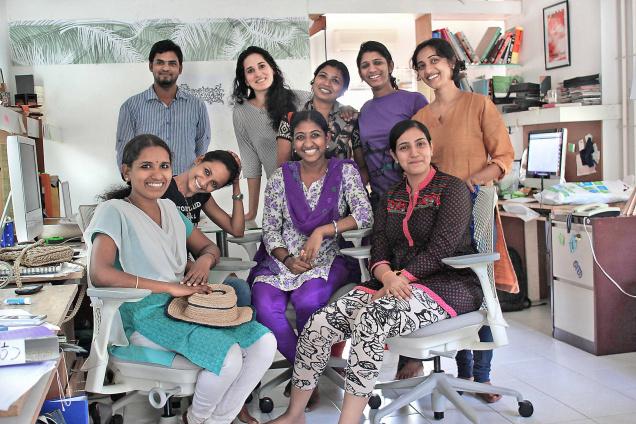
Via Kerala = Kerala

Via Kerala uses Malayalam as a motif to bridge the gap between the traditional and the contemporary

Via Kerala uses Malayalam as a motif to bridge the gap between the traditional and the contemporary

Our friends at Thought Factory and Via Kerala are important members of our collaborative tribe, so of course we were thrilled to read this article highlighting their efforts. We manage their flagship store in Thekkady at Cardamom County, and the new RAXA Shop at Spice Harbour also showcases some of their iconic products.

Malayalam alphabet and the Malayali’s personality have some things in common. Just as the rounded letters, we, as a people, are not aggressive and have rounded personalities. We are a bit complicated, too. Theresa J. George uses Malayalam typography as a metaphor for our culture and the very essence of being Malayali.

Her company Via Kerala uses Malayalam as a motif to bridge the gap between the traditional and the contemporary. “We are proud of our roots, yet there is a slight disconnect between it and the younger generation,” she says. Continue reading

More On Tesla’s Mr. Musk

Photograph by Dario Cantatore/Getty.

Photograph by Dario Cantatore/Getty.

We like him more the more we hear of him, and while we do not know enough to gush, nor to promote his automotive products, we pass along this interesting news as recorded on the New Yorker‘s website:

Yesterday, one of the more interesting people in Silicon Valley did one of the more interesting things that the car industry has seen in a while. Elon Musk, the C.E.O. of Tesla, opened up all of his patents. “Tesla will not initiate patent lawsuits against anyone who, in good faith, wants to use our technology,” he wrote in a blog post. Tesla’s competitors can now freely take advantage of its batterieschargers, or sunroofs. Continue reading

If You Happen To Be In London

Last year, and the year before, were successes to say the least. But, after the jump, see what makes this year‘s worth attending if at all possible:

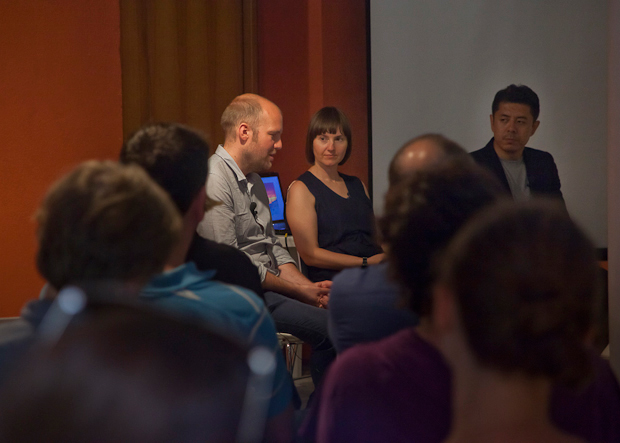
Following on from the success of 2012’s inaugural Here symposium, we returned to the splendid surroundings of The Royal Geographical Society in the summer of 2013 to do it all over again. From Nelly Ben Hayoun and Adam Buxton to Kate Moross, Wayne Hemingway and Erik Kessels, our international line-up once again dazzled and delighted the audience with a series of engaging and exciting creative talks.

Continue reading

Architecture And National Identity

morephaidoninvenicetalk

Our interest, invariably, is to showcase authentic culture in each project in every location where we play a role. Mostly, this means how our team members showcase their communities to visitors from other communities in other parts of the world. But it also means something about architecture and design. With the recent opening of Spice Harbour, and the soon-to-open Marari Pearl, we have found ourselves describing the architecture of each property without reference to local or national architectural style so much as to what is “appropriate” to the location.

We admit we do not always know exactly what we mean when we say this. On the other hand, we are content to note that even the “experts” do not always have neat answers to such complex questions, as noted on Phaidon’s website about a forum at the Venice Biennale:

…The debate was ably chaired by the British Council’s Vicky Richardson who began by asking Stephan Petermann a little about the brief set by Koolhaas for this year’s biennale.

“What we were hoping for is that the countries would reveal themselves and their national characteristics by looking at their own history,” he said. “We think they have. It might not be as blatant as the provocation we made, but (you can see it) in the subtleties of the details and angles that some countries take. I hope that people enjoy the diversity of the directions we took.”

Continue reading

New Tesla Model Test Driven

Samuel Gibbs test-drives a Tesla Model-S. Photograph: Antonio Zazueta Olmos

Samuel Gibbs test-drives a Tesla Model-S. Photograph: Antonio Zazueta Olmos

Its availability is limited to a few places. Its numbers are limited, period. But in the UK it is about to grow a new market, so this review is timely. We are not in the business of promoting automobiles or other consumer products but several La Paz Group contributors have been in the vicinity of the home location of this car and its claims of zero emissions are such that we could not help noting this remarkable thing:

…Inside it’s all premium Silicon Valley technology. Musk likes to think of Tesla as the “Apple” of cars, which might explain why there is what looks like a large iPad complete with Apple-style graphics where the centre console should be. The 17in touchscreen controls almost everything about the car, from the air conditioning and music to opening the sunroof and firing up the heated windscreen wipers. Continue reading

Architectural Moveables

carrybuildingslead

Casa Transportable ÁPH80 by Ábaton is one of the Atlas choices

Thanks to Phaidon for their attention to architecture that not only moves users, but which users can move:

Regular Phaidon readers will already be familiar with our recently launched Online Atlas, the dedicated resource website for architects, students and true lovers of architecture .

The site, which features over 130,000 images, 3,079 projects from 1,537 architects in 115 countries around the world is an invaluable aid to anyone who works in the industry and needs to know who did what, where – and, of course, how.

The Atlas editors have a regular feature in which they focus on a specific, occasionally left field aspect of architecture or an architectural project each week. It’s called Editors’ Focus and the first one was all about small buildings; a more recent post dwelt on nine of the hardest to construct buildings listed. This latest round-up takes in portable architecture. Continue reading

Relationships Across The Boundaries Of Photography And Architecture

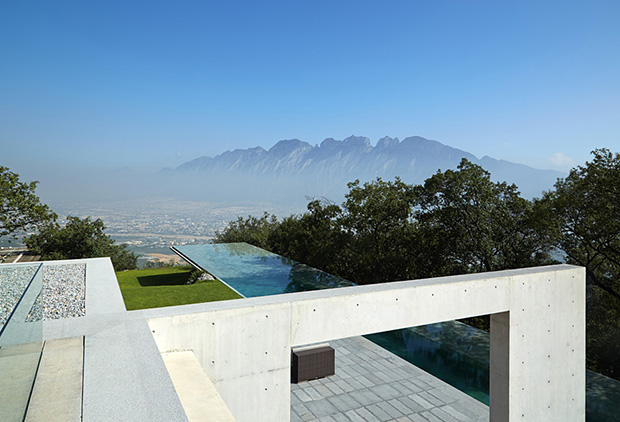
Tadao Ando's Monterrey house, by Edmund Sumner

Tadao Ando’s Monterrey house, by Edmund Sumner

Thanks to Phaidon for this story on the relationship between architecture and photography, or rather architects and photographers:

By the time Edmund Sumner was given his first camera, at the age of eight, he was already surrounded by, and wholly obsessed with, design. Edmund’s father was an interior designer whose clients included the likes of The Rolling Stones; his sister took up the paternal profession, while his brother became an architect.

Sumner, for his part, decided to photograph buildings for a living, and working with his wife, the architectural journalist Yuki Sumner, has specialised in architectural photography, with particular emphasis placed on contemporary Japanese design.

Continue reading

A Young Architect’s Process from Concept to Construction to Cigarette featured in Indian Architect & Builder


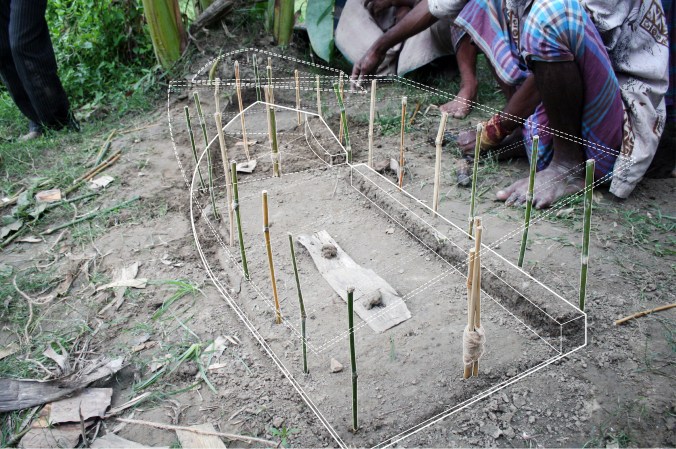
Preliminary model of the pavilion (Photo by Karen Chi-Chi Lin)

Preliminary model of the pavilion (Photo by Karen Chi-Chi Lin)

My very first internship was in Bangladesh with Panigram Resort, an eco-boutique resort in a rural farming town outside of Jessore, Bangladesh. I had no idea that it would ignite an insatiable curiosity about South Asia that would lead me back to the region several years later. I arrived in Kerala, India in 2012 not only with the amazing opportunity to return to a similar tropical biome and region, I had also returned to the same hospitality and resort family! Raxa Collective collaborates with Panigram Resort to help train Panigram Resort’s future leadership and staff.

When I was working at Panigram Resort, I was tasked with building a temporary pavilion for hosting potential investor meals and events. It seemed like an uphill battle for me at the time: I was young (19 years old); I was female; and I was a foreigner. Who would listen to me? I recently shared my story and was awarded the Young Designers 2014 Award by the Indian Architects & Builders (IA&B) magazine. I hope you, too, will enjoy my anecdote about the process from concept to construction … and finally, acceptance.

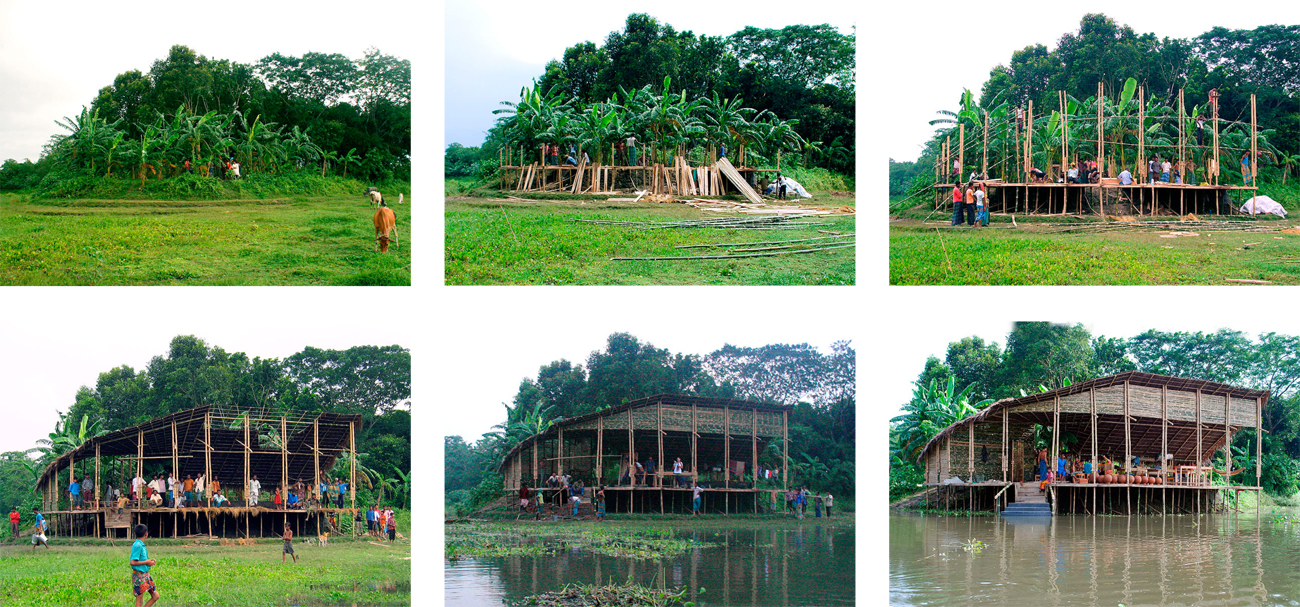
Panigram Resort banquet pavilion from start to finish (Photo by Karen Chi-Chi Lin)

Panigram Resort banquet pavilion from start to finish (Photo by Karen Chi-Chi Lin)

I have never felt more accomplished than when I was handed a cigarette. Of course that requires an explanation. Continue reading

Coconut Palm Leaf Roofing

Photo credits : Shymon

Photo credits: Shymon

In rural communities around the world it’s a common sight to see structures made from 100% natural and sustainable materials, and Kerala is no exception, especially in the Alappuzha district. In thatched homes the roof and walls are made out of coconut leaves. Continue reading

Controlling Invasive Lionfish – Update on Market Solutions: Part 2/2 — Lionfish Art

spines and tails-photo3

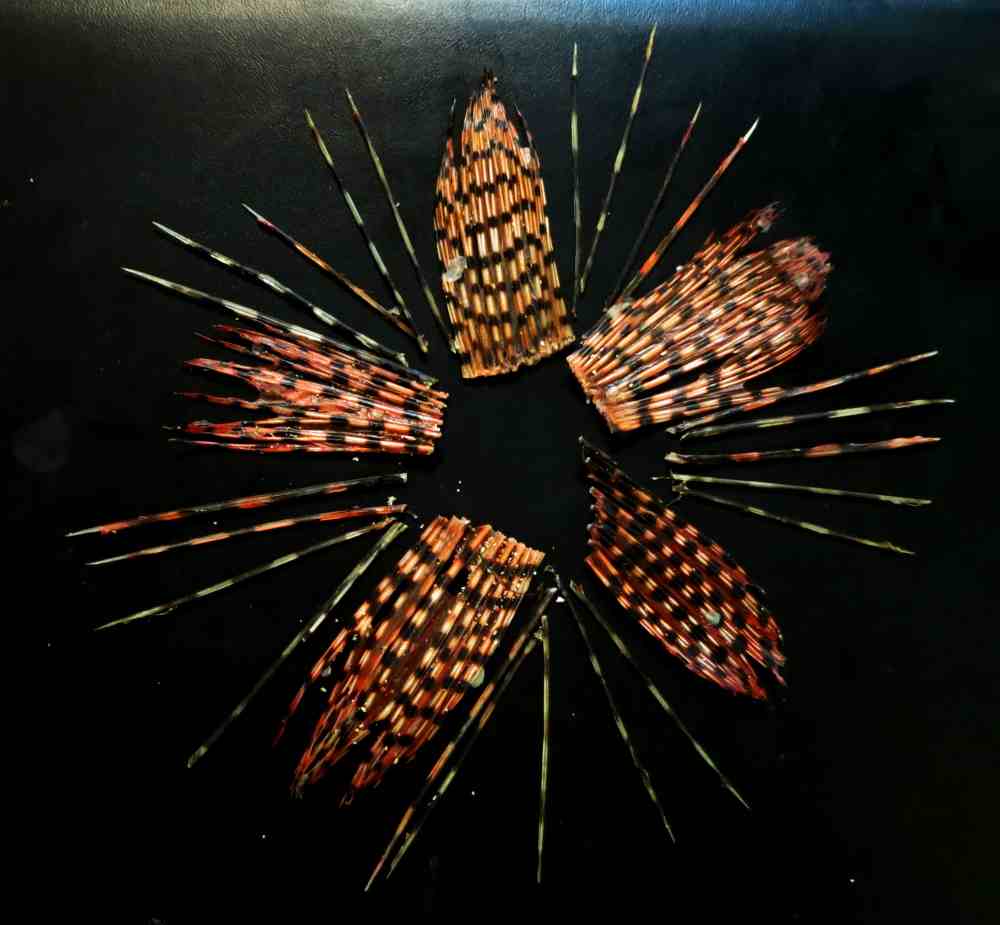
Array of dried lionfish spines and tails -ready for jewelry use Credit: ReefCI

In Part 1 of this post regarding market-based solutions to fighting the lionfish invasion that is threatening coral reef and other marine ecosystems throughout the Caribbean, Gulf of Mexico, and Southern Atlantic Seaboard of the United States, I wrote about the challenge of developing commercially sustainable strategies for undertaking the systematic removals that are needed to keep lionfish populations under control. I discussed the need to develop a series of vertical markets, pointing to promotion of lionfish as a seafood choice as the most obvious of these. Capture of juvenile lionfish for the aquarium trade as another.  A third market, and one in which I’m personally involved, is use of lionfish spines and tails for jewelry and other decorative items.  Continue reading

Craft Beer, Designed

What with Spice Harbour and 51 design projects behind us, and the second biennale just ahead, stories about art, design, food and beverage catch our attention more than ever. On the latter, we might think each craft beer is itself an artist’s design searching for masterpiece status, but we might be wrong:

Milton Glaser Critiques Modern Beer Art 

The 84-year-old graphic-design legend who created the Brooklyn Brewery identity weighs in on what craft breweries are doing right and wrong.

Duchamp Design Du Jour

tumblr_mjnoeg7QzL1qz5g9bo1_1280

Our thanks to Mel Duarte for this referral of a design idea that has artistic legs and history, but is as fresh as ever:

In a small Brazilian village, artist and photographer Mel Duarte came across this great example of turning an old thing into a new thing.

“I really like the idea of creative recycling, and hope to inspire people with the potential it offers. With this in mind, I took the chance when I was in a little town in Bahia, Brazil, called Serra Grande, to wander through the village looking for something that could express this idea. That’s how I came across the recycled toilet bowl – it’s such a lovely example of how waste can be turned into something funny and beautiful.” Continue reading

Better Driving

tumblr_mo9zu18bZf1qz5g9bo1_1280

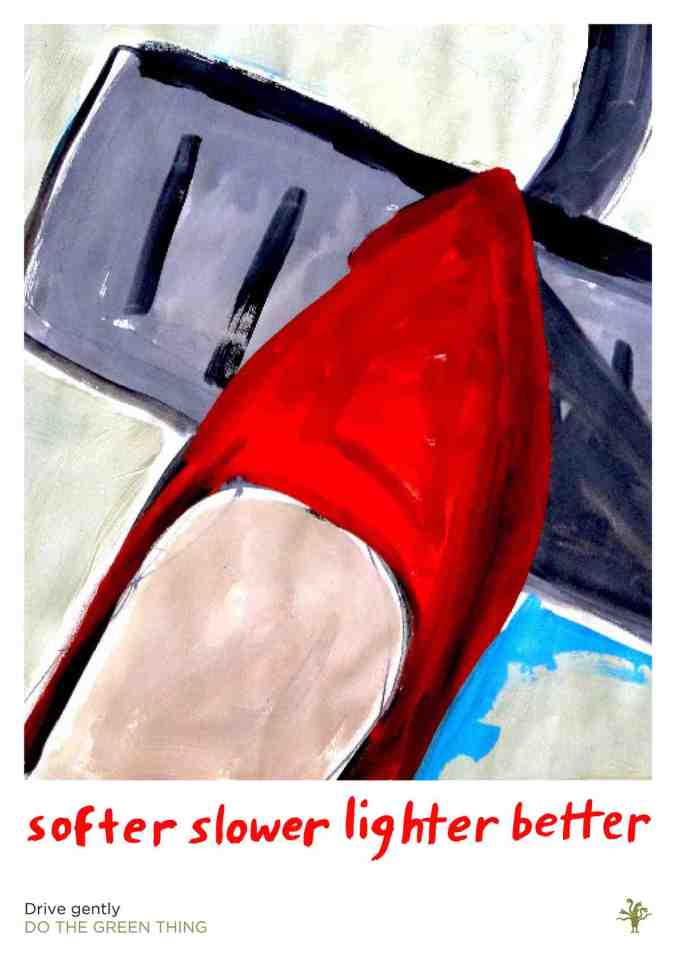
No matter how you view it, driving more fuel-efficiently is a worthy goal, but in a world with more than enough aggression already we think “Softer Slower” by Huntley Muir sends just the right visual reminder of another reason why driving more gently is a worthy goal:

Su and Donna, the two halves of artist duo Huntley Muir, have painted a poster that encourages people to be more tender on the accelerator.

“We decided to cut our speed by 10 miles an hour to save fuel and cut pollution and noise. It really works – we do use less fuel, it’s safer, less stressful and we don’t even notice the difference. And we are below the legal speed limits as well. Such goody two shoes. Continue reading

Perchance To Dream

Endearing, yes, unless “Lights Out” makes you think the way Philip K. Dick did about dreaming while inanimate, or even as Shakespeare did; dark stuff that, but we get the point of our friends at this great initiative:

Design company Hudson-Powell have created this rather endearing poster, encouraging us to show light bulbs a bit of compassion.

“In the Shinto religion inanimate objects are often given a persona or spirit to help people relate to them in a more humanistic way and to create a dialog with the object. Taking this idea and applying it to light bulbs, making them delicate living things that need rest and can dream seemed like a playful way of getting people to remember to turn them off.”

Why? Continue reading

Traditional Ironing Box

Photo credit : Dileep

Photo credit: Dileep


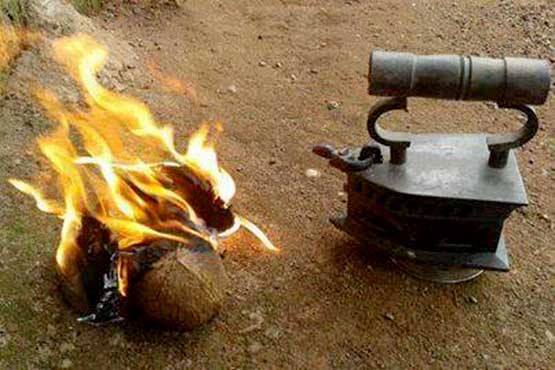
Charcoal ironing boxes were heated with smoldering coals that were taken from a fire and placed inside a box on the top of the iron. The lid of the box had a handle, which allowed people to hold the hot iron as they ran it over clothing, smoothing out wrinkles. In Kerala the box was traditionally made of bronze.

Continue reading

Bring Your Own Bottle

tumblr_mrzmgv3ZXg1qz5g9bo1_1280

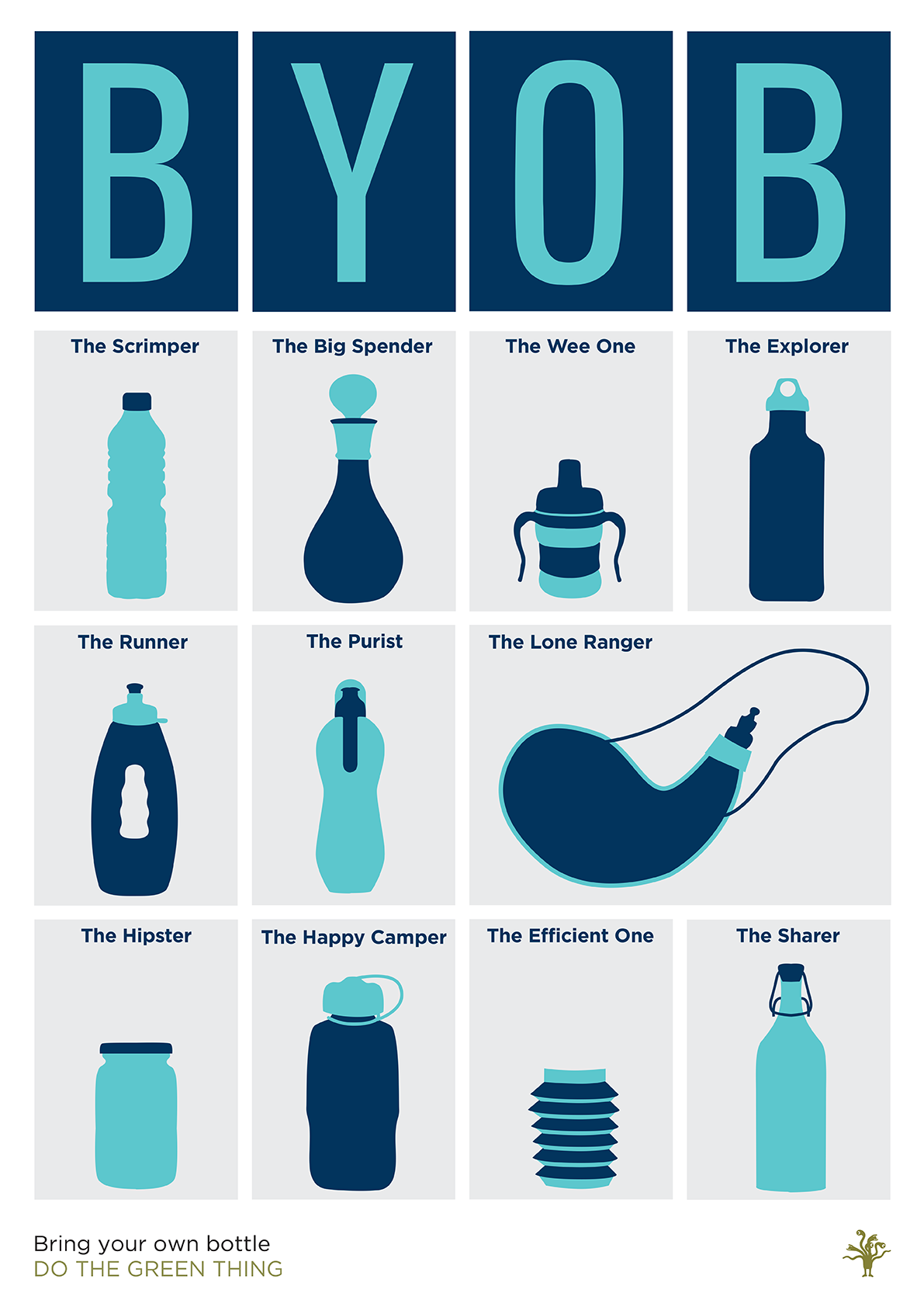
The image above is a reminder for us, as much as it is a pass along to you. After finally securing, in early 2013, a supply of beautiful glass water bottles for all of our restaurants and guest rooms in Kerala, Raxa Collective has been working for the last year to source a reusable and conveniently portable water bottle. The Earth Hour original purpose of the series of which the above poster is a part has a long tail of utility. Today we give thanks for “BYOB” by Rebecca Penmore, one of the altruistic designers at Pentagram giving us more clarity on why we should re-use:

On a hot summer’s day when hydration was the name of the game, Pentagram designer Rebecca Penmore noticed that our bottles of tap water are much more than liquid containers – they are an extension of our personality.

“The aim of my poster is to encourage people to carry their own bottle of tap water and avoid countlessly re-buying mineral water. I have used the well known acronym BYOB as a simple and straightforward way to communicate this message,” says Rebecca. “Bringing your own bottle is not only an easy way to reduce your global footprint, but it can be a great form of self expression!”

Why? Continue reading

Make The Pledge by Nikki Miles

tumblr_mwb61wXD4G1qz5g9bo1_1280

The day has come. Come! During the last month of food trials at 51, we were looking forward to the day–yesterday–when the doors officially opened and we could invite both vegetarian and non-vegetarian friends to dine, and in particular feast on a roasted vegetable dish rooted in Malabar Coast vegetables and Eastern European foodways. Thanks to another of the Young Creatives for this encouragement on getting non-vegetarians to pledge to add more vegetables to their diet–all it takes is better-tasting veggies, we think, and some creative promotion:

With this playful painting, illustrator Nikki Miles is urging us to make a pinky promise to go easy on the meat and its carbon consequences and enjoy some veg instead.

“I don’t eat a lot of meat but I’m not strictly a vegetarian either,” says Nikki. I have tried being a vegetarian in the past but I found it to hard to give up the odd bacon sandwich or roast dinner with beef gravy.  I only eat meat around once or twice a week because vegetables are yummy too! Eating more veg and less meat is a simple way to make a big difference to your health and the environment.” Continue reading

Font Innovation, Greening Government

We like all the dots that can be connected in this story.  First, for our friends at Thought Factory Design, another story about font innovations. Second, the fact that at 14 years old this fellow is thinking about waste reduction in such inventive ways means he may be a candidate for membership on the Young Creatives dream team. Third, a bit of home team pride for several hundred members of Raxa Collective, some of the stories that ran after CNN first reported this mention that Suvir is from a family of Indian origin:

(CNN) — An e. You can write it with one fluid swoop of a pen or one tap of the keyboard. The most commonly used letter in the English dictionary. Simple, right?

Now imagine it printed out millions of times on thousands of forms and documents. Then think of how much ink would be needed.

OK, so that may have been a first for you, but it came naturally to 14-year-old Suvir Mirchandani when he was trying to think of ways to cut waste and save money at his Pittsburgh-area middle school.

It all started as a science fair project. As a neophyte sixth-grader at Dorseyville Middle School, Suvir noticed he was getting a lot more handouts than he did in elementary school. Continue reading

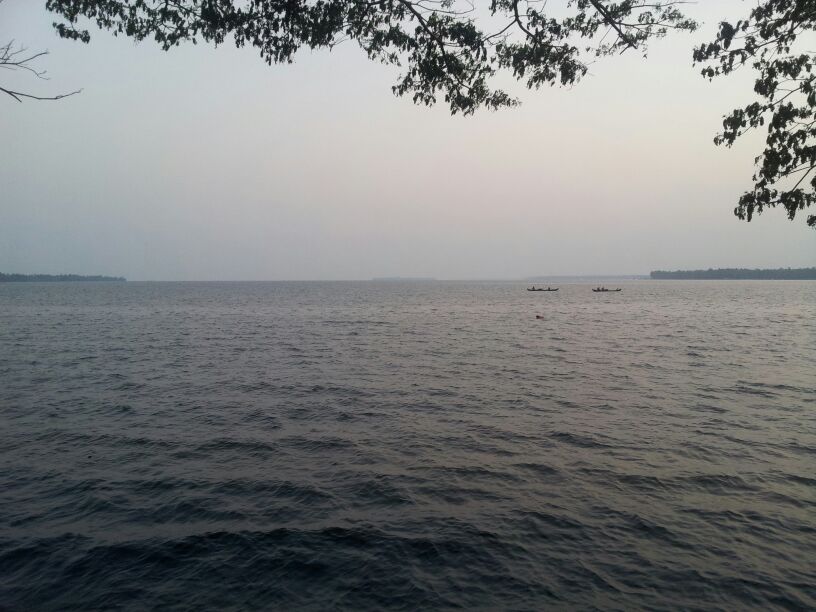
Thanneermukkom Bund

Thanneermukkom Bund

Thanneermukkom Bund

Constructed in 1974 and functional since 1976, the Thanneermukkom Bund was build to prevent tidal action and intrusion of salt water into the low-lands and the backwaters of Vembanad Lake. One of the biggest lakes in Kerala, Vembanad is a famous tourist spot where house boats and local fishing practices are a common attraction. Continue reading