Moringa: Superfood?

A moringa tree (tallest plant in the back left of the photo)

There’s a Moringa tree in the coffee plot at Xandari’s west farm area, and the head gardener José Luis always points it out to guests as a plant with dozens of healthy properties, in addition to its value as a shade-provider to the coffee shrubs. The genus of trees is beginning to be touted as a “miracle tree” and superfood in the United States, but has yet to really catch on among the denizens of developing nations in the dryland tropics, where Moringa grows best. Amanda Little writes for the New Yorker:

On the western margin of Agua Caliente [Mexico], Mark Olson, a professor of evolutionary biology at the National Autonomous University of Mexico, has a farm. “It may look like a shitty little field with runty little trees in a random little town, but it’s an amazing scientific resource,” Olson said, as he led me through the hilly, hardscrabble acre that constitutes the International Moringa Germplasm Collection. This is the world’s largest and most diverse aggregate of trees from the genus Moringa, which Olson believes are “uniquely suited to feeding poor and undernourished populations of the dryland tropics, especially in the era of climate change.”

Continue reading

Get Ready For New Foods

4167

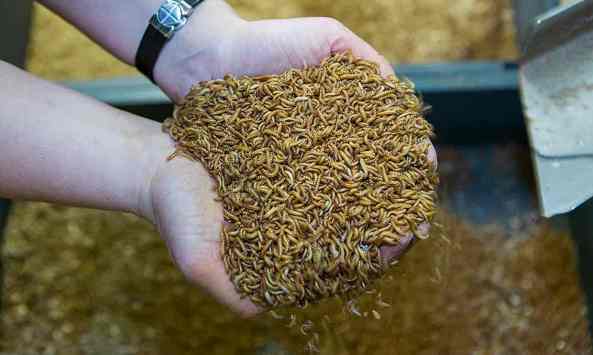
Edible insects are currently expensive, but bug farmers believe economies of scale will bring lower prices. Photograph: Proti-Farm

We cannot help but wonder which type of salt may be considered most appropriate for the new menu items coming soon to a table near you; but seriously, get ready:

The worm has turned: how British insect farms could spawn a food revolution

With meat prices expected to soar, agricultural entrepreneurs believe invertebrate livestock can provide the protein we need. But will the mainstream ever be ready to eat mealworms?

It could be the tumbledown, moss-covered drystone walls marking the boundaries of land that has been farmed since the arrival of the Norse settlers. Or the gentle meanderings of the river Eden through the shadows of the Cumbrian fells. Or the proximity of the Settle-Carlisle railway line. All in all, Thringill Farm seems an unlikely setting for a 21st-century food revolution. Continue reading

Redefining Recycling

In the early years of this site we highlighted a concept of “the fourth r” – focusing on the restaurants and events planners who support a form of social entreprenuership by donating excess food to local shelters. On an annual basis huge amounts of prepared foods go to waste in all forms of venues, but the classic buffet-style cafeteria is a long-term culprit. But luckily creative solutions have gone hand-in-hand with awareness of the problem. At the time we used the term “recycled” when taking about the food programs. Kudos to the new voices who redefined at as “repurposed.”

Back in 2011 when I was a student at the University of Maryland in College Park I once noticed a massive pile of trash in front of a dining hall. A closer look revealed that it was mostly food — a half-eaten sandwich, a browning apple and what appeared to be the remains of the day’s lunch special.

The heap was gross, but intriguing. Turned out it was a stunt to get students thinking about how much food they throw out each day.

Nowadays, students are coming face to face with their food waste, and its environmental and social impact, a lot more often. They also have more opportunities do something about it. Continue reading

Dirt Candy. Say It. Now Resist. It’s Futile.

Whenever we see a story about innovative, excellent food that involves no animals, we check on its suitability for this blog. We are not committed, by any means, to exclusive consumption of vegetarian cuisine but we believe going easy on the meat is a good way to do the green thing. This headline makes me think of the several of us contributing here who spent time in Ithaca, NY USA; and especially makes me think of a certain restaurant, Moosewood by name, that may have been the reference in Little Sprout Grows Up by Jeff Gordiner:

Ben Russell for The New York Times

Dishes at Dirt Candy tend to be composed and clever, but unapologetically crave-inducing. Here, the cabbage hot pot. Ben Russell for The New York Times 

Amanda Cohen Replants Her Vegetable Restaurant Dirt Candy.

Back when the chef Amanda Cohen was running her restaurant, Dirt Candy, out of an East Village nook that felt only slightly more commodious than a gopher hole, she received a call from someone representing a famous man who wanted to eat her food. Although they may hesitate to admit it, most chefs in New York would mount a synchronized swan dive into the iced-over Hudson River if it would help entice celebrities through their front doors. But Dirt Candy, in spite of being one of the most prominent and influential vegetarian establishments in the United States, was so small it almost qualified as a bonsai restaurant. Ms. Cohen had only 18 seats. She didn’t feel right giving a pair of nonfamous customers the cold shoulder. Continue reading

Sugar Beets, Wherefore Art Thou?

shutterstock_79736593

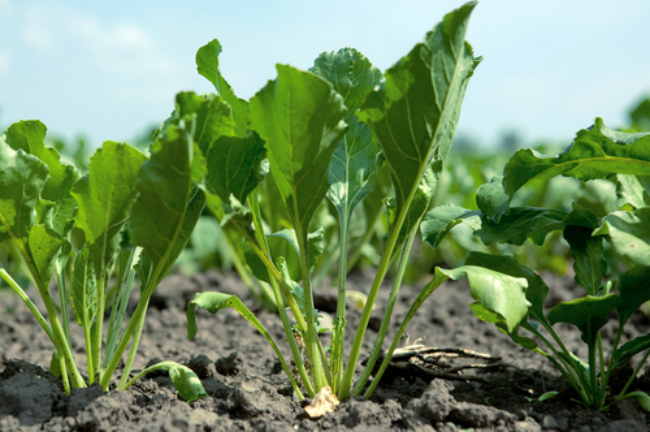
A Dutch scientist has created a process for turning sugar beet leaves into protein. Photo credit: Shutterstock

Thanks to Ecowatch, we can consider the long lost love of our better, healthier selves, found:

Sugar Beet Leaves Create Vegan Protein Alternative

Katie Levans

A scientist in the Netherlands is turning plant waste into a potential substitute for environmentally unsustainable proteins like meat, dairy and soy. The Dutch government commissioned Peter Geerdink, a food scientist at TNO, to identify a use for the 3 million tons of beet sugar leaves produced each year and left to rot after the beets themselves are harvested. The result of his work is a vegan gluten-free plant-based protein extracted from the pressed green juice of sugar beet leaves that, according to Geedink, is as versatile as a chicken egg.

Continue reading

Superfoods & Taste Of Place

Migle/Flickr

Migle/Flickr

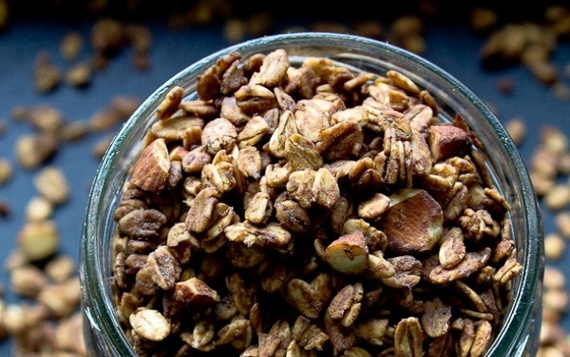
Several of us scouting in Ethiopia recently have been treated to roasted barley as a snack.  It has us thinking about super foods, diet, wellness, taste of place, and lots more to ponder in future blog posts; for now, this catches our eye:

The Skinny Carb

A recent study shows that people who simply ate more fiber lost about as much weight as those who went on a complicated diet.  Olga Khazan

Continue reading

Simplicity, An Elegant Solution To Food Needed Fast

Sam Kaplan for The New York Times. Food stylist: Suzanne Lenzer. Prop stylist: Maeve Sheridan.

Sam Kaplan for The New York Times. Food stylist: Suzanne Lenzer. Prop stylist: Maeve Sheridan.

51 completed its first round of food trials many months ago, and all is well, and getting better all the time.  As we welcome a new executive chef to our team on February 7, lots of ideas await him from our team for the next iteration of Malabar Soul Food.

Though food trials are an ongoing affair, we all do our best to eat a balanced diet, away from work, as much as possible.

So, thank you Mark Bittman for recognizing that there do not seem to be enough minutes in the day:

Simple Stocks for Soup on the Fly

9 ways to transform water into a flavorful dish in a matter of minutes.

Authenticity And Its Discontents

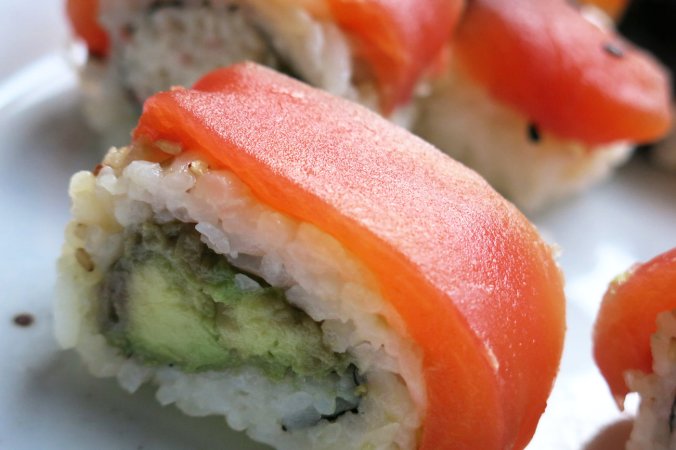
Chef James Corwell's nigiri sushi rolls made with Tomato Sushi, a plant-based tuna alternative, in San Francisco. Alastair Bland for NPR

Chef James Corwell’s nigiri sushi rolls made with Tomato Sushi, a plant-based tuna alternative, in San Francisco.
Alastair Bland for NPR

I am realizing more each day how complex the notion of authenticity is. It is often, I see with increasing frequency, a cliche thrown casually into descriptions and promotions of this or that. Are there times when something other than authenticity is appropriate, even for an organization such as ours that promotes offering travelers authentic experiences of various cultures around the world, including local cuisine?

This story has me thinking (thanks to National Public Radio, USA and its program called “the salt”) that if foodies can make the leap from literal authenticity to a more complex notion of authenticity, for the sake of the environment as well as for broadened pleasures of the palate, it may serve as a model for how to approach seemingly intractable challenges facing the planet (in the case of this story, fisheries collapse but also the broader challenges of collapse), including the ever-changing cultures that make our planet worth traveling:

It’s a dead ringer for Ahi tuna sashimi. It cuts into glistening slivers that are firm and juicy. And it’s got a savory bite.

But this flesh-like food is not fish. It’s made of tomato, and it’s what San Francisco chef James Corwell hopes could be one small step toward saving imperiled species of fish, like bluefin tuna.

“What I want is to create a great sushi experience without the tuna,” Corwell tells The Salt.

To make this Tomato Sushi, he skins and removes the seeds from fresh Roma tomatoes. Then he vacuum seals them in sturdy plastic bags and cooks them in hot water for about an hour — a technique called sous-vide. Continue reading

Burn Calories, Eat What You Want

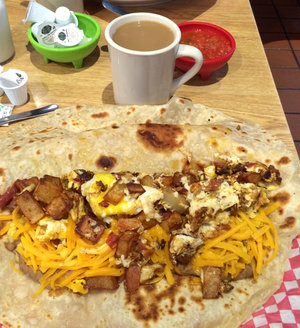
A breakfast taco in Texas. John Burnett/NPR

A breakfast taco in Texas. John Burnett/NPR

Now that the heavy lifting of food trials of 51 is mostly behind us, we are ramping up food trials at Marari Pearl. Any of you who know members of the Raxa Collective food trials team can attest that some of them remain mysteriously svelte, and others are gravitating into Santa Claus territory. Does this story at The Salt provide any explanations, or possible solutions? It is worth a read:

Last month, a friend and I rode bicycles 738 miles up the spine of Texas from the Rio Grande to the Red River, dodging oilfield trucks and yipping Chihuahua dogs.

All that pedaling had us burning about 5,000 to 5,500 calories every day. And so the 10-day journey — eight days of it riding into a headwind — became a movable feast.

There were hero sandwiches, Tater Tots, loaded baked potatoes, rib-eye steaks, chiles rellenos, cheese enchiladas, fried shrimp, cheeseburgers, french fries, hot dogs, barbecue brisket, beef jerky, chocolate glazed donuts, Snickers bars and fried pies. Continue reading

Food Rebels

From guerilla gardeners, to food foraging, to our own movement toward preserving food biodiversity and farm to table sustainability, we love to write about the food we eat and how it reaches our plate.

Luckily for all of us we’re not alone in either our interest or speaking out about it. Generations since Rachel Carson‘s seminal book there have been people writing about, and more importantly, acting upon the need to re-embrace the old methods of food production while sometimes using technology to our more healthy advantage.

Food Forward opens the door into a new world of possibility, where pioneers and visionaries are creating viable alternatives to the pressing social and environmental impacts of our industrial food system. Continue reading

Past, Present & Future Food

grid_2048

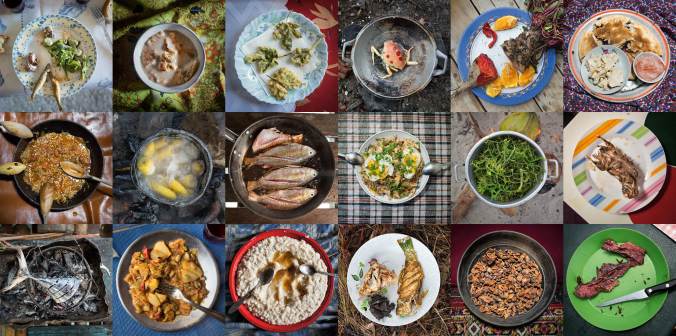
Top row: escargots, sardines, and fava beans (Crete); naan in salty yak-milk tea (Afghanistan); fried geranium leaves (Crete); boiled crab (Malaysia); raw beetroot and oranges (Crete); chapati, yak butter, and rock salt (Pakistan). Middle row: dried-apricot soup (Pakistan); boiled plantains (Bolivia); fried coral reef fish (Malaysia); bulgur, boiled eggs, and parsley (Tajikistan); stewed-seaweed salad (Malaysia); boiled ptarmigan (Greenland). Bottom row: grilled tuna (Malaysia); cooked potatoes, tomatoes, and fava beans in olive oil (Crete); rice with melted yak butter (Afghanistan); fried fish with tamarind (Malaysia); dried apricots (Pakistan); grilled impala (Tanzania; photographer’s utensils shown).

Thanks to National Geographic for this article:

The Evolution of Diet

Some experts say modern humans should eat from a Stone Age menu. What’s on it may surprise you.

It’s suppertime in the Amazon of lowland Bolivia, and Ana Cuata Maito is stirring a porridge of plantains and sweet manioc over a fire smoldering on the dirt floor of her thatched hut, listening for the voice of her husband as he returns from the forest with his scrawny hunting dog. Continue reading

Humanity’s Diet Makes A Difference, Historically As Well As Futuristically

On the timescale of evolutionary history, paleo enthusiasts note, agriculture is a fad. Credit Illustration by Mike Ellis.

On the timescale of evolutionary history, paleo enthusiasts note, agriculture is a fad. Credit Illustration by Mike Ellis.

Since the early days of this blog we have been hungry consumers of environmental long form journalism, of which Elizabeth Kolbert’s New Yorker chronicles are best-in-category. They are also, frankly, almost always depressing.

Nonetheless, they put humanity into its natural context. This not-at-all-depressing chronicle demonstrates the value of that contextualization well:

The first day I put my family on a Paleolithic diet, I made my kids fried eggs and sausage for breakfast. If they were still hungry, I told them, they could help themselves to more sausage, but they were not allowed to grab a slice of bread, or toast an English muffin, or pour themselves a bowl of cereal.

Continue reading

Chicago’s Vertical Farming

Plant Chicago, NFP/Rachel Swenie

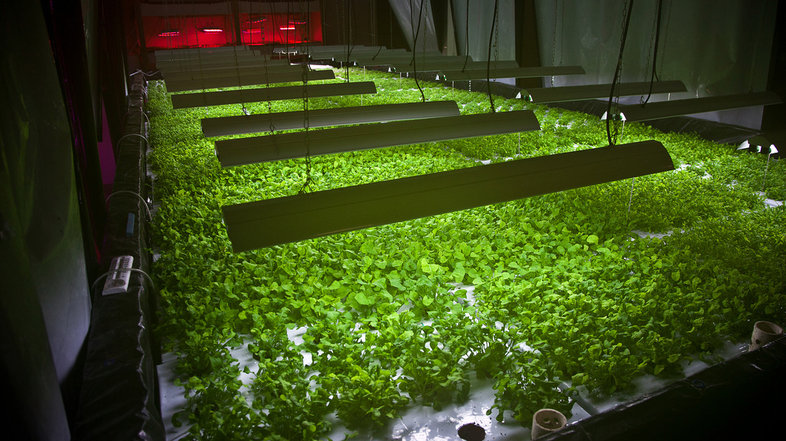
Arugula plant beds inside The Plant, a vertical farm operation in Chicago. Plant Chicago, NFP/Rachel Swenie

Thanks to National Public Radio (USA) for this story on their weekly program called The Salt:

From plant factories fueled by the magenta glow of blue and red LED lights, to the 30-foot tall Ferris wheel for plants in Singapore, we’ve shown you the design possibilities for growing vegetables up instead of out.

But critics ask, what kind of stresses does that put on the plant? And how do you feed this kind of intensive cultivation without spending more than what you get back in the harvest? Continue reading

Make The Pledge by Nikki Miles

tumblr_mwb61wXD4G1qz5g9bo1_1280

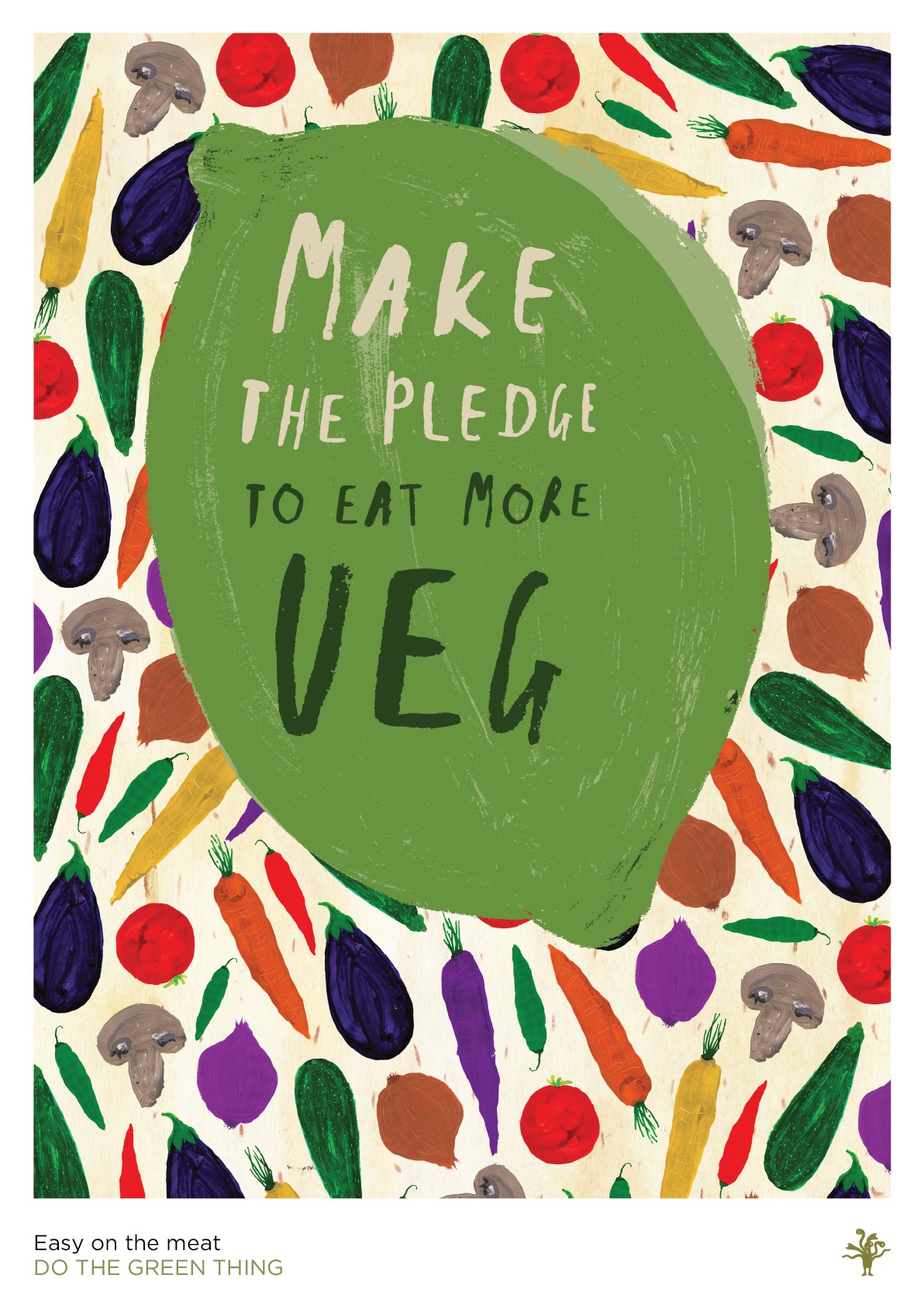
The day has come. Come! During the last month of food trials at 51, we were looking forward to the day–yesterday–when the doors officially opened and we could invite both vegetarian and non-vegetarian friends to dine, and in particular feast on a roasted vegetable dish rooted in Malabar Coast vegetables and Eastern European foodways. Thanks to another of the Young Creatives for this encouragement on getting non-vegetarians to pledge to add more vegetables to their diet–all it takes is better-tasting veggies, we think, and some creative promotion:

With this playful painting, illustrator Nikki Miles is urging us to make a pinky promise to go easy on the meat and its carbon consequences and enjoy some veg instead.

“I don’t eat a lot of meat but I’m not strictly a vegetarian either,” says Nikki. I have tried being a vegetarian in the past but I found it to hard to give up the odd bacon sandwich or roast dinner with beef gravy.  I only eat meat around once or twice a week because vegetables are yummy too! Eating more veg and less meat is a simple way to make a big difference to your health and the environment.” Continue reading

Lunchtime, 51

51 LunchAs this post goes up, it is time to step in through the front door of 51. On Bazar Road, neighboring the spice merchants who have been plying their trade for centuries here in the Mattanchery neighborhood of Fort Kochi, you will see this sign on the left side of the road passing from the Brunton Ferry in the direction of the Dutch Palace.

Continue reading

Things We Know That Bear Repeating–Nuts, Beans, Vegetables & Fruits Edition

A new study linking animal protein-rich diets to increased mortality in middle age adds fuel to the controversy over how much protein — and from what sources — is ideal for health. One thing that seems pretty clear: It doesn't hurt to go heavy on the greens. iStockphoto

A new study linking animal protein-rich diets to increased mortality in middle age adds fuel to the controversy over how much protein — and from what sources — is ideal for health. One thing that seems pretty clear: It doesn’t hurt to go heavy on the greens. iStockphoto

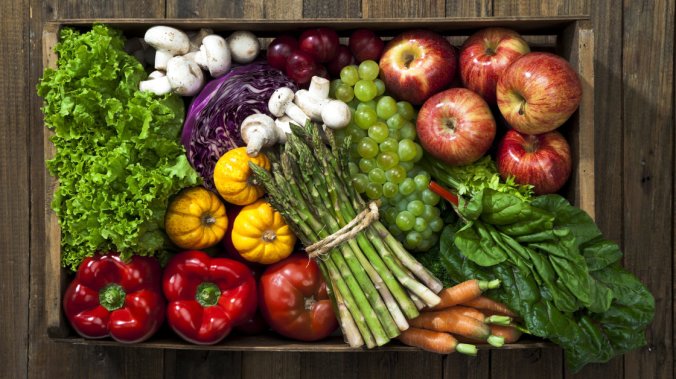
For most of us, most of the time, less animal protein in our diet is a good thing. For some of us, some of the time, more vegetable protein is a particularly good thing. The takeaways from this short item at The Salt (National Public Radio, USA) are worthy quick dietary recommendations:

…In the new study, Longo and his colleagues found that high-protein foods derived from plants, such as beans and nuts, did not have the same effect on mortality as did high-protein foods from animals… Continue reading