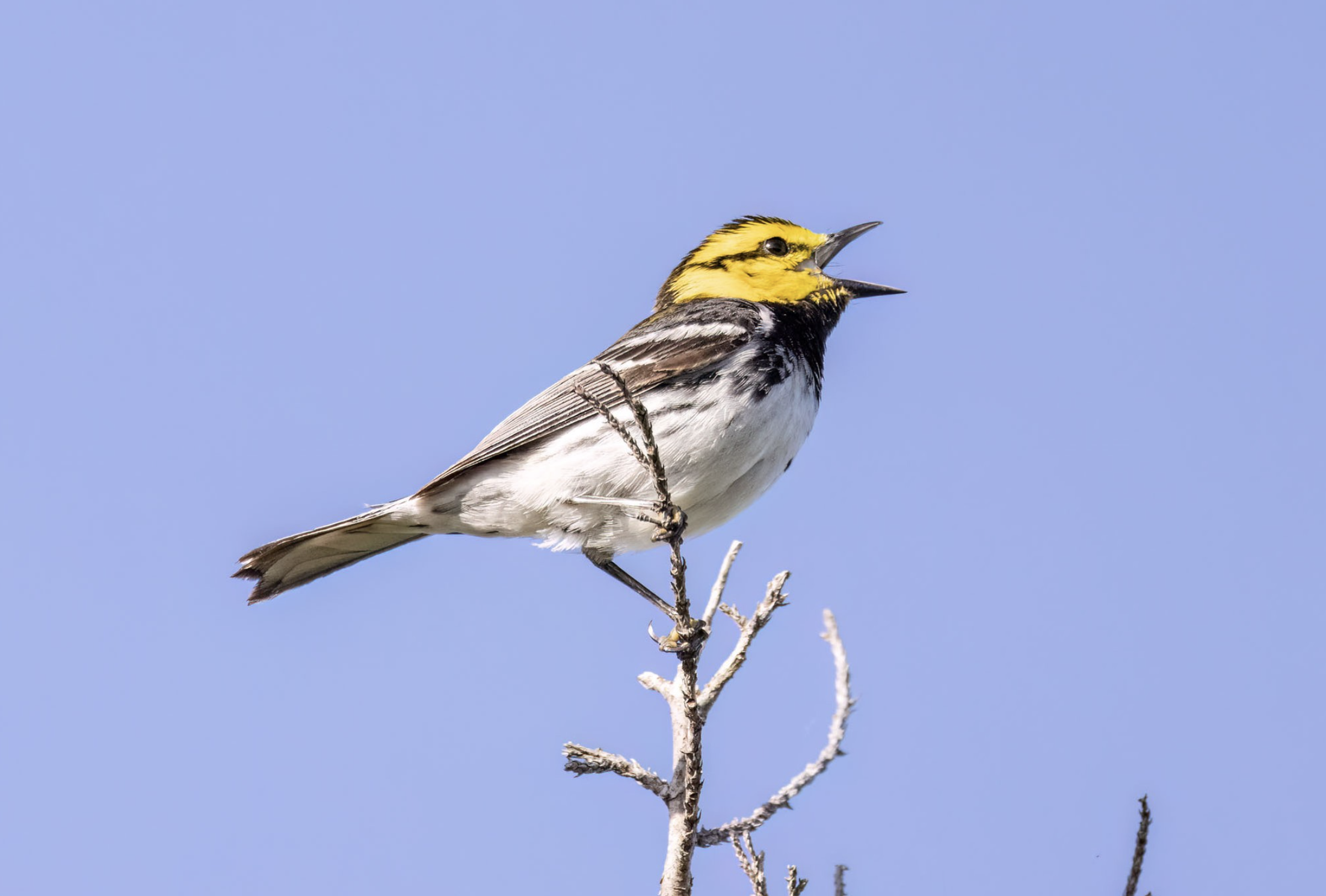
endangered species
Camp Wood Area, Real County, TX
endangered species
Camp Wood Area, Real County, TX
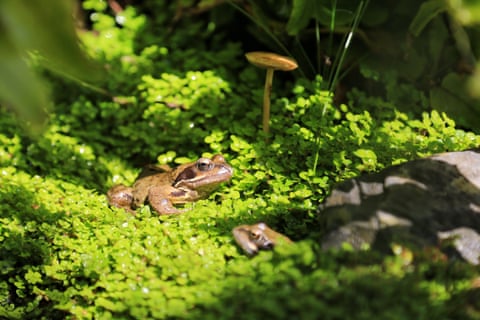
Common frogs and other amphibians will spawn in the most modest of garden ponds. Photograph: Brendan Allis/Getty Images/iStockphoto
There are many variations on the theme of garden as haven in our pages over the years. The common thread is that at the scale of a garden, there is much that the individual can do to support conservation. Thanks to Jules Howard for adding to the theme:
The frogs may be gone, but life goes on: how I regained my faith in gardening for wildlife
Gardens allowed to grow a little wild can be a lifeline for struggling pollinator populations – in rural as well as urban areas. Photograph: kirin_photo/Getty Images/iStockphoto
The extremes of the climate crisis mean it’s harder than ever to provide a garden haven for birds, insects and other animals. Some gardeners are questioning whether trying to do the right thing is time well spent
More than two decades ago, I had the honour of running the world’s last (possibly only) frog telephone helpline. No, this is not a set-up for a punchline. Continue reading
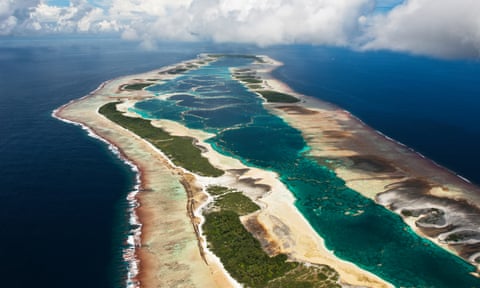
The Millennium Atoll in Kiribati, the Pacific state that is sponsoring Michael Lodge for re-election as ISA leader. Photograph: Mauricio Handler/Getty
Before we leave the subject of oceans, back to the question of how their protection is managed, and by whom.
We are learning today that some of the planet’s smaller nation states have a potentially significant, and clearly long overdue influence on how the oceans surrounding them will be protected:
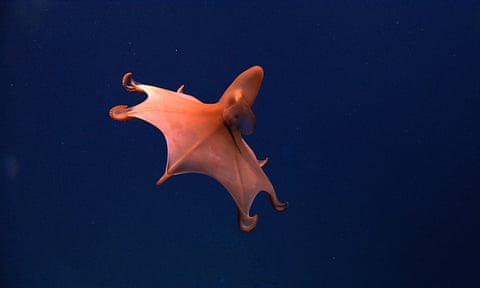
The rare dumbo octopus (Cirrothauma murrayi) is one of many creatures potentially at risk from deep-sea mining. Photograph: NOAA
Inside the battle for top job that will decide the future of deep-sea mining
Marking a pivotal moment for the fate of the barely known ecosystems on the ocean floor, 168 nations will decide this week who will head the International Seabed Authority
Deep-sea mining exploration trials under way in the Clarion-Clipperton Zone of the Pacific Ocean between Hawaii and Mexico. Photograph: Richard Baron/The Metals Company
Leticia Carvalho is clear what the problem is with the body she hopes to be elected to run: “Trust is broken and leadership is missing.” Later this week, at the headquarters of the International Seabed Authority (ISA) in Kingston, Jamaica, nations negotiating rules governing deep-sea mining face a critical vote that could impact the nascent industry for years: who should be the next leader of the regulatory body? Continue reading

Isabel Seliger
While Brisa surfs in Tahiti, the fate of our oceans will be on our minds. While not self-evidently important to most of us, most of the time, their scale on our planet gets us to pay attention when someone makes the case. Porter Fox, who reports on climate change, has come to the following conclusions with regard to those waters:
There’s a New Reason to Save Life in the Deep Ocean
Honey Long and Prue Stent
To most of us, the ocean is a no man’s land — a vast, bottomless and uncharted void. Three-quarters of the ocean has never been seen by humans, and only a quarter of its floor has been mapped in detail, which means we have a better understanding of the surface of Mars than we do of the seas on our own planet. It is this lack of exploration and appreciation — particularly of the layer of cold, dark water that begins where light fades, known as the ocean’s twilight zone — that has led us to a very precarious place. Continue reading

Starship, the upper stage of SpaceX’s new rocket, at its launchpad in Boca Chica, Texas. Conservationists are concerned with the environmental impact space operations have on the area.
After assurances about protecting the environment, damage was done. They declined responsibility (the words they used included “…it’s cool”). Not cool:
Wildlife Protections Take a Back Seat to SpaceX’s Ambitions
A New York Times investigation found that Elon Musk exploited federal agencies’ competing missions to achieve his goals for space travel.
As Elon Musk’s Starship — the largest rocket ever manufactured — successfully blasted toward the sky last month, the launch was hailed as a giant leap for SpaceX and the United States’ civilian space program.
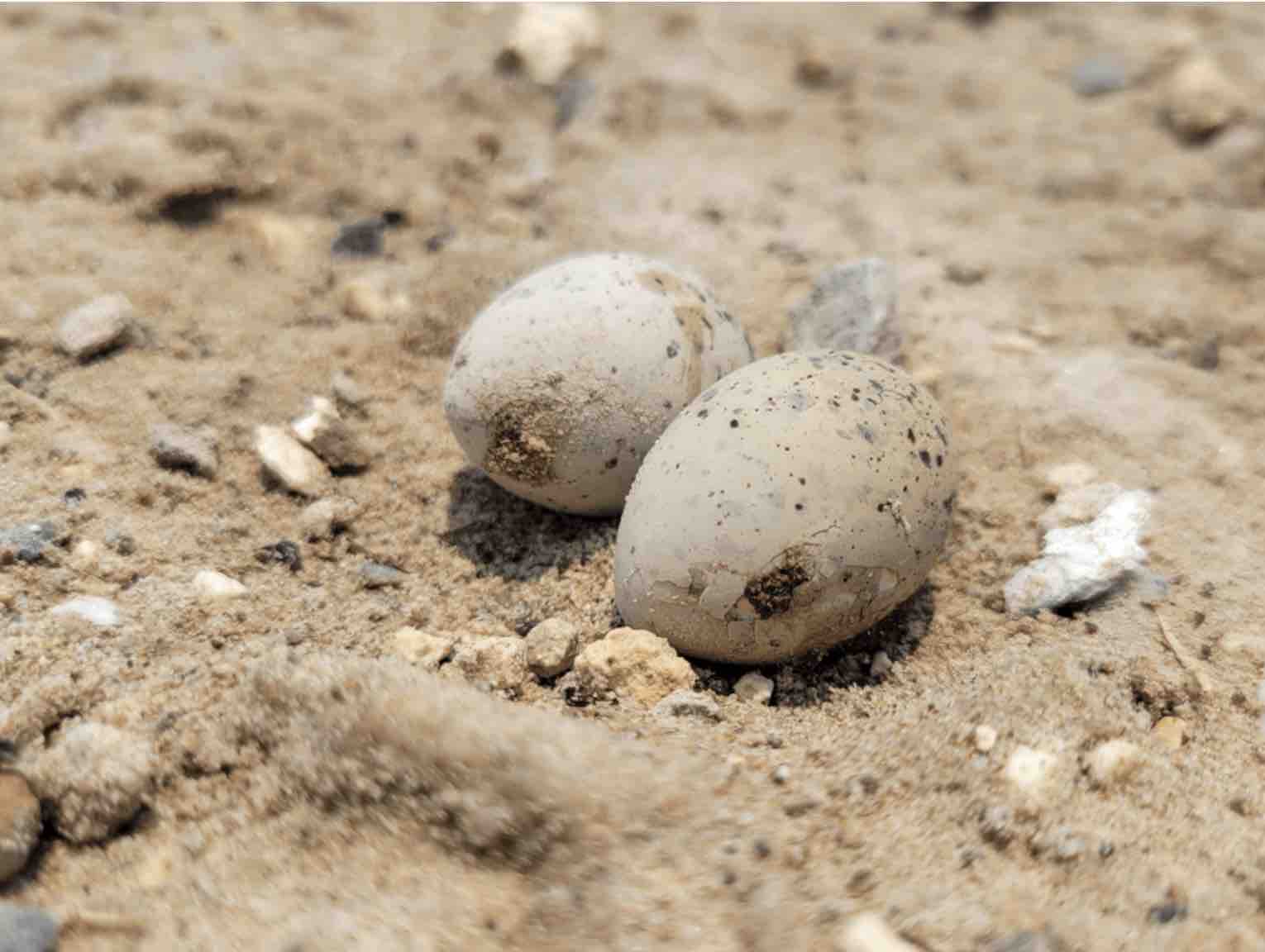
Figure 9. LETE 1 showing both eggs with large holes/cracks and dried egg contents emerging on June 6, 2024.
Two hours later, once conditions were deemed safe, a team from SpaceX, the U.S. Fish and Wildlife Service and a conservation group began canvassing the fragile migratory bird habitat surrounding the launch site.
The impact was obvious.
The launch had unleashed an enormous burst of mud, stones and fiery debris across the public lands encircling Mr. Musk’s $3 billion space compound. Chunks of sheet metal and insulation were strewn across the sand flats on one side of a state park. Elsewhere, a small fire had ignited, leaving a charred patch of park grasslands — remnants from the blastoff that burned 7.5 million pounds of fuel.
Most disturbing to one member of the entourage was the yellow smear on the soil in the same spot that a bird’s nest lay the day before. None of the nine nests recorded by the nonprofit Coastal Bend Bays & Estuaries Program before the launch had survived intact.
Egg yolk now stained the ground. Continue reading

Screenshot
Cute kitten videos are everywhere, and we avoid posting them here. But due to the Cairngorms rewilding efforts in Scotland this type of video is different, so our thanks as always to the Guardian:
Wildcat kittens born outside captivity in Cairngorms a ‘major milestone’
Adult cats were released into national park last year after British population had come close to extinction
The birth of wildcat kittens in the Cairngorms national park has been hailed as a “major milestone” in efforts to rescue the secretive mammals from extinction in the UK. Continue reading
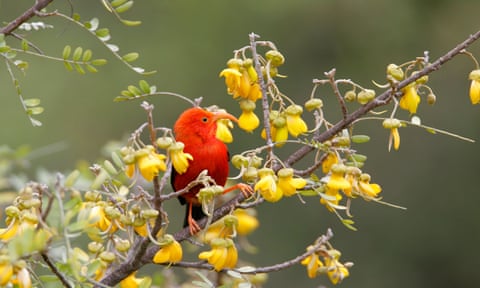
The scarlet honeycreeper, or ‘i’iwi, has a 90% chance of dying if bitten by an infected mosquito. Thirty-three species of the bird are already extinct. Photograph: Photo Resource Hawaii/Alamy
We had not heard of such risk to birds before, but this may be the rare case of mosquitoes potentially serving a good purpose:
Millions of mosquitoes released in Hawaii to save rare birds from extinction
Conservationists hope insects carrying ‘birth control’ bacteria can save honeycreeper being wiped out by malaria
Millions of mosquitoes are being released from helicopters in Hawaii in a last-ditch attempt to save rare birds slipping into extinction. Continue reading

Because invasive species are among the main drivers of extinction today, conservationists have made efforts to cull mice in favor of albatrosses, rats in favor of puffins, and pythons in favor of bobcats. Illustration by Javier Jaén; Source photographs from Getty
Invasive species have received plenty of attention in our pages in the years since we first shared on this topic. Creative approaches to solving the problem abound. Elizabeth Kolbert reviews two books that take up the moral implications:
Should We Kill Some Wild Creatures to Protect Others?
Where humans have tilted the game in favor of one species, some believe we should cull predators to save their prey. Others think it’s a mistake to pick sides.
The northern spotted owl is about a foot and a half high, with very dark eyes, a greenish beak, and a rim of feathers, called a facial disk, that makes it appear to be regarding the world with worried perplexity. Like most owls, northern spotteds are nocturnal, but, unlike most of their brethren, they are picky. They can live only in old-growth forests in the Pacific Northwest. Their diet is restricted and seems to consist mainly of flying squirrels. They’re incapable of building nests of their own, and so, to raise their young, they rely on tree cavities or on basketlike growths that are produced by arboreal infections and known, evocatively, as witches’ brooms.
The spotted owl’s fastidiousness produced one of the great environmental conflicts of the twentieth century. By the late nineteen-eighties, it was estimated that only fifteen hundred breeding pairs survived. Since the owls depended on old growth, the only way to save them, according to biologists, was to preserve the Northwest’s remaining stands of ancient trees. The timber industry countered that leaving those trees untouched would cost thousands of jobs. The two sides adopted increasingly confrontational tactics. Continue reading

Students in a course at the University of Chicago sorted through the future that they will inherit. Illustration by Ben Denzer
Gags and wonders abound. But now, enough diversionary fun, back to the tough stuff. Thanks to Rivka Galchen, writing in the current issue of The New Yorker, follow along and ponder all the major threats, with rigorous reasoning, in the classroom:
Are We Doomed? Here’s How to Think About It
Climate change, artificial intelligence, nuclear annihilation, biological warfare—the field of existential risk is a way to reason through the dizzying, terrifying headlines.
In January, the computer scientist Geoffrey Hinton gave a lecture to Are We Doomed?, a course at the University of Chicago. He spoke via Zoom about whether artificial intelligence poses an existential threat. He was cheerful and expansive and apparently certain that everything was going to go terribly wrong, and soon. “I timed my life perfectly,” Hinton, who is seventy-six, told the class. “I was born just after the end of the Second World War. I was a teen-ager before there was aids. And now I’m going to die before the end.” Continue reading
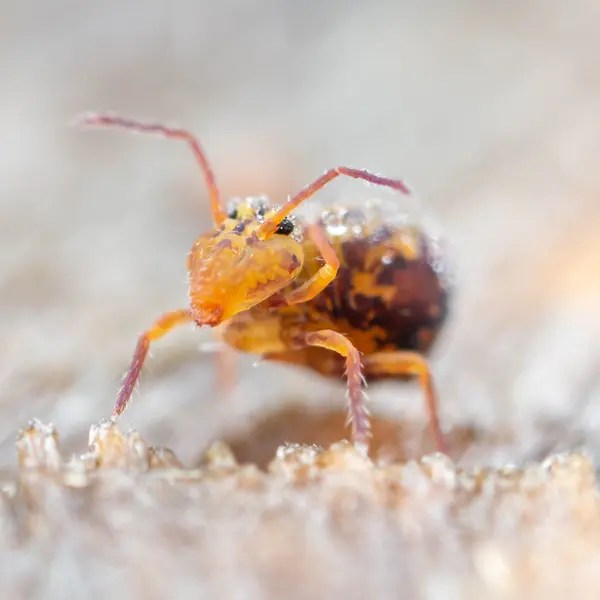
Scientists have identified about 9,000 species of springtails, but that number might represent just a fraction of their global species richness. Frank Ashwood
We have shared articles about the type of small creatures that we rarely think about, but which may be important to the wellbeing of the planet. Sofia Quaglia, an award-winning freelance science journalist (new to us), has written this story for the New York Times with exceptional photos by Frank Asherood:
Life in the Dirt Is Hard. And Climate Change Isn’t Helping.
Heat and drought are taking a toll on the tiny soil creatures that help to lock away planet-warming carbon, according to a new analysis.
They’re dirt-dwelling invertebrates, but, in a sense, they’re the real backbone of Earth’s carbon cycle.
Thousands of species of mites and springtails, living in soil all around the world, provide a crucial service by munching organic matter like fallen leaves and wood, transferring its planet-warming carbon into the ground and releasing nutrients that help new plants grow. Continue reading
Another of this year’s trouble-making prize-winners:
Alok Shukla led a successful community campaign that saved 445,000 acres of biodiversity-rich forests from 21 planned coal mines in the central Indian state of Chhattisgarh. In July 2022, the government canceled the 21 proposed coal mines in Hasdeo Aranya, whose pristine forests—popularly known as the lungs of Chhattisgarh—are one of the largest intact forest areas in India. Continue reading
 We missed Ever Green when it was published last year, but it came to our attention through this essay by one of its co-authors in the current issue of The Atlantic. The essay is about a path to the restoration of hope:
Protecting species from extinction is not nearly enough.
When Otis Parrish was a kid in the 1940s, abalone were abundant. Each abalone grows in a single, beautiful opalescent shell, which can get as big as a dinner plate. Parrish’s father showed him how to pry the abalone off the rocky shoreline at low tide with an oak stick or the end of a sharpened leaf spring. Continue reading

Scalloped hammerhead sharks are critically endangered. But the discovery of a schooling population in the Caribbean is giving local researchers hope. Blickwinkel/Alamy Stock Photo
Thanks to David Shiffman writing in Hakai Magazine:
In the Caribbean, Hammerhead Sharks Return to School
The detection of schooling behavior is a promising sign of recovery for this iconic and endangered animal.
Hammerhead sharks—fish with pronounced oblong heads and bodies as long as small cars—are unmistakable. Continue reading

Illustration by Matteo Giuseppe Pani. Source: Getty.
We have done our part to share, perhaps erroneously, that honeybees are in trouble. We hope we have been wrong:
For years, people have understood them to be at imminent risk of extinction, despite evidence to the contrary. Why?
Everyone, for so long, has been worried about the honeybees. Continue reading

Coastal marshlands exist in a precarious state: they need enough sediment to stay above water but not so much they get buried. In San Francisco Bay, the US Army Corps of Engineers and others are working to develop a less destructive way of giving marshes the mud they need. Photo by Aerial Archives/Alamy Stock Photo
For the record, marshes matter, so our thanks to Erica Gies, writing for Hakai:
Making a Marsh out of a Mud Pile
In San Francisco Bay, scientists are looking for a better way to rebuild flagging marshland.
The water in California’s San Francisco Bay could rise more than two meters by the year 2100. For the region’s tidal marshes and their inhabitants, such as the endangered Ridgway’s rail and the salt marsh harvest mouse, it’s a potential death sentence. Continue reading

Photo illustration by Lauren Peters-Collaer
If conservation failure is an option, then assisted evolution is a necessary consideration. Emily Anthes walks us through the idea:
Should We Change Species to Save Them?
When traditional conservation fails, science is using “assisted evolution” to give vulnerable wildlife a chance.
Scientists are trying to save lowland Leadbeater’s possums, tree-dwelling marsupials known as forest fairies, by crossbreeding them with possums from a separate highland population, a strategy known as genetic rescue.
For tens of millions of years, Australia has been a playground for evolution, and the land Down Under lays claim to some of the most remarkable creatures on Earth.
It is the birthplace of songbirds, the land of egg-laying mammals and the world capital of pouch-bearing marsupials, a group that encompasses far more than just koalas and kangaroos. (Behold the bilby and the bettong!) Nearly half of the continent’s birds and roughly 90 percent of its mammals, reptiles and frogs are found nowhere else on the planet.
Australia has also become a case study in what happens when people push biodiversity to the brink. Continue reading
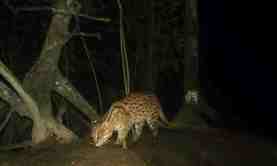
A fishing cat in Peam Krasop wildlife sanctuary. Photograph: Fauna & Flora/FCEE
Thanks to Robin McKie, now Science Editor at the Guardian, for this news from Cambodia:
‘We found 700 different species’: astonishing array of wildlife discovered in Cambodia mangroves
Smooth-coated otters in the mangroves. Photograph: Fauna & Flora/FCEE
Hairy-nosed otters and cats that catch fish are among the startling diversity of creatures making their home in threatened habitats
One of the most comprehensive biodiversity surveys ever carried out in a mangrove forest has revealed that an astonishing array of wildlife makes its home in these key, threatened habitats. Continue reading
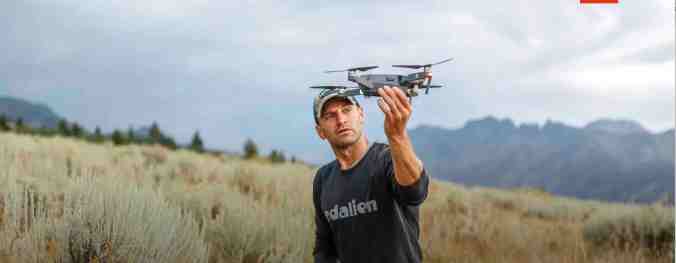
Daniel Anderson holds a drone on his family’s ranch in Montana’s Paradise Valley. Louise Johns/High Country News
High Country News is where a story like this gets assigned, and since they are a hyper-niche publication we thank The Atlantic for broadcasting it. If drones can unite these two constituencies, they are worth a moment of your time:
Illustration by Matteo Giuseppe Pani. Source: Getty.
Drones Could Unite Ranchers and Conservationists
Flying robots could offer a nonlethal way to keep wolves away from cattle.
In the summer of 2022, several researchers with USDA Wildlife Services held their breath as a drone pilot flew a large drone, equipped with a camera, toward a wolf standing in a pasture in southwestern Oregon. Continue reading

A giant sequoia in Bromyard, England. DEREK HARPER VIA GEOGRAPH
Thanks to Yale e360:
Under Threat in Their Native California, Giant Sequoias Are Thriving in Britain
Worsening drought and wildfires in California are pushing giant sequoias, the biggest trees on Earth, into decline. But sequoias that have been planted in Britain are flourishing, new research finds. Continue reading
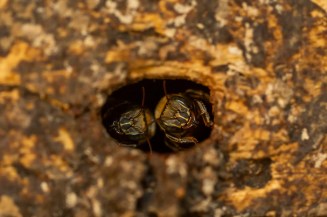
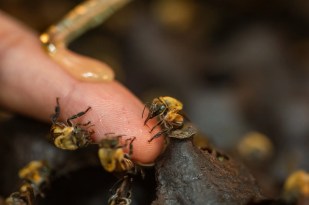
Melipona eburnea, a species of bee, is native to the Amazon. Unlike the more familiar but invasive honey bees from Africa and Europe that have spread through the Americas, these bees don’t sting. Ana Elisa Sotelo for National Geographic
The countless wonders of bees, as well as the many problems they now face, have made Melipona bees, also known as stingless bees, of particular interest to our daily scan for news stories:
In Peru, a Mission to Save the Stingless Bee
Native to the tropics, these pollinators are taking a lead role in one of the latest efforts to conserve the Amazon rainforest.
The Amazon is home to hundreds of species of stingless bee, but as deforestation converts the tropical landscape into farms and ranches, these and other native pollinators are in danger of disappearing. Ana Elisa Sotelo for National Geographic
As a child, Heriberto Vela, an Indigenous resident of Loreto, Peru, watched his father pull nests of wild stingless bees from trees in the Amazon forest. Together, the two then extracted honey from the nests to help cure colds and other ailments.
Stingless bees are native to the Amazon, unlike the more familiar but invasive honey bees from Africa and Europe that have spread through the Americas. The most obvious difference, perhaps, is that stingless bees don’t sting. Their honey, which is runny enough to be drunk like a liquid and is said to have a citrusy aftertaste, is used by many Indigenous Peruvians as a natural medicine. Continue reading





 Organikos