The built environment produces over 40% of global CO2 emissions. U.S. mayors are taking the lead to cut emissions with CO2 mineralized concrete.
As cities look to cut carbon emissions in their construction sector, the use of low-carbon concrete over other alternatives could help them do just that.
“Green” or carbon dioxide (CO2) mineralized concrete has received support from the U.S. Conference of Mayors (USCM) and private companies for its use in public projects as part of the national response to climate change. A resolution passed at this year’s USCM annual meeting in Honolulu urged its members to use the concrete over less environmentally-friendly alternatives.
Low-carbon concrete involves injecting recycled CO2 from industrial emitters like fertilizer and power plants into concrete. The CO2 then chemically converts into a mineral and gets embedded in the concrete, making it stronger and helping concrete producers use less cement for roads and buildings.
The built environment is responsible for over 40% of the world’s CO2 emissions and global building stock is expected to double by 2060. Concrete is the most widely used construction material in the world due to its affordable and durable nature. And its key ingredient, cement, contributes to up to 7% of the world’s CO2 emissions. Companies like CarbonCure are helping lead that charge with CO2 mineralized concrete.
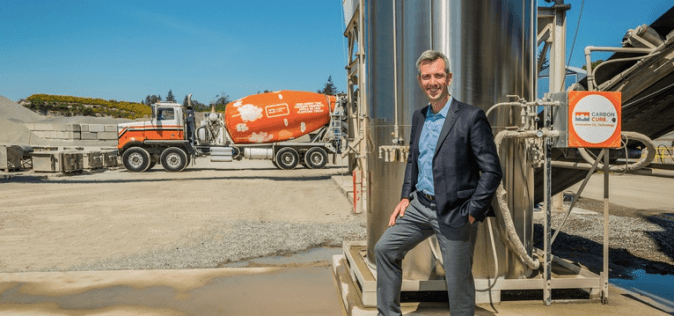
“The cliche really stands that cities are the laboratory of innovation,” CarbonCure CEO Robert Niven told Smart Cities Dive. “And cities are really committed to taking a leap on solving this climate change issue.”













 Organikos