Standing, Healthy Forests Are Essential

A managed forest near Jokkmokk, Sweden. Humanity will not limit global heating to safe levels without forests and woodland. Photograph: Peter Essick/Aurora/Getty Images

We thank Patrick Greenfield for this opinion in the Guardian:

Root and branch reform: if carbon markets aren’t working, how do we save our forests?

The world has looked to offsetting schemes to protect forests, fund conservation and fight the climate crisis – but many fail to fulfil their promises. Here are five ways to keep our forests standing

Keeping the world’s remaining forests standing is one of the most important environmental challenges of the 21st century. Continue reading

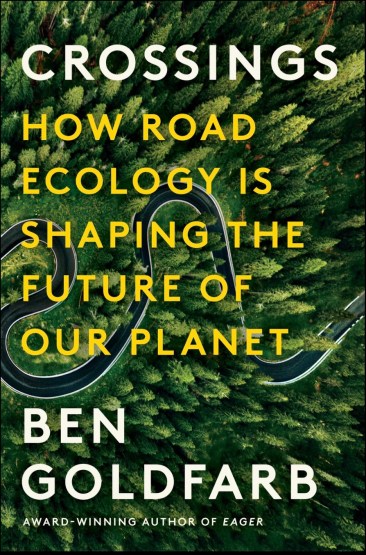
Crossings, By Ben Goldfarb

This journalist and author of the book to the left, surprisingly, has not appeared in our pages before. Here is what he says about himself:

Hi, I’m Ben, an independent conservation journalist. I’m the author of Crossings: How Road Ecology Is Shaping The Future of Our Planet, named one of the best books of 2023 by the New York Times, and Eager: The Surprising, Secret Life of Beavers and Why They Matter, winner of the 2019 PEN/E.O. Wilson Literary Science Writing Award.

And about the book he shares what others have said:

An eye-opening and witty account of the global ecological transformations wrought by roads, from the award-winning author of Eager.

Some 40 million miles of roadways encircle the earth, yet we tend to regard them only as infrastructure for human convenience. While roads are so ubiquitous they’re practically invisible to us, wild animals experience them as entirely alien forces of death and disruption. Continue reading

Letters To The Secretary

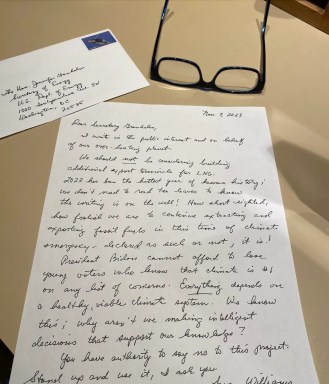
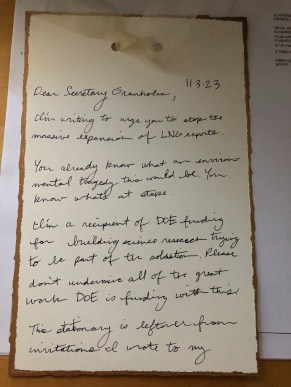
We have appreciated this newsletter since it started, and every issue since. This week it brings these handwritten letters to our attention:

…Oh, and who’s the other group of climate voters the president needs to worry about? That would be older people, like those of us at Third Act—we codgers have been organizing mass protests all year. And while we may not be TikTok savvy, we have another weapon: pen and stationery. In the last week Third Actors have unleashed thousands of letters on DOE headquarters—which may not sound quite as sexy as petitions from the Internet, but they have their own impact, since officials know that if you’re willing to do more than click you’re probably an effective and motivated adversary.

So consider [image above left]

Or [image to the right]

What I’m trying to say is, the Department of Energy has a real problem—an increasingly aware and activated posse of youngsters and oldsters. And a solution: announce CP2 is going nowhere, and that no other project will be approved, or even considered, until there’s been an exhaustive rewrite of the criteria taking into account the latest science and economics. It’s not hard. Continue reading

Frightening Future Facts For All Hallows’ Eve

Faced with climate change on the one hand and the material demands of new energy infrastructure on the other, humanity had better figure out how to reuse the resources it has already dug up. Illustration by Laura Edelbacher

Not to rain on the parade of the candy and costumes fun of October 31, but to heighten the mood of the day with some sobering truths facing all of us, our thanks as always to Elizabeth Kolbert for getting our attention pointed where it needs to go:

The Real Cost of Plundering the Planet’s Resources

Our accelerating rates of extraction come with immense ecological and social consequences.

The town of Spruce Pine, North Carolina, doesn’t have a lot to say for itself. Its Web site, which features a photo of a flowering tree next to a rusty bridge, notes that the town is “conveniently located between Asheville and Boone.” According to the latest census data, it has 2,332 residents and a population density of 498.1 per square mile. A recent story in the local newspaper concerned the closing of the Hardee’s on Highway 19E; this followed an incident, back in May, when a fourteen-year-old boy who’d eaten a biscuit at the restaurant began to hallucinate and had to be taken to the hospital. Without Spruce Pine, though, the global economy might well unravel. Continue reading

US Supreme Court’s Extreme Tilt

Relentless and Loper Bright have been brought before the Supreme Court with the same all-but-explicit goal: to make it more difficult for the federal government to protect the public. Photograph by Jemal Countess / UPI /Shutterstock

Courts with politically appointed jurists can tilt to an extreme, as we see now at the highest level in the USA’s judicial system. Even as the environment needs more protection, the infrastructure for providing it is being dismantled (thanks as always to Elizabeth Kolbert):

The Supreme Court Looks Set to Deliver Another Blow to the Environment

Two upcoming cases take aim at the government’s power to regulate.

Last week, the United States Supreme Court agreed to hear a case that’s nominally about herring. Arguments will be heard this winter, in tandem with a case that the Court had agreed to hear earlier, that one also ostensibly about herring. In both cases, though, the Justices have much bigger fish to fry: what’s really at issue is the fate of federal regulation. The stakes are enormously high, and, given the Court’s predilections, the outcome seems likely to undermine still further the government’s ability to function. Continue reading

Rishi Doubles Down On Awful

Prime Minister Rishi Sunak announcing last month that the U.K. will delay the phaseout of gasoline and diesel cars. JUSTIN TALLIS / POOL VIA AP

When leadership is most needed, the special relationship between the UK and the USA should count for something, but so far no sign of the USA pressing back on the UK’s awful reversal on their already tepid recent leadership on climate. We knew that leadershsip was lacking in the UK. The Orwell-worthy podium messaging in the photo to the left says all you need to know about efforts to obfuscate, but read Fred Pearce‘s account in Yale e360 anyway:

Demonstrators in Edinburgh protest the government’s recent approval of drilling in the Rosebank North Sea oil field. PRESS ASSOCIATION VIA AP IMAGES

Why Is Britain Retreating from Global Leadership on Climate Action?

While Britain has long been a leader in cutting emissions, Prime Minister Rishi Sunak is now implementing a stunning reversal of climate-friendly policies, with new plans to “max out” oil production. Business leaders have joined environmentalists in condemning the moves.

In 1988, British Prime Minister Margaret Thatcher became the first world leader to take a stand on fighting climate change. Continue reading

Going The Extra Mile For Monarch Butterflies

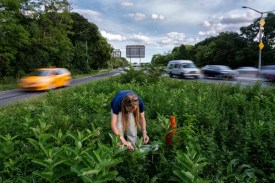
Ms. Elman collects butterfly eggs from milkweed plants growing wild along New York City’s highways. Karine Aigner

Some of the best stories are about people who go the extra mile for others:

To Save Monarch Butterflies, They Had to Silence the Lawn Mowers

An unlikely group of New Yorkers is winning small victories in the battle to protect butterfly habitats.

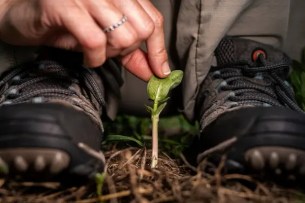
The small white dot under a milkweed plant is a monarch butterfly egg. Karine Aigner

The Long Island Expressway is not generally a place people linger, unless they’re stuck in traffic.

But during the summer, Robyn Elman can often be found walking alone near the highway’s shoulder, inspecting scraggly patches of overgrown milkweed. The plant is the only source of nutrition for monarch caterpillars before they transform into butterflies. Continue reading

Fireflies At Risk

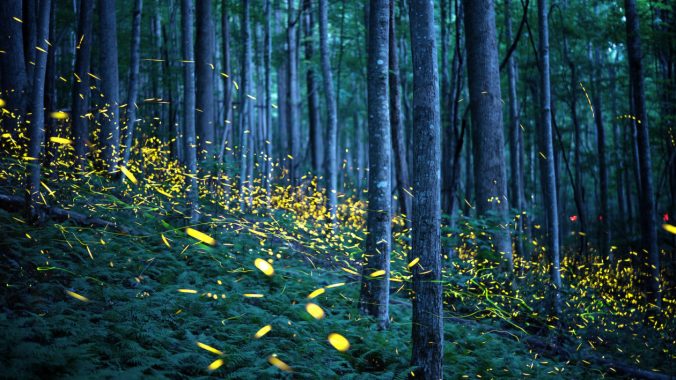
Fireflies in Great Smoky Mountains National Park. RADIM SCHREIBER

Fireflies being among the more charismatic insects, they and other glowing creatures have been covered in our pages second only to bees. Our thanks to Ted Williams, writing for Yale e360, for explaining their specific challenge:

A Summer Light Show Dims: Why Are Fireflies Disappearing?

Fireflies — whose shimmering, magical glows light up summer nights — are in trouble, threatened by habitat destruction, light pollution, and pesticide use. With 18 species now considered at risk of extinction in North America alone, recovery efforts are only just beginning.

For millions of people around the globe, fireflies have been a big part of the magic of spring and early summer nights. They certainly were in our family. When my children were young, our field in central Massachusetts blazed with fireflies. Continue reading

Environmental Status Reports & Lurking Contradictions

The last time we shared an advertisement here? Never. Occasionally, we promote a video like Kill the K-Cup that serves the opposite purpose. But this ad? Must see. It promotes a powerful message, and paradoxically at the same time, as Bill McKibben points out in this week’s newsletter, a whole other big mess is lurking just behind the curtain. He starts by bringing our attention to a new bill being considered in California, and then relates that bill to Apple in a way that raises questions about the accomplishments celebrated in the ad:

…#In California, SB 253 made it through the legislature, which is an incredibly big deal. Because California is the fifth largest economy on earth, and this law would force the big companies that do business there—which is everyone, really, because who is going to miss out on that economy?—to fully disclose their carbon emissions, including their “Scope 3” emissions, which are the ones that come from the supply chain. Continue reading

The Price Is Not Right For Groundwater

Not all natural resource utilization problems are simply a matter of pricing the resource correctly. But clearly it matters. Water hogging is apparently more widespread than we thought, and the price is clearly not right on this resource. This first in a series on the causes and consequences of disappearing water, by Mira Rojanasakul, Christopher Flavelle, Blacki Migliozzi and Eli Murray, has excellent interactive features to help understand these challenges:

Center-pivot irrigation. Farming is a major groundwater user. Loren Elliott for The New York Times

America Is Using Up Its Groundwater Like There’s No Tomorrow

Overuse is draining and damaging aquifers nationwide, a New York Times data investigation revealed.

GLOBAL WARMING HAS FOCUSED concern on land and sky as soaring temperatures intensify hurricanes, droughts and wildfires. But another climate crisis is unfolding, underfoot and out of view.

Most American communities also rely on wells for tap water. Rebecca Noble for The New York Times

Many of the aquifers that supply 90 percent of the nation’s water systems, and which have transformed vast stretches of America into some of the world’s most bountiful farmland, are being severely depleted. These declines are threatening irreversible harm to the American economy and society as a whole.

The New York Times conducted a months-long examination of groundwater depletion, interviewing more than 100 experts, traveling the country and creating a comprehensive database using millions of readings from monitoring sites. Continue reading

Beechnut & Beaver Hope

Nearing the end of the northern summer, one for too many of the wrong kind of record books, some notion of hope is more than welcome. This edition of his newsletter offers some:

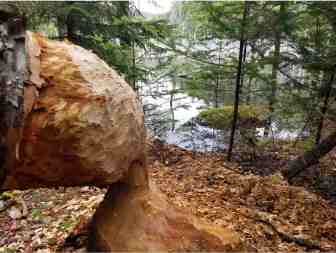
Beavering Away

With Your Help. (An annual update!)

In the guise of my annual report on our nifty online community I’m going to show you my vacation pictures! Lucky you!

It’s possible I’m just feeling guilty because I took a couple of days off in this Summer To End All Summers. But Sunday and Monday, while Hillary was introducing southern Californians below the age of 85 to the concept of ‘tropical storm,’ I went on a wander with an old friend through the middle of the Wilcox Lake Wild Forest in New York’s Adirondack Mountains, a splendidly remote chunk of land that I’ve lived on the edge of, off and on, for much of my life, and which I never tire of exploring. Continue reading

Planting Trees In New Haven

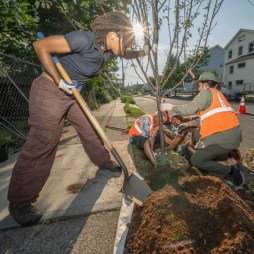
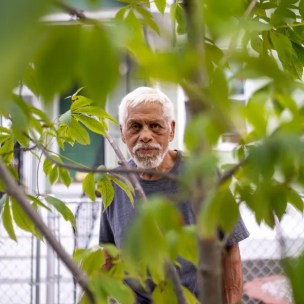
From left, Jess Jones, Ed Rodriguez, Zach Herring and Joshua De-Anda, planting a crab apple tree at 10 Wolcott Street in the Fair Haven neighborhood of New Haven, Conn. Tony Cenicola/The New York Times

Ed Rodriguez has a few years on me, but we have comparable tree counts. The caption of the second photo below captures my my own preference of activity on any given day. Having grown up in Connecticut and moved to Costa Rica decades ago, I note our reverse patterns of migration.

Colbi Edmonds, a member of the 2023-24 New York Times Fellowship class, reports from Seth’s previous hometown New Haven on an initiative I love reading about as much as I enjoy my own versions of the same kind of activity:

“I love to dig and mess around in the soil,” said Ed Rodriguez, who grew up in Puerto Rico but moved to Connecticut in the 1960s. Christopher Capozziello for The New York Times

One Neighborhood, 90 Trees and an 82-Year-Old Crusader

Ed Rodriguez is on a mission to convince his neighbors that they need trees to help combat summer heat — and to make the world a better place. It’s not always so easy.

Maria Gonzalez, who lives in New Haven, Conn., was envious of the other side of her street. It was lined with trees, offering some beauty as well as a shield from this summer’s unusual heat. But the sidewalk directly in front of her residence was bare, with trash littering patches of grass. Continue reading

UK Regenerative Agriculture Festival, Groundswell 2023

Last year’s highlights in the video above, and a review of this year’s festival in the link below to an online magazine:

Lannock Manor Farm, Hertfordshire, SG4 7EE, UK

The Groundswell Festival provides a forum for farmers, growers, or anyone interested in food production and the environment to learn about the theory and practical applications of regenerative farming systems.

The next Groundswell Festival takes place on the 26th & 27th of June 2024. View the Event Guide from 2023 here.

Franzen On Motivating Nature Preservation

Illustration by Benoit Leva

Yesterday a writer, whose care for nature is as famous as his books are popular, posted this:

The Problem of Nature Writing

To succeed—to get people to care about preserving the world—it can’t be only about nature. 

The Bible is a foundational text in Western literature, ignored at an aspiring writer’s hazard, and when I was younger I had the ambition to read it cover to cover. After breezing through the early stories and slogging through the religious laws, which were at least of sociological interest, I chose to cut myself some slack with Kings and Chronicles, whose lists of patriarchs and their many sons seemed no more necessary to read than a phonebook. Continue reading

Solidarity, Class Traitors & Ambiguity Management

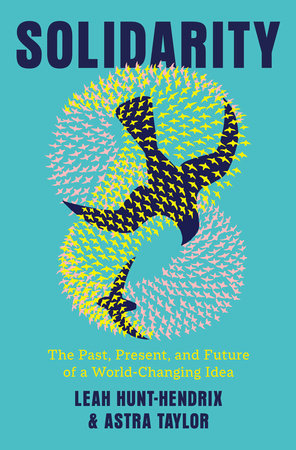
Solidarity by Leah Hunt-Hendrix and Astra TaylorThis book comes with a strong pitch by Bill McKibben. It came to my attention while reading this profile by Andrew Marantz. Full of ambiguity, about a balancing act between privilege inherited from fossil fuel wealth and sincere commitment to solidarity movements, what follows is entirely worth the read to get to the last paragraph (which only works if you have made it through the entire text):

What Should You Do with an Oil Fortune?

The Hunt family owns one of the largest private oil companies in the country. Leah Hunt-Hendrix funds social movements that want to end the use of fossil fuels.

Leah HuntHendrix photographed by Platon.

“Leah was clearly preoccupied with how a person of extreme privilege can live responsibly in the world,” her Ph.D. adviser said. Photograph by Platon for The New Yorker

Let’s say you were born into a legacy that is, you have come to believe, ruining the world. What can you do? You could be paralyzed with guilt. You could run away from your legacy, turn inward, cultivate your garden. If you have a lot of money, you could give it away a bit at a time—enough to assuage your conscience, and your annual tax burden, but not enough to hamper your life style—and only to causes (libraries, museums, one or both political parties) that would not make anyone close to you too uncomfortable. Or you could just give it all away—to a blind trust, to the first person you pass on the sidewalk—which would be admirable: a grand gesture of renunciation in exchange for moral purity. But, if you believe that the world is being ruined by structural causes, you will have done little to challenge those structures. Continue reading

If You Are In The Market For A New Puffer Jacket

The first and last time some of us heard the word bullrush was with regard to baby Moses. That may change. Thanks to Patrick Greenfield at the Guardian for bringing this company and its innovative product to our attention:

Goosedown out, bulrush in: the plant refashioning puffer jackets

By 2026, a rewetted peatland site in Greater Manchester will be harvesting bulrushes in a trial that aims to boost UK biodiversity, cut carbon emissions and provide eco-friendly stuffing for clothes

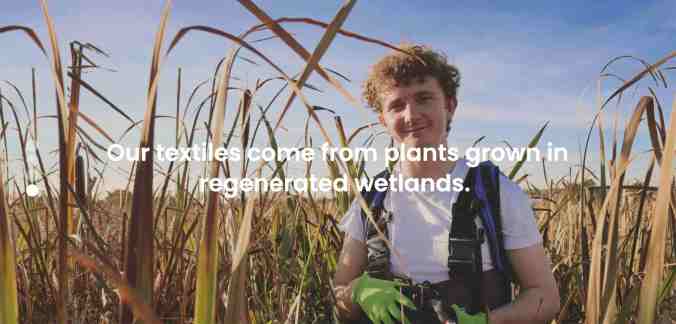
Bulrushes grow in marshes and peatland across the UK. Photograph: Krys Bailey/Alamy

The humble bulrush does not look like the next big thing in fashion. Growing in marshes and peatland, its brown sausage-shaped heads and fluffy seeds are a common sight across the UK. Yet a project near Salford in north-west England is aiming to help transform the plant into an environmentally friendly alternative to the goosedown and synthetic fibres that line jackets, boosting the climate and the productivity of rewetted peatland in the process. Continue reading

Plastic Waste Losing Another Place To Land

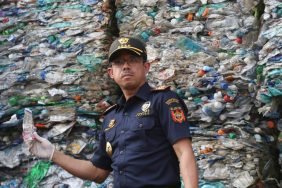
An Indonesian customs official intercepts a container full of illegally imported plastic waste in September 2019. ACHMAD IBRAHIM / AP PHOTO

When conscientious citizens learn more about where all the plastic goes when they do their part to recycle, it can be demoralizing. Recycling is important but the real solution is reducing the waste in the first place:

Indonesia Cracks Down on the Scourge of Imported Plastic Waste

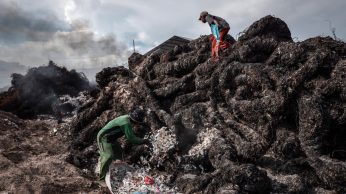
Workers prepare to burn plastic waste at an import dump in Mojokerto, Indonesia. ULET IFANSASTI / GETTY IMAGES

When China banned plastic waste imports in 2018, exporters in wealthy countries targeted other developing nations. Faced with an unending stream of unrecyclable waste, Indonesia has tightened its regulations and has begun to make progress in stemming the plastics flow.

In 2019, at a meeting in Geneva, Switzerland, delegates from 187 countries approved the first-ever global rules on cross-border shipments of plastic waste. Continue reading

11 Years, 11 Months & 11 Days Later

Mermaid (now in Escazu, Costa Rica), handcrafted by Rock Bottom from driftwood in Port Antonio, Jamaica

June 15, 2011 was the day we first posted on this platform, and while we have evolved since then we have remained constant and consistent in a few ways. In the daily search for something worth sharing, photos of birds from around the world have been the most constant–as in, every day since the first photo was shared by this old friend who got us started on that daily routine. Thank you, Vijaykumar, for a healthy habit-formation.

Consistent have been the shared convictions that environmental conservation, no matter how bleak the news, is worth our effort.

Maroon shaman mask with third eye for healing power (now in Ithaca, NY USA), handcrafted by Rock Bottom from driftwood in Port Antonio, Jamaica

Plenty more constantly interesting sub-topics like books and libraries, seemingly unrelated to the environment, have been the focus of daily posts; but they are related. As is artisan production, riffed upon many times in these pages, especially now that it is the focus of our day jobs.

So today, heading toward the twelve year mark posting here, a nod to an artisan named Rock Bottom. He carves driftwood in Port Antonio, Jamaica.

There is an effort in that part of Jamaica to revive and strengthen traditional crafts, and the work of Rock Bottom is a model for what we can hope to see more of. My hope is that the amazing engine of economic activity that Jamaica’s tourism sector represents will valorize his work and the work of others akin to his.

Chilekwa Mumba, 2023 Goldman Environmental Prize Winner

https://youtu.be/8TG_1ILhxcU

The 2023 Goldman Prize goes to this man:

Alarmed by the pollution produced by the Konkola Copper Mines operation in the Copperbelt Province of Zambia, Chilekwa Mumba organized a lawsuit to hold the mine’s parent company, Vedanta Resources, responsible. Chilekwa’s victory in the UK Supreme Court set a legal precedent—it was the first time an English court ruled that a British company could be held liable for the environmental damage caused by subsidiary-run operations in another country. This precedent has since been applied to hold Shell Global—one of the world’s 10 largest corporations by revenue—liable for its pollution in Nigeria.

Our thanks to Jocelyn C. Zuckerman for this conversation with him:

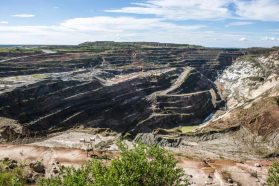
The Nchanga copper mine, operated by Konkola Copper Mines, in Chingola, Zambia. WALDO SWIEGERS / BLOOMBERG VIA GETTY IMAGES

This Zambian Took on a U.K. Mining Giant on Pollution and Won

Chilekwa Mumba led a court battle to hold a U.K.-based company responsible for the gross pollution from a copper mine it owns in Zambia. In an interview, he talks about how he and local villagers faced arrest to overcome long odds and finally win a landmark legal victory.

The southern African nation of Zambia is home to a wealth of minerals — in particular, lots of the copper and cobalt that the world will require to power a green economy. Continue reading