Golf & Its Discontents

Thanks to Yale e360, with this headline below I found my way to the video above and the website where the video is hosted:

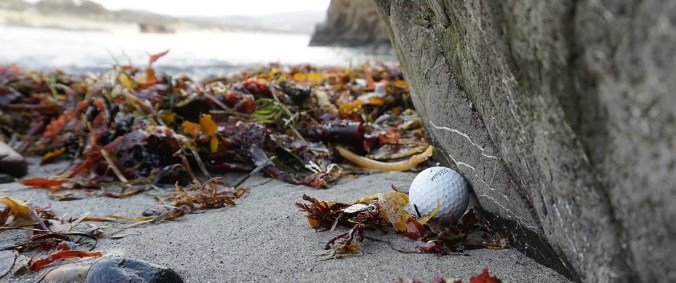
California Teen Finds Thousands of Golf Balls Releasing Microplastics into Ocean

Reading further, I sensed that Yale e360 was being a bit polite saying “thousands” — more than 50,000 balls have already been extracted over two years. The article linked to National Public Radio’s coverage of the same story, with this slightly more aggressive headline:

Teenage Diver Finds Tons Of Golf Balls Rotting Off California

During my PhD years I got to be reasonably competent at the game of golf. I can say I even loved the game. One odd bi-product of my dissertation was that I learned of the perils to the planet from out of control golf course development. Then I felt compelled to give up the game. (I did play a bunch during the mid-1990s, in Costa Rica, as I slowly learned of those perils.) Recently I found the clubs I used to play with, and the shoes, while cleaning out a store room in Costa Rica. I left them there.

To this day I have some close friends who play golf. I never comment on this topic in front of them, because my message is easily misconstrued. I am not against all golf. I just think there are more than enough courses already built on this planet. A moratorium on building more would make me happy. My friends already have more than enough courses to play on. Anyway, this topic is of interest now for a new, very specific reason. And it comes as a bit of a surprise what a big problem golf balls are in the ocean. The website of the organization that is featured in both articles can be reached by clicking the image below:
GolfOcean.jpg

I remember advertisements from not that long ago that encouraged you to daydream about hitting balls endlessly into the ocean from cruise ship voyages with golf tees on the back of the ship. At first I thought maybe that kind of weird pleasure was the culprit, considering all the other dirty outcomes of cruising. But it’s complicated, as I learned from The Plastic Pickup website:

Golf1.jpgIn the spring of 2016, my dad (Mike Weber) and I (Alex Weber) were freediving along the central coast of California in the shallow waters adjacent to the Pebble Beach golf course, when we came across a discovery that had never been reported before. Thousands of golf balls blanketed the seafloor, and inhabited nearly every crack and crevice in the underwater and onshore environment. The overabundance of inorganic materials was overwhelming but for a second it did not phase us. As we began diving to the bottom to collect the balls, we realized what perfect freediving training it was and the whole operation felt like a fun game; we were having a blast. But soon, the enormity and vast scale of the pollution set in and it made me feel sick to my stomach. To preface this day, for a few years prior I had been spending at least an hour a day down at the beach collecting golf3microplastics and nurdles after heavy storms would wash them ashore. As a kid I was raised in the sea, boogie boarding everyday after school in kindergarten, scuba diving as soon as I was allowed to, and spending each summer day swimming offshore to hang out with dolphins and swim through giant kelp forests. To me the ocean was a peaceful home as well as my favorite teacher, so the discovery of such a large scale underwater plastic problem both shocked me and also captivated my curiosity. What began as a day of freediving resulted in a project that has changed my life ever since.

golf2The next dive-able day, we were underwater early in the morning equipped with mesh bags and a new diver, Jack Johnston. Jack and I had been long time friends since middle school, and spent all our time together either underwater or on mountains, so he didn’t need much convincing to come along. Jack’s reaction was similar to mine, but his wildly curious mind helped him stay positive and motivated. That day we collected nearly 2,000 golf balls which was just the start of what grew into The Plastic Pick-Up. As we continued diving, we were not only collecting golf balls, but data too…

Read the whole story here. And if that interests you, there is another website that mentions a different Alex and his buddy Andrew who have also found a mission-driven business focused on ocean cleanup:

4Ocean1.jpg

The story begins when Alex and Andrew take a surf trip…

to Bali Indonesia that would inevitably change their lives and the fate of the ocean. Devastated by the amount of plastic in the ocean, they set out to find out why no one was doing anything about it. Continue reading

The Future Runs Through It

CORiver-111118-0482_HooverAerial_web.jpg

After two decades of drought, Lake Mead in Nevada is just 40 percent full. TED WOOD

Thanks to Jim Robbins and Yale e360 for this second installment, and especially to Ted Wood for photography as visually compelling as the implication of the story:

CRISIS ON THE COLORADO: PART II

On the Water-Starved Colorado River, Drought Is the New Normal

With the Southwest locked in a 19-year drought and climate change making the region increasingly drier, water managers and users along the Colorado River are facing a troubling question: Are we in a new, more arid era when there will never be enough water?


corivermx-101118-0063_treeringlab_web

Scientists at the University of Arizona are using tree rings to study centuries of drought conditions in the Colorado River Basin.

In the basement of the University of Arizona’s Laboratory of Tree-Ring Research, the fragrant smell of pine hangs in the air as researchers comb through the stacks of tree slabs to find a round, 2-inch-thick piece of Douglas fir.

They point out an anomaly in the slab — an unusually wide set of rings that represent the years 1905 to 1922. Those rings mean it was a pluvial period — precipitation was well above average — and so the trees grew far more than other years.

“In 1905, the gates opened and it was very wet and stayed very wet until the 1920s,” said David Meko, a hydrologist at the lab who studies past climate and stream flow based on tree rings. “It guided their planning and how much water they thought was available.”

CORiver-0906-0037_MarkHarris_web.jpg

Mark Harris, a water manager in Grand Junction, Colorado.

The planning was that of the states that share the water of the Colorado River. Worried that a burgeoning California would take most of the water before it was fairly divvied up, representatives from the other Colorado River Basin states, presided over by U.S. Secretary of Commerce Herbert Hoover, came together in 1922 to develop an equitable apportionment. They looked at flow measurements and figured that the river contained an average of 15 million acre-feet. They divided the Colorado River states into two divisions – the upper basin and the lower basin, with the dividing line in northern Arizona near the Utah border. The upper basin states — Utah, Wyoming, Colorado, and New Mexico — agreed not to take more than a total of 7.5 million acre-feet and to allow the other half to flow south to the lower basin. The agreement they signed was called the 1922 Colorado River Compact, also known as the Law of the River. Continue reading

Naughty Behavior Will Not Be Tolerated

Thanks to the Guardian for the latest story in this series. We have avoided adding our voice to the many rightly concerned about the radically pro-extraction, carbon-freewheeling policies of the United States since early 2017. The concern is loud and widespread. We have listened. Today, reading this story, I pictured a naughty boy, a bully, getting away with bad behavior for an extended period. Any period of bad boy behavior is intolerable but it happens. Until it is no longer tolerated. Which eventually always happens. And that may be the best stand-in for optimism these days:

Lost lands? The American wilderness at risk in the Trump era

Exclusive: a new study reveals the vast extent of public lands being opened up to the energy industry. The Guardian heard from three communities on the frontlines

by Charlotte Simmonds, Gloria Dickie and Jen Byers

3872 (2).jpg

Colter Hoyt, an outdoors guide and conservationist, at Grand Staircase-Escalante. Photograph: Charlotte Simmonds for the Guardian

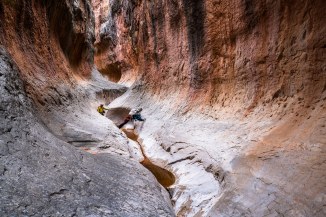
In the great expanses of the Grand Staircase-Escalante national monument, the silence hits you first. Minutes pass, smooth and unbroken as glass. The smallest sound – a breath of wind, a falling rock – can seem as loud as passing traffic.

Colter Hoyt knows this landscape well. As an outdoor guide, he walks the monument almost daily. Yet these days he is full of fear. This remote paradise of red rocks, slot canyons and towering plateaus faces an uncertain future, following a controversial presidential proclamation that removed 800,000 acres from the monument and opened land up for potential energy development.

When Trump took office in 2016, he promised the energy industry a new era of “American energy dominance”. This would only be possible by exploiting America’s 640m acres of public land: mountains, deserts, forests and sites of Native American history that cover more than a quarter of the country. Continue reading

Part Of The Solution

06CLI-AGRICULTURE1-jumbo.jpg

Harvesting soybeans in Mato Grosso, Brazil. Credit Yasuyoshi Chiba/Agence France-Presse — Getty Images

Thanks to Brad Plumer, whose reporting on environmental issues has been illuminating, for this fifth feature in our links out to stories that help us understand what we might do to be part of the solution:

Can We Grow More Food on Less Land? We’ll Have To, a New Study Finds

06CLI-AGRICULTURE2-jumbo

A farm in the Pays de la Loire region of France. Cows have an especially large environmental footprint. Credit Loic Venance/Agence France-Presse — Getty Images

WASHINGTON — If the world hopes to make meaningful progress on climate change, it won’t be enough for cars and factories to get cleaner. Our cows and wheat fields will have to become radically more efficient, too.

That’s the basic conclusion of a sweeping new study issued Wednesday by the World Resources Institute, an environmental group. The report warns that the world’s agricultural system will need drastic changes in the next few decades in order to feed billions more people without triggering a climate catastrophe.

The challenge is daunting: Agriculture already occupies roughly 40 percent of the world’s land and is responsible for about a quarter of humanity’s greenhouse gas emissions. But with the global population expected to grow from 7.2 billion people today to nearly 10 billion by 2050, and with many millions of people eating more meat as incomes rise, that environmental impact is on pace to expand dramatically. Continue reading

News & Perspective

lead_720_405 (4).jpg

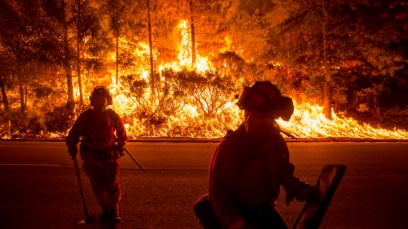
Firefighters battle the King Fire near Fresh Pond, California, in September 2014. NOAH BERGER / REUTERS

Posts like this one tend to not fare as well with readers visiting our platform. Whoever makes their way here is normally looking for what we normally offer, stories about entrepreneurial conservation. Which we believe can be a winning formula for the challenges at hand. But from time to time, we must acknowledge that the odds look grim.

merlin_146590158_372cbff0-acb2-4bf5-8308-f9b1c200405d-jumbo.jpg

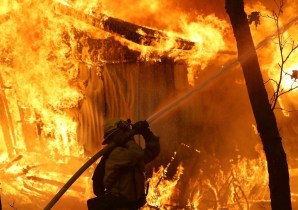
Fighting the Camp Fire this month in Magalia, Calif. Credit Justin Sullivan/Getty Images

Two articles, both very well written, about the report warning of the dangers of climate change to the US economy, note that the report is not likely to have much impact. Because of Black Friday? No, because the forces behind willful ignorance have been at it for a long time, with plentiful resources to strengthen their game. This cartoon says more in fewer words than either article on why. Nathaniel Rich’s short essay, dark and stark and alarming, is akin. Bill McKibben, though, once again hits the nail squarely and firmly, and more effectively than news, because of his trench-based perspective:

181126_r33282.jpg

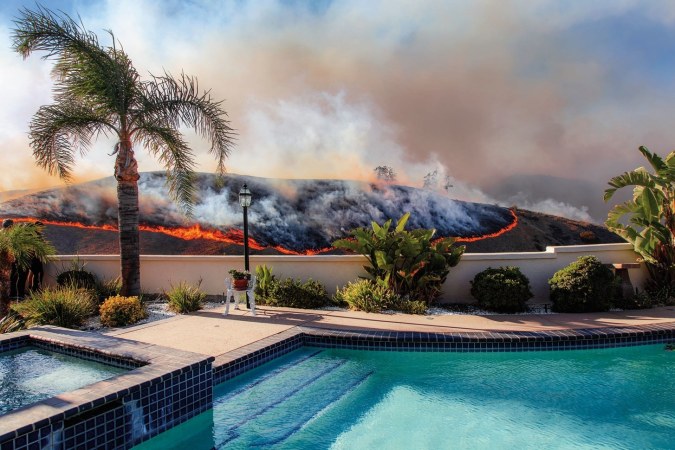
California is currently ablaze, after a record hot summer and a dry fall set the stage for the most destructive fires in the state’s history. Above: The Woolsey fire, near Los Angeles, seen from the West Hills. Photograph by Kevin Cooley for The New Yorker

How Extreme Weather Is Shrinking the Planet

With wildfires, heat waves, and rising sea levels, large tracts of the earth are at risk of becoming uninhabitable. But the fossil-fuel industry continues its assault on the facts.

Thirty years ago, this magazine published “The End of Nature,” a long article about what we then called the greenhouse effect. I was in my twenties when I wrote it, and out on an intellectual limb: climate science was still young. But the data were persuasive, and freighted with sadness. We were spewing so much carbon into the atmosphere that nature was no longer a force beyond our influence—and humanity, with its capacity for industry and heedlessness, had come to affect every cubic metre of the planet’s air, every inch of its surface, every drop of its water. Scientists underlined this notion a decade later when they began referring to our era as the Anthropocene, the world made by man.

I was frightened by my reporting, but, at the time, it seemed likely that we’d try as a society to prevent the worst from happening. Continue reading

Mapping Earth’s Remaining Intact Ecosystems

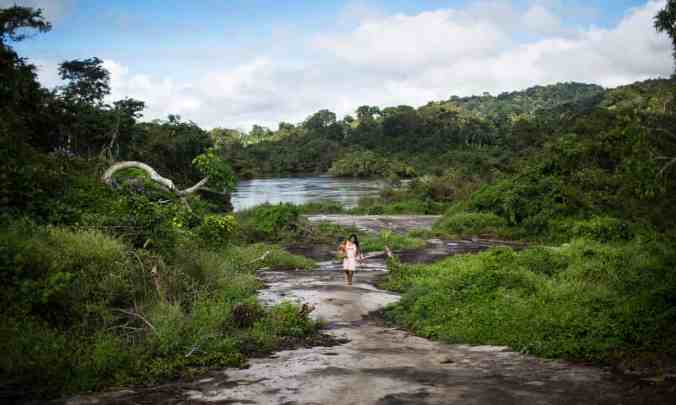
A Xikrin woman walks back to her village from the Cateté River in Brazil. Photograph: Taylor Weidman/Getty Images

Thanks to Lisa Cox, the Guardian’s Australia correspondent for environment, for this:

Five countries hold 70% of world’s last wildernesses, map reveals

First map of Earth’s intact ecosystems shows just five nations are responsible for most of them – but it will require global action to protect them

1048.jpg

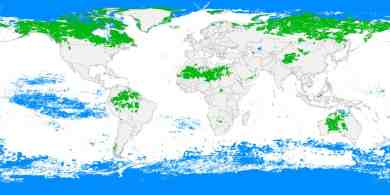
Map of the world’s remaining wilderness. Green represents land wilderness, while blue represents ocean wilderness. Photograph: Nature

Just five countries hold 70% of the world’s remaining untouched wilderness areas and urgent international action is needed to protect them, according to new research.

Researchers from the University of Queensland (UQ) and the Wildlife Conservation Society (WCS) have for the first time produced a global map that sets out which countries are responsible for nature that is devoid of heavy industrial activity.

It comes ahead of the conference of parties to the Convention on Biological Diversity in Egypt in November where signatory nations are working towards a plan for the protection of biodiversity beyond 2020.

Conservationists are calling for a mandated target for wilderness conservation that will preserve the planet’s vulnerable ecosystems. Continue reading

Reckoning With Doom

Kolbert.jpgWe have featured work by Elizabeth Kolbert since the earliest days of this platform, about twice a year. A year ago we linked to The Fate of Earth, which remains a favorite.

LongformShe has chosen to focus her work on the existential environmental challenges created by mankind, and unflinchingly reports on what we collectively are, and more often are not, doing about those challenges. The word doom always comes to mind when I see her name or think about her work. Today I am recommending this rare interview with her, in which she shares personal reflections on what it is like to do the work she does, and about 40 minutes in touches on how and why she persists with her work, even knowing that most people simply cannot bear to face the facts she is presenting:

Elizabeth Kolbert, author of Field Notes from a Catastrophe: Man, Nature, and Climate Change and The Sixth Extinction: An Unnatural History, is a staff writer at The New Yorker.

“I still nurse the idea in my heart of hearts that something you write, that there’s some key to this all. Continue reading

Keeping Track Of Renewables

Kormann-Prop-127.jpg

Despite the rapid decline in the cost of solar-energy technology and battery storage, Arizona gets only six per cent of its electricity from solar. Photograph by Joshua Lott / Bloomberg / Getty

Thanks to Carolyn Kormann, making her fifth appearance since early 2016 in our pages, including this recent item that I particularly favored, for the article below that helps us understand what is happening with renewable energy these days in the USA. It is easy to forget, amidst all the noise of a federal government working to deregulate and reduce environmental protection, that important work continues:

The Battle for Solar Energy in the Country’s Sunniest State

In late September, the Heartland Institute, a libertarian think tank that receives donations from fossil-fuel companies, published a blog post titled “California Billionaire’s Renewable Energy Initiative Makes Arizona Ballot.” The billionaire in question was Tom Steyer, whose year-long effort to pass Proposition 127, an amendment to Arizona’s constitution that would require power companies to generate fifty per cent of their electricity from renewable sources by 2030, has faced aggressive opposition from the state’s largest utility, Arizona Public Service, or A.P.S. The blog post lamented a failed lawsuit filed by Arizonans for Affordable Energy, a political-action committee funded by A.P.S.’s parent company, to keep Prop 127 off the ballot, and quoted several opponents who believed the measure, now up for a vote in November, would be a costly mistake. “Prop 127 would tie Arizona’s future to technologies that do not deliver baseload electricity,” Mark Finchem, a Republican state representative, said, “and are arguably worse for the environment as a whole than the dependable technologies we already have.” The photograph accompanying the post depicted a wind-turbine farm, and, in the foreground, a dead bald eagle.

Arizona is the sunniest state in the country, with more than three hundred bluebird days per year. It is also projected to endure an additional month of hundred-degree days in the coming decades owing to climate change. Yet, despite the rapid decline in the cost of solar-energy technology and battery storage—to the point that, as an A.P.S. director told me, it now frequently outbids fossil fuels, even natural gas—in 2017, Arizona generated only six per cent of its electricity from solar, according to the ballot initiative’s advocates. The state currently requires utilities to generate eight per cent of their power from sources like solar and wind, scaling up to fifteen per cent by 2025. Natural gas, the largest source of Arizona’s net electricity generation, is imported from out of state. “Our most abundant resource in Arizona is our sunshine,” D. J. Quinlan, a spokesman for Clean Energy for a Healthy Arizona, the Phoenix-based political-action committee that Steyer is funding, said. “We need a nationwide transition to renewables. One of the first places we should be doing it is where it’s most efficient and cost-effective, and that’s here.” Continue reading

Carbon Insurance As Heritage Insurance

Kormann-YurokCarbonCredits-Primary.jpg

A carbon-offset project, the first of its kind in the United States, has become the Yurok’s main source of discretionary income, helping the tribe buy back thousands of acres of land. Photograph by Joel Redman

Carbon trading has featured, or at least been mentioned, only rarely on this platform, now that I stop to check. That seems impossible. But the scheme with so much promise has simply not taken off. Indigenous heritage, on the other hand, has featured in dozens of stories here since we started in 2011. Thanks to Carolyn Kormann for bringing this story to my attention, helped by two captivating photos and the fact that it highlights the approach of the Yurok Tribe (a community I had not heard of before):

Kormann-YurokCarbonCredits-Secondary2

“I think we did a good thing by saving the trees, but I’m not happy with it,” Jene McCovey, a tribal elder, said. “It’s not viable. It allows polluters to pollute.” Photograph by Joel Redman

How Carbon Trading Became a Way of Life for California’s Yurok Tribe

When Marty Lamebear is not fighting fires, he is starting them. In the past few years, as a member of the Yurok Tribe Forestry Program’s fire department, he has been helping revive the controversial practice of prescribed burns to protect and restore the coastal redwood forests of northern California. Lamebear is also a hunter, fisherman, and dancer. In his free time, he makes tribal regalia for ceremonial dances from parts of elk, deer, minks, and porcupines, which he shoots or finds already dead, and from frozen eagles that he orders from the U.S. Fish and Wildlife Service. A prescribed burn, what Lamebear calls a culture burn, creates prairies within the forest, which attract those animals. “At first, we couldn’t really tell its effects,” he said. “But, after about six years now, we can honestly start seeing the landscape open up, animals come around.” They also serve another purpose, he said. “It’s insurance for our carbon.” Continue reading

Trees, Cities & Happiness

merlin_144034221_4ee0b063-798b-4669-80dc-817bcbc10dfe-superJumbo.jpg

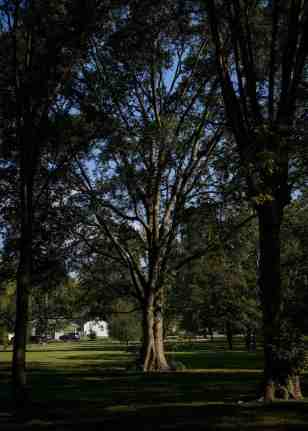
A tree in Riverfront Park competes for grandeur with Nashville’s iconic At&T building. Credit William DeShazer for The New York Times

PlantTreeCity.jpgI just learned of an urban tree-planting initiative on a day when the news shows purposeful indifference about climate change on the part of a powerful country’s elected leader, on the same day when the news also shows that an economist considered a pioneer of environmental economics is receiving a prestigious prize and what he said when he learned of his being awarded the prize:

“Once we start to try to reduce carbon emissions, we’ll be surprised that it wasn’t as hard as we anticipated. The danger with very alarming forecasts is that it will make people feel apathetic and hopeless.

“One problem today is that people think protecting the environment will be so costly and so hard that they want to ignore the problem and pretend it doesn’t exist. Humans are capable of amazing accomplishments if we set our minds to it.”

PlantTreesCity2Let’s decide together to do something, seems to be his message. I learned about this urban tree-planting initiative, news of a president’s abdication of responsibility, and this economist’s optimistic message on the same day I read about a 15-year old climate activist who has decided to do something where she sees her government failing to take action. She has decided at a very young age to do what she can regardless of the daunting odds. So thanks to Margaret Renkl a Nashville-based contributing opinion writer for The New York Times, for bringing this initiative to my attention, as a reminder to do something:

More Trees, Happier People

When cities grow, green space dies. Replanting it has been shown to lift the human spirit.

merlin_144034215_0e5eb0e9-e3ad-4046-b39b-a6189d715df7-superJumbo

A tale of two trees in Nashville. A mature tree in England Park, left, and a newly planted tree at Wright Middle School.

NASHVILLE — The scene in a tiny pocket park outside Plaza Mariachi here on Nolensville Pike last Wednesday was like a tableau from a Norman Rockwell painting, 21st-century style. Surrounded by signs advertising the Hispanic Family Foundation, Dubai Jewelry, the Dominican Barber Shop and restaurants offering Peruvian, Chinese, Mediterranean and Indian food — as well as a Game Stop franchise and H&R Block — was a small sign that read, “Today: Free trees.”

merlin_144034152_9a1c43d3-ccb7-42c0-bfd7-979917608536-superJumbo

Photographs by William DeShazer for The New York Times

The arrow on the sign pointed to a pop-up canopy where the Nashville Tree Foundation was hosting its fourth tree giveaway of October. A family standing under the canopy was posing for a photo with the sapling they had just adopted. Carolyn Sorenson, executive director of the foundation, was taking the picture: “Say ‘trees’!” she said.

The tree giveaway at Plaza Mariachi happened to fall on the very day that Nashville’s mayor, David Briley, announced a campaign to restore and enlarge the city’s tree canopy. The effort, called “Root Nashville,” will be overseen by the city and the Cumberland River Compact, an environmental nonprofit, and funded through a combination of public, corporate, foundation and private dollars. Together with several municipal departments and other nonprofit organizations, the initiative aims to plant 500,000 trees in Davidson County by 2050.

Many of these newly planted saplings will replace very large, very old trees that have been lost to Nashville’s meteoric growth — a population increase of more than 45 percent since 2000. As the city has grown, the city’s trees have fallen: deliberately felled by developers to make room for new construction or unintentionally killed as a side effect of nearby building. Just since 2008, the tree canopy in the urban core has dropped from 28 percent to 24 percent, a loss of roughly 9,000 trees a year. Continue reading

A Visual Requiem, And A Call For Quiet Grace At The Grand Canyon

Paumgarten-Grandy-Canyon_01.jpg

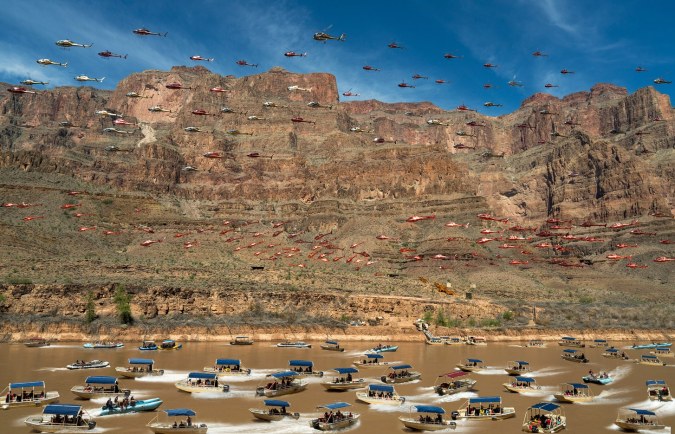
In a merged image, the photographer Peter McBride captured a vision of the Grand Canyon choked by noise and exhaust. Photograph by Pete McBride

Noise pollution was the topic of several of the first posts on this platform when we started it in 2011, and has been a persistent theme ever since then. We especially appreciate those related to noise in wilderness areas, so thanks to Nick Paumgarten for this story:

The Grand Canyon Needs to Be Saved By Every Generation

Paumgarten-Grandy-Canyon_03.jpg

Hiking in the Grand Canyon can be a perilous pursuit. Photograph by Pete McBride

Three years ago, in the course of thirteen months, the photographer Peter McBride and the writer Kevin Fedarko hiked from one end of the Grand Canyon to the other. They did it in eight sections, mainly so that McBride could shoot in different seasons. In all, it took them seventy-one days to cover two hundred and seventy-seven river miles and some eight hundred shoe-leather miles, through some of the continent’s roughest hiking terrain—“a whole lot of scratching around the rock puzzles in that giant abyss,” as McBride put it recently.

Before they set off, the Grand Canyon had been hiked nose to tail only nine times in recorded history. There is also a handful of obsessives who have chipped away at it, piece by piece, in the course of decades. “Maybe some crazy ancestral Puebloan did the whole thing, but that wouldn’t make logical sense—they wouldn’t have had any reason to,” McBride said.

Paumgarten-Grandy-Canyon_02.jpg

 panoramic view of the confluence of the Colorado and the Little Colorado. Photograph by Pete McBride

McBride, a native Coloradan who shoots for National Geographic, has been documenting the Colorado River for a decade, sometimes from a perch in an ultralight aircraft. Fedarko, who lives in Flagstaff, Arizona, has guided on the river and is the author of “The Emerald Mile,” an account (with many historical tributaries) of a harrowing speed run of the Grand in a dory during the biggest flood in generations. (As it happens, Kenton Grua, the boatman in the book, was also the first person to walk the canyon, in 1976.) McBride and Fedarko have both become persistent, ardent advocates for preserving the place, in all its spellbinding, inhospitable glory, in abidance with Teddy Roosevelt’s famous dictum, issued during his one visit, in 1903: “Leave it as it is. Man cannot improve on it; not a bit.” Still, this was the first time, and surely the last, that either of them had tried to walk it. Continue reading
Analyzing Local Sources Of Big Carbon Footprints

lead_720_405.png

GOOGLE

What gets measured gets managed. In the realm of climate science, national governments have the scale and responsibility to be involved in measurement. But if a skeptic is in charge of the government apparatus, good luck with that. With the national government of one of the big carbon footprint countries abandoning science and dropping out of the fight to reduce climate change, one of that country’s biggest companies is stepping up to offer an alternative. It may be too little too late but under the circumstances we may have no choice but to cheer it on:

Google’s New Tool to Fight Climate Change

The company will begin estimating local carbon pollution from cities around the world.

In the next decade or so, more than 6,000 cities, states, and provinces around the world will try to do something that has eluded humanity for 25 years: reduce their emissions of greenhouse gases, which warm the atmosphere and cause climate change.

The city-level leaders overseeing this task won’t have the same tools available to their national peers. Most of them won’t have an Environmental Protection Agency (or its equivalent), a meteorological bureau, a team of military engineers, or nasa. So where will they start? Never mind how to reduce their city’s greenhouse-gas emissions; how will they know what’s spewing carbon dioxide in the first place?

Maybe Google will do it for them. Or, at least, do it with them.

Google has started estimating greenhouse-gas emissions for individual cities, part of what it recently described as an ambitious new plan to deploy its hoard of geographic information on the side of climate-concerned local leaders. Continue reading

Superpods & Ocean Heroes

OHeroes.jpgThis National Public Radio (USA) story led us to the video above, and then the source website, where we discovered several initiatives that are worth a closer look:

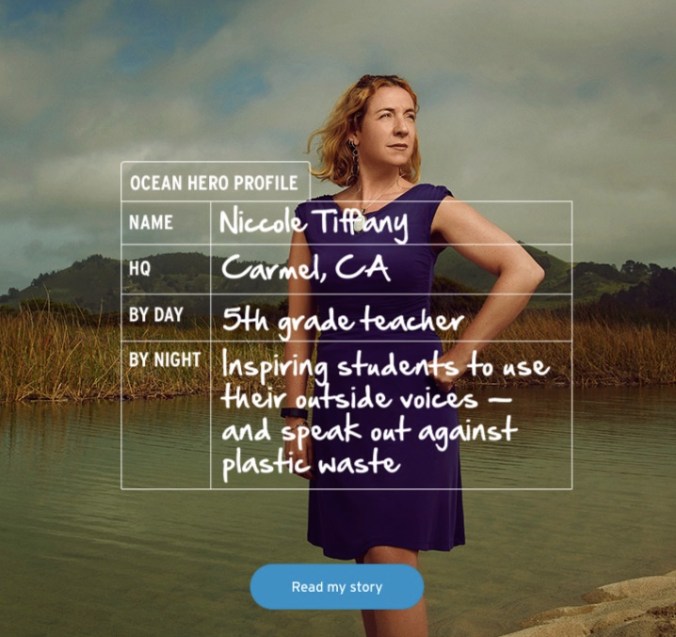
Ocean action: In 2017, Carmel-by-the-Sea’s City Council voted to require that restaurants stop using single-use plastic straws and utensils and instead provide only compostable to-go serviceware—and only upon request. The law took effect in the spring of 2018. The impetus came from a group of fifth-grade students from Carmel River Elementary School. They spoke at community forums and Carmel City Council meetings to advance the idea. Mayor Steve Dallas later credited them with playing a pivotal role in getting the ordinance enacted. “When it finally passed, the students were ecstatic,” says teacher, Niccole Tiffany, of her students. “It was a big lesson on the power of kids’ voices in actively creating change.” (Read more of her story here)

OceanHero.jpg

Thanks to the Monterey Bay Aquarium for programs that inspire local citizens, especially youth, to environmental activism like this:

Saving Our Seas One Sip at a Time with “No Straw November”

Ocean action: Shelby O’Neil, a high school student from San Juan Bautista, created a successful campaign called “No Straw November,” asking people to pledge not to use plastic straws for one month. She’s earned national exposure through the Martha Stewart Living magazine and the Leonardo DiCaprio Foundation. She convinced Alaska Airlines to ditch plastic straws and toothpicks on all its flights (a story picked up by Fortune magazine). Shelby was even flown to the headquarters of Delta Airlines to promote her campaign; spoke at Dreamforce, the annual user conference hosted by Salesforce.com in San Francisco; and won unanimous California Coastal Commission support for “No Straw November.” But she didn’t stop there. “For a Girl Scout Gold Award, I created a nonprofit called Jr Ocean Guardians,” says Shelby, “teaching younger schoolchildren the importance of the oceans and how they can help.” Continue reading

The Aha Moment Explaining One Challenge To Recycling

15Fixes-jumbo.jpg

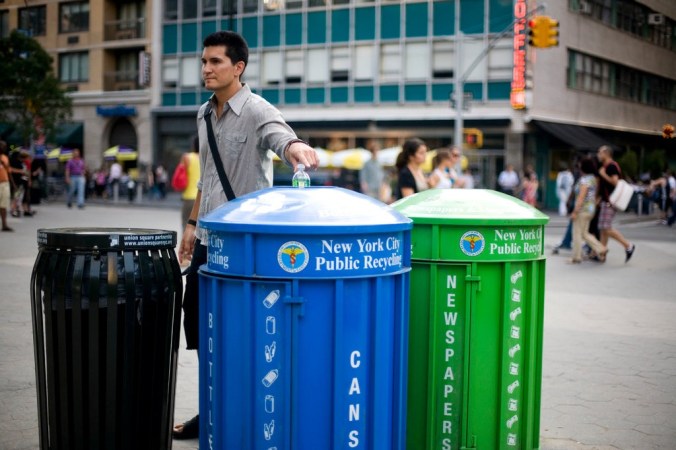
Color-coordinated waste baskets for waste recycling in New York City. Credit Ramin Talaie/Corbis, via Getty Images

Thanks for this interview full of incisive interview quetions by David Bornstein, who is co-founder of the Solutions Journalism Network, which supports rigorous reporting about responses to social problems. Thanks to Mitch Hedlund, executive director of Recycle Across America, for the explanatory answers in the interview that follows:

The Conflict of Interest That Is Killing Recycling

Some of the biggest recycling operations are owned by landfill companies whose profits improve when recycling doesn’t work well.

15fixes2-articleLarge.jpg

Mitch Hedlund, executive director of Recycle Across America. Credit Shelly Mosman/Recycle Across America

In the past few years, one of the core pillars of the environmental movement — recycling — has fallen on hard times. News dispatches reveal hundreds of cities and counties scaling back their recycling programs because of the high costs associated with processing recyclables and the lack of demand for the materials. A new conventional wisdom is gaining ground suggesting that recycling may not be worth the effort.

But is that true? And has recycling ever gotten a fair shake? After decades, less than a third of municipal solid waste is recycled — and much of that is contaminated with garbage, which diminishes or destroys its value. Almost 50 years after the first Earth Day, are we really ready to admit defeat and return to the “Mad Men”-era ethos of the “throwaway society”?

There may be another way. For most of the past decade, Recycle Across America, a nonprofit organization I covered in this column six years ago, has been demonstrating that it’s quite possible to get people to recycle properly, just as it’s possible to get most people to wear seatbelts, quit smoking and stop driving drunk. But the recycling industry has never taken the logical steps needed to create a successful societywide recycling habit — and today it may not be in the economic interest of some of the big recycling companies to build it. Recently, I spoke with Mitch Hedlund, the founder of Recycle Across America, about this dilemma and the possibility that a recycling collapse can be avoided. Continue reading

Model Mad, Rollback Pushback

Mary Nichols, who heads the California Air Resources Board, has vowed to fight the federal government’s proposed changes. Credit Eric Risberg/Associated Press

It’s been a while since we’ve addressed our “model mad” theme, despite there being numerous opportunities. We’re continually heartened by the strength of both the public and the private sector to pushback against the current administration’s regressive proposals.

California Strikes Back Against the Trump Administration’s Auto Pollution Rollback

California went on the offensive Tuesday against the Trump administration’s plan to weaken fuel-efficiency rules for cars, laying out a scathing rebuttal that the state’s clean-air regulator said would shape the battle with Washington in the coming months and years.

The state’s target is one of President Trump’s most consequential environmental rollbacks to date, a proposal unveiled last week to let cars pollute more while stripping California of its right to set its own air-quality rules.

The administration’s proposal “is contrary to the facts and the law,” the California document says, before refuting point by point the Trump administration’s arguments for weakening the nation’s long-term goals for making vehicles more fuel efficient and less polluting.

The clash between California and Washington threatens to throw the United States auto market into disarray. Because California has the authority under the Clean Air Act to set its own air pollution rules, and because a dozen other states follow its lead, the dispute could effectively split the nation’s market into two, one side adhering to stringent emissions rules set in Sacramento and the other to weaker federal standards.

Continue reading

The Mystery of the Lorax: Solved

Dr. Seuss has held an important place in my life, stretching from my own childhood and into parenthood, and connecting the dots between the pure joy of reading and powerful messages keeps him at the top. So what fun to discover the story, species and science behind the inspiration for his most impactful books!

Who Was the Real Lorax? Seeking the Inspiration for Dr. Seuss

What inspired the creature who was “shortish and oldish and brownish and mossy?” The one who spoke in a voice that was “sharpish and bossy?” He spoke for the trees, yet he called them his own. All that he left “in this mess was a small pile of rocks, with the one word … ‘UNLESS.’”

In 1970, millions of people observed Earth Day for the first time, and the Environmental Protection Agency was born. Joni Mitchell’s “Big Yellow Taxi” topped the charts.

And in La Jolla, Calif., Theodor Geisel, also known as Dr. Seuss, was fighting to keep a suburban development project from clearing the Eucalyptus trees around his home. But when he tried to write a book about conservation for children that wasn’t preachy or boring, he got writer’s block.

At his wife’s suggestion to clear his mind, they traveled to the Mount Kenya Safari Club, an exclusive resort where guests watched animals along Kenya’s Laikipia plateau.

And if you haven’t guessed by now, it was there that “The Lorax” took shape — on the blank side of a laundry list, nearly all of its environmental message created in a single afternoon. Continue reading

Vegetarianism For Footprint Reduction

3000 (2).jpg

Replacing 50% of meat consumption with a vegetarian diet would push back the overshoot date by five days. Photograph: Scott Olson/Getty

Our vegetarian diet ambitions are strengthening for all kinds of reasons. Footprint reduction among them. Thanks to our colleague Mathis Wackernagel for his regular reminders of the anything but regular footprint growth humanity imposes on the planet each year:

Earth’s resources consumed in ever greater destructive volumes

Study says the date by which we consume a year’s worth of resources is arriving faster

Humanity is devouring our planet’s resources in increasingly destructive volumes, according to a new study that reveals we have consumed a year’s worth of carbon, food, water, fibre, land and timber in a record 212 days.

As a result, the Earth Overshoot Day – which marks the point at which consumption exceeds the capacity of nature to regenerate – has moved forward two days to 1 August, the earliest date ever recorded.

Earth Overshoot Day falls on 1 August this year – marking the point at which consumption exceeds the capacity of nature to regenerate

OverShot.jpg

Guardian graphic. Source: Overshootday.org

To maintain our current appetite for resources, we would need the equivalent of 1.7 Earths, according to Global Footprint Network, an international research organisation that makes an annual assessment of how far humankind is falling into ecological debt. Continue reading

Rewilding Croatia’s Velebit Mountains

0A2A4816-1.jpg

Davor Krmpotić
Team leader of Velebit Mountains

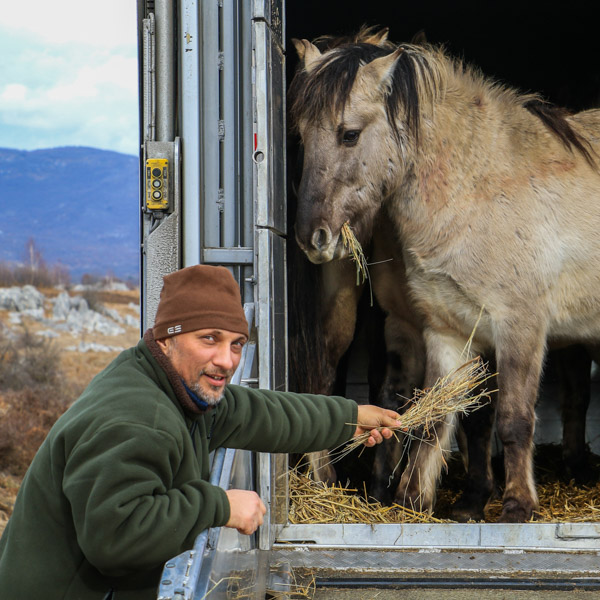
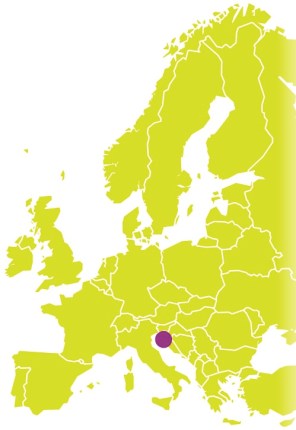
VelebitMap.jpgCroatia, playing in its first World Cup final today, makes this rewilding story from the Velebit Mountains, and interview with its team leader, timely:

This dramatic mountain chain, right on the Adriatic coast in Croatia, is one of the wildest areas of the whole Mediterranean. A region where wild nature is really coming back.

Velebit is one of the most important natural areas in the Balkans and situated on the Adriatic coast of Croatia. It hosts two national parks, a biosphere reserve and several wonderful old-growth forests, deep canyons, ancient open lands and exciting wildlife like Balkan chamois, red deer, brown bear, wolf and lynx…

Velebit hosts a diversity of habitats

Velebit.jpgHow would you characterise your rewilding area?
Velebit is one of the most important natural areas in the Balkans. The area hosts an extraordinary diversity of different habitats, from barren Mediterranean landscapes at sea level, via vast beech forest of central European type, to almost boreal systems and alpine grasslands at higher altitudes. Outside protected areas in the south and east there are several other very interesting areas also with great rewilding potential, mainly consisting of abandoned farm and grazing lands. Apart from its fantastic wildlife, Velebit is also a climber’s paradise, home to spectacular caves and breathtaking sceneries. Continue reading
Rewild The Uplands?

Poster_battle

Int2.jpgIntelligence Squared has an app that allows you to listen to their debates and lectures at your own convenience, on your phone or wherever, whenever you choose. If, like us, you have found the rewilding debate interesting, this is one you will want to listen to:

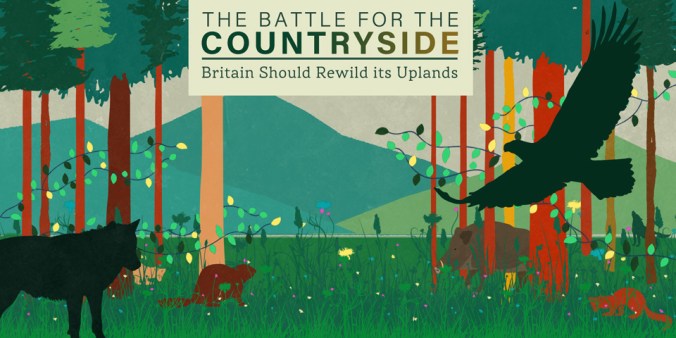
THE BATTLE FOR THE COUNTRYSIDE: BRITAIN SHOULD REWILD ITS UPLANDS

Imagine if swathes of the British countryside were allowed to be wild once again, if trees and rare plants could flourish and beavers, boars and white-tailed eagles could retake their place in the ecosystem. That’s the goal of the growing numbers of nature-lovers who support the idea of rewilding Britain’s uplands. We tend to think of these uplands as ‘wild’ and ‘natural’. But in fact, as the rewilders point out, they are entirely man-made, the result of clearances by man to make way for millions of sheep whose grazing over the last 200 years has rendered the land bare. Continue reading
Wilderness, Massive Infrastructure Projects & Changing Global Norms
NairobiNtlPark_ChinaKenyaRailroad_Getty_web.jpg

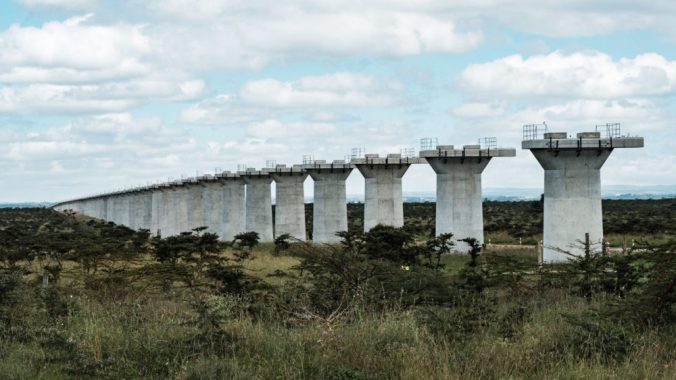
Construction of the second phase of the Chinese-financed Standard Gauge Railway in Kenya crosses through Nairobi National Park, as pictured here in June. YASUYOSHI CHIBA/ AFP/ GETTY IMAGES

Thanks to William Laurance for this informative opinion essay that gives a bit of hope for wilderness preservation:

Is the Global Era of Massive Infrastructure Projects Coming to an End?

The world’s wild places have been badly carved up by decades of roadbuilding, dam construction, energy exploitation, and other megaprojects. Now, as the financial community, environmental groups, and local citizens increasingly oppose big infrastructure development, the tide of environmental destruction may be turning.

AP_MalaysiaChinaRailroad_web.jpg

Malaysia’s former Prime Minster Najib Razak, third from left, looks at a model of the China-backed East Coast Rail Link in 2017. Malaysia has since canceled the project due to mounting costs. AP PHOTO

We are living in the most explosive era of infrastructure expansion in human history. To meet the United Nations’ development goals, we would need to invest tens of trillions of dollars in new roads, railways, energy ventures, ports, and other projects by 2030 — dramatically amplifying an infrastructure tsunami that is already shattering the world’s biologically richest ecosystems. But this great wave of infrastructure development is suddenly looking shaky — and it might just be the best outcome for nature and humanity alike. Continue reading