Resilience At Sycamore Gap

The shoots growing from the stump of the Sycamore Gap tree.

The Sycamore Gap tree, a beloved way marker, had grown for centuries along Hadrian’s Wall in England before vandals cut it down last year. Now little shoots have been discovered growing at its stump. Jason Lock/National Trust

When this act of vandalism was in the news last year, it felt terrible but had no meaning. But if the felled tree is giving new life, we must celebrate that:

A man kneels beside a tree stump with a tape measure in his hands.

Gary Pickles, a ranger at Hadrian’s Wall Path National Trail, inspecting the Sycamore Gap tree shoots that recently appeared. Jason Lock/National Trust

Vandals last year chopped down the famed tree, which had stood on Hadrian’s Wall in England for nearly 200 years.

On a fine, bright morning last Friday, just like so many other fine, bright mornings, Gary Pickles took a walk.

Two people in a fenced-in area in a field by a stone wall.

Mr. Pickles and a colleague at the site where the tree once stood. Jason Lock/National Trust

Mr. Pickles, a ranger who works at Northumberland National Park in England, just south of the Scottish border, was inspecting a route that wends past Hadrian’s Wall, constructed by the Roman Army in the second century A.D. He walked past the cleft where the Sycamore Gap tree had famously jutted out into the landscape before it was illegally cut down last year, and he bent down to its stump. Continue reading

Turning Tree Leaves Into Mats

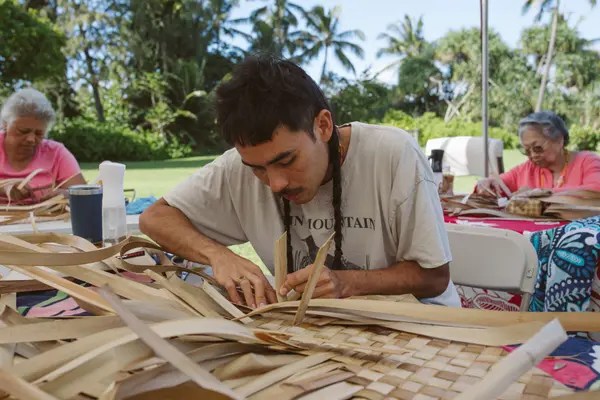
Emma Broderick, right, and her mother, Maile Meyer, under a pu hala tree on Oahu, a touchstone of Hawaiian culture. Its leaves are used to weave mats like the one they are sitting on. “To be a weaver is to be a healer,” said Broderick, whose group passes on ancestral knowledge about weaving and other practices. Daeja Fallas for The New York Times

Traditional weaving was a means to achieve our goal of strengthening biodiversity in our final work in Kerala. It is heartening to see handicraft coming back to life in Hawaii for other reasons:

In Hawaii, Weaving New Life Into a Nearly Vanished Art Form

The age-old practice of turning tree leaves into mats has been revived on the islands. “It teaches you how to weave relationships, past and present,” one master artisan says.

Just past daybreak, before they began to weave, Emma Broderick and her mother, Maile Meyer, gathered beneath a canopy of sinuous leaves to greet the pū hala tree, a touchstone of Hawaiian culture that for generations has provided the raw materials for weaving moena, the traditional floor mats that were once ubiquitous in Hawaiian homes.

Kainoa Gruspe, one of the young weavers who joined the group. Preparing the lau is laborious and begins by ridding the leaves of ants and centipedes before cutting, smoothing and drying. Daeja Fallas for The New York Times

Broderick introduced herself to the tree, with its lattice of stilt-like roots, addressing it as she might a loved one. “Of course, flattery never hurts,” she said. She had a pink plumeria blossom with an intoxicating aroma tucked behind her ear.

“You want to come with me?” she asked the tree, seductively. “Would you like to live in a house and be in a mat?” Continue reading

Inca Woven Masterpiece

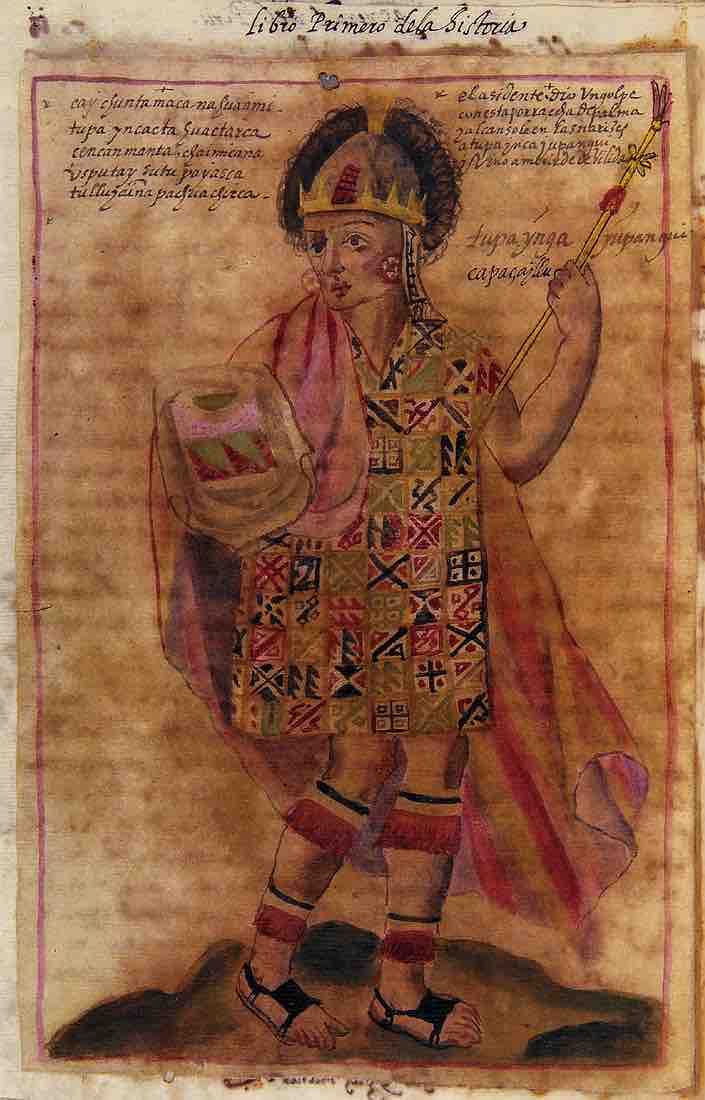
Illustration of Tupac Inca Yupanqui (an Inca emperor) c. 1590, by an unknown artist. | USED WITH PERMISSION / PRIVATE COLLECTION

In this article by Max J. Krupnick we are given reason to rethink the notion that the Incas had no written language. There is plenty of evidence that they were capable of advanced communication aesthetically:

A Royal Tunic

Unraveling an Inca masterpiece’s secrets

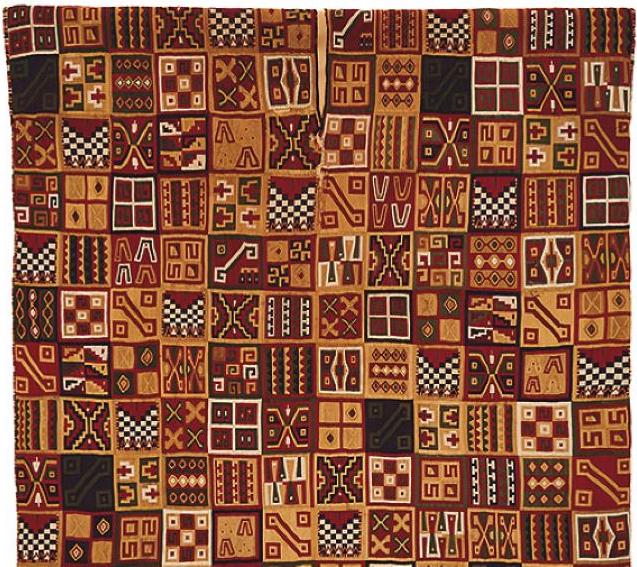
WITH STITCHES as dense as an iPad’s pixels, this woven tunic represents the pinnacle of Inca artistry. The brutal Spanish conquest and the unforgiving march of time have destroyed most Inca textiles, but the tunic now at Dumbarton Oaks in Washington, D.C., survived. Although its symbols captivate visitors and scholars alike, much is left to be learned about the garment. Who made it? Who wore it? Is it truly authentic?

Tunic | ©DUMBARTON OAKS, PRE-COLUMBIAN, WASHINGTON, D.C.

Robert Bliss, who cofounded Dumbarton Oaks, Harvard’s center for Byzantine, Pre-Columbian, and landscape studies, purchased the tunic for his personal collection, so its acquisition history is not well documented. Added to the institute’s holdings in 1963, the tunic attracted scholarly attention as researchers attempted to decode its symbols, which they believed comprised a written language, despite evidence that the Incas did not write. Continue reading
Popcorn’s Origin Story

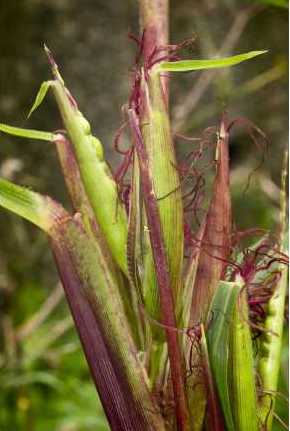
(Credit: vainillaychile/iStock via Getty Images Plus) The ancestor of maize was a grass called teosinte.

Since it is one of my go-to snacks, I frequently wonder about this, and appreciate the sleuthing by Sean Rafferty at SUNY Albany, and Discover magazine for publishing it:

How Was Popcorn Discovered?

Could a spill by the cook fire have been popcorn’s eureka moment?

You have to wonder how people originally figured out how to eat some foods that are beloved today. The cassava plant is toxic if not carefully processed through multiple steps. Yogurt is basically old milk that’s been around for a while and contaminated with bacteria. And who discovered that popcorn could be a toasty, tasty treat?

pile-of-popcorn

(Credit: Yeti studio/Shutterstock)

These kinds of food mysteries are pretty hard to solve. Archaeology depends on solid remains to figure out what happened in the past, especially for people who didn’t use any sort of writing. Unfortunately, most stuff people traditionally used made from wood, animal materials or cloth decays pretty quickly, and archaeologists like me never find it.

We have lots of evidence of hard stuff, such as pottery and stone tools, but softer things – such as leftovers from a meal – are much harder to find. Sometimes we get lucky, if softer stuff is found in very dry places that preserve it. Also, if stuff gets burned, it can last a very long time. Continue reading

Celebrating Voices Of The Americas

Curved exterior of the National Museum of the American Indian in DC, pale bricks glowing as if during sunrise.We missed the 2024 INDIGENOUS VOICES OF THE AMERICAS –CELEBRATING THE NATIONAL MUSEUM OF THE AMERICAN INDIAN. Our calendars are already marked for next year, based on what we see from this year’s celebration:

Across the Western Hemisphere, thousands of Indigenous communities are sustaining traditional practices and contributing to a more equitable future. Today, these individuals and nations define who they are, through their own stories in their own words.

An illustration of the ingredients for Cherokee bean bread.In 2024, Indigenous Voices of the Americas: Celebrating the National Museum of the American Indian highlights living traditions of Indigenous peoples. At its core, the program honors contemporary and traditional creative expressions, celebrations, and community connections that feed new possibilities for Indigenous futures. The program is co-presented by the Smithsonian Center for Folklife and Cultural Heritage, the National Museum of the American Indian, and the National Park Service.

We would not have known about it except for this article (thanks to National Public Radio, USA):

Bolivian skateboarders demonstrate their skills on the half pipe.

Bolivian women skateboarders — wearing traditional garb — demonstrate their skills on the half pipe. Ben de la Cruz/NPR

It’s a rather unusual skateboard lesson.

Little girls are lined up to learn to balance on a board on a half-pipe ramp. The teachers are young women from Bolivia, in their teens and 20s, wearing traditional garb as a tribute to female strength. Their outfits do not seem as if they are ideal for skateboarding: Each skateboarder wears a beribboned bowler hat and a poofy skirt. Among the eager disciples is Poppy Moore…

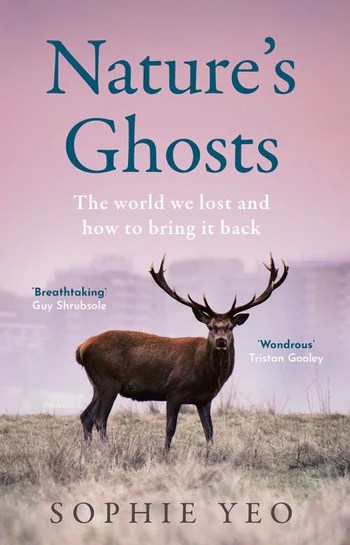
Nature’s Ghosts, Author’s Viewpoint

Thanks to Sophie Yeo, editor of Inkcap Journal and the author of this book to the right, for sharing that book’s key insights in essay form in the Guardian:

Nature’s ghosts: how reviving medieval farming offers wildlife an unexpected haven

Agriculture is often seen as the enemy of biodiversity, but in an excerpt from her new book Sophie Yeo explains how techniques from the middle ages allow plants and animals to flourish

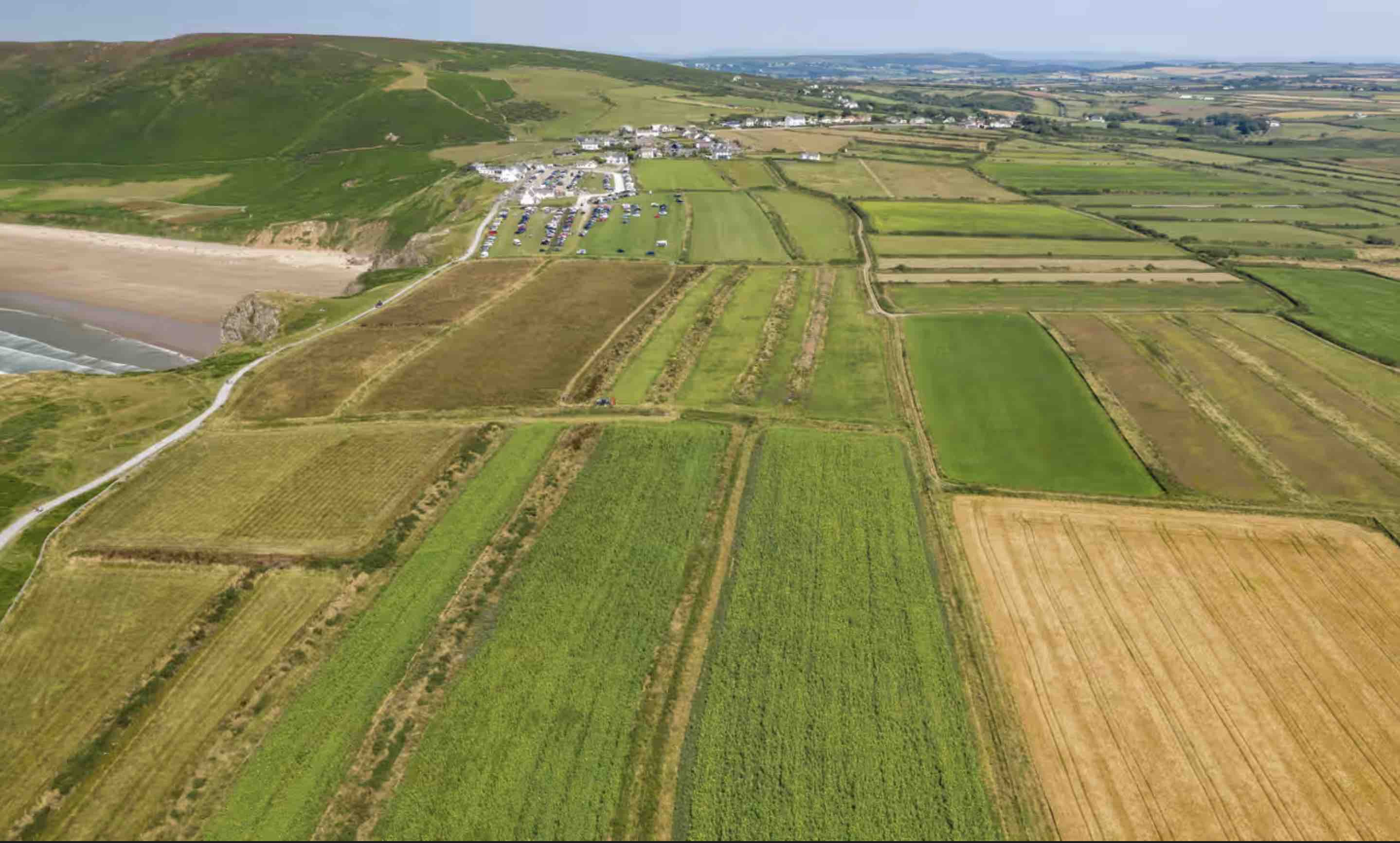
The Vile, a medieval strip field system below Rhossili village, Gower, Wales. Photograph: Wales/Alamy

The Vile clings on to the edge of the Gower peninsula. Its fields are lined up like strips of carpet, together leading to the edge of the cliff that drops into the sea. Each one is tiny, around 1-2 acres. From the sky, they look like airport runways, although this comparison would have seemed nonsensical to those who tended them for most of their existence.

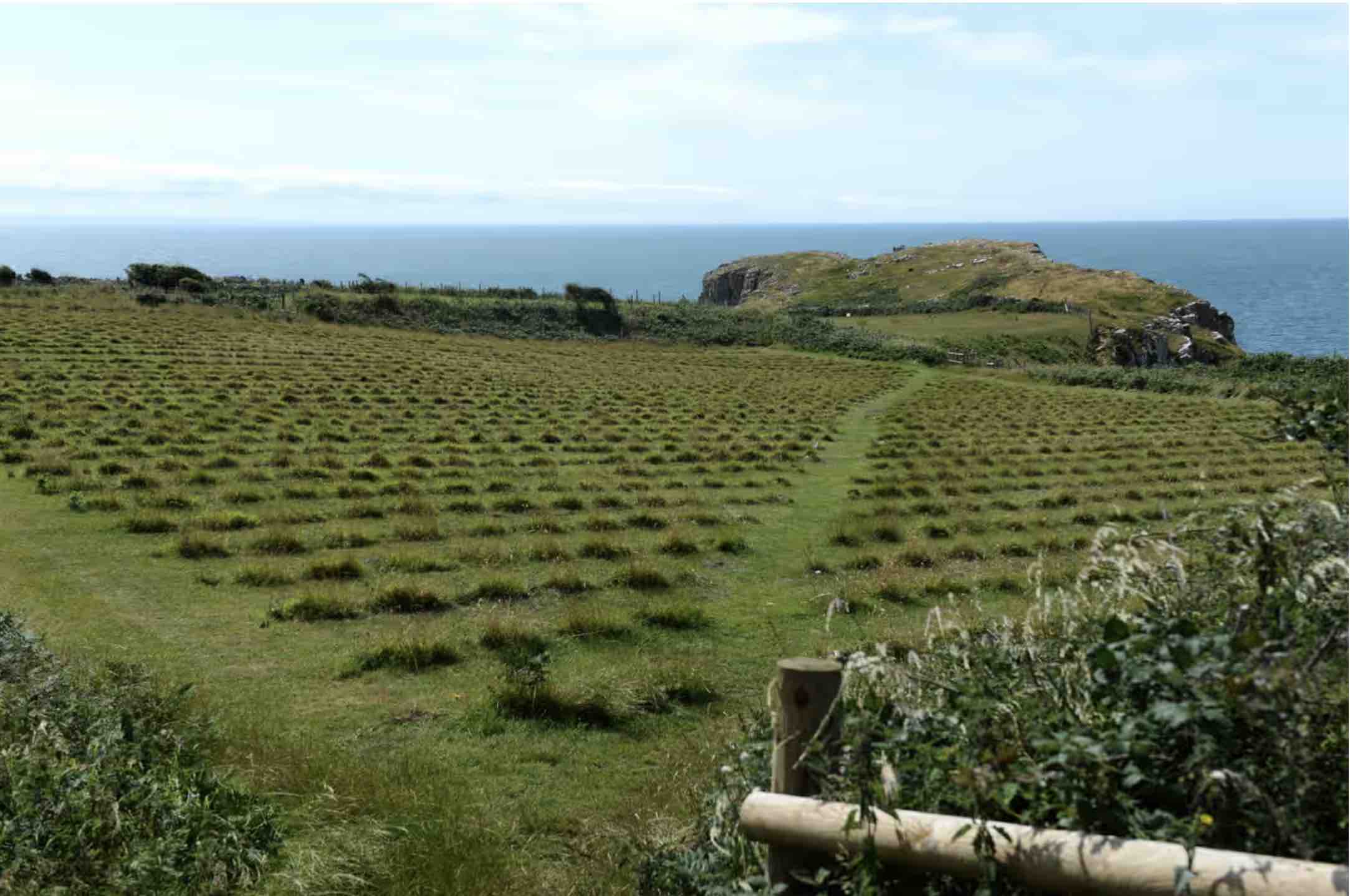
A field of lavender on the Vile above Fall bay, Rhossili, planted in summer 2019 to encourage pollinating insects. Photograph: Holden Wildlife/Alamy

That is because the Vile is special: a working example of how much of Britain would have been farmed during the middle ages. Farmers have most likely been trying to tame this promontory since before the Norman conquest.

The fields have retained their old names, speaking to a long history of struggle against the soil. Stoneyland. Sandyland. Bramble Bush. Mounds of soil known as “baulks” separate one strip from the next. Continue reading

Mountaineering Books Worthy Of Your Time

photograph: tashi tsering/xinhua/eyevine

It goes without saying, for most non-mountaineers anyway, that Jon Krakauer is the master of this genre, but hear what the Economist has to say:

Five of the best books on climbing mountains

The books and a documentary that capture the pull of the peaks

Mountaineering has gone mainstream. What was once a pursuit for only the hardiest adventurers is now the extreme sport du jour. Take Mount Everest. In the four decades after Sir Edmund Hillary and Tenzing Norgay first reached the summit in 1953 an average of 12 people a year followed in their footsteps. Continue reading
Food & Identity

photograph: alamy

We do not live by fruit alone, so:

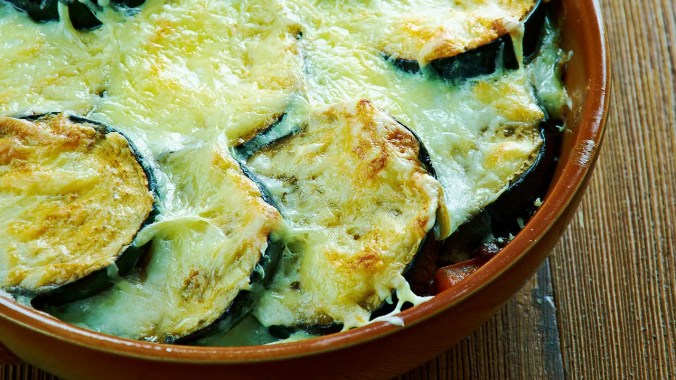
How moussaka made it into the pantheon of Greek gastronomy

Patriotism revolutionised a classic dish

In 1821 greek revolutionaries rose up against the Ottomans, setting off years of bloodshed that culminated in the creation of a free state in 1829. Continue reading
A Century’s Evidence On The Benefits Of Planting Trees

People work to reforest Allegheny National Forest in Pennsylvania circa 1934.
Photograph: Universal History Archive/Universal Images Group via Getty Images

Planting trees, we have noted, is smart policy.  Some campaigns may have stretched beyond scientific evidence, but science has given us plenty to go on:

Very cool: trees stalling effects of global heating in eastern US, study finds

Vast reforestation a major reason for ‘warming hole’ across parts of US where temperatures have flatlined or cooled

Civilian Conservation Corps workers plant 15,000,000 trees across the wastelands of southern Mississippi on 11 April 1940. They are part of the United Forest Service which will re-establish forests destroyed by logging and lumbering operations decades ago. Photograph: AP

Trees provide innumerable benefits to the world, from food to shelter to oxygen, but researchers have now found their dramatic rebound in the eastern US has delivered a further, stunning feat – the curtailing of the soaring temperatures caused by the climate crisis.

While the US, like the rest of the world, has heated up since industrial times due to the burning of fossil fuels, scientists have long been puzzled by a so-called “warming hole” over parts of the US south-east where temperatures have flatlined, or even cooled, despite the unmistakable broader warming trend. Continue reading
Central Valley Reserve

Central Valley coffee farms produce reliably high quality beans. A few farms produce beans of unusual quality, and we source from these farms to create a blend worthy of the name Reserve. Unlike the chocolate notes typical of a Los Santos coffee, or more fruity or floral notes from other regions, here we find a special toasted nut sensation.

The “architecture of coffee heritage” caption for the image on this label refers to the fact that this building from the 1990s pays tribute to the history of coffee in Costa Rica. It was built within a coffee hacienda, and this year thousands of coffee plants are being replanted on the property. If you have an interest in the feeling of a coffee plantation, and plan to visit Costa Rica, you could not do better than spend a few days here.

Charles Duhigg & 2024 Themes

Charles Duhigg at home. PHOTOGRAPH OF CHARLES DUHIGG BY GLENN MATSUMURA

The themes in Charles Duhigg’s work are ones we aim to pay more attention to this year. So, thanks to Jonathan Shaw at Harvard Magazine for this:

Reporting, with an M.B.A.

Charles Duhigg unpacks how business and finance—and you—really work.

IN THE HISTORY OF stock market rallies and economic recessions, much defies quantitative explanation. Whether looking back on the tulip mania that gripped the Netherlands in the 1630s, or to the present obsession with bitcoin, the decisive role of human behavior fascinates journalist and author Charles Duhigg. Continue reading

The Irony Of Patriotic Fervor

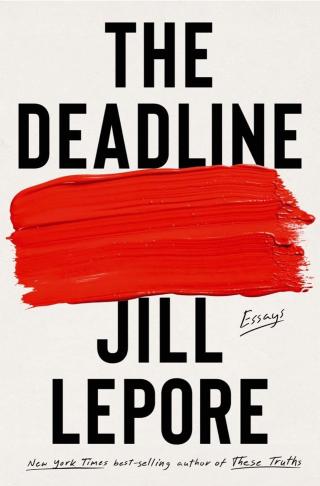
There is an interview with Jill Lepore discussing this book to the left, which I link to below. It got me thinking about an earlier post I wrote about having read April Morning and The Hessian in my teens and my brief encounter with their author Howard Fast. That post was primarily a thank you to the librarians who got me interested in reading. I knew from the return address on the letter he sent me that Mr. Fast lived on my same street, a five minute walk from my home. I enjoyed that fact because I enjoyed the two of his books that I had read. But I never saw him after the library lecture.

Who I did see frequently, because he drove an easily identifiable red convertible Cadillac, and also lived close by, was Roy Cohn. Yes, that guy. If you know a certain bit of mid-20th Century history, the bit called the Red Scare, you might understand my first glimpse of irony. I had learned that Howard Fast was punished early in his career for his political beliefs. By the time I knew who Roy Cohn was I knew he had something to do with that punishment, directly or indirectly. What I found ironic, as a teenager, was that Howard Fast was influential on my sense of why patriotism exists; and Roy Cohn, a self-proclaimed protector of American values, made me fear patriotism. I always wondered if they knew they lived so close to one another. History does not seem to have recorded anything about that. The interview by Julien Crockett below reminded me of that irony of patriotic fervor I sensed in my teens:

The Hold of the Dead Over the Living: A Conversation with Jill Lepore

“I WROTE THESE essays during a period of terrible, tragic decline in the United States,” historian Jill Lepore writes in the introduction to her new essay collection, The Deadline. Wide-ranging and often provocative, the essays cover the past decade of “political violence, endless vicious culture war, a series of constitutional crises, catastrophic climate change, and a global pandemic.” In short, “a time that felt like a time, felt like history.” Continue reading

Crowdsourcing & OED

Illustration by Paul Spella / The Atlantic. Sources: Wikimedia; Getty.

The origins and uses of words have been of interest to us since early on, because the terminology around conservation is relatively young; also because words are essential to the cause. Stephanie Hayes, writing this review in the Atlantic, reminds us to keep paying attention to how we know what we know about words:

Who Made the Oxford English Dictionary?

A new book gives life to one of the world’s greatest crowdsourcing efforts.

The Oxford English Dictionary always seemed to me like the Rules from on high—near biblical, laid down long ago by a distant academic elite. But back in 1857, when the idea of the dictionary was born, its three founders proposed something more democratic than authoritative: a reference book that didn’t prescribe but instead described English, tracking the meaning of every word in the language across time and laying out how people were actually using each one. Continue reading

Corn & Other English Words, Then & Now

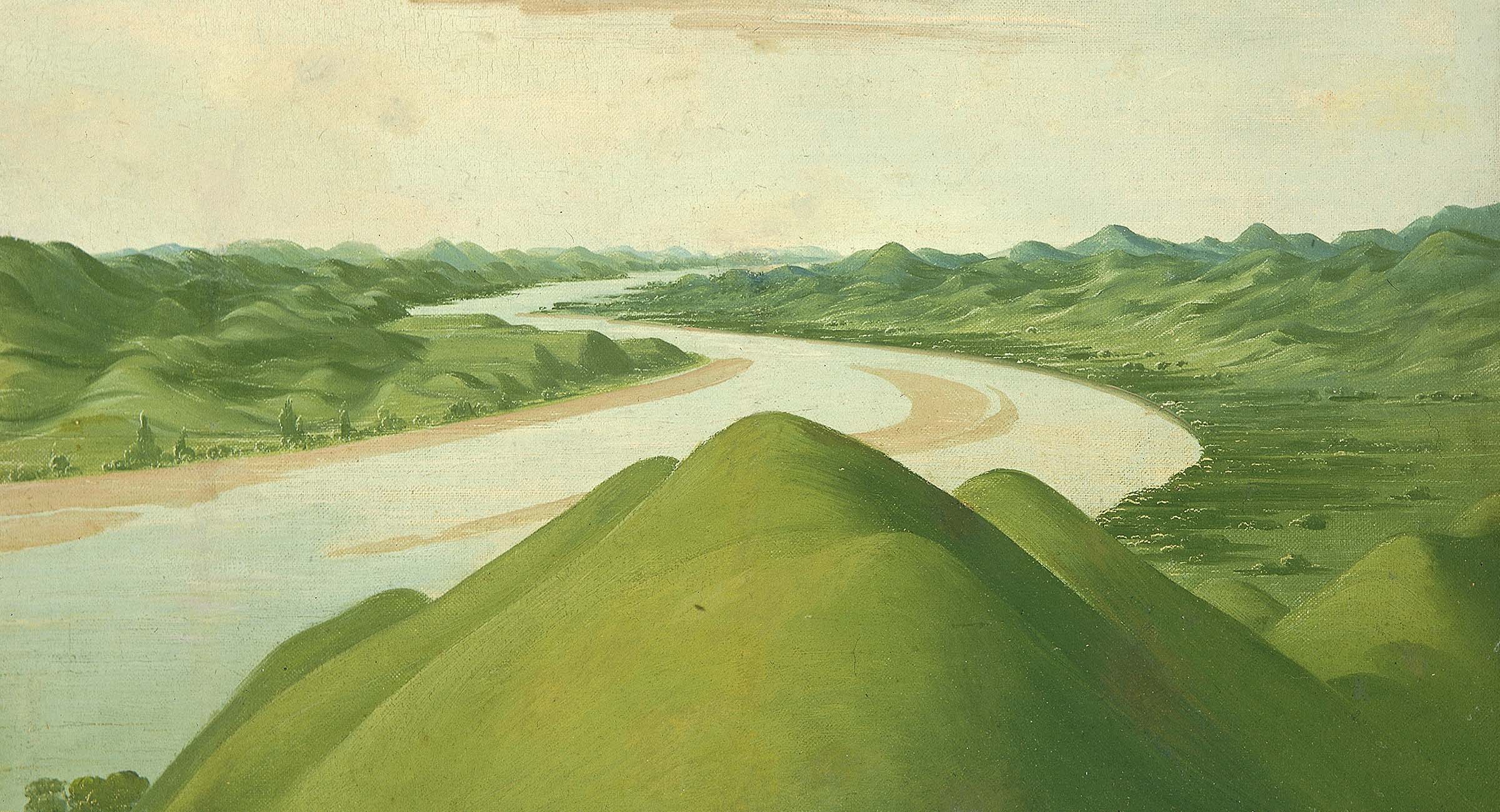
View in the “Cross Timbers,” Texas, by George Catlin, c. 1832. Smithsonian American Art Museum, gift of Mrs. Joseph Harrison, Jr.

Lapham’s Quarterly, judged here only by the rare occasions when we have linked to their work, offers gem quality items of interest, such as this essay by Rosemarie Ostler:

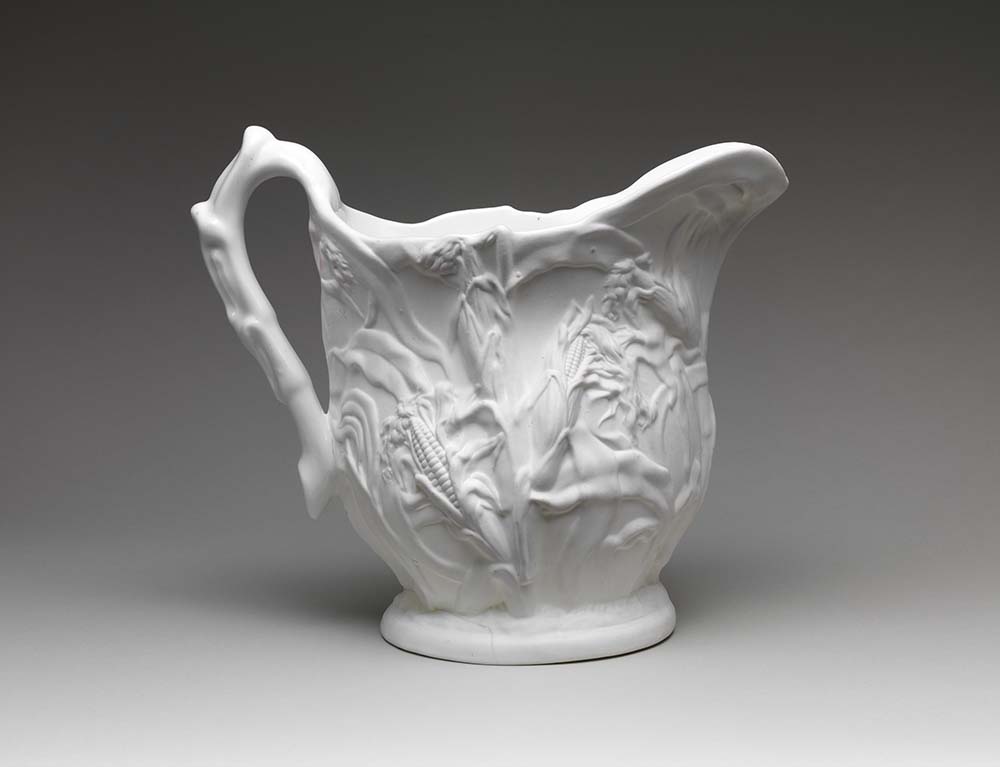
Corn pitcher, c. 1855. The Metropolitan Museum of Art, Sansbury-Mills Fund, 2014.

Corn pitcher, Southern Porcelain Company, c. 1855. The Metropolitan Museum of Art, Sansbury-Mills Fund, 2014.

The Early Days of American English

How English words evolved on a foreign continent.

English settlers faced with unfamiliar landscapes and previously unknown plants and animals in the Americas had to find terms to name and describe them. They sometimes borrowed words from Native American languages. They also repurposed existing English words and invented new terms, as well as keeping words that had become archaic in British English. As non-English-speaking immigrants began to arrive during the eighteenth century, they accepted words from those languages as well. By the time of the American Revolution, English had been evolving separately in England and America for nearly two hundred years, and the trickle of new words had become a flood. Continue reading

Ancient Amazon Carbon Capture

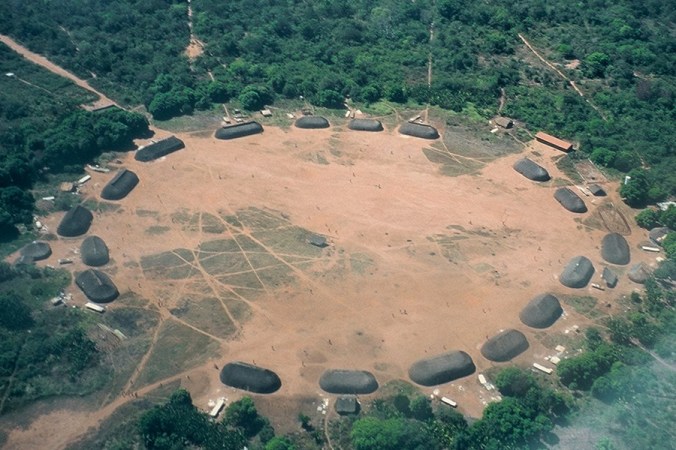
A Kuikuro village in the southeastern Amazon. JOSHUA TONEY

Thanks to Yale e360 for this one:

How Ancient Amazonians Locked Away Thousands of Tons of Carbon in “Dark Earth

A new study reveals how, by cultivating fertile soil for farming, ancient Amazonians locked away thousands of tons of carbon that have stayed in the ground for centuries. Continue reading

Jill Lepore On Walter Isaacson’s Latest Biography

Among topics I would not have shared here previously, Elon Musk. But this is by one of our best biographers, and he has earned the benefit of our doubt. A review by one of our best historians captures my concerns about the system that Musk represents. By extension it raises questions about the biographer’s approach. So, I share:

How Elon Musk Went from Superhero to Supervillain

Walter Isaacson’s new biography depicts a man who wields more power than almost any other person on the planet but seems estranged from humanity itself.

In 2021, Elon Musk became the world’s richest man (no woman came close), and Time named him Person of the Year: “This is the man who aspires to save our planet and get us a new one to inhabit: clown, genius, edgelord, visionary, industrialist, showman, cad; a madcap hybrid of Thomas Edison, P. T. Barnum, Andrew Carnegie and Watchmen’s Doctor Manhattan, the brooding, blue-skinned man-god who invents electric cars and moves to Mars.” Continue reading

Northwest Passage Expedition & Arctic Secrets Revealed

Soren Walljasper, NGM Staff. Sources: Douglas Stenton, University of Waterloo; Jonathan Moore, Parks Canada; Matthew Betts, HMS Terror; Mark Synnott; Tom Gross

We rarely link to expeditions-gone-awry stories, but here is an exception, with thanks to National Geographic:

Seeking to solve the Arctic’s biggest mystery, they ended up trapped in ice at the top of the world

In 1847, Sir John Franklin and a crew of 128 men disappeared while searching for the fabled Northwest Passage. A National Geographic team sought to find evidence of their fate—but the Arctic doesn’t give up its secrets easily.

Jacob Keanik scanned his binoculars over the field of ice surrounding our sailboat. Continue reading

The Coming Wave, Reviewed

The primary author of this book is one of the pioneers of AI, so what he has to say about it as a dilemma is relevant. From a recent conversation he had with Sam Harris my takeaway was that while I do not have much agency in the dilemma, it is better for me to understand it than ignore it. Containment is not, apparently, an option. So what can I do? In this book review, a quicker version of the same message, and the only option may be to ponder it:

The Coming Wave by Mustafa Suleyman review – a tech tsunami

The co-founder of DeepMind issues a terrifying warning about AI and synthetic biology – but how seriously should we take it?

On 22 February 1946, George Kennan, an American diplomat stationed in Moscow, dictated a 5,000-word cable to Washington. In this famous telegram, Kennan warned that the Soviet Union’s commitment to communism meant that it was inherently expansionist, and urged the US government to resist any attempts by the Soviets to increase their influence. This strategy quickly became known as “containment” – and defined American foreign policy for the next 40 years. Continue reading

Basketry, Craft & Art

A coiled basket by Louisa Keyser (Dat So La Lee) of the Washoe people of Nevada, titled “Our Ancestors Were Great Hunters” (1905), with an oval degikup form, was made for the curio market. Her work comes to the Independent 20th Century fair this week. Donald Ellis Gallery

When craftwork is treated as artwork, valorization is the word that comes to mind. Not all craft is art, nor need it be; but we applaud the impetus of the Independent 20th Century fair. If this is your interest, and you are in New York City, the fair is open:

A couple recognized the Washoe weaver Louisa Keyser’s prodigious talent and spun myths to promote it. But her fortitude shines in work that today can be seen in museums and at the Independent 20th Century fair.

A portrait of Louisa Keyser, the most famous Washoe basket maker, who helped transform a utilitarian craft to fine art and was promoted at the time as a “princess” by a couple who sold her work. Donald Ellis Gallery

The Native American baskets sold in the early 1900s out of Abe Cohn’s Emporium, a men’s clothing store in Carson City, Nev., were exceptional. They were woven by Dat So La Lee, said to be a “princess” from the nearby Washoe people whose royal status permitted her alone to utilize a special weaving style.

The truth was less exciting. Dat So La Lee preferred her English name, Louisa Keyser. She was a Washoe woman, but the tales Cohn and his wife, Amy, spun about her — her esteemed heritage, her meeting with the Civil War general John C. Frémont — were myths. Continue reading

Museum Loot Going Home

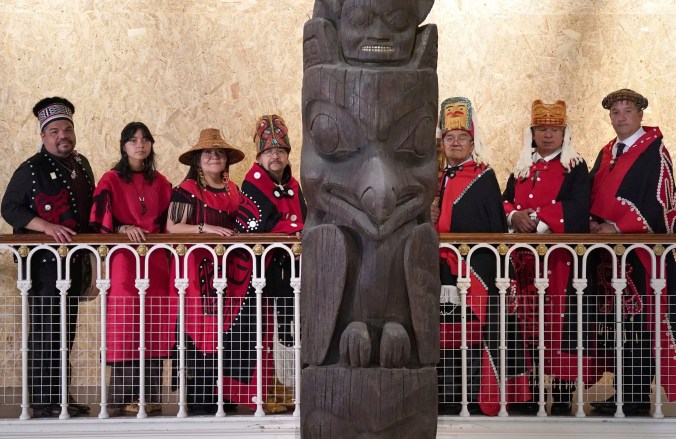
Earl Stephens, who goes by the Nisga’a cultural name Chief Ni’is Joohl, center left, and members of a delegation from the Nisga’a nation pose beside a 36-foot tall memorial pole during a visit to the National Museum of Scotland on Monday. Andrew Milligan/Press Association, via Associated Press

The legitimacy of museums possessing artifacts from other cultures is not inherently dubious, but as the Parthenon marbles example has demonstrated, there are plenty of reasonable questions. This story about a museum’s move to the better side of history is worth a read:

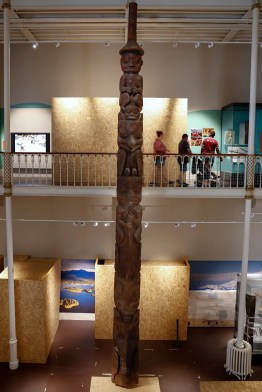
The pole is soon to be moved to British Columbia on the west coast of Canada. Jeff J Mitchell/Getty Images

Totem Pole Taken 94 Years Ago Begins 4,000-Mile Journey Home

The 36-foot tall memorial pole has spent almost a century in a Scottish museum. Now it will be returned to the Nisga’a Nation in Canada.

Almost 100 years ago, a hand-carved totem pole was cut down in the Nass Valley in the northwest of Canada’s British Columbia.

The 36-foot tall pole had been carved from red cedar in the 1860s to honor Ts’wawit, a warrior from the Indigenous Nisga’a Nation, who was next in line to become chief before he was killed in conflict. Continue reading