Our last in a series of three tributes to The Guardian for their photographic prowess at capturing and educating about Holi. Go visit their site to see larger versions of these amazing photos. Meanwhile, stay tuned tomorrow. Continue reading
India
Crepuscular Forest
Elusive, elemental, and extremely beautiful – this natural phenomenon is breathtaking and actually quite simple to explain. Commonly known as light beams, crepuscular rays are caused by an effect similar to Rayleigh scattering, and are rare to see in a natural environment save near the twilight peripheries – hence the name. Steam, smoke, and dust during the rest of the day makes these beams visible to us from all angles, but short of these mediums, angle and hour are the most significant factors for seeing them.
Holier Than Holi?
After noting several reasons, big and small, that we trust The Guardian, I kept looking at those photos. When I showed Milo, as usual he already knew much more about the topic of Holi than I (not a major feat in this case because until seeing those photos in The Guardian I knew precisely zero about Holi), so today when those photos caught my eye again it occurred to me that The Guardian might just have some more. Continue reading
Guardians
A trusted source of information, ideas, news, and more — the website of The Guardian is always worth a visit. Today is no exception, but above (click here to go to the original) is an exceptional example of its visual contribution to our sense of wonder about India’s diverse communities and how they worship.
Our Gang, Thevara (February Favorites)
The passerby, known as a neighbor by now, aka something like “perambulating portrait person,” senses a few patterns: one youngster, perhaps four years old, is a gigglebox at all times; another, same age, is the village notification siren (SAIPE!); and a few always mix their moves like karate chop Bollywood extras. Continue reading
Royal Poinciana (Delonix regia)
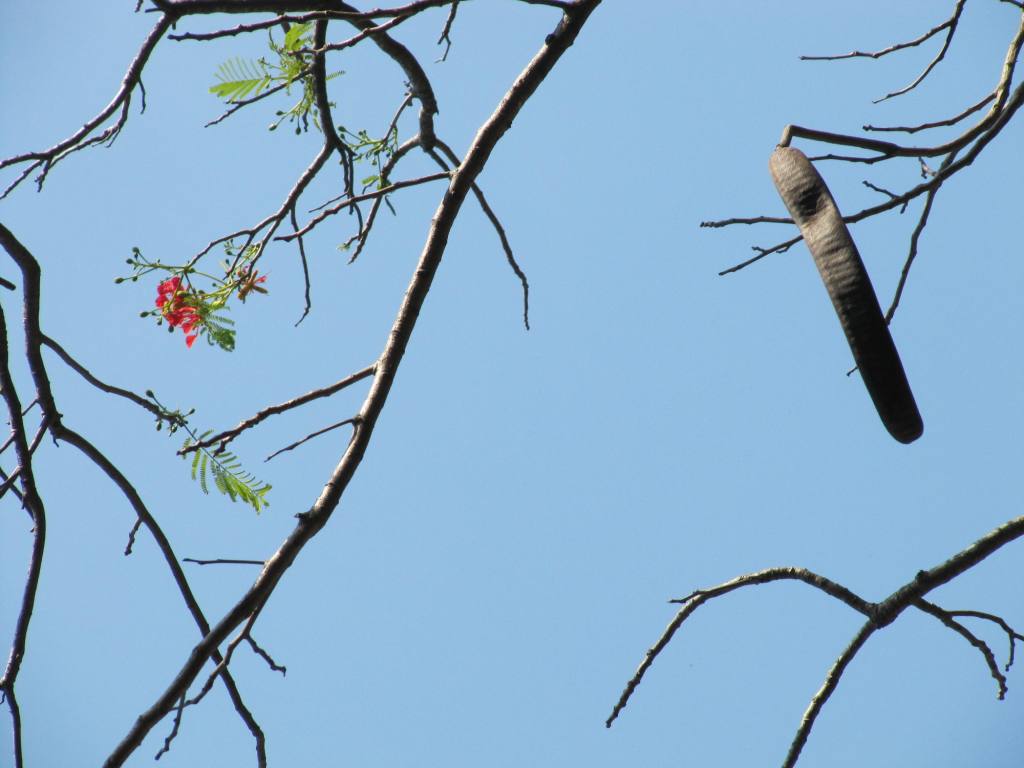
The Royal Poinciana (Delonix regia) is an ornamental tree which grows up to 30 to 40ft in height. In India, it is widely known as the Gulmohar tree which means “peacock flower” due to its abundant color. Continue reading
A Dry Periyar
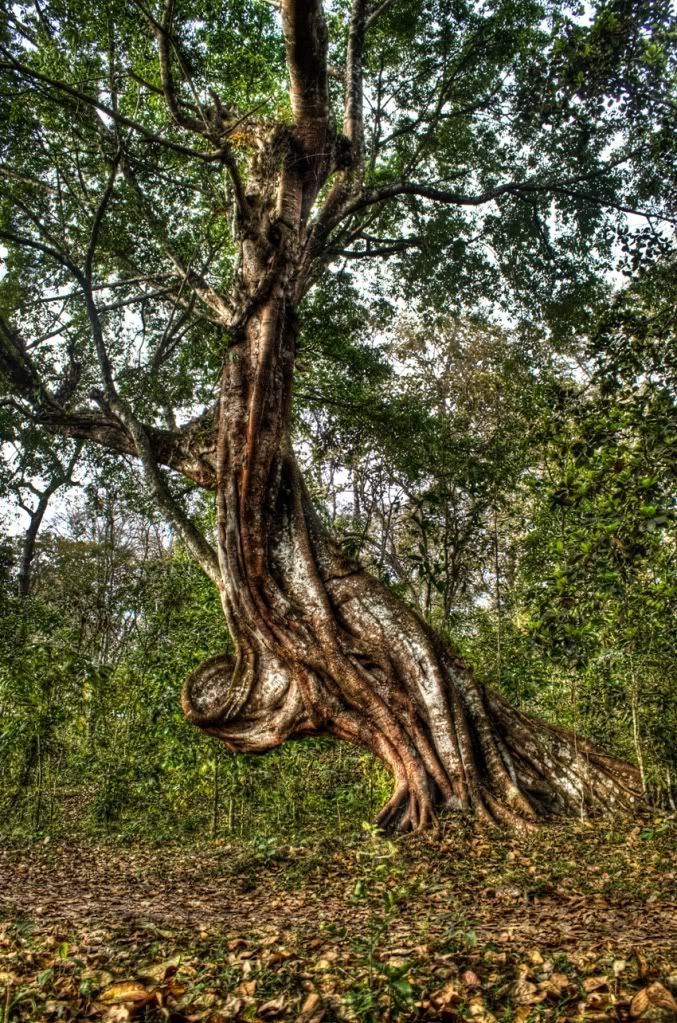
Kerala is dry. The places I’m used to seeing so green and vibrant that they practically drip are now dry, brown and crackly. What are normally torrential waterfalls are reduced to sunbaked rock faces. Clouds occasionally float through the sky, mostly in early morning, but they haven’t shed tears throughout the season. The native plants are geared to survive this climate, as the year seesaws between dryness and enormous moisture. In the forest, untold thousands of dead leaves cover the ground, crackling with glee as trekkers pass under the trees. Continue reading
Motherly Love

The dangers of coming between a mother and her child are well known. Bears are infamous for their maternal aggression. Lionesses delegate to other lionesses their maternal duties in order to hunt, but if anything gets too close, it’s “out with their bowels”! What about herbivores? Continue reading
Tigerkill

People come to the Periyar Wildlife Sanctuary in hopes of seeing tigers. Few do, but with a dwindling population and excursions limited to the fringes of the reserve, it’s no surprise. However, the tigers that do venture on the edges of the forest, mere kilometers away from Thekkady, leave ample evidence of their lifestyle. Paw prints are a common sight, and less frequently, carcasses of their prey. Simply being in their habitat is an experience worth having. (Warning: slightly graphic images below) Continue reading
Cardamom Plantations

Kerala’s hill districts are a historical hub of trade and culture – George discussed a bit of that history in his previous post. But spice plantations, which are one of the region’s main economic assets, are not very similar to most people’s view of agriculture. Enormous flat fields of rigidly regimented plants are not a common sight here (except for rice paddies), and spice plantations are quite different from this doctrine. Continue reading
Wordsmithing: Cousin
In Kerala, and perhaps other parts of India, “auntie” or “uncle” are terms of endearment among youth for anyone of “respectable” age. No blood ties are necessary. In many Western cultures the OED definition tends to prevail, respectively, for these two terms:
A sister of one’s father or mother; also, an uncle’s wife (= aunt-in-law).
A brother of one’s father or mother; also, an aunt’s husband (= uncle-in-law).
And cousins?
Lessons Of The Road

I recently wrote about India’s pithy little roadside instructions with the promise of photos to come. My last drive to Thekkady was on an unusually traffic free day, so it seemed safe enough to pull over and finally get my shots.
While The Sun Shines
The festival has the kind of illustrious history that makes it interesting enough on its home turf in Wales; its more recent evolution is a sign of creativity in motion. Take a look at this story from the most recent iteration of the festival in Kerala, and then after the jump see more on one of the festival’s participants in Colombia last week. Continue reading
Red Leadwort (Plumbago Rosea Linn)
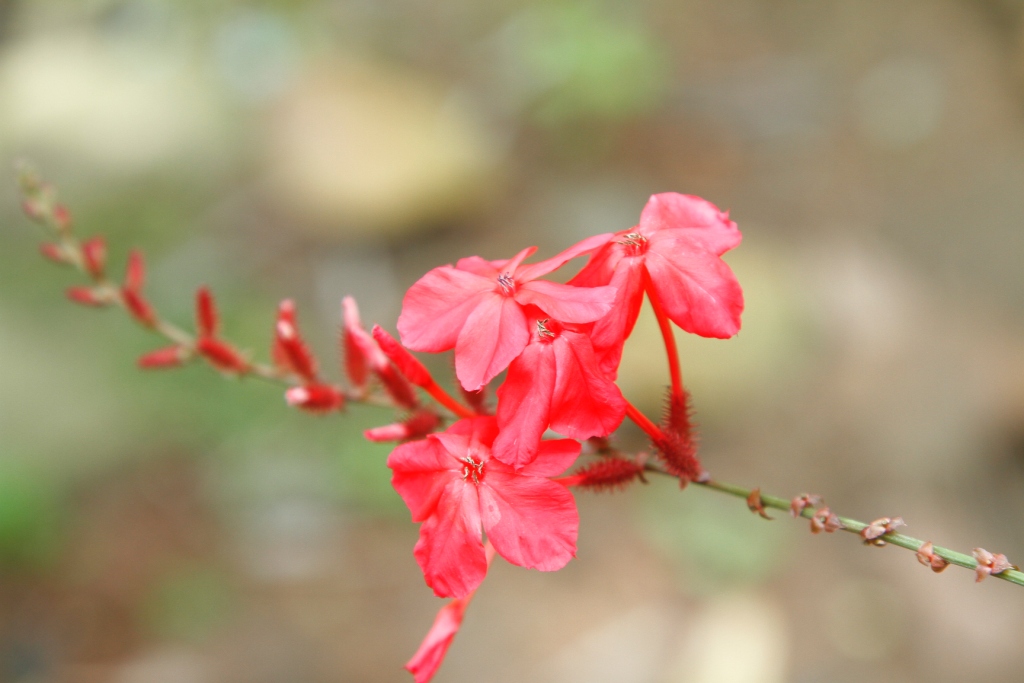
Red Leadwort (Plumbago rosea Linn ) is an ornamental plant which is found in most gardens in India. The main attraction of this plant is its flower stalk, but more importantly the plant is used in the field of Ayurveda for its medicinal values. Continue reading
Munnaranorama
Creating panoramas is an imprecise art – a photographer has to account for several variables when planning a shot. Composition is itself the most simple of these variables – despite the fact that what you see is rarely what you get. A good vantage point at a higher altitude than the subject is ideal, although occasionally elements which frame in the view add interest to the image. Symmetry isn’t necesary, but unbalanced shots should have either objects of interest or follow the rule of thirds (which is by no means an actual rule). A panorama need not be a full 360 degrees, and besides the ‘wow’ factor there is usually little value to this property. The picture ends up being more like a strip than something easily viewable, and takes a great deal of time to see and appreciate.

Theyyam – The Ritual Dance
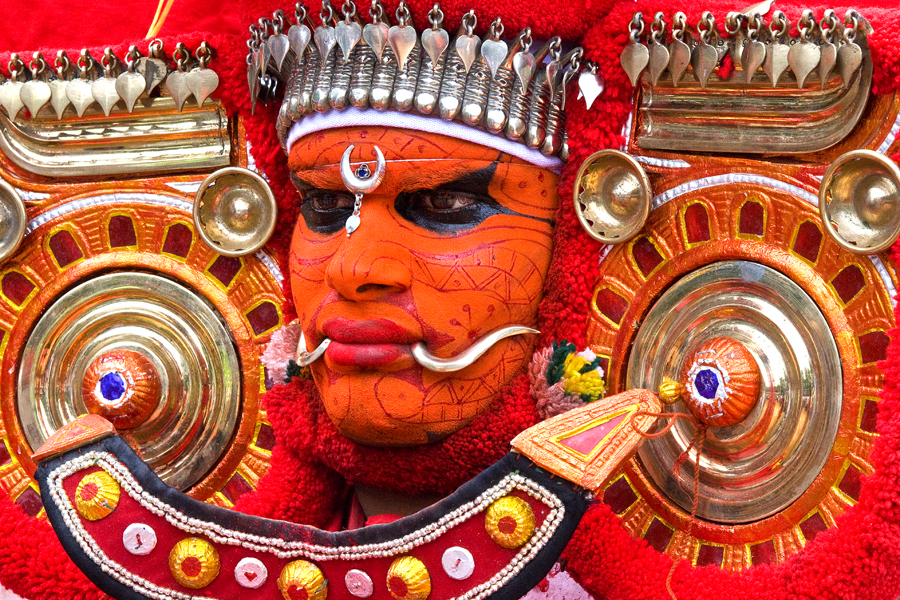
Photo: T J Varghese- taken from a temple festival near kannur, North kerala
Kerala is a land of old traditions, rituals, customs and arts. Most of them spring from folk tradition but they are often related to religious rituals and mythological stories.
Theyyam is one of the oldest popular devotional performance of Kerala. The performer usually takes a role of one deity and continue the character over the year. Continue reading
India Art Fair 2012

In case you are on your way to India, and can divert to Delhi for a day or two, here is a diversion to justify it (click the image above to go to the website):
The 4th edition of India Art Fair, formerly India Art Summit, will once again bring focus to the rapidly growing Indian art market. The 3rd edition in 2011 drew 128000 visitors over 4 days. While 80% of the galleries reported buoyant sales, the fair also attracted a record number of new collectors (30-40%). In only three years, India Art Fair has consolidated its position as the region’s leading platform for modern & contemporary art. Continue reading
Happy New Year, China
 Today marks the start of another year of the dragon, according to Chinese tradition. I was just about to go find out what that might mean, but decided better of it. That decision was influenced by the man in the picture to the right (click it for his bio) and what he said in this brief but moving response to the Annual Question that Edge puts to very smart folks (his response is the second one, so scroll down to that).
It is a fundamental principle of economics that a person is always better off if they have more alternatives to choose from. But this principle is wrong. There are cases when I can make myself better off by restricting my future choices and commit myself to a specific course of action. Continue reading
You Value The Books You Turn To In Need
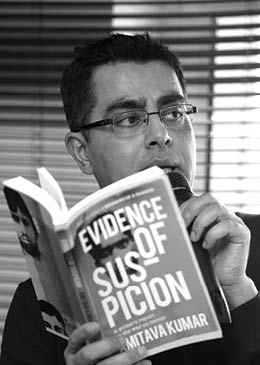 Click the image to the left for a trip to Jaipur via The Guardian and the fertile mind of Amitava Kumar:
When I was younger books were fetish objects. They sat in a small group on a bare shelf or a window sill, depending on whether I was at home or staying in my room at the college hostel. Now, with more money, I’m able to acquire the books more easily, and they have lost their ancient magic as objects. Now, they are treasured as friends. Or, more likely, as guilty reminders of money wasted — because I hardly have the time to read one-tenth of the books I buy.
Mr. Kumar is quoted here in a series called “Of Writers & Reading” in honor of the Jaipur Literature Fest. Continue reading
Our Gang, Thevara (About The Clever One)
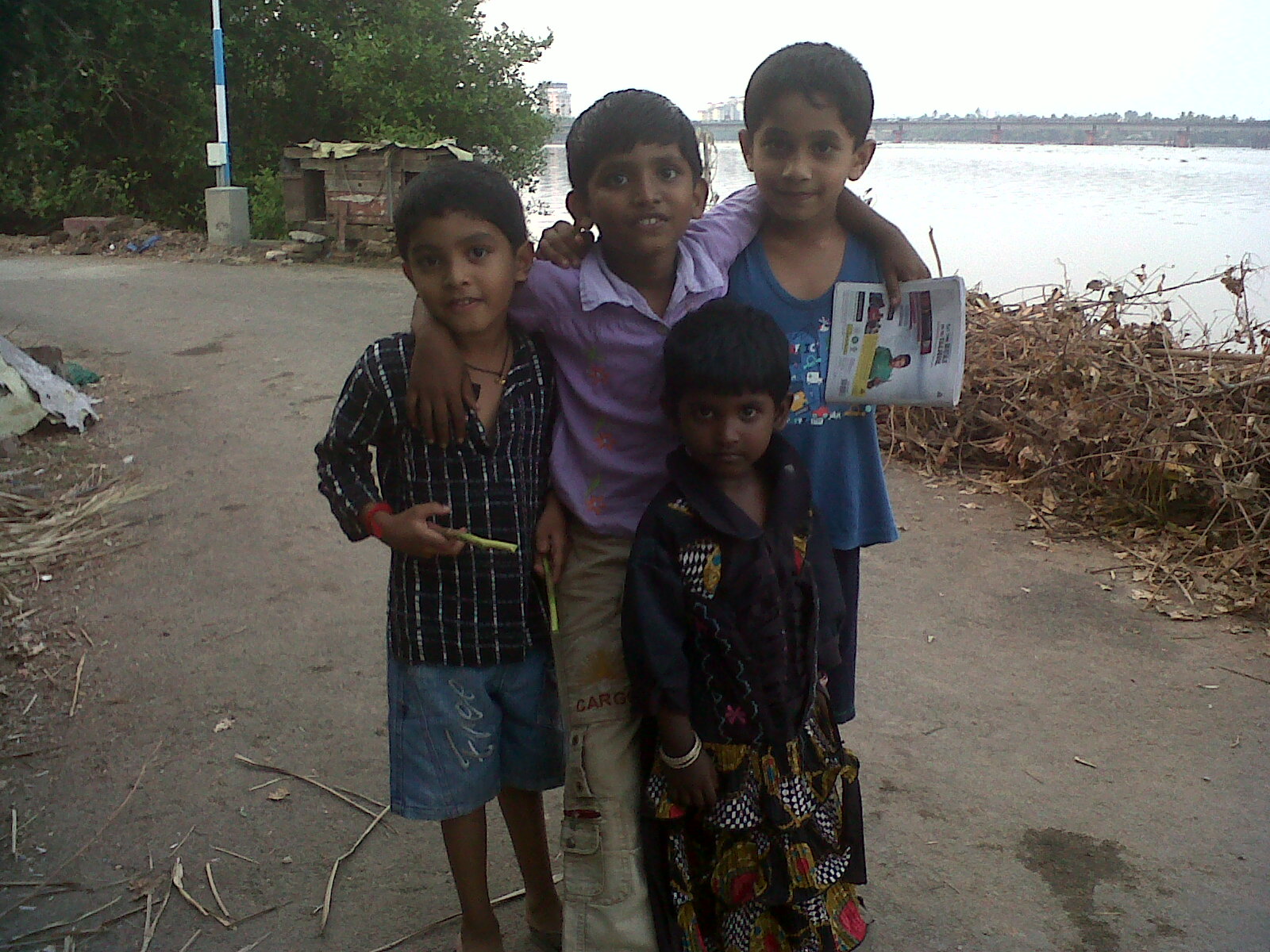
This young lady in the foreground of the photo above is special. She has already broken an unspoken, unwritten, and increasingly irrelevant gender barrier in which girls play with girls and boys with boys: her brother has welcomed her into the fellowship that used to be strictly a fraternity. It helps that she is clever.
 Organikos