Planting Trees In New Haven

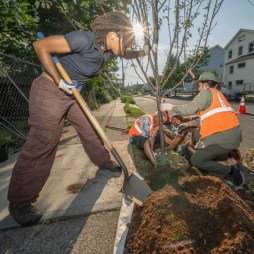
From left, Jess Jones, Ed Rodriguez, Zach Herring and Joshua De-Anda, planting a crab apple tree at 10 Wolcott Street in the Fair Haven neighborhood of New Haven, Conn. Tony Cenicola/The New York Times

Ed Rodriguez has a few years on me, but we have comparable tree counts. The caption of the second photo below captures my my own preference of activity on any given day. Having grown up in Connecticut and moved to Costa Rica decades ago, I note our reverse patterns of migration.

Colbi Edmonds, a member of the 2023-24 New York Times Fellowship class, reports from Seth’s previous hometown New Haven on an initiative I love reading about as much as I enjoy my own versions of the same kind of activity:

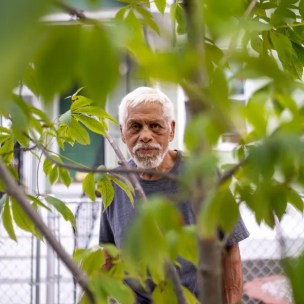
“I love to dig and mess around in the soil,” said Ed Rodriguez, who grew up in Puerto Rico but moved to Connecticut in the 1960s. Christopher Capozziello for The New York Times

One Neighborhood, 90 Trees and an 82-Year-Old Crusader

Ed Rodriguez is on a mission to convince his neighbors that they need trees to help combat summer heat — and to make the world a better place. It’s not always so easy.

Maria Gonzalez, who lives in New Haven, Conn., was envious of the other side of her street. It was lined with trees, offering some beauty as well as a shield from this summer’s unusual heat. But the sidewalk directly in front of her residence was bare, with trash littering patches of grass. Continue reading
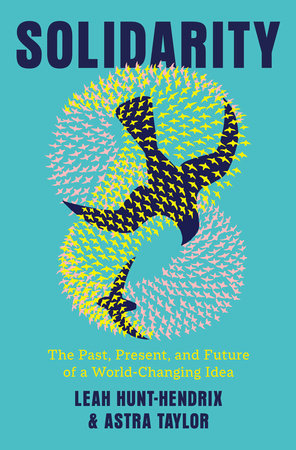
Solidarity, Class Traitors & Ambiguity Management

Solidarity by Leah Hunt-Hendrix and Astra TaylorThis book comes with a strong pitch by Bill McKibben. It came to my attention while reading this profile by Andrew Marantz. Full of ambiguity, about a balancing act between privilege inherited from fossil fuel wealth and sincere commitment to solidarity movements, what follows is entirely worth the read to get to the last paragraph (which only works if you have made it through the entire text):

What Should You Do with an Oil Fortune?

The Hunt family owns one of the largest private oil companies in the country. Leah Hunt-Hendrix funds social movements that want to end the use of fossil fuels.

Leah HuntHendrix photographed by Platon.

“Leah was clearly preoccupied with how a person of extreme privilege can live responsibly in the world,” her Ph.D. adviser said. Photograph by Platon for The New Yorker

Let’s say you were born into a legacy that is, you have come to believe, ruining the world. What can you do? You could be paralyzed with guilt. You could run away from your legacy, turn inward, cultivate your garden. If you have a lot of money, you could give it away a bit at a time—enough to assuage your conscience, and your annual tax burden, but not enough to hamper your life style—and only to causes (libraries, museums, one or both political parties) that would not make anyone close to you too uncomfortable. Or you could just give it all away—to a blind trust, to the first person you pass on the sidewalk—which would be admirable: a grand gesture of renunciation in exchange for moral purity. But, if you believe that the world is being ruined by structural causes, you will have done little to challenge those structures. Continue reading

Droning For Polluters

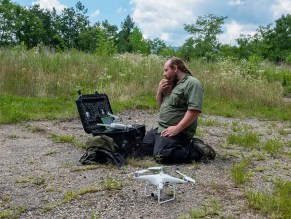
Junior Walk of Coal River Mountain Watch in Naoma, West Virginia, prepares his drone to fly near a reclaimed surface mine in Edwight. Roger May/The Guardian

Mother Jones shares a story we missed in its original publication:

One Man’s Aerial Crusade Against West Virginia’s Coal Industry

Citizen vigilante uses his drone to expose polluters—”I don’t have a lot of friends around here.”

Coal has stalked Junior Walk his entire life.

Continue reading
Lula’s Commitments Continue Progress

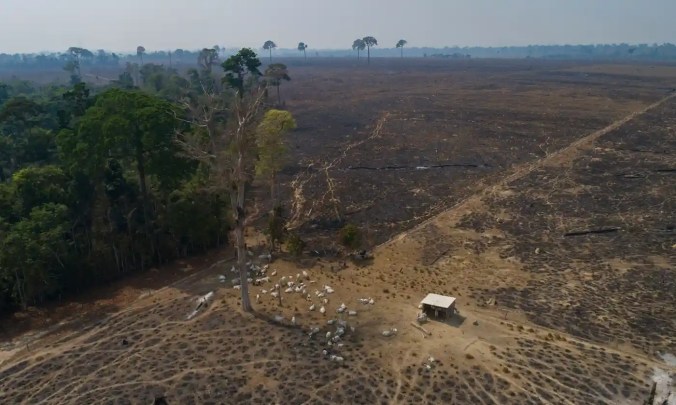
Cattle graze on land recently burned and deforested by cattle farmers near Novo Progresso, in Para state. Photograph: André Penner/AP

A short note following up on the progress reported earlier from our big and very important neighbor to the south:

Brazil: Amazon deforestation drops 34% in first six months under Lula

Government data shows marked reduction against same period last year, reversing trend of destruction during Bolsonaro reign

After four years of rising destruction in Brazil’s Amazon, deforestation dropped by 33.6% during the first six months of President Luiz Inácio Lula da Silva’s term, according to new government satellite data. Continue reading
Celebrating French Environmental Commitments

Paris mayor Anne Hidalgo and the co-president of the Paris bid for the 2024 Olympics, Tony Estanguet, paddle on the Seine in Paris. Photograph: Reuters

Since 11+ years ago many valuable environmental opinions by George Monbiot have been linked to in our pages; today a celebration of a neighboring country’s efforts:

When it comes to rich countries taking the environment seriously, I say: vive la France

Emmanuel Macron’s government is at least doing the bare minimum to avert the planetary crisis – and putting the UK to shame

While we remain transfixed by a handful of needy egotists in Westminster and the crises they manufacture, across the Channel a revolution is happening. It’s a quiet, sober, thoughtful revolution, but a revolution nonetheless. France is seeking to turn itself into an ecological civilisation. Continue reading
Food Waste Best Practice, South Korea Edition

Unloading the food waste at a disposal facility in Seoul. Chang W. Lee/The New York Times

One of the most covered topics in our pages during the decade since we started paying attention to it, still going strong for all the wrong reasons; so, our thanks to the New York Times for assigning John Yoon (reporting, writing) and Chang W. Lee (for photographs and video) to go to South Korea:

Food waste being separated from plastic bags at the Goyang facility.

When wasted food rots in landfills, it pollutes soil and water — and warms the planet. Here’s how one country keeps that from happening.

Around the world, most of the 1.4 billion tons of food thrown away each year goes to landfills. As it rots, it pollutes water and soil and releases huge amounts of methane, one of the most potent greenhouse gases. Continue reading
Taking Better Care With Help From Kate Raworth

What? We never posted on this book or its economist author before? We correct that now with Hettie O’Brien’s article in the Guardian :

The planet’s economist: has Kate Raworth found a model for sustainable living?

Her hit book Doughnut Economics laid out a path to a greener, more equal society. But can she turn her ideas into meaningful change?

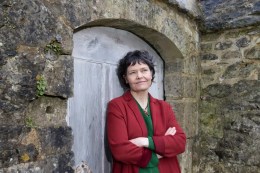
Raworth in Oxford. Photograph: Graeme Robertson/The Guardian

Consider the electric car. Sleek and nearly silent, it is a good example of how far the world has progressed in fighting the climate crisis. Its carbon footprint is around three times smaller than its petrol equivalent, and unlike a regular car, it emits none of the greenhouse gases that warm the planet or noxious fumes that pollute the air. That’s the good news. Then consider that the battery of an electric car uses 8kg of lithium, likely extracted from briny pools on South America’s salt flats, a process that has been blamed for shrinking pasturelands and causing desertification.

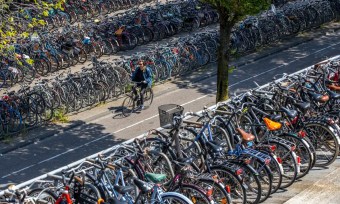
A bike park in Amsterdam which offers free parking for more than 2,500 bicycles. Photograph: Jochen Tack/Alamy

The 14kg of cobalt that prevent the car’s battery from overheating have probably come from the Democratic Republic of the Congo, where cobalt mines have contaminated water supplies and soil. As the demand for electric vehicles grows, the mining and refining of their components will intensify, further damaging natural ecosystems. By 2040, according to the International Energy Agency, the global demand for lithium will have increased more than fortyfold. Continue reading
About That Rocking Chair

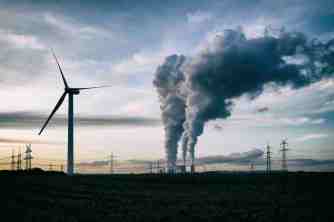
There’s been no enormous hurry in Washington to do much about the greatest threat that humans have ever faced. Photograph by Kevin Dietsch / Getty

Thanks, as always, to Bill McKibben for a perspective on otherwise difficult-to-make-sense-of events:

Looking at the White House Through Wildfire Smoke

This week, elected officials can see for themselves why they must get serious about climate change.

I’m sitting on a rocking chair just outside the White House fence on Thursday afternoon, and I can more or less make out the seat of American executive power through the haze. In the morning, the local government announced that the air-quality index for the District of Columbia had reached Code Purple (“very unhealthy”), because of the level of particulate pollution, which has never happened before. Continue reading
McKibben Embraces Green Building Boom

Grace J. Kim

We link to one person more than anyone else, for good reason:

ELECTRIFY EVERYTHING

Yes in Our Backyards
It’s time progressives like me learned to love the green building boom.

The United States is on the brink of its most consequential transformation since the New Deal. Read more about what it takes to decarbonize the economy, and what stands in the way, here

I’m an environmentalist, which means I’ve got some practice in saying no. It’s what we do: John Muir saying no to the destruction of Yosemite helped kick off environmentalism; Rachel Carson said no to DDT; the Sierra Club said no to the damming of the Grand Canyon. Continue reading

A Proposal For The Colorado River States

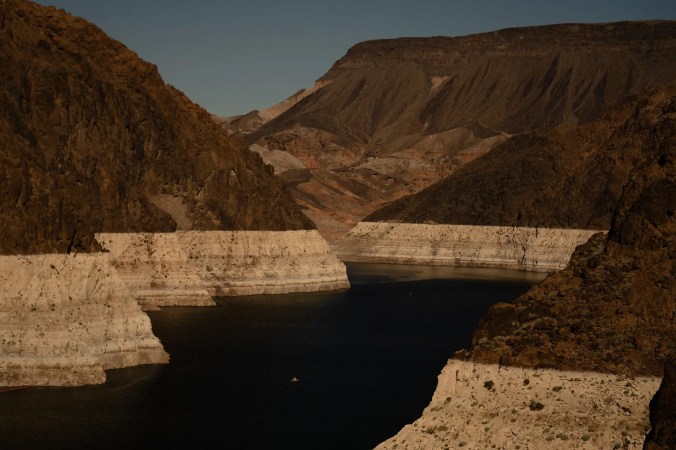
The Lake Mead reservoir in Nevada is showing a “bathtub ring” because of drought. Erin Schaff/The New York Times

We have featured the river plenty in recent years. No easy solutions. Bruce Babbitt, who was secretary of the Interior Department in the Clinton administration, and before that a governor of Arizona, has this to say:

Before Western States Suck the Colorado River Dry, We Have One Last Chance to Act

The Interior Department last summer dropped a bomb on the seven states that depend upon the Colorado River for water. Continue reading

Developing Clean Energy At Ambitious Scale

It is not every day that your country is given good odds on an important project of such an ambitious scale.

The Economist’s WOODBINE column has this to say about it:

America’s chance to become a clean-energy superpower

Getting the most ambitious energy and climate laws in American history through Congress was not easy. Now comes the hard part

The future catches you in unexpected places. Drive down Interstate 95, the highway running along America’s Atlantic coast, into south-eastern Georgia and you will find signs and rest stops named after pecans and peaches. Continue reading

Valuation Of Biodiversity

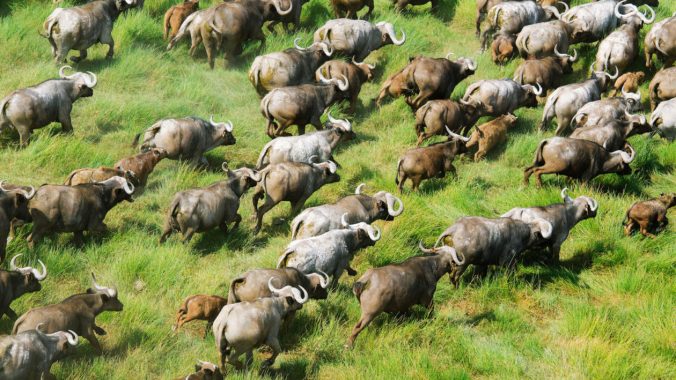
Cape Buffalo in Kenya. MARTIN HARVEY / ALAMY

Biodiversity valuation is a topic we link to from time to time, so we thank Zach St. George for this article’s contribution to our understanding:

Pricing Nature: Can ‘Biodiversity Credits’ Propel Global Conservation?

Backed by the UN, an alliance of conservationists and policymakers is devising new ways to finance the preservation of biodiversity by placing economic values on ecosystems. Some analysts say such schemes have the potential to boost conservation, but others are skeptical.

In 2009, as global financial markets shuddered, David Dorr became interested in the possibility of putting a price on nature. Dorr is a Cayman Islands-based global macro trader, attuned to what he calls the “butterfly effect” of geopolitics and other international forces on financial markets. Continue reading

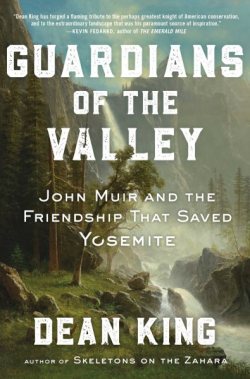
Yosemite, John Muir & Robert Underwood Johnson

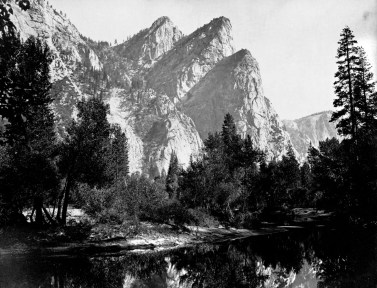
The Three Brothers, taken just east of El Capitan, by Carleton Watkins, ca. 1865. “A sharp earthquake shock at 7:30 a.m.,” Muir wrote in his journal on January 5, 1873. “Rotary motion tremored the river. . . . A boulder from the second of the Three Brothers fell today.” (Courtesy of the Library of Congress)

This book review in the LA Times will be of interest to those who find the history of conservation innovations entertaining:

The odd couple that saved Yosemite

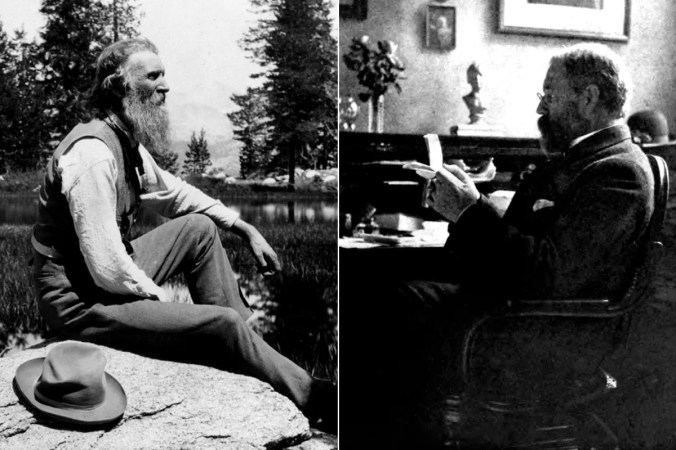
John Muir and Robert Underwood Johnson were unlikely allies in the war to preserve Yosemite. Muir, son of a Scripture-quoting Scottish immigrant father, was raised poor on a Wisconsin farm, but he wrote and spoke with the fervor of a prophet, and his craggy visage, tough constitution and unshakable devotion to the natural world drew admirers like a magnet. The urbane and cultured Johnson was an insider with a vast network of contacts in publishing and politics. The editor of one of the country’s preeminent magazines, Johnson hosted New York literary salons, mingled with America’s elite and eventually became the U.S. ambassador to Italy.

John Muir in California nature, 1902, left, and Robert Underwood Johnson, associate editor of the Century Magazine, at his office on Union Square in New York City. Their complementary skills helped carve out Yosemite National Park.(Courtesy of the Library of Congress; Courtesy of Wikimedia Commons)

It was improbable that they even met — Muir was on the West Coast, Johnson on the East. But on one memorable journey into the California kingdom now known as Yosemite National Park, the two agreed to pull together to wage the nation’s “first great environmental war,” battling through the administrations of seven presidents to save Yosemite. It’s fair to say that the valley’s matchless terrain and fragile ecosystem would have been logged, plowed and plundered without their relentless efforts. Veteran nonfiction writer Dean King tells their story in “Guardians of the Valley: John Muir and the Friendship that Saved Yosemite.” Continue reading

Audubon, The Name

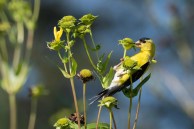
American Goldfinch on cup plant. Photo: Catherine Mullhaupt/Audubon Photography Awards

Elizabeth Gray, Chief Executive Officer and Ex Officio Board Director of Audubon offers this:

Open Letter from the CEO on Audubon’s Name

Hear directly from Dr. Elizabeth Gray on why Audubon is keeping its name.

Dear Flock,

This past year, the National Audubon Society embarked on a process to reexamine the name of our organization, in light of the personal history of the organization’s namesake, John James Audubon.  Continue reading

Leveraging Guarani Knowhow For Reforestation

A Guarani man walks through a cleared patch of Brazil’s Atlantic Forest that the local Indigenous community is trying to reforest. DIEGO HERCULANO / NURPHOTO VIA GETTY IMAGES

Thanks to Jill Langlois and Yale e360:

How Indigenous People Are Restoring Brazil’s Atlantic Forest

The Guarani Mbya people are working to restore the once-vast Atlantic Forest, which has been largely lost to development. Gaining official tenure of their lands, they hope, will boost their efforts, which range from planting native trees to reintroducing pollinators.

It was 2016 when Jurandir Jekupe noticed the bees were gone.

Their nests were once common in Yvy Porã, the Guarani Mbya village where Jekupe grew up and still lives. Continue reading

Brilliance Up North

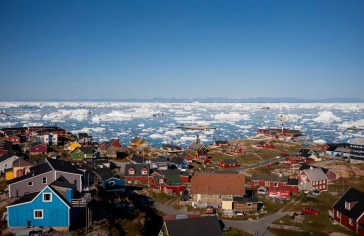
Ilulissat’s icy fjord, a UNESCO World Heritage site, is one of Greenland’s main tourist destinations even though its airport is currently too small to accommodate large jets. Carsten Snejbjerg for The New York Times

Setting limits at the outset, what a brilliant idea:

The Arctic island, renowned for its glaciers and fjords, is expanding airports and hotels to energize its economy, even as it tries to avoid the pitfalls of overtourism.

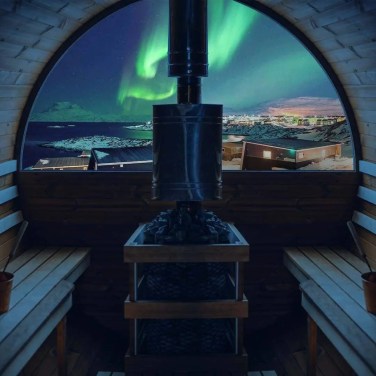
A sauna with a view of Nuuk and, at left, in the distance, the nearly 4,000-foot mountain Sermitsiaq. Inuk Travel

“The weather decides”: It could almost be the motto of Greenland. Visitors drawn to this North Atlantic island to see its powder blue glaciers, iceberg-clogged fjords and breathtakingly stark landscapes quickly learn to respect the elements, and they’re sometimes rewarded for it.

One cold December day, I was waiting for a delayed flight in Kangerlussuaq, a former U.S. military base just above the Arctic Circle, when a friendly Air Greenland pilot named Stale asked if I’d like to join him on a drive to the harbor to “pick up some musk ox heads.” The offer seemed very Greenlandic, so how could I refuse? Continue reading

Communities & Respect

The term was shaped by social-evolutionist thinking; white settlers used it to designate the “primitive” other. Illustration by Lauren Peters-Collaer

Given that our work has often brought us into close proximity, sometimes into working relationships, with such communities as described in the essay below, we have done our best to stay informed on respectful communication; so, this is of interest:

It’s Time to Rethink the Idea of the “Indigenous”

Many groups who identify as Indigenous don’t claim to be first peoples; many who did come first don’t claim to be Indigenous. Can the concept escape its colonial past?

Identity evolves. Social categories shrink or expand, become stiffer or more elastic, more specific or more abstract. What it means to be white or Black, Indian or American, able-bodied or not shifts as we tussle over language, as new groups take on those labels and others strip them away. Continue reading

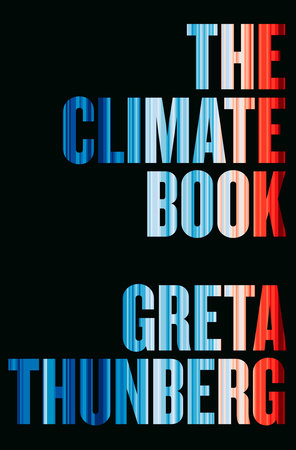
Greta Thundberg Talking To David Wallace-Wells

David Wallace-Wells has published a conversation, Greta Thunberg: ‘The World Is Getting More Grim by the Day’, in advance of the publication of the book to the right:

There is genuinely no precedent in the modern history of geopolitics for the climate activist Greta Thunberg.

Four and a half years ago, she began “striking” outside of Swedish parliament — a single teenager with a single sign. She was 15. In just a few months, she had made her mark at the United Nations climate conference in Poland: “You are not mature enough to tell it like it is,” she told the assembled diplomats and negotiators, “even that burden you leave to us children.” Continue reading

When Diplomatic Language Is Counter-Productive

Climate-change straight talk is crucially important as the occurrence of enormous, unnatural disasters coincides with a man-made flood of obfuscation. Photograph from Getty

We look for positive news on the environment without hiding the perils. Bill McKibben, as always, prefers straight talk in all such matters:

The U.N. Secretary-General’s Searing Message for the Fossil-Fuel Industry

Forget diplomatic language—it’s a moment for some home truths.

On Monday morning, at the United Nations, the Secretary-General delivered his annual report on priorities—a kind of State of the Planet address. If you’re struggling to remember the name of the current Secretary-General, it’s António Guterres, who came to the job after, among other things, serving as the Prime Minister of Portugal. We’re used to the idea that “diplomatic language” is filled with euphemisms—“a full and frank exchange of views,” and so on. Continue reading

Bravo, Bobbi Wilson!

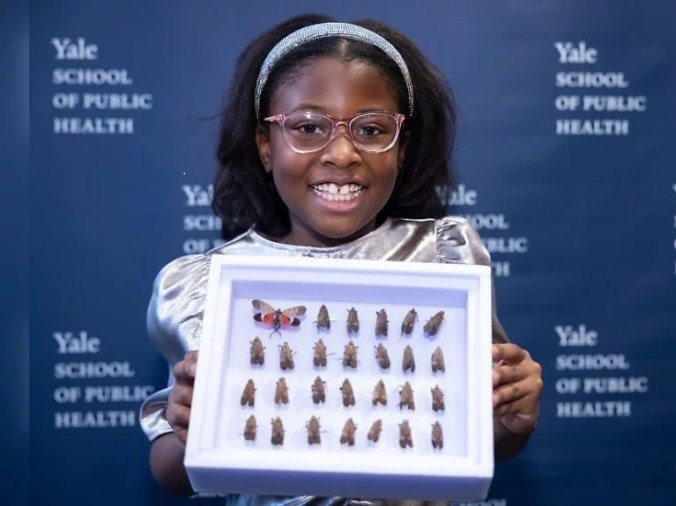
Bobbi Wilson holds her collection of spotted lanternflies as she is honored at the Yale School of Public Health on Jan. 20. Andrew Hurley/Yale University

A young person doing their part, on their own, to help with an environmental scourge. Hats off to that. The unneighborly act aside, this is a story to celebrate (thanks to National Public Radio, USA) and an extra bravo to Yale University for their part in it:

Yale honors the work of a 9-year-old Black girl whose neighbor reported her to police

Nine-year-old Bobbi Wilson may be in the fourth grade, but last month the Yale School of Public Health held a ceremony honoring the budding scientist’s recent work. Continue reading