Montenegro, 2017

5565

Wild and wet … Lake Skadar national park, Montenegro. Photograph: Alamy

It is now ancient history, but it may as well be yesterday, since I can look at the photo above and it has no less of an impact on me. When Montenegro was still part of what remained of ex-Yugoslavia, La Paz Group worked in partnership with UNDP on a project for the Prime Minister of this soon-to-be independent nation. He was visionary, and wanted to replicate what Costa Rica had accomplished as a small ecologically diverse country–harnessing sustainable development to ensure his country would not become the victim of the forces of mass tourism.

Skadar Lake was the crown jewel in the country’s potential attraction of ecologically-oriented travelers, and the perfect complement to the wild beauty of the coast line and the spectacular mountains. Montenegro has done a very good job in the decades since my first visit to Skadar Lake (standing exactly where the photographer above stood, looking at my own photos from that visit), communicating its commitment to those principles. Nonetheless, the challenges never go away, so we wish them continued success in fighting the dark forces:

Montenegro’s pristine Lake Skadar threatened by new resort

Tourism in Montenegro is booming, but the approval of plans for a new ‘eco-resort’ has led to protests from conservationists who fear it will threaten a stunning national park Continue reading

Ruby Sea Dragon, First Live Portrait


13Tb-seadragon2-superJumbo.jpg

A ruby sea dragon that washed up on the Point Culver cliffs in Western Australia. Credit Zoe Della Vedova

Click the image above, a Ruby Sea Dragon washed ashore, to go to a moving image of another member of this creature’s species, alive and well in the wild waters off Australia:

For the First Time, a Ruby Sea Dragon Flaunts in Front of the Camera

By

Famous for their flamboyant, leaflike appendages and mesmerizing movements, sea dragons are aquatic works of art. Since the 19th century, marine biologists had thought that only two types of these enchanting fish existed — the leafy and weedy — until they discovered a third among museum specimens in 2015: the ruby sea dragon. Continue reading

Coffee, Birds & How They Matter

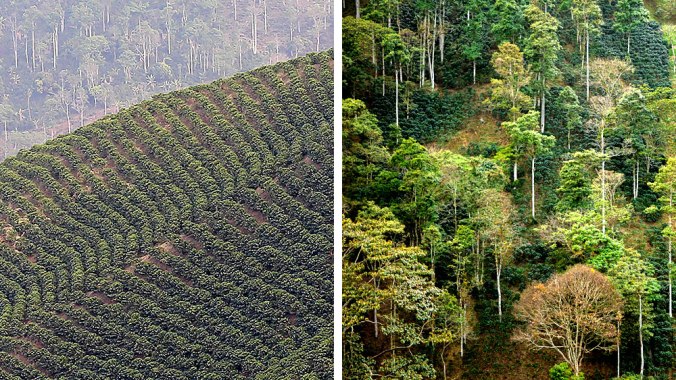
Sun-grown coffee (left) is a monoculture of coffee bushes. Shade-grown coffee (right) offers more habitat for forest species. Photos: Chris Foito/Cornell Lab Multimedia; Guillermo Santos).

Sun-grown coffee (left) is a monoculture of coffee bushes. Shade-grown coffee (right) offers more habitat for forest species. Photos: Chris Foito/Cornell Lab Multimedia; Guillermo Santos).

Our lives in the New World Tropics has allowed a frequent convergence between birds and coffee, even in the most simple terms of enjoying birdsong in our garden over the first morning cup. That very garden of our home in Costa Rica sits in what was historically cafetal (a coffee finca), with large trees shading the coffee that still grows along the little stream that runs along the property line. Blue-crowned motmots (the Central American cousin to the Andean Motmot mentioned below, have been frequent residents.

The coffee plantings at our home are insignificant compared to the 100+ acres of Gallon Jug Estate shade-grown coffee at Chan Chich. Of the nearly 350 bird species recorded in the Chan Chich Reserve’s 30,000 acres, a large percentage are migratory, making their home in the coffee as well as the healthy forest habitats that make up the reserve.

Sustainable agriculture is rarely a “get rich quick scheme”, but taken within the context of the “seventh generation stewardship”, the benefits will continue to outweigh the costs.

In Colombia, Shade-Grown Coffee Sustains Songbirds and People Alike

By Gustave Axelson

Early one morning last January, I drank Colombian coffee the Colombian way—tinto, or straight dark.

I sipped my tinto while sitting on a Spanish colonial veranda at Finca Los Arrayanes, a fourth-generation coffee farm and hotel deep in northwestern Colombia’s Antioquia region. The sun had not yet risen above the high ridges of the northern Andes. In the ambient gray predawn light, the whirring nocturnal forest insects were just beginning to quiet down.

My senses of taste and smell were consumed by the coffee, which was strong and bold in a pure way, the flavor flowing directly from the beans, not a burnt layer of roast. But my eyes were trained on a small wooden platform that held a couple of banana halves. The first bird to visit was an Andean Motmot, one of Colombia’s many Alice in Wonderland–type fantastical birds. It sported a green-and-turquoise coat and black eye mask, and it was huge—longer than my forearm, with a long tail with two circles at the end that swung rhythmically from side to side like the pendulum of a clock.

The motmot flew away and I took another sip of coffee to be sure I didn’t dream it. Another bird soon landed on the platform to pick at the bananas. This one was yellow, though Colombians call it tangara roja, because males of this species are completely red. In its breeding range, birders from the Carolinas to Texas know it as the Summer Tanager.

For more than 5 million years, a rainbow of Neotropical migrant birds (tanagers, warblers, and orioles) has been embarking on epic annual migrations from breeding grounds in North America to the New World tropics. In Colombia, these wintering areas are a lot different now than they were just 50 years ago. From the 1970s to the 1990s, more than 60 percent of Colombian coffee lands were cleared of forest as new varieties of sun-grown coffee were planted. During that same period, populations for many Neotropical migrant species plummeted—a drop many scientists say is related to deforestation of the birds’ wintering areas across Central and South America.

And yet, coffee doesn’t require deforestation. Continue reading

2017, Year Of Wilderness Conservation, Farming & Food

CCL Board.jpg

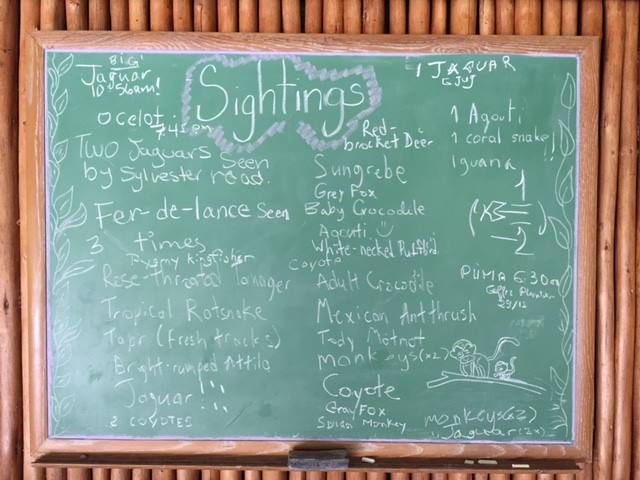
A few days ago Arnay, the General Manager of Chan Chich Lodge, posted a snapshot of the sightings board just outside the reception area, where guests share what they have seen on any given day while trekking with guides, or trekking solo. 2016 was not exceptional for Chan Chich, but it was another year of exceptional opportunity to witness the abundance that comes with committed conservation.

The big cats made their presence known day after day after day. The entire food chain on which they depend was right there with them, well balanced in the 30,000 acres of forest that Chan Chich protects, surrounded by an additional nearly half million acres that other private conservation-minded land-owners protect in northwest Belize. Continue reading

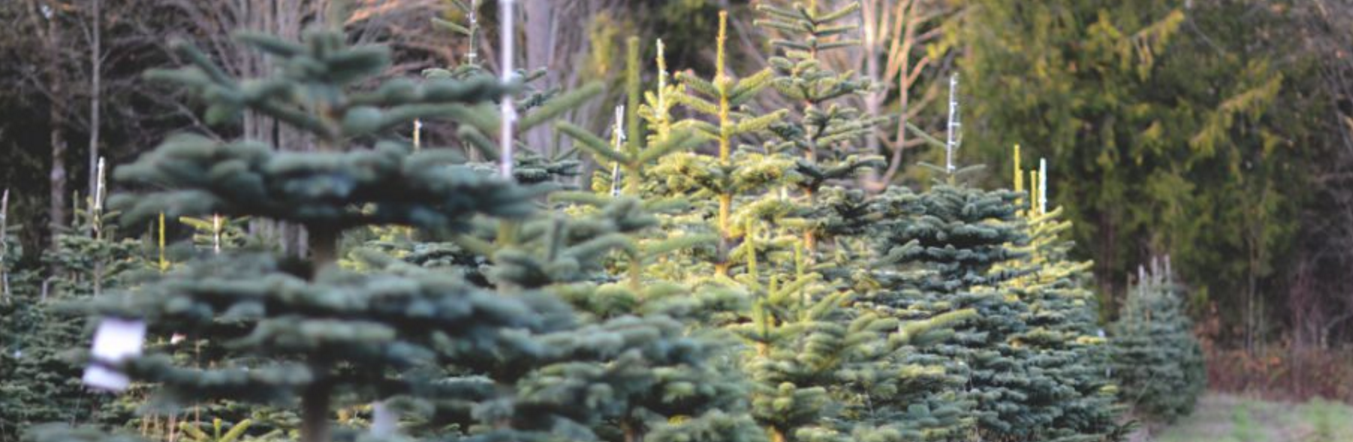
‘Tis the Season for Creative Arborescent Decision-Making

photo credit: Carol Fernandez

photo credit: Carol Fernandez

Real Vs. Fake Trees – Which is Better for the Environment?

Tis the season for an age-old question: Which kind of Christmas tree – real or fake – is better for the environment?

We love this question, because it’s an example of a simple choice that anyone and everyone can make that can reduce our impacts on the environment.

We also love this question because, like many environmental issues, the answer isn’t as simple as you might think. Our #1 recommendation? Buy a real tree. Read on for more details on the impacts of both real and fake Christmas trees, and then make the choice that’s right for you. And check out our 12 Tree Tips for other earth-friendly holiday decoration tips.

REAL CHRISTMAS TREES

In 2015, 26.9 million trees were purchased from live Christmas tree farms – more than twice the number of fake trees purchased (12 million).   Continue reading

Big Weather & Big Cats At Chan Chich Lodge

Cockscomb Basin Wildlife Sanctuary is of interest because it is a pioneer in conservation in Belize–as Chan Chich Lodge is in its own way. But in writing about it Vicky Croke, for The Wild Life at WBUR (National Public Radio, Boston, USA), reminds a few of us of our time in Belize during Earl, and the aftermath during which jaguar sitings have been, and continue to be, inexplicably spectacular:

Jaguars Interrupted: Counting Big Cats After A Hurricane

Two months after Earl hit Belize, researchers at the world’s first jaguar reserve are still taking stock.

By Vicki Croke

This past summer, within days of gathering spectacular camera-trap footage of a female jaguar and her two tiny cubs sauntering through the Cockscomb Basin Wildlife Sanctuary in Belize, field scientists with Panthera, the global wild cat conservation organization, got the news that a tropical storm was forming and might just come their way. Continue reading

Sardine Disco Balls, Or Cabo Pulmo

15tb-sardines-superjumbo

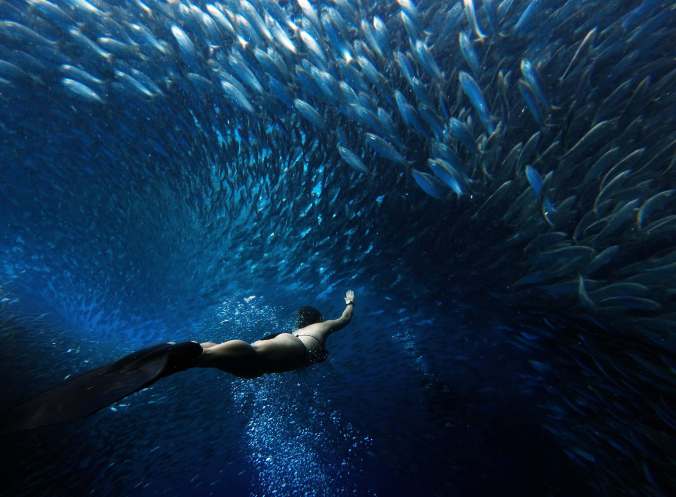
A free diver swooping into a sardine ball. Credit Keith Sepe

Joanna Klein’s story in the Science section of the New York Times this week, titled Swimming With the Mysterious Sardine Disco Balls of the Philippines, has had me thinking in recent days about the Gulf of California, and specifically about Villa del Faro. If you have reason to be in the Philippines, click the image above to get a quick view of what may be in store for a diver in certain waters.

But otherwise, I will riff off that photo in the direction of Baja California Sur. The intensity of those sardine schools are comparable to the biodiversity in the waters of Cabo Pulmo. Continue reading

Getting Our Thinking Right, When It Matters Most

9780399184123An editorial that I read yesterday– Does Decision-Making Matter?–was a welcome “moving on” from all the other kinds of recent editorializing. Welcome because it tells us there is a new Michael Lewis book, and especially welcome because it shows that five years after we first heard him credit two scientists for their influential work he has now gone the last mile in documenting their greatness for a mass audience. We have had a couple nods to that same work in our pages in recent years.

This morning’s walk was accompanied by a podcast I had neglected for some months, with an interview that Chuck Klosterman–not mentioned in our pages before–gave to promote his new book. It is time to finally correct that oversight. I cannot explain why that is important as well as the interview can, so I suggest listening to it. If you do not have the 90 minutes required for that, a short synopsis version of his promotional interview can be heard and read on this NPR interview given at about the same time:

‘But What If We’re Wrong:’ A Look At How We Will Remember The Now, Later

…KELLY MCEVERS, HOST:

What if everything we think that’s important or interesting or relevant right now will be totally insignificant in the future? Or what if something we don’t really appreciate today will be considered great in 200 years, like how people didn’t think much of “Moby Dick” when it was written, but now we think it’s pretty great? These are the questions that critic Chuck Klosterman asks in his new book. In it, he tries to predict how we will remember the present when it is the past. And he’s not too worried about whether he’s right or not. Continue reading

Tierra del Fuego

tdf

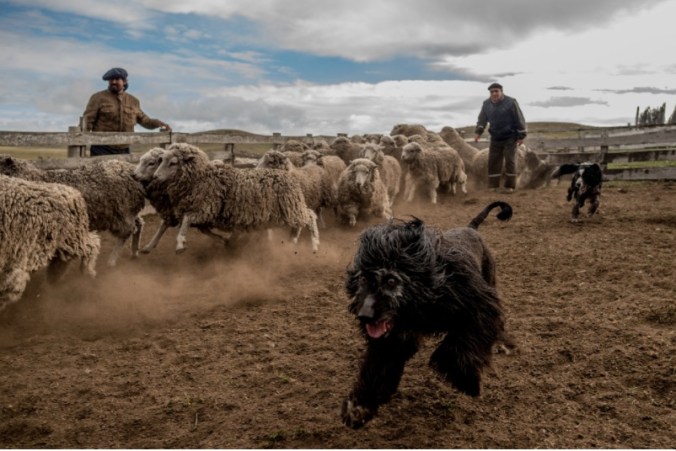
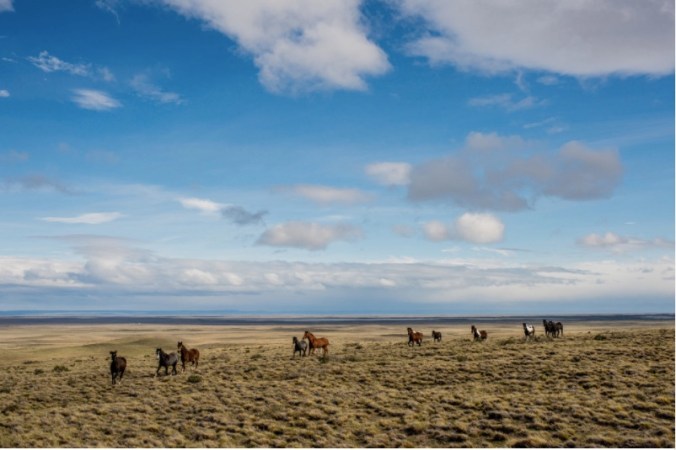
Dogs at this year’s shearing. Outside the season, gauchos may go weeks without seeing a person. Credit Tomas Munita for The New York Times

I am reminded of the 2008-2010 period of my life, which was spent mostly in Patagonia; some of it was in Tierra del Fuego. These photos, from an article in today’s New York Times, show that this newspaper is adapting.

tdf2

Horses, like these from Estancia Por Fin, help gauchos with shepherding sheep. Credit Tomas Munita for The New York Times

Continue reading

The Gulf Of California In Front Of Villa Del Faro

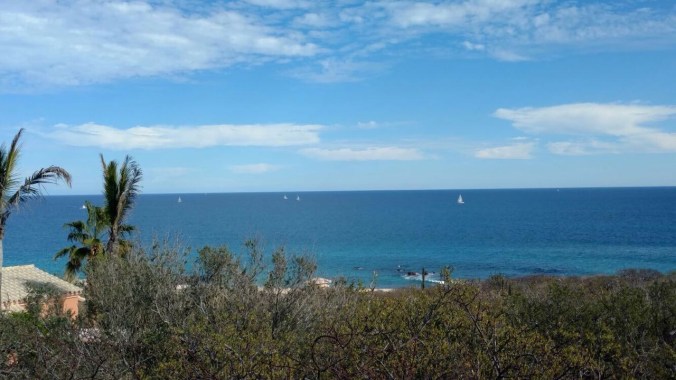
vdfregatta

Seth sent a snapshot he quickly took on his phone yesterday late morning at Villa del Faro. He had already told me the day before that they were seeing whales in the same vicinity of where the boats are in this photo, but he had not had his phone handy to snap a picture. So this would have to do. It looked as though a regatta was passing by. Continue reading

Villa Del Faro Morning Walk

vdfwalk1This post from yesterday reminds me of an early morning walk I took a few days ago with Seth and Jocelyn, when these two donkeys came wandering down the road. One seemed determined to get his head and shoulders portrait in the best possible light.

So I indulged him, and both seemed happy with a bit of nose-petting. No carrots, but never mind. When we continued our walk they started to follow, but then, nope. They wandered off in the opposite direction.

vdfwalk2Donkeys do that. A walk at dawn is the best way to know a place–at its quietest, and as per donkey logic, in the best possible light. I had arrived at Villa del Faro after a visit at Chan Chich Lodge, where dawn greets you with howler monkeys howling, and on a walk you will definitely hear a symphony of birdsong. At Villa del Faro you will hear birdsong, but different; at most it will be chamber music, more likely solos and duets. Continue reading
A Place To Reflect, To Reconnect, To Recharge

vdfbeachhouse

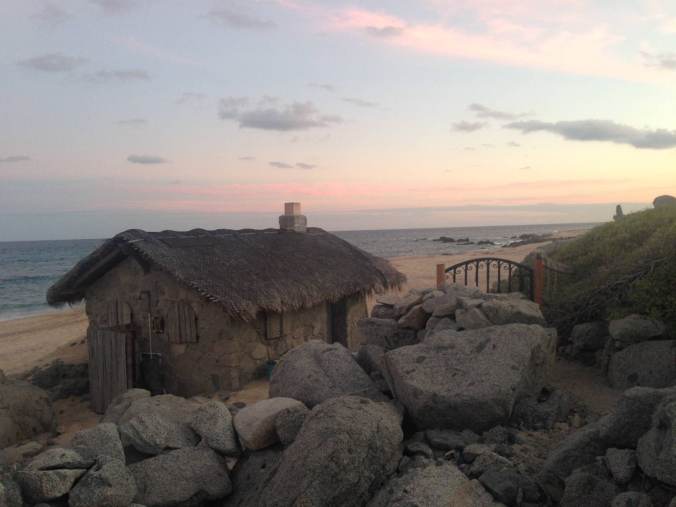
This past week I have been at Villa del Faro with Seth and Jocelyn, reviewing plans for 2017. It was a week in which the thought came to us: people need time to reflect (among other important things). I took this photo of the Stone Beach Cottage at about 5:30 p.m. yesterday and I can visualize many friends, colleagues, and plenty of as yet unknown folks who would benefit from some reflection time there. Continue reading

Life Among The Lighthouses

Lighthouse.jpg

Writing now from Villa del Faro, in Baja California Sur, I am delighted to read this article from the Travel section this week in the NY Times:

Keeping the Fire of Irish Lighthouses Alive

The golden age of lighthouse construction is long gone, but in their wake are beautiful vistas and stories that bring modern Irish history to life.

By

To get to the Clare Island Lighthouse in County Mayo, in the west of Ireland, you climb up to the island’s northern cliffs along a road of stones, past damp sheep chewing grass, around the bend through an alley of fuchsia hedges in bloom. Keep walking until you reach the lighthouse and slip your key in the lock, hang your parka by the door and take a seat beside the peat-burning fireplace. Someone may be nearby to take your drink order, and the reward for a long walk will be a cold gin and tonic and the soft heat of the fire. Continue reading

From Recent Chan Chich Lodge Guests

cclmonkey1

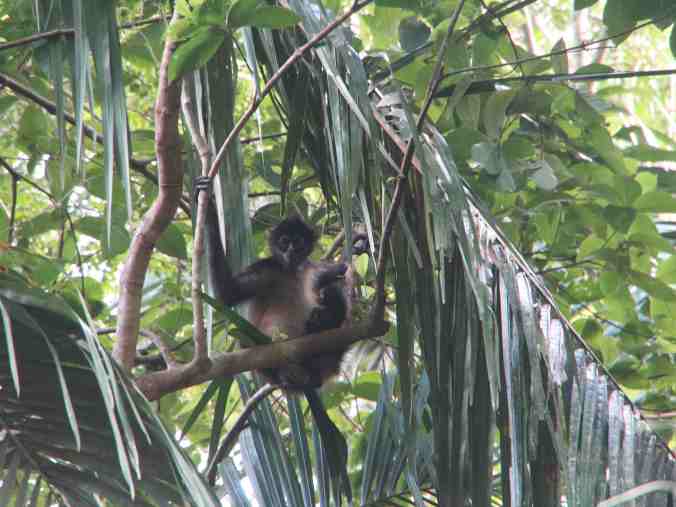
When this family told me about their encounter with a troupe of monkeys I had not yet seen these photographs, which they shared as they were preparing to depart Chan Chich Lodge. Looking at the photos now I understand why they were so thrilled by the wilderness setting. The first one I saw, above, was just a blur so I skipped it, but when I came back to it I realized this was what the son in the family had most loved–the exploration, the search to see his first animal in the wild. Continue reading

From Guests At Chan Chich Lodge

cclmonkey

A family from Spain shared with me some photos they took during their first four days in Belize, spent at Chan Chich Lodge. I asked what was their favorite “thing” about Chan Chich and I appreciated the simplicity of their reply: they most enjoyed the simple fact of being in nature. Waking up to the spectacular racket of monkeys claiming territory in the nearby trees Continue reading

Chan Chich Lodge, According To Fodor’s

fodors-belizeA guest recently left a copy of this guidebook and I just picked it up. After my puma sitings yesterday and today, I am not surprised to read what one of the most respected travel guides has to say about Chan Chich Lodge:
Arguably the best lodge in Belize and one of the top lodges in all of Central America, Chan Chich is set in a remote, beautiful area … with 12 rustic yet comfortable cabañas. Just outside your door you’re likely to encounter legions of tropical birds and wild animals, even jaguars Continue reading

Puma, Chan Chich Lodge, & Me (Or You)

puma

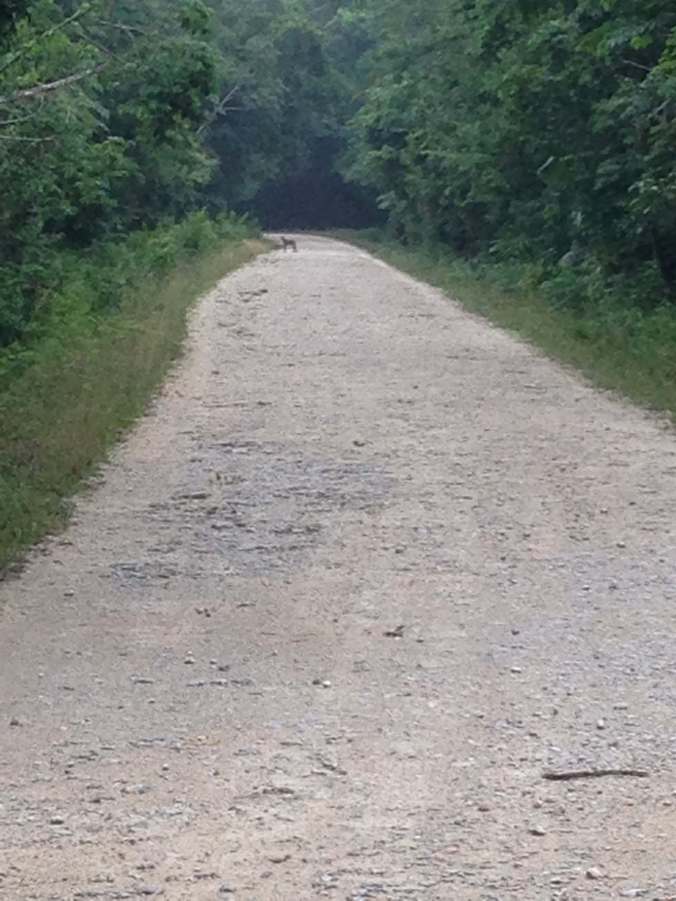
Trekking in a protected area, my hopes and expectations balance each other to create a happy medium: if I can see evidence of the ecosystem’s health, and can believe that it supports the entire food chain, I get that biophilia sensation. I do not need to see the top of the food chain, which frequently is a big cat (tigers and leopards in India, jaguars and pumas in Latin America, lions and cheetahs throughout Africa) as much as I would want to. Or as much as I am elated, on days like today and yesterday, when I do see a healthy mature cat. Continue reading

Solar Rising

4000

A road divides solar panels at the Ivanpah Solar Electric Generating System in the Mojave Desert, Nevada. Photograph: Bloomberg/Bloomberg via Getty Images

Those of us who live near the Kochi Airport in Kerala, India feel pretty proud of our 100% solar-powered access to the outside world; but this story tells us to expect even more in the USA soon:

US energy shakeup continues as solar capacity set to triple

Solar expected to almost triple in less than three years by 2017 as coal continues to fall, solidifying gas as country’s chief electricity source, reports Climate Central

Bobby Magill for Climate Central, part of the Guardian Environment Network

Solar power capacity in the US will have nearly tripled in size in less than three years by 2017 amid an energy shakeup that has seen natural gas solidify its position as the country’s chief source of electricity and coal power continue to fade, according to monthly data published by the US Department of Energy. Continue reading

The Journey We Are All Responsible For

28_millimetres_-_women_are_heroes_action_in_phnom_penh_open_eyes_cambodge_2009

28 Millimeters, Women Are Heroes. Action in Phnom Penh, Open Eyes, Cambodge, 2009

A big part of what we do when we are not adding to these pages involves helping people all over the world plan journeys. We want them to stay in places that we have developed and/or that we manage because we have worked to reduce our contribution to negative anthropocentric travel impacts. There are positive impacts also, of course, including resources flowing to places where they are needed for human development, which in turn increases the likelihood of conservation efforts succeeding.

I was happy to see this newly revamped online publication back in these pages recently, and today as I went to their website I am even more happy to see this amazing article by a writer who was liberally linked to in our first couple of years on this platform. We have enormous respect for Mr. Revkin’s commitment to many of the same things we work on day in and day out. This is a long article, but worth the time and attention:

An Anthropocene Journey

The word “anthropocene” has become the closest thing there is to common shorthand for this turbulent, momentous, unpredictable, hopeless, hopeful time—duration and scope still unknown

By Andrew C. Revkin
October 2016

My reporting career has taken me from smoldering, fresh-cut roadsides in the Amazon rain forest to the thinning sea ice around the North Pole, from the White House and Vatican to Nairobi’s vast, still-unlit slums. Throughout most of it, I thought I was writing about environmental and social problems and solutions.

Lately I’ve come to realize that my lifelong beat, in essence, has been one species’ growing pains. After tens of thousands of years of scrabbling by, spreading around the planet, and developing tools of increasing sophistication, humans are in surge mode and have only just started to become aware that something profound is going on. The upside has been astounding. Child and maternal mortality rates have plunged. Access to education has soared. Deep poverty is in sharp retreat. Despite the 24/7 distilled drama online and on TV, violence on scales from war to homicide has been in a long decline.

Ice Melt, Harbinger Of Accelerated Melting

161024_r28885-690x448-1476393905

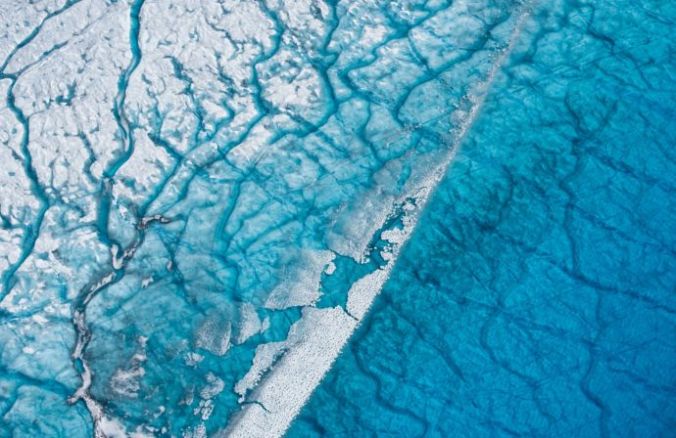
When water accumulates on the surface of an ice sheet, more sunlight gets absorbed, which results in more melt, in a cycle that builds on itself. This year’s melt season began so early that many scientists couldn’t believe the data they were seeing. PHOTOGRAPH BY DANIEL BELTRÁ

Elizabeth Kolbert has appeared in these pages about as frequently as any other individual we admire (McKibben, an activist and a writer, wins the race with a few more posts pointing his way), or any other topic (take your pick between libraries, entrepreneurial conservation or a few others that nudge past EK in the same race) we care deeply about. She is an activist through her writing, advocating on behalf of our better understanding of the challenges facing the next generations. Epochal challenges that we have some ability to influence the outcome of. So, when she delivers biblical proportions of reporting, we read every word and pass it on:

GREENLAND IS MELTING

The shrinking of the country’s ice sheet is triggering feedback loops that accelerate the global crisis. The floodgates may already be open.

Not long ago, I attended a memorial service on top of the Greenland ice sheet for a man I did not know. The service was an intimate affair, with only four people present. I worried that I might be regarded as an interloper and thought about stepping away. But I was clipped onto a rope, and, in any case, I wanted to be there. Continue reading