International Seabed Authority

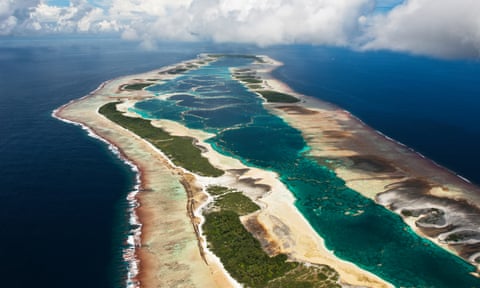
A long thin atoll around a lagoon

The Millennium Atoll in Kiribati, the Pacific state that is sponsoring Michael Lodge for re-election as ISA leader. Photograph: Mauricio Handler/Getty

Before we leave the subject of oceans, back to the question of how their protection is managed, and by whom.

We are learning today that some of the planet’s smaller nation states have a potentially significant, and clearly long overdue influence on how the oceans surrounding them will be protected:

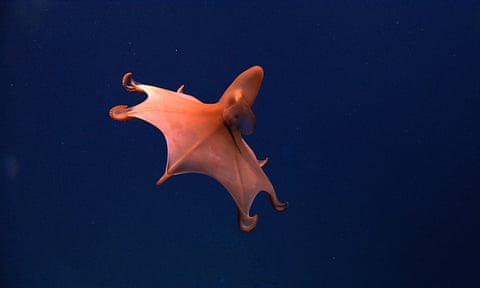
The rare dumbo octopus (Cirrothauma murrayi)

The rare dumbo octopus (Cirrothauma murrayi) is one of many creatures potentially at risk from deep-sea mining. Photograph: NOAA

Inside the battle for top job that will decide the future of deep-sea mining

Marking a pivotal moment for the fate of the barely known ecosystems on the ocean floor, 168 nations will decide this week who will head the International Seabed Authority

Deep-sea mining exploration machinery in the Pacific Ocean

Deep-sea mining exploration trials under way in the Clarion-Clipperton Zone of the Pacific Ocean between Hawaii and Mexico. Photograph: Richard Baron/The Metals Company

Leticia Carvalho is clear what the problem is with the body she hopes to be elected to run: “Trust is broken and leadership is missing.” Later this week, at the headquarters of the International Seabed Authority (ISA) in Kingston, Jamaica, nations negotiating rules governing deep-sea mining face a critical vote that could impact the nascent industry for years: who should be the next leader of the regulatory body? Continue reading

Dos Rios, California’s New State Park

Dos Rios mural signage, photographed June 28, 2024 in Dos Rios located in Modesto, California

Grayson muralist Jose Muñóz hand-painted this sign welcoming visitors to Dos Rios. Geloy Concepcion for NPR

California has a new protected area, complete with a Native Use Garden. Visit the website for the Dos Rios, described by National Public Radio (USA) as follows:

A view from the Oak Tree Grove June 28, 2024 in Dos Rios State Park in Modesto, California.

The sun rises, shedding light onto an oak grove along the western edge of Dos Rios. Geloy Concepcion for NPR

California’s newest state park is like a time machine

At the crack of dawn in California’s Central Valley, birds sing their morning songs and critters chirp unabashedly. In a shady grove next to a river, an owl swoops down from the spindling branches of an oak tree that has stood its ground for centuries.

A few feet above the tree’s base, its massive trunk is lined with a white ring, indicating how high the San Joaquin River rose during a flood last year. Dos Rios is supposed to flood — it’s a floodplain, recently transformed into California’s newest state park.

Native use garden on June 28, 2024 in Dos Rios State Park in Modesto, California.

The Native Use Garden is a place where, with permission from Dos Rios staff, tribal members can go to gather native plants for ceremonial use and other cultural practices. Geloy Concepcion for NPR

The park opened this summer, emerging among the never-ending rows of agriculture the valley is known for. It’s a lush 2.5 square miles now bursting with hundreds of thousands of native trees, bushes and animals.

Dos Rios, named for the Tuolumne and San Joaquin rivers that meet at the edge of the park, is the first new California state park in more than a decade.

But it isn’t like most state parks. In addition to bringing much-needed green space to an underserved area, its unusual design uses nature-based climate solutions that reinvigorate native wildlife. Continue reading
Really, SpaceX?

A rocket stands with water in the foreground.

Starship, the upper stage of SpaceX’s new rocket, at its launchpad in Boca Chica, Texas. Conservationists are concerned with the environmental impact space operations have on the area.

After assurances about protecting the environment, damage was done. They declined responsibility (the words they used included “…it’s cool”). Not cool:

Wildlife Protections Take a Back Seat to SpaceX’s Ambitions

A New York Times investigation found that Elon Musk exploited federal agencies’ competing missions to achieve his goals for space travel.

As Elon Musk’s Starship — the largest rocket ever manufactured — successfully blasted toward the sky last month, the launch was hailed as a giant leap for SpaceX and the United States’ civilian space program.

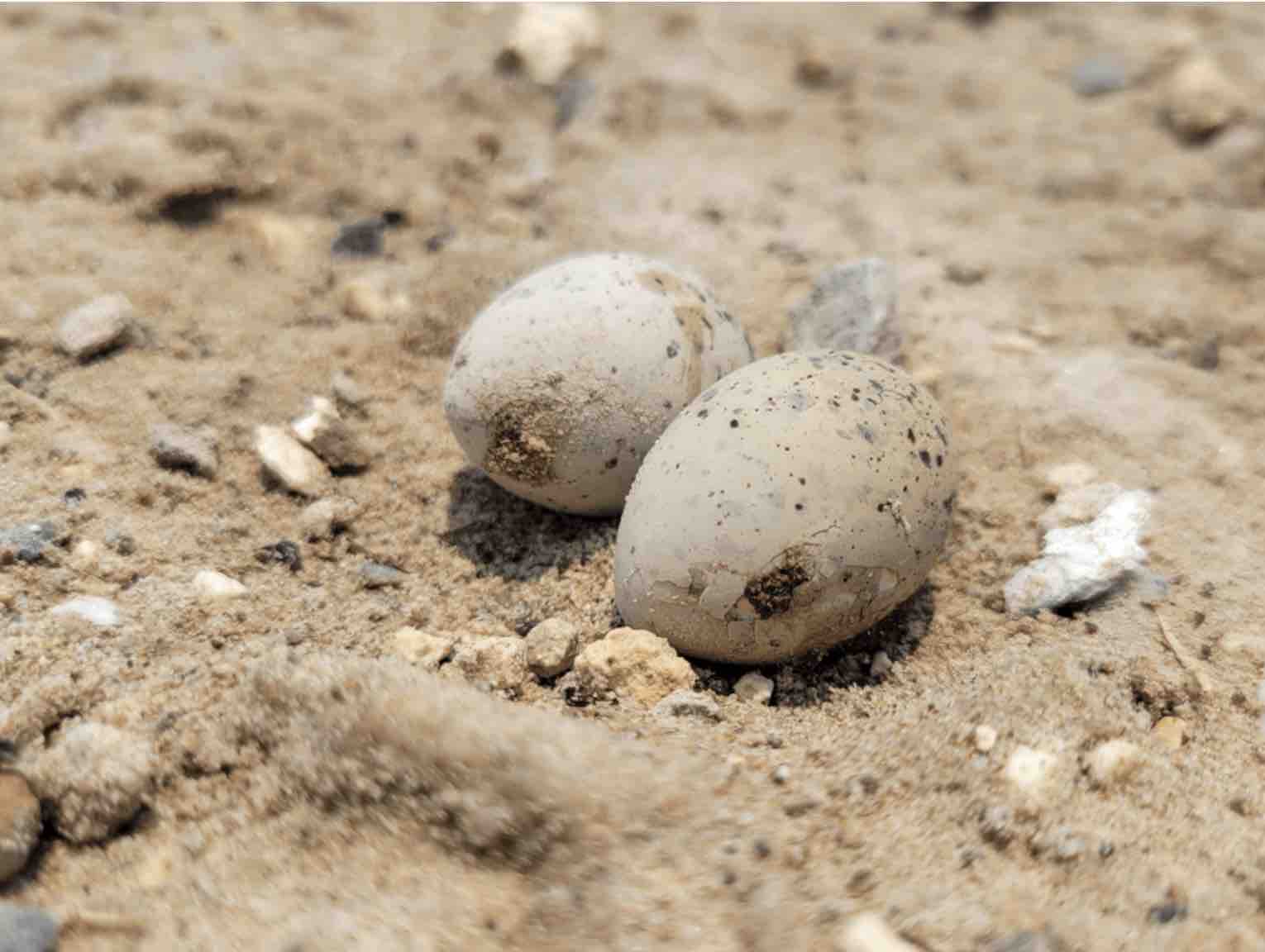
Figure 9. LETE 1 showing both eggs with large holes/cracks and dried egg contents emerging on June 6, 2024.

Two hours later, once conditions were deemed safe, a team from SpaceX, the U.S. Fish and Wildlife Service and a conservation group began canvassing the fragile migratory bird habitat surrounding the launch site.

The impact was obvious.

The launch had unleashed an enormous burst of mud, stones and fiery debris across the public lands encircling Mr. Musk’s $3 billion space compound. Chunks of sheet metal and insulation were strewn across the sand flats on one side of a state park. Elsewhere, a small fire had ignited, leaving a charred patch of park grasslands — remnants from the blastoff that burned 7.5 million pounds of fuel.

Most disturbing to one member of the entourage was the yellow smear on the soil in the same spot that a bird’s nest lay the day before. None of the nine nests recorded by the nonprofit Coastal Bend Bays & Estuaries Program before the launch had survived intact.

Egg yolk now stained the ground. Continue reading
When Kitten Videos Represent Important Environmental News

Screenshot

Cute kitten videos are everywhere, and we avoid posting them here. But due to the Cairngorms rewilding efforts in Scotland this type of video is different, so our thanks as always to the Guardian:

Wildcat kittens born outside captivity in Cairngorms a ‘major milestone’

Adult cats were released into national park last year after British population had come close to extinction

The birth of wildcat kittens in the Cairngorms national park has been hailed as a “major milestone” in efforts to rescue the secretive mammals from extinction in the UK. Continue reading
Culling Questions

Because invasive species are among the main drivers of extinction today, conservationists have made efforts to cull mice in favor of albatrosses, rats in favor of puffins, and pythons in favor of bobcats. Illustration by Javier Jaén; Source photographs from Getty

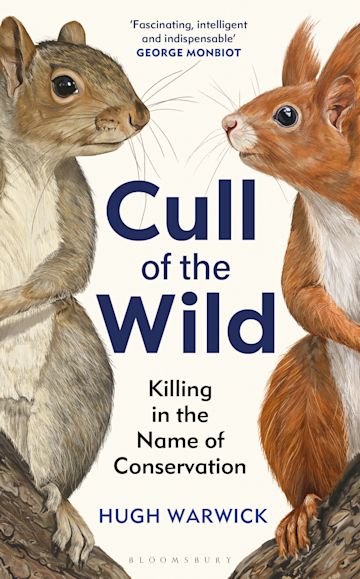
Invasive species have received plenty of attention in our pages in the years since we first shared on this topic. Creative approaches to solving the problem abound. Elizabeth Kolbert reviews two books that take up the moral implications:

Cull of the Wild coverShould We Kill Some Wild Creatures to Protect Others?

Where humans have tilted the game in favor of one species, some believe we should cull predators to save their prey. Others think it’s a mistake to pick sides.

The northern spotted owl is about a foot and a half high, with very dark eyes, a greenish beak, and a rim of feathers, called a facial disk, that makes it appear to be regarding the world with worried perplexity. Like most owls, northern spotteds are nocturnal, but, unlike most of their brethren, they are picky. They can live only in old-growth forests in the Pacific Northwest. Their diet is restricted and seems to consist mainly of flying squirrels. They’re incapable of building nests of their own, and so, to raise their young, they rely on tree cavities or on basketlike growths that are produced by arboreal infections and known, evocatively, as witches’ brooms.

Hedgehogs, Killing, and Kindness: The Contradictions of Care in Conservation PracticeThe spotted owl’s fastidiousness produced one of the great environmental conflicts of the twentieth century. By the late nineteen-eighties, it was estimated that only fifteen hundred breeding pairs survived. Since the owls depended on old growth, the only way to save them, according to biologists, was to preserve the Northwest’s remaining stands of ancient trees. The timber industry countered that leaving those trees untouched would cost thousands of jobs. The two sides adopted increasingly confrontational tactics. Continue reading

Making Good Trouble In India

Another of this year’s trouble-making prize-winners:

Meet Alok Shukla

Alok Shukla led a successful community campaign that saved 445,000 acres of biodiversity-rich forests from 21 planned coal mines in the central Indian state of Chhattisgarh. In July 2022, the government canceled the 21 proposed coal mines in Hasdeo Aranya, whose pristine forests—popularly known as the lungs of Chhattisgarh—are one of the largest intact forest areas in India. Continue reading
Marshes Matter, And This One More Than Many

The outer edge of the Nartë lagoon in Vlorë, Albania. YURIY BRYKAYLO / ALAMY STOCK PHOTO

I have worked in some of Albania’s most important coastal and inland bird habitats, though not this one. My time working there is not my only reason for caring about this particular location. Read on–thanks as always to Fred Pearce–to understand why it matters so much. No offense intended to Jared Kushner, but this is not one of his better ideas. The destruction is not worth whatever it is he is hoping to accomplish:

Jared Kushner Has Big Plans for Delta of Europe’s Last Wild River

Albania’s Vjosë River is known as Europe’s last wild river, and its pristine delta is a haven for migratory birds. As plans for luxury developments there — spearheaded by Donald Trump’s son-in-law Jared Kushner — move ahead, conservationists are sounding the alarm.

It is the jewel of the Adriatic. Its shimmering waters feed a rare colony of Dalmatian pelicans, the world’s largest freshwater birds, sustain the endangered Albanian water frog, and host loggerhead turtles on its encircling dunes. Continue reading
The Most Important View, If Climate Change Interests You


In a vulnerable, defendable part of the Amazon, the hundred-and-ten-foot-high tree house was built to attract wealthy tourists—and potential funders of conservation.Photograph courtesy Tamandua Expeditions

Tree house lodging is not new, but beyond beauty is impact. In that regard the accommodations with the most important view right now might be here:

The Highest Tree House in the Amazon

In 2023, conservationists and carpenters converged on Peru to build luxury accommodations in the rain-forest canopy.

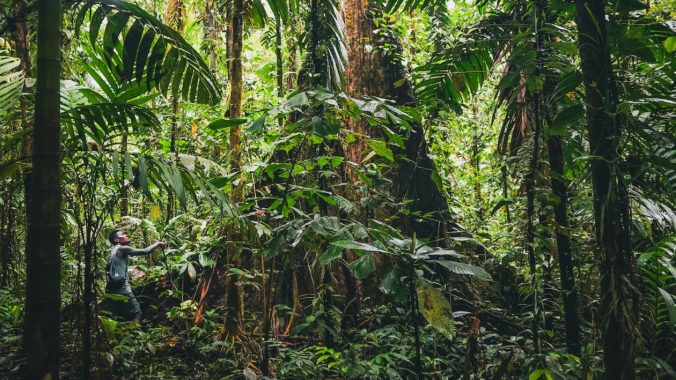
Every day, empty logging trucks rumble into Puerto Lucerna, a small outpost on Peru’s Las Piedras River, which snakes through the lush Amazon rain forest. There, workers load them up with pyramids of freshly cut logs—cedar, quinilla, and, most important, ironwoods, which are prized for their hardness and rich color. Continue reading

Marsh Matters

Coastal marshlands exist in a precarious state: they need enough sediment to stay above water but not so much they get buried. In San Francisco Bay, the US Army Corps of Engineers and others are working to develop a less destructive way of giving marshes the mud they need. Photo by Aerial Archives/Alamy Stock Photo

For the record, marshes matter, so our thanks to Erica Gies, writing for Hakai:

Making a Marsh out of a Mud Pile

In San Francisco Bay, scientists are looking for a better way to rebuild flagging marshland.

The water in California’s San Francisco Bay could rise more than two meters by the year 2100. For the region’s tidal marshes and their inhabitants, such as the endangered Ridgway’s rail and the salt marsh harvest mouse, it’s a potential death sentence. Continue reading

Babatana Rainforest Conservation Project & High Integrity Carbon Credits

Sirebe tribal ranger Elijah Qalolilio Junior in the rainforest. DOUGLAS JUNIOR PIKACHA / NAKAU

A sign marks the boundary of protected Sirebe land. DOUGLAS JUNIOR PIKACHA / NAKAU

Of all the methods for addressing climate change, new incentives for protecting forests are among those we have most confidence in. Thanks to this article by Jo Chandler in Yale e360, if your introspection after reading this previous article had you down on carbon credits, there may be a way to restore your confidence:

The Sirebe forest at dusk. DOUGLAS JUNIOR PIKACHA / NAKAU

Solomon Islands Tribes Sell Carbon Credits, Not Their Trees

In a South Pacific nation ravaged by logging, several tribes joined together to sell “high integrity” carbon credits on international markets. The project not only preserves their highly biodiverse rainforest, but it funnels life-changing income to Indigenous landowners.

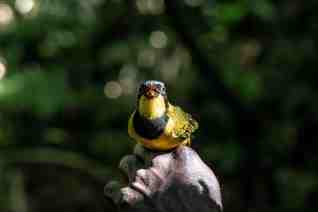
A male oriole whistler on a forest ranger’s hand. DOUGLAS JUNIOR PIKACHA / NAKAU

When head ranger Ikavy Pitatamae walks into the rainforest on Choiseul Island, the westernmost of the nearly 1,000 islands that make up the South Pacific archipelago of Solomon Islands, he surveys it with the heart of a tribal landowner and the eye of a forester. Continue reading
Illegal Miners Face The Fire

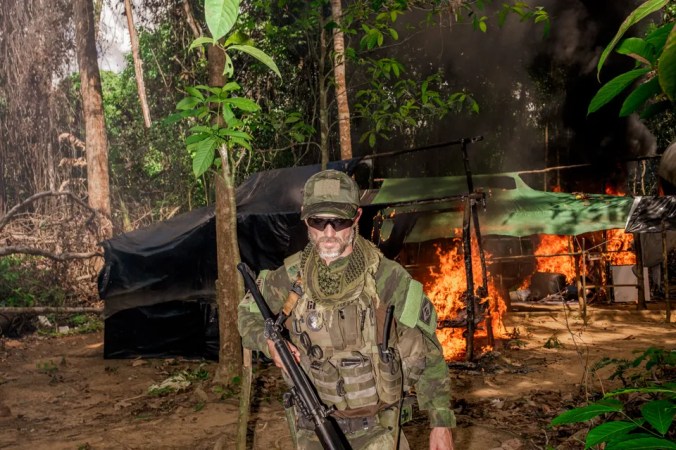
The G.E.F. burns mining camps as part of a long-running counteroffensive against environmental depredation. “Wherever they go, the miners destroy everything,” Felipe Finger, the unit’s leader, says. Photographs by Tommaso Protti for The New Yorker

Thanks to Jon Lee Anderson, as always, for his reporting from the danger zone that Brazil’s Amazon forest too often is:

The Brazilian Special-Forces Unit Fighting to Save the Amazon

As miners ravage Yanomami lands, combat-trained environmentalists work to root them out.

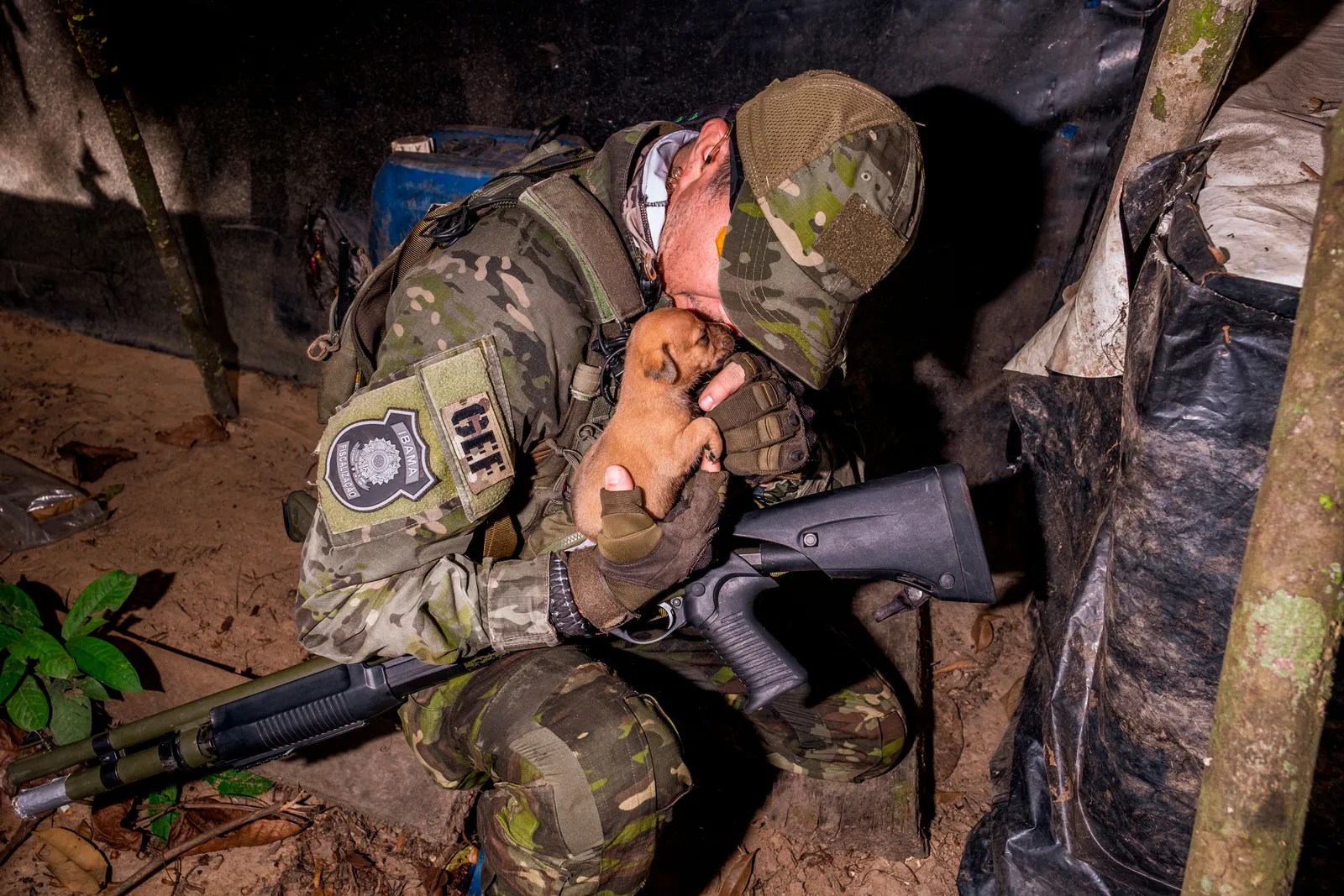
Roberto Cabral, a founder of the G.E.F., attends to a puppy discovered in a camp after miners fled.

In a clearing in the Brazilian Amazon, I stood with a group of armed men, discussing a viral TikTok video. The video, shot from a helicopter full of illegal miners, showed a vast stretch of rain forest, with dense foliage extending in all directions. The only sign of human habitation was below: a dirt circle surrounded by fanlike lean-tos made of wooden poles and palm fronds. It was a maloca, a traditional compound of the Yanomami, an Indigenous group that inhabits a remote territory in the rain forest of northern Brazil. Continue reading
Is That Safari In Tanzania A Good Use Of Your Money?

Brian Otieno

This guest opinion, written by Professor Robert Williams of the Indigenous Peoples Law and Policy Program at the University of Arizona, and published in the New York Times, should make you think twice about the safari that might be on your bucket list:

Over 600,000 tourists travel to Tanzania’s Ngorongoro Conservation Area each year, and many will catch a glimpse of the Great Migration: the famed trek of more than one million wildebeests and thousands of zebras, gazelles and other animals crossing over the Mara River into Kenya and back again. Continue reading
Manatees, To Brighten Your Horizon

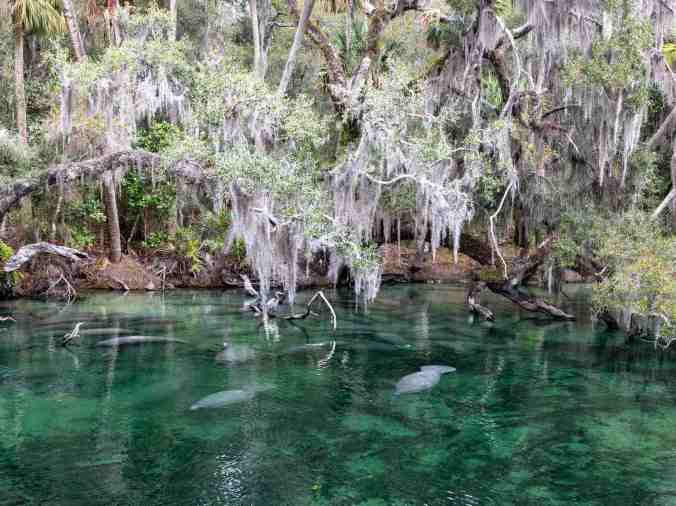
Manatees are generally solitary creatures, but tend to gather at warm water sites in the winter.
Florida State Parks

After a Kolbert doomcloud, a bit of sunshine is needed. Here it is in the form of creatures so charismatic they make you see something other than darkness. Thanks to National Public Radio (USA):

Legend has it that centuries ago, manatees used to be mistaken for mermaids, so a sight last week at one Florida state park would have put ancient sailors in shock.

Blue Spring State Park is home to one of the largest winter gathering sites for manatees in Florida, and recently, the park reached a new record when the number of manatees spotted in one group was nearly 1,000. Continue reading

More Honey & Bees, Also

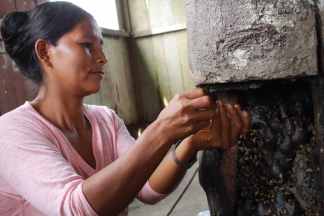
Tarkis Ríos Ushiñahua harvesting honey from stingless bees in a tree-trunk hive, at her home in Puerto Huamán in the Peruvian Amazon, 2019. [Hannah Hutchinson]

Along with anything else to get 2024 off to a good start, an article by Andrew Wingfield and Michael P. Gilmore that we missed from last year. The topic is one that we have only briefly touched on a couple times. The wider world of honey and the bees responsible for it are topics we hope to share more of this year.

To begin, let this bring some joy:

A Sweet and Potent Harvest

Tarkis Ríos Ushiñahua teaches her daughter to divide a hive, 2022. [Dylan Francis]

For the Maijuna of the Peruvian Amazon, harvesting honey from stingless bees is bringing prosperity and empowerment. Local beekeeping might also help preserve a vast ancestral forest.When Tarkis Ríos Ushiñahua collects honey from one of her beehives, she wears no protective clothing and uses just one tool, a large plastic syringe. 1 As she lifts the lid from the wooden box housing the hive, the bees swarm. They buzz around her face, land on her back, and settle in strands of her straight black hair, but they do no harm — these bees are stingless.

The bee yard of Loida Ríos Tamayo and Saúl Peterman Mosoline, 2021. [Enrique Redondo Navarro]

The slender tip of Ríos Ushiñahua’s syringe fits neatly inside the hive’s honeypots, brownish, papery-looking pouches that the bees have fashioned from wax and plant resins. Continue reading

Beavers’ Resilience On Display In Canada

Beavers are not always welcome, but where they belong, they are a wonder to behold. Ian Frazier offers this dispatch from the great North:

Deep in the Wilderness, the World’s Largest Beaver Dam Endures

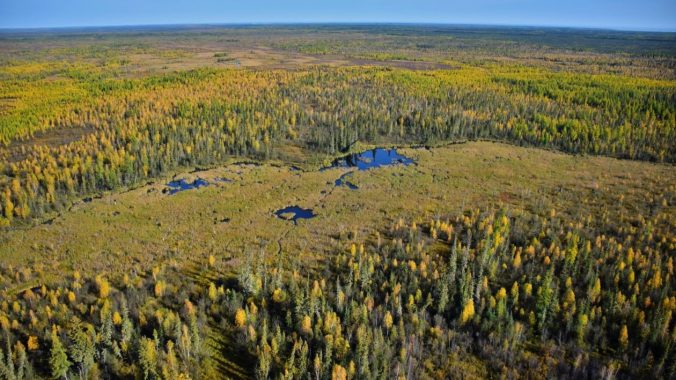
The largest beaver dam on Earth was discovered via satellite imagery in 2007, and since then only one person has trekked into the Canadian wild to see it. It’s a half-mile long and has created a 17-acre lake in the northern forest — a testament to the beaver’s resilience.

Wood Buffalo National Park, the largest national park in Canada, covers an area the size of Switzerland and stretches from Northern Alberta into the Northwest Territories. Continue reading

Power Rangers With A Different Approach

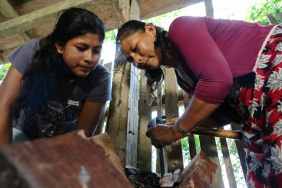
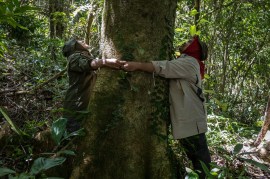
Women rangers hugged a tree while collecting data during a forest patrol near the village of Damaran Baru, in Aceh Province, Indonesia. Ulet Ifansasti for The New York Times
We thank Muktita Suhartono for the story and  Ulet Ifansasti for the photographs:

Female Rangers ‘Don’t Go All Alpha Like the Men’ to Protect a Forest

Rather than take a confrontational approach with trespassers looking to farm or log in a tropical rainforest in Indonesia, teams of women rangers try dialogue first.

Asmia, one of 15 rangers whose job is to protect nearby forests from squatters who want to clear trees for timber or to farm the fertile soil.

Riding her motorbike while balancing a backpack, a wok and a sharp cleaver, Asmia expertly maneuvered her way up a dangerous cliffside: a three-mile trip along a precipitous dirt path, barely 40 inches wide, to reach the mouth of the forest.

Asmia is one of the 15 members of a team of rangers — 10 of whom are women — whose job is to protect their village forest in Aceh Province in Indonesia from the squatters who want to clear the trees for timber or to farm the fertile soil.

Two teams of rangers, each consisting of five women and two men, take turns each month on five-day forest patrols.

“Here, we once fought with a squatter, asking him to stop the encroachment,” Asmia said, pointing as she walked beneath the thick canopy of trees that shadow her rounds. “He insisted on clearing the land, as he wanted to grow coffee. He was persistent. But we talked him out of it.” Continue reading

Removing Environmental Protections Will Not Seem So Clever In Hindsight

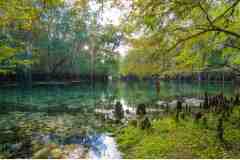
Sunset in the trees at Manatee Springs, Florida. Photograph: Michael Warren/Getty Images/iStockphoto

Oliver Milman, again, brings our attention to an environmental activism that deserves attention, this time for all the wrong reasons:

Experts fear half of the 290m wetland acres have lost federal protection and could be at risk from developers

Lake Caddo, on the border between Louisiana and Texas, is a beautiful cypress swamp. Photograph: wanderluster/Getty Images

Often dismissed as dismal wet bogs and rampantly cleared since European arrival in the US, the underappreciated importance of wetlands has been placed into sharp relief by a supreme court ruling that has plunged many of these ecosystems into new peril.

The extent of wetlands, areas covered or saturated by water that encompass marshes, swamps and carbon-rich peatlands, has shrunk by 40% over the past 300 years as the US drained and filled them in for housing, highways, parking lots, golf courses and other uses. Globally, wetlands are disappearing three times faster than forests are. Continue reading

Species-Specific Safe Spaces

O’Keefe’s team designed bat boxes that offer a wide range of interior temperatures. Joy O’Keefe

We have pointed to stories about activism and entrepreneurship in the interest of protecting animal habitat plenty of times, but not so much on the science of the field work. As part of its Climate Desk collaboration Mother Jones shares this article originally published by Undark, written by Marta Zaraska, that addresses some of the science of species-specific safe spaces:

Inside Scientists’ Race to Create Safe Refuges for Animals

Climate crisis is destroying habitats. Can technology help create new ones?

Conservation ecologist Ox Lennon simulated stacks of rocks that would create crevices big enough for skinks, but too small for mice. Courtesy Ox Lennon

In 2016, Ox Lennon was trying to peek in the crevices inside a pile of rocks. They considered everything from injecting builders’ foam into the tiny spaces to create a mold to dumping a heap of stones into a CT scanner. Still, they couldn’t get the data they were after: how to stack rocks so that a mouse wouldn’t squeeze through, but a small lizard could hide safely inside. Continue reading

Proposed Chumash Sanctuary One Step Closer

Thanks to National Public Radio (USA) for bringing this to our attention:

Members of the Chumash tribe have pushed for a decade to create a new marine sanctuary. If created, it would be the first to be designated with tribal involvement from the outset. Robert Schwemmer/NOAA

Biden proposes vast new marine sanctuary in partnership with California tribe

The Biden administration is one step away from designating the first national marine sanctuary nominated by a tribe. The Chumash Heritage National Marine Sanctuary would protect 5,600 square miles of ocean off the central California coast, an area known for its kelp forests, sea otters and migratory whales. Tribal members of the Chumash, who have lobbied for its creation for more than a decade, would be involved in managing it…

The First Tribally Nominated Sanctuary

Preserving marine and cultural resources along 156 miles of Central California Coastline

Estimated to generate $23 million in economic activity and create 600 new jobs

Will safeguard the Central Coast from offshore oil expansion and other threats


Beechnut & Beaver Hope

Nearing the end of the northern summer, one for too many of the wrong kind of record books, some notion of hope is more than welcome. This edition of his newsletter offers some:

Beavering Away

With Your Help. (An annual update!)

In the guise of my annual report on our nifty online community I’m going to show you my vacation pictures! Lucky you!

It’s possible I’m just feeling guilty because I took a couple of days off in this Summer To End All Summers. But Sunday and Monday, while Hillary was introducing southern Californians below the age of 85 to the concept of ‘tropical storm,’ I went on a wander with an old friend through the middle of the Wilcox Lake Wild Forest in New York’s Adirondack Mountains, a splendidly remote chunk of land that I’ve lived on the edge of, off and on, for much of my life, and which I never tire of exploring. Continue reading