McKibben On The LNG Methane Problem

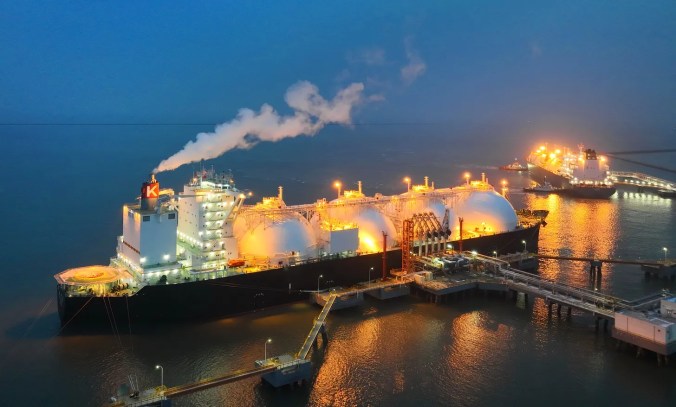
Exporting LNG to China helps no one but frackers

Not as cheerful as Mr. Grouse, but this week’s newsletter is important reading in the interest of progress of this looming LNG problem (a gentle way of putting it, since it is more a PROBLEM than a problem):

Different Kinds of Winning

Helping Biden Help Himself–and the Planet–on Climate

We are, I think, edging towards a win on LNG exports, which would be a very good thing: a pause on the biggest fossil fuel expansion plan on earth. The question, I think, is if it will be the kind of win that makes it easier to boost the beleaguered presidential campaign of Joe Biden—which has got to be a central focus for anyone worried about the planet’s (and our democracy’s) future. And that is largely up to the White House. Continue reading

Bikes Connected To The Grid

A man rides an ebike in Hermosa Beach, California. Photograph: Mel Melcon/Los Angeles Times/Getty Images

From one point of view ebikes could be viewed as just one more form of entertainment drawing energy from the grid. But an argument can be made that this increase in load on the grid is decreasing other carbon footprints. On top of that, maybe more people on bikes is its own gain:

Sales surge as cities and states look to cut pollution from cars and improve options for Americans to get around

After several years of false starts, electric bikes are finally entering the American mainstream, amid booming sales of a multiplying number of models on offer and as more states offer incentives for people to ditch their cars and shift to two, motor-assisted, wheels. Continue reading

Standing, Healthy Forests Are Essential

A managed forest near Jokkmokk, Sweden. Humanity will not limit global heating to safe levels without forests and woodland. Photograph: Peter Essick/Aurora/Getty Images

We thank Patrick Greenfield for this opinion in the Guardian:

Root and branch reform: if carbon markets aren’t working, how do we save our forests?

The world has looked to offsetting schemes to protect forests, fund conservation and fight the climate crisis – but many fail to fulfil their promises. Here are five ways to keep our forests standing

Keeping the world’s remaining forests standing is one of the most important environmental challenges of the 21st century. Continue reading

Responsibility For Technology

Illustration by Ricardo Tomás

Cal Newport’s essay is an important declaration of our responsibility with regard to regulating technology:

It’s Time to Dismantle the Technopoly

As technology accelerates, we need to stop accepting the bad consequences along with the good ones.

In the fall of 2016—the year in which the proportion of online adults using social media reached eighty per cent—I published an Op-Ed in the Times that questioned the popular conception that you need to cultivate a strong social-media brand to succeed in the job market. “I think this behavior is misguided,” Continue reading

Copping To The Resolution

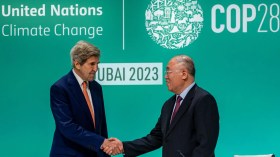
United States’ Special Presidential Envoy for Climate John Kerry(L) and China’s special envoy for climate change Xie Zhenhua (R) attend a press conference during the 2023 United Nations Climate Change Conference (COP28), in Dubai, United Arab Emirates, on December 13th, 2023. Martin Divisek/ZUMA

It started on a flawed premise, that a petrostate bigwig could honestly lead the forum to a legitimate outcome. We knew it was not going to end dirtier than it should have, but still we must parse what just happened. Thanks to Mother Jones for republishing Damien Carrington’s explanation from the Guardian:

Good Cop, Bad Cop: Breaking Down the UN’s New Climate Resolution

Some call the COP28 agreement “historic,” others call it weak. Here’s why.

Language on coal power was no stronger than that of Cop26 in 2021. Photograph: Maxim Shipenkov/EPA

The decision text from Cop28 has been greeted as “historic,”  for being the first ever call by nations for a “transition away” from fossil fuels, and as “weak and ineffectual” and containing a “litany of loopholes” for the fossil fuel industry. An examination of the text helps to explain this contradiction.

Reducing Fossil Fuel Use

The text states the huge challenge with crystal clarity: Continue reading

Alternative Aviation Fuel


Planes account for roughly two per cent of the world’s CO2 emissions—if all the world’s aircraft got together to form a country, they’d emit more than the vast majority of actual nations. Photograph by Kevin Dietsch / Getty

I have had precisely one direct experience with otherwise elusive alternative aviation fuel. It was during my first of multiple work trips to Paraguay. The fuel was made from sugarcane, and while I am still here to write about it, the experience was among the most harrowing of my lifetime. I only have time and space here to mention that I spent an unexpected night in the Chaco. I highly recommend visiting the Chaco, but I do not highly recommend traveling with experimental fuel. That said, read on:

Looking for a Greener Way to Fly

The Treasury Department is about to announce tax credits for sustainable aviation fuel, which raises the question: What fuels are actually “sustainable”?

Sometime in the next few weeks, the Department of the Treasury is expected to decide who—or, really, what—will qualify for a new set of tax credits. Continue reading

Greenwash Vibing@Cop28

In an illustration, a sunflower sprouts from the top of a sparkling oil barrel that sits atop a grassy hill. A rainbow is in the background.

Sam Whitney/The New York Times

Vibing is a slang word that works well as a stand-in for greenwashing. Alex Simon, a co-founder of Synaps, an economic and environmental research center, shares additional perspective on the corruption built into Cop28:

In Dubai, a ‘Good Vibes Only’ Approach to Climate Change

On a recent trip to the United Arab Emirates, I felt as if I’d entered a fever dream of green exuberance. It was more than two months before COP28, the annual global climate meeting now in progress in Dubai, but the country was already awash in environmental hype. On the highway, banners for an event hosted by the Abu Dhabi National Oil Company, the fossil fuel behemoth known as Adnoc, read: “Decarbonizing. Faster. Together.” A placard in my hotel bathroom asked me to conserve water by using the two-tiered flush, although the flush had only one tier. A friend’s utility bill was labeled “green bill” — although U.A.E. households have some of the biggest carbon footprints in the world. Continue reading

New York Noise

A particularly loud intersection on Manhattan’s Upper West Side. The neighborhood is home to at least one of the noise cameras the city is testing. Sara Naomi Lewkowicz for The New York Times

When we lived in India we used to post frequently on this topic, but it has been a while. Happy to see (thanks to Erin Nolan and the New York Times) that another onetime hometown of ours is taking up the issue:

New York City, not exactly known for its peace and quiet, is expanding its use of technology to fine the drivers of loud cars and motorcycles.

New York City is known for its noise. A cacophony of sounds bombards residents every time they step outside — screeching subway cars, jackhammers drilling away, late-night revelers leaving bars and clubs. Continue reading

New York Wind Power

The giant parts for wind turbines await pickup at a pier in New London, Conn. Joe Buglewicz for The New York Times

Wind has always been there for the taking in so many places, the challenges of nimbyism notwithstanding. Now the turbines are arriving to harness it for the New York metropolitan area. Our thanks to Patrick McGeehan and the New York Times for sharing the story:

Huge Turbines Will Soon Bring First Offshore Wind Power to New Yorkers

Parts of what will eventually be the towers of wind turbines out in the ocean. Joe Buglewicz for The New York Times

New York’s best bet for entering the era of offshore wind power is stacked up at the water’s edge in Connecticut.

The pier on the Connecticut coast is filled with so many massive oddities that it could be mistaken for the set of a sci-fi movie. Sword-shaped blades as long as a football field lie stacked along one edge, while towering yellow and green cranes hoist giant steel cylinders to stand like rockets on a launchpad.

It is a launching point, not for spacecraft, but for the first wind turbines being built to turn ocean wind into electricity for New Yorkers. Crews of union workers in New London, Conn., are preparing parts of 12 of the gargantuan fans before shipping them out for final assembly 15 miles offshore. Continue reading

Corrupt Cop

Illustration by Isabel Seliger

Ever wondered what the Cop in Cop1-28 means? The answer is not nearly as interesting as how it came to be that a country whose lifeblood is oil is hosting Cop28. Petrostates have been biding their time, gaining momentum, and now have corrupted the Cop system from within. Weekend reading, Thanksgiving edition, from Elizabeth Kolbert, explains the stakes:

The Road to Dubai

The latest round of international climate negotiations is being held in a petrostate. What could go wrong?

Cop1 was held in 1995 in Berlin’s International Congress Center, a massive, metal-clad complex that looks like the set for a dystopian movie. Around nine hundred government delegates attended the weeklong negotiating session, along with about a thousand observers from non-governmental organizations. Daimler-Benz brought some electric cars to show off, while young activists brought a steamroller, to convey their opposition to cars. Delegates were invited to take a trip along the River Spree in a solar-powered boat. Continue reading

Carlos Manuel Rodriguez, Leading The Conversation, Again

We are grateful to the GEF for sharing this, and to Carlos Manuel Rodriguez for leading the conversation, as he has always done:

Creating space for young people to affect climate policy

In a recent conversation at his home, GEF CEO and Chairperson Carlos Manuel Rodríguez heard from members of the Youth and Climate Change Network of Costa Rica about how the climate emergency is impacting young people. Continue reading

Prioritizing Carbon Capture Versus Emissions Reduction

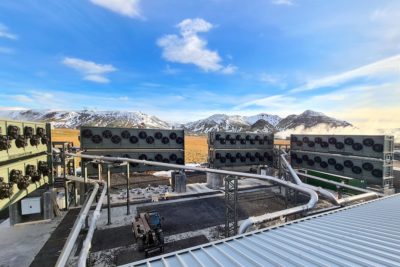
A carbon capture plant near Reykjavik, Iceland.

A carbon capture plant near Reykjavik, Iceland. CLIMEWORKS

Since we first heard of it we have been enthusiastic about the upside potential of this technology, but until now had not considered the tradeoffs:

Climate Plans That Rely Too Much on Carbon Removal Could Breach International Law

Countries that rely too heavily on carbon removal in their climate plans could violate international law, warns a new paper. Continue reading

Letters To The Secretary

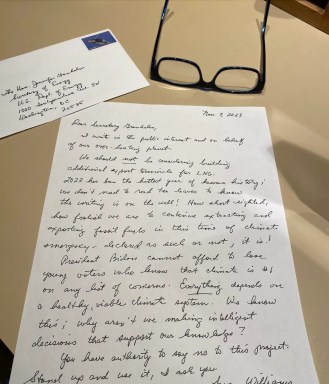
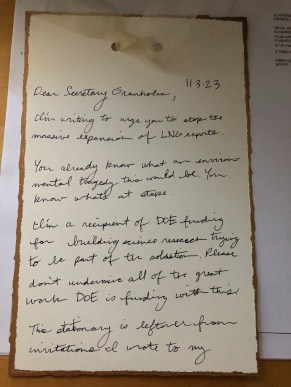
We have appreciated this newsletter since it started, and every issue since. This week it brings these handwritten letters to our attention:

…Oh, and who’s the other group of climate voters the president needs to worry about? That would be older people, like those of us at Third Act—we codgers have been organizing mass protests all year. And while we may not be TikTok savvy, we have another weapon: pen and stationery. In the last week Third Actors have unleashed thousands of letters on DOE headquarters—which may not sound quite as sexy as petitions from the Internet, but they have their own impact, since officials know that if you’re willing to do more than click you’re probably an effective and motivated adversary.

So consider [image above left]

Or [image to the right]

What I’m trying to say is, the Department of Energy has a real problem—an increasingly aware and activated posse of youngsters and oldsters. And a solution: announce CP2 is going nowhere, and that no other project will be approved, or even considered, until there’s been an exhaustive rewrite of the criteria taking into account the latest science and economics. It’s not hard. Continue reading

Removing Environmental Protections Will Not Seem So Clever In Hindsight

Sunset in the trees at Manatee Springs, Florida. Photograph: Michael Warren/Getty Images/iStockphoto

Oliver Milman, again, brings our attention to an environmental activism that deserves attention, this time for all the wrong reasons:

Experts fear half of the 290m wetland acres have lost federal protection and could be at risk from developers

Lake Caddo, on the border between Louisiana and Texas, is a beautiful cypress swamp. Photograph: wanderluster/Getty Images

Often dismissed as dismal wet bogs and rampantly cleared since European arrival in the US, the underappreciated importance of wetlands has been placed into sharp relief by a supreme court ruling that has plunged many of these ecosystems into new peril.

The extent of wetlands, areas covered or saturated by water that encompass marshes, swamps and carbon-rich peatlands, has shrunk by 40% over the past 300 years as the US drained and filled them in for housing, highways, parking lots, golf courses and other uses. Globally, wetlands are disappearing three times faster than forests are. Continue reading

Hurricane Otis & A Gut Punch


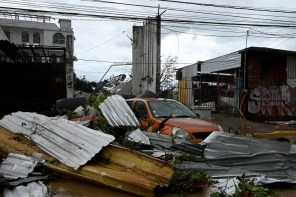
Acapulco shows signs of Hurricane Otis’s devastation on Wednesday.Photograph by Francisco Robles / AFP / Getty

While Acapulco got pummeled, a climate denier was elected to lead the majority party in the US House of Representatives, a different kind of gut punch. Thanks to Elizabeth Kolbert for this juxtaposition of facts:

Hurricane Otis and the World We Live in Now

The unexpected Category 5 storm is just the latest in a series of unprecedented climate disasters this year.

In the wee hours of Wednesday morning, Hurricane Otis crashed into the western coast of Mexico, just north of the resort city of Acapulco. Continue reading

Really, Poland Spring?

Tristan Spinski

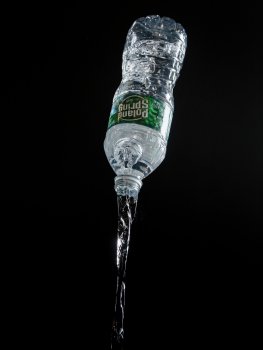
We all need drinking water. Those of us lucky enough to have good quality water from a public source can avoid bottled water, but still too many need or want what Poland Spring sells.

The New York Times deserves high praise for this series on water abuses, especially Hiroko Tabuchi‘s reporting on Poland Springs and its parent company’s practices:

Inside Poland Spring’s Hidden Attack on Water Rules It Didn’t Like
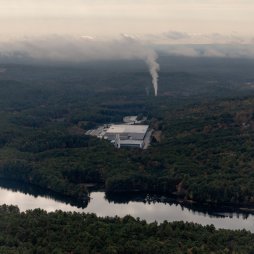
The BlueTriton bottling plant in Poland Spring, Maine, this month.

When Maine lawmakers tried to tighten regulations on large-scale access to water, the brand’s little-known parent company set out to rewrite the rules.

When Maine lawmakers tried to rein in large-scale access to the state’s freshwater this year, the effort initially gained momentum. The state had just emerged from drought, and many Mainers were sympathetic to protecting their snow-fed lakes and streams.
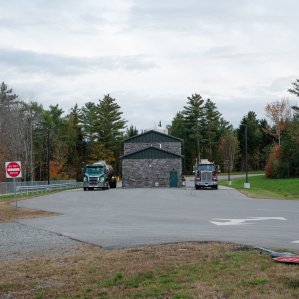
Water trucks filling up at a Poland Spring facility in Lincoln, Maine.

Then a Wall Street-backed giant called BlueTriton stepped in.

BlueTriton isn’t a household name, but its products are. Americans today buy more bottled water than any other packaged drink, and BlueTriton owns many of the nation’s biggest brands, including Poland Spring, which is named after a natural spring in Maine that ran dry decades ago.

Maine’s bill threatened BlueTriton’s access to the groundwater it bottles and sells. The legislation had already gotten a majority vote on the committee and was headed toward the full Legislature, when a lobbyist for BlueTriton proposed an amendment that would gut the entire bill. Continue reading

US Supreme Court’s Extreme Tilt

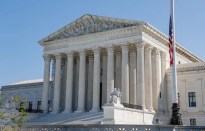
Relentless and Loper Bright have been brought before the Supreme Court with the same all-but-explicit goal: to make it more difficult for the federal government to protect the public. Photograph by Jemal Countess / UPI /Shutterstock

Courts with politically appointed jurists can tilt to an extreme, as we see now at the highest level in the USA’s judicial system. Even as the environment needs more protection, the infrastructure for providing it is being dismantled (thanks as always to Elizabeth Kolbert):

The Supreme Court Looks Set to Deliver Another Blow to the Environment

Two upcoming cases take aim at the government’s power to regulate.

Last week, the United States Supreme Court agreed to hear a case that’s nominally about herring. Arguments will be heard this winter, in tandem with a case that the Court had agreed to hear earlier, that one also ostensibly about herring. In both cases, though, the Justices have much bigger fish to fry: what’s really at issue is the fate of federal regulation. The stakes are enormously high, and, given the Court’s predilections, the outcome seems likely to undermine still further the government’s ability to function. Continue reading

Pricing Flights Realistically

United Airlines wants to zero out its greenhouse gas emissions by 2050, but without using conventional carbon offsets. Nicolas Economou/NurPhoto via Getty Images

If airlines can quantify what it would cost to become carbon neutral within a relevant timeframe, it implies that we know by how much they are currently fudging their investment model. If it is going to require an investment of X number of dollars over Y number of years to achieve carbon neutrality then they should invest, and price their flights accordingly. Then we will all know the real cost of flying, including the environmental cost. Thanks to Umair Irfan (long time since we last saw his work) and to Vox for this:

Emirates demonstrated a Boeing 777 flight fueled with SAF earlier this year. Giuseppe Cacace/AFP via Getty Images

Airlines say they’ve found a route to climate-friendly flying

Cleaner, faster, cheaper — the aviation industry’s plan to decarbonize air travel, explained.

If you’ve caught an ad for an airline lately on TV, a podcast, or the entertainment display on your flight, you’ve probably heard the company brag about what it wants to do about climate change.

Major airlines like AmericanDeltaSouthwest, and United have all set targets of achieving net-zero greenhouse gas emissions by 2050. They’re using a suite of tactics including buying more fuel-efficient aircraft, electrifying their ground vehicles, and increasing the efficiency of their operations. They’re also testing the winds on battery- and hydrogen-powered planes, as well as some radically different aircraft designs. Continue reading

Rishi Doubles Down On Awful

Prime Minister Rishi Sunak announcing last month that the U.K. will delay the phaseout of gasoline and diesel cars. JUSTIN TALLIS / POOL VIA AP

When leadership is most needed, the special relationship between the UK and the USA should count for something, but so far no sign of the USA pressing back on the UK’s awful reversal on their already tepid recent leadership on climate. We knew that leadershsip was lacking in the UK. The Orwell-worthy podium messaging in the photo to the left says all you need to know about efforts to obfuscate, but read Fred Pearce‘s account in Yale e360 anyway:

Demonstrators in Edinburgh protest the government’s recent approval of drilling in the Rosebank North Sea oil field. PRESS ASSOCIATION VIA AP IMAGES

Why Is Britain Retreating from Global Leadership on Climate Action?

While Britain has long been a leader in cutting emissions, Prime Minister Rishi Sunak is now implementing a stunning reversal of climate-friendly policies, with new plans to “max out” oil production. Business leaders have joined environmentalists in condemning the moves.

In 1988, British Prime Minister Margaret Thatcher became the first world leader to take a stand on fighting climate change. Continue reading

Water Rights, Heritage & Responsibility

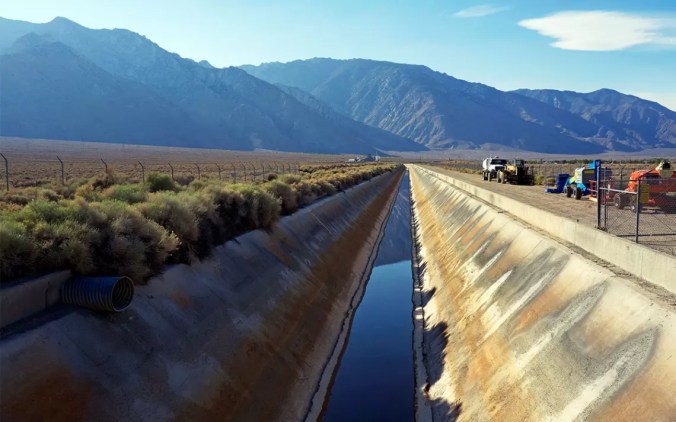
The Los Angeles Aqueduct. | Photo by Brian Melley/AP

California water has been covered in earlier posts, and it keeps getting more important. Once again, with abundance comes responsibility:

Dear Los Angeles: You’re Drinking Indigenous Water

How LA can localize its water supply and finally do right by the Owens Valley Paiute tribes

In August 2023, a tropical storm bore down upon Southern California for the first time in 84 years. As Hilary’s northward-rolling blanket of rain touched off mudslides from Hollywood to the San Bernardino Mountains, thigh-deep water floated vehicles in the streets of Cathedral City. To the east, 120 miles of Highway 395 were closed due to flooding and rock slides, pinching off the route between the city of Los Angeles and the once-green valley 300 miles away from which it has, for over a century, sourced fresh water. Continue reading