Anthropocene Representative Location

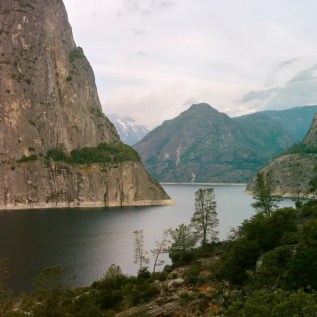
A wide view of a lake with trees surrounding it and blue sky with clouds in distance. We now have a place to match to the name for our epoch:

The Human Age Has a New Symbol. It’s a Record of Bomb Tests and Fossil Fuels.

A scientific panel has picked Crawford Lake, Ontario, to represent the Anthropocene, a proposed, and hotly contested, new chapter in geologic time.

For almost 15 years, a panel of scholars has been chewing over a big question: Has our species transformed the planet so much that we have plunged it into a new interval of geologic time? Continue reading

George Musser Talks With Michael Levin For Nautilus

Nautilus is not one of our go-to sources for inspiration, but with conversations like this it is obvious we should be paying more attention to their work. Thanks to George Musser for this article:

The Biologist Blowing Our Minds

Michael Levin is uncovering the incredible, latent abilities of living things.

Michael Levin, a developmental biologist at Tufts University, has a knack for taking an unassuming organism and showing it’s capable of the darnedest things. He and his team once extracted skin cells from a frog embryo and cultivated them on their own. With no other cell types around, they were not “bullied,” as he put it, into forming skin tissue. Instead, they reassembled into a new organism of sorts, a “xenobot,” a coinage based on the Latin name of the frog species, Xenopus laevis. It zipped around like a paramecium in pond water. Continue reading

The Diligence Of Local Bees

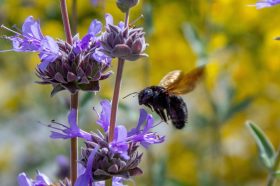
Native Bees Yield Hardier Flowers Than Honey Bees, Research Finds

Bees getting the scientific attention they deserve, our thanks to Yale e360 for summarizing and sharing these findings:

Native Bees Yield Hardier Flowers Than Honey Bees, Research Finds

Flowers pollinated by native bees produce fitter offspring than flowers pollinated by honey bees, according to a new study carried out in San Diego, California. Continue reading

Panthera’s Puma Program

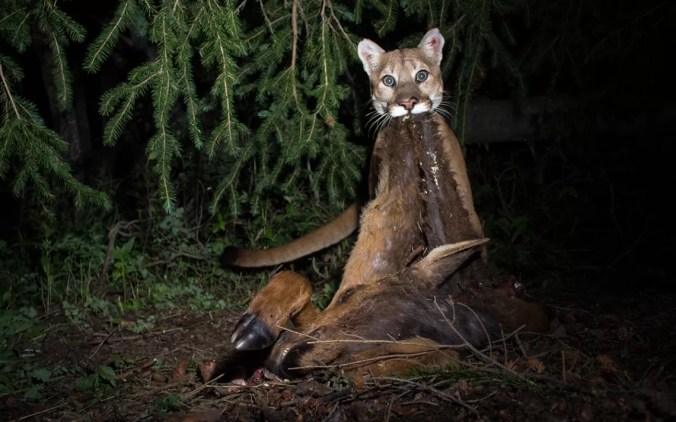
Puma in Wyoming. | Photo by Neal Wight, courtesy of Panthera

Thanks to Grace van Deelen for this article in the magazine of the Sierra Club:

Mountain Lions Are Murder Gardeners

By leaving carcasses, mountain lions create lush landscapes for future victims that could attract prey

If you’re hiking in Yellowstone and stumble upon an unusually lush landscape, you might have found a mountain lion’s garden. Continue reading

Duckweed, By Plantible Foods

Duckweed at the Plantible Foods aqua farm in San Marcos, Calif. (Eric Thayer/for The Washington Post)

We link frequently to articles about meat replacement options, and this appears to be the first time that duckweed is the plant protein being featured. So, thanks to Michael J. Coren, a climate advice columnist at the Washington Post, for this:

The plant protein that could push meat off your plate

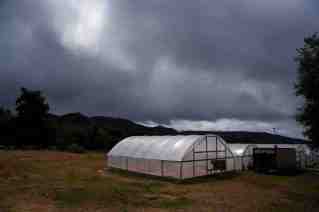
Plantible grows duckweed in ponds housed in greenhouses. (Eric Thayer/for The Washington Post)

SAN MARCOS, Calif. — I came to this aquatic farm an hour outside of San Diego because I wanted to see what could be the future of humanity’s protein supply.

At the moment, it looks more like a meth lab out of the drama “Breaking Bad,” jokes Tony Martens Fekini, the chief executive of Plantible Foods.

Debris from a machine that grinds duckweed. (Eric Thayer/for The Washington Post)

Decrepit recreational vehicles squat on the property. In one corner, people tend to vials, grow lights and centrifuges in a trailer lab. More than a dozen big ponds filled with duckweed, a tiny green plant, bask in the Southern California sunshine.

But the only thing cooking here is protein.

Continue reading

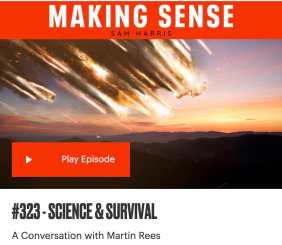
Martin Rees Making Sense

We rarely link to audio or video, instead sharing reading material we think can give unique insight into the topics we are interested in. The link to this podcast episode is unusual, in that sense, but not at all unusual in terms of the quality of conversation that Sam Harris conducts. Subscription recommended to be able to listen to the whole episode with Martin Rees (and all of the consistently excellent episodes):

Sam Harris speaks with Martin Rees about the importance of science and scientific institutions. They discuss the provisionality of science, the paradox of authority, genius, civilizational risks, pandemic preparedness, artificial intelligence, nuclear weapons, the far future, the Fermi problem, the prospect of a “Great Filter”, the multiverse, string theory, exoplanets, large telescopes, improving scientific institutions, wealth inequality, atheism, the conflict between science and religion, moral realism, and other topics. Continue reading

Taking Better Care With Help From Kate Raworth

What? We never posted on this book or its economist author before? We correct that now with Hettie O’Brien’s article in the Guardian :

The planet’s economist: has Kate Raworth found a model for sustainable living?

Her hit book Doughnut Economics laid out a path to a greener, more equal society. But can she turn her ideas into meaningful change?

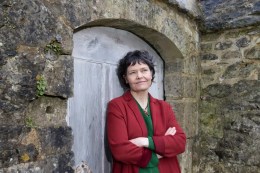
Raworth in Oxford. Photograph: Graeme Robertson/The Guardian

Consider the electric car. Sleek and nearly silent, it is a good example of how far the world has progressed in fighting the climate crisis. Its carbon footprint is around three times smaller than its petrol equivalent, and unlike a regular car, it emits none of the greenhouse gases that warm the planet or noxious fumes that pollute the air. That’s the good news. Then consider that the battery of an electric car uses 8kg of lithium, likely extracted from briny pools on South America’s salt flats, a process that has been blamed for shrinking pasturelands and causing desertification.

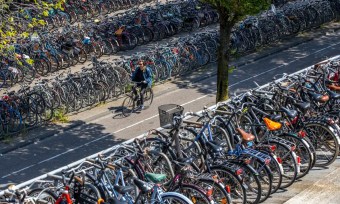
A bike park in Amsterdam which offers free parking for more than 2,500 bicycles. Photograph: Jochen Tack/Alamy

The 14kg of cobalt that prevent the car’s battery from overheating have probably come from the Democratic Republic of the Congo, where cobalt mines have contaminated water supplies and soil. As the demand for electric vehicles grows, the mining and refining of their components will intensify, further damaging natural ecosystems. By 2040, according to the International Energy Agency, the global demand for lithium will have increased more than fortyfold. Continue reading

More On Merlin Sheldrake, Fungi & Related Matters

Merlin Sheldrake, author of the best-selling book “Entangled Life.” Alexander Coggin for The New York Times

We are grateful to any publication that gives this topic its due attention, in this case the New York Times and a particular thanks to Jennifer Kahn for such a thoughtfully written profile:

A vast fungal web braids together life on Earth. Merlin Sheldrake wants to help us see it.

One evening last winter, Merlin Sheldrake, the mycologist and author of the best-selling book “Entangled Life,” was headlining an event in London’s Soho. The night was billed as a “salon,” and the crowd, which included the novelist Edward St. Aubyn, was elegant and arty, with lots of leggy women in black tights and men in perfectly draped camel’s-hair coats. “Entangled Life” is a scientific study of all things fungal that reads like a fairy tale, and since the book’s publication in 2020, Sheldrake has become a coveted speaker.

A pied bleu (Lepista personata), also known as the field blewit. Alexander Coggin for The New York Times

At talks like these, Sheldrake is sometimes asked to answer a question he poses in the first chapter of his book: What is it like to be a fungus? The answer, at least according to Sheldrake, is at once alien and wondrous. “If you had no head, no heart, no center of operations,” he began. “If you could taste with your whole body. If you could take a fragment of your toe or your hair and it would grow into a new you — and hundreds of these new yous could fuse together into some impossibly large togetherness. And when you wanted to get around, you would produce spores, this little condensed part of you that could travel in the air.” There were nods. In the audience, the woman next to me gave a long, affirming hum. Continue reading

Snow Lab & Melting

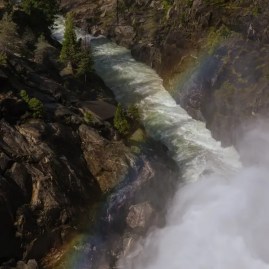
Water released from Hetch Hetchy Reservoir’s O’Shaughnessy Dam flows into the Tuolumne River. The reservoir currently supplies drinking water to 2.7 million San Francisco Bay Area residents. Photograph by Aubrey Trinnaman

We are gratified to know of such a place as a snow lab, and that their scientists share their knowledge in language we can all understand:

California’s Snow Is Melting, and It’s a Beautiful Thing

By Andrew Schwartz.

Dr. Schwartz is the lead scientist and station manager at the University of California, Berkeley, Central Sierra Snow Lab.

Photograph by Aubrey Trinnaman

SODA SPRINGS, Calif. — My fellow Californians often remark that the weather in this state seems it has been reduced to two seasons, both defined by natural disasters: In summer and fall, huge, intense wildfires rip their way across dry land, and winter and early spring bring intense atmospheric rivers with heavy rainfall, floods and landslides, along with winds that take down trees. Continue reading

Greenland’s Rock Flour

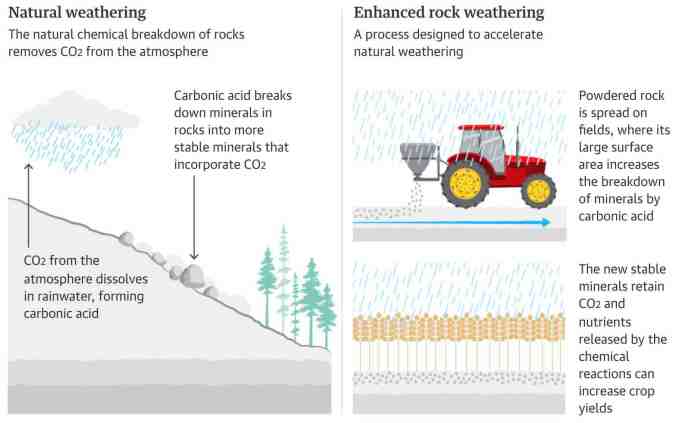
Guardian graphic. Source: Guardian research

Damian Carrington, Environment editor at the Guardian, shares these findings:

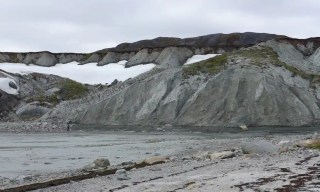
Eight-thousand-year-old marine deposits, exposed by the slow rise of Greenland after the last ice age. The cliffs are about 15 metres high. Photograph: Minik Rosing

Rock ‘flour’ from Greenland can capture significant CO2, study shows

Powder produced by ice sheets could be used to help tackle climate crisis when spread on farm fields

Rock “flour” produced by the grinding under Greenland’s glaciers can trap climate-heating carbon dioxide when spread on farm fields, research has shown for the first time.

Natural chemical reactions break down the rock powder and lead to CO2 from the air being fixed in new carbonate minerals. Continue reading

Out With PFAS, Considering Alternatives

PFAS are used as a coating on food packaging and are prevalent in other everyday items like personal care products and textiles.

Triple Pundit, and writer Riya Anne Polcastro, are new to us, and we appreciate their coverage of this complex topic, important both for health and environmental reasons:

Nixing PFAS is a Real Possibility: Here’s One Company That’s Doing It

Per- and polyfluorinated substances (PFAS) have been getting a lot of negative publicity. And with good reason. Classified as “forever chemicals,” they’ve been found in food, water, soil, animals and even our blood. Although the extent of their effects is not fully understood, they are known to negatively impact human health in a variety of ways. But while many are calling for an overall ban on the chemicals, pushback from the industry seeks to simply switch out the PFAS we already know are harmful with lesser-known ones that likely have the same — or possibly even worse — effects. Continue reading

Think, While You Can, About The Processed Foods You Eat

Jess Ebsworth

The groceries we shop for, even with the finer shopping options, sometimes disappoint; but some foods are just plain wrong, as this article by Sally Wadyka in the New York Times explains:

The Link Between Highly Processed Foods and Brain Health

Eating packaged foods like cereal and frozen meals has been associated with anxiety, depression and cognitive decline. Scientists are still piecing together why.

Roughly 60 percent of the calories in the average American diet come from highly processed foods. Continue reading

Natural History Anew

An image from 1957, when the cross and square design was still legible. American Museum of Natural History

We have featured so many natural history museums in our pages over the years that one more might have been redundant; but no:

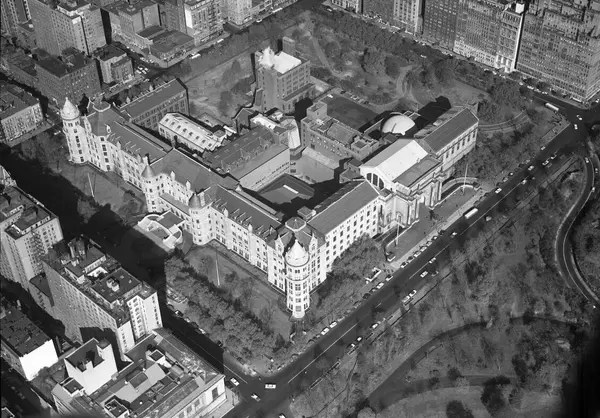
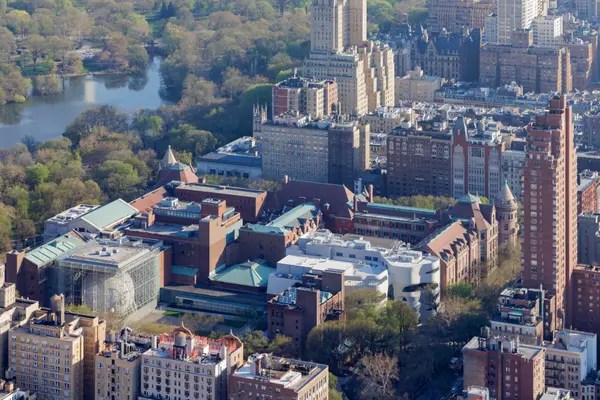
A new aerial photo shows the museum today, as a crazy quilt of buildings from many eras, with Gilder on the right. Iwan Baan

The article below, by Michael Kimmelman with photographs and video by Peter Fisher, allows us to imagine the experience of a new view on natural history in New York City.

The view at the entrance toward the monumental staircase with bleacher seats.

We are ready to be awed:

The stunning $465 million Richard Gilder Center for Science, designed like a canyon, is destined to become a colossal attraction.

When plans for it first surfaced, I wondered if the new Gilder Center at the Natural History museum might end up looking overcooked.

From the outside it’s a white-pink granite cliff with yawning windows shaped a little like the openings to caves, nestling the museum’s wonderful Romanesque Revival addition from the turn of the last century. Past the front doors, that cliff face morphs. It becomes an atrium in the guise of a towering canyon, a city block deep.

Skylights and balconies in the atrium of the new Richard Gilder Center for Science, Education and Innovation.

For its architects, Jeanne Gang and her team, Gilder was clearly a gamble and leap of faith, bucking today’s innocuous norms, almost begging for charges of starchitectural self-indulgence.

Now that it’s built, I love it.

I wouldn’t go so far as to equate it with the curvaceous genius of Gaudi or with Saarinen’s groovy TWA Terminal, but it’s in the family. Like them, Gilder is spectacular: a poetic, joyful, theatrical work of public architecture and a highly sophisticated flight of sculptural fantasy. New Yorkers live to grouse about new buildings. This one seems destined to be an instant heartthrob and colossal attraction. Continue reading

Anthropocene’s Marker

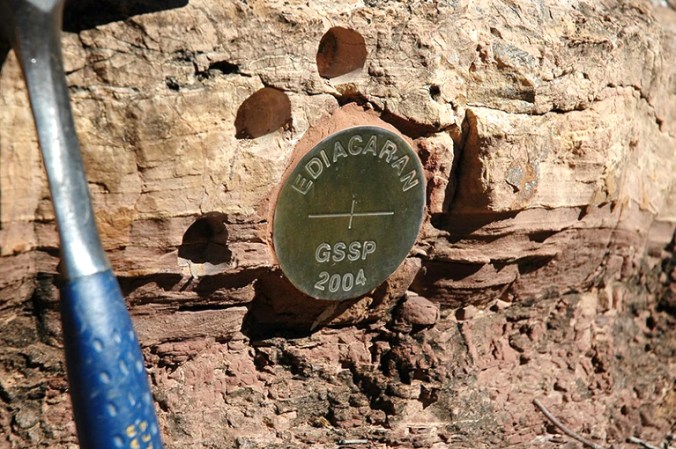
The Ediacaran Period, which ended some 540 million years ago, is marked by a gold spike in the Flinders Ranges of South Australia. JAMES ST. JOHN

We do not love the word Anthropocene, but we appreciate the marker it represents. And until now we did not know there would be a physical counterpart, a marker that will be placed in a representative location:

A Golden Spike Would Mark the Earth’s Next Epoch: But Where?

Before the Anthropocene can be officially proclaimed, a scientific working group must select a single site that permanently captures the new human-influenced epoch. Nine candidate sites — from California to China to Antarctica — are under consideration, with a decision expected soon.

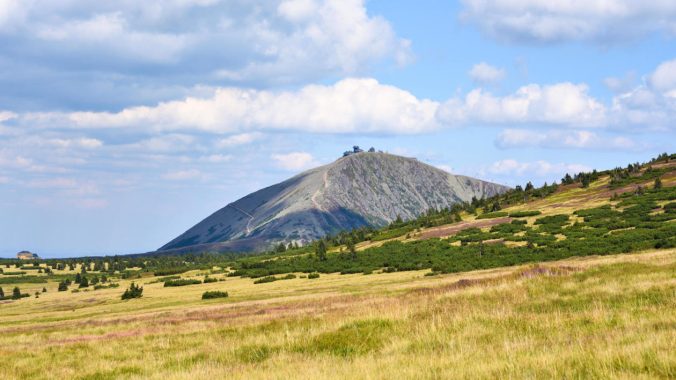
The peatland below Poland’s Mount Śnieżka contains contaminants from burning fossil fuels, nuclear testing, and other human activities. MYSTICWALKER / ALAMY STOCK PHOTO

At first glance, these nine sites scattered across the globe seem unremarkable. Continue reading

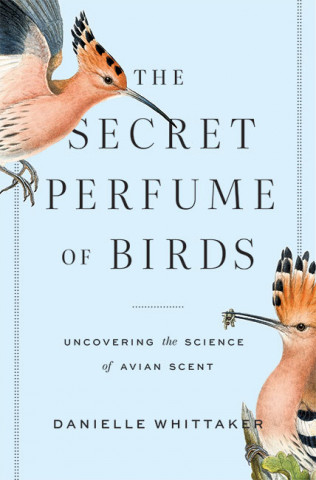
The Secret Perfume Of Birds, Reviewed By The Inquisitive Biologist

The Inquisitive Biologist recently came to our attention with a book review, and now another review of a book on a topic that is new (to us):

To successfully navigate their world, organisms rely on numerous senses. Birds are no exception to this; and yet, for a long time, people have been convinced that birds cannot smell. This came as a surprise to evolutionary biologist Danielle J. Whittaker. Given that smell is effectively chemoreception (the sensing of chemical gradients in your environment) and was one of the first senses to evolve, why would birds have no use for it? The Secret Perfume of Birds tells the story of 15 years spent investigating the olfactory capabilities of birds and provides an insider’s account of scientific research. Continue reading

More Metrics For Animal Intelligence

(Credit: Viesinsh/Shutterstock)

We appreciate Conor Feehly’s article in Discover, expanding our understanding of and ability to measure the intelligence of our co-inhabitants on this planet:

How Intelligence Is Measured In The Animal Kingdom

As understandings of human intelligence evolve, so, too, do understandings of animal intelligence.

Human beings — with our big brains, technology and mastery of language — like to describe ourselves as the most intelligent species. After all, we’re capable of reaching space, prolonging our lives and understanding the world around us. Over time, however, our understanding of intelligence has gotten a little more complicated. Continue reading

Ozone Progress

A refrigerator factory in 2018 in Xingfu, China, an area that defied restrictions on ozone-depleting CFC-11 until a government crackdown. Gilles Sabrié for The New York Times

Any time we see even the slightest sign of meaningful change, it is worth pausing, noting it, and getting back to work:

Rogue emissions from China of ozone-depleting chemicals had threatened to delay recovery by a decade. But the emissions were stopped, according to a U.N.-backed report.

The protective ozone layer in the upper atmosphere could be restored within several decades, scientists said Monday, as recent rogue emissions of ozone-depleting chemicals from China have been largely eliminated. Continue reading

Lungs Of The Earth, The Amazon Calls Our Attention Again

Illustration by Max Guther

The Amazon is one of those big topics that we come back to again and again for a reason.  We all depend on these lungs of the earth, so it would be strange to not be obsessed with the subject:

Some Brazilian scientists fear that the Amazon may become a grassy savanna — with profound effects on the climate worldwide.

Illustration by Max Guther

One of the first times Luciana Vanni Gatti tried to collect Amazonian air she got so woozy that she couldn’t even operate the controls. An atmospheric chemist, she wanted to measure the concentration of carbon high above the rainforest. To obtain her samples she had to train bush pilots at obscure air-taxi businesses. The discomfort began as she waited on the tarmac, holding one door open against the wind to keep the tiny cockpit from turning into an oven in the equatorial sun. When at last they took off, they rose precipitously, and every time they plunged into a cloud, the plane seemed to be, in Gatti’s words, sambando — dancing the samba. Then the air temperature dipped below freezing, and her sweat turned cold. Continue reading

Embracing Anthropocene

Image credits: Alamy; David Guttenfelder for The New York Times; Getty Images; Ashley Gilbertson for The New York Times; Michael Probst/Associated Press; Getty Images; NASA

We have been using this terminology already for more than a decade, thinking it was apt enough to be official:

For Planet Earth, This Might Be the Start of a New Age

A panel of experts has spent more than a decade deliberating on how, and whether, to mark a momentous new epoch in geologic time: our own.

The official timeline of Earth’s history — from the oldest rocks to the‌ dinosaurs to the rise of primates, from the Paleozoic to the Jurassic and all points before and since — could soon include the age of nuclear weapons, human-caused climate change and the proliferation of plastics, garbage and concrete across the planet. Continue reading

Fusion Hoopla

A reason that the breakthrough is causing such hoopla is that it implicitly promises that we could use fusion to run the world in almost its current form. Photograph courtesy Lawrence Livermore National Laboratory

Without the expertise to fully appreciate the science, the hoopla can be overlooked too easily. McKibben’s comment helps clarify:

The Fusion Breakthrough Suggests That Maybe Someday We’ll Have a Second Sun

In the meantime, we need to use the sun we’ve already got.

On Tuesday, the Department of Energy is expected to announce a breakthrough in fusion energy: according to early reports, scientists at the government’s Lawrence Livermore National Laboratory, in California, have succeeded for the first time in making their complex and expensive machinery produce more power than it uses, if only for an instant. Continue reading