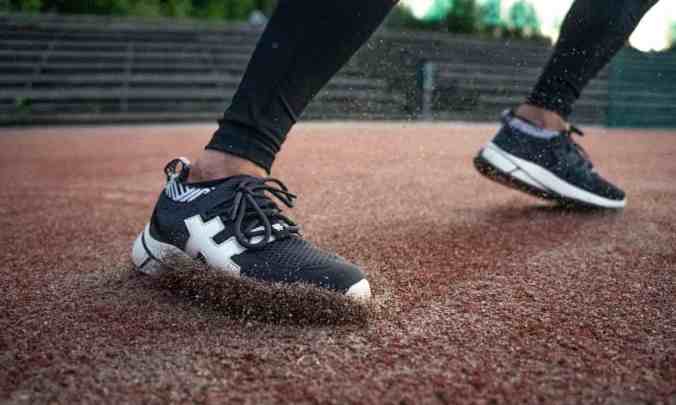
The company said the shoe, called Nomad, will be made from coffee waste and recycled bottles, while recycled polyester will be used to create the membrane to make the footwear waterproof. Photograph: c/o Rens
There is nothing particularly remarkable about the idea of using coffee bags a second time. But it was fun realizing how easy it is, and just doing it. Less easy and maybe lots more fun is the idea in the article below. Hats off to the creative founders who chose this path instead of chasing Silicon Valley unicorns (perhaps their success will demonstrate that unicorns thrive on a healthy planet, as expressed in this t-shirt I saw recently):
Finnish firm Rens says shoes made from used grounds and recycled plastic will be climate neutral
It is the typical morning routine for hundreds of thousands of Britons: have a cup of coffee and then slip on your trainers before heading for a jog. Upon returning, a quick drink of water to rehydrate before stepping into the shower.
Now, one firm has enabled one thing to beget another, by creating trainers made of recycled plastic bottles and used coffee beans.
Finnish footwear firm Rens launched an online fundraising campaign for its latest sustainable trainer on Tuesday, which it claims will be climate neutral in its production, packaging and transport. Continue reading →
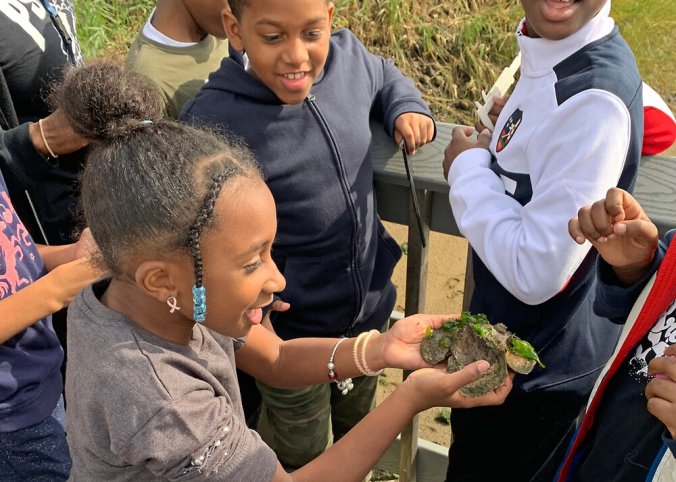
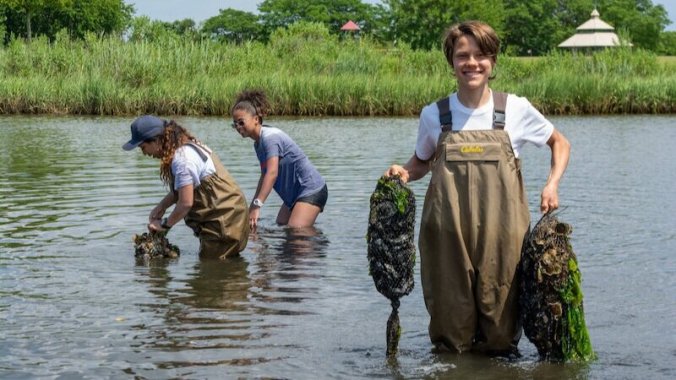
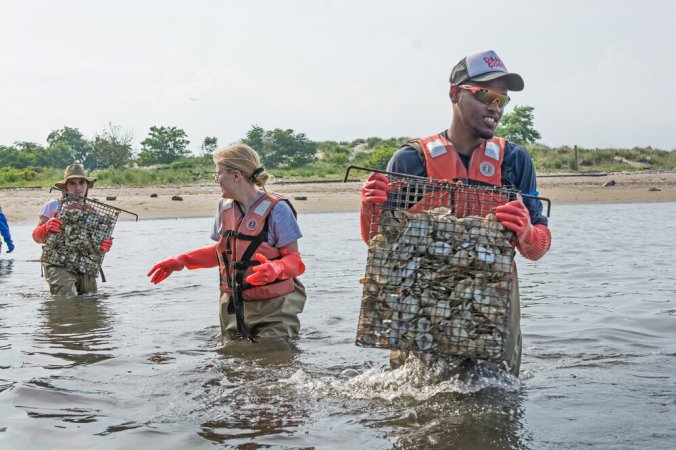
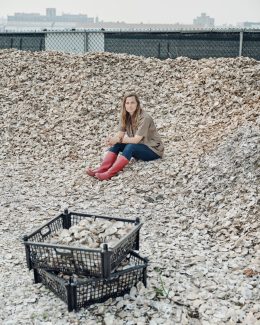
Click any of the images above to go to the website of this organization featured once before in our pages and now again in the article below. It will make more sense after reading the article. But do visit the site and consider volunteering. Take some kids along.
In New York, Kate Orff will use oyster reefs to mitigate storm surges. Photograph by Thomas Prior for The New Yorker
Eric Klinenberg‘s work on the topic of libraries provided a sense of common cause. After featuring so many stories about libraries and librarians (my more recent personal anecdote was purposely brief so did not relay how many ways my local library impacted my young life, a topic for another day), his book summed up much of why the institution matters to us. And then some. Advocating for libraries was something a talented academic could do on a larger scale than we could in these pages, especially with publications like those. Bravo. And now this.
After lots of attention to rewilding in these pages, plenty of it related to urban landscapes, the same author that further illuminated our understanding about the value of libraries has convinced me of how much more there is to learn on this topic:
How a landscape architect is enlisting nature to defend our coastal cities against climate change—and doing it on the cheap.
On a windy afternoon in April, the landscape architect Kate Orff stood on the open walkway of a container crane, some eighty feet above the Red Hook Terminal, in Brooklyn, and the Buttermilk Channel, a tidal strait on the southeast side of Governors Island. Continue reading →
The art director JP Boneyard ’s favourite park is Montana’s Glacier national park. “It’s breathtaking, I’m smiling just thinking about it ,” he says. For his screen-print project Fifty-Nine Parks, now collected in a book, he asked modern artists to reinterpret America’s classic national park posters, commissioned by the government in the 1900s.
“I hope they inspire people to visit the parks and connect with nature, but, heck, it’d be awesome if the book inspired folks to pick up a squeegee and start printing too,” he says.
Insects have declined by 75% in the past 50 years – and the consequences may soon be catastrophic. Biologist Dave Goulson reveals the vital services they perform
I have been fascinated by insects all my life. One of my earliest memories is of finding, at the age of five or six, some stripy yellow-and-black caterpillars feeding on weeds in the school playground. I put them in my empty lunchbox, and took them home. Eventually they transformed into handsome magenta and black moths. This seemed like magic to me – and still does. I was hooked. Continue reading →
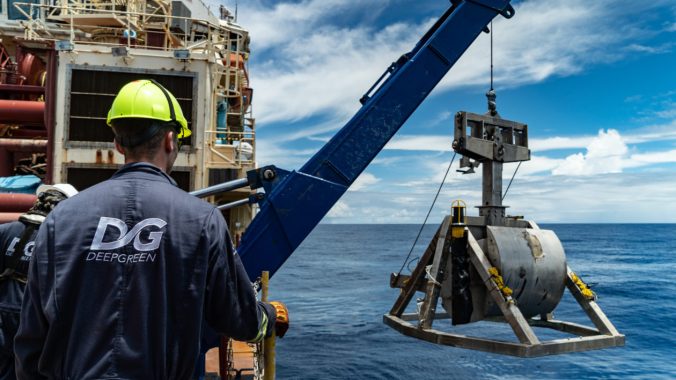
Researchers with DeepGreen Metals deploy a box core tool to capture a sample of the seafloor. THE METALS COMPANY
As more and more households and businesses and governments plan their switch to electric vehicles, considering the ripple effects is as important now as it was in the age of fossil-fueled vehicles:
The electric vehicle boom is driving a surge in demand for prized metals needed for batteries and other components. Some companies say the solution lies in mining the deep oceans, but scientists say that could irreversibly damage a vast, largely pristine ecosystem.
A polymetallic nodule containing manganese, nickel, cobalt and copper gathered from the seafloor. THE METALS COMPANY
Nauru, lying about halfway across the vast expanse of the Pacific Ocean between Australia and Hawaii, is the world’s smallest island nation. But in the emerging industry of deep-sea mining, it punches far above its weight.
This June, Nauru gave notice to the International Seabed Authority (ISA), the UN agency charged with regulating mining in international waters, that it was triggering the so-called two-year rule: The agency will have to consider any application for a deep-sea mining license two years from now, under whatever regulations are on the books at the time. This effectively forces the ISA’s hand to finalize a regulatory mining code before that deadline. With this latest development, a once-fanciful idea may soon become a global industry. Continue reading →
Since Sunday I have been thinking about what to plant, and how, with regard to our Escazu coffee regeneration project. Questions related to genetics are fundamental to agriculture, even if genetic engineering is controversial. I am only considering hybrids, not genetically engineered coffee varietals. We will use no pesticides or synthetic fertilizers, nor have any been used on this land in nearly three decades, so our coffee will be grown according to organic standards. Whether we seek USDA certification is a topic for a later date.
But I am a proponent of organic certification. Not every farmer can afford it but if they could I would hope they consider it. That said, like any certification, there can be bugs in the system. Thanks to Amanda Little (whose work we first linked to five years ago, and again when her book was published) for investigating and bringing this to our attention, with the help of Bloomberg. It would seem to go without saying, but perhaps we all need to shout it out:
A USDA loophole that allows farmers to cut down forests and clear grasslands to win faster certification should have been closed years ago.
Sustainable agriculture is having its political moment.
The Biden administration deserves credit for being the first to recognize that food system reforms can go a long way toward solving the climate crisis. Yet for all its big-picture vision, some critical details are getting overlooked. A big one is a loophole within the USDA’s National Organic Program that undermines its mission and impedes the nation’s path toward climate-smart agriculture. Continue reading →
In a world that will need less oil, the attraction of going to a landlocked continental interior, such as Alberta, Canada, and trying to separate petroleum from sand is waning. Photograph by Ben Nelms / Bloomberg / Getty
Oil from the tar sands of Alberta will sink us faster than we are already sinking. How important is it to keep it where it is? Akin to some sort of holy grail. Thanks to Bill McKibben, as always, for weekly reminders to keep our eyes on the prize:
If the province’s oil is dug up and burned, it will be calculably harder to limit the damage from climate change.
Some weeks ago, the government of Alberta wrote to me—and apparently to a number of other environmentalists and environmental groups. We are all subjects of an “anti-Alberta energy inquiry,” and have the right to respond to charges that are being levelled by a government commission. Alberta, it turns out, has spent three and a half million dollars in an effort to find out whether foreigners are unfairly targeting its oil-and-gas industry. I’m mentioned dozens of times in the draft report, due to be finished this week, and it contains links to lots of articles of mine explaining why the province’s vast tar-sands project should be curtailed. Continue reading →
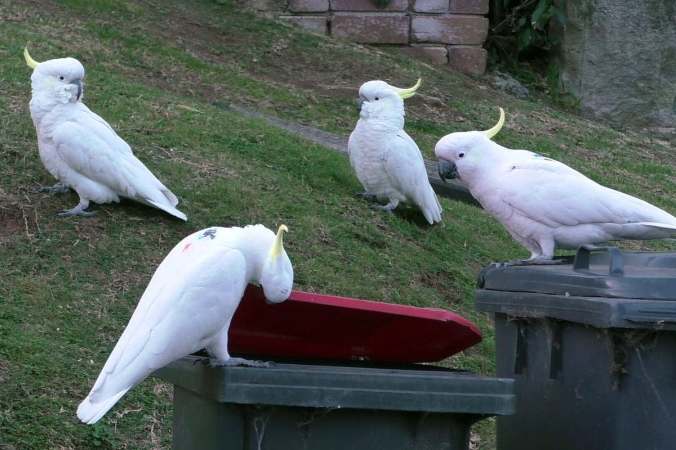
Sydney’s clever and adaptable sulfur-crested cockatoos learn how to pry open garbage bins by watching one another.
You’ve heard of trash pandas: Raccoons raiding the garbage. How about trash parrots?
Sulfur-crested cockatoos, which may sound exotic to Americans and Europeans, are everywhere in suburban areas of Sydney. They have adapted to the human environment, and since they are known to be clever at manipulating objects it’s not entirely surprising that they went after a rich food source. But you might say that the spread of their latest trick, to open trash cans, blows the lid off social learning and cultural evolution in animals. Continue reading →
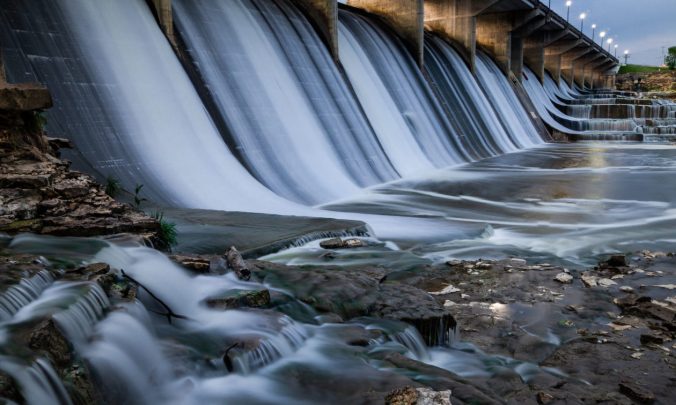
With the era of building big dams over in the U.S., a growing number of existing dams are being modified to produce hydropower. These projects, advocates say, avoid the damaging impacts of new dams and could generate enough renewable electricity for several million homes. Continue reading →
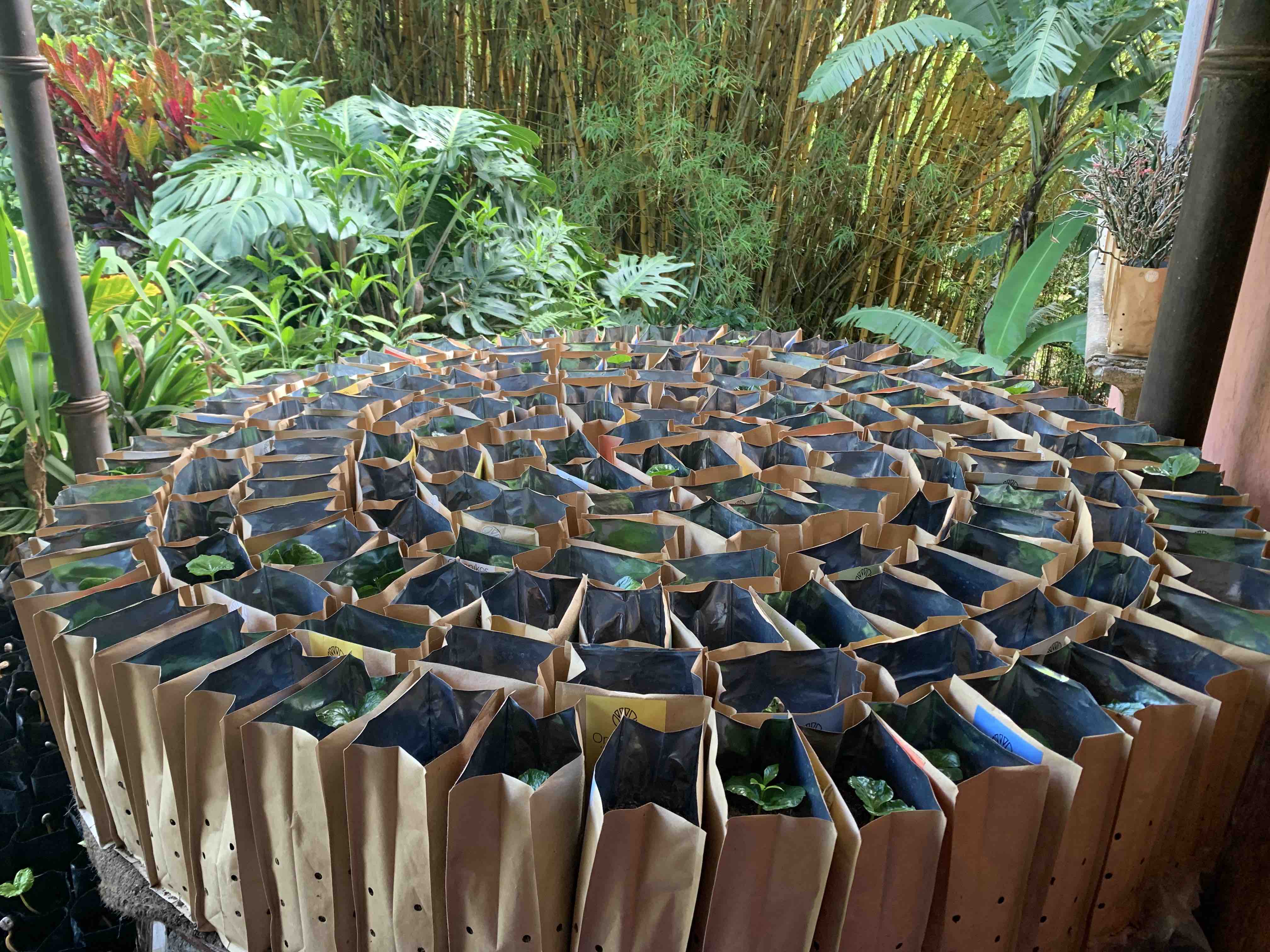
When posting yesterday I had in mind my coffee germination project. In addition to recycling bags to use for this stage of prepping for the bigger goal, I have been considering the question of varietals, including hybrids, to plant alongside these seedlings that are from coffee collected on this land 187 days ago, from coffee trees originally planted five decades ago.
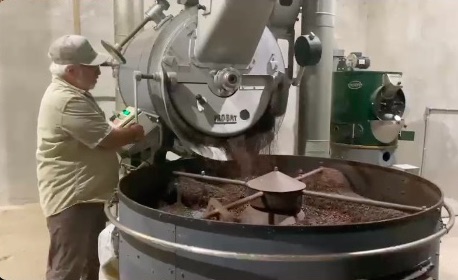
Hacienda La Amistad coffee, roasted at the farm
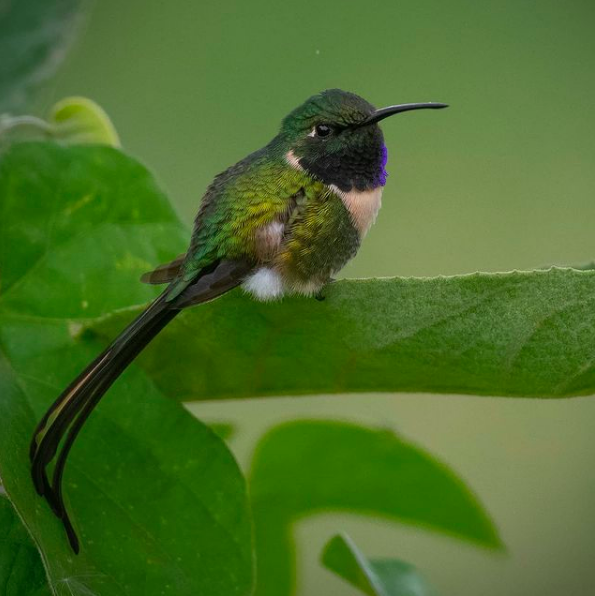
On Saturday I was speaking with the man who farms and roasts one of our single estate coffees, the only one that is USDA-certified organic. He exhibited the new roaster at the farm, while telling me about an experimental varietal he has growing at 1,800 meters elevation, which he has nicknamed Purple Haze.
This fueled my imagination further down the road of how complex to get with our own re-planting options. Our seedlings will be mature enough to plant next May, and by that time I will need to have sourced the thousand or so other seedlings we have space for. We will have micro-lots within our micro-lot. If we plant varietals in clusters of 100, that would give us the option of ten varietals other than the varietal that was originally planted here. Or clusters of 50, allowing twenty other varietals? More likely clusters of 200, because over the next ten months surely we can do enough homework to figure out the five very best varietal options for this soil, climate and elevation. It’s time to start pondering and plotting those on the map…
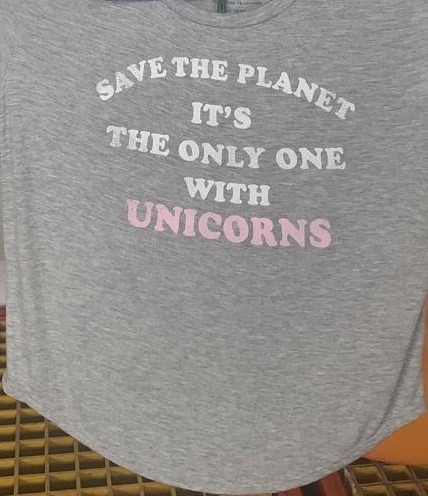 There is nothing particularly remarkable about the idea of using coffee bags a second time. But it was fun realizing how easy it is, and just doing it. Less easy and maybe lots more fun is the idea in the article below. Hats off to the creative founders who chose this path instead of chasing Silicon Valley unicorns (perhaps their success will demonstrate that unicorns thrive on a healthy planet, as expressed in this t-shirt I saw recently):

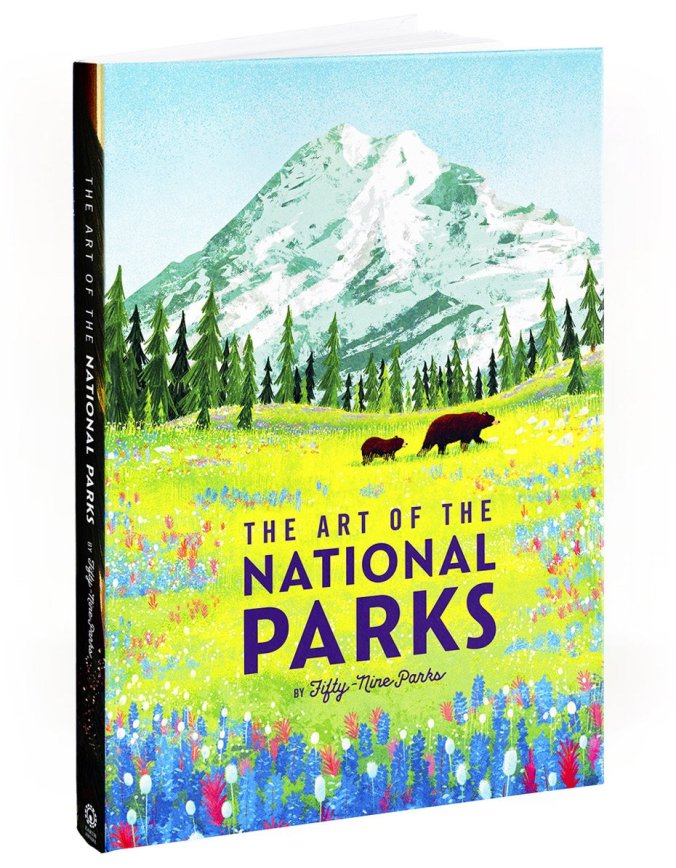
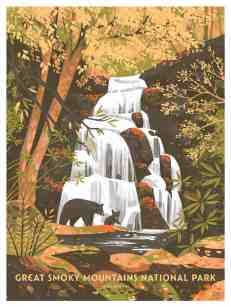 Click the image above if this is your kind of coffee table book. It is of course available elsewhere but please, support the publisher instead of the elsewhere option. We feature stories related to the national parks of the USA about as frequently as any other topic; here is a unique way to support the idea and the actions that flow from the idea.
 Thanks to the Guardian’s feature on the book for bringing it to our attention:
“I hope they inspire people to visit the parks and connect with nature, but, heck, it’d be awesome if the book inspired folks to pick up a squeegee and start printing too,” he says.



 Organikos