Urban Rewilding: Giving Space for People and Nature

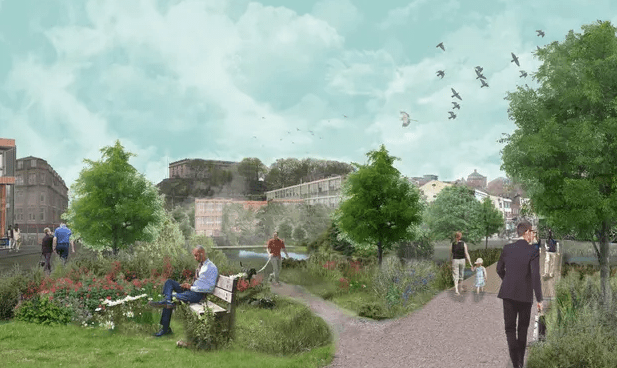
What the Broadmarsh area of central Nottingham could look like if the Wildlife Trust’s ambitious post-Covid wildscape plan gets the go-ahead. Photograph: The Wildlife Trusts

When we’ve written about rewilding on this site before we usually are referring to bringing  wildlife back into a landscape that had lost it for decades, if not centuries.  This Nottingham project has precedent in terms of plans to transform an urban eyesore into public space that is welcoming to both biodiversity of fauna and flora, and the people who will benefit from taking pleasure in it.

Thanks to the Guardian for highlighting the story. We look forward to reading about the finished project!

An additional Public Service Announcement: If you like this story the Nottingham Wildlife Trust has an ongoing petition to help make this project a reality. Please feel free to follow the link and add your name. Being local to Nottingham is not required.

Going wild? A radical green plan for Nottingham’s unloved shopping centre

An empty 1970s shopping centre in Nottingham could be transformed into wetlands, pocket woodlands and a wildflower meadow as part of a post-pandemic urban rewilding project.

The debate about Broadmarsh shopping centre, considered an eyesore by many, has rumbled on for years. This year it was undergoing a £86m revamp by real estate investment trust Intu when the firm went into administration.

The number of empty shops on UK high streets has risen to its highest level in six years, and as retail giants such as Debenhams and Arcadia Group falter, Nottinghamshire Wildlife Trust has come up with a new model of inner city regeneration: urban rewilding.

The trust wants to bulldoze the already half-demolished Broadmarsh building and turn it into 2.5 hectares (6 acres) of scruffy green space at an estimated cost of £3-4m. The designs were created with Influence Landscape Architects and could set a precedent for what to do with the growing amount of vacant retail space in other cities. “It’s unbelievable to hear that stores like Debenhams are in the position they are in – they’re stalwarts of the city, but it does put out an opportunity,” said Sara Boland, managing director of Influence. Continue reading
More On The Social Networking Of Trees

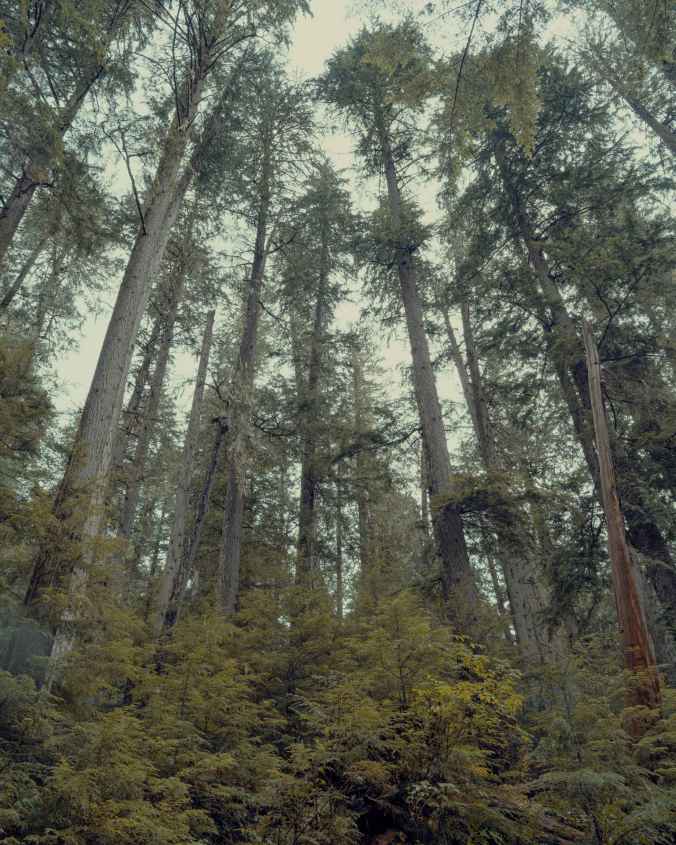
On a topic we have posted about at least a few times before, here is the latest science on the ways in which trees communicate among themselves, and with others, accompanied by some phenomenally beautiful supporting photographs (especially the fungi):

The Social Life of Forests

Trees appear to communicate and cooperate through subterranean networks of fungi. What are they sharing with one another?

By Ferris Jabr
Photographs by Brendan George Ko

As a child, Suzanne Simard often roamed Canada’s old-growth forests with her siblings, building forts from fallen branches, foraging mushrooms and huckleberries and occasionally eating handfuls of dirt (she liked the taste). Her grandfather and uncles, meanwhile, worked nearby as horse loggers, using low-impact methods to selectively harvest cedar, Douglas fir and white pine. They took so few trees that Simard never noticed much of a difference. The forest seemed ageless and infinite, pillared with conifers, jeweled with raindrops and brimming with ferns and fairy bells. She experienced it as “nature in the raw” — a mythic realm, perfect as it was. When she began attending the University of British Columbia, she was elated to discover forestry: an entire field of science devoted to her beloved domain. It seemed like the natural choice.

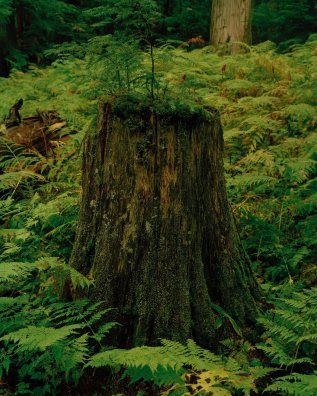
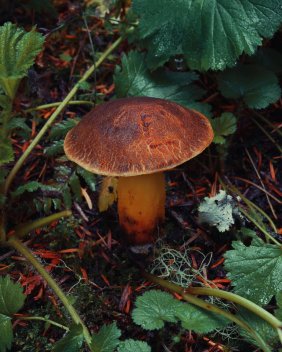
Mushrooms and conks are the fruiting bodies of fungi. Their underground filaments form networks among the root systems.

By the time she was in grad school at Oregon State University, however, Simard understood that commercial clearcutting had largely superseded the sustainable logging practices of the past. Loggers were replacing diverse forests with homogeneous plantations, evenly spaced in upturned soil stripped of most underbrush. Without any competitors, the thinking went, the newly planted trees would thrive. Instead, they were frequently more vulnerable to disease and climatic stress than trees in old-growth forests. In particular, Simard noticed that up to 10 percent of newly planted Douglas fir were likely to get sick and die whenever nearby aspen, paper birch and cottonwood were removed. The reasons were unclear. The planted saplings had plenty of space, and they received more light and water than trees in old, dense forests. So why were they so frail? Continue reading

The Miracle Of Soil, Explained

As we work to improve the soil in advance of planting thousands of coffee seedlings in a few months, we appreciate a video like this one as a tool for explaining what we are doing, and why. Thanks to Phoebe Weston for bringing this to my attention.

Parasitism’s Charisma Deficit

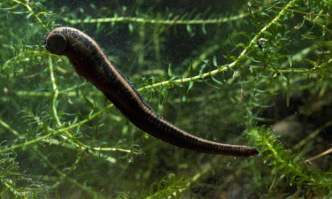
The medicinal leech, Hirudo medicinalis, is one of the few parasites formally protected. Photograph: Stephen Dalton/Alamy

By the time I was welcoming guests to a place where they would experience them in the wild, I had become accustomed to leeches. I did not enjoy feeling them in my hiking boot or elsewhere on my body, but after a few times I stopped being freaked out by it. As unlikely as it sounds, I eventually found them fascinating, if not charismatic. I could appreciate their place in the ecosystem we were working to protect, but I could not bring myself to celebrate them in public. A photograph like the one above would not win them new friends but illustrations like the one below might help. Phoebe Weston’s article about the challenges of protecting parasites rings true:

Overlooked and unloved: how a global project could unlock the world of parasites

The tiny freeloaders may be considered disgusting by many but new research shows they are crucial in shaping ecosystems

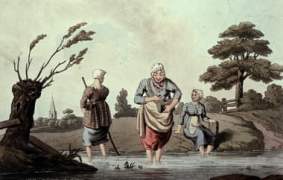
A coloured aquatint from the early 19th century shows three women gathering leeches in a stream. Photograph: Wellcome Collection

The leech craze of the 1800s put parasites on the map. Collectors (usually women and sometimes old horses) would stand in ponds waiting for medicinal leeches to come and suck their blood. They were then picked off and sold for bloodletting.

The parasites were so popular that by the early 1900s they were nearly extinct, and there was a coordinated effort to save them. Even so, the European medicinal leech, Hirudo medicinalishas been labelled as near threatened on the IUCN red list since 1996, and remains one of the few parasites with formal protections. Continue reading

A Step To Reduce Overfishing, Even A Modest One, Is Better Than No Step

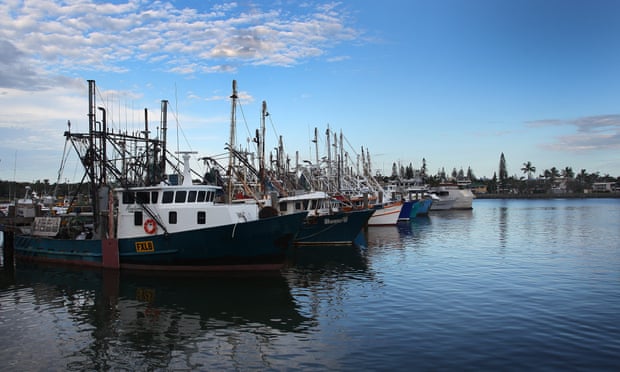
Research has found that sustainably managed oceans can provide six times more food than today. Photograph: Lisa Maree Williams/Getty Images

It is too few countries protecting too little ocean space, but it is a step in the right direction:

Global sustainable fishing initiative agreed by 14 countries

Governments to reduce pollution in oceans and end subsidies that contribute to overfishing

Governments responsible for 40% of the world’s coastlines have pledged to end overfishing, restore dwindling fish populations and stop the flow of plastic pollution into the seas in the next 10 years.

The leaders of the 14 countries set out a series of commitments on Wednesday that mark the world’s biggest ocean sustainability initiative, in the absence of a fully fledged UN treaty on marine life.

The countries – Australia, Canada, Chile, Fiji, Ghana, Indonesia, Jamaica, Japan, Kenya, Mexico, Namibia, Norway, Palau and Portugal – will end harmful subsidies that contribute to overfishing, a key demand of campaigners. They will also aim to eliminate illegal fishing through better enforcement and management, and to minimise bycatch and discards, as well as implementing national fisheries plans based on scientific advice.

Each of the countries, members of the High Level Panel for Sustainable Ocean Economy, has also pledged to ensure that all the areas of ocean within its own national jurisdiction – known as exclusive economic zones – are managed sustainably by 2025. That amounts to an area of ocean roughly the size of Africa. Continue reading

2020 Goldman Prize Winners

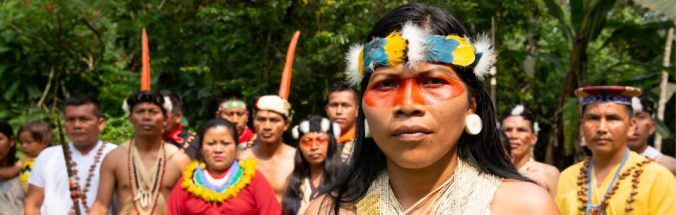
Nemonte Nenquimo led an indigenous campaign and legal action that resulted in a court ruling protecting 500,000 acres of Amazonian rainforest and Waorani territory from oil extraction. Nenquimo’s leadership and the lawsuit set a legal precedent for indigenous rights in Ecuador, and other tribes are following in her footsteps to protect additional tracts of rainforest from oil extraction.

The last time we mentioned a Goldman Prize winner was also the only time we have done so. What explains that? Nothing, really. Just a missed opportunity each year to celebrate things we care about. Today we share the news on one of the six prize winners for 2020:

Guardians of the Amazon Rainforest

Despite its relatively small area, Ecuador is one of the 10 most biodiverse countries on Earth. It contains pristine Amazon rainforests with rich wildlife, complex ecosystems, and significant populations of indigenous communities. Long protectors of this territory, the Waorani people are traditional hunter-gatherers organized into small clan settlements. Continue reading

Ending Perverse Subsidies

The wealthiest landowners – those receiving payments over £150,000 a year – will face the sharpest cuts. Photograph: Owen Humphreys/PA

We post so much about farming on this platform that it could be considered a major topic of interest. Subsidies, less so, but just as with farming there are both better and worse forms of subsidies. We favor reforming the perverse ones, and so cheer this news:

Environment to benefit from ‘biggest farming shake-up in 50 years’

£1.6bn subsidies for owning land in England to end, with funds going to improve nature

Wildlife, nature and the climate will benefit from the biggest shake-up in farming policy in England for 50 years, according to government plans.

The £1.6bn subsidy farmers receive every year for simply owning land will be phased out by 2028, with the funds used instead to pay them to restore wild habitats, create new woodlands, boost soils and cut pesticide use.

The wealthiest landowners – those receiving annual payments over £150,000 a year – will face the sharpest cuts, starting with 25% in 2021. Those receiving under £30,000 will see a 5% cut next year. Continue reading

Obsessively Eliminating Protections To The End

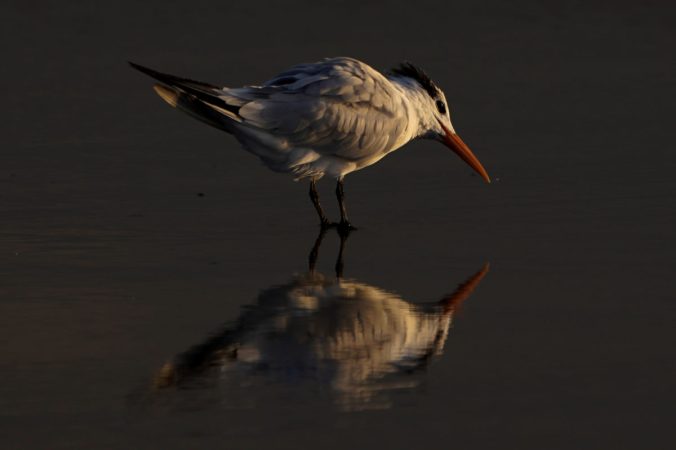
A sea bird is reflected in the water during low tide at Cardiff State Beach in Encinitas, California, U.S. October 17, 2019. REUTERS/Mike Blake

No special prognostication talent was required to know this was coming, if you have been paying attention for the last four years. Environmental, among other protections, have been gutted constantly since shortly after this administration’s inauguration in 2017. The only important question is how quickly some of these protections can be restored by the incoming administration:

Trump administration moves forward with gutting bird protections

The Trump administration moved forward Friday on gutting a longstanding federal protection for the nation’s birds, over objections from former federal officials and many scientists that billions more birds will likely perish as a result.

The U.S. Fish and Wildlife Service published its take on the proposed rollback in the Federal Register. It’s a final step that means the change — greatly limiting federal authority to prosecute industries for practices that kill migratory birds — could be made official within 30 days. Continue reading

To Catch A Thief, Reformed

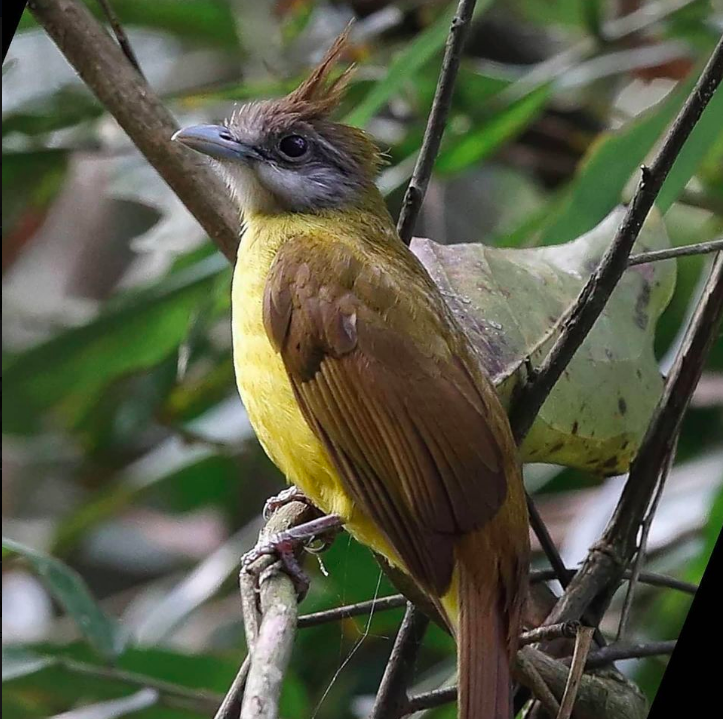
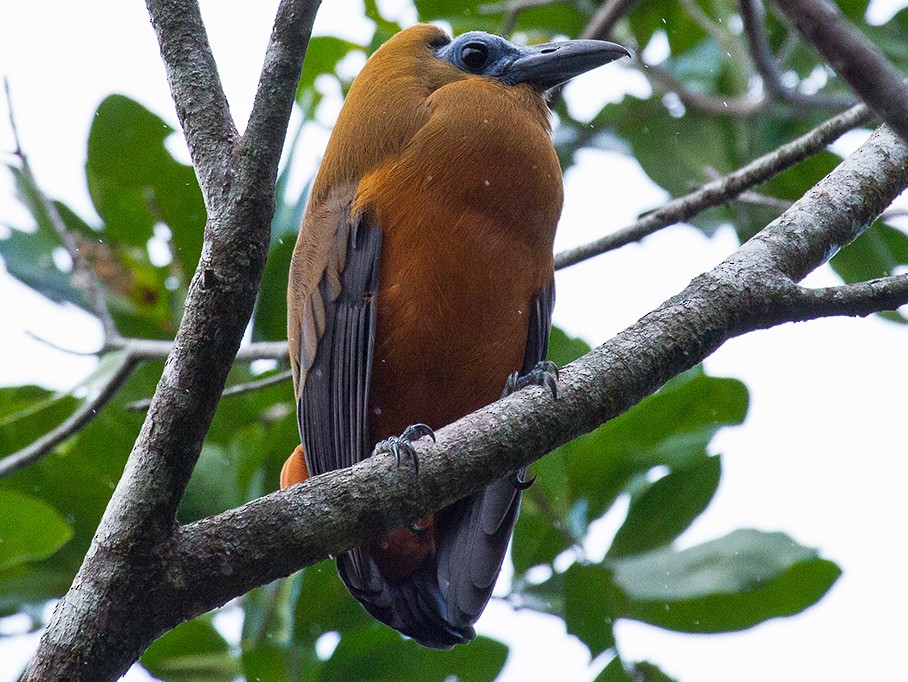
Capuchinbird - Leon Moore

© Leon Moore eBird S34151423 Macaulay Library ML 47998261

The image of the Capuchinbird above is from eBird, which we have written about many times on this platform. Denise Hruby has written a very important account of how birds are taken from tropical wilderness into captivity, who pays for it, and other important details. The bird above is apparently a favorite of one of the most accomplished thieves, and the journalist was astute enough to link to its eBird page.  To catch a feather thief is one thing. To catch a bird thief is altogether more important. To read of the possibility of the thief’s reform, different again and will take time to verify:

He Once Trafficked in Rare Birds. Now, He Tells How It’s Done.

After a chance encounter in Brazil, Johann Zillinger became one of the world’s most prolific wildlife smugglers. Three decades and two prison stints later, he says he has gone straight.

WEIDEN AN DER MARCH, Austria — On a humid evening at the airport in Fortaleza, in northern Brazil, Johann Zillinger, a wildlife trafficker, was keeping a close eye on his new hire. He had recruited the 24-year-old farmhand as a smuggler a few days earlier, promising him a free trip to Europe and $2,000 in cash. Continue reading

Sheltering in Nature

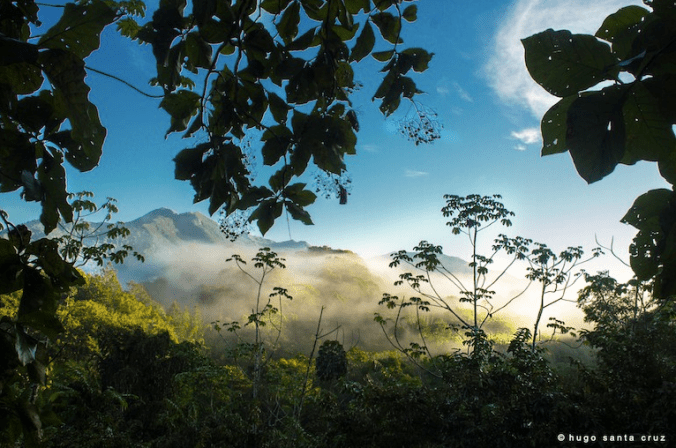
The Turrubares Hills in Costa Rica’s Central Pacific region. Photo courtesy of Hugo Santa Cruz.

This is an exciting example of the old adage about life’s lemons and making lemonade. The Macaw Sanctuary is an inspirational space and we’re proud to have explored it with Hugo during the Global Big Day.

Thank you to Milan Sime Martinic and the inspiration of Mongabay for nature and conservation stories.

A new conservation project is created in Costa Rica thanks to COVID-19

  • Hugo Santa Cruz is a photographer contributing to a new Netflix documentary about nature and coping with COVID-19.
  • A Bolivian currently stuck in Costa Rica due to the pandemic, he has turned his camera lens on the local landscape, which has helped him deal with his separation from family and friends.
  • Many hours spent in the rainforest have given him solace and also an idea to aid the rich natural heritage that he is currently documenting.
  • Santa Cruz is now a co-founder of the new Center for Biodiversity Restoration Foundation, which will work to restore and connect natural areas in the region.

Call him inspired.

If Biblical Ishmael were banished to the desert, naturalist Hugo Santa Cruz is quarantined to wander in paradise, a paradise in the Costa Rican jungle, that is.

He is in the Central American rainforest along the Paso de Las Lapas Biological Corridor, an area near the Pacific coast that converges with the mountainous foothills of the western dry tropical forest.

Roaming some 370 hectares of ample primary and secondary forests, regenerated forests restored from human damage, plus plantings, ponds, and biodiverse jungle, Santa Cruz is deep in the wilderness, far from home due to the COVID-19 shutdown of travel and normal activities. He is exploring the jungle, studying the animals, photographing, filming, and registering the species he encounters. Continue reading