
Thattekadu Bird Sanctuary, Kerala
Thattekadu Bird Sanctuary, Kerala
 Architectural Digest is not the reason we do what we do. But when they take note, in any manner, we feel the love. Xandari Harbour soft-opened, and within a very short time got an inordinate amount of good press even before the formal opening. Yet the AD mention, which was neither a cover story nor even a particularly huge feature, had a different level of impact on those of us on the team that developed it.
George M George, the visionary who saw the potential in the run down property and particularly the crumbling godown (waterfront warehouse) featured on the left above post-restoration, was that team’s source of energy, inspiration, encouragement–this would not have happened without his excellent leadership. Continue reading
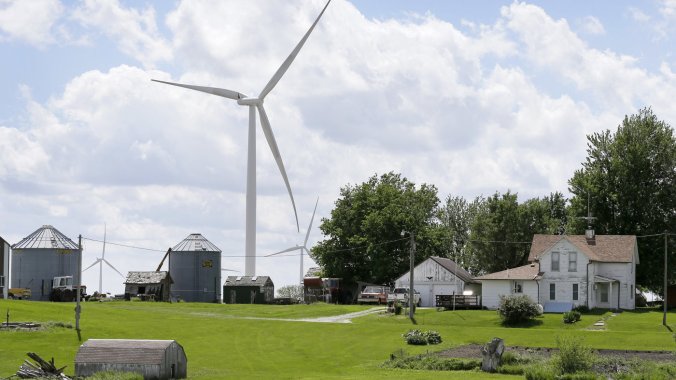
A wind turbine stands over a farmhouse in Adair, Iowa. Charlie Neibergall/AP
Thanks to National Public Radio (USA):
Obama’s New Clean Energy Goal For North America: 50 Percent By 2025
The three leaders are expected to set a target for North America to get 50 percent of its electricity from nonpolluting sources by 2025. That’s up from about 37 percent last year.
Aides acknowledge that’s a “stretch goal,” requiring commitments over and above what the three countries agreed to as part of the Paris climate agreement. Continue reading

First result when searching “solar power” in Google
We posted about a solar oven yesterday, and today we heard about a less tangible but equally valuable product offered for free by Google: by visiting their Project Sunroof webpage, you can find out in seconds if your roof is suitable for panels, how many panels you’d need, and finally, what your payment options are depending on your location (at the moment it seems focused on the US and the different state and federal tax credits available). From their About page:
Why are we doing this?
As the price of installing solar has gotten less expensive, more homeowners are turning to it as a possible option for decreasing their energy bill. We want to make installing solar panels easy and understandable for anyone.
Project Sunroof puts Google’s expansive data in mapping and computing resources to use, helping calculate the best solar plan for you.
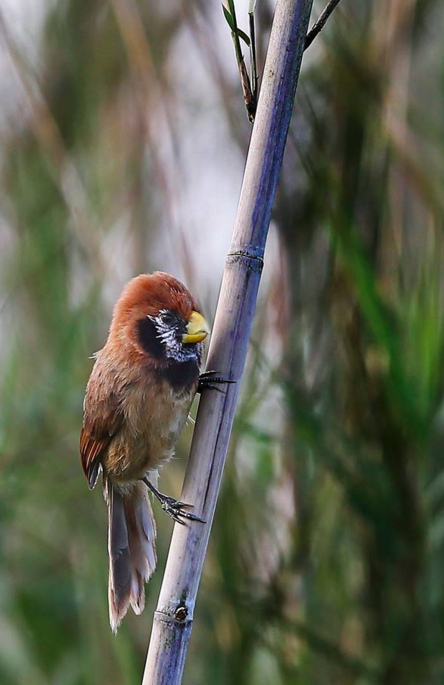
One of India’s rarest birds.
Maguri Beel, Assam

Two years ago I had the pleasure of meeting a family at Xandari in Costa Rica who were on their first vacation in Costa Rica and at Xandari. The father in the family was a photographer by avocation and he shared various photographs with me that he had taken on that visit. He captured views from the property that I consider to be classic favorites of the guests who know Xandari the best. I asked permission to use his photographs, which he granted, but this is the first chance (oops) I have had to share them.
Then one year ago I had the good fortune to meet them again on their second vacation at Xandari–good fortune in the sense that I do not spend alot of time at the Costa Rica property, and so meeting them again was just funny good luck. Ray showed me more photographs. I noticed his scope and scale had changed this time around. Continue reading
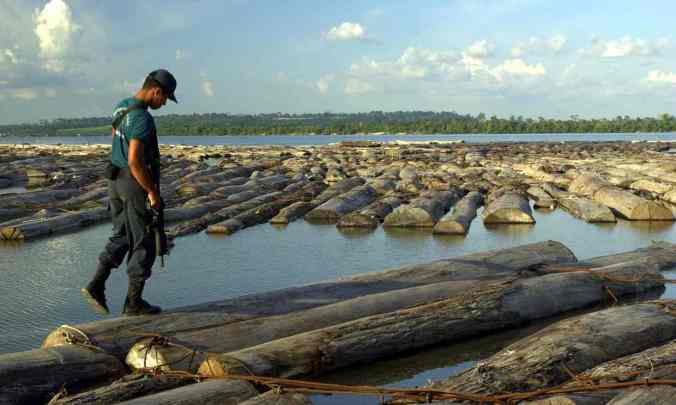
An armed officer inspects a seizure of thousands of illegal mahogany logs in Brazil. Photograph: Dado Galdieri/AP
Thanks to the Guardian for this reminder that we consumers need to do our caveat emptor duties when buying wood products:
Deforestation is rife in the Amazon, Colombia and the Philippines, say environmental groups
British shoppers could be unknowingly buying wooden furniture, flooring and even food items that are byproducts of destructive illegal logging in the Amazon, environmental campaigners are warning.
Friends of the Earth is calling on ministers to make companies reveal the source of their products in order to stop the black market trade. Last week human rights watchdog Global Witness revealed that 185 environmental activists were killed in 2015, many of whom had been trying to stop illegal logging in the Amazon. An estimated 80% of Brazilian hardwood is illegally logged.
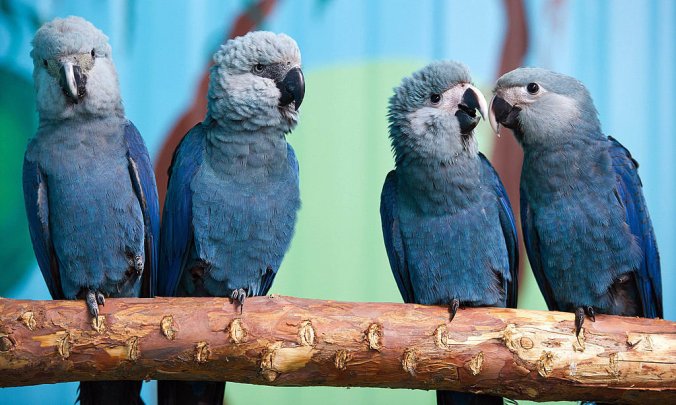
Spix’s macaws (L-R) Felicitas, Frieda, Paula and Paul sit on a branch in their aviary in Germany. The species has not been seen in the wild for 15 years until the recent sighting in Brazil. DPA/AFP/Getty Images
Thanks to National Public Radio (USA):
An Avian Mystery: Rare Parrot Spotted In Wild For First Time In 15 Years
For the last 15 years, Spix’s Macaw has been presumed extinct in the wild. That’s until one of the blue-feathered parrots was spotted and caught on video flying near the town of Curaca, Brazil.
Conservators say the appearance of the mysterious rare bird represents “a new hope” for the area.
The bird was first spotted by a local farmer named Nauto Sergio Oliveira, a government conservation institute said in a statement. Oliviera told his neighbors, and the next day his wife Lourdes Oliveira and daughter Damilys trekked out at dawn in search for the bird.
The rare parrot appeared in a nearby riparian forest and Damilys managed to catch it on video: Continue reading
Cooking directly with solar power is not something we’ve posted about here before, although it is a pretty important subject when you consider the vast amount of wood, electricity, or natural gas used to cook food around the world. About seven years ago we enjoyed one of our favorite articles from the New Yorker about the effort to perfect solar ovens and reduce smoke-related deaths in developing countries, and it’s clear that the quest to build a better solar oven is still going:

Male – Sivarpanam Palace, Tamil Nadu

Magazine cover by Barry Blitt
We’ve been reading for several weeks now in The Guardian that leaving the European Union would not be good for the United Kingdom’s air pollution problems, their landfill waste management, their wildlife conservation, and so on. Now that the vote has been made and the break will happen, Craig Bennet, CEO of the environmental justice and advocacy group Friends of the Earth, has written a piece for the British news source pleading with readers to not let a departure from the E.U. start a downward spiral on environmental issues for the U.K:
Friends of the Earth campaigned vigorously to remain in the EU. Membership of Europe has been good for our ‘green and pleasant land’, and the plain truth is that pollution doesn’t recognise national boundaries. It seems obvious to me that the best way of solving anything other than very local environmental problems is for countries to cooperate and develop solutions under a common framework.

Photo and pendant by Milo Inman
While we were in the early stages of shaping the look of Xandari Pearl, we had a team of design interns, and these highly creative collaborators sent us a constant stream of design feedback on the evolving Marari pearl concept. Little did I know that at that same time Milo, who at that time I thought of as a photographer-to-be, was developing another artistic talent. The photo above shows one example of that talent.
I consider that pendant as good an artifact of Xandari’s aesthetic legacy as any. Continue reading

Barva Volcano, Costa Rica

© NSW Gov, Australia
A few weeks ago several news outlets publicized a new carbon-capture method tested in Iceland, but there’s also a low-tech way of storing carbon in the ground that people can consider, which is restoring degraded lands that once held large amounts of carbon and could become fertile again if we follow certain practices. Stephen Wood reports for Cool Green Science:
Soils have twice as much carbon as the atmosphere. Which means there’s a lot of interest in figuring out if soil can hold even more carbon—to help fight climate change.
Sequestering carbon in soil is like saving money in your bank account—simple in theory, but challenging in practice. If you’re frugal enough you may end up fighting climate change. Spend too much and you could make the situation worse.

The dark spots stained blue are placodes, which develop into scales, feathers and hair. The animals from left to right are a mouse, snake, chicken and crocodile. Credit Nicolas Di-Poï, Michel C. Milinkovitch and Athanasia Tzika
For some time now it’s been known that hair and feathers share a root, but the link between scales and feathers was not so clear. New research published in Science Advances shows that all three growths do, in fact, share a common ancestor. Nicholas St. Fleur reports for the New York Times:
Reptiles have scales. Birds have feathers. Mammals have hair. How did we get them?
For a long time scientists thought the spikes, plumage and fur characteristic of these groups originated independently of each other. But a study published Friday suggests that they all evolved from a common ancestor some 320 million years ago.

Dear Xandari Pearl circa 2026,
I hope the day this photo was taken (yesterday as I type this) will be remembered. Amie wept. Saji shared some wisdom–and we all embraced in the hopeful spirit of looking forward to this lovely property’s prosperity. I shared recollections of my first visit to this property years before moving to India, and wanted each of the team members to know why this property is the most important work so far in my lifetime. It had to do with this location’s personal meaning to George M George, and how that meaning influenced the design process. Xandari Costa Rica was a big part of that process as well, and the Xandari community should be aware of that special link. Continue reading
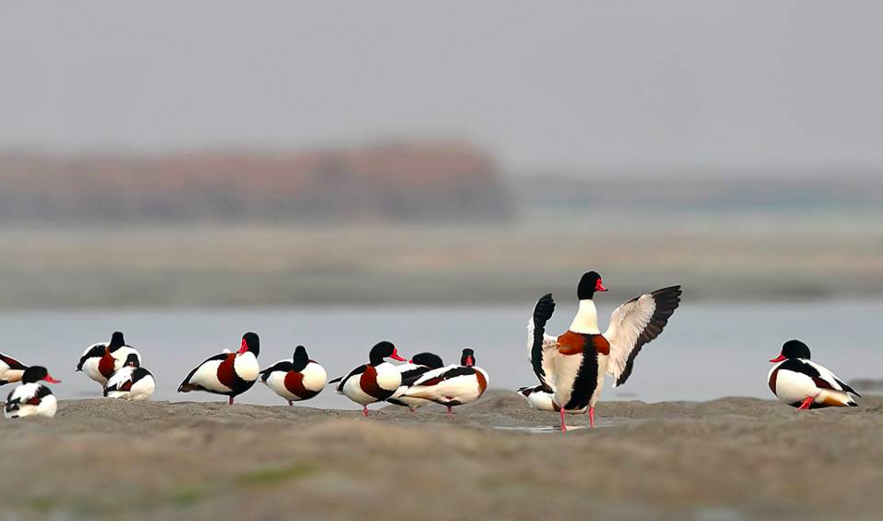
Gazaldoba Barrage, West Bengal

The new brewery at Culinary Institute of America in Hyde Park, N.Y. The school now teaches the art and science of brewing, an elective course. Allison Aubrey/NPR
When the Culinary Institute Of America says so, we pay attention. We keep hearing about fermentation from our friends and colleagues in the know. So we watch for these stories. The Salt feature on National Public Radio must be, by now, one of our most go-to sources, and for good reason (considering what we care about):
Fermentation Fervor: Here’s How Chefs Boost Flavor And Health
ALLISON AUBREY
There’s an explosion of interest in friendly bacteria.
Beneficial microorganisms, as we’ve reported, can help us digest food, make vitamins, and protect us against harmful pathogens.
As this idea gains traction, so too does the popularity of fermented foods such as yogurt, sauerkraut and kimchi.
Though the science is tricky, researchers are learning more about how this ancient technique for preserving food may also help promote good health. Continue reading
From today’s New York Times, whose lead headline is the largest in my lifetime that I remember, yet (with apologies to all those affected by the cause of those headlines) I find this editorial more urgent and hope Mr. Egan will not mind my sharing it here:

Sometimes, because brevity is truly the soul of wit, a love letter is best delivered simply as a postcard
 Organikos