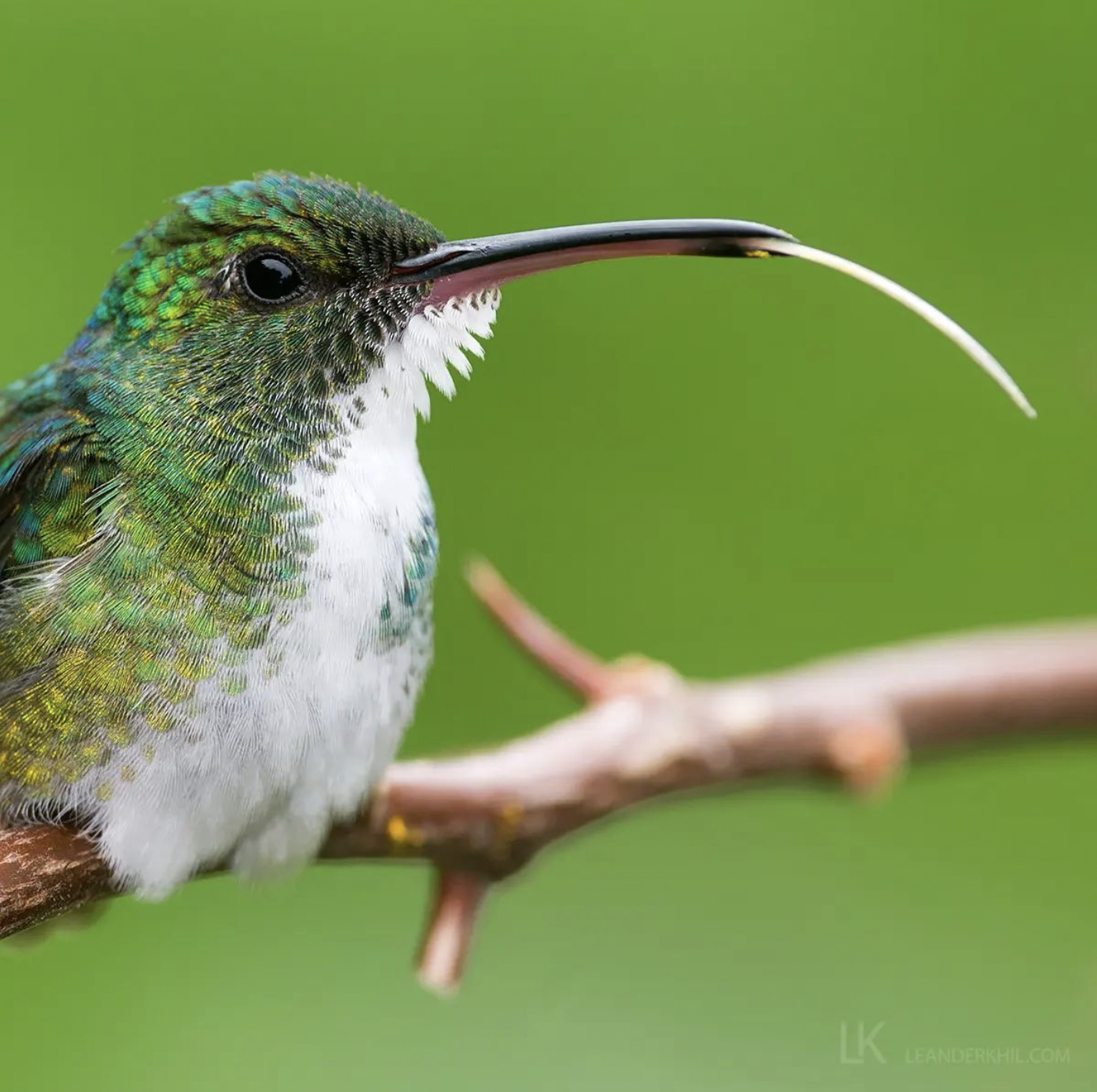
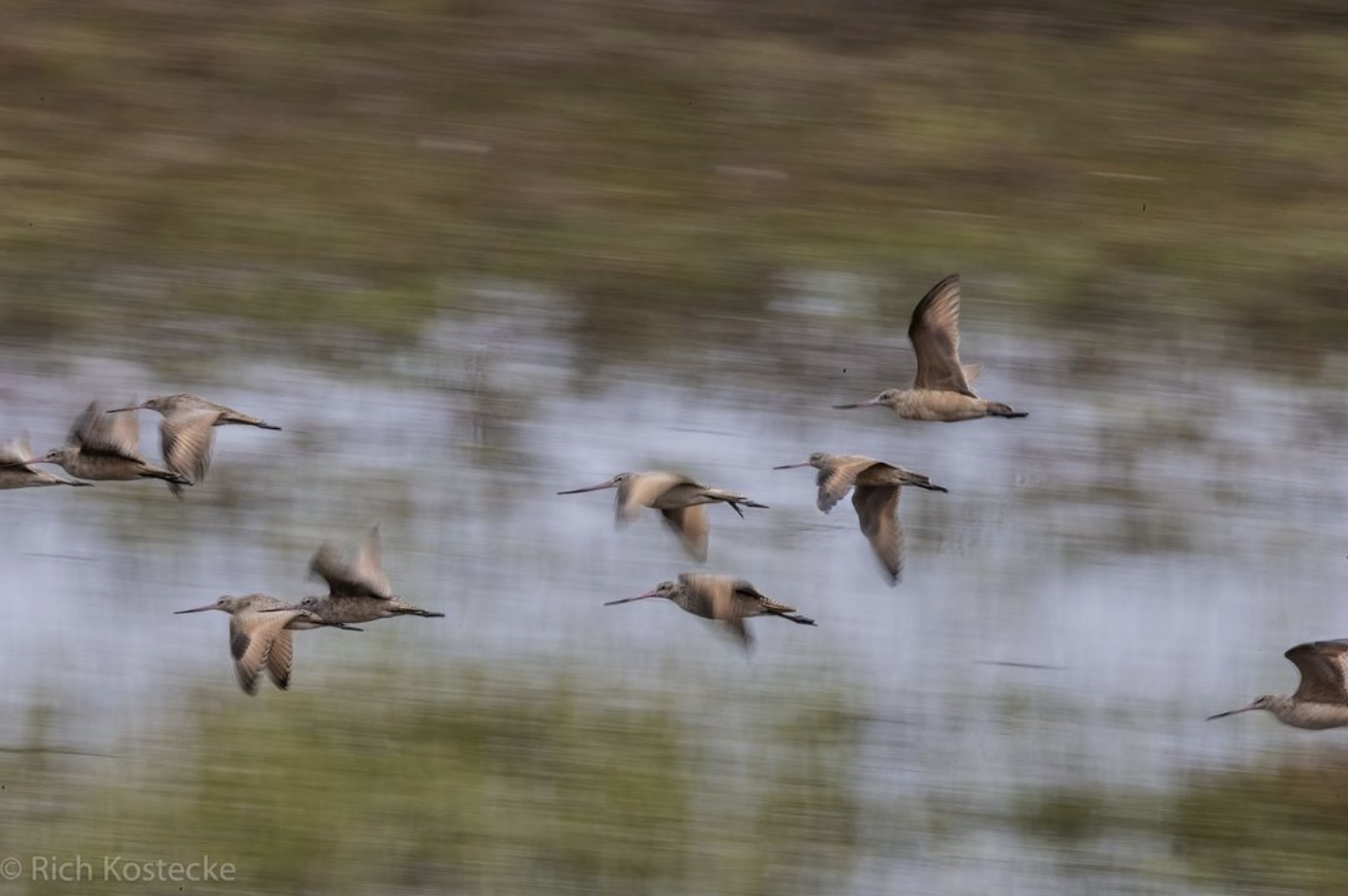
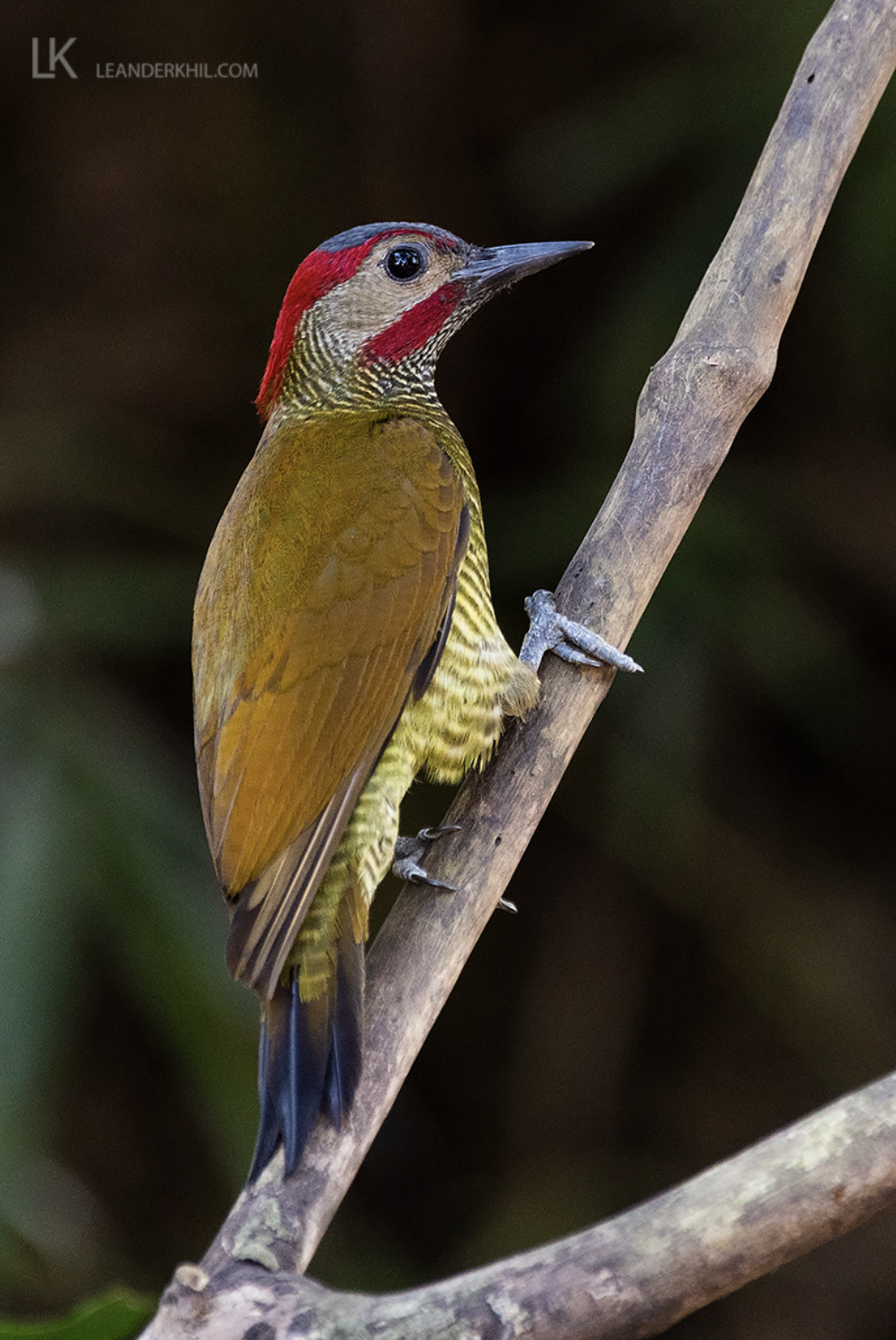
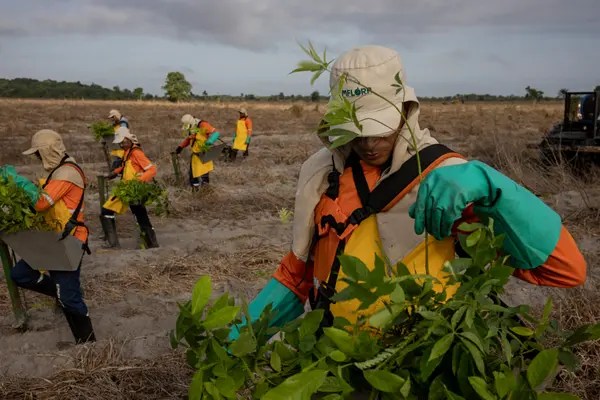
We have changed our coffee labels, but continue to use kraft bags, and continue to find ways to re-use those with the old style labels. Above, and below, case in point. Continue reading
Bird of the Day: Coal Tit
Cambodian Mangrove Wonders
Thanks to Robin McKie, now Science Editor at the Guardian, for this news from Cambodia:
‘We found 700 different species’: astonishing array of wildlife discovered in Cambodia mangroves
Hairy-nosed otters and cats that catch fish are among the startling diversity of creatures making their home in threatened habitats
One of the most comprehensive biodiversity surveys ever carried out in a mangrove forest has revealed that an astonishing array of wildlife makes its home in these key, threatened habitats. Continue reading
Bird of the Day: Barn Owl
Exquisite Textiles

“Development in Rose I” (1952).Art work by Anni Albers / Courtesy © The Josef and Anni Albers Foundation / ARS, 2024
Weavers got more attention during our seven years in India, but we are no less interested in the tradition today. Thanks to Jackson Arn, writing in the New Yorker, for this review:
Anni Albers Transformed Weaving, Then Left It Behind
Her textiles are quiet revelations, but even her later prints show how restraint can generate ravishing beauty.
Imagine you’d been born in 1899. Imagine living through the invention of the Model T, the jet aircraft, the liquid-fuelled rocket, and the computer chip. Now imagine looking back on all this in 1965 and writing, as though with a shrug, “How slow will we appear some day?”
In works like “Pasture” (1958), texture and almost-patterns create an overwhelming experience.Art work by Anni Albers / Courtesy © The Josef and Anni Albers Foundation / ARS, 2024 / © Metropolitan Museum of Art; Photograph by Peter Zeray
It takes an uncommon turn of mind to survive decades this dizzying and then sum them up with perfect nonchalance—but a lot of the greatness of Anni Albers lay in her ability to stay undizzied and keep doing her thing, year after year. Not that she was afraid of innovation; her thing just happened to be weaving, an art form that, by her own calculation, had not changed in any fundamental way since the Stone Age.
Critics reach for a few key words with Albers: “crisp,” “precise,” “mathematical.” Continue reading
Bird of the Day: Brown-hooded Parrot
Costa Rica
Conservation, Tourism & Introspection

A Maasai boy herds goats and sheep in the shadow of Ol Doinyo Lengai—known to the Maasai as the Mountain of God—in northern Tanzania. Government plans call for the removal of the Maasai from this region, the latest in a long series of evictions.

Bumper-to-bumper in Serengeti National Park, the first enclave in northern Tanzania to be set aside for conservation and tourism (Nichole Sobecki for The Atlantic)
If your professional focus is at the intersection of tourism and conservation, this article in The Atlantic, by Stephanie McCrummen with photos by Nichole Sobecki, forces introspection. At least it did for me:
How Gulf princes, the safari industry, and conservation groups are displacing the Maasai from the last of their Serengeti homeland
Maasai gather at a livestock market, one stop on Songoyo’s 130-mile circuit from Tanzania to Kenya and back. (Nichole Sobecki for The Atlantic)
It was high safari season in Tanzania, the long rains over, the grasses yellowing and dry. Land Cruisers were speeding toward the Serengeti Plain. Billionaires were flying into private hunting concessions. And at a crowded and dusty livestock market far away from all that, a man named Songoyo had decided not to hang himself, not today, and was instead pinching the skin of a sheep. Continue reading
Bird of the Day: Prothonotary Warbler
Industry Pivots Via Carbon Sequestration

This gas processing plant at Casalborsetti is the focus of the first phase of an ambitious plan to capture carbon dioxide and bury it under the sea. Maurizio Fiorino for The New York Times
Where to put carbon is a major question of the day. Thanks to writers like Stanley Reed and publications like the New York Times the ideas keep coming:
Plan to Stash Pollution Beneath the Sea Could Save Money and Jobs
The Italian energy giant Eni sees future profits from collecting carbon dioxide and pumping it into natural gas fields that have been exhausted.
Renowned for ancient churches and the tomb of Dante, the 14th-century poet, the city of Ravenna and its environs along Italy’s Adriatic coast are also home to old-line industries like steel and fertilizer. Continue reading
Bird of the Day: Common Tern
Norderoog Island, Germany
Make Space For Weeds
Weeds are part of nature, whether we like them or not. Thanks to Senay Boztas and the Guardian for this new take on weeds from Holland:
‘We need to accept the weeds’: the Dutch ‘tile whipping’ contest seeking to restore greenery
National competition has goal of helping Netherlands reach environmental targets by removing garden paving
Tineke Menalda sits in the sun on her front step, nursing a cup of coffee and idly plucking out the odd weed. Three years ago, the front of her terrace house in Amersfoort was completely paved. But now, sitting in a lush garden of trees and green, she is an official ambassador for the strangest new sport in the Netherlands: tegelwippen, “tile whipping”, or “whipping away” the paving stones. Continue reading
Bird of the Day: Secretary Bird
South American Fishing Methods, And Choices
As we increase our awareness of the many choices we have when consuming fish (among other things), here is more food for thought:
Puerto Almanza, on the Beagle Channel in Argentinian Tierra del Fuego, is one of the world’s most southerly settlements and best known for the local seafood, especially Patagonian king crabs.
Photograph: Visit ArgentinaWhile the ecosystem is thriving off the coast of Argentina, the proliferation of salmon farms in Chile’s waters is threatening marine life, say critics
A rocky path, strewn with thick tree roots, leads from a dirt road down to a small green hut overlooking the choppy waters of the Beagle Channel, a strait between Chile and Argentina. The shack is home to Diane Mendez and her family but doubles as Alama Yagan, one of nine restaurants in the fishing village of Puerto Almanza. Continue reading
Bird of the Day: Eastern Wood-Pewee
Illegal Miners Face The Fire

The G.E.F. burns mining camps as part of a long-running counteroffensive against environmental depredation. “Wherever they go, the miners destroy everything,” Felipe Finger, the unit’s leader, says. Photographs by Tommaso Protti for The New Yorker
Thanks to Jon Lee Anderson, as always, for his reporting from the danger zone that Brazil’s Amazon forest too often is:
The Brazilian Special-Forces Unit Fighting to Save the Amazon
As miners ravage Yanomami lands, combat-trained environmentalists work to root them out.
In a clearing in the Brazilian Amazon, I stood with a group of armed men, discussing a viral TikTok video. The video, shot from a helicopter full of illegal miners, showed a vast stretch of rain forest, with dense foliage extending in all directions. The only sign of human habitation was below: a dirt circle surrounded by fanlike lean-tos made of wooden poles and palm fronds. It was a maloca, a traditional compound of the Yanomami, an Indigenous group that inhabits a remote territory in the rain forest of northern Brazil. Continue reading
Bird of the Day: Eurasian Jay
Drone Cowboys

Daniel Anderson holds a drone on his family’s ranch in Montana’s Paradise Valley. Louise Johns/High Country News
High Country News is where a story like this gets assigned, and since they are a hyper-niche publication we thank The Atlantic for broadcasting it. If drones can unite these two constituencies, they are worth a moment of your time:
Drones Could Unite Ranchers and Conservationists
Flying robots could offer a nonlethal way to keep wolves away from cattle.
In the summer of 2022, several researchers with USDA Wildlife Services held their breath as a drone pilot flew a large drone, equipped with a camera, toward a wolf standing in a pasture in southwestern Oregon. Continue reading
Bird of the Day: MacGillivray’s Warbler
Does Recycling Matter In 2024?
Thanks to Yale Climate Connections for this primer:
Does recycling actually do anything? What about carbon offsets? Did you know that the average person’s carbon footprint is about 6.5 tons but the average American’s footprint is double that? Meteorologist Alexandra Steele talks to the experts to get answers about what actually helps the planet, and what doesn’t. You can calculate you carbon footprint by using the links below:
https://coolclimate.berkeley.edu/calc…
https://www.nature.org/en-us/get-invo…
Credits Script, research, interviews, camera: Alexandra Steele Script Editors: Sara Peach, Pearl Marvell Edit Producers: Iain Moss, Sam Lucas Production support: Anthony Leiserowitz, Lisa Fernandez Production Editor: Iain Moss Graphics: Screen Stories Production Manager: Ellie Aitken Social Media Manager: Ellie Phillips Director of Production: Hal Arnold Production Company: Little Dot Studios
Bird of the Day: California Quail
Pinnacles National Park, California