Dirt Candy. Say It. Now Resist. It’s Futile.

Whenever we see a story about innovative, excellent food that involves no animals, we check on its suitability for this blog. We are not committed, by any means, to exclusive consumption of vegetarian cuisine but we believe going easy on the meat is a good way to do the green thing. This headline makes me think of the several of us contributing here who spent time in Ithaca, NY USA; and especially makes me think of a certain restaurant, Moosewood by name, that may have been the reference in Little Sprout Grows Up by Jeff Gordiner:

Ben Russell for The New York Times

Dishes at Dirt Candy tend to be composed and clever, but unapologetically crave-inducing. Here, the cabbage hot pot. Ben Russell for The New York Times 

Amanda Cohen Replants Her Vegetable Restaurant Dirt Candy.

Back when the chef Amanda Cohen was running her restaurant, Dirt Candy, out of an East Village nook that felt only slightly more commodious than a gopher hole, she received a call from someone representing a famous man who wanted to eat her food. Although they may hesitate to admit it, most chefs in New York would mount a synchronized swan dive into the iced-over Hudson River if it would help entice celebrities through their front doors. But Dirt Candy, in spite of being one of the most prominent and influential vegetarian establishments in the United States, was so small it almost qualified as a bonsai restaurant. Ms. Cohen had only 18 seats. She didn’t feel right giving a pair of nonfamous customers the cold shoulder. Continue reading
Mega-Meme Coffee Can Still Surprise

We care about coffee. Not only for 10th latitude reasons (geckos and coffee seem to go together), or 1,200 meter reasons (Xandari is perfectly located). Derek gets at it here, but there is more to say and the recent expedition to Ethiopia provides fodder for the next best post on topic. But that will come in due time.  Mainly, we just love coffee and we happen to work in places where it grows well.

So we watch for useful stories about coffee.Below is an excerpt from midway through a great piece from Atlantic‘s website, the most surprisingly interesting written piece on coffee in a long time, and as you have likely noticed coffee stories are a mega-meme these days:

Like many users of the Internet, I had actually already seen “Kill the K-Cup.” The mysteriously anonymous YouTube video was published this January, and spread widely. It spawned a hashtag #KillTheKCup (at the suggestion of the final frames of the video), which is still alive on multiple social-media platforms. Continue reading

Hackers, Lentils & Love In A Flower Bed

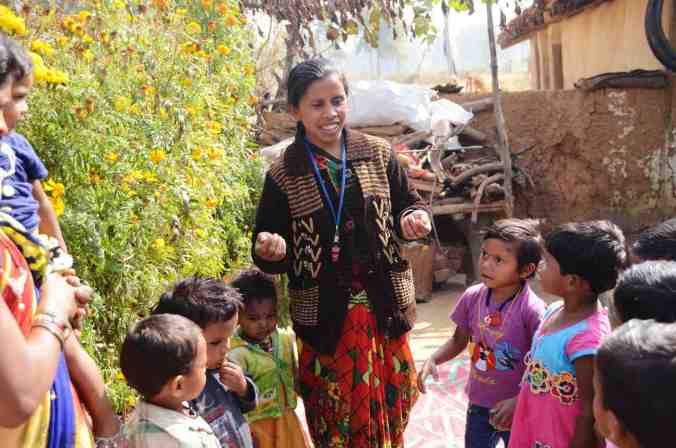
Nursery worker Shivkumari Pate leads children in a learning song. Pate works with the nonprofit Jan Swasthya Sahyog, which developed the first network of community nurseries. Ankita Rao for NPR

Nursery worker Shivkumari Pate leads children in a learning song. Pate works with the nonprofit Jan Swasthya Sahyog, which developed the first network of community nurseries. Ankita Rao for NPR

It would be remarkably easy to fill these pages with stories from India, from various places in Africa and Latin America where we also have projects, that give a strong sense that no matter how quickly solutions get hacked, there are more problems than can possibly be resolved; we spare you those most of the time. Instead, we point to stories like this one (thanks National Public Radio, USA):

…For decades, aid organizations tried to improve the health of moms and babies in Chhattisgarh. Little made a dent. But then a garden of flowers rose up in the state. Continue reading

Ornithology + Engineering = Bird Geek Bliss

Screen Shot 2015-03-03 at 8.09.05 AMThere are natural wonders that help answer important questions, such as those about what climate change has wrought in the distant past; and there are wonders of man’s creation that raise important questions, such as whether man can do anything to reduce his impact on climate change if he, collectively, puts his mind and energy into it.

And then there are those who study natural wonders for reasons that appear more prosaic than climate change and yet punch above their weight class in terms of getting the rest of us motivated to participate in solutions; ornithology and its amateur cousin bird watching are two of Raxa Collective’s favorite choices of what to pay attention to, just because:

ScienceTake | Hawk Cam Captures the Hunt

BY Poh Si Teng and James Gorman

Thanks to a helmet camera, researchers discovered that a goshawk mixes its methods of chasing its prey.

If You Happen To Be In New York

Always downtown in spirit, the Whitney relocates from Madison Avenue to the base of the High Line. CREDIT ILLUSTRATION BY MICHAEL KIRKHAM

Always downtown in spirit, the Whitney relocates from Madison Avenue to the base of the High Line.
CREDIT ILLUSTRATION BY MICHAEL KIRKHAM

If you have not read Justin’s post yet, stop here and go there.  It is much more important. But this is important to our archiving the ever-evolving and improving institutions related to the arts:

On May 1, the Whitney Museum opens in its new location, on Gansevoort Street. The eight-story building, designed by the Italian architect Renzo Piano, has sweeping views of the Hudson River, but they won’t pull focus from the inaugural show, an in-depth look at the permanent collection, which is anchored deep in the American modern and contemporary canon, from Marsden Hartley to Rachel Harrison. Continue reading

You No Sen, We Still Come

– A succinct (yet unabridged and uncensored) commentary on the Cockpit Expedition for Golden Swallows, by Justin Proctor

Why the hell didn’t I bring a change of pants on this trip?!”  That was a reoccurring thought I had almost six or seven times each day while hiking through or around Jamaica’s Cockpit Country.  After 6 months of off-and-on planning, I managed to dream up most of the Plan A, B, C, and D scenarios that would befall us and what gear we would need to combat/survive each of those adventures – yet, that second pair of pants just didn’t seem to hit my radar or the inside of my suitcase back in Ithaca.  [We leave for the second expedition tomorrow and you can bet that I’m currently wearing TWO pairs of pants just to make sure an oversight like that doesn’t repeat itself]

So it turns out that Gary Graves was right when he said it gets hot in those limestone hills.  It also turns out that Susan Koenig was just as right when she told me that you can’t just draw lines over satellite imagery of the Cockpit in a fun loop-de-loop pattern that would be ideal for hiking.  And well, the rest of the people who told us to bring gloves to counteract stinging plants and razor-sharp karst; that even though it rained all the time that there was no potable water to be easily found; and that you won’t understand a damn word that anybody is saying to you – yep, they were all right too.

But life finds a way, and I think that looking back on what I see as a fairly quick, jam-packed assault on the Cockpit, we made some damn good orange juice out of the lemons we were given.  Or maybe that was yam juice with a hint of rusty Nutella flaking off from the inner joints of my pocket knife.  Either way, we gave it our best and left with a good taste in our mouths.

What an absolutely amazing opportunity this has been to connect my graduate thesis work on Hispaniolan Golden Swallows with the Jamaican subspecies that once pocketed the hills and glades of Cockpit Country.  What a twist of good fortune that Gary Graves from the Smithsonian and I would share a common interest and be able to find a way to continue unraveling the mystery that surrounds this bird.  And what total luck that I have had such great friends to accompany me in a search for something that may not even be out there.

Seth and JZ

THE TROOPS:  (Left)  Seth Inman.  Historian, philosopher, rememberer of all things.  Some say he’s a God amongst men.  Others say he’s just a damn good guy. (Right)  John Zeiger.  Philanthropist, nurturer, rememberer of all things that somehow form a solid counter-argument to facts invented by Justin.  Some say his socks could make Gods weep.  Others say that he just has dirty feet.

Continue reading

Sugar Beets, Wherefore Art Thou?

shutterstock_79736593

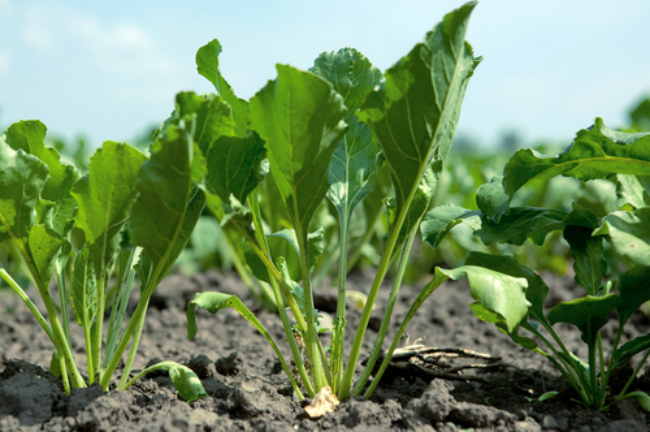
A Dutch scientist has created a process for turning sugar beet leaves into protein. Photo credit: Shutterstock

Thanks to Ecowatch, we can consider the long lost love of our better, healthier selves, found:

Sugar Beet Leaves Create Vegan Protein Alternative

Katie Levans

A scientist in the Netherlands is turning plant waste into a potential substitute for environmentally unsustainable proteins like meat, dairy and soy. The Dutch government commissioned Peter Geerdink, a food scientist at TNO, to identify a use for the 3 million tons of beet sugar leaves produced each year and left to rot after the beets themselves are harvested. The result of his work is a vegan gluten-free plant-based protein extracted from the pressed green juice of sugar beet leaves that, according to Geedink, is as versatile as a chicken egg.

Continue reading

Craters Of Man’s Devotion

StG Ethiopia

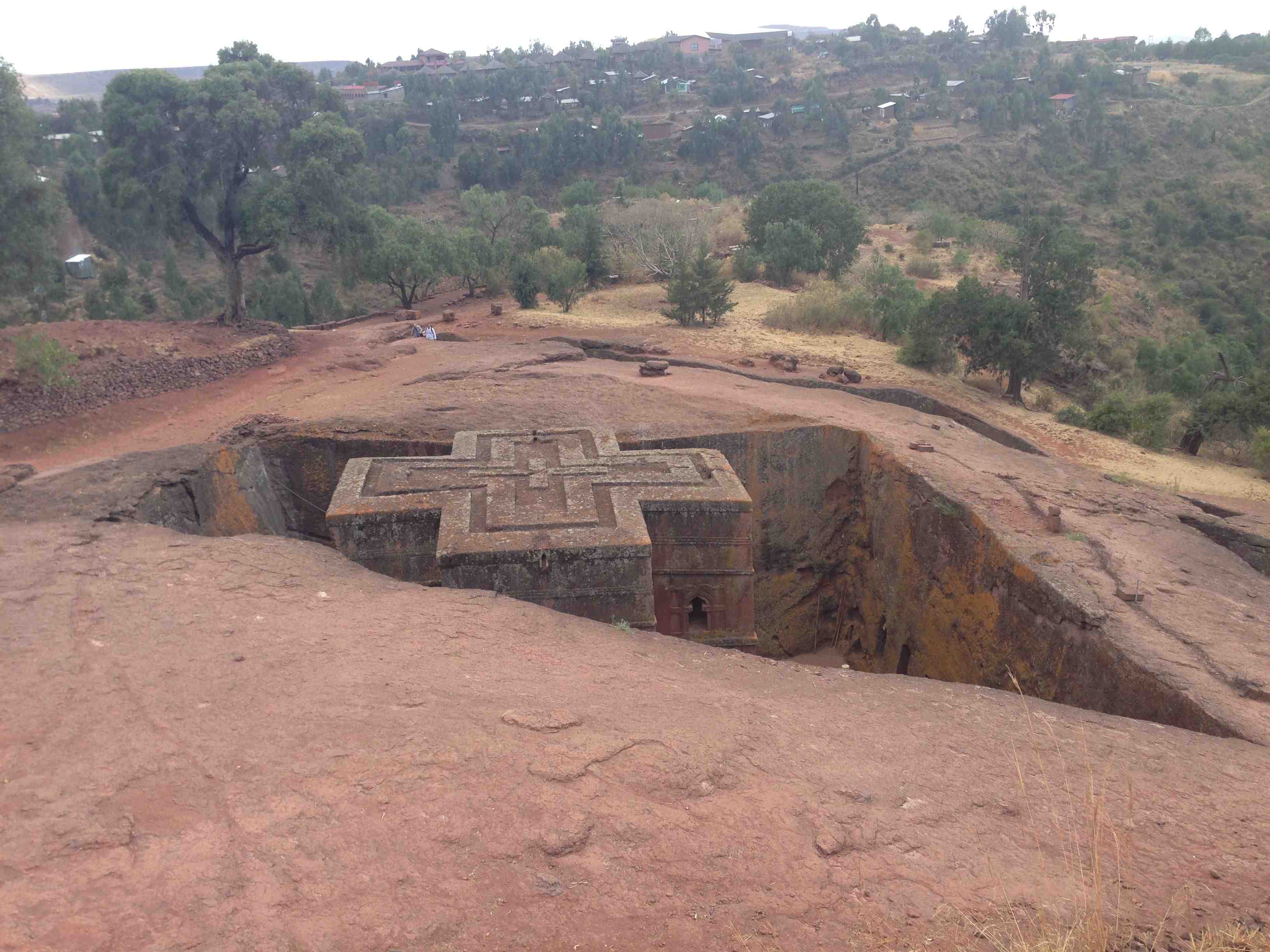
Some snapshots of my Ethiopian expedition, just ended, are in order; not of the national parks which were the main purpose of the expedition–more on which later–but from the visit to the north which is where most visitors to Ethiopia currently make a sort of pilgrimage for reasons you can understand looking at these snapshots.

It would be difficult for any photo to do justice to this wonder, a church created by men 1,000 years ago by carving down into the stone mountain. But words are even less helpful for reasons you can probably best understand by seeing another view of the same, following what the UNESCO World Heritage Centre has to say about this and the other churches of Lalibela, Ethiopia:

…The churches were not constructed in a traditional way but rather were hewn from the living rock of monolithic blocks. These blocks were further chiselled out, forming doors, windows, columns, various floors, roofs etc. This gigantic work was further completed with an extensive system of drainage ditches, trenches and ceremonial passages, some with openings to hermit caves and catacombs…

StG 2

As impressive as those craters in Siberia may be, they pale compared to what man can do when he is sufficiently motivated, which may be the one source of hope for addressing the challenges of climate change (one of the seemingly impossible challenges of our own time). This modern challenge, now that I think of it, seems particularly well-suited to the beliefs many hold, across various religious traditions, about the saint who is the namesake of this particular church.

Continue reading

Understanding Climate Change Through Craters

The jury is no longer out on how climate change has been influenced by man, since the dawn of the Industrial Revolution and especially in the last 70 years. But the jury has not even convened yet on many phenomena in the natural world, including some geological oddities. Thanks to National Geographic‘s news service for this story from the far reaches of Siberia:

New Theory Behind Dozens of Craters Found in Siberia

Scientists narrow down the cause and think it is related to warming.

When a massive and mysterious hole was discovered in Siberia last July (see pictures), social media users pointed to everything from a meteorite to a stray missile to aliens to the Bermuda Triangle as possible causes. But the most plausible explanation seemed to be the explosive release of melting methane hydrate—an ice-like material frozen in the Arctic ground—thanks to global warming.

yamal-craters-siberia-new-explanation_89023_990x742

A Russian scientist prepares to descend into a mystery crater in Siberia in November. More holes have since been found. PHOTOGRAPH BY VLADIMIR PUSHKAREV, THE SIBERIAN TIMES

Continue reading

Food To Come Home To, Ghana Edition

A joint expedition made up of two Zaina Lodge and two of our team members just concluded two weeks in Ethiopia sampling the best national parks, scouting for new locations in which to collaborate, and tasting foodways evolved over millennia. The Zaina duo at this moment are headed back to Ghana, and we can imagine they will appreciate this:

01mag-01eat.t_CA0-thumbStandardA Spicy Spinach Stew From Ghana

Ghanaians living within bunting distance of Yankee Stadium in the Bronx can have a taste of home with this dish.

Libraries of Life

Elsie, a former teaching assistant for Cornell’s ornithology course, holds up an Impeyan Pheasant skin specimen. Photo by Rebecca Snow.

At Raxa Collective we’ve always been big admirers of museums, whether focussed on art, culture, or nature. In today’s op-ed section of the New York Times, two biologists write about the importance of natural history museums. The authors, Larry M. Page and Nathan K. Lujan, argue that funding shouldn’t be cut from these types of institutions and that the active collection of specimens from the wild should not be curtailed:

These specimen collections serve as the bedrock of our system of taxonomy — the rules by which we classify life — and are integral to our understanding of the threats, origins and interrelationships of biodiversity. And yet, thanks to budget cutbacks, misplaced ethical critiques, public misconceptions and government regulations that restrict scientists while failing to restrict environmental exploitation, the continued maintenance and growth of these libraries is in danger.

Though most visitors never know they are there, natural history collections are as critical to modern biologists as libraries are to journalists and historians. Indeed, like good literature, each museum specimen allows reinterpretation by every person who examines it.

A couple of our contributors–myself included–are currently working for the Smithsonian Institution, and our supervisor is the curator of birds Continue reading

5 things you might not know about the science of coffee

wake-up-and-smell-the-coffeeIf you are like me, you are obsessed with your coffee. I love the taste, the smell, the sound the grinder makes, and of course, how it makes me feel. But have you ever heard of a “coffee nap”?

Scientists work tirelessly to uncover the mysteries of the natural world, from the reasons people binge to the best way to wash hands. Recently it was revealed that they’ve figured out why coffee served in white mugs tastes so bitter. (The contrast between the color of coffee and a white mug makes the joe look and taste bolder.) Coffee served in clear glass mugs tastes sweeter. Continue reading

Potoo Dreams

moon

As the sun drifts below the horizon and the Jamaican bush is lit up with stars, the Northern Potoos begin to duet. QUAAAA-QUA-QUA-QUA-QUA QUA screams one into the night. Its neighbor responds in kind. As darkness settles over our tents, we fall asleep listening to their song.

2

Potoos are very odd birds. (This group of near passerine birds are related to frogmouths and nightjars.) During the day, they are practically impossible to spot, due to their legendary camouflage. They generally freeze at the end of a branch, and their streaky brownish and grayish plumage resembles an extension of their perch. Although we checked many snags while in Jamaica, we could never find a potoo in the daytime.

At night it was another story. Potoos are nocturnal, or active at night, and they like to hunt in open fields at the edge of the forest. They have huge eyes, which glow bright orange when light is shined in their direction. With headlamps, we were able to spot potoos perched on posts hundreds of feet away. Continue reading

Menacing Weed or Wonder Plant?

©Peter Chadwick/DK Images

©Peter Chadwick/DK Images

We’ve written about the invasive species water hyacinth on these pages before, discussing its environmental impact as well as its material value for eco-development projects. But we haven’t seen stories such as this one from Conservation Magazine where there’s a positive side to what many people call the “weed from hell.”

The scene at Florida’s Crystal River National Wildlife Refuge in Kings Bay last October would have been familiar to anyone who has ever engaged in the battle to control the spread of invasive plants. Eager volunteers scurried about the shoreline of this manatee wintering ground, carting large plastic bins stuffed with water hyacinth, a notorious aquatic weed that’s caused headaches on five continents. Closer inspection, however, would have revealed the activity to be anything but business as usual: instead of hauling water hyacinth out of the bay, the conservationists were putting it back in—almost 4,300 gallons’ worth by day’s end.

Those volunteers were taking part in a bold pilot project that is the latest chapter in a half-century-long ecological story that reads like a fable. It starts with a well-intentioned campaign to rid Kings Bay of the water hyacinth, an aggressive nonnative species. Next come decades of additional control measures and a tragic downward spiral that transformed these crystal-clear waters into an unpleasant soup of slimy green algae. Then the story takes an unexpected turn, back to its original antagonist. Only this time, Bob Knight, the wetlands restoration ecologist leading this pioneering project, has recast water hyacinth as the unlikely hero. He believes this South American native, if controlled, could help solve the algae problem and return the bay’s ecosystem to a more desirable state. The irony in this approach is not lost on anyone involved. Continue reading

A Sneak Peek at Jamaican Bird Videos

We have several full hours of raw bird behavior footage from our first trip, so it’ll be a while before we have much processed to the point of sharing here, but I thought it’d be nice to have a quick preview of some things to come once we’re back from our second trip to the Blue Mountains.

In the video above, you can see four relatively common bird species in Jamaica: the American Kestrel, Northern Mockingbird, Merlin, and Orangequit. The first three species can be found in the United States but have resident populations in Jamaica, while the last is endemic to the island. The behavior exhibited in the video is typical of all the species. Continue reading