Robo-bees

PHOTO COURTESY OF KEVIN MA AND PAKPONG CHIRARATTANANON

PHOTO COURTESY OF KEVIN MA AND PAKPONG CHIRARATTANANON

At RAXA Collective we’re often writing about the birds and the bees within the context of ornothological and entomological biodiversity, as well as the agricultural health of the planet. The impact of CCD, or colony collapse disorder, is significant enough that the Obama administration has challenged scientists with the same force of urgency as Kennedy’s 1962 appeal for a moon landing before the decade was over.

Food attorney and National Geographic contributor Mary Beth Albright writes:

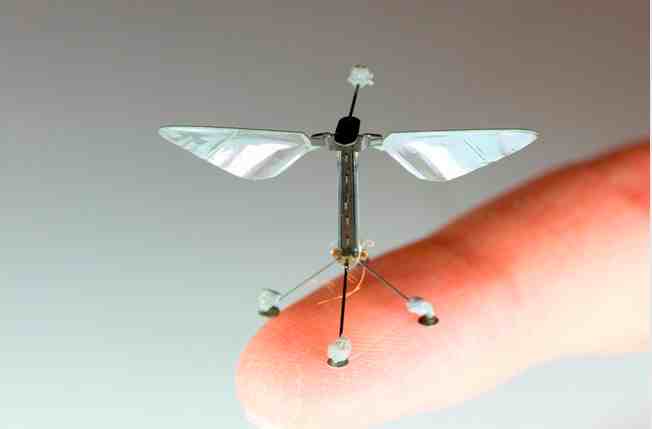
To stay optimistic on this planet I have to believe that most agree that saving honeybees is vastly preferable to replacing them but an interesting alternative is coming out of Harvard. On its website a research team led by engineering professor and National Geographic Emerging Explorer Robert Wood states “we do not see robotic pollination as a wise or viable long-term solution to Colony Collapse Disorder. If robots were used for pollination—and we are at least 20 years away from that possibility—it would only be as a stop-gap measure….”

Continue reading →

Why We Walk

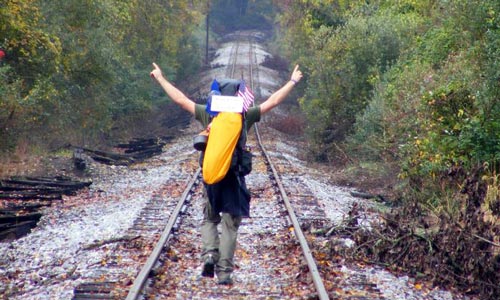
Photo Courtesy of digitaldeconstruction.com

Photo Courtesy of digitaldeconstruction.com

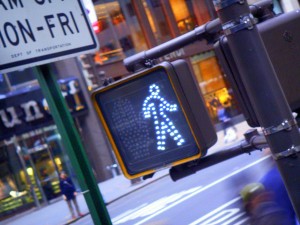
I have been endlessly fascinated by walking. I asked myself Why We Walk while I walked 400 km on the Camino de Santiago. A recent article by Adam Gopnik in the New Yorker has brought me to this question again in a new context. The article talks about what it means to be a pedestrian in the modern world and how the role of walking has changed as it’s become less necessary. The sad thing about walking for pleasure instead of necessity means that it occurs less. Many of us spend our lives in the sitting position: sitting in cars to then go sit at work and then sitting at home after a long day of sitting. I’m generalizing here as I call myself out on my sedentary life. Our bodies are made to walk, so I must ask myself, Why Don’t We Walk?

Roads are not enjoyable to walk in an increasingly auto dependent world. When living in a residential area there isn’t much activity to make walking around something that invites ‘randomness’. Adam Gopnik writes in the New Yorker about Why We Walk. He says,”We start walking outdoors to randomize our experience of the city, and then life comes in to randomize us.” The sidewalks are public space. In the suburbs we have a lot of private space and little public space. I have to wonder how it could affect our psyche to not brush up against the world. I wonder what we take away when we lose the opportunity to have chance interactions in indeterminate public spaces.  I wonder how creative we could be as a culture if the majority of our interactions with strangers didn’t occur over money exchanges. Adam Gopnik talks about the vague excitement and pure chance of walking in New York City.

You could walk anywhere. Saturday all day, Sunday all day, I’d tramp through the lower-Manhattan neighborhoods. The differences, architectural and social, among Tribeca and SoHo and the East Village, to name only contiguous areas, were distinct and vivid and nameable then: cast-iron buildings shading off into old egg- and paper-carton factories sweetly interrupted by small triangular parks, and edging over, as you walked east, into poor-law tenements that were just being reclaimed by painters. I would set off on a Saturday morning and walk all day, and achieve Kazin’s feeling of vague excitement, of unearned release, in a way that I have never felt before or since.

I like this description because it shows the way he was able to interact with the environment around him as a walker. Suburbs that are designed for cars make walking an outdated form of transportation. It’s inefficient and time consuming if you live in a city that’s designed for cars rather than pedestrians. In the suburbs, there aren’t many people dancing in the ‘sidewalk ballet’ as Jane Jacobs puts it. So, I just wonder what a healthier culture there would be if there were more public space for people to live outward facing lives that brushed up against each other.

The article brings up a quote from Frédéric Gros’s book A Philosophy of Walking, “The purpose of walking, is not to find friends but to share solitude, for solitude too can be shared, like bread and daylight.” This quote to me highlights the sort of communion we can have with each other while walking. While I was walking the Camino, I felt that communion with fellow walkers as well as with the landscape. I was sharing solitude with the landscape. I think taking away that walking aspect of communion in our lives further isolates us from nature. Continue reading →
The Marari Fruit Diaries

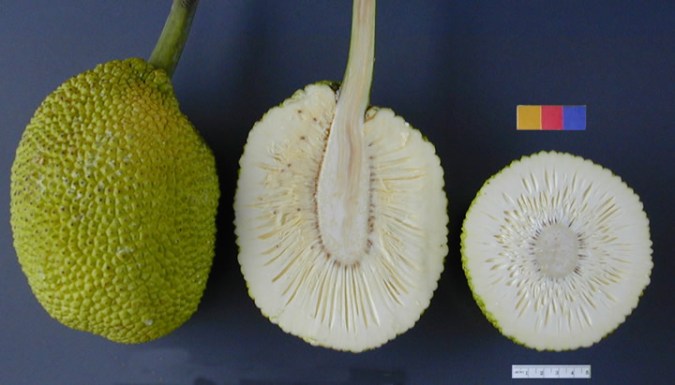
This is a picture of breadfruit, which actually tastes like freshly baked bread

This is a picture of breadfruit, which actually tastes like freshly baked bread

I’ve been writing about the exciting biodiverse varieties of plants at the new property, Marari Pearl. I want to point out though that even before we started, the land has hundreds of coconut trees on it, as well as dozens of mango and cashew trees, which is exciting in its own right.

One thing about the coconut trees that makes them a win-win, is that it helps provide local jobs. There is a certain group of people whose legal right it is in Kerala to do the job of tending to coconut trees. Before Marari Pearl was there, no one was hiring them to take care of the trees. Now that we are utilizing them to provide coconuts for our properties, they get jobs and we get fresh coconuts.

We are adding a cornucopia of other fruits, both local and exotic. I mentioned that we have pomelos, rambutans, tamarinds, several types of jackfruit,  lovi-lovis, mangos, and oranges as well as the infamous miracle fruit. There is also the hong kong guava, burmese grape bud, pomegranate, sapota, malayalam champa fruit, abiu fruit, jaboticaba fruit, langsat tree, and several varieties of avocados or ‘butter fruit’ as its called here. There are breadfruit trees as well as peanut butter trees. There is karonda fruit, nelli puli fruit, mangosteen, and mooty fruit. There are five pages of names, some I know, some I don’t, and some I can’t understand because it’s a handwritten list. Continue reading →
Andrew Forsthoefel, Come To Kerala!

AndrewSlider

Andrew Forsthoefel. Photo by Therese Jornlin, Andrew’s mom. Chadds Ford, PA.

The interns we have had the honor of hosting since setting up shop in Kerala a few years ago have all shared in the responsibility to communicate their experiences in writing on this blog. We are committed to the written word, but not Ludditically opposed to other forms of communication. We have barely put a toe in the water with video, and not even thought about radio as an option, even though we consider Jay Allison an epic hero of good, important communication.

Because of him, we know alot of worthy things that otherwise would have escaped our attention; most recently we learned of and from Andrew Forsthoefel, whose radio story is worth an hour of your time. After which, if you are like us, you will want to know where he is now, and what he is doing. We hope Andrew will see our shout out here and consider our welcome mat in Kerala. Here is his introduction to the podcast when it originally aired nearly 17 months ago: Continue reading →

eBird Expansion

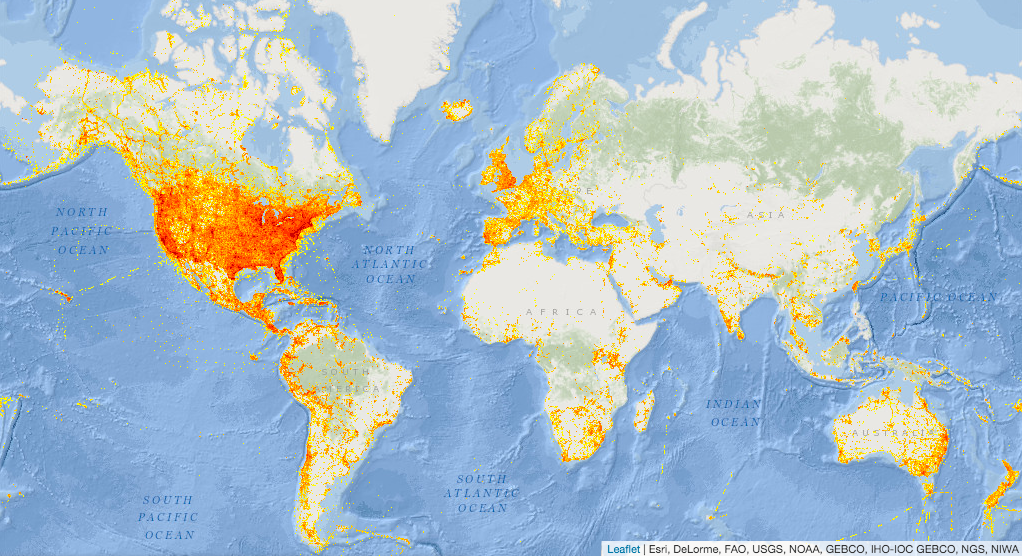
Including historical data since 1810 and extending into checklists from December of last year, eBird’s Observational Dataset just hit a milestone of 500 million records, making eBird the largest repository of biodiversity information that is freely accessible.

The Sense in Sustainability

adak-fish-farm-krishnankotta-mala

Today we went to  a 68 acre fish farm in Thrissur called ‘Haya Poya’. They were using a traditional box system (the local name is petty para) to collect fish and manage the water level. We went to learn about implementing aquaculture at Kayal Villa, a newer property.

By using this traditional method, they do not have to introduce new varieties of fish in order to farm. They do this mainly because it is less costly to collect the fish naturally than to artificially introduce fish. Also, since it is all local varieties, it limits the possibility of messing up the natural ecosystem with foreign invasive species.

During our ride home, the agronomist, Mr. Deyal, and I continued the conversation about doing what’s ecologically beneficial is actually easier and more cost-efficient. He said

“Only an ecologically viable system will be economically viable. When we fight against the environment, the environment will go against us and we will have to invest more money to protect against it.”

This reminds me of a conversation I had with an oil driller recently. When I asked him what the most challenging thing about his job was, he said ‘going against nature,’ and then proceeded to tell me how rebellious nature was to the oil drilling process and how costly it is. I found it interesting that although their career choices were the antithesis of each other, the conversations I had with them had parallel messages: going against nature is costly.  Continue reading →

Goats and Gallinas at Xandari

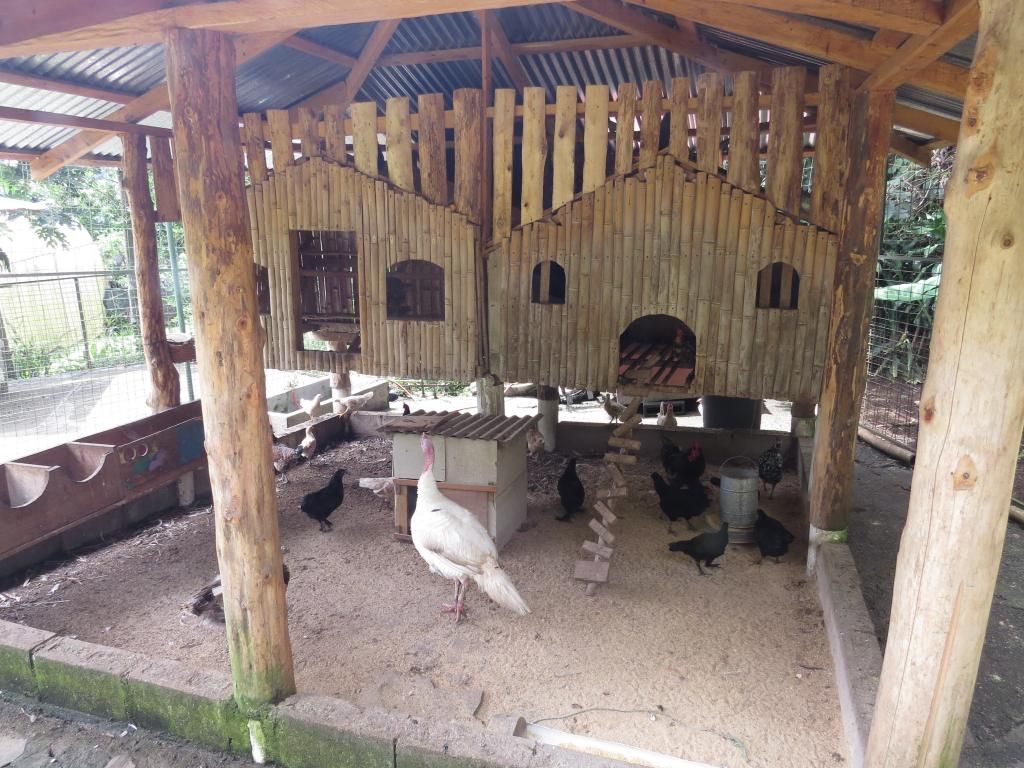
The chicken coop with two visiting turkey neighbors

At Xandari, right by the orchard and the greenhouse, you can find pens with a good thirty-something chickens, two goats, and three turkeys. Providing eggs for the restaurant every day, the chickens — or gallinas, as they’re called in Spanish — leave their pen every day to forage amongst the orchard trees, which are primarily citrus fruits. The turkeys are currently living at Xandari for aesthetic purposes, but the hope is that eventually they could also supply eggs or meat to the kitchen.

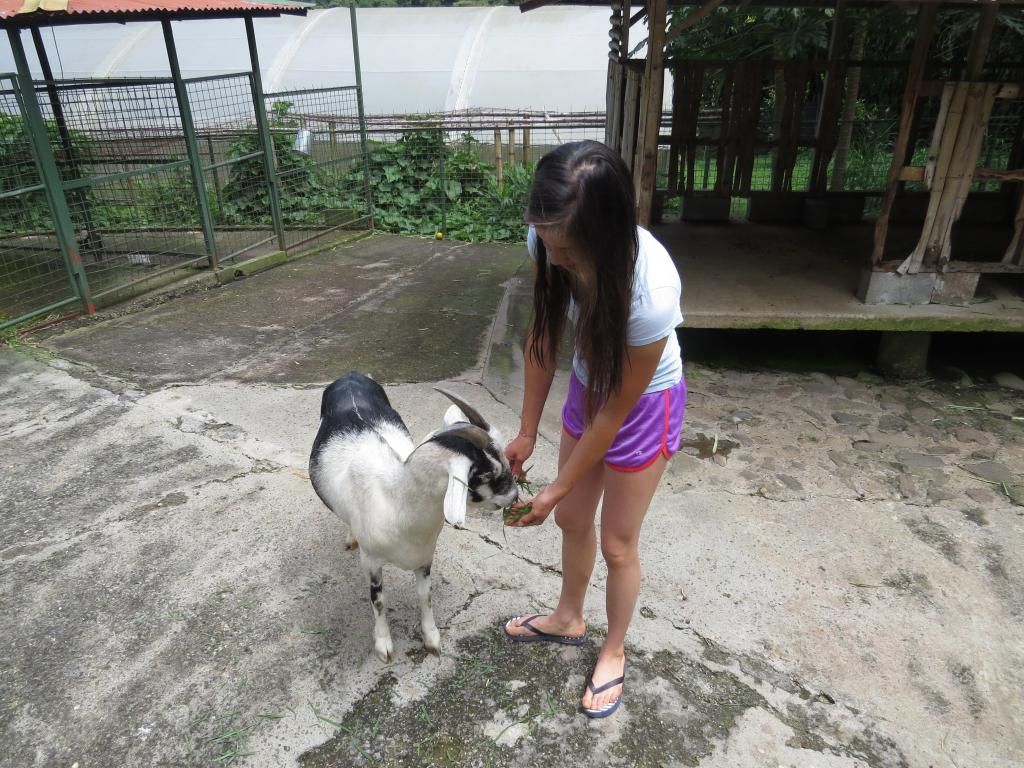
A Xandari guest feeding Sparkle some grass

Xandari’s goats, named Sparkle and Twinkle, are mother and daughter, and the plan is Continue reading →

South Indian Music at the Kathakali Culture Center

I had the pleasure of listening to classical South Indian music the other night with a guest I happened to connect with at the 51 restaurant in Spice Harbour. We went to the oldest remaining theater in Fort Cochin for Kathakali, which is a traditional art form of Kerala that originated in the early 17th century. In this theater, they have famous Kathakali dance as well as classical music, meditation, and yoga. Even though we just went for the music, I got to learn a little bit more about the dance.

kathakali2

The made-up face of the Kathakali dancers is ubiquitous around Kerala. To do the make up takes at least one hour.

In Malayalam, ‘Katha’ means story and ‘Kali’ means play. I didn’t see the traditional Kathakali dance but from what I learned the dance has a storyline that is acted out through mime and drama. The stories are mostly based on Hindu mythology.

The instruments that we listened to were flute, mridangam, and kanjira. Mridangam and kanjira are drums. There was also a drone playing from an electronic shruti box.

The music put me into a dreamy state of mind. As I was listening I found my mind drifting back to all my music theory classes to help me wrap my mind around what I was listening to.  In the beginning they told us the ragas were in 8 count rhythm. Our minds can easily predict phrases that fit within a 4 count rhythm, so I wondered what made an 8 count so different. Then I realized the emphasis was on the 5th and 7th count which was pretty cool and made me understand why the phrasing was so unpredictable. Something about the syncopated rhythm and the ambiance sent me into a theta state of deep relaxation.

I was grateful to spontaneously meet that friend and get to experience that traditional aspect of Kerala culture!


Banksy, Entrepreneurial Conservationist?

_77174539_mobile_lovers_by_banksy

Banksy’s Mobile Lovers appeared in a doorway in April

Street art is not everyone’s cup of tea, but you kind of have no choice but to love this story:

Banksy’s Mobile Lovers sale to ‘keep Broad Plain boys’ club open’

A Banksy artwork has been sold to a private collector for enough money to keep the seller – a cash-strapped boys’ club – open for “a few years”.

The sale price of Mobile Lovers, which has been on display at Bristol Museum and Art Gallery, will be revealed on Wednesday when it is handed over.

The piece of street art appeared in a Bristol doorway in April, but a row broke out over who owned it.

Banksy then wrote to hard-up Broad Plain Boys’ Club saying it was theirs.

Broad Plain will be sharing a portion of the proceeds with a number of other voluntary sector youth clubs across the city. Continue reading →

Ospreys At Cornell

Volunteer birders capture fledging of young ospreys on campus

Volunteer birders capture fledging of young ospreys on campus

Click the image above to watch three minutes of video from the Cornell Lab of Ornithology:

Cornell employees and volunteer “birders-on-the-ground” Cindy and Karel Sedlacek and Suzanne and William Horning capture the fledging of two young ospreys from their nest on a light pole above the soccer field on Game Farm Road, August 8, 2014.

Ospreys build nests on high outcropings and forks in trees. Utility Poles and platforms are a frequent substitute, often built especially for this purpose.

Competitive Upright Bipedalism

We are in awe about how many things we find out, on a daily basis, we did not know.  And for the things that we realize we want to know more about, thank goodness for longform writers of the quality that the New Yorker staff has consistently fielded since its founding. One of the great essayists of our time reviews recent writings on a history we had not the slightest clue about:

Why people walk is a hard question that looks easy. Upright bipedalism seems such an obvious advantage from the viewpoint of those already upright that we rarely see its difficulty. In the famous diagram, Darwinian man unfolds himself from frightened crouch to strong surveyor of the ages, and it looks like a natural ascension: you start out bending over, knuckles dragging, timidly scouring the ground for grubs, then you slowly straighten up until there you are, staring at the skies and counting the stars and thinking up gods to rule them. But the advantages of walking have actually been tricky to calculate. One guess among the evolutionary biologists has been that a significant advantage may simply be that walking on two legs frees up your hands to throw rocks at what might become your food—or to throw rocks at other bipedal creatures who are throwing rocks at what might become their food. Although walking upright seems to have preceded throwing rocks, the rock throwing, the biologists point out, is rarer than the bipedalism alone, which we share with all the birds, including awkward penguins and ostriches, and with angry bears. Meanwhile, the certainty of human back pain, like the inevitability of labor pains, is evidence of the jury-rigged, best-solution-at-hand nature of evolution. Continue reading →

A Biodiversity Triumph at Marari

As I mentioned in my last post, the new property, Marari Pearl, could easily be called the Beach Banana Genome Project because it has 30 varieties of bananas being grown on it. When Amie and I saw the list of everything being grown on the property, our joy was akin to kids on christmas.

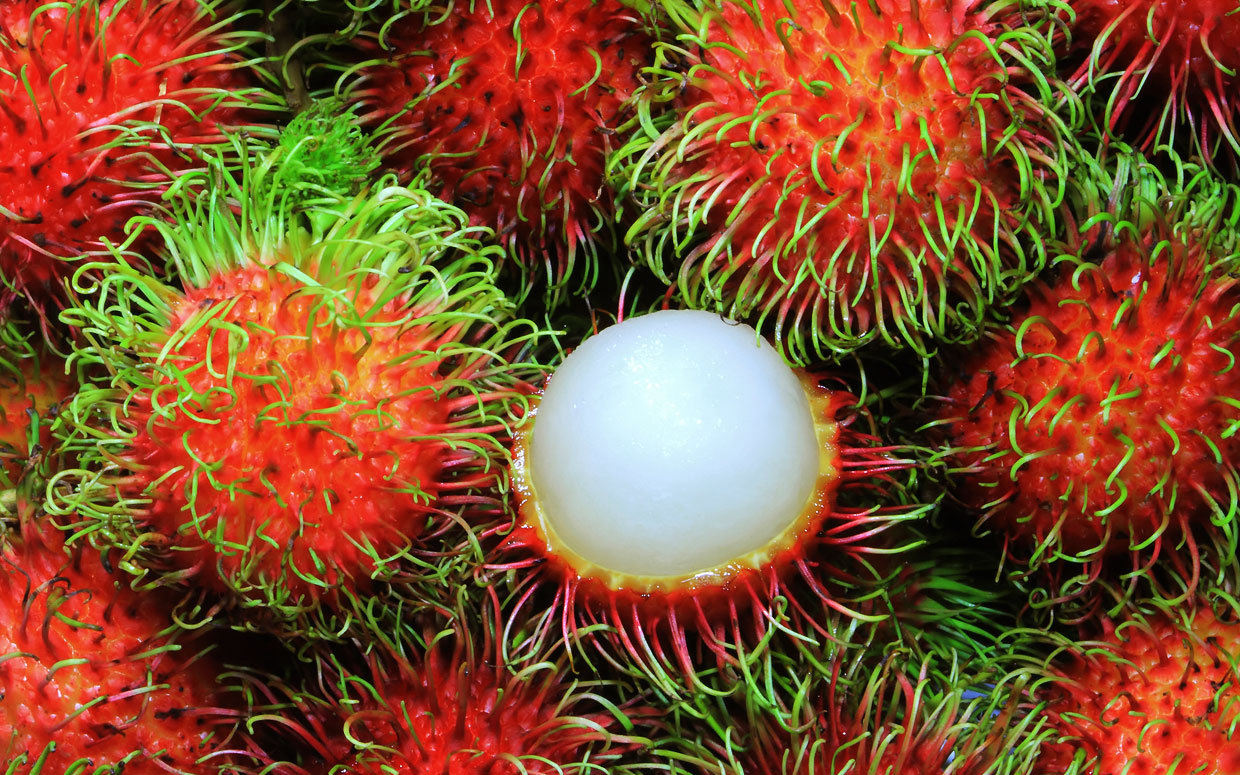
Have you ever seen a rambutan?

Have you ever seen a rambutan?

Since I’ve been reading The Fruit Hunters by Adam Leith Gollner, I’ve realized the role variety awareness plays in conserving biodiversity. Simply not knowing about all the varieties allows agribusiness to monopolize the market with one or two varieties that best suit global trade. For example, when people only saw red and yellow apples in the supermarket, they did not know what they were missing out on, so they weren’t as picky. Once Fujis and Galas became known, customers began to demand more. Knowledge of varieties is seen as a threat to supermarket because customers focused on varieties become less easy to please with subpar, out-of-season fruits.

So with that being said, simple awareness of varieties is a method of raising the bar. It helps promote biodiversity because people are less willing to accept generic and standardized fruit.

On the Marari Pearl property, there are pomelos, rambutans, and tamarinds. There are several types of jackfruit,  lovi-lovis, mangos, and oranges. I was particularly excited to see the miracle fruit on the list. Continue reading →

Past, Present & Future Food

grid_2048

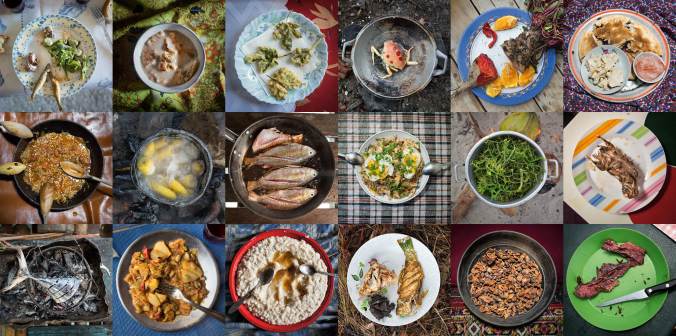
Top row: escargots, sardines, and fava beans (Crete); naan in salty yak-milk tea (Afghanistan); fried geranium leaves (Crete); boiled crab (Malaysia); raw beetroot and oranges (Crete); chapati, yak butter, and rock salt (Pakistan). Middle row: dried-apricot soup (Pakistan); boiled plantains (Bolivia); fried coral reef fish (Malaysia); bulgur, boiled eggs, and parsley (Tajikistan); stewed-seaweed salad (Malaysia); boiled ptarmigan (Greenland). Bottom row: grilled tuna (Malaysia); cooked potatoes, tomatoes, and fava beans in olive oil (Crete); rice with melted yak butter (Afghanistan); fried fish with tamarind (Malaysia); dried apricots (Pakistan); grilled impala (Tanzania; photographer’s utensils shown).

Thanks to National Geographic for this article:

The Evolution of Diet

Some experts say modern humans should eat from a Stone Age menu. What’s on it may surprise you.

It’s suppertime in the Amazon of lowland Bolivia, and Ana Cuata Maito is stirring a porridge of plantains and sweet manioc over a fire smoldering on the dirt floor of her thatched hut, listening for the voice of her husband as he returns from the forest with his scrawny hunting dog. Continue reading →