Straw Bale Construction: Part 1/3

Guest Author: Virginia Carabelli

Hello everyone, I am delighted to be invited by RAXA Collective to participate in such a wonderful community! My name is Virginia Carabelli. I was born in Italy and raised both there and in France. I moved to the US in my late teens to attend college and fell in love with this beautiful country. I have always been more comfortable in nature and silence and have never been very interested in the rat race and busi-ness. I would much rather be than do.

I’ve always found our human ways mostly destructive and superficial, and had a plan since childhood to live life on my own terms as much as possible. In 1989 I achieved one of my childhood dreams: I bought a beautiful piece of property in a verdant valley in New Mexico, where I could live at least partially off the land. The community was mixed Spanish/Pueblo Indian, and many families lived in trailers (by that I do not mean a nice double-wide, but rather a large shipping container on cement blocks). Ecologically speaking, the valley was a fragile environment. With those two things in mind I said a simple prayer asking for guidance to build a home that would be in harmony with nature and also provide some good affordable housing for those in need. I had no idea how to do this, but I had only to wait a couple of weeks for Matts Myhrman to coincidentally walk into my life. Continue reading

Flora By Knight

This slideshow requires JavaScript.

The New Yorker’s website highlights with the images above the newly updated version of a book we intend to add to our collection:

The herbarium at the Natural History Museum in London contains nearly six million plant specimens, many of which are centuries old and were gathered from far-flung parts of the world. The British photographer Nick Knight was introduced to the collection in 1992, while exhibiting his own work at the museum. In the following years, he sifted through the collection, photographing thousands of what he considered to be the most visually alluring samples. The eighth edition of Knight’s book “Flora” is now available for purchase through Schirmer/Mosel.

All photographs by Nick Knight/Schirmer/Mosel.

The photographer’s publicist has this to say:

Continue reading

It Could Be, Costa Rica

Screen Shot 2014-06-30 at 6.47.12 AM

Several Raxa Collective contributors in India were up until 4am today at Cardamom County, watching Costa Rica play against Greece in the World Cup. They were simul-texting with a Raxa Collective contributor in Costa Rica, who reported watching in a friend’s home near Xandari while the streets outside were empty and silent, erupting echoes of cheer or anguish in the distance from time to time. The google doodle at this moment could be representing Costa Rica’s red white and blue, its tropical sense of fun, or it could be a representation of any country having a chance at the beautiful game. Continue reading

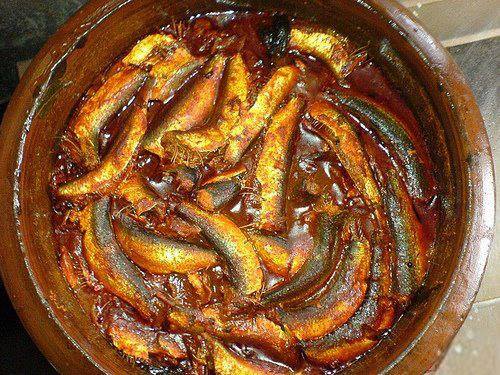
Sardine Fish Curry

Photo credits : Shymon

Photo credits: Shymon

In Kerala, sardines are always available fresh from the sea. Rich in Omega-3 fatty acids, sardines are prepared in most households as a staple, especially as a fish curry. Sardine fish curry is one of the most popular dishes in Kerala, and it is not only very tasty, but very spicy too. Continue reading

Happy Anniversary, Yosemite!

One hundred and fifty years ago, on June 30th, President Abraham Lincoln signed the Yosemite Grant Act, which passed through Congress and created the first protected wild land in the United States. The Yosemite Grant Act was the first step toward creating what is now the famous and highly popular national park, which eventually happened in 1906 under President Theodore Roosevelt. In the video below, you can see some nature and landscape photography and a couple videos I took during a recent visit to YNP.

Continue reading

A Different Brand Of Men’s Linen Suit

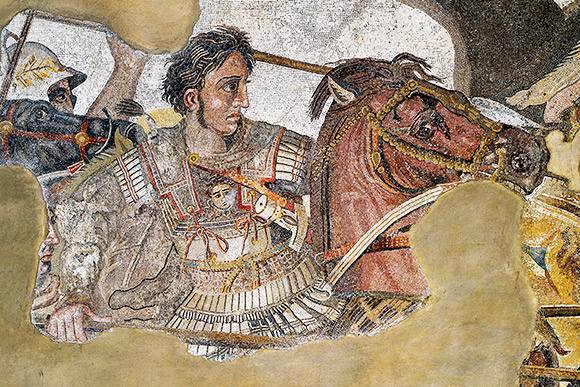
how-to-make-greek-armor

Raxa Collective is fortunate to have classicist contributor, James, currently in the field with Seth in Costa Rica. Slacklining, occasional ichnologizing, and restoring a coffee plantation are (we think) the perfect prelude to a Ph.D. program in Classics. James will be in Cambridge, Massachusetts for the next few years, utilizing the Latin, Classical Greek and other languages he has already mastered, preparing to teach the next generation in the liberal arts. We never know, nor really need to know, where the liberal arts may take us. They are important for the sake of thinking and communicating effectively, in any walk of life, and we hope they remain alive and well in perpetuity for undergraduate university students.

We also hope that while he is in Costa Rica James has the chance to visit the home Seth grew up in, across the Central Valley from Xandari, where some of Raxa Collective’s contributors have had the opportunity to see the uniform of Seth’s great-great grandfather on display. More than a century old, and lovingly restored by a friend of Seth’s family who does museum restoration work, the uniform looks something like what Alexander the Great may have worn. After seeing it James may have more to say on this post by Joshua Rothman on the New Yorker website’s “New ideas from the arts and sciences” section:

Intellectual life thrives on mystery. When it comes to ancient Greece, one of those mysteries is the linothorax—the flimsy-looking, hip-length armor that you see warriors wearing on Greek vases. (Linothorax means, literally, “linen chest.”) Why go to war, archaeologists have wondered, in what looks to be a linen minidress? While a linothoraxlets you show off your muscular legs to great effect, it hardly seems like practical protection against the enemy’s swords and arrows. And yet, judging by how frequently linothoraxes are represented in Greek art, they were extraordinarily popular among soldiers in ancient Greece and around the Mediterranean between 600 and 200 B.C. Because no linothoraxes have survived—linen doesn’t last—no one knows why. Continue reading

Kakkoor Kalavayal

Photo credits : Shymon

Photo credits: Shymon

Kakkoor Kalavayal is one of Kerala’s famous festivals. The village, Kakkoor, is situated in Eranakulam district. Mud racing is a post-harvest festival celebrated by the farmers of Kakkoor and surrounding villages. A farmer controls his pair of bulls as they race through paddy fields. Continue reading

Time Drives Change

Screen Shot 2014-06-28 at 9.47.22 PM The roads and the things that inhabit them in India are evolving before our eyes. In good ways, we assure you. So, thanks to the New York Times for their commitment to India Ink and its excellent coverage of India and its changing circumstances:

“When the Ambassador car was born in 1957 to a newly independent India, it was the height of style and status,” Nida Najar wrote in The New York Times. ”It was standard issue to senior civil servants and government officials; its possession implied status, and its ubiquity was a sign of an earlier, seemingly simpler India.” Continue reading

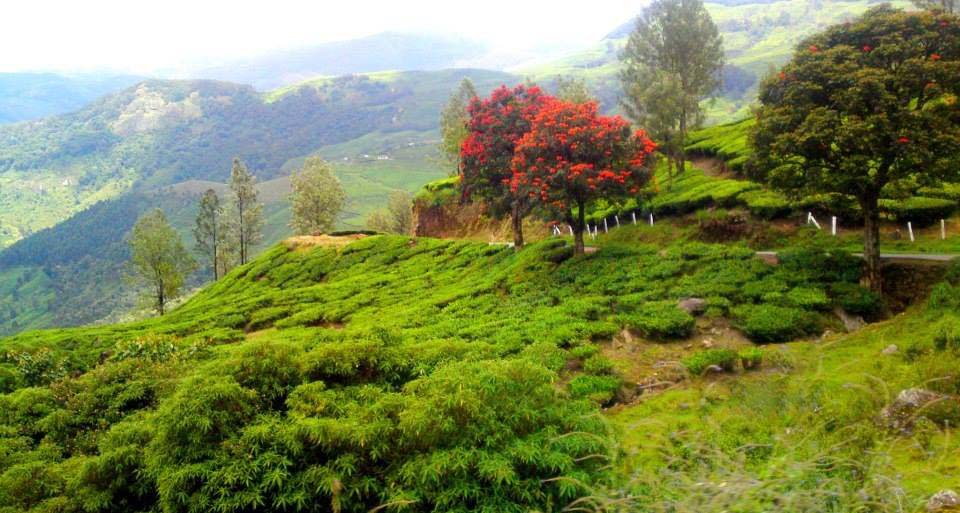
Munnar, Revealed

Photo credits : Bobby Mathew

Photo credits: Bobby Mathew

Munnar is one of the most popular hill stations in Kerala, nestled in the Western Ghats at an altitude of above 6000 ft. Its stunning expanses of tea plantations, mountains and valleys, and natural waterfalls play host to many exotic species of flora and fauna. Truly worth the visit! Continue reading

Citizen Science in Belize – Update on Lionfish Jewelry: Part 2

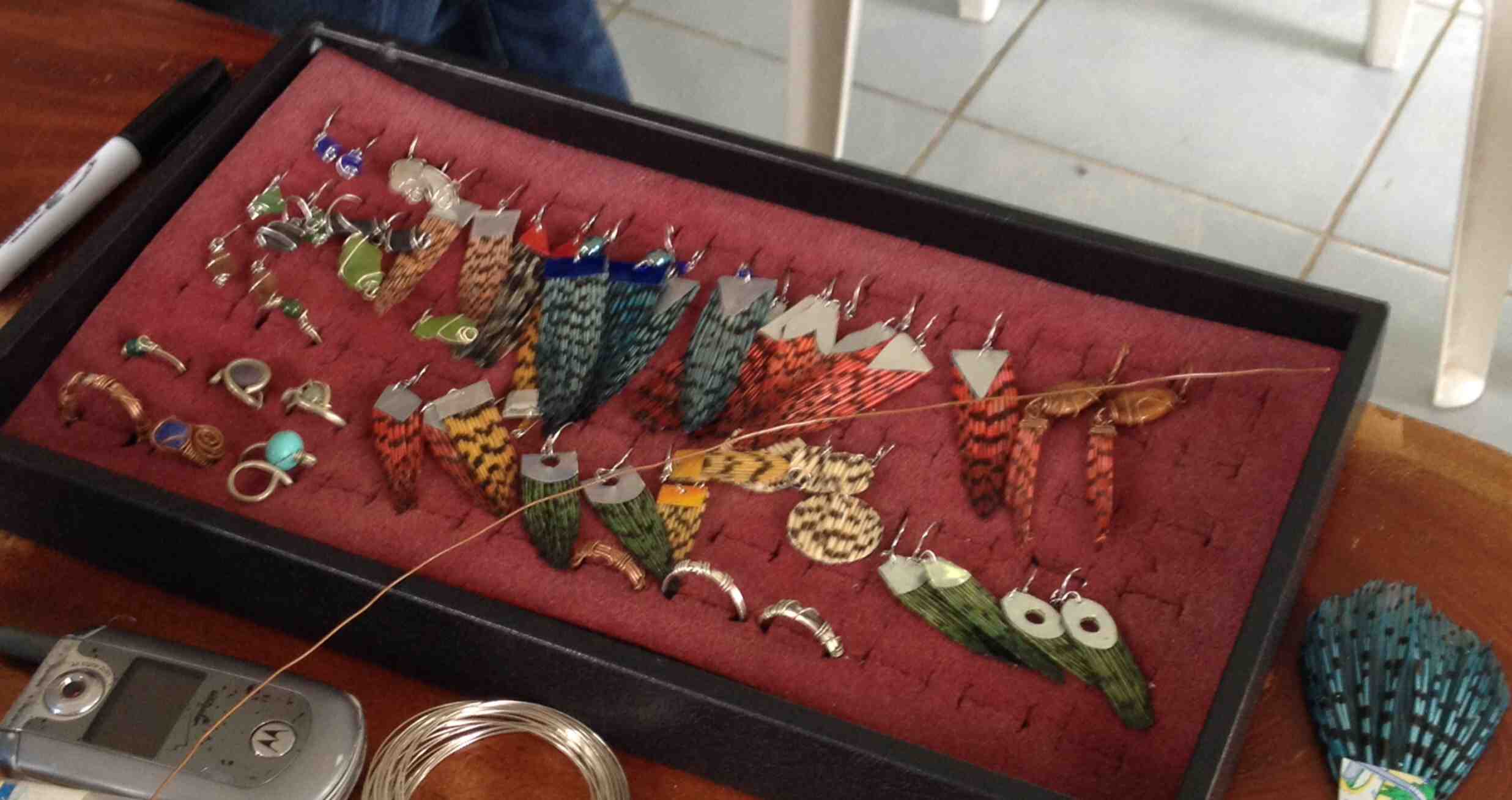
Assorted lionfish jewelry from Palovi Baezar, Punta Gorda, Belize

Assorted lionfish jewelry from Palovi Baezar, Punta Gorda, Belize

In Part 1 of this post I wrote about my recent visit to Belize to help with further development of the nascent  market for lionfish jewelry; one of several market-based approaches to addressing the threat to Southwest Atlantic marine ecosystems posed by the invasion of this non-native species. I noted that the market is most advanced in the area around Punta Gorda, in Southern Belize, in large measure due to the support provided by ReefCI which has provided training on jewelry making to a group of local women and is supplying them with lionfish spines, fins, and tails as well as marketing assistance.

Lionfish spines, fins, and tails ready for jewelry

Lionfish spines, fins, and tails ready for jewelry

While ReefCI’s involvement has been instrumental in getting things started, further development and expansion of the market will require engagement with artisans and women’s groups in other parts of the country, particularly areas closer to major tourist markets. Interventions are also needed to develop a reliable and sustainable supply chain for lionfish jewelry production and sales. I was pleased to hear from one of the jewelry makers in Punta Gorda that a local fisherman had approached her about selling lionfish tails. This was music to my ears, as one of the motivations behind the lionfish jewelry idea has been to up return to fishers in order to create added commercial incentive for them to hunt lionfish (the fish cannot be caught using conventional fishing methods such as hook and line or nets, but must instead be speared or hand-netted by diving). Continue reading

In The Rough, Big As Can Be

Photograph by Antonio Zambardino/Contrasto/Redux.

Photograph by Antonio Zambardino/Contrasto/Redux.

Who knew? Diamonds, forever and ever the best friend of half of us, can be otherworldly:

The biggest diamond ever found on Earth, known as the Cullinan diamond, weighed three thousand one hundred and six carats before it was cut, or about one and three-tenths pounds. The biggest diamond ever found in the universe, whose discovery was announced this week, has no name, will never be cut, and weighs approximately a million trillion trillion pounds. This makes it as massive as the sun, and no wonder: it’s the corpse of a star that once looked very much like the sun, lying nine hundred or so light-years from Earth. Continue reading

Riding the Slackline

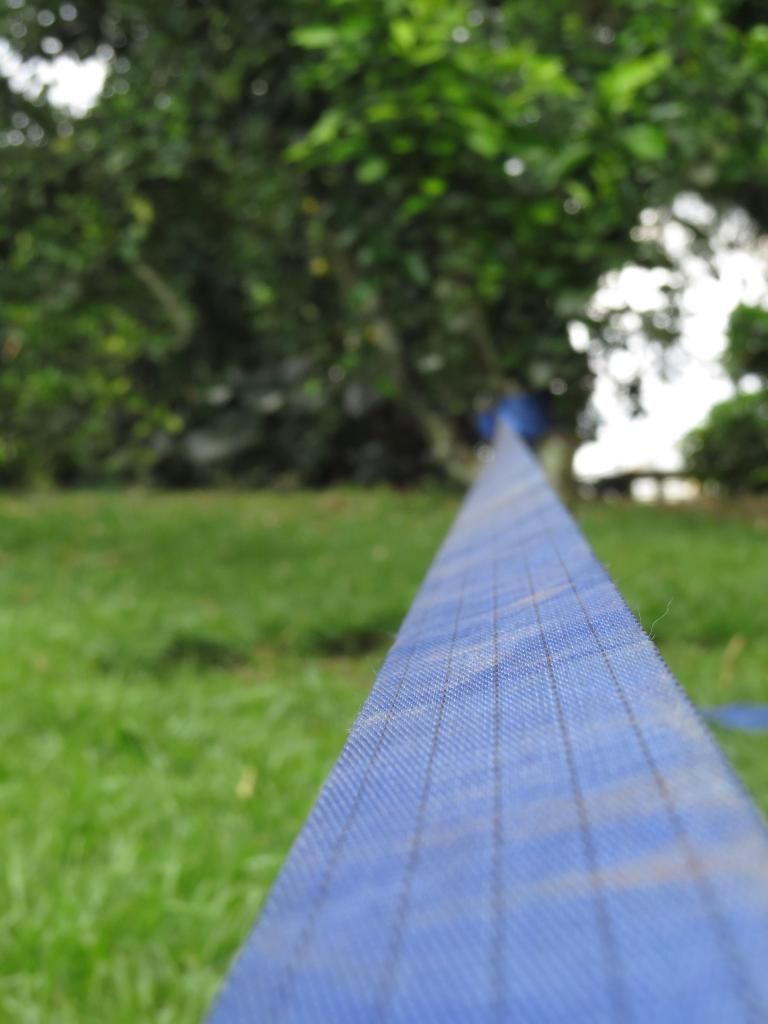
A slackline at Xandari (photo credit: S. E. Inman)

2014 marks the 150th anniversary of the land grant that yielded Yosemite National Park (Seth will be talking more about this in a post on the topic). But why should this matter for a post on slacklining? Well, as it turns out, Yosemite was one of the early hotbeds for the development of this increasingly popular outdoor activity. In celebrating Yosemite’s anniversary, we can also take a moment to appreciate Continue reading

Theyyam Face Make-up

Photo credits: Jithin Vijay

Photo credits: Jithin Vijay

Face painting is one of the most important parts of Theyyam, an ancient form of worship in certain parts of Kerala. Theyyam dance make-up should be made from as many natural materials as possible. Coconut leaves are used as brushes, and the make-up artist should have perfect knowledge of how to combine colours.  Continue reading