Flawed Definition Of Luxury

Beautiful, environmentally valuable natural areas increasingly seem to fit the definition of luxury, based on their scarcity and the quality of the pleasure they provide.  Golf, also, is often defined as a luxury.  Can golf and pristine wilderness both be defined, correctly, as luxuries?  Linguists, please weigh in.

Meanwhile, above, a promo clip on a new documentary about a beautiful place, Trumped (talk about misdefining luxury!).  Thanks to the Green blog at the New York Times website, this story which even an avid golfer might wince at:

On July 15, Trump International Golf Links finally opened. But not everyone was delighted to see one of Britain’s last stretches of coastal wilderness transformed into a putting green. Continue reading →

Spiral Ginger (Costus Speciosus)

Native to Sri Lanka and the Western Ghats of India, Spiral Ginger is a gregarious herb seen along sheltered gravelly slopes in warm, moist, forested regions. This succulent herb has leaves growing spirally around the stem and flowers year-round. The rhizome of the plant is used in ayurvedic medicine.

Continue reading →

Go, Marcus!

In case you missed my earlier post on the topic, you may want to listen to that podcast before reading this more straightforward “business wunderkind” story in today’s Sunday New York Times.  Still, the closing paragraphs of the story circle around to why this fellow has our attention.  Great food interests us, yes; entrepreneurship, yes; but even more so this sense of community:

He often seeks interaction with the broader community, whether at his restaurants, through the Internet, or on his daily subway ride. In Harlem, he has held free cooking classes for children and has helped expand the farmer’s market in the area. More than 70 percent of Red Rooster employees are local residents, many of whom had little experience with fine dining. The restaurant hired additional managers to get the employees up to speed.
“When you look at strategy, it’s not set up to be a pure moneymaking machine,” says Derek Evans, the media adviser for the Marcus Samuelsson Group. “It’s a passion machine.”

Full Circle

One minute ago, I opened my laptop to begin writing this blogpost, seated at gate 3 in Cochin International Airport.

One hour ago, I was in line waiting to enter the airport without a print out (evidently, an iPhone picture of my flight itinerary is not the same idea).

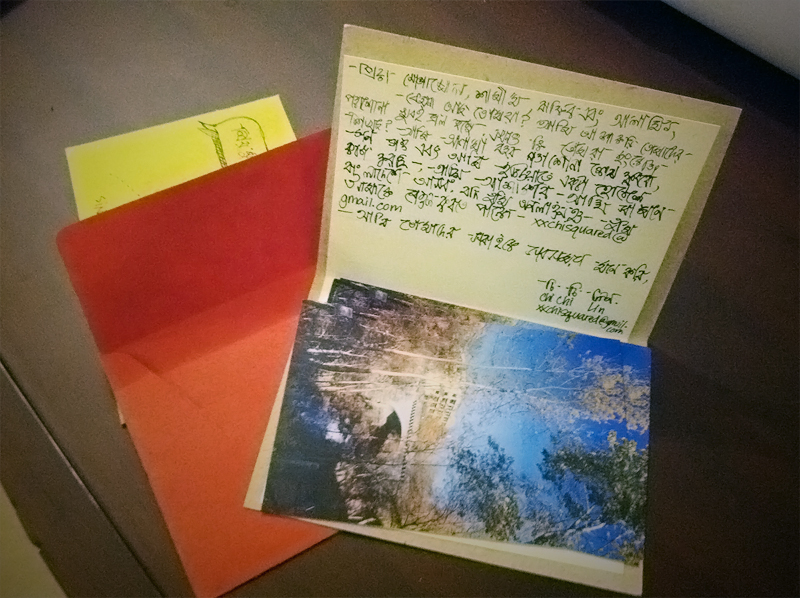
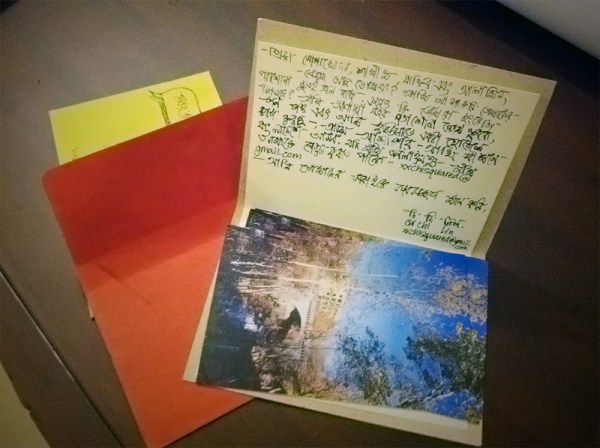
Two hours ago, I was frantically transcribing my “I miss you” letters in Bangla onto elephant dung paper as I ate my last dinner with the interns. It was chicken and “Indian-style salad.”
Transcribed Letters

Transcribed letters, thank you to Marfy (the F&B Management trainee from Panigram) for the translation!

Three years ago, I was in the same position. I was in South Asia, I had just finished an internship at an eco resort, and I was already contemplating how I would come back. I sat in Bangladesh’s major international airport thinking about how my past two months at Panigram (which, coincidentally is being developed and will be operated by La Paz Group, the organization responsible for Raxa Collective) were so wonderful, enriching, eye-opening, and everything in between and that I had to come back to see the boutique resort completed.  Would it be just an emotional return? Maybe getting a tattoo in Bangla script? Would I come back for my “I’m done with undergrad” senior trip?

Spending two months in Bangladesh with three hotelies afforded me everlasting friendships and a fondness for South Asia. Jonathon and I, specifically, tag-teamed each other around the world. We would meet in exotic cities all around the globe, any city was fine, just not Jessore, Bangladesh. We had a pact for that: “we’re going back to Panigram together, okay?”

Continue reading →

Nutmeg (Myristica Fragrans)

The Nutmeg Tree is an evergreen aromatic which usually grows up to a height of 15-20 meters. Nutmeg and mace are two distinctly different spices produced from the same tree- the nutmeg being the actual interior nut, while mace is the red lacy covering beneath the outer shell. Although it is now cultivated throughout most of the south Indian states, the tree is a native of Moluccas, an island in the Indonesian archipelago. It thrives in hot and moist climates at low elevations.

Continue reading →

A Summer in Muir Woods

Guest Author: Robert Frisch

In the summer between the first and second years of nearly every MBA program, students are tasked with finding themselves a three-month internship.  Some advise trying to round out your resume by focusing on your weaknesses.  Others say to shoot for a well-known company that will lend you credibility.  For me, I knew that I wanted to spend my time doing something that I love and feel passionate about.   A position in the realm of sustainable hospitality, land conservation, or eco-tourism was what I was looking for.  I had a few interviews for a sustainability position in a hotel real estate investment trust (REIT), talked to a conservation focused management firm based in India, and a for-profit land conservation company based in Chile.  I would have never guessed it, but I ended up accepting a position as a summer consultant to the National Parks Service in San Francisco. Continue reading →

My First Dives in Galápagos (2/2)

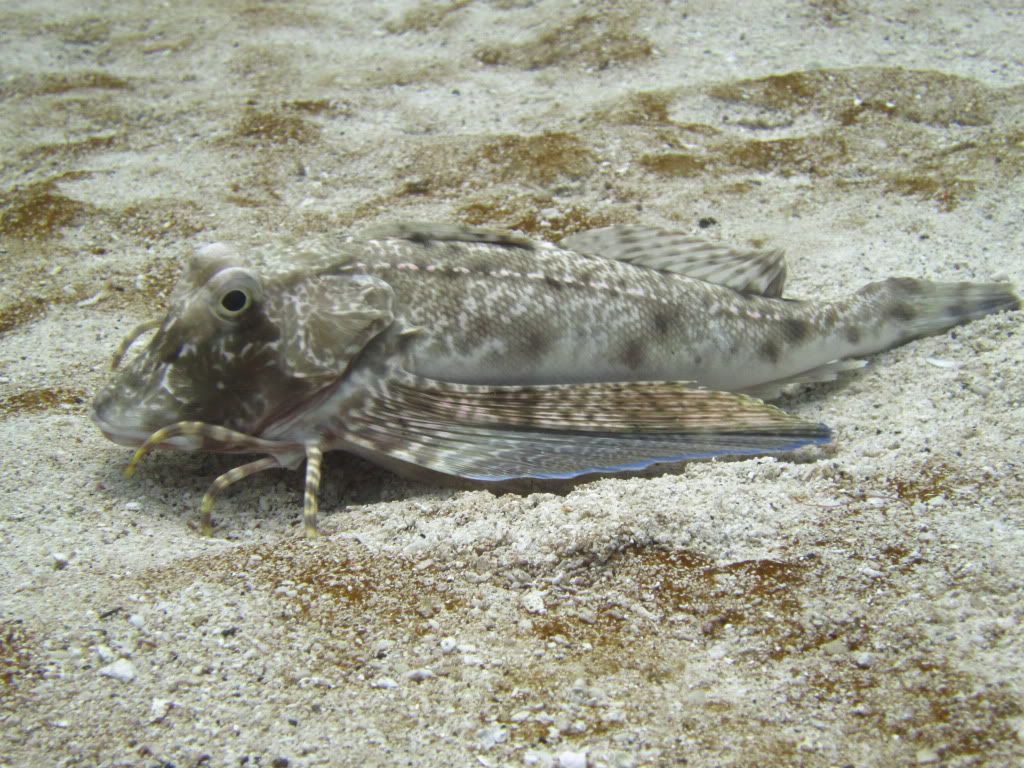
Six legs and two sail-like fins! What?!

My last post shared a video of some of my scuba trips and a few images of two absolutely bizarre ocean species: the Red-lipped Batfish and the Galápagos Searobin. I had no clue that any such creatures existed in nature, or at least not under the light of the sun no more than 15 meters below surface level. Once again, Quike Morán of Scuba Iguana took the pictures and video with a point-and-shoot digital camera in a plastic waterproof case, and the two dives featured here were at Seymour Island and Mosquera Island, north of Santa Cruz.

Live And Let Live

The images after the jump are from here and first came to our attention in the Guardian story (click the headline image to the left), which follows a recent interest we have taken in these mercilessly misunderstood and under appreciated wild creatures. Seth’s recent post begins a new vein in our conversation about marine conservation (for
that wait for 2/2 in that series).

Continue reading →

Black – Eyed Susan Vine (Thunbergia Alata)

The Black Eyed Susan vine is native to tropical countries and naturalized in India. The twiner is often seen among hedges as well as on the ground. The leaf paste of this  plant is used in traditional medicine. It is commonly grown in gardens, plains and hills.

Continue reading →

A Perfect Sendoff and a Nostalgic Farewell

It is amazing how fast ten weeks can go by.  I remember sitting in the library at Cardamom County writing about my first day of birding here; I remember how excited I was to see barbets, minivets, and leafbirds from the parking lot.  Now, ten weeks later with about a dozen activities completed and many birding expeditions into the Periyar Tiger Reserve under my belt, I’m suddenly looking back on fond memories.  My first excursion into Periyar was a Bamboo Rafting trip along Periyar Lake.  To be honest, I was a little overwhelmed in this strange new place with its checklist of over 300 unfamiliar birds.  As is always the case with Periyar, the excursion was a blast, and that trend continued with the Border Hike, the Nature Walk, the Tiger Trail, the Green Walk, and indeed with every trip into the Reserve.

Continue reading →

Thank You, North Carolina

Of course, thanks to the individuals who made the direct effort to make this project possible.  Click the image above to see the visuals they produced, and click here to see those individuals.  But North Carolina’s citizens, whose taxes make the University’s operations possible, deserve our thanks too:

Our 2012 Fellows present a Powering a Nation special report, “100 Gallons.”

“100 Gallons” explores how our most critical resource goes far beyond traditional power. More than fossil fuels, commerce or industry, water powers life. Continue reading →

Rock Balsam (Impatiens Acaulis)


Rock Balsam is native to Peninsular India. It grows widely in the Western Ghats, occurring in small or large clusters in the hills up to 800 – 2400 meters on wet rock faces. The lavender flowers are showy and stand out daintily from the rounded heart-shaped leaves.

Connecting Over Competition

Guest Author: Siobhan Powers

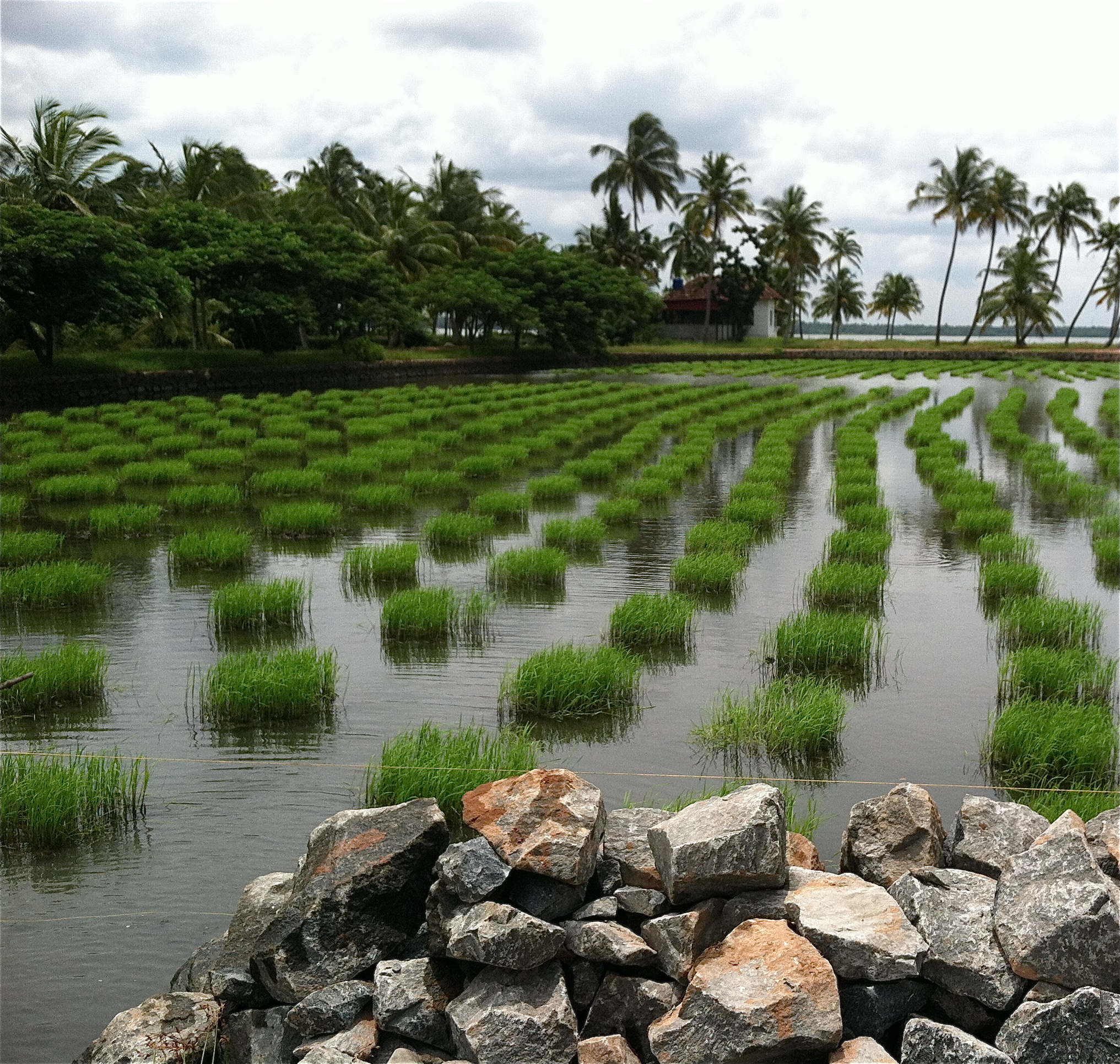
I’ve been staying in the beautiful backwaters of Kerala for the past few days, which has put me at ease as I always feel more comfortable by the water.  Jonathon and I took some time out of our workday to take a walk and get a feel of the area, including all it has to offer, both culturally and agriculturally. We interrupted the construction of a stone wall surrounding a rice paddy field and watched a young boy catch fish in a stream at the side of the narrow road. In the heat of the Indian sun’s rays, we contemplated buying ice cream, but, on our return, settled on the universal refreshing thirst-quencher that is an ice-cold cola.

Rice paddy in Panangad

Continue reading →

50 Years Onward, Progress Via Anthropology

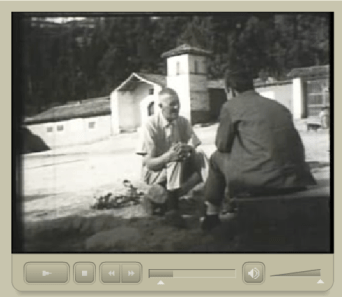
Anyone born in the USA between 1930 and 1970 would recognize the two CBS journalists in this brief documentary.  Some born elsewhere in that period might recognize them as well.  Probably few outside small towns in Central New York and Central Peru would recognize the name of the professor featured here.
So That Men Are Free
McGraw-Hill Films (1963)
Reporter: Charles Kuralt
Presenter: Walter Cronkite
 

I’m Walter Cronkite. We take you to one of the remote areas of the world to the high Andes of Peru. CBS News correspondent, Charles Kuralt reporting…The seeds came here in the head of an anthropologist, a man usually the observer, not the creator of change.  Dr. Allan Holmberg of Cornell University…

Continue reading →

Kovalam Beach

Kovalam lies 16 kms  south of Thiruvananthapuram, Kerala’s Capital.  Three crescent shaped beaches surrounded by rocky outcroppings form the main attraction of this coastal resort. The coast is backed by steeply rising headlands covered in verdant coconut palms, especially the southernmost Lighthouse Beach. The green hinterlands provide a refreshing backdrop to the white sandy beaches, offering privacy and seclusion.