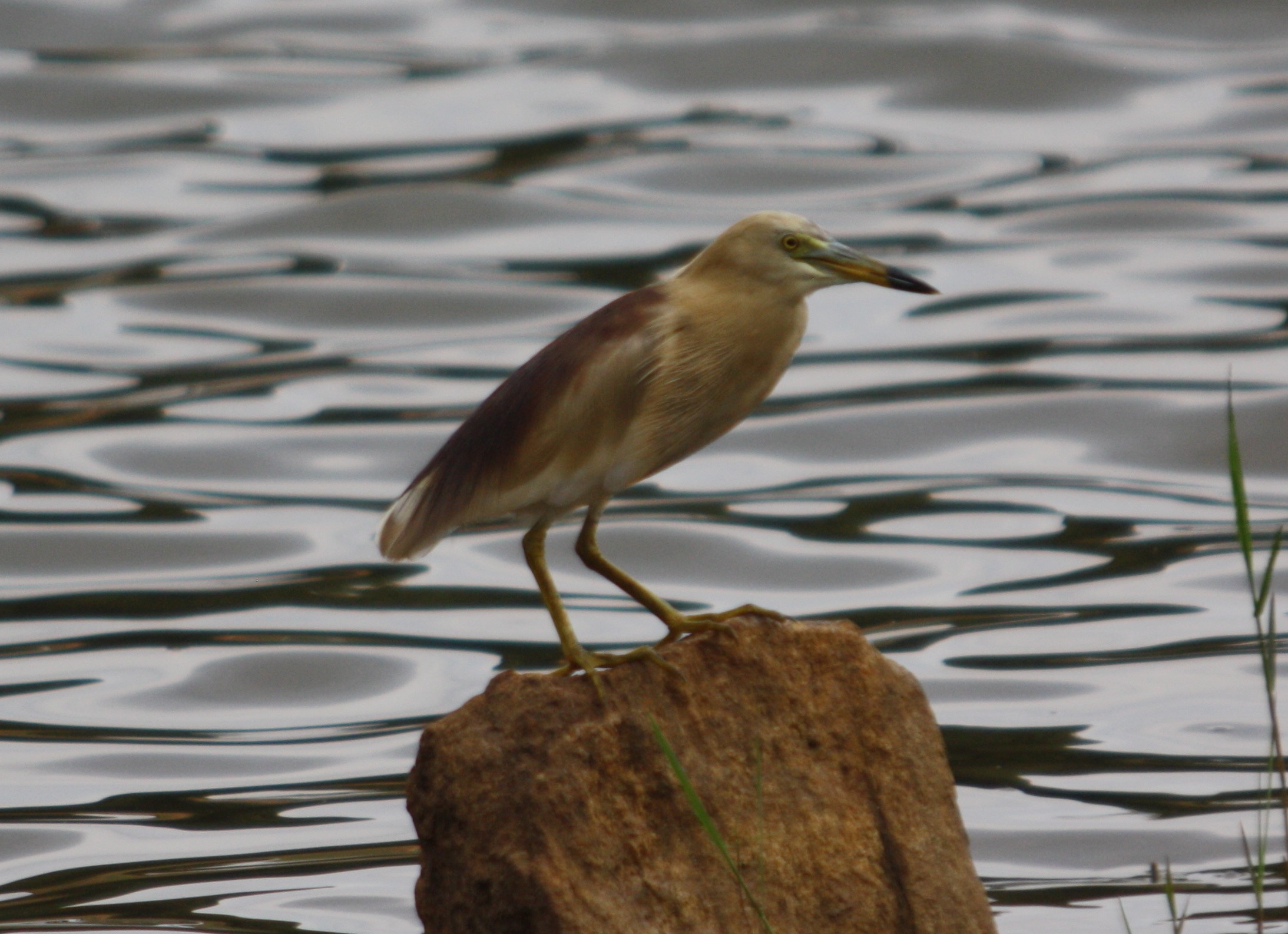
Periyar Tiger Reserve, Kerala
Periyar Tiger Reserve, Kerala
Thanks to the Environment section of the New York Times, its website, the “Green” and the “Science” initiatives on that site, the above quick video of an invention that may change clean up procedures for one of the scariest new energy trends (read the story here, and then scroll down that site for earlier stories on fracking itself):
In fracking, a mix of water, sand and chemical additives is injected into a drilling well under heavy pressure to release natural gas from shale deposits. At the end of the process, some of the chemical-laden water returns to the surface along with salts, radioactive elements and other contaminants absorbed from the shale. Safely disposing of the waste from fracking without contaminating drinking water and waterways has been a major environmental and health concern.

White hibiscus is a small shrub which normally grows to a height of 15-20 feet commonly naturalized in the Western Ghats of India. This single white flower blooms throughout the year and is slightly fragrant. In Kerala, it is mainly grown in homes and spice gardens as an ornamental plant.

Click the image above to go to National Geographic‘s valuable contribution to address one of the least discussed conservation crises facing the world today:
Every 14 days a language dies. By 2100, more than half of the more than 7,000 languages spoken on Earth—many of them not yet recorded—may disappear, taking with them a wealth of knowledge about history, culture, the natural environment, and the human brain.
National Geographic’s Enduring Voices Project (conducted in collaboration with the Living Tongues Institute for Endangered Languages) strives to preserve endangered languages by identifying language hotspots—the places on our planet with the most unique, poorly understood, or threatened indigenous languages—and documenting the languages and cultures within them.

I was at the beach with Reyna, Roberto, and their kids at Tortuga Bay on Sunday when we heard from an acquaintance that El Solitario Jorge had passed away (the news passed at a speed throughout the Galapagos Islands similar to that reserved for elder dignitaries elsewhere in the world). My first feeling was surprise, because I had always heard how old giant tortoises could live and I knew how much veterinary care the animals at the Charles Darwin Research Station received. My second and third feelings were sadness, followed by some unexplained relief (was it a queasy feeling of my good fortune for just having seen George for a second time on Friday afternoon, while walking through the tortoise breeding area? Relief provided by the mystical thought that maybe he will find his soul mate in the next dimension? Something else? I do not know).
We were all a bit stunned by the news, wondering what the implications were for the dozens of organizations and companies that used George as “celebrity” endorser for the Galápagos and biodiversity conservation: almost every t-shirt you see on Charles Darwin Road in Puerto Ayora has Lonesome George imprinted on it, either in artwork or the logos for the National Park, the Galapagos Conservancy, and many other groups. This single tortoise was placed alone on billions of pieces of merchandise supporting (or purporting to) conservation, and his loss brings to mind what the WWF would face should the last panda pass: the extinction of the species might serve as an even more compelling, albeit less directly or personally moving, icon for protection of endangered species.
In lighter news: this week, from morning till evening, I’ll be attending and learning from a workshop titled “Development of a Participatory Environmental Monitoring Program for Galapagos,” which I think will be incredibly useful and educational for my plans with citizen science at Tomás de Berlanga!

Lonesome George: alone until the end. Photograph: Thomas H Fritts/EPA
Some of our contributors, like Reyna and Roberto, are permanent residents of the Galapagos Islands; some like Seth, are currently stationed there; others among us have been there and had a brief encounter with George. The news of his demise is not merely sad, for all of them, all of us; it sends a bit of a chill, for reasons evident when you read the history of his species. Yet, George made an enormous contribution to awareness of the need for conservation and habitat renewal. He was a celebrity, of sorts, working (whether he liked the gig or not, we shall never know) on behalf of endangered species around the world. Thank you, George. Click the image above for the notice in The Guardian:
The last known representative of the giant Galápagos tortoise subspecies Chelonoidis nigra abingdoni had every reason to shun humanity, however. His relatives were exterminated for food or oil by whalers and seal hunters in the 19th century, and his habitat on Pinta was devastated by escaped goats. George possibly has relations on neighbouring Isabela Island, but it is more likely his whole subspecies is now extinct – the end of what is probably a 10m-year-old line.

Indian Leopard at Wayanad Sanctuary
Indian Leopard comes under one of the categories of five Indian big cats, which are massively spreaded on the Indian sub-continent. Preferring dry, deciduous areas with significant amounts of rainfall these leopards inhabit tropical rainforest upwards of 2200 meters above sea level. Continue reading

A NASA artist’s illustration of events on the sun changing the conditions in near-Earth space.
Click the image above to go to the 5-minuted podcasted explanation of a project you have likely never heard of. But it sounds important (perhaps to explain why sometimes your mobile phone gets inexplicably scrambled) and as with the story here it may inspire the career aspirations of a few young clever dreamers:
“When one of these big storms comes in, it can actually change and flex the magnetic field around the Earth,” Stratton says. “So we’ll measure that and then we’ll see how all of that energy that’s coming out of the sun deposits into the Earth’s magnetic field, into the radiation belts.”
Ordinary satellites wouldn’t survive so much radiation. So Stratton and a large team at the Applied Physics Lab have spent years designing and building two very tough spacecraft.
Each of the spacecraft is an octagon about 4 feet tall. But once they are in space, they will deploy booms that extend about the length of a football field.

Periyar Tiger Reserve, Kerala
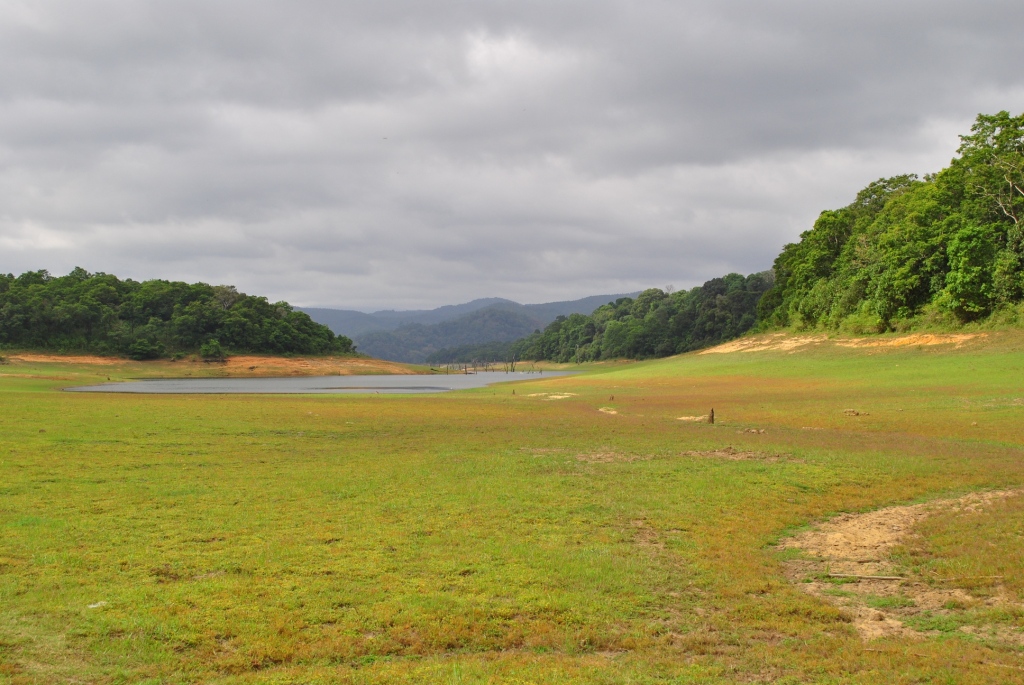
One who loves Nature Mother will love this walk, especially during monsoon. You feel the soft earth on the bog, hear the whispering movements in the forest and smell her flowers everywhere. Nature Walk is a three hour trek which passes through evergreen and moist deciduous forests interspersed with marshy grasslands in Periyar Tiger Reserve. The trail normally covers 4 to 5 km area of Reserve escorting along with a tribal forest guide. This program offers an excellent opportunity of Bird watching, butterflies and other wildlife of Periyar Tiger Reserve. Continue reading
Guest Author: Rania Mirabueno

Beyond the nature tours of the Periyer Tiger Reserve near Cardamom County, the cultural scene in Thekkady offers a traditional Kerala martial arts performance called Kalari that I would definitely recommend for everyone to experience. Kalari is truly an art form combining music, dance and performance in the context of martial arts.
What I enjoyed most about Kalari was the diverse audience that attended. Kalari attracted all ages and from all backgrounds. I was able to share a unique moment with the community to see an ancient art form. From dagger to long stick to sword, I was at the edge of my seat the entire hour. Continue reading
When I decided to come to Kerala this summer for my internship, I got most excited not entirely about my work, but really about seeing a tiger. I can’t even remember the last time I went to a zoo, but I know deep in my closet I have a dusty photo of me and a tamed tiger from Thailand. At this time, seeing a wild tiger was actually more of a WILD idea. Since I’m working next to the Periyar Tiger Reserve, a home to approximately 40 tigers and many other animals, I’m practically neighbors with them and awaiting a miraculous moment to see a tiger before my trip to Delhi.
As a Korean descendent, I must introduce you all to some Korean culture and explain why I’m writing a blog post that is dedicated just to tigers. I’m sure a lot of my Korean folks will agree that tigers and Koreans go way back. My relationship with tigers started when I was 3 years old when my grandmother told me a story about a tiger that smoked using bamboo pipes. My reaction was: “Really? Tigers smoke, too?”

Source & Credit: Picture of a Tiger at SamChunSa (삼천사) at BookHanSan (북한산)
Lately, I have been noticing how much I rely on and draw value from eye contact. Maybe due to my weak hearing I tend to evaluate my conversations by observing others’ body language, specifically eye contact and supporting facial reactions. I am surprised to find that I can accumulate a range of feelings simply from looking at these small features; I can be made to feel entirely stupid, worthless, and a time wasted, or I can feel encouraged, wise, and joyful to share my thoughts. I guess this can support the old phrase, “a picture is worth a thousand words.” The manner in which I maintain eye contact matters and can convey much more than the words I am speaking. It makes me wonder how my message would be perceived if only my eyes were seen and my words were heard.
Before my mind over-evaluates this communication feature, I pause to promise myself to be mindful to the conversation my eyes and other facial features are having with someone instead of only that of my words. I know according to Eleanor Roosevelt that I can only make someone feel inferior or poorly if he/she allows me that crude act. However, I never want to put someone in a position to be made to feel negatively by my actions, both in words and other supporting communication. So, in the words of John Sinclair, “The eyes of Texas are upon you,” and will, to the most often and to the best of their ability, be encouraging others to reach their great potential.
On a Monday morning, probably the last thing you want to hear about is how climate changed wiped out a civilization. And one of our objectives on this site is to not merely serve as a feed for depressing news. Yet this story, for all its dark implications (especially for the billion+ of us living in the region discussed in the piece) is not merely a bummer. It also inspires on at least two levels, both related to science as it intersects with conservation. For those of us still young enough to follow in the footsteps of Jared Diamond and his many fellow scientific-discoverers, what better illumination (in a gloomy sort of way) of a potential career path? For those of us of a certain age, with perspective already focused on future generations beyond our own, it provides fuel to the fire of our determined efforts not to ignorantly or lazily replicate age-old human errors…
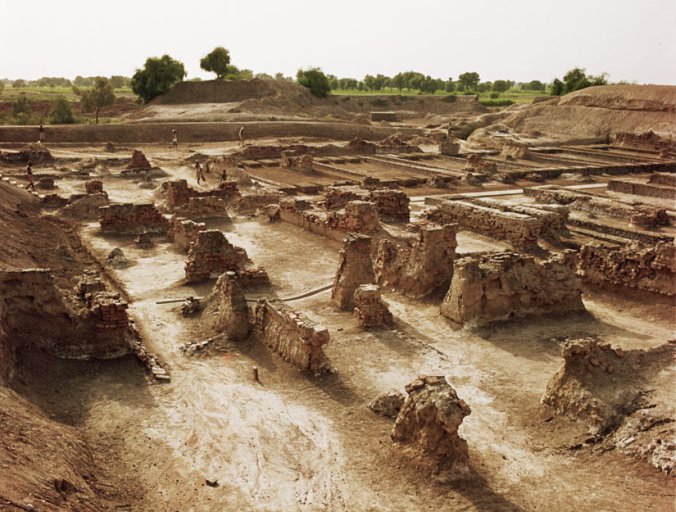
Click the image to go to the story in Discovery‘s news website:
THE GIST
- The Harappans enjoyed plumbing, complex trade routes and a system of writing.
- The civilization built up in a “goldilocks” period when the rivers flooded often enough to support agriculture.
- As the climate changed, so did the monsoon season, lowering the floods and support for their cities.
___________________________________________________
The mysterious fall of the largest of the world’s earliest urban civilizations nearly 4,000 years ago in what is now India, Pakistan, Nepal and Bangladesh now appears to have a key culprit — ancient climate change, researchers say.

Periyar Tiger Reserve, Kerala
The morning of the staff picnic began with a wakeup call at 4:30am to prepare for a prompt 6am departure to Munnar, a beautiful hill station in the Idukki district of Kerala. To the interns, an early morning with a long bus ride meant a great opportunity to catch up on some sleep after several long days of trekking and work. To the staff it meant the party could start even earlier.
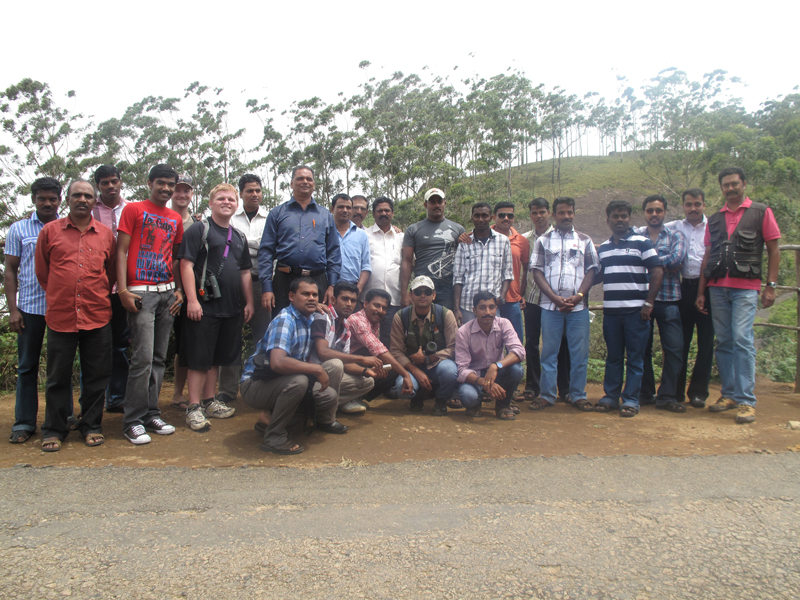
The Men of Cardamom County
Within minutes of leaving the Cardamom County parking lot, a small group of the staff was already busy preparing the music list for the day’s journey. Immediately the bus was pouring with energy- Bollywood music incited full volume singing and raucous dancing that was only made more amusing by the jostling motions of the moving bus. It provided not only a humorous and exciting start to the day but also a somehow appropriate cultural soundtrack to the beautiful mountain views, tea plantations, and villages that passed by the bus window on the way to Munnar. Continue reading
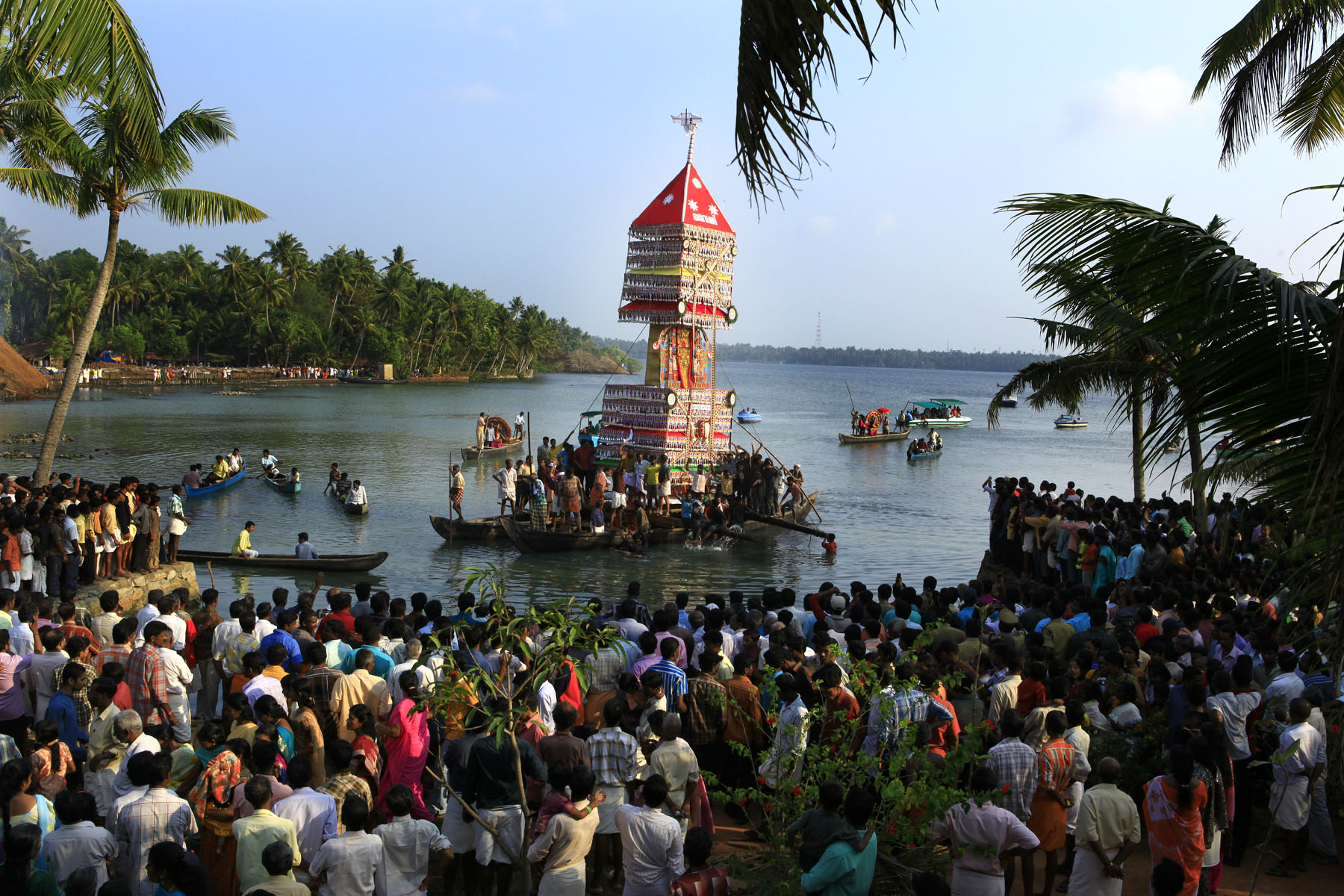
During the Malayalam month of Kumbham and Meenam (February & March), a special Keralan temple festival draws the faithful to the Allepy and Kollam districts. This festival, Kettukazhcha is a time where devotees of Goddess Parvathy bring offerings from their paddy field. At the temple of Chettikulangara they use sculpted and decorated forms of six temple cars known as ‘Kuthiras’, five ‘Therus’ (Chariots ) to represent the architectural skills of the ancient people of Chettikulangara. Continue reading

Monterey, CA

