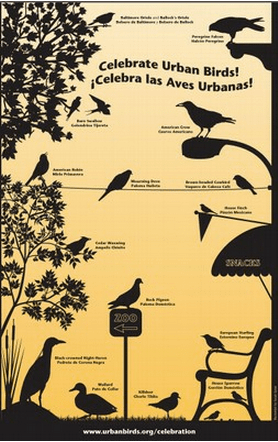
 For the past year, I have been working at the Cornell Lab of Ornithology for the project Celebrate Urban Birds. Distinct from other citizen science projects the Lab of O. is involved with, such as eBird or FeederWatch, Celebrate Urban Birds (CUBs) stays true to its name and hones in on the celebratory aspect of studying birds: artwork, festivals, education, and other activities promoting community. Of course, there is still data involved. Thousands of forms have been filed—both electronically and physically—containing information on sightings of the sixteen focal species within 10-minute observation periods. These observations, along with notes about sighting location, are the source of data for the project. Participants include the address from which they are looking for birds in the ten minutes, describe the general amount of greenery and pavement in the area (as well as the size of the area itself), and list whether they saw, did not see, or were not sure about each of the sixteen species. This information constitutes a checklist that can be compiled into a larger repository of sightings in various types of green spaces around the country; the CUBs website contains species maps according to the number of observations in the last 90 days, marking where, say, a Brown-headed Cowbird has and has not been seen.
Bird of the Day: Snowy Egret (Rancho Mirage, CA)

Road To Rio
The power of convergence and collaboration
• Sustainability optimists speak of an era of convergence – a coming together of new technologies and new business models to create a 21st century economy
• In the below video, sustainability pioneers explain the power of having common goals and a shared, collaborative vision
(click the banner below to go to the video)

3 Minutes Of Silence
Beauty is in the eye of the beholder. Turn the volume off (because beauty is in the ear of the beholder), go full screen, and click play. If all goes well for you, repeat with moderate volume.
Bhathra Kali Amman Goddess (Ten Handed Goddess)

This is the statue of the Goddess Veera Bathra Kaliamman situated 8 kms away from Thekkady, on the way to Madurai in between Gudalur and Lower camp(villages of Tamilnadu). The statue is nearly 42 feet high and is unlike anything elsewhere in India. Continue reading
Bird of the Day: Fox Sparrow

Basking Ridge, NJ
A Very Tough Call

Click the headline above to go to the story below:
A western Indian state has declared war on animal poaching, allowing forest guards to shoot hunters on sight to curb attacks on tigers, elephants and other wildlife. Continue reading
Black Lily

The Black lily is an ornamental species of flowering plant found in the Western Ghats of India. It grows a cluster of beautiful blossoms from a taller, leafless flower stalk and are surrounded by broad bracts. The underground stem tubers of the plant are rich in starch. Continue reading
Bird of the Day: White-crowned Sparrow (Palm Desert, CA)

Red Torch Ginger (Pyramidosphaera)
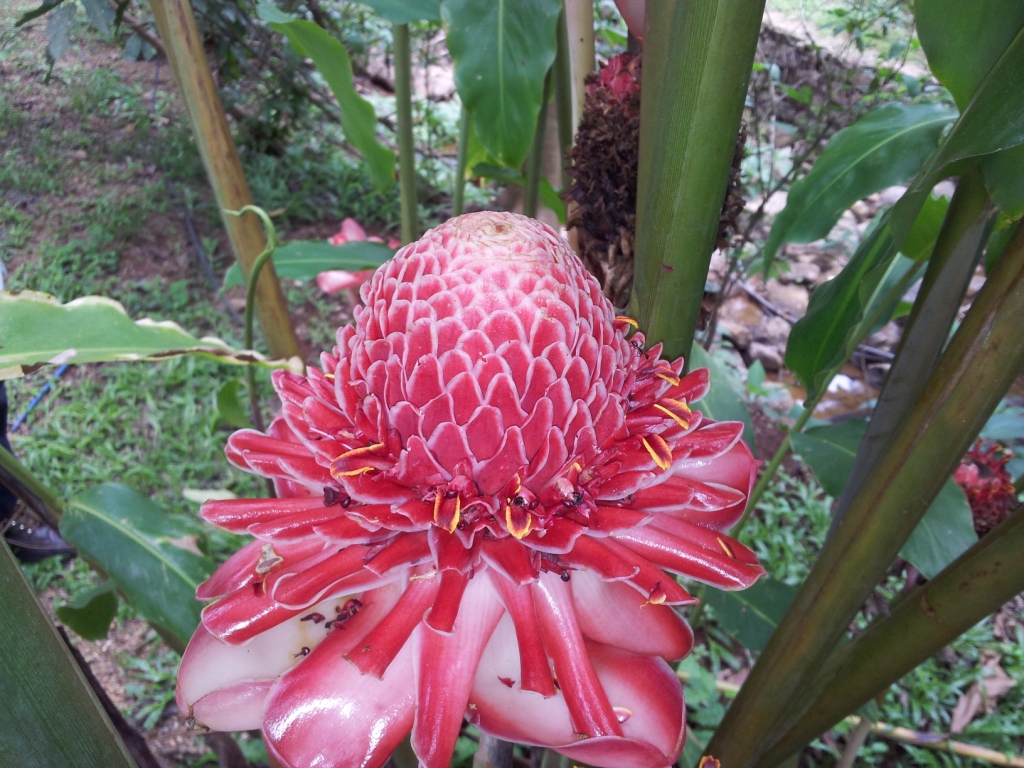
Red torch ginger is a perennial tropical plant native to Malaysia and Indonesia but naturalized in the Western Ghats of India. The plant grows from rhizomes, bulbous root structures similar to culinary part of the ginger family. The main attraction of the plant is its sturdy cluster of bracts that vary from light pink to deep rose color and resemble a flaming torch, hence the name Red Torch Ginger. Continue reading
Food Puzzles
 The New Yorker‘s Dana Goodyear is a foodie’s food writer. She reports on topics you maybe did not know you did not know about; but after, you realize you wanted to know. Her most recent blog post (click the image to the left) describes research asking questions which, in the spirit of science, may leave the non-scientist scratching their head (but read the post to the end to see how the puzzle is put together): Continue reading
Bird of the Day: Asian koel (Kumarakam, India)
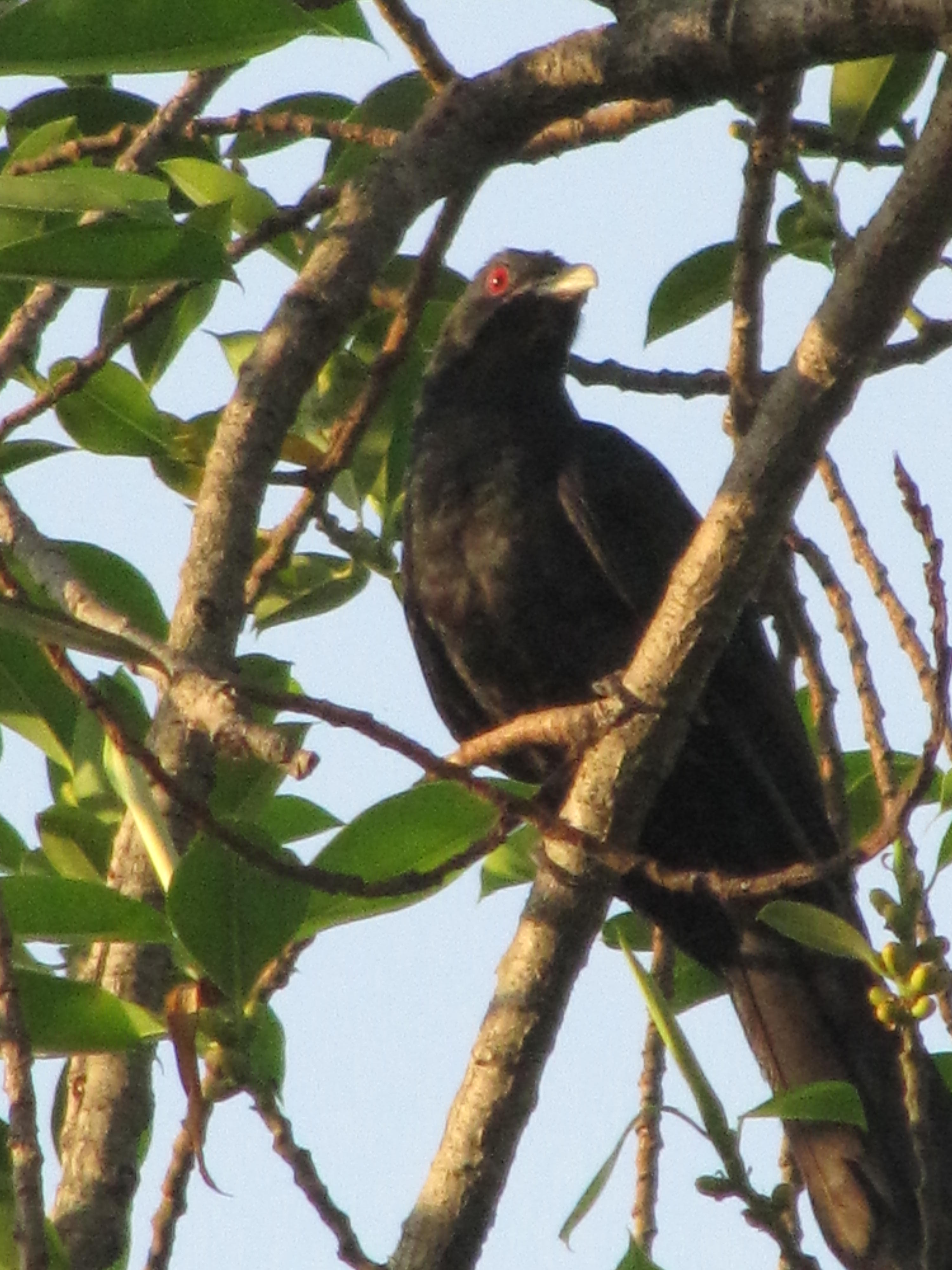
Photo: Mr.Steve, Cardamom County Guest from UK
Breadfruit
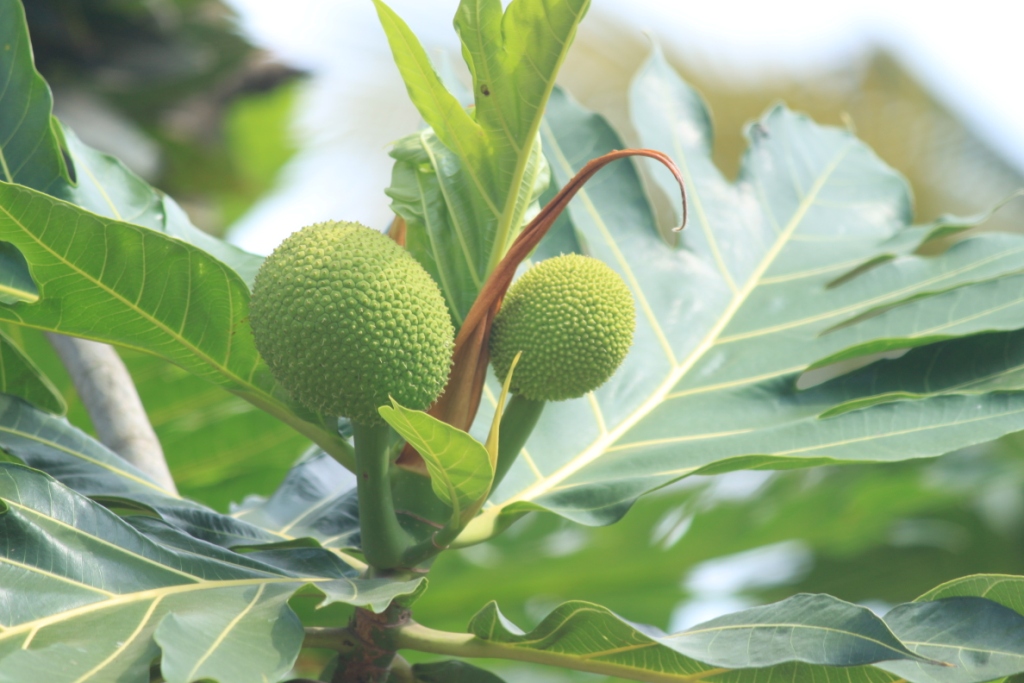
Breadfruit is an equatorial tropical fruit species found at the elevation of 1500m in the Western Ghats of South India. The starchy, potato-like fruit has a taste and texture similar to freshly baked bread when cooked; and hence the name ‘Breadfruit’. The tree grows vigorously to a height of 25m and produce 120-200 fruits annually. Continue reading
Beauty of Jordan: Wadi Dana at Dawn
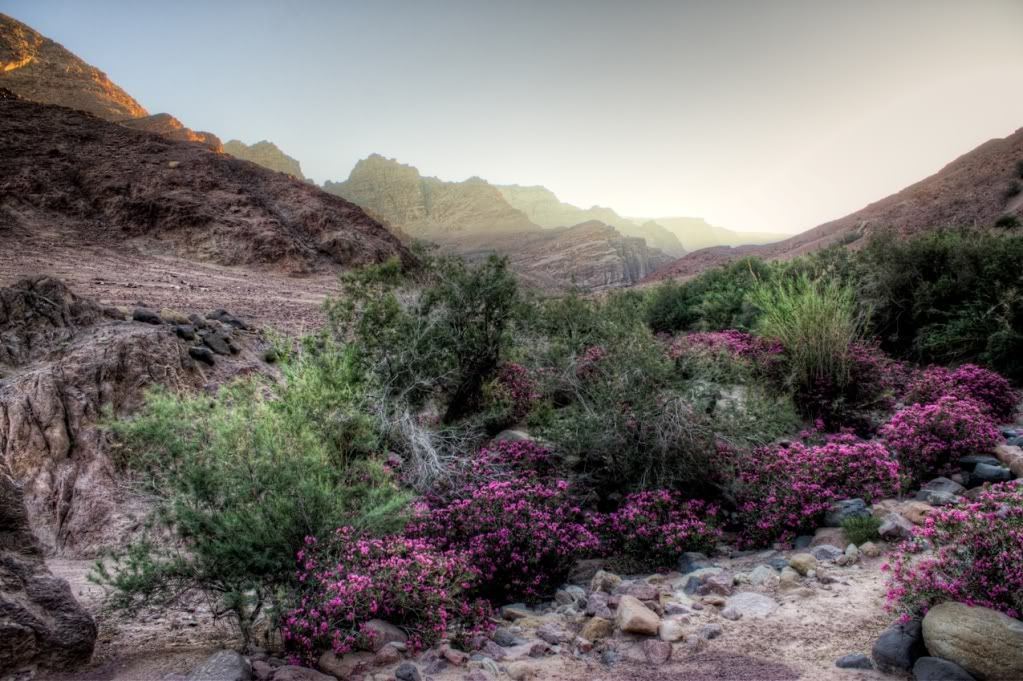
This is a series of posts on Jordan’s natural wonders, which will mainly include only one or two pictures and a brief description per post. I’m working at Feynan Ecolodge for this reason; Jordan is beautiful, culturally, historically, but most of all naturally. The wilderness here is something else, and it is my duty to share that beauty with the world. Continue reading
Bird of the Day: Red-breasted Nuthatch
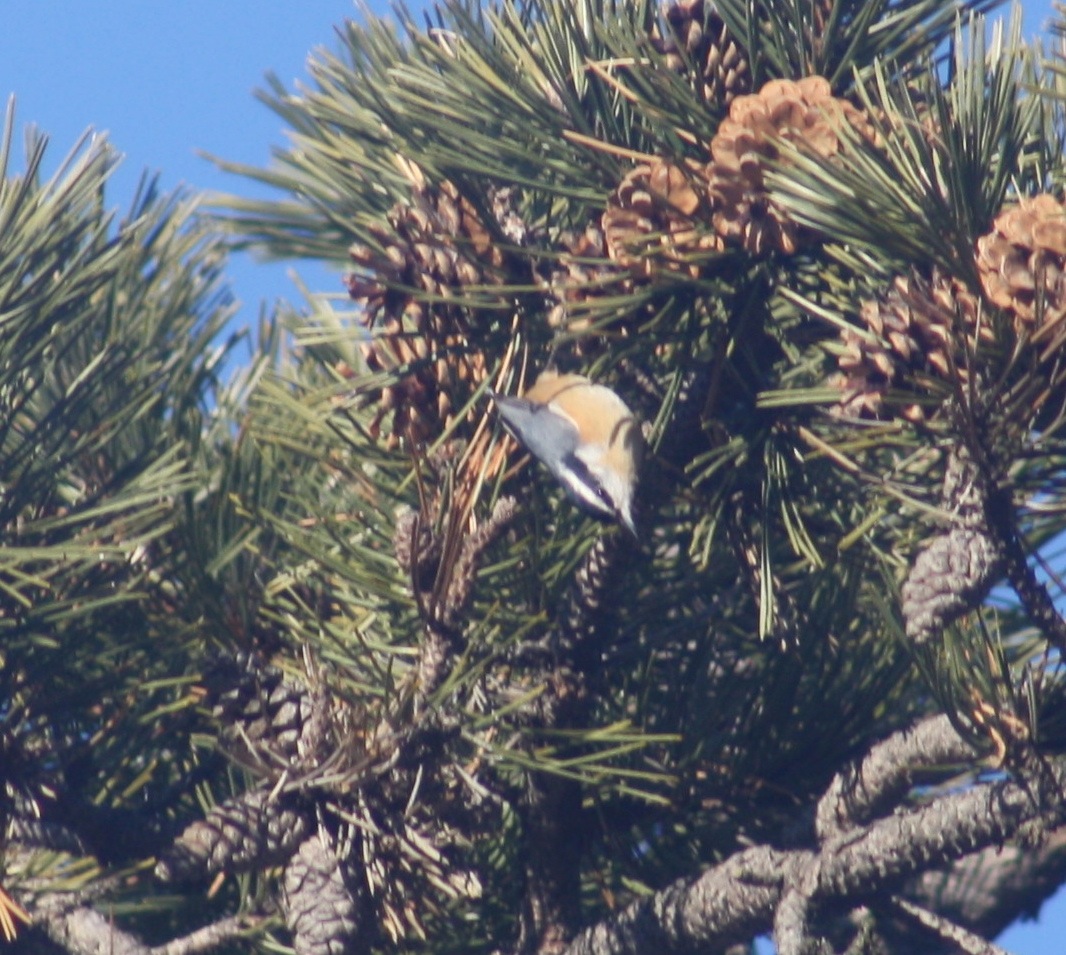
Round Valley Reservoir, NJ
Wild Periyar: May 22, 2012
Mr. & Mrs. Sutton staying at Cardamom County visited Periyar this morning and wanted to share their wonderful sightings with us.
While staying at Cardamom County we visited the Periyar Tiger Reserve and enjoyed a lot there. The first thing which attracted us was the Periyar’s naturally blessed landscape. Our kids were very excited and happy to spot elephants, wild dogs chasing sambar deer, bisons, wild boars with their piglets and some the birds too. We were so lucky to spot the elephants with the little one after a short period. This was a unique experience for us and our kids and we hope for the same in future. – Sutton Family
Sound Suits
I’ve written about numerous artists who have just the right “tinker’s eye” to see the aesthetic potential in what many would call trash. But as far as I know, Chicago based artist and educator Nick Cave (not to be confused with the deep voiced musician of the same name) is the only one to take the next step to turn sculpture into a kinetic, interactive celebration. Continue reading
Bird of the Day: Black Phoebe (Rancho Mirage, CA)

Common Bluebottle Butterfly (Graphium Sarpedon)
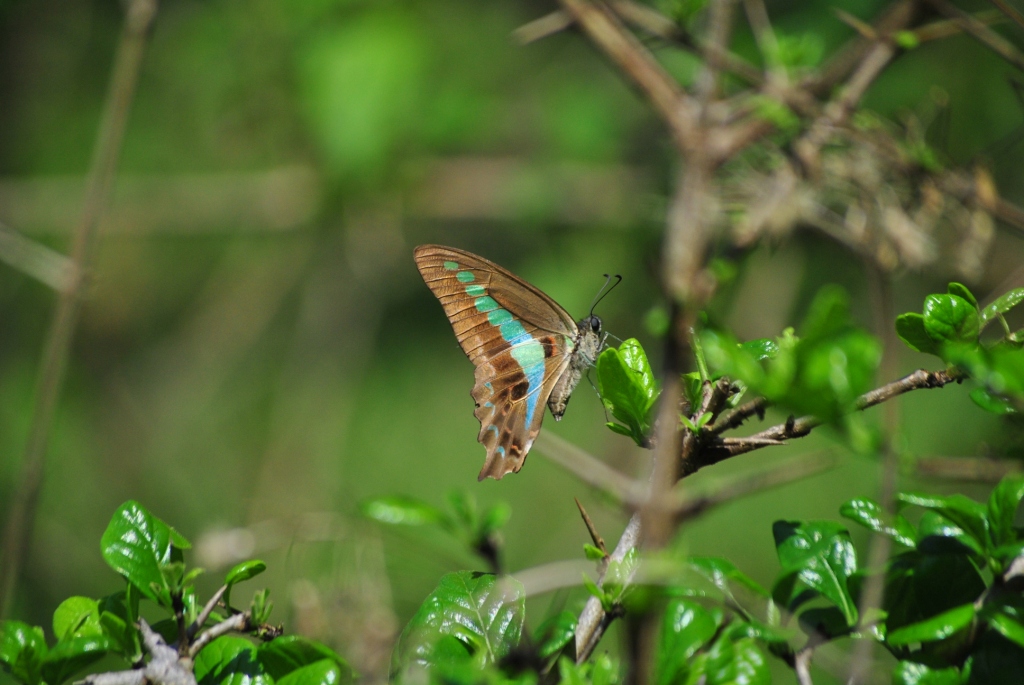
Common Bluebottle butterflies are frequently found in and around the wooded regions of the Western Ghats, especially in the Periyar Tiger Reserve. This handsome butterfly has a pale blue or greenish band running across the middle of its brown wings on the both sides. Continue reading
Commoner’s Dilemma
 A Perfect Moral Storm: The Ethical Tragedy of Climate Change
by Stephen Gardiner, Oxford, 512 pp, £22.50, July 2011, ISBN 978 0 19 537944 0
A Perfect Moral Storm: The Ethical Tragedy of Climate Change
by Stephen Gardiner, Oxford, 512 pp, £22.50, July 2011, ISBN 978 0 19 537944 0
Click the LRB banner above to go to the review of this important book, which starts:
For the benefit of anyone who has spent the past decade or so on a different planet, the most frequently asked questions about climate change on this one are as follows. Is it getting warmer? Yes, surface temperatures have risen by 0.8°C from pre-industrial levels. Are humans causing it? Almost certainly.
 Organikos