Graphic Comprehension Of Forest Loss

A section of forest in the Brazilian Amazon that was burned by cattle ranchers, seen on August 16, 2020. Cattle ranching is the largest driver of deforestation in the Amazon rainforest. Andre Penner/AP
The photograph heading the story is alarming enough, but the illustrations (especially the “scroll down” graphic) accompanying the written explanations are extremely compelling. Thanks to Benji Jones for the story and to Alvin Chang for the graphics in this Vox article:
The alarming decline of Earth’s forests, in 4 charts
Deforestation raged ahead again in 2022, even after scores of countries pledged to protect their forests.
Over the last decade, dozens of companies and nearly all large countries have vowed to stop demolishing forests, a practice that destroys entire communities of wildlife and pollutes the air with enormous amounts of carbon dioxide.
A big climate conference in Glasgow, in the fall of 2021, produced the most significant pledge to date: 145 countries, including Brazil, China, and Indonesia, committed to “halt and reverse” forest loss within the decade. Never before, it seems, has the world been this dedicated to stopping deforestation. Continue reading
Bird of the Day: Plumbeous Water Redstart
The Downside Of Dry

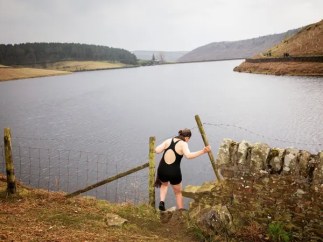
Baitings reservoir in Ripponden, West Yorkshire, in summer 2022, when the total stock of water in England’s reservoirs was at its lowest level since 1995. Photograph: Danny Lawson/PA
We do not favor panic button words in headlines; but when the cap fits, wear it:
‘Drought is on the verge of becoming the next pandemic’
While the world becomes drier, profit and pollution are draining our resources. We have to change our approach
The River Derwent in Cumbria has run dry in parts of the Borrowdale valley for the third consecutive year. Photograph: Christopher Thomond/The Guardian
During the summer months in the Oxfordshire town where I live, I go swimming in the nearby 50-metre lido. With my inelegantly slow breaststroke, from time to time I accidentally gulp some of the pool’s opulent, chlorine-clean 5.9m litres of water. Sometimes, I swim while it’s raining, when fewer people brave it, alone in my lane with the strangely comforting feeling of having water above and below me. I stand a bottle of water at the end of the lane, to drink from halfway through my swim. I normally have a shower afterwards, even if I’ve showered that morning. I live a wet, drenched, quenched existence. But, as I discovered, this won’t last. I am living on borrowed time and borrowed water. Continue reading
Bird of the Day: Greater Scaup
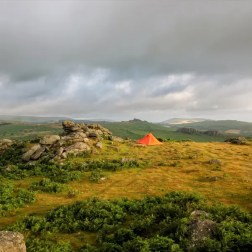
Varanger Peninsula, Norway
Duckweed, By Plantible Foods

Duckweed at the Plantible Foods aqua farm in San Marcos, Calif. (Eric Thayer/for The Washington Post)
We link frequently to articles about meat replacement options, and this appears to be the first time that duckweed is the plant protein being featured. So, thanks to Michael J. Coren, a climate advice columnist at the Washington Post, for this:
The plant protein that could push meat off your plate
SAN MARCOS, Calif. — I came to this aquatic farm an hour outside of San Diego because I wanted to see what could be the future of humanity’s protein supply.
At the moment, it looks more like a meth lab out of the drama “Breaking Bad,” jokes Tony Martens Fekini, the chief executive of Plantible Foods.
Decrepit recreational vehicles squat on the property. In one corner, people tend to vials, grow lights and centrifuges in a trailer lab. More than a dozen big ponds filled with duckweed, a tiny green plant, bask in the Southern California sunshine.
But the only thing cooking here is protein.
Bird of the Day: Red-bellied Woodpecker
Wind Power & Backyard Progress

A turbine blade more than 300 feet long. The $4 billion Vineyard Wind project is expected to start generating electricity by year’s end. Bob O’Connor for The New York Times
On previous occasions when we linked to stories about windfarms‘ large turbines, we have noticed that aesthetics can get in the way of progress, so thanks to Stanley Reed and Ivan Penn for this reporting from the New England coast:
A Giant Wind Farm Is Taking Root Off Massachusetts
The offshore energy project will have turbines taller than any building in Boston, but they will be barely visible from Martha’s Vineyard.
On a chilly June day, with the Massachusetts island of Martha’s Vineyard just over the distant horizon, a low-riding, green-hulled vessel finished hammering a steel column nearly 100 feet into the bottom of the Atlantic Ocean. Continue reading
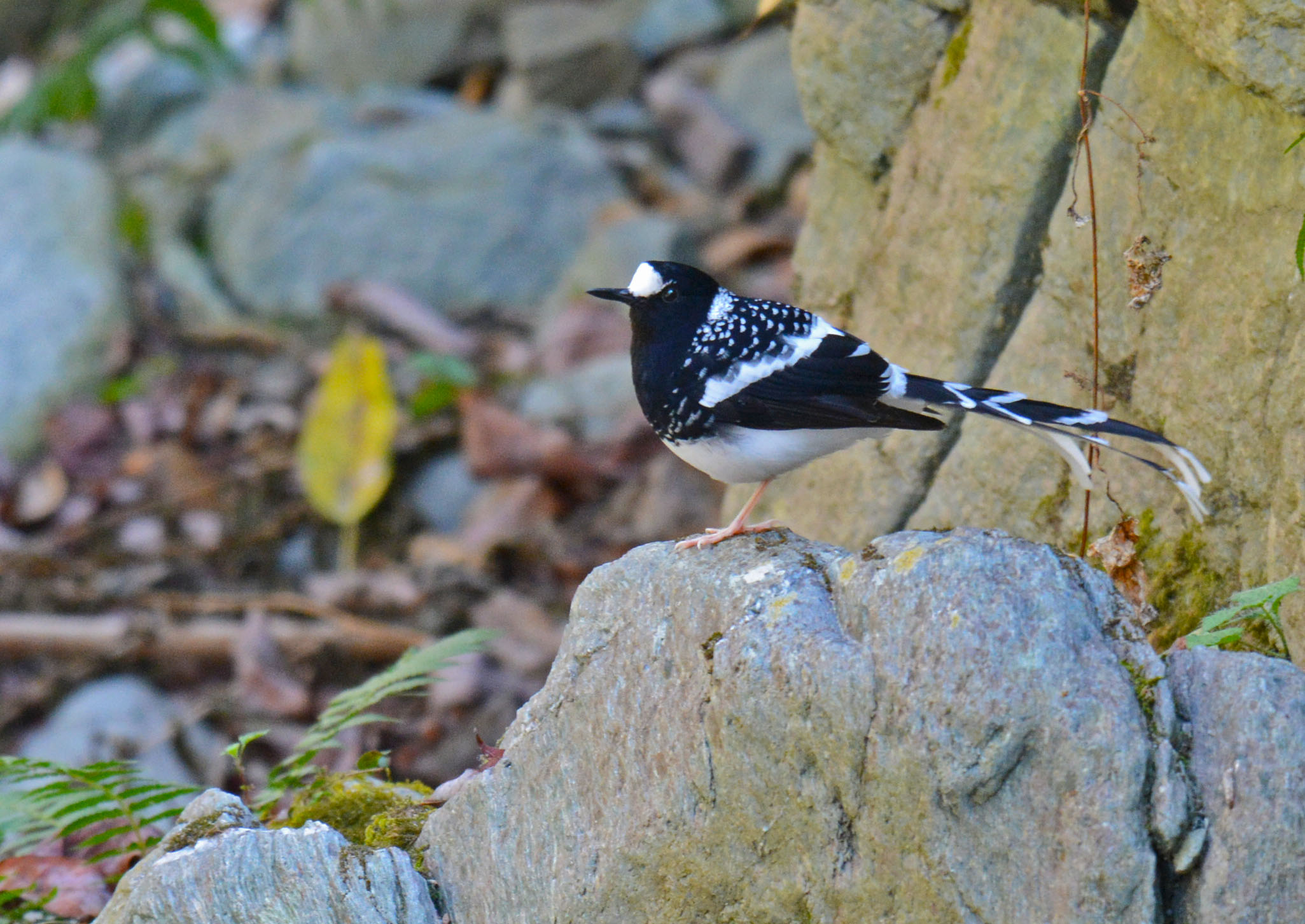
Bird of the Day: White-crested Laughingthrush
Plastics, Waste & What To Do
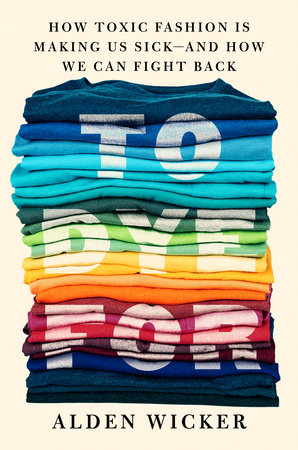
Four books have been read and summarized, thanks to Elizabeth Kolbert (the information challenges you, of course). The covers of those books appear here with links to independent booksellers where they are or will be available, and at minimum the opening story of Kolbert’s article is a must-read if you care about plastic:
They both release and attract toxic chemicals, and appear everywhere from human placentas to chasms thirty-six thousand feet beneath the sea. Will we ever be rid of them?
In 1863, when much of the United States was anguishing over the Civil War, an entrepreneur named Michael Phelan was fretting about billiard balls. At the time, the balls were made of ivory, preferably obtained from elephants from Ceylon—now Sri Lanka—whose tusks were thought to possess just the right density. Phelan, who owned a billiard hall and co-owned a billiard-table-manufacturing business, also wrote books about billiards and was a champion billiards player. Owing in good part to his efforts, the game had grown so popular that tusks from Ceylon—and, indeed, elephants more generally—were becoming scarce. He and a partner offered a ten-thousand-dollar reward to anyone who could come up with an ivory substitute.
A young printer from Albany, John Wesley Hyatt, learned about the offer and set to tinkering. In 1865, he patented a ball with a wooden core encased in ivory dust and shellac. Players were unimpressed. Next, Hyatt experimented with nitrocellulose, a material made by combining cotton or wood pulp with a mixture of nitric and sulfuric acids. He found that a certain type of nitrocellulose, when heated with camphor, yielded a shiny, tough material that could be molded into practically any shape. Hyatt’s brother and business partner dubbed the substance “celluloid.” The resulting balls were more popular with players, although, as Hyatt conceded, they, too, had their drawbacks. Nitrocellulose, also known as guncotton, is highly flammable. Two celluloid balls knocking together with sufficient force could set off a small explosion. A saloon owner in Colorado reported to Hyatt that, when this happened, “instantly every man in the room pulled a gun.”
It’s not clear that the Hyatt brothers ever collected from Phelan, but the invention proved to be its own reward. From celluloid billiard balls, the pair branched out into celluloid dentures, combs, brush handles, piano keys, and knickknacks. They touted the new material as a substitute not just for ivory but also for tortoiseshell and jewelry-grade coral. These, too, were running out, owing to slaughter and plunder. Celluloid, one of the Hyatts’ advertising pamphlets promised, would “give the elephant, the tortoise, and the coral insect a respite in their native haunts.” Continue reading
Bird of the Day: Azure-hooded Jay
Celebrating French Environmental Commitments

Paris mayor Anne Hidalgo and the co-president of the Paris bid for the 2024 Olympics, Tony Estanguet, paddle on the Seine in Paris. Photograph: Reuters
Since 11+ years ago many valuable environmental opinions by George Monbiot have been linked to in our pages; today a celebration of a neighboring country’s efforts:
When it comes to rich countries taking the environment seriously, I say: vive la France
Emmanuel Macron’s government is at least doing the bare minimum to avert the planetary crisis – and putting the UK to shame
While we remain transfixed by a handful of needy egotists in Westminster and the crises they manufacture, across the Channel a revolution is happening. It’s a quiet, sober, thoughtful revolution, but a revolution nonetheless. France is seeking to turn itself into an ecological civilisation. Continue reading
Bird of the Day: Senegal Coucal
Martin Rees Making Sense
We rarely link to audio or video, instead sharing reading material we think can give unique insight into the topics we are interested in. The link to this podcast episode is unusual, in that sense, but not at all unusual in terms of the quality of conversation that Sam Harris conducts. Subscription recommended to be able to listen to the whole episode with Martin Rees (and all of the consistently excellent episodes):
Sam Harris speaks with Martin Rees about the importance of science and scientific institutions. They discuss the provisionality of science, the paradox of authority, genius, civilizational risks, pandemic preparedness, artificial intelligence, nuclear weapons, the far future, the Fermi problem, the prospect of a “Great Filter”, the multiverse, string theory, exoplanets, large telescopes, improving scientific institutions, wealth inequality, atheism, the conflict between science and religion, moral realism, and other topics. Continue reading
Bird of the Day: White Wagtail
Useful Summary Of Carbon Credit Schemes
Anthropocene Magazine has a useful summary, created by Mark Harris, of the strength’s, weaknesses, opportunities and threats of various carbon credit schemes. In a short read it helps clarify some, if not all, questions that can generate from conflicting headlines on the topic:
What Counts As A Carbon Credit?
A new UN draft report threatens to sideline billions of tons of future carbon removal
Back in 2015, the Paris Agreement called for the creation of an international program through which countries could trade emissions to meet their climate commitments. For that to happen, the world has to agree on what qualifies for a carbon credit. Continue reading
Bird of the Day: Yellow-eared Toucanet
Thank You, Church Of England

‘The climate crisis threatens the planet we live on, and people around the world who Jesus Christ calls us to love as our neighbours,’ says Justin Welby, the archbishop of Canterbury. Photograph: Gareth Fuller/PA
This is likely the first, and maybe the only time we ever thank a church in our pages (religion has shown up only a few times, whereas divestment is quite common in our pages), but it is certainly warranted in this case:
C of E divests of fossil fuels as oil and gas firms ditch climate pledges
Church pension and endowment funds shed holdings after U-turns by BP and Shell
The Church of England is divesting from fossil fuels in its multibillion pound endowment and pension funds over climate concerns and what the church claims are recent U-turns by oil and gas companies. Continue reading
Bird of the Day: Ruff
Frauenkirchen, Austria
Prime Pitch Punished

Federal regulators have sued Amazon, alleging the company for years “tricked” people into Prime memberships that were purposefully hard to cancel. FREDERIC J. BROWN/AFP via Getty Images
We have shared our concern about the company so many times in the last decade it is surprising that this part of their market aggression has not featured until now:
FTC sues Amazon for ‘tricking and trapping’ people in Prime subscriptions
Federal regulators have sued Amazon, alleging the company for years “tricked” people into buying Prime memberships that were purposefully hard to cancel. Continue reading