The New Climate War Book Tour Optimism

If you are wondering where the hope comes from, read Eric Schwartzman’s article at Yale Climate Connections:

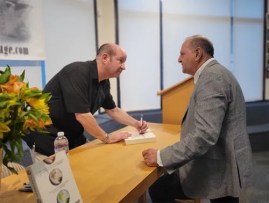
Climate scientist Michael E Mann PhD, author of The New Climate War signs his book for winemaker Ross Halleck of Halleck Vineyard in Sonoma County, California.

Scientist Michael Mann expresses hope during West Coast book tour

University of Pennsylvania climate scientist says he remains optimistic despite daunting challenges and continued concerns about ‘false’ climate solutions.

CORTE MADERA, CALIFORNIA – Don’t believe the climate crisis doomsayers: We can still achieve a 50% reduction in carbon emissions by 2030. But we have to elect lawmakers with the political will to enact meaningful climate legislation. The atmosphere is warming significantly, just as Exxon Mobil scientists were predicting back in 1982. Continue reading

Elephant Seals & Marine Sciences

Thanks to Sierra for this:

When Elephant Seals Become Ocean Researchers

Marine mammals unlock the secrets of climate and the Arctic

By Kate Golden

Illustrations by Masha Foya

ON A FEBRUARY MORNING at Año Nuevo Reserve on the coast of Northern California, hundreds of gray-brown elephant seals lay strewn, lumplike, all over the beach. It was hard to hear anything over the honks and shrieks of status jockeying and sex dramas. The north wind gusted to 35 knots and blew a river of fine sand into everyone’s faces. At a dense seal cluster near the water, researchers and students from the University of California, Santa Cruz, knelt over an 815-pound female whose stern had been labeled “X1” with Clairol bleach. Continue reading

Alerce, A Mysterious Phenomenon Examined Scientifically

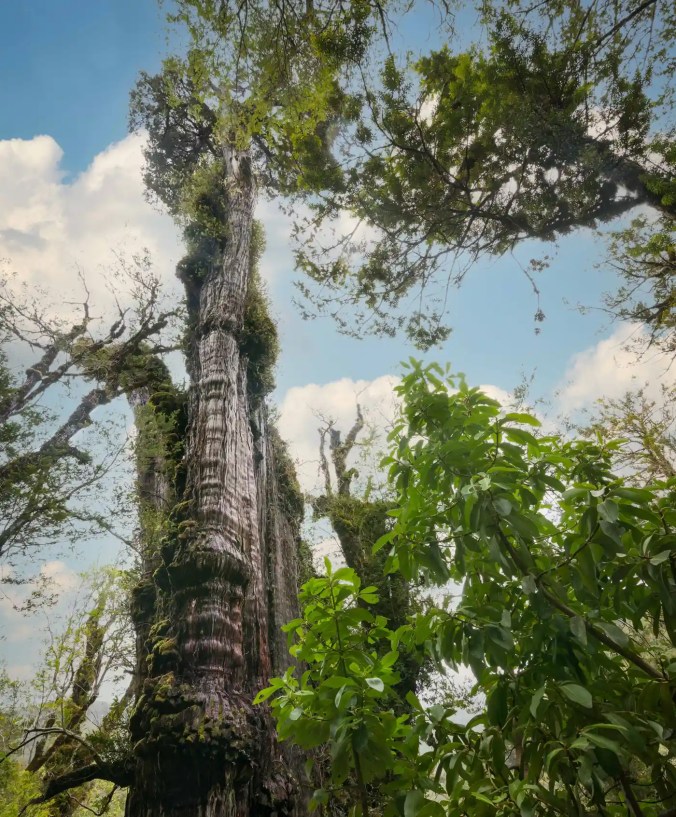
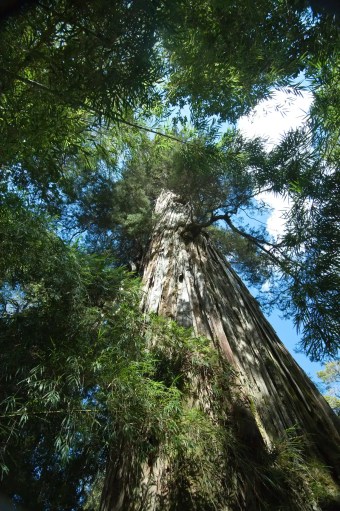
The Gran Abuelo tree in Alerce Costero national park, Chile. Buried alerce trunks can hold carbon for more than 4,000 years. Photograph: Salomón Henríquez

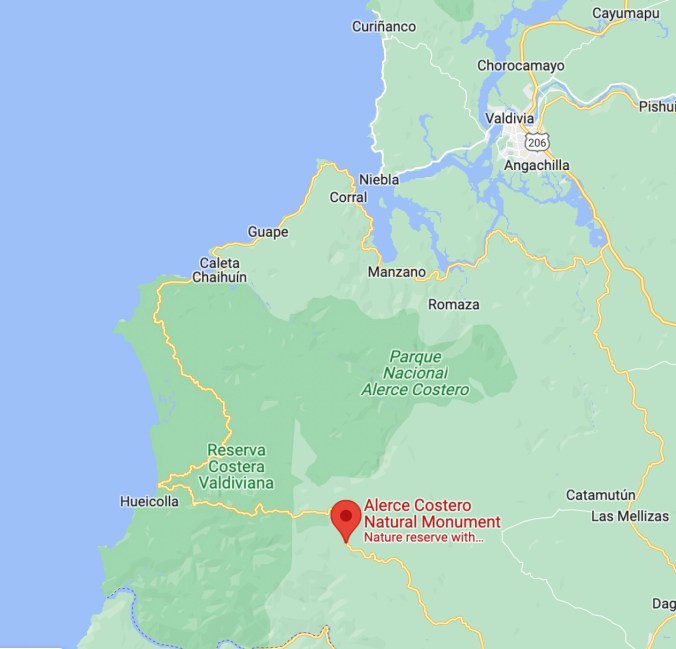
I do not recall whether we saw the tree pictured above, but we certainly breathed in the oxygen it expired. We spent the summer of 2009 in southern Chile, some of it working in the Chaihuin River Valley–a portion of the Reserva Costera Valdiviana co-owned at the time by WWF and The Nature Conservancy. The “Caleta” entrance to Chaihuin can be seen in the map below.

We have also seen the redwood trees in California, distant cousins of the alerce. Spectacular is an insufficient word to describe them, but hours-long visits to redwoods cannot compare to sleeping night after night under alerces. Chaihuin was for our family an immersion into the alerce ecosystem. Although I reserve the word miracle for other types of mysterious phenomena, I have no problem with a scientist using the word in this manner:

Alerce shingle was used as currency by local populations throughout the 1700s and 1800s. Photograph: Krystyna Szulecka Photography/Alamy

‘It’s a miracle’: Gran Abuelo in Chile could be world’s oldest living tree

100ft alerce has estimated age of 5,484, more than 600 years older than Methuselah in California

In a secluded valley in southern Chile, a lone alerce tree stands above the canopy of an ancient forest.

Green shoots sprout from the crevices in its thick, dark trunks, huddled like the pipes of a great cathedral organ, and water streams down its lichen-streaked bark on to the forest floor from bulbous knots in the wood. Continue reading

On Those 20 Quadrillion+ Ants, Again

Ants in Escazu

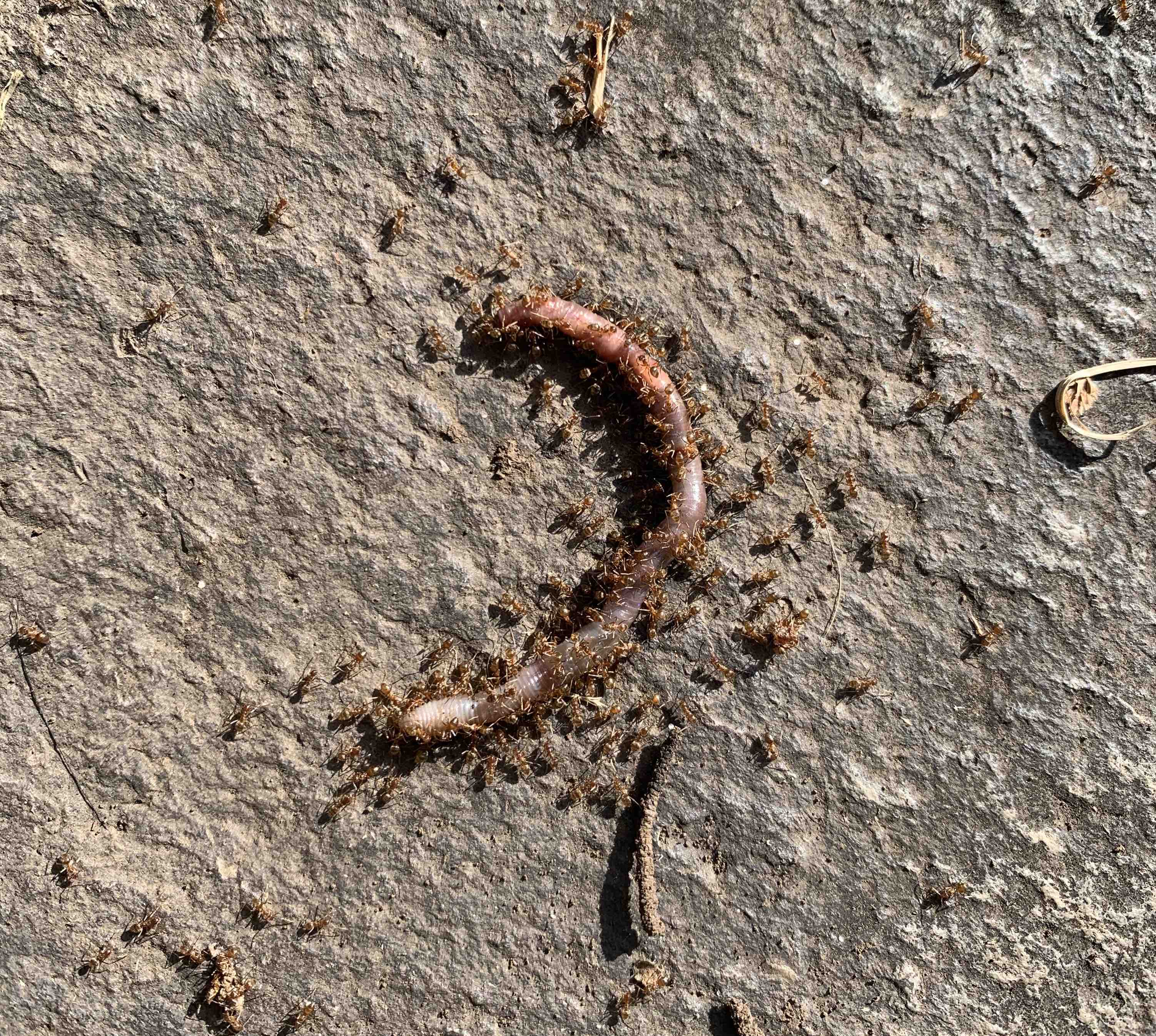
The earthworm in the photo above had been in a bag of soil where a coffee seedling started germinating earlier this year. I was moving the seedling from its small “starter” bag to a larger one, and the earthworm jumped out, wriggling under the nearby supplies I was working with. I did not see it again until it was too late. Since earthworms are good for soil, and we are in the early stages of a soil regeneration project, I was sorry to see the worm lose its life. This particular species of ant is currently everywhere on the property where we are re-planting coffee. I have not seen so many of this type of ant at any point in the last 22 years on this property, and their shocking abundance made me think of that new ant study. Normally we do not repeat sharing of news stories here, unless new information has come to light. It has only been a couple days, but I must share more on the study because my planting work is keeping the subject in front of me, and the photos in this article are that good.

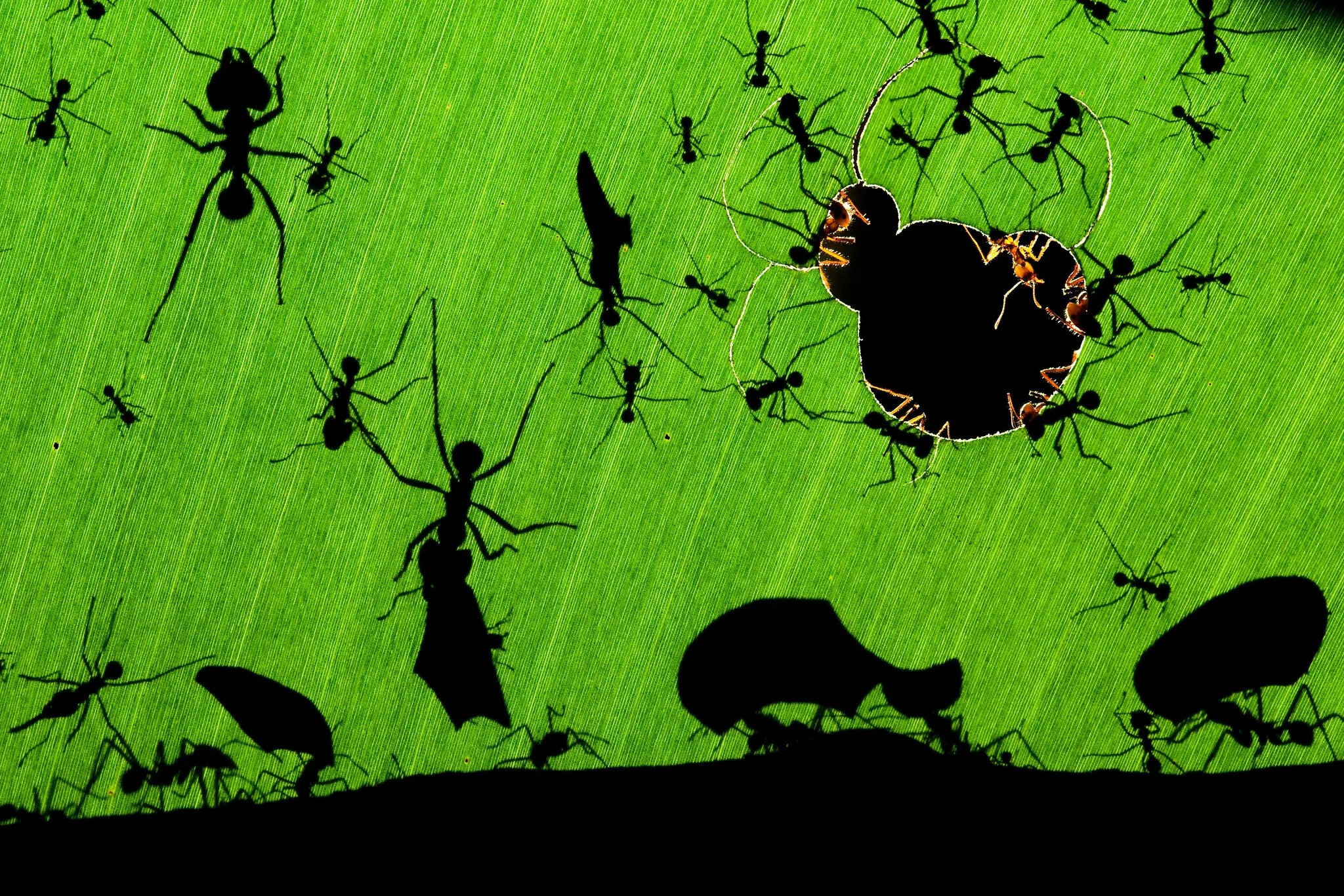
Leaf cutter ants in Costa Rica. The researchers sampled 1,300 locations around the world, estimating ant abundance in different environments in areas such as forests and steppes. Bence Mate/Nature Picture Library, via Alamy

Rebecca Dzombak, who authored this article for the New York Times, will be on our radar from now on:

Weaver ants engaged in teamwork. Sunthorn Viriyapan/Alamy

Counting the World’s Ants Requires a Lot of Zeros

There are 20 quadrillion ants worldwide, according to a new census, or 2.5 million for every living human. There are probably even more than that.

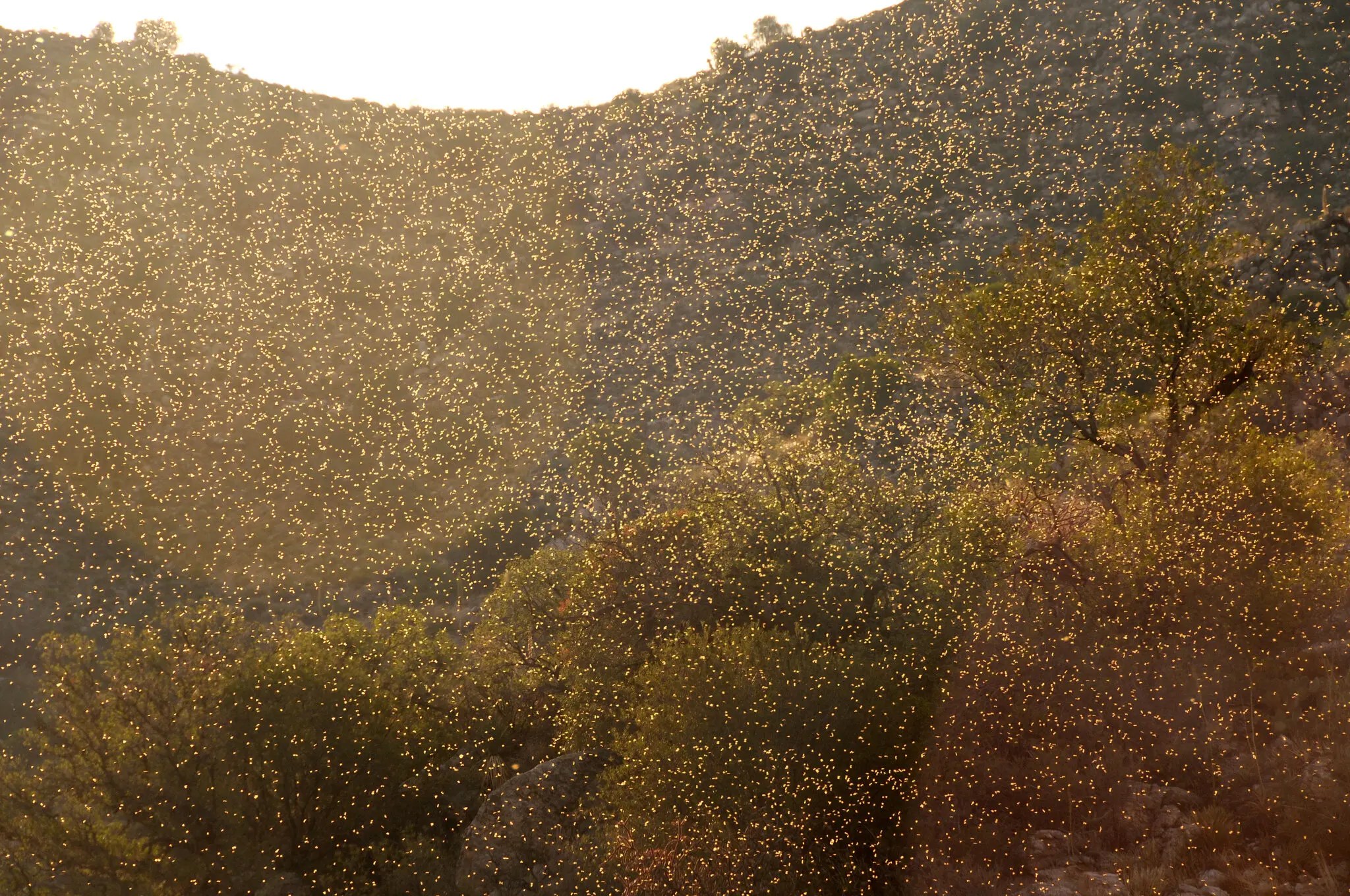
Male leaf cutter ants on the move over the Sonoran Desert in search of females and to make more ants. Norma Jean Gargasz/Alamy

Right now, ants are scurrying around every continent except Antarctica, doing the hard work of engineering ecosystems. They spread seeds, churn up soil and speed up decomposition. They forage and hunt and get eaten. You may not know how much you rely on them. Continue reading

Really, World Bank?

We knew there were still agents of climate skepticism, and even deniers, in important positions of influence. But the person trusted to lead the World Bank is among the last we would expect to be one of them. Really. Read about it in Bill McKibben’s newsletter:

The Global Banker Who’s Not Sure the Globe is Warming

Biden’s Easiest Climate Call Ever is to Ditch David Malpass

Some essential climate tasks are hard and expensive and take years.

And a few could not be easier. President Biden needs—now—to get rid of David Malpass as the head of the World Bank. Continue reading

Ant Mass Calculation

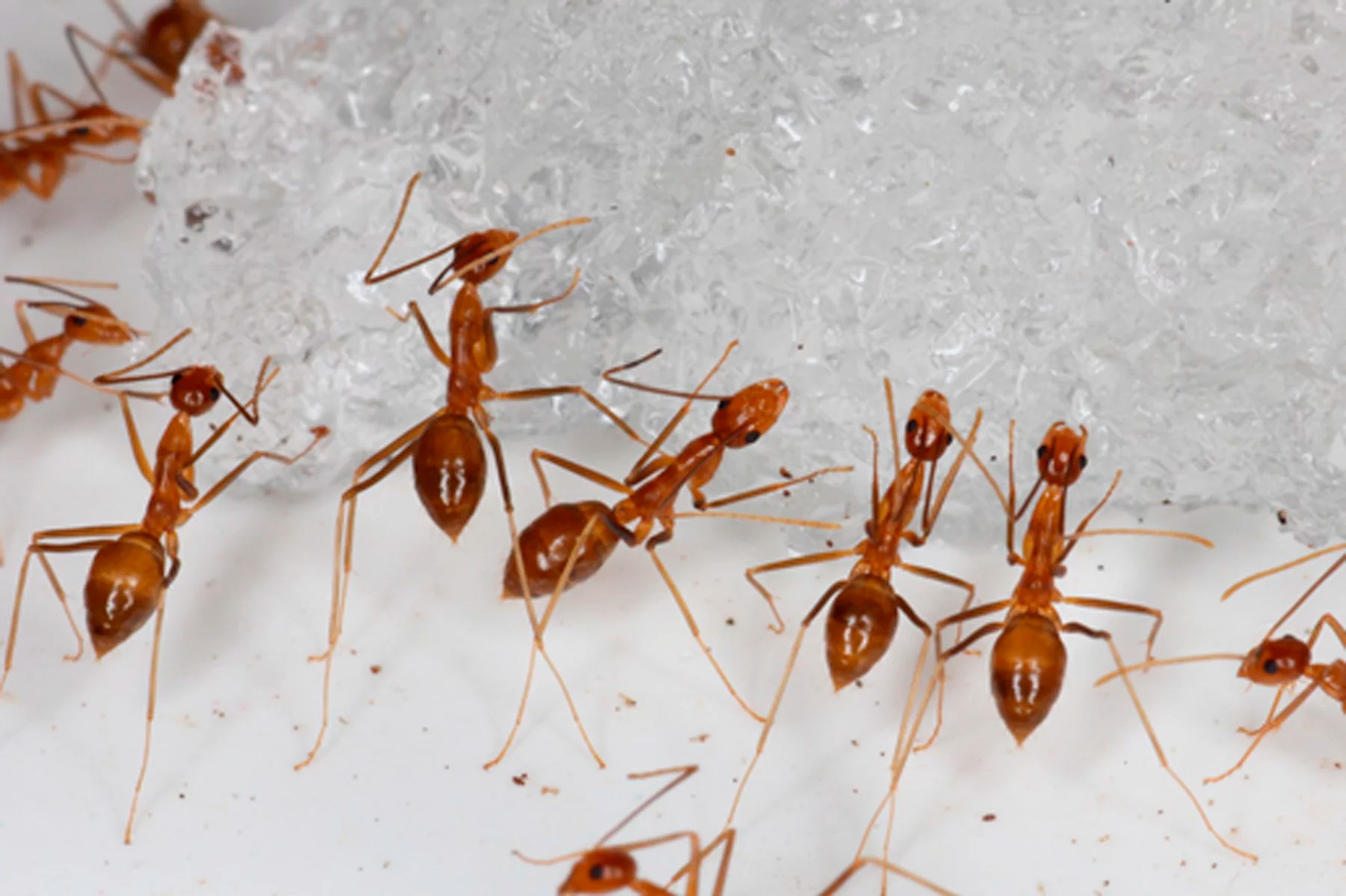
In this photo provided by the U.S. Fish and Wildlife Service, yellow crazy ants are seen in a bait testing efficacy trial at the Johnston Atoll National Wildlife Refuge in December, 2015. An invasive species known as the yellow crazy ant has been eradicated from the remote U.S. atoll in the Pacific. Robert Peck/AP

The mass of ants on earth is not a topic we have considered, but there is not too much surprise at reading this news:

The number of ants on Earth has a mass greater than all birds and mammals combined

For every human on Earth, there are estimated to be about 2.5 million ants — or 20 quadrillion in total.

A new study published by researchers at both the University of Hong Kong and University of Würzburg in Germany attempts to count the total number of ground-dwelling and tree-dwelling ants. Continue reading

Essential Lithium & Essential Water

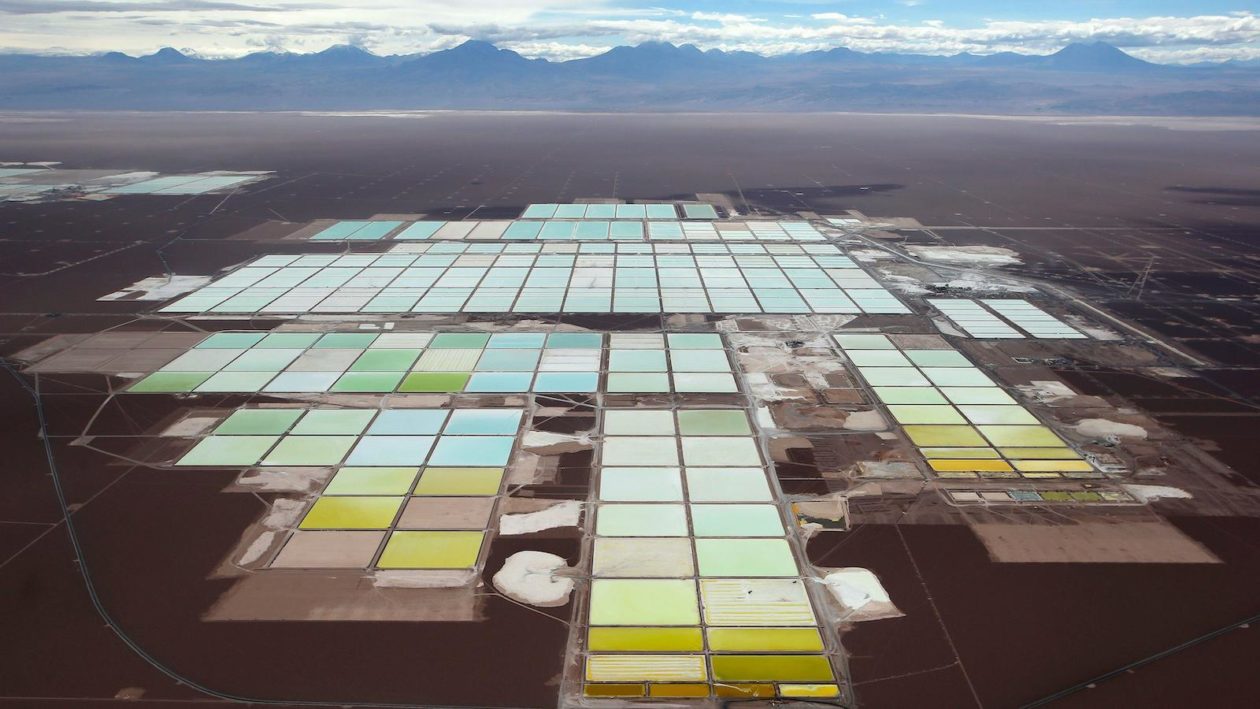
Brine pools at the Soquimich lithium mine on a salt flat in northern Chile. IVAN ALVARADO / REUTERS VIA ALAMY

On my one visit to the Atacama desert in 2009 I had a feeling unlike any I had previously experienced, and it was attributed to the lithium. There is so much, you can feel it. And to put it simply, it feels good. I knew it was being mined, but I assumed it was primarily for pharmaceutical use; no clue it would become so important for batteries. And this set up a sort of zero-sum game, which Fred Pearce helps to understand:

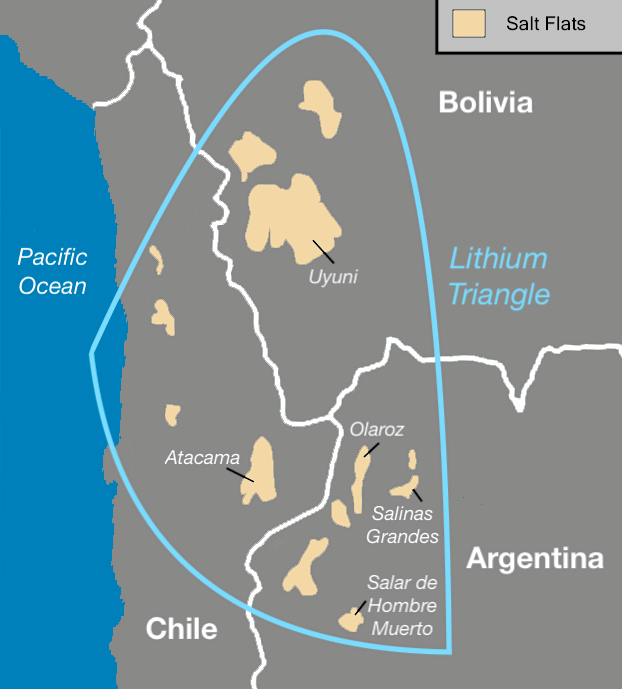
The Lithium Triangle region. YALE ENVIRONMENT 360

Why the Rush to Mine Lithium Could Dry Up the High Andes

The demand for lithium for EV batteries is driving a mining boom in an arid Andes region of Argentina, Chile, and Bolivia, home to half the world’s reserves. Hydrologists are warning the mines could drain vital ecosystems and deprive Indigenous communities of precious water.

What environmental price should the world be willing to pay for the metals needed to switch to electric vehicles? The question is being asked urgently in South America where there are growing fears that what is good for the global climate may be a disaster for some of the world’s rarest and most precious ecosystems — salt flats, wetlands, grazing pastures, and flamingo lakes high in the Andean mountains. Continue reading

Math & Him

When I started graduate school 34 years ago I was 25 years old. I had scored sufficiently high on the math section of the GMAT to be accepted into a program that assumed all students would be comfortable with calculus. Not only was I years since my last math class but I had never taken calculus. The experience of starting a quantitative program of study for which I was mathematically unprepared was no fun whatsoever. But there is a funny story to share, another day. For now, all eyes on this book, which a while back I had read an excerpt of here:

Illustration by Nicholas Konrad / The New Yorker

How Mathematics Changed Me

If one is inclined toward mysteries, mathematics can lead one to the conclusion that behind the veil of life there is a structure and an order.

I have written about mathematics for The New Yorker and, lately, also in my book “A Divine Language: Learning Algebra, Geometry, and Calculus at the Edge of Old Age,” and I thought that I had said everything I had to say about mathematics and my simple engagement with it, but I find I can’t stop thinking about it…

María Medem

And then yesterday I followed that up by reading this op-ed, which on its own is also worth anyone’s reading:

Math Is the Great Secret

As a boy in the first weeks of algebra class, I felt confused and then I went sort of numb. Adolescents order the world from fragments of information. In its way, adolescence is a kind of algebra. The unknowns can be determined but doing so requires a special aptitude, not to mention a comfort with having things withheld. Straightforward, logical thinking is required, and a willingness to follow rules, which aren’t evenly distributed adolescent capabilities. Continue reading

Patagonia 2.0

Details of a desk in a Patagonia office with a stack of orange and brown stickers that read “defend bears ears national monument’ on top of stacks of magazines and papers.

Patagonia has become more politically active, going so far as to sue the Trump administration in a bid to protect the Bears Ears National Monument. Laure Joliet for The New York Times

We have mentioned this company multiple times in our pages over the years, because we take inspiration from it, the same way we have taken inspiration from the example set by Chuck Feeney. It is worth noting that I also value everything I have ever bought from Patagonia. The day of this blizzard in New York I took an old beat up backpack in to see if they could repair it in the nearby shop; instead, they gave me a new one.

Good quality products, combined with good service, make the good environmental values of the company all the better:

“Hopefully this will influence a new form of capitalism that doesn’t end up with a few rich people and a bunch of poor people,” said Mr. Chouinard. Meridith Kohut for The New York Times

Billionaire No More: Patagonia Founder Gives Away the Company

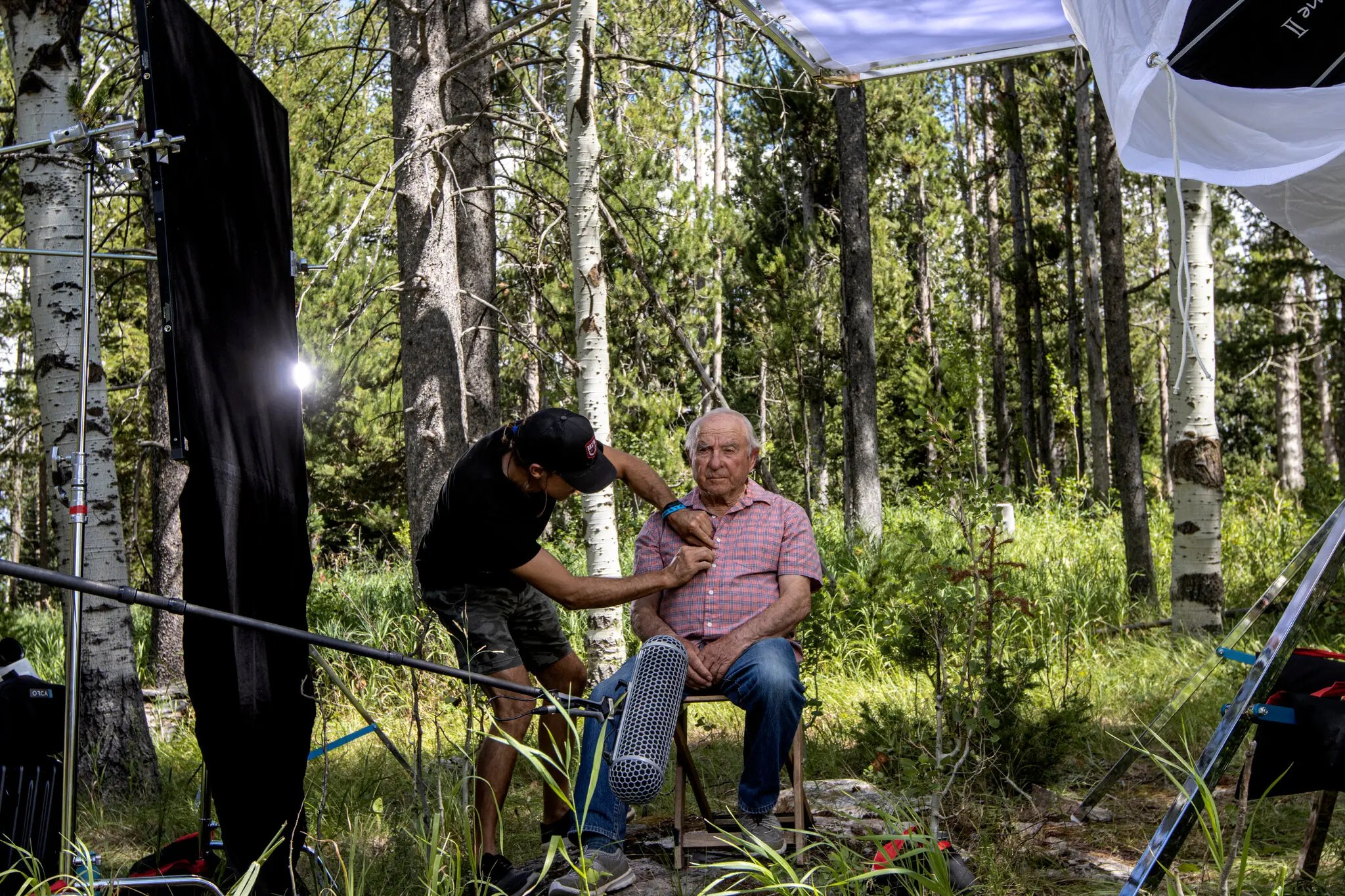
Mr. Chouinard filmed an announcement for his employees at home in Wyoming. By giving away the bulk of their assets during their lifetime, the Chouinards have established themselves as among the most charitable families in the country. Natalie Behring for The New York Times

A half century after founding the outdoor apparel maker Patagonia, Yvon Chouinard, the eccentric rock climber who became a reluctant billionaire with his unconventional spin on capitalism, has given the company away.

Rather than selling the company or taking it public, Mr. Chouinard, his wife and two adult children have transferred their ownership of Patagonia, valued at about $3 billion, to a specially designed trust and a nonprofit organization. They were created to preserve the company’s independence and ensure that all of its profits — some $100 million a year — are used to combat climate change and protect undeveloped land around the globe. Continue reading

Solar@School, Win-Win-Win

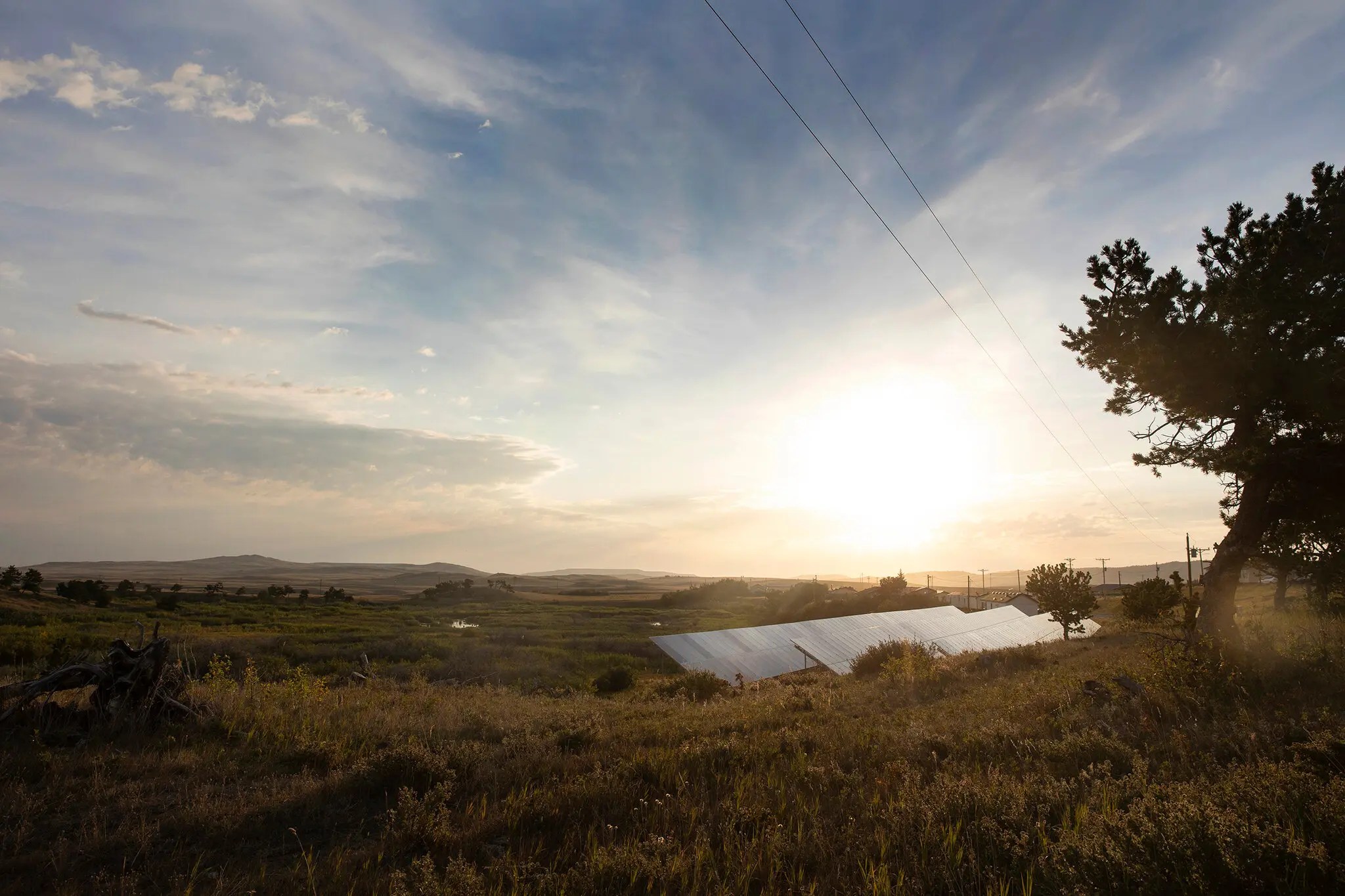
Solar panels installed near the Heart-Butte schools in Montana. Janie Osborne for The New York Times

Two elementary school students stand at table covered in papers, markers and other school materials, and face a wall with a poster map of Montana, divided by tribal territories. The child at left uses an orange marker to point at an area called “Blackfeet & Gros Ventre.”

Students at Heart-Butte School exploring their area of the world on a map in the “Blackfeet Immersion” classroom. Janie Osborne for The New York Times

In the USA it has become normal to think that partisan divisions prevent collaboration on issues of common interest. The partisan divisions are real, and then some; but there are silver linings here and there.  Cara Buckley, a climate reporter, continues to demonstrate a talent for finding cases where communities benefit from collective action in the act of taking better care of the environment:

Black and white goats frolic in grass on a field, which is fenced off and behind which is a series of solar panels angled at the sun. Trees line the horizon.

Goats cared for by Batesville High School’s 4-H students, next to the school’s solar panels. “If you’re conservative, we didn’t ask you for more taxes, if you’re liberal, you love the green concept,” Dr. Hester said. Terra Fondriest for The New York Times

Facing Budget Shortfalls, These Schools Are Turning to the Sun

Public schools are increasingly using savings from solar energy to upgrade facilities, help their communities, and give teachers raises — often with no cost to taxpayers.

One school district was able to give pay raises to its teachers as big as 30 percent. Another bought new heating and ventilation systems, all the better to help students and educators breathe easier in these times. The improvements didn’t cost taxpayers a cent, and were paid for by an endlessly renewable source — the sun.

Mike Tatsey, in jeans and a light blue plaid short sleeve shirt, his thumbs hooked into his jean pockets, stands in a field with solar panes in the background. Brush partially obscures the foreground.

Mike Tatsey, superintendent of schools in Heart-Butte, believes that freeing up extra money for staples like groceries and shoes could have a ripple effect in classrooms. Janie Osborne for The New York Times

As solar energy gains traction across the country, one beneficiary have been schools, particularly those in cash-strapped districts contending with dwindling tax bases.

From New Jersey to California, nearly one in 10 K-12 public and private schools across the country were using solar energy by early 2022, according to data released Thursday by Generation180, a nonprofit that promotes and tracks clean energy. That’s twice as many as existed in 2015. Continue reading