Going The Extra Mile For Monarch Butterflies

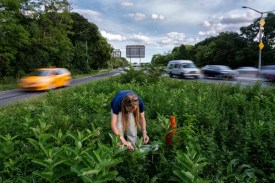
Ms. Elman collects butterfly eggs from milkweed plants growing wild along New York City’s highways. Karine Aigner

Some of the best stories are about people who go the extra mile for others:

To Save Monarch Butterflies, They Had to Silence the Lawn Mowers

An unlikely group of New Yorkers is winning small victories in the battle to protect butterfly habitats.

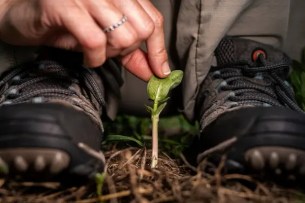
The small white dot under a milkweed plant is a monarch butterfly egg. Karine Aigner

The Long Island Expressway is not generally a place people linger, unless they’re stuck in traffic.

But during the summer, Robyn Elman can often be found walking alone near the highway’s shoulder, inspecting scraggly patches of overgrown milkweed. The plant is the only source of nutrition for monarch caterpillars before they transform into butterflies. Continue reading
Butterfly Origin Story

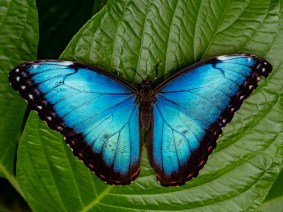
A blue morpho butterfly sits on a leaf. A new study finds that butterflies likely originated somewhere in western North America or Central America around 100 million years ago. Kristen Grace/Florida Museum

It is almost a certainty that if you visit Costa Rica you will see the blue morpho fluttering by somewhere. And you may be in the location of its origin story:

Butterflies originated in North America after splitting from moths, new study suggests

Akito Kawahara remembers being eight years old when he went on a special tour of the insect collection at the American Museum of Natural History in New York City. He marveled at the vast array of pinned bugs before stopping in front of a large picture of the butterfly family tree.

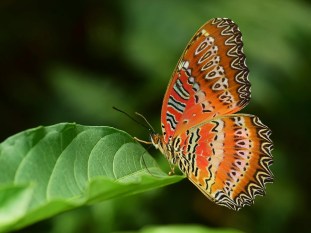
A red lacewing butterfly perches on a plant. Rachit Pratap Singh

A number of spots on that tree, he saw, were curiously blank.

“Just looking at it, realizing that scientists at these museums still don’t know these basic things — I’ll never forget that day,” Kawahara says.

That moment sparked a lifelong passion in Kawahara to fill in those blanks and determine where these charismatic insects originated. Now, he’s gotten a little closer to an answer. His latest research shows that butterflies probably first flapped their wings in present-day western North America or Central America. Continue reading

Protecting Insects Requires More Effort

The large marble butterfly is now locally extinct in some places. Rick and Nora Bowers/Alamy

Insects matter, and our thanks to Catrin Einhorn for making it more clear why:

Are Butterflies Wildlife? Depends Where You Live.

A legal quirk leaves officials in at least a dozen states with little or no authority to protect insects. That’s a growing problem for humans.

It’s tough being an insect. They get swatted, stomped and sprayed without a thought. Their mere presence can provoke irrational panic. Even everyday language disparages them: “Stop bugging me,” we say. Continue reading

Monarch Butterflies’ Future

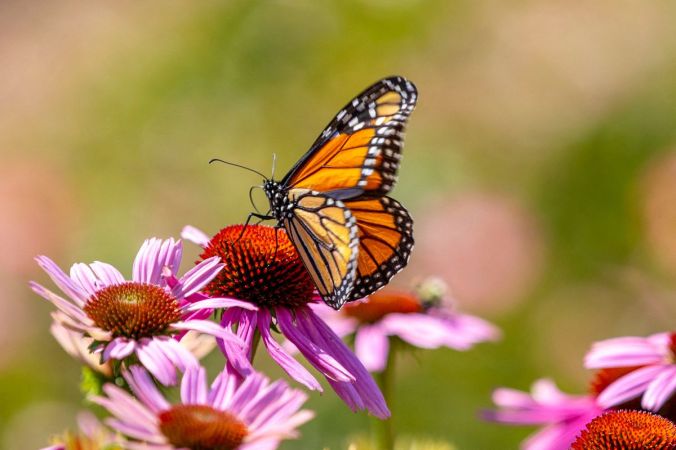
A Monarch butterfly, which is now placed in the endangered category of the International Union for the Conservation of Nature’s Red List of Threatened Species, perches at the Royal Botanical Gardens in Burlington, Ontario, Canada July 21, 2022. REUTERS/Carlos Osorio

Butterflies in general, and this species in particular, have graced our pages more than most other insects over the years. Thanks to Emma Farge and Gloria Dickie, from Reuters, for this:

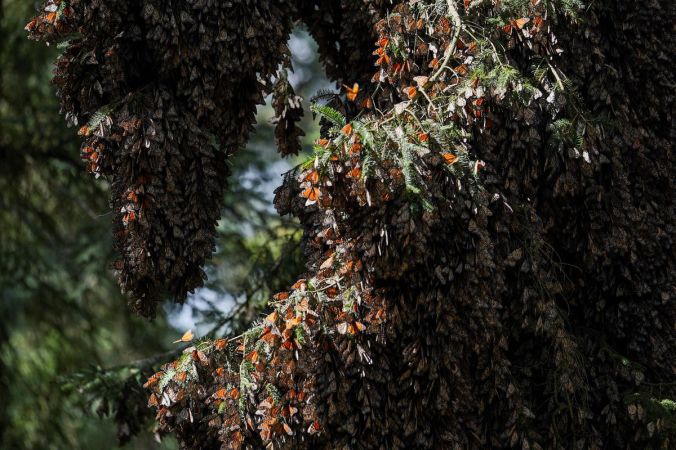
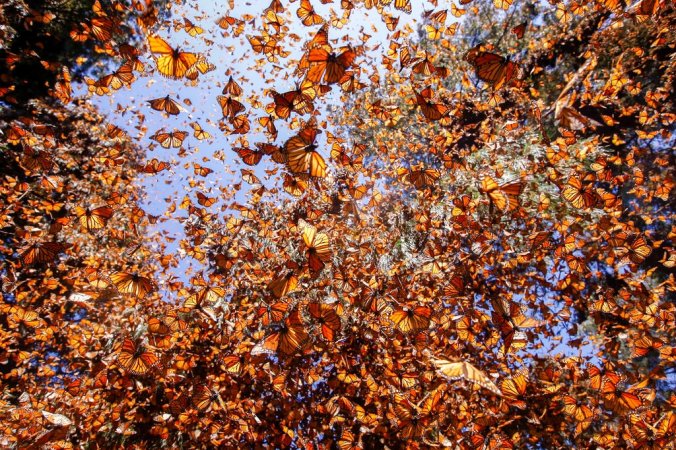
Monarch butterflies rest on a tree at El Rosario sanctuary, in El Rosario, in Michoacan state, Mexico February 11, 2021. Picture taken February 11, 2021. REUTERS/Toya Sarno Jordan/File Photo

Kaleidoscopic migratory monarch butterfly joins global endangered species list

GENEVA, July 21 (Reuters) – The migratory monarch butterfly, which has for millennia turned North American woodlands into kaleidoscopes of colour in one of nature’s most spectacular mass migrations, is threatened with extinction, international conservationists said on Wednesday. Continue reading

Care For The Little Ones Among Us

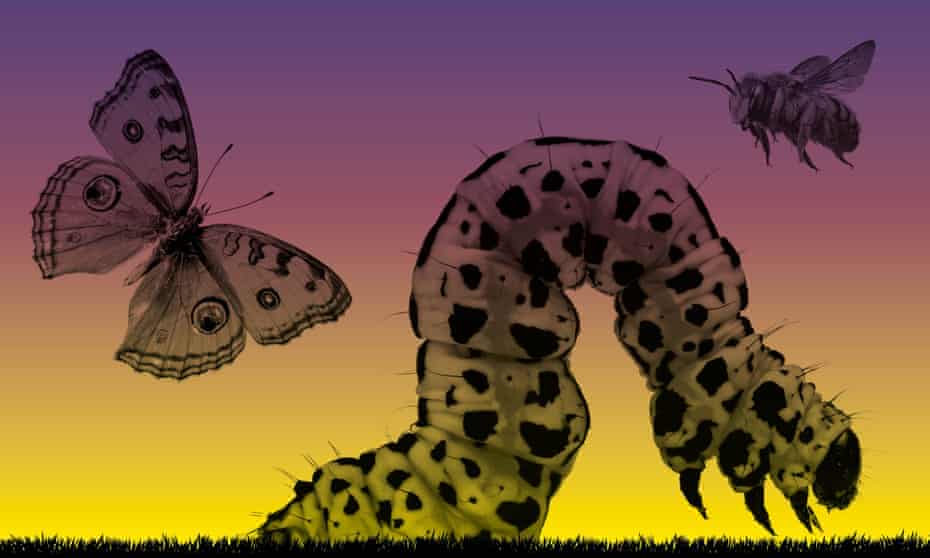
Illustration of insects

Thanks to the Guardian for providing this biologist the platform to explain to us why insects matter so much:

The insect apocalypse: ‘Our world will grind to a halt without them’

Insects have declined by 75% in the past 50 years – and the consequences may soon be catastrophic. Biologist Dave Goulson reveals the vital services they perform

I have been fascinated by insects all my life. One of my earliest memories is of finding, at the age of five or six, some stripy yellow-and-black caterpillars feeding on weeds in the school playground. I put them in my empty lunchbox, and took them home. Eventually they transformed into handsome magenta and black moths. This seemed like magic to me – and still does. I was hooked. Continue reading

Butterfly Farming’s Limits

merlin_171378282_a6460ac2-c217-40f4-b8a0-00d58c272766-jumbo

Sylvain Cordier/Gamma-Rapho, via Getty Images

Costa Rica pioneered butterfly farming in the 1990s, and it has been an important export ever since. It is an export oriented to botanical gardens and other natural attractions where butterflies can be released by the thousands in enclosures; it is also an export that feeds the hunger of collectors. It is not a cure-all as Elizabeth Preston, on our radar again after five years, notes:

What’s Wrong With Butterflies Raised in Captivity?

A study suggests that monarchs bred by enthusiasts were less fit than those that started as caterpillars in the wild.

Monarch butterflies look delicate, but they need to be super-tough to survive their annual migrations. The monarchs of eastern North America may travel thousands of miles to their winter home in Mexico’s Sierra Madre mountains. And, increasingly, they’re not making it, a problem that has been blamed on habitat loss, climate change and pesticides.

In an effort to boost the struggling insect’s numbers, some butterfly enthusiasts buy monarchs raised in captivity or breed their own, then set them free. But research published Wednesday in Biology Letters shows that captive-born monarchs are weaker than wild ones — adding evidence to the arguments of those who warn that releasing them does more harm than good. Continue reading

Butterflies From Another Perspective

2965

Forest mother-of-pearl
‘It was a painstaking process, holding my breath and sitting perfectly still every time I pressed the shutter release. It seemed to take forever’

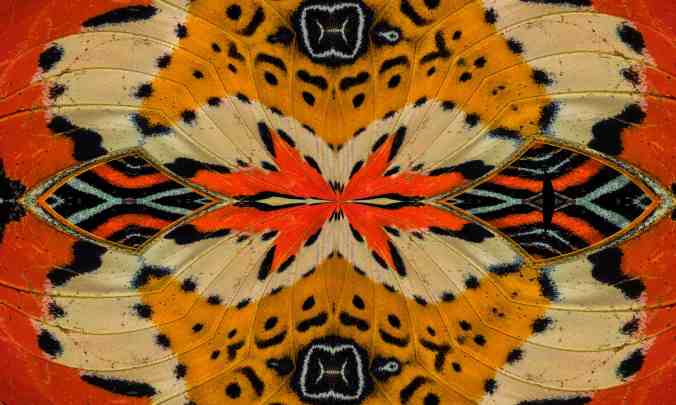
Time for a break from the regular news. Here are some visual reminders of why we care for nature, and why we protect it. Thanks to the Guardian for bringing this photographer’s unique technique to our attention in the photo feature titled The butterfly effect: wings in extreme close-up – in pictures:

5988 (1).jpg

Detail of a Malay lacewing butterfly. Photograph: Jake Mosher

Thanks to that feature, I wandered into this commercial project, valorizing the beauty of butterflies, that I can recommend as worth a look:

METAMORPHOSIS

*** Featured in the Royal Photographic Society’s Journal, and also in The Guardian. Please take a look at their photo gallery display here.***

Limited edition, 1 of 1 pieces. When one sells, it will not be reprinted in any size, ever. This is your chance to own collectible, one-of-a-kind pieces of art the likes of which the world has never seen before.

These images are the composition of hundreds – and sometimes thousands – of 4:1 macro photographs of butterfly and moth wings. There is no artificial color, imported designs, or any “drawn” artifacts. This is art and photography intertwined, and these images are only available here. This work has been recognized as entirely unique to me. Continue reading

Join The Butterfly Count

3500 (6).jpg

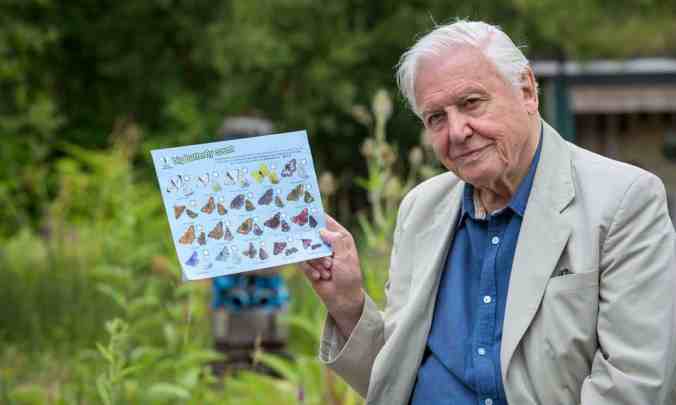
Sir David Attenborough launching the Big Butterfly Count in July 2017. Photograph: Butterfly Conservation/PA

Thanks to the Guardian for bringing this to our attention:

Sir David Attenborough urges British public to join butterfly count

Veteran broadcaster encourages people to take part in Big Butterfly Count and highlights mental health benefits of wildlife

Watching nature provides “precious breathing space” from the stress of modern life, Sir David Attenborough has said, as he urges people to take part in the world’s biggest butterfly count.

While the UK’s butterflies are basking in the best summer conditions in more than a decade, if the hot weather becomes a drought it could be catastrophic for the insects as plants wither and caterpillars starve.

The public are being encouraged to take part in the Big Butterfly Count over the next three weeks to help experts see how butterflies are faring and to enjoy the mental health benefits of watching wildlife. Continue reading

Butterflies Bear Bucolic Benefits

merlin_138359769_63074afa-6c7c-4550-acd6-302cfc29161d-jumbo

Milkweed was first mentioned in these pages  so long ago I had forgotten their importance to Monarch butterflies, a seemingly perennial topic for our contributors. So thanks to Margaret Renkl for keeping that tradition going in her Monday op-ed, and reminding us in the process that while it is not all good news out there, it is also not all bad news:

Monarchs in My Garden, at Last

NASHVILLE — I was pretty proud of myself the spring I planted my first organic garden. It was the mid-1980s, and I was a first-year graduate student in creative writing, a program entirely unrelated to horticultural mastery. But I had taken a college course in environmental biology, and I knew the basics: The more chemicals you use in a garden, the more chemicals you’ll need in the garden. It’s a self-perpetuating cycle, more reliable than the seasons.

At my house, companion planting — marigolds in between the broccoli, tomato vines encircling the spinach — would repel bugs the natural way. Any lingering pests would be dispatched by beneficial insects like ladybugs and praying mantises. One evening I watched happily as cabbage white butterflies flitted over silvery broccoli leaves. Those little white butterflies pausing in the gloaming on the water-beaded broccoli made for a tableau of bucolic harmony. Continue reading

Ubiquitous and Sublime

photo credits: Richard Kostecke

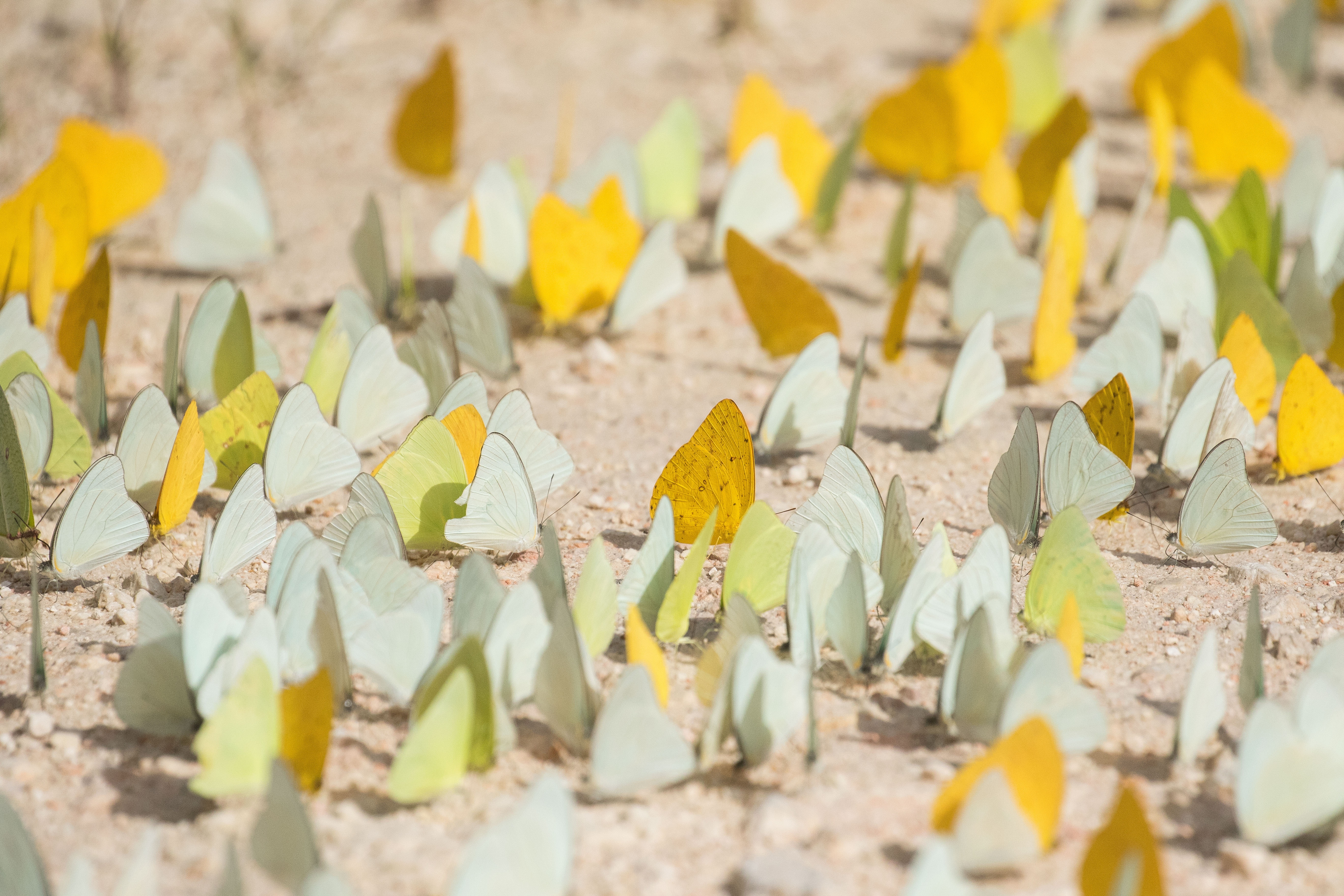
The sources we frequent for stories of interest appears to proclaim it butterfly season. So it’s incredibly timely that contributor Richard Kostecke should have sent us  these beautiful photos of Sulfurs and Whites “puddling” along the road to Chan Chich Lodge. Continue reading

Scotland, Land Of Butterfly Resurgence

5151

For a second day in a row, a butterfly story catches our attention. Small stories of unexpected good fortune are always welcome:

Rare butterfly spotted in Scotland for the first time since 1884

Elusive and endangered white-letter hairstreak discovered in a field in the Scottish borders could become the 34th species to live and breed in the country Continue reading

A Highway For Monarchs

Monarch-migration-map

Interstate 35, which stretches from Minnesota to Mexico, lies in the heart of the monarchs’ migration route.

Thanks to Janet Marinelli and the team at YaleEnvironment360:

Can the Monarch Highway Help Save a Butterfly Under Siege?

The population of North American monarch butterflies has plummeted from 1 billion to 33 million in just two decades. Now, a project is underway to revive the monarch by making an interstate highway the backbone of efforts to restore its dwindling habitat. Continue reading

Big Butterfly Count Coming Up in UK

Photo from bigbutterflycount.org

Starting this Friday and continuing through the first week of August, the largest survey in the world for butterflies and day-flying moths will take place in the United Kingdom. We’ve featured lepidopterists and citizen scientists here before, including today and for last year’s event, which involved over fifty thousand people counting more than half a million lepidopterans.  It’s great to see such a simple yet complete chart/app to ID the more common butterflies that people may encounter –– I would have really appreciated something like that for Costa Rica! Read more about the project below:

Why count butterflies?

Butterflies react very quickly to change in their environment which makes them excellent biodiversity indicators. Butterfly declines are an early warning for other wildlife losses.

That’s why counting butterflies can be described as taking the pulse of nature.

Continue reading

Lepidopteran Diversity at Xandari

Over the last month or two one of my goals has been to identify as many of the butterflies and moths–or lepidopterans–that we have here at Xandari. Part of this work involves looking at old photos taken since 2014, when James and I first arrived on property and started taking pictures of wildlife; another element of the job is going out and photographing the lepidopterans in a more determined fashion.

Not an easy task, when butterflies can have such whimsical flight patterns and startle quite easily. Moths are a little simpler to chase because during the day they’re often focused on staying still and hiding out until evening. Continue reading

Butterflies from the Butter-files

As I mentioned in the “flora-file” series (see posts #1 and #2, more are forthcoming), I’m posting a number of photos I collected during my time at Xandari Resort & Spa this summer. Some of these photos aren’t of plants, so I’ve got to think of another punny name for this post featuring butterflies: what about the “butter-files”? It’ll have to work for now! Continue reading

Tamil Lacewing Butterfly

Photo credits : Aparna P

Photo credits: Aparna P

The Tamil Lacewing Butterfly (Scientific name: Cethosia nietneri) is endemic to the  Western Ghats of India and Sri Lanka, where it commonly cuts through the breezes from the months of June to September. Frequent at the onset of monsoon season, the beautiful insect usually disappears by September or October. Catch it while you can! Continue reading

Lepidoptera Diversity in Costa Rica

Costa Rica is home to some 1200 butterflies and another 8000 species of moths (both diurnal and nocturnal varieties). This astounding diversity is no surprise, given the country’s neotropical climate and its position as a land bridge between North and South America, each home to a plethora of diverse ecosystems. The tremendous number of butterflies that can be seen goes hand-in-hand with the fact that Costa Rica is home to about 4% of the world’s total biodiversity! Of the butterfly species, some of the most famous include Continue reading

Common Grass Yellow Butterfly

Photo credit : Sherif

Photo credit: Sherif

The Common Grass Yellow Butterfly lives up to its name. Found throughout all of India, this lepidopteran flies low and close to the ground in fields, and its wings are a pretty yellow with some subtle patterning. Their larvae feed on several different plants, but generally in the families of the spurges and legumes.  Continue reading

Common Acacia Blue Butterfly

Common Acacia Blue Butterflies are seen in and around the Periyar Tiger Reserve and are found across South India and North East India up to 1200 meters. The are active from March to November, primarily in deciduous hill forests . Continue reading
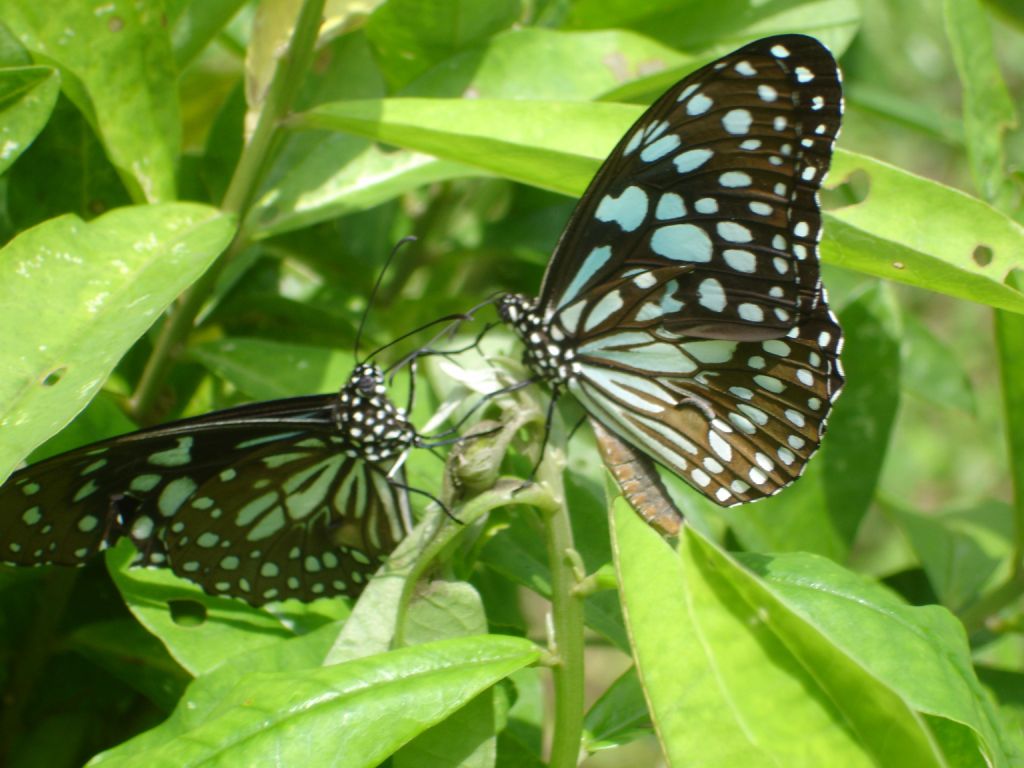
Blue Tiger Butterfly (Tirumala limniace)

Photo credits: Amie Inman

The Blue Tiger is one of the butterflies found commonly throughout most of India, both in the hills and in the plains. These butterflies are frequent visitors to gardens and the Pink Cockscomb (Ageratum conyzoides) is its favorite flower. Continue reading