Fighting Pollution With Garbage

Image may contain Outdoors Flower Plant Nature Pond and Water

Photograph: Abir Mahmud, University of Dhaka

Our thanks to Hannah Richter for her reporting and writing, as well as to Wired for publishing what sounds not like garden variety too good to be true, but quintessentially ridiculous.

Kudos to Nepal for testing out this idea in spite of how it sounds:

Image may contain Lake Nature Outdoors Water Aerial View Architecture and Building

Groups of platforms installed in Nagdaha lake in Nepal. PHOTOGRAPH: SAMYAK PRAJAPATI/THE SMALL EARTH NEPAL

Polluted Lakes Are Being Cleansed Using Floating Wetlands Made of Trash

Platforms combining plants and recycled garbage could offer a cut-price solution for reviving polluted bodies of water.

ON THE BANKS of Nagdaha, a polluted and lotus-infested lake in Nepal, Soni Pradhanang is putting trash back into the water—on purpose.

Image may contain Plant Potted Plant Water Waterfront Boat Transportation Vehicle Outdoors and Food

A floating treatment wetland system loaded with plants. PHOTOGRAPH: SAMYAK PRAJAPATI/THE SMALL EARTH NEPAL

She carefully assembles a platform of styrofoam and bamboo mats, then weaves it together with zip ties and coconut fiber, refuse from nearby tech stores. Then, she pokes 55 plants lush with red flowers through 2-inch holes in the platform, each plant set 6 inches apart. Though Pradhanang’s creation isn’t high-tech, it is effective, and one of the most affordable water-filtration systems available. “I’m cheap,” she says, laughing. Continue reading

Removing Environmental Protections Will Not Seem So Clever In Hindsight

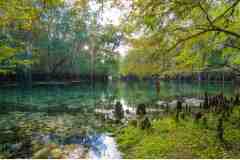
Sunset in the trees at Manatee Springs, Florida. Photograph: Michael Warren/Getty Images/iStockphoto

Oliver Milman, again, brings our attention to an environmental activism that deserves attention, this time for all the wrong reasons:

Experts fear half of the 290m wetland acres have lost federal protection and could be at risk from developers

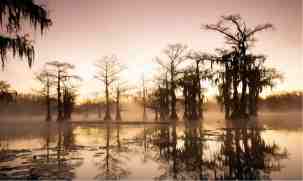
Lake Caddo, on the border between Louisiana and Texas, is a beautiful cypress swamp. Photograph: wanderluster/Getty Images

Often dismissed as dismal wet bogs and rampantly cleared since European arrival in the US, the underappreciated importance of wetlands has been placed into sharp relief by a supreme court ruling that has plunged many of these ecosystems into new peril.

The extent of wetlands, areas covered or saturated by water that encompass marshes, swamps and carbon-rich peatlands, has shrunk by 40% over the past 300 years as the US drained and filled them in for housing, highways, parking lots, golf courses and other uses. Globally, wetlands are disappearing three times faster than forests are. Continue reading

Wetland Treasury

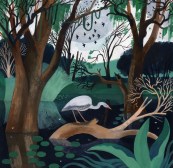
The U.S. once held a wealth of wetness, but the country’s treasury has shrivelled. Illustration by Carson Ellis

The word swamp does not have a pleasant ring to it. The thing itself, though, is something much more than pleasant. Essential to our future, Annie Proulx clarifies in a lovely manner, swamps should be treated with greater care:

Swamps Can Protect Against Climate Change,

If We Only Let Them
Wetlands absorb carbon dioxide and buffer the excesses of drought and flood, yet we’ve drained much of this land. Can we learn to love our swamps?

It can be hell finding one’s way across an extensive boggy moor—the partially dry, rough ground and the absence of any landmarks let the eye rove helplessly into the monotype distance. Continue reading

Good Journalism, Excellent Environmental Coverage

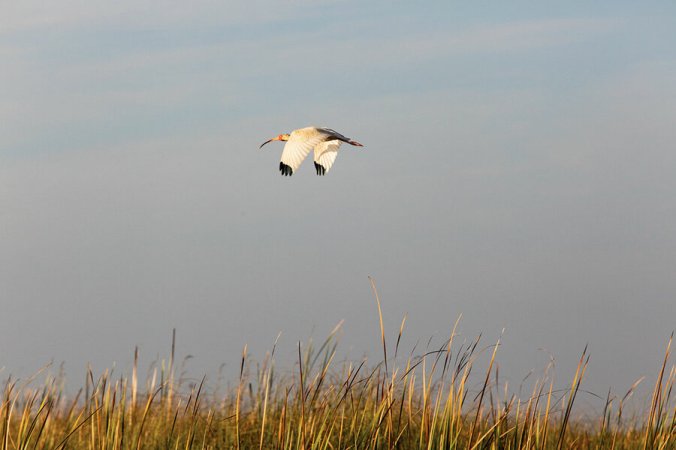
Melanie Stetson Freeman/Staff. A white ibis flies over the Everglades, where many bird species nest each year. Restoration efforts in Florida’s “river of grass” have begun to show signs of progress.

The CS Monitor was the newspaper delivered to our home when I was growing up. Lucky me. These days it still offers good journalism, but is no longer a paper. They made the switch to digital-only in 2008. In earlier years of my monitoring dozens of news sources for this platform it was the source of numerous stories of environmental interest in our pages. But in the last few years, for no particular reason, I failed to monitor their website for stories. And then today, this:

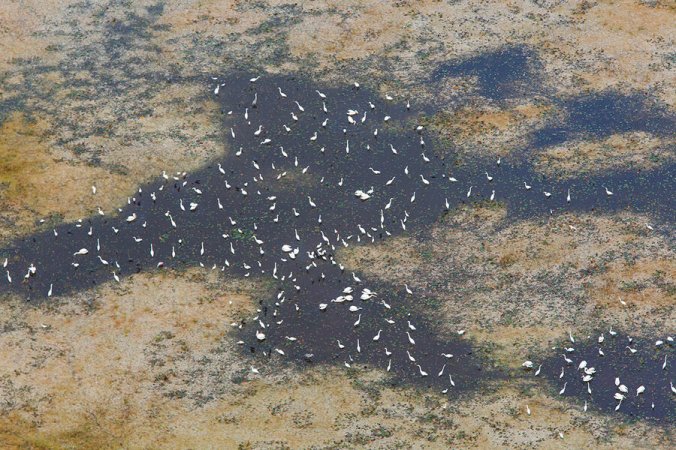
Melanie Stetson Freeman/Staff. Birds look like white flecks from the air.

‘River of Grass’: Inside the quest to restore the Everglades

Richard Mertens Special contributor

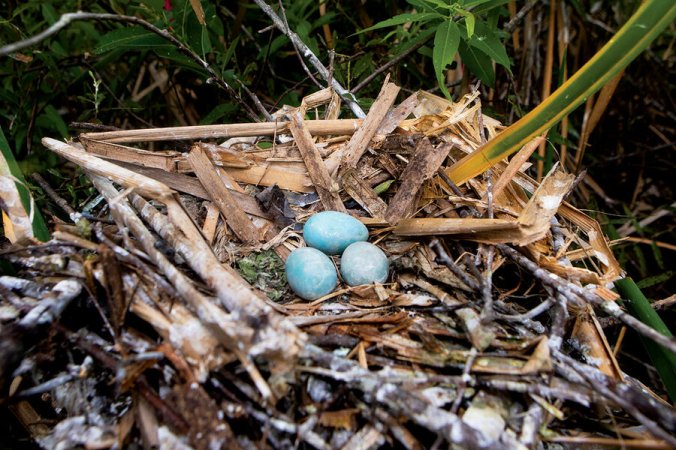
Melanie Stetson Freeman/Staff. Three eggs sit in a nest in the Everglades.

Eight hundred feet up, the helicopter banks hard to the left. The horizon disappears. Mark Cook, an avian biologist, peers out his side window at a small irregular patch of water below. It’s hardly distinguishable from innumerable other patches that lie in every direction, dark and shining amid a ragged expanse of brown marsh grass and green tree islands. Continue reading

Pantanal Priorities

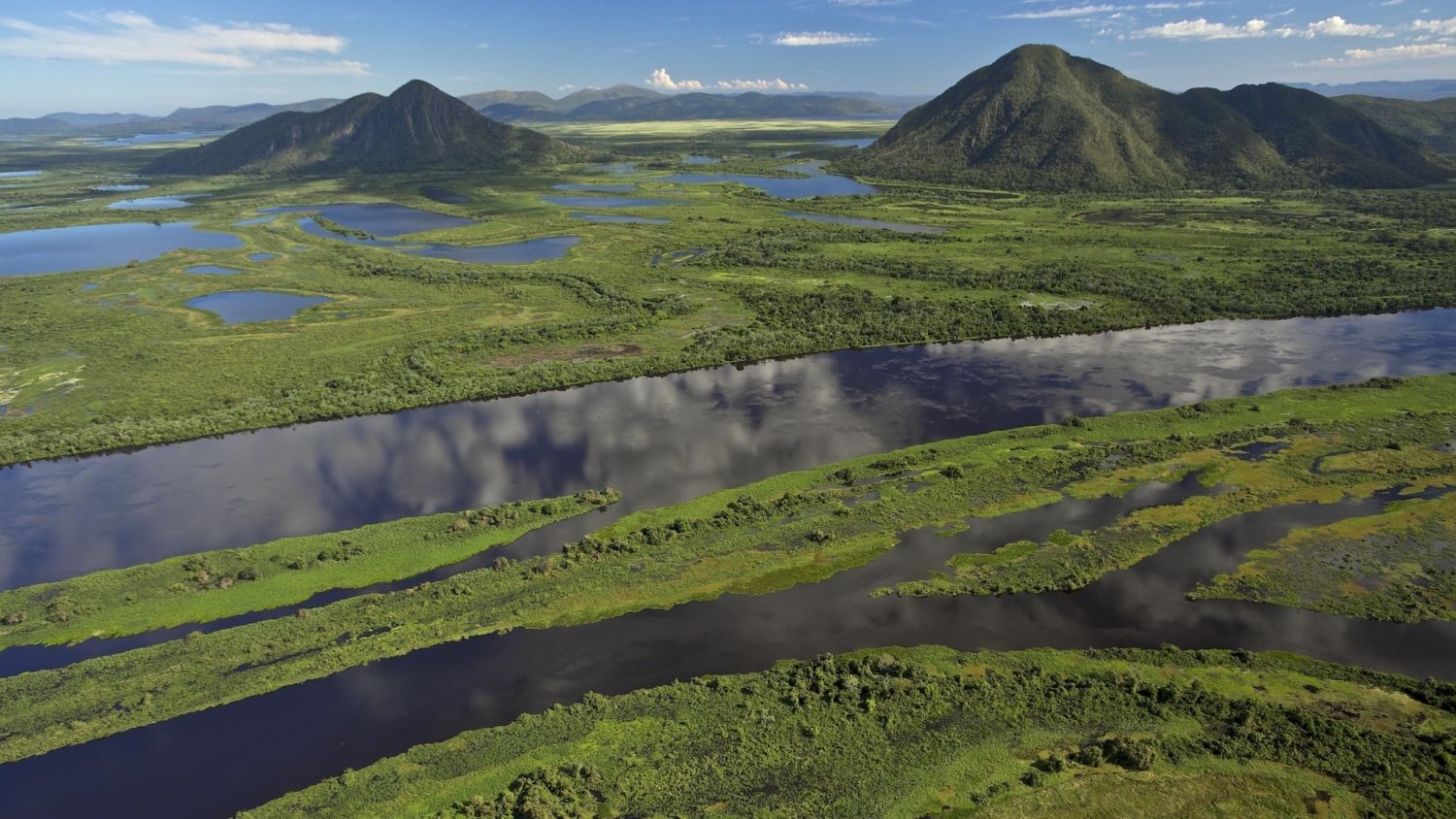
The Pantanal wetlands in Brazil.

The Pantanal wetlands in Brazil. MARKUS MAUTHE / GREENPEACE

There is not much that has happened in Brazil in the last few years that I would consider good environmental news.

YALE ENVIRONMENT 360

So one more urgency is at risk of getting lost in all the rest (which may be part of a strategy). But making it easier to extract the extracted from the center of the continent is akin to adding fuel to a very big fire:

A Waterway Project in Brazil Imperils a Vast Tropical Wetland

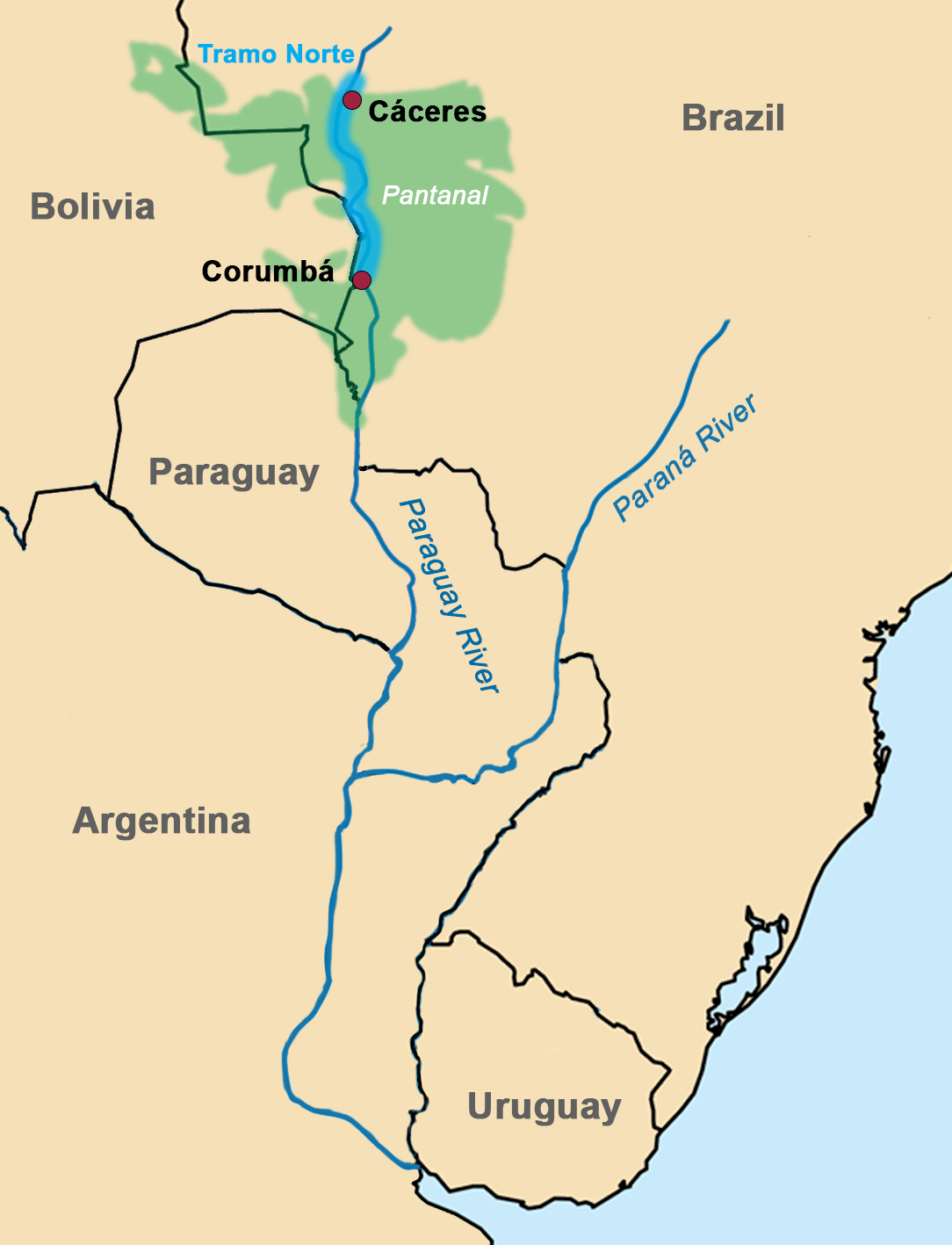
The Pantanal, the world’s largest tropical wetland, has been battered in recent years by agricultural development, drought, and fire. Now, a push to turn the region’s key river into a waterway for soybean-laden barges threatens to alter the natural flows of this iconic ecosystem.

It takes 14 hours for Lourenço Pereira Leite to reach his fishing spot.

He and his brother-in-law chug along in a simple one-engine motorboat, towing their traditional fishing canoe behind them. Continue reading

The Force Of Law, On Top Of Information & Protest

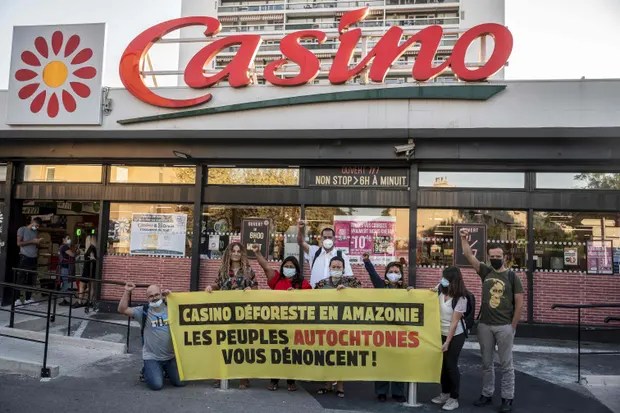
A protest in Marseille against the French supermarket chain Groupe Casino for allegedly selling meat products linked to deforestation. Photograph: Christophe Simon/AFP/Getty

What can we do when commercial interests damage our collective future? The identification of and protest against companies doing business in ways that cause environmental destruction are two important forces, but the force of law is another. Thanks to the Guardian for its ongoing coverage of these:

Legal eagles: how climate litigation is shaping ambitious cases for nature

Plans for an airport in the Tagus estuary have failed to take into account its impact on the wetlands, lawyers argue. Photograph: Handout

Environmental lawsuits are nothing new but now lawyers are turning their attention to cases that address the loss of biodiversity

The Tagus estuary near Lisbon is Portugal’s largest wetland, a vital habitat and stopover for tens of thousands of migratory birds, including flamingos, black-tailed godwits and glossy ibis. Continue reading

Thames Is Alive, Again

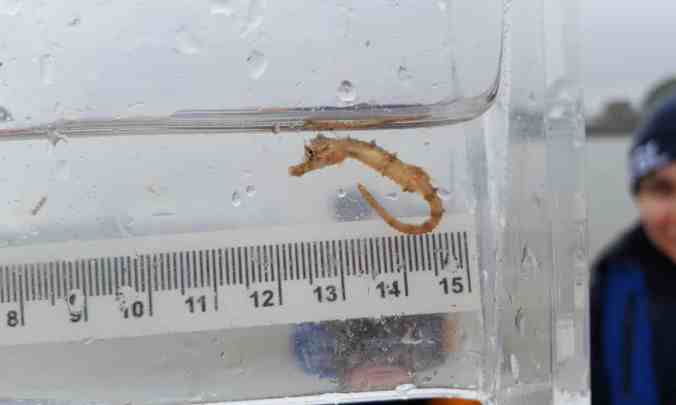
Species living in the Thames include seahorses and sharks. Photograph: ZSL

We will take good news where and how we can get it:

Seahorses and sharks living in River Thames, analysis shows

Zoological Society of London carries out most comprehensive survey since 1950s

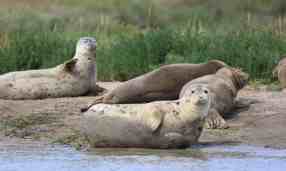
Since 2003 there has been as steady increase in seal populations in the Thames estuary. Photograph: ZSL

Seahorses, eels, seals and sharks are living in the tidal Thames, according to the most comprehensive analysis of the waterway since it was declared biologically dead in the 1950s.

But scientists from the Zoological Society of London (ZSL), who carried out the work, warn that the 95 miles of the tidal Thames is suffering from rising nitrate levels as a result of industrial runoff and sewage discharges. Water levels and temperature are also rising as a result of global heating. Continue reading

Droning Over Wetlands

Thanks to The Nature Conservancy’s Cool Green Science team for helping us realize we almost missed this story:

Flight Over the Bas-Ogooué: Using Drones to Map Gabon’s Wetlands

BY JUSTINE E. HAUSHEER

How do you map a nearly inaccessible 9,000-square-kilometer African wetland that is home to hippos, forest elephants, crocodiles, and the notorious Gaboon viper?

Enter the drones.

Nature Conservancy scientists are using unmanned aerial vehicles to create the first-ever detailed wetlands habitat map of coastal Gabon, in collaboration with scientists from NASA, and other conservation groups working in Gabon. Continue reading